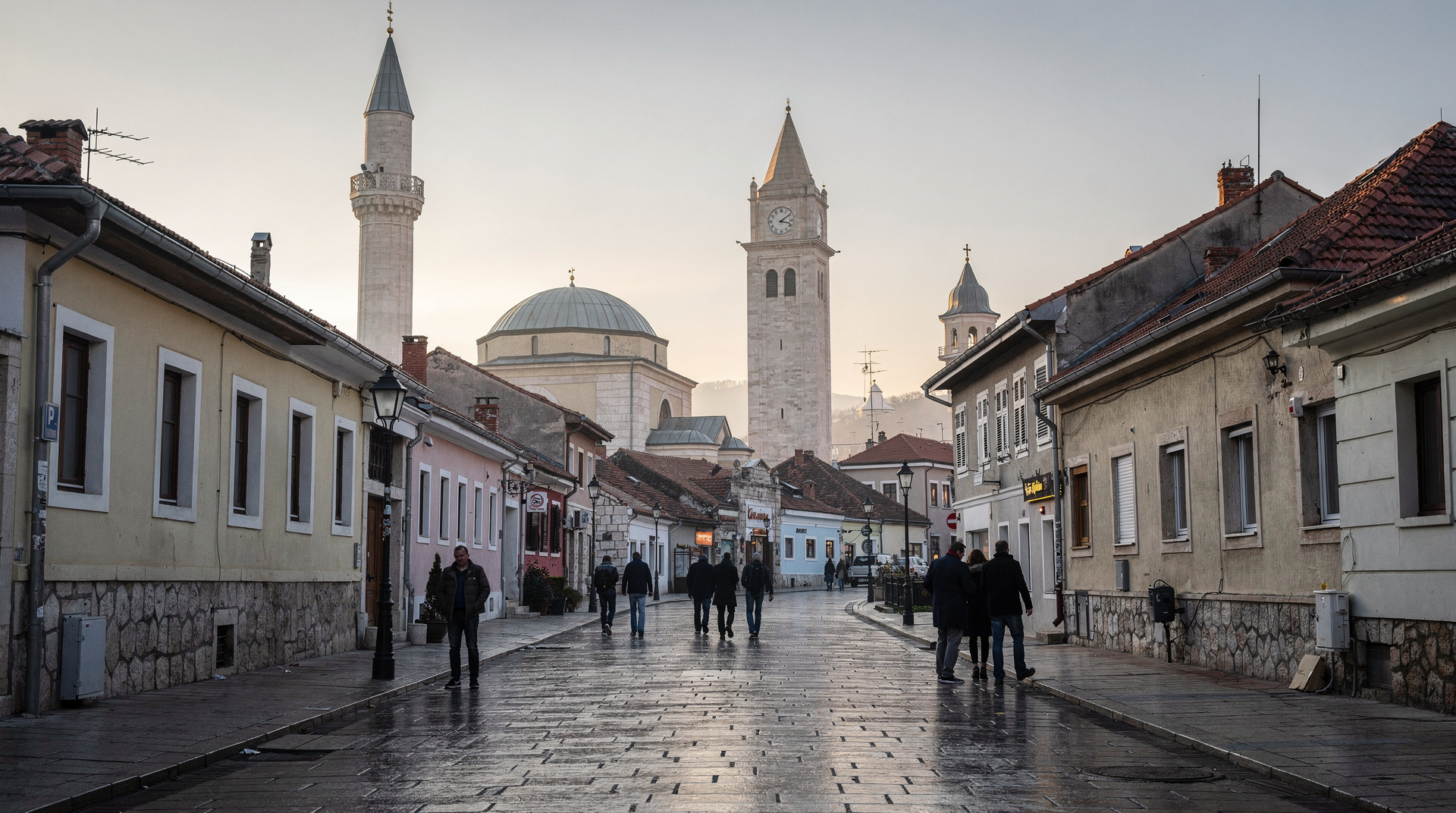
Medjugorje
An honest guide to Medjugorje: who it is for, what to expect at Apparition Hill, Blue Cross and St James Church, and how to visit from Mostar or Dubrovnik.
Međugorje with Apparition Hill and Mostar private tour
Quick facts
- Region
- Herzegovina-Neretva Canton / West Herzegovina Canton
- Distance from Mostar
- 30 km / 35 min by car
- Distance from Dubrovnik
- ~100 km / 1h30 by car
- Days needed
- Half-day to 1 full day
- Currency
- BAM (1 EUR = 1.95583 KM)
Medjugorje is one of the most visited Catholic pilgrimage sites in the world. Since 1981, when six local teenagers claimed apparitions of the Virgin Mary, the village has attracted tens of millions of visitors — an estimated 35 million since the visions began. The Vatican has neither officially recognised nor dismissed the apparitions, but that has not dampened devotion. Each year, roughly 1 million pilgrims come from over 60 countries.
This guide is honest about what Medjugorje is and who it is for. If you are a pilgrim, it covers the spiritual sites in detail. If you are a curious secular traveller, it tells you what the experience is like and whether the visit is worth your time.
| At a glance | |
|---|---|
| Where | Herzegovina, ~30 km west of Mostar, near the Croatian border |
| Cost | Free to walk the hill and church grounds; budget around 20-40 BAM for a meal |
| Time needed | 2-3 hours for a curious visitor, a full day for pilgrims |
| Getting there | Self-drive from Mostar or Dubrovnik, or a guided pilgrimage tour |
| Best time | Outside June 24-25 and August 5 for a quieter, more contemplative visit |
Who is Medjugorje for?
For pilgrims: Medjugorje is a profound destination. The combination of the outdoor Stations of the Cross, Apparition Hill, the Blue Cross, and the active parish church of St James creates a full day of meaningful experience. Masses are held in multiple languages daily; Irish, Italian, Polish and Korean pilgrims are among the most numerous. The atmosphere is genuinely devotional and, outside peak season, contemplative.
For secular travellers: It is interesting as a cultural and sociological phenomenon, but the actual sights are limited: a rocky hill, a suburban-feeling church, and a commercial strip selling religious souvenirs. If you have no personal connection to Marian apparition sites, two hours is enough. It is easily combined with Mostar (30 km east) or Počitelj for a broader Herzegovina day.
Getting to Medjugorje
From Mostar, Medjugorje is 30 km west, about 35 minutes by car. No reliable public bus connects the two.
From Dubrovnik, organised tours are the most practical option — driving independently takes about 1h30 and requires crossing into Bosnia (passport required). A group pilgrimage tour from Dubrovnik handles the logistics and typically includes a guide who provides spiritual and historical context.
From Sarajevo, the drive is about 120 km (1h45). A Sarajevo to Medjugorje pilgrimage tour is a full-day option that covers both cities.
A combined Medjugorje and Mostar day trip is one of the most popular options, letting you see both sites in a single long day.
What to see
Apparition Hill (Podbrdo)
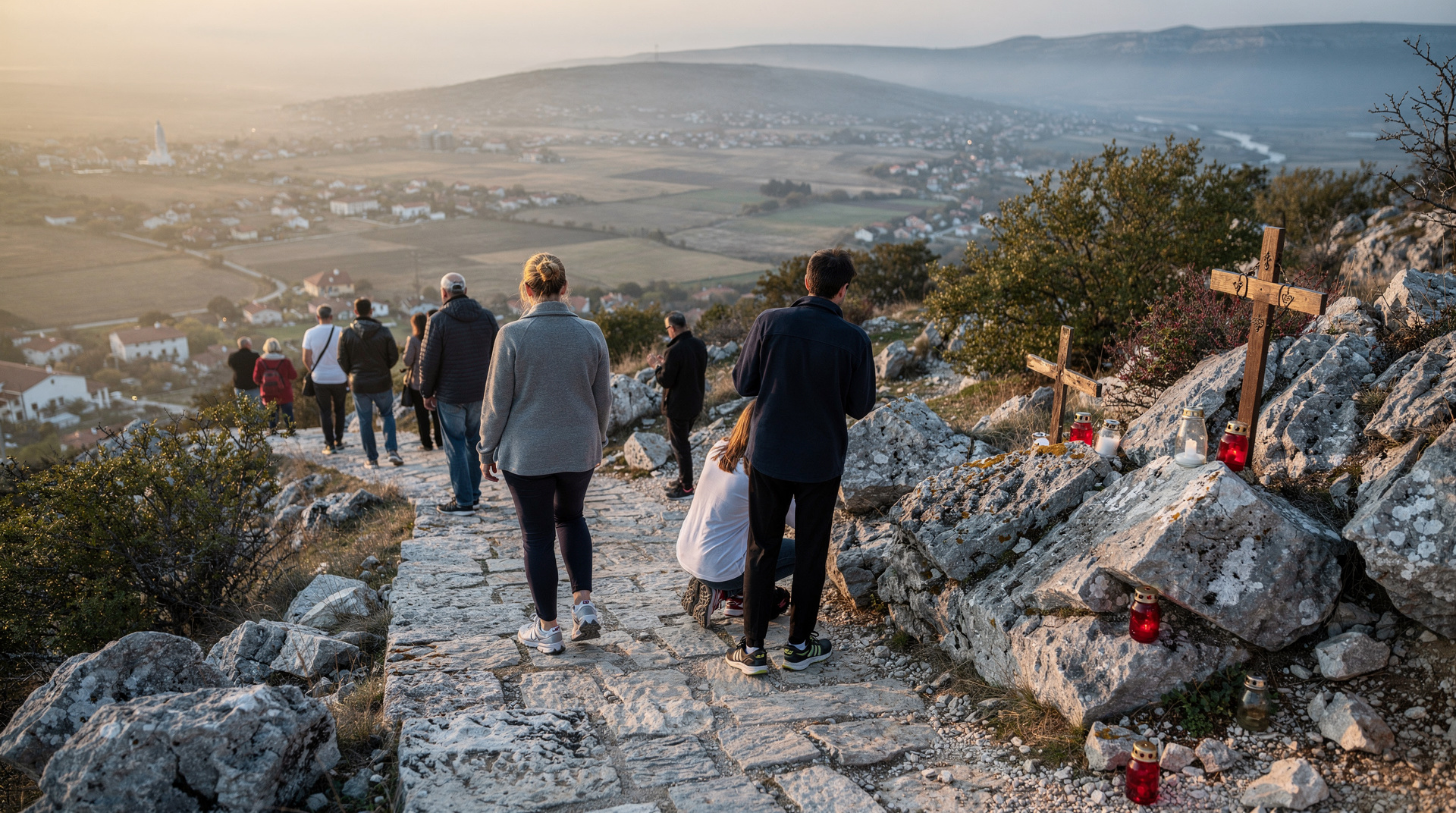
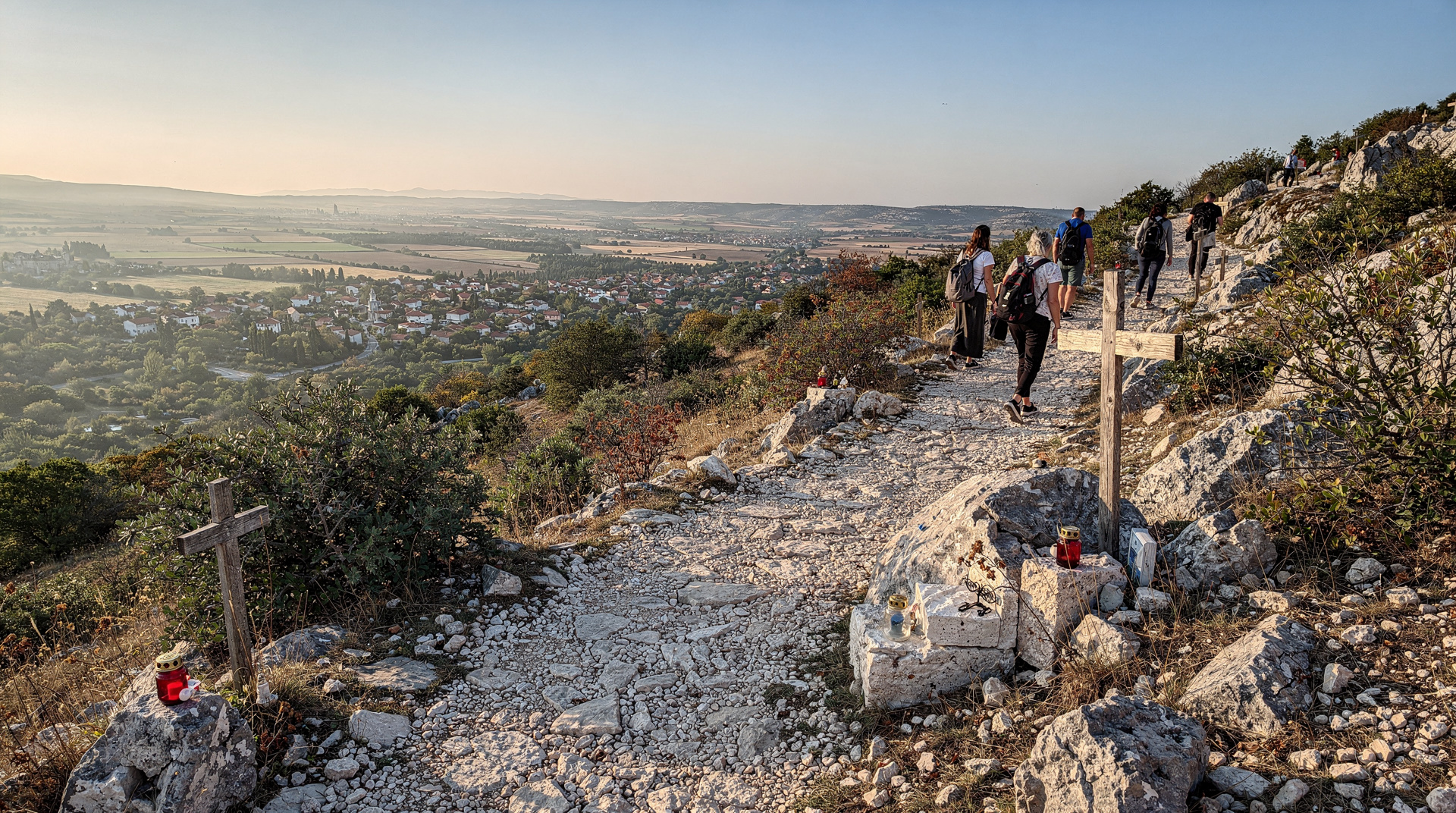
This is the hill where the six visionaries first reported seeing the apparition on June 24, 1981. The path climbs through rocky terrain to the spot marked by a bronze statue of the Virgin. It takes about 20-30 minutes to walk up. The path is rocky and uneven; proper footwear is strongly advised. Pilgrims typically walk it barefoot as an act of penance — this is not required of visitors.
The hill is accessible at all times, day and night. At dawn or dusk, the experience is particularly atmospheric.
Blue Cross and Cross Mountain (Križevac)
Blue Cross marks the point where the visionaries later received apparitions; it is a short walk from the base of Apparition Hill. Cross Mountain (Križevac, 520 m) is a harder, longer climb — about 45-60 minutes up rough stone paths — to a large concrete cross erected in 1933. The Stations of the Cross along the path were designed by sculptors from several countries. Views from the summit take in the Herzegovinian plateau.
St James Church
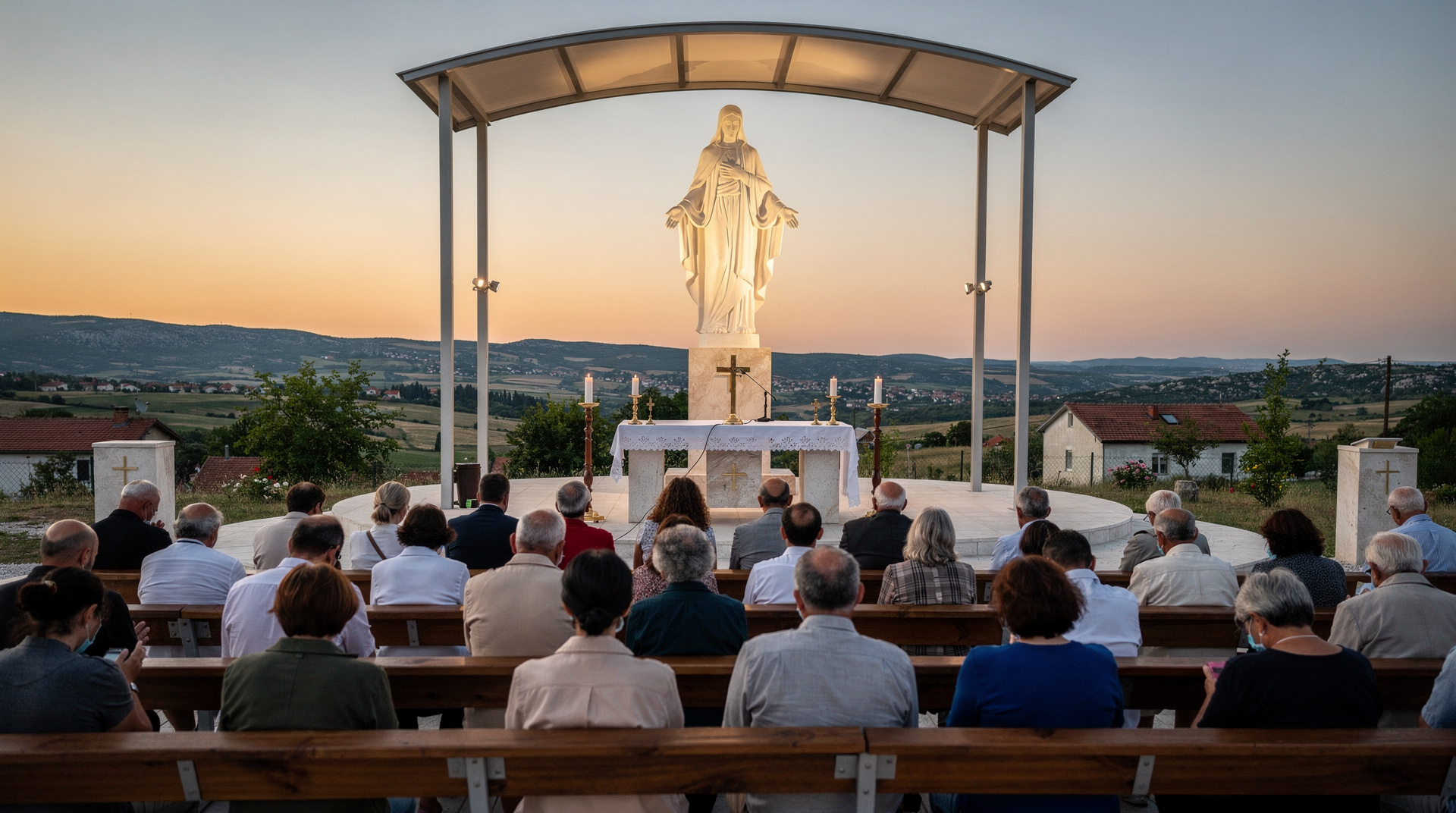
The parish church of St James (Crkva sv. Jakova) is the hub of daily liturgical life. Outdoor Mass on the esplanade can draw thousands during festival days. Inside, the church is spacious but simple.
Planning your hours on the ground
Medjugorje works best when you treat the three main sites as a loop rather than separate trips. Start with the church grounds to get your bearings and see how the parish day is organised, then walk toward Apparition Hill, and keep Cross Mountain for the end if you still have energy and daylight. Doing the harder climb last means you are not rushing the quieter, more reflective stops. The dedicated Apparition Hill guide goes deeper on the path, the stations and the best moments of the day to go up.
Bring water, a hat and sturdy shoes, and carry a light layer for the summit, where the wind can be sharper than it feels in the village. The stone underfoot is polished smooth in places by the passage of pilgrims, which makes it slippery after rain. If the weather turns, the church and the parish grounds are a good fallback, and the village cafés are never far.
If you would like a first-hand account before you decide, read the sceptic’s visit to Medjugorje, written by a traveller who arrived with doubts and tells plainly what moved them and what left them cold.
Behaviour and atmosphere
Medjugorje is a place of worship first and a tourist stop second, and the mood changes quickly depending on where you stand. Around the church, in the evening, people are praying, singing or sitting in silence, and visitors who photograph them closely or talk loudly will stand out. On the hills, the same applies: many people are walking in a spirit of penance or quiet thought, and a polite greeting is welcome but a long conversation is not always.
You do not need to share the beliefs of the people around you to be welcome. Curiosity, respect and a little restraint are enough. Keep your phone on silent in and near the church, ask before photographing individuals, and let people pass on narrow stretches of the path. If you are visiting as a group of friends who are not religious, agree beforehand how long you plan to stay, so that nobody feels trapped or rushed.
Choosing how to arrive
The way you reach Medjugorje shapes the day more than anything else. Independent travellers with a car have the most freedom, particularly if they are already exploring Herzegovina. If you are not yet comfortable on Bosnian roads, the guide to renting a car in Bosnia and the driving in Bosnia guide explain what to expect, and the Croatia to Bosnia driving guide covers the paperwork and the border for anyone starting on the coast.
Travellers based in Dubrovnik or Split often prefer a guided option so that someone else handles the crossing. The Mostar from Dubrovnik guide and the Mostar from Split guide describe the same corridor that Medjugorje sits on, and many of their tips on timing and border waits apply equally here. If your route runs along the coast, the Neum corridor crossing guide explains the short stretch of Bosnian coast you may pass through on the way.
Whichever way you arrive, start early. The village is calmest in the morning, and an early start leaves room to add a second stop afterwards instead of finishing the day in a hurry.
When to go
Medjugorje is open all year, but the experience changes with the season. Spring and autumn tend to give the most comfortable walking and a calmer parish atmosphere, while high summer brings heat on the exposed hills and larger crowds around the feast days. Winter is quiet and more austere, with fewer services and a very different mood. For a broader view of how the weather and the crowds shift across the country, see the best time to visit Bosnia guide.
Peak days and practical warnings
June 24-25 (anniversary of the first apparition) and August 5 (the feast of the Queen of Peace) draw enormous crowds — hundreds of thousands of pilgrims. Accommodation books out months in advance; the village infrastructure is stretched. If you are visiting for devotional reasons, these dates are meaningful; if you are a casual visitor, avoid them.
Commercial zone: The main street between the church and the hill is lined with religious souvenir shops, cafés, and guesthouses. Quality ranges widely; prices for accommodation and food are tourist-oriented. Budget 20-40 BAM for a meal; accommodation starts around 50-80 BAM per person in guesthouses.
EUR is widely accepted in Medjugorje, reflecting the heavy Italian and Western European pilgrim traffic. BAM is always the better option at local rates.
Honest take: is it worth visiting?
For pilgrims: unequivocally yes. For secular travellers already in Herzegovina: it is worth two to three hours if you are curious about the phenomenon. The landscape is unremarkable, but the cultural and demographic spectacle — people from dozens of countries gathered around a rocky hill in rural Bosnia — is genuinely fascinating. Our fuller assessment is in the is Medjugorje worth it guide.
Do not, however, rearrange your whole Bosnia itinerary around it unless pilgrimage is your reason for being there. Mostar, Blagaj, and Kravice offer more varied experiences for most travellers.
Practical details
- Opening hours: St James Church — multiple daily Masses, hours vary by season. Apparition Hill and Cross Mountain: always open.
- Dress code: Modest dress expected in church; shorts and bare shoulders in the street are common but frowned upon near the church.
- Language: English widely spoken; Italian and German also common in services.
- Accommodation: If staying overnight, book well ahead for summer and peak feast days. Dozens of guesthouses (pension) operate around the church area; see Medjugorje pilgrimage guide for recommendations.
Medjugorje in context: Bosnia’s religious mosaic
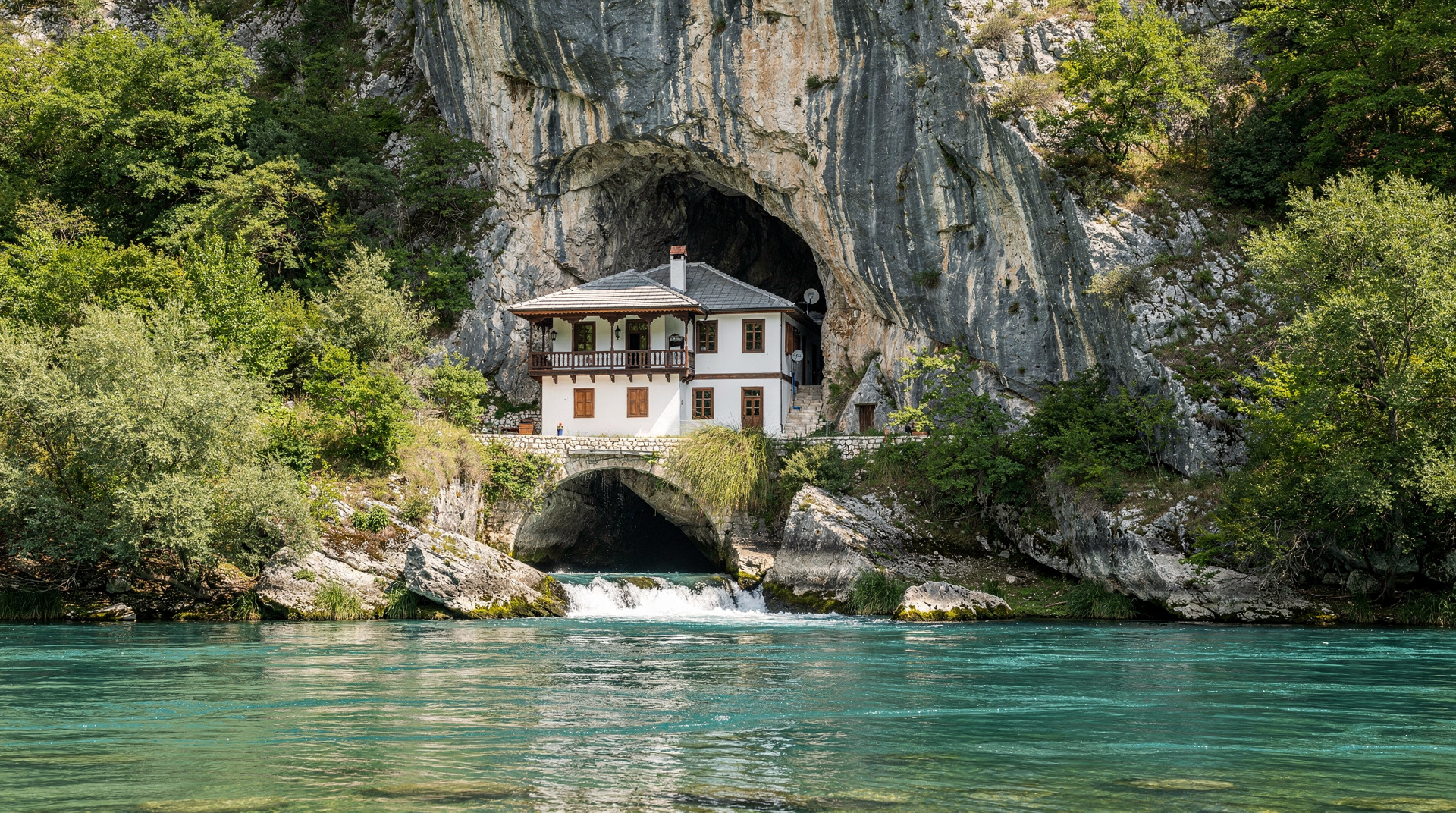
Medjugorje’s Catholic identity sits within a country where Bosniak Muslim, Orthodox Serb and Catholic Croat communities have coexisted — and at times fought — for centuries. Herzegovina, unlike Sarajevo or central Bosnia, is predominantly Catholic Croat, which explains why a Marian apparition site took root here rather than elsewhere in the country. Travellers who want the fuller picture of how Bosnia’s faiths intersect, including Sarajevo’s mosques, synagogue and churches within walking distance of one another, should read the Sarajevo faiths guide or visit Blagaj’s dervish monastery, a very different kind of devotional site 40 km east.
Understanding the wider story
The apparitions began a decade before the wars that broke up Yugoslavia, and the region around Medjugorje lived through that conflict like the rest of the country. Visitors who want to understand why Herzegovina looks the way it does, and why communities here are organised as they are, will find useful background in the Bosnia history for travellers guide and the plain-language Yugoslav wars explained. For the Ottoman layer that sits alongside the Catholic one in this part of the country, the Ottoman heritage guide is a good companion read.
Money matters are simple but worth knowing in advance; the Bosnia money and currency guide explains how cash and cards work in practice, which is handy in a village where many sellers are used to several currencies.
Combining Medjugorje with a Herzegovina day
Because Medjugorje itself only needs a few hours, most independent travellers pair it with other Herzegovina stops. A natural sequence from Mostar is: Blagaj Tekke in the morning, Medjugorje at midday, then either Počitelj or Kravice Waterfalls in the afternoon. Drivers coming from Dubrovnik or Split sometimes fold Medjugorje into a wider Herzegovina day trip rather than a dedicated pilgrimage tour. For those without a car, the Sarajevo war tunnel tour and Medjugorje sit at opposite ends of the country and should not be combined in one day.
If you are building a longer trip around the region, the Herzegovina weekend itinerary places Medjugorje alongside the area’s other highlights, and the best day trips from Mostar shows how it compares with the alternatives when time is short. Anyone linking Bosnia with the Croatian coast can slot it into the Croatia and Bosnia two-week itinerary.
Frequently asked questions about Medjugorje
Is Medjugorje worth visiting if I am not religious? For a couple of hours, yes, as a cultural and sociological experience — but it is not a scenic destination in its own right. Combine it with Mostar or Blagaj rather than making it a standalone trip.
Can I visit Medjugorje as a day trip without joining a tour? Yes, if you have a car. Self-driving from Mostar takes about 35 minutes; from Dubrovnik or Sarajevo a tour is usually more practical because of the border crossing or distance involved.
Top experiences
Bookable activities with verified prices and instant confirmation on GetYourGuide.