Is Medjugorje worth visiting
Međugorje with Apparition Hill and Mostar private tour
Is Medjugorje worth visiting?
It depends entirely on who you are. For Catholic pilgrims and those with an interest in religious phenomena, Medjugorje is a deeply meaningful destination with genuine spiritual atmosphere and a steady stream of international pilgrims. For secular travellers, it offers a fascinating (if commercial) glimpse into modern religious pilgrimage culture — but little in the way of conventional tourist sights. There is no middle-ground answer.
| At a glance | |
|---|---|
| Where | Herzegovina, about 30km south-west of Mostar |
| Cost | Free to visit the church and hillsides; climbs and mass are free, souvenirs and meals cost extra |
| Time needed | 2-3 hours for the core sites; a half or full day if combined with a Herzegovina circuit |
| Getting there | Around 35-40 minutes by car or tour from Mostar; roughly 2 hours from Dubrovnik |
| Best time | Year-round for pilgrims; shoulder season (spring/autumn) for secular visitors avoiding peak crowds |
Medjugorje is one of the most visited pilgrimage sites in the world — and one of the most divisive destinations in Bosnia & Herzegovina. Approximately one million people visit each year, drawn by the reported apparitions of the Virgin Mary that began in 1981. For some, it is the spiritual highlight of their lives. For others, it is an awkward encounter with aggressive commercialisation wrapped around unverified religious claims. The honest answer to “is it worth it” is: it depends almost entirely on who you are and why you are going.
What Medjugorje is
In June 1981, six young people from the village of Međugorje (then Yugoslavia, now Bosnia & Herzegovina) reported seeing an apparition of the Virgin Mary on a rocky hillside above the village. The apparitions reportedly continued. The original six visionaries — now adults spread across several countries — claim to still receive messages, with three reportedly receiving daily apparitions and three receiving annual ones.
The Vatican investigated the phenomenon multiple times across several decades. In 2024, a significant declaration (Fiducia et Spes) authorised local and organised pilgrimage to Medjugorje and approved the veneration of the “Our Lady of Medjugorje,” while explicitly stopping short of pronouncing the apparitions definitively supernatural. It acknowledged the “positive spiritual fruits” (conversions, religious vocations) while reserving judgement on the supernatural dimension.
For pilgrims: what Medjugorje offers
For Catholic pilgrims — particularly those from Italy, Germany, Ireland, Poland, the United States, Croatia and Brazil — Medjugorje is a profoundly meaningful destination. The community of Franciscan friars at St James Church (the main parish) runs masses in multiple languages daily. The church grounds host large outdoor prayer gatherings. The confessionals operate almost continuously.
The two main devotional climbs:
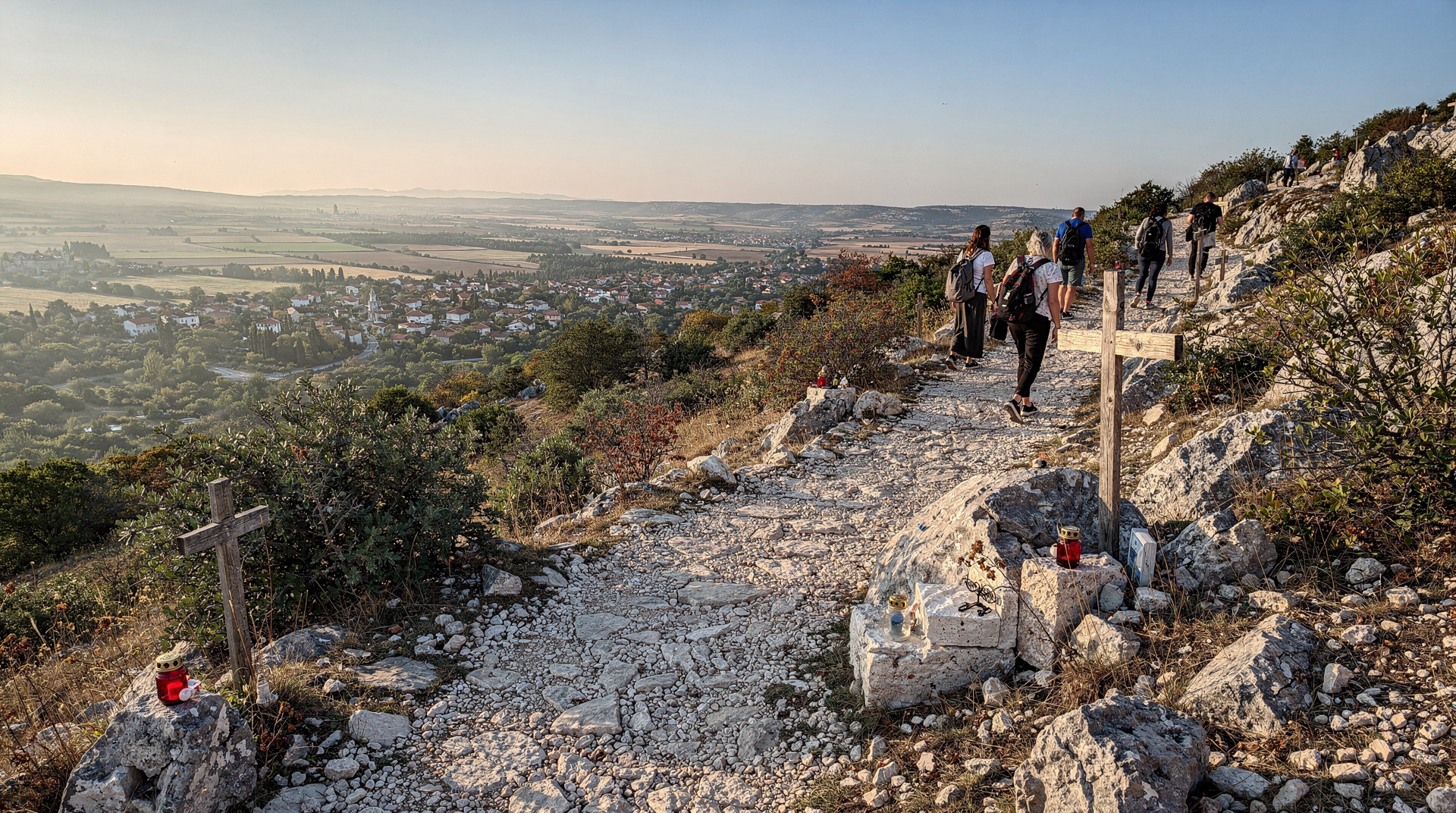
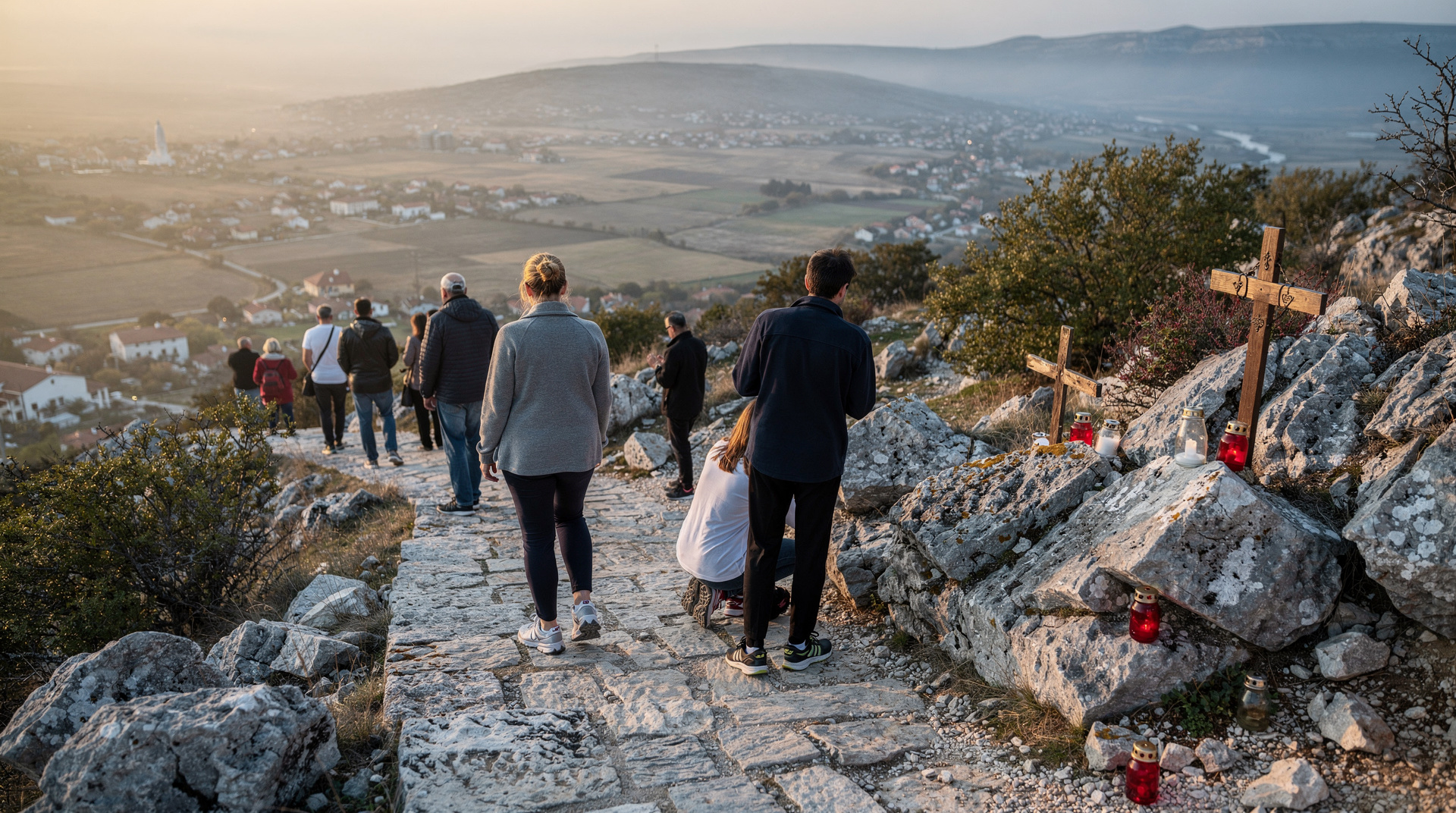
Apparition Hill (Podbrdo): The original site of the reported apparitions, marked by a blue cross. The path climbs roughly 300 m over rocky limestone terrain. Many pilgrims ascend barefoot as an act of penance. The terrain is rough and requires proper footwear if not done barefoot. A guided pilgrimage tour to Apparition Hill, combined with a visit to Mostar, covers both sites with meaningful context.
Cross Mountain (Križevac): A steeper, longer climb (about 2 km, 520 m altitude) with 14 Stations of the Cross leading to a large concrete cross on the summit. Both the climb and the views are demanding but rewarding.
The atmosphere during the evening mass (International Croatian Croatian prayer in Medjugorje’s parish church) is genuinely powerful — thousands of pilgrims from dozens of countries, spontaneous singing, multilingual prayer. Even secular visitors often find it unexpectedly moving.
For secular travellers: what you will actually encounter
If you are visiting Bosnia for cultural, historical or landscape reasons and Medjugorje appears on a suggested itinerary, here is what to expect honestly.
The village of Međugorje itself is one of the most aggressively commercialised religious sites in Europe. Arriving by the main road, you pass kilometre after kilometre of souvenir shops selling religious statuary, rosaries, blessed objects, candles and devotional art, interspersed with hotels, restaurants and exchange bureaus. The density of gift shops around the main church rivals Lourdes or Fatima.
The landscape is pleasant — hills, vineyards, limestone — but not spectacular by Herzegovinian standards. There are no conventional historical monuments, museums or notable restaurants outside the pilgrimage infrastructure. The village was an unremarkable agricultural settlement before 1981 and has been almost entirely rebuilt around the pilgrimage economy.
What a secular visitor does encounter is an anthropologically fascinating real-time demonstration of pilgrimage culture: international faith communities, multilingual prayer, stories of conversion and healing, and the extraordinary economic and social structures that organised religion can generate around a contested site.
Combining Medjugorje with a Herzegovina day trip
The most sensible way for mixed-motivation groups (pilgrims and non-pilgrims travelling together) to include Medjugorje is as part of a larger Herzegovina day circuit. A full day from Mostar can combine:
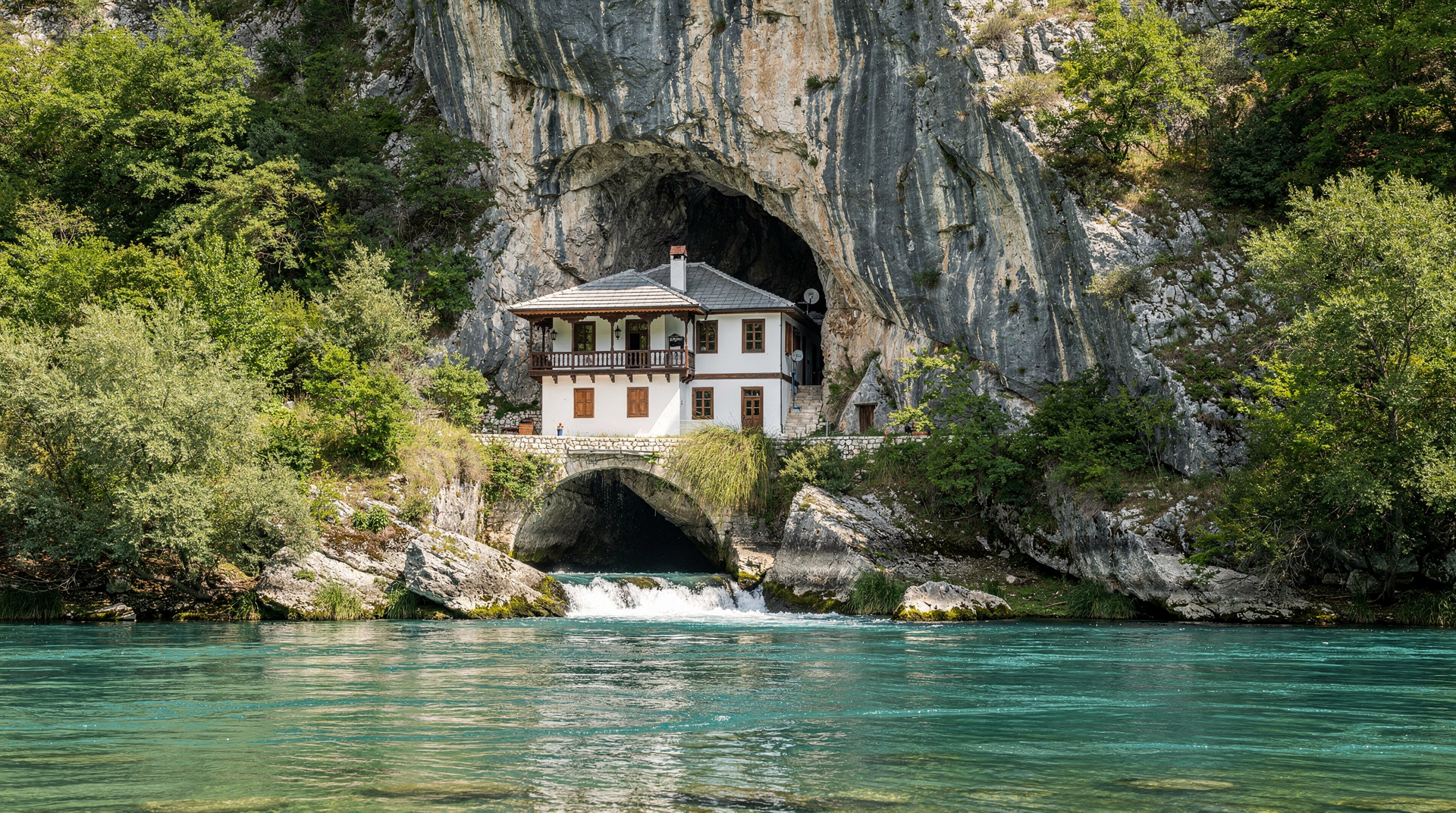
- Blagaj Tekija (the Dervish monastery at the source of the Buna — one of the most beautiful sites in Bosnia)
- Medjugorje (2-3 hours)
- Počitelj (Ottoman hilltop village)
- Kravice Falls (swimming and lunch in season)
This structure gives pilgrims their time at the apparition site while ensuring the broader group has enough variety to make the full day rewarding. Tour operators from Mostar, Sarajevo and Dubrovnik all offer versions of this circuit. If you would rather not organise the logistics yourself, a day that pairs Mostar, Medjugorje and Kravice with a farm meal gives a mixed group a little of everything.
The honest question of authenticity
Critics of Medjugorje — and there are many, including within the Catholic Church — point to the length of the alleged apparitions (40+ years), the prominent public profiles of some visionaries, and the commercial scale of the operation as grounds for scepticism. Some bishops of Bosnia-Herzegovina have historically been cautious about the claims.
Supporters — including large numbers of clergy and lay Catholics — point to the measurable spiritual fruits: priests and nuns who cite Medjugorje as the origin of their vocation, people who describe profound conversion experiences, prayer communities that formed around Medjugorje’s messages and still meet globally.
This guide takes no position. The Vatican’s 2024 document is the most authoritative current statement, and its deliberately careful language — encouraging pilgrimage while reserving judgement on the supernatural dimension — reflects the genuine theological complexity.
The practical answer to “is it worth it”
Go if: You are a Catholic pilgrim, interested in religious pilgrimage culture, researching the phenomenon journalistically, or are part of a group that includes someone for whom Medjugorje is meaningful.
Skip or combine if: You are a secular traveller on a tight itinerary focused on history, landscape and food. The hour or two at Medjugorje is most valuable when embedded in a wider Herzegovina day, not as a standalone destination.
Plan around if: You actively dislike heavy religious commercialisation. The approach to and immediate area of St James Church in peak season (summer, major feast days especially) is genuinely overwhelming — dense crowds, aggressive souvenir selling, emotionally heightened atmosphere.
For the full pilgrimage planning guide, see Medjugorje pilgrimage guide. For a wider look at religious sites in the region, the Blagaj Tekija guide covers one of Bosnia’s most beautiful and peaceful spiritual destinations.
What to actually plan for a visit
Whichever camp you fall into, a few practical points help set expectations. St James Church itself has no entry fee and no fixed dress requirement enforced at the door, though modest dress (covered shoulders and knees) is expected and generally observed. Apparition Hill and Cross Mountain require sturdy footwear — the rocky paths are genuinely uneven, not a stylised “pilgrim path,” and flip-flops or thin sandals make for a miserable, slow climb. Evening mass times vary by season and language rotation; check the parish schedule on arrival rather than assuming a fixed time.
For accommodation, Medjugorje has an enormous supply of pilgrim-oriented guesthouses and hotels, most block-booked by tour groups in peak season (especially around the apparition anniversary in June and major summer feast days). Independent travellers visiting outside those windows will find rooms easily; those visiting during peak pilgrimage weeks should book well ahead.
Choosing the right moment and the right pace
Medjugorje rewards a slow visit more than a rushed one. Arriving at midday, walking past the souvenir shops, glancing at the church and leaving gives the impression of a retail strip. Staying for the late afternoon and evening, when the church grounds fill with people at prayer, gives a very different picture. If your schedule allows only one thing, make it the evening gathering rather than the shops or a quick photo stop.
Timing matters too. The busiest periods are described in the best time to visit Bosnia guide in general terms, and Medjugorje follows its own calendar on top of that: the June anniversary and major feast days bring the largest crowds. Quieter spring and autumn weeks are easier on secular visitors, and the Bosnia in autumn and Bosnia in spring guides explain what else those seasons offer in Herzegovina. If crowds are your main worry, the avoiding crowds in Bosnia guide has wider tactics.
How to read the two climbs
The two hills are the physical heart of the visit, and they feel different. Apparition Hill is shorter and more intimate: small groups pause to pray at stations along the rocky path, and the mood is quiet and inward. Cross Mountain is a longer effort with a clear sense of progress from one station to the next, finishing at the cross with a wide view over the surrounding Herzegovinian landscape. Pilgrims often treat it as the more demanding of the two, physically and emotionally.
If you are not religious, you can still do either climb as long as you move quietly and give people space on the narrow sections. Take water, wear closed shoes and avoid the hottest part of the day in summer. The dedicated Apparition Hill guide goes into the route in more detail, and the Medjugorje destination page gives the wider overview of the village and its surroundings.
Travelling with a mixed group
The hardest version of this decision is a family or friend group where one person wants to be here and the others do not. A workable approach is to agree in advance on the shape of the day. Pilgrims take the church and the climb they came for; others can wander, sit with a coffee or simply take in the atmosphere, then everyone regroups for the rest of the circuit. Nobody is obliged to take part in anything, and nobody needs to apologise for being curious rather than devout.
For these groups the surrounding region does a lot of the work. A day that continues to Blagaj, Počitelj and the waterfalls near Kravice gives everyone something they came for. The Kravice Waterfalls guide and the Počitelj Ottoman village guide help you decide how much time to give each stop, and the Mostar day trip options show where this circuit sits among the alternatives.
Where to base yourself
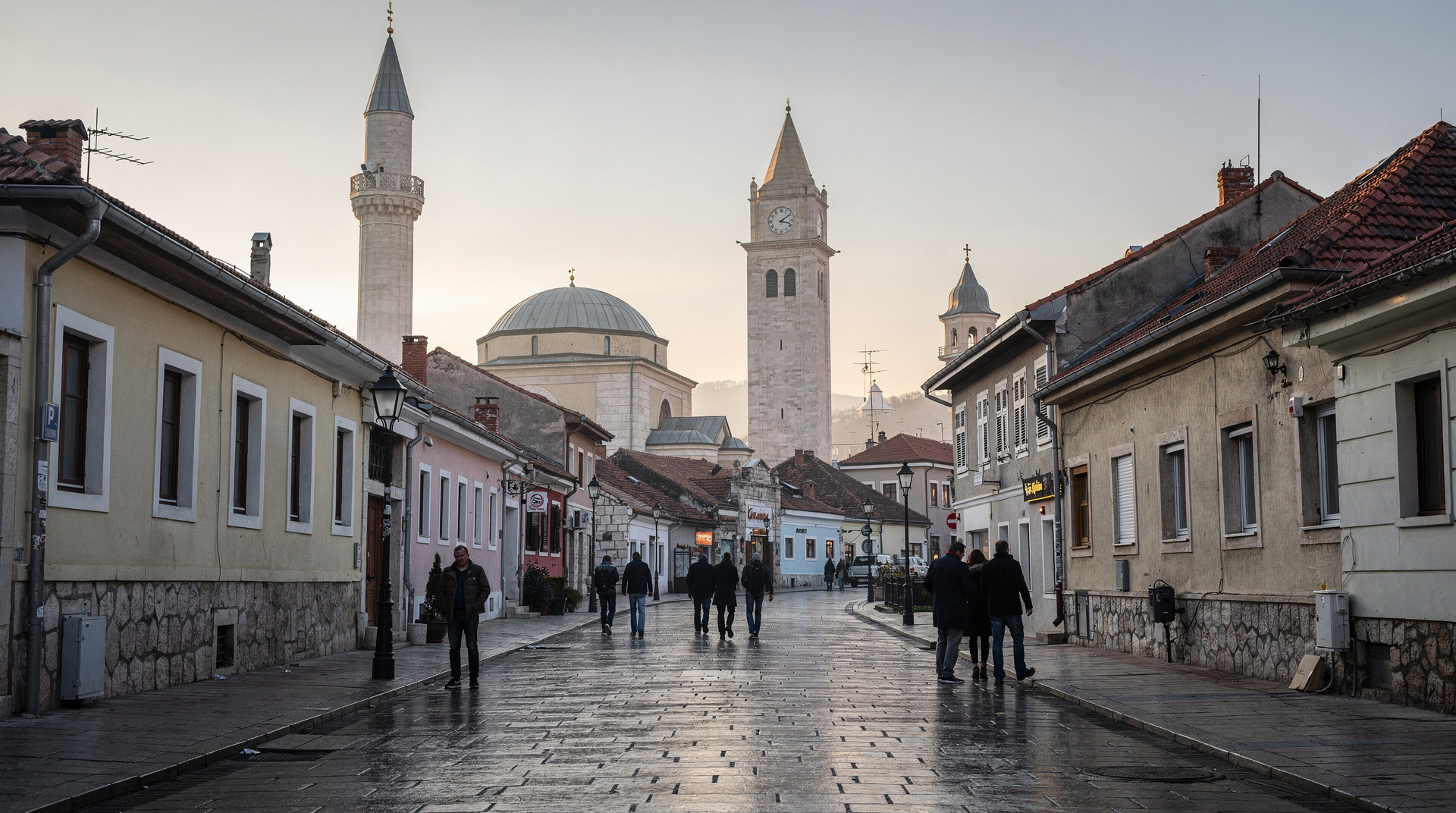
You do not have to sleep in Medjugorje to see it. Many visitors stay in Mostar, which has a much wider choice of restaurants and a historic centre to explore in the evening, and treat Medjugorje as an excursion. The Mostar where to stay guide helps you choose a neighbourhood. Others arrive from the coast, and for them a small-group pilgrimage day from Dubrovnik spares the driving and the border queues; the Mostar from Dubrovnik and Mostar from Split guides cover how those long days are usually organised, and the driving from Croatia to Bosnia guide explains what to expect at the border if you drive yourself.
Pilgrims, on the other hand, often prefer to stay in the village itself so that morning and evening services are within walking distance. That is a legitimate reason to choose it, and it changes the experience: you see the place before the day-trippers arrive and after they leave.
Reading other perspectives
If you want more than one voice before deciding, the site also carries a personal account in A sceptic’s visit to Medjugorje, which is useful for readers who arrive with doubts. For the wider religious picture of the country, the Sarajevo faiths guide shows how Catholic, Orthodox, Muslim and Jewish traditions share the same small country, and the Bosnia history for travellers page helps place a site like this in the longer story of the region.
Common visitor mistakes to avoid
Non-pilgrim visitors sometimes misjudge the tone of the place — treating the hillside climbs as a casual viewpoint hike rather than recognising the devotional seriousness many fellow visitors bring to it. A degree of respect and quiet, even for sceptical visitors, goes a long way and is simply good manners toward people for whom the site carries real meaning.
Frequently asked questions about Is Medjugorje worth visiting
What actually happened in Medjugorje?
Has the Catholic Church officially recognised Medjugorje?
What is Apparition Hill and Cross Mountain?
Is Medjugorje commercialised?
How far is Medjugorje from Mostar and Dubrovnik?
Is Medjugorje worth visiting as part of a Herzegovina loop?
Do I need to dress modestly to visit Medjugorje?
Is Medjugorje busy year-round?
Top experiences
Bookable activities with verified prices and instant confirmation on GetYourGuide.