Srebrenica
Visiting Srebrenica: Potočari Memorial and Cemetery, the 1995 genocide, guided study tours from Sarajevo and practical visitor information.
From Sarajevo: Srebrenica Genocide Memorial Study Tour
Quick facts
- Region
- Eastern Bosnia / Republika Srpska
- Days needed
- 1
- Currency
- BAM (1 EUR = 1.95583 KM)
- Distance from Sarajevo
- ~130 km, 2h by car
- Memorial entry
- Free
Srebrenica is a small town in eastern Bosnia, about 130 km east of Sarajevo in the Drina River valley. In July 1995, it was the site of the worst atrocity in Europe since the Second World War: the systematic killing of more than 8,000 Bosniak men and boys by Bosnian Serb forces — an act that the International Court of Justice and the International Criminal Tribunal for the former Yugoslavia have ruled to be genocide.
The Memorial Centre Srebrenica-Potočari stands at the site where the killings began. It is a place of mourning, documentation, and education. Visiting requires a degree of emotional preparation and, above all, a respectful approach. This guide is written to help visitors understand what they will encounter and how to visit thoughtfully.
| At a glance | |
|---|---|
| Where | Potočari, about 5 km north of Srebrenica town, eastern Bosnia |
| Cost | Free entry to the memorial and cemetery |
| Time needed | Around half a day, including travel from Sarajevo |
| Getting there | Guided study tour from Sarajevo, or self-drive (around 2 hours) |
| Best time | Year-round; 11 July is the anniversary commemoration |
What happened at Srebrenica
In April 1993, the United Nations Security Council declared Srebrenica a “safe area” under UN protection. By July 1995, the town and its surroundings held tens of thousands of displaced Bosniaks who had fled fighting elsewhere. On 11 July 1995, Bosnian Serb Army units under General Ratko Mladić entered Srebrenica despite the UN presence. Over the following days, Bosniak men and boys were separated from women and children and executed en masse. The bodies were buried in mass graves, later exhumed and in some cases reburied in secondary graves in attempts to conceal the evidence.
The International Criminal Tribunal for the former Yugoslavia (ICTY) convicted multiple individuals for genocide, including General Ratko Mladić (sentenced to life in 2017) and former Republika Srpska President Radovan Karadžić (sentenced to life in 2019). The event is internationally recognised as genocide by numerous states and international organisations.
Potočari Memorial and Cemetery
The Memorial Centre Srebrenica-Potočari occupies the former UN compound at Potočari, about 5 km from Srebrenica town. It consists of:
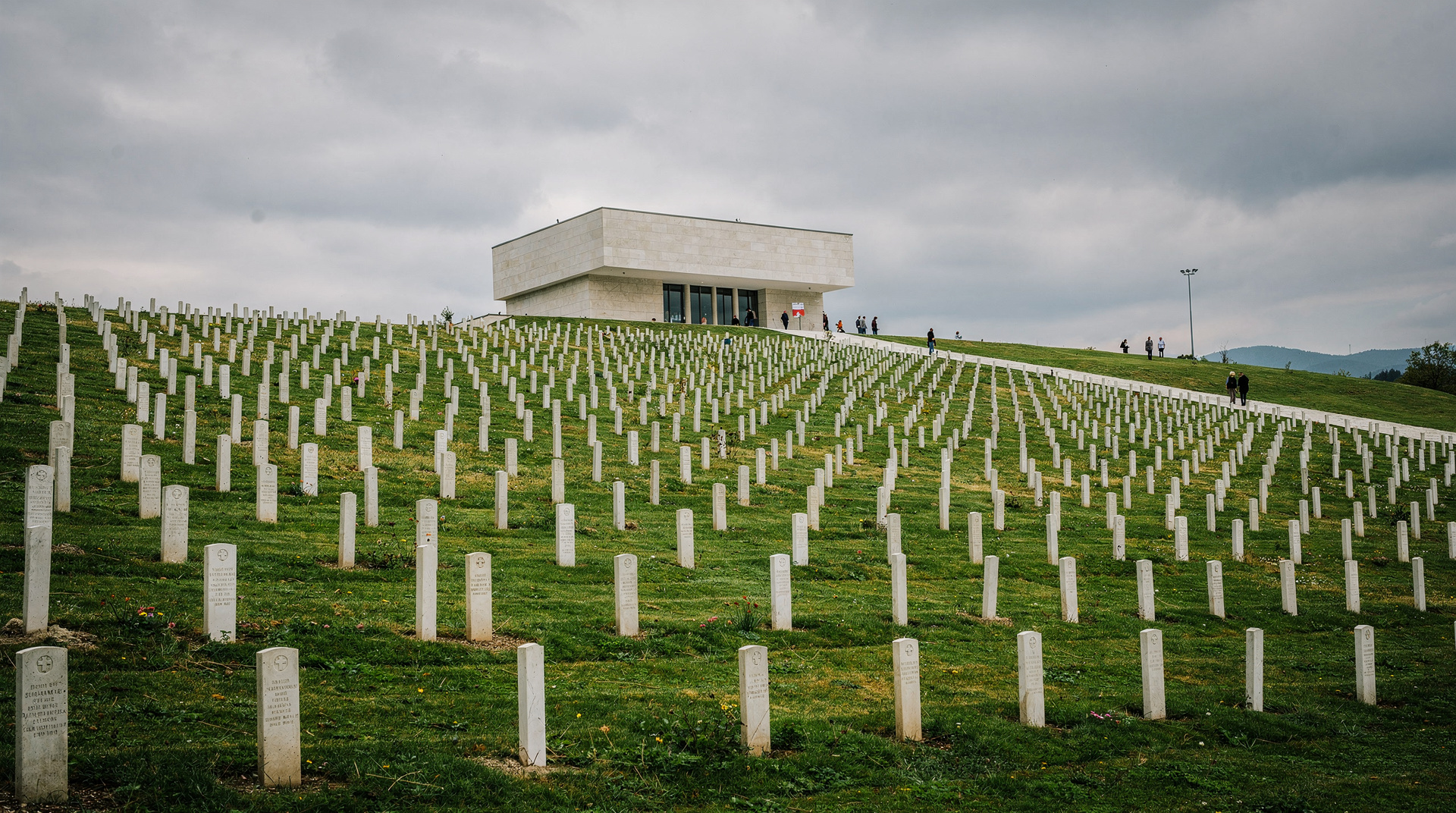
- The Memorial Building: The former battery factory that served as the UN base and shelter. The exhibition inside documents the fall of the enclave with photographs, testimonies, maps and artefacts. It is thorough, sober and essential viewing before walking the grounds. Allow 60–90 minutes.
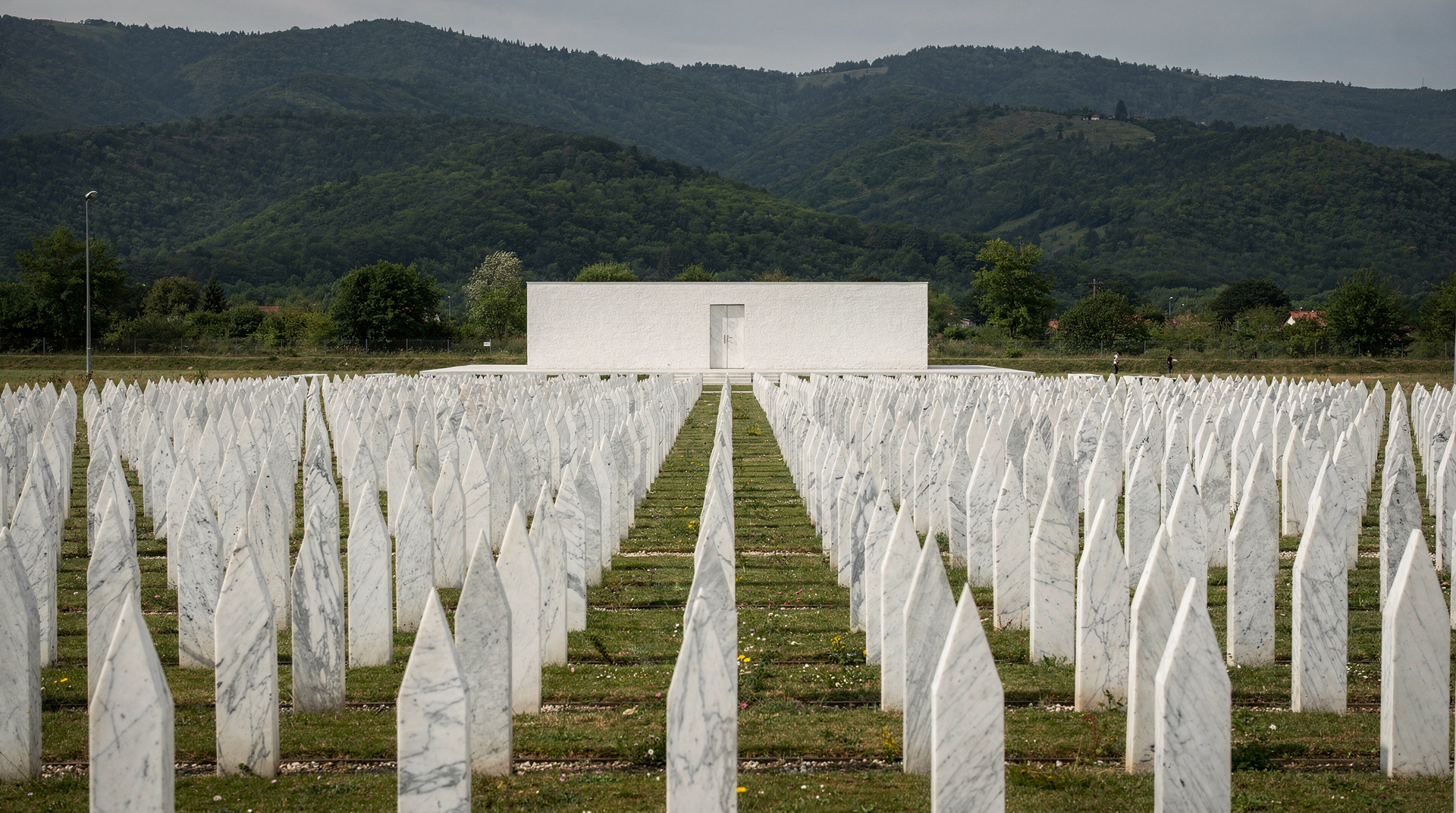
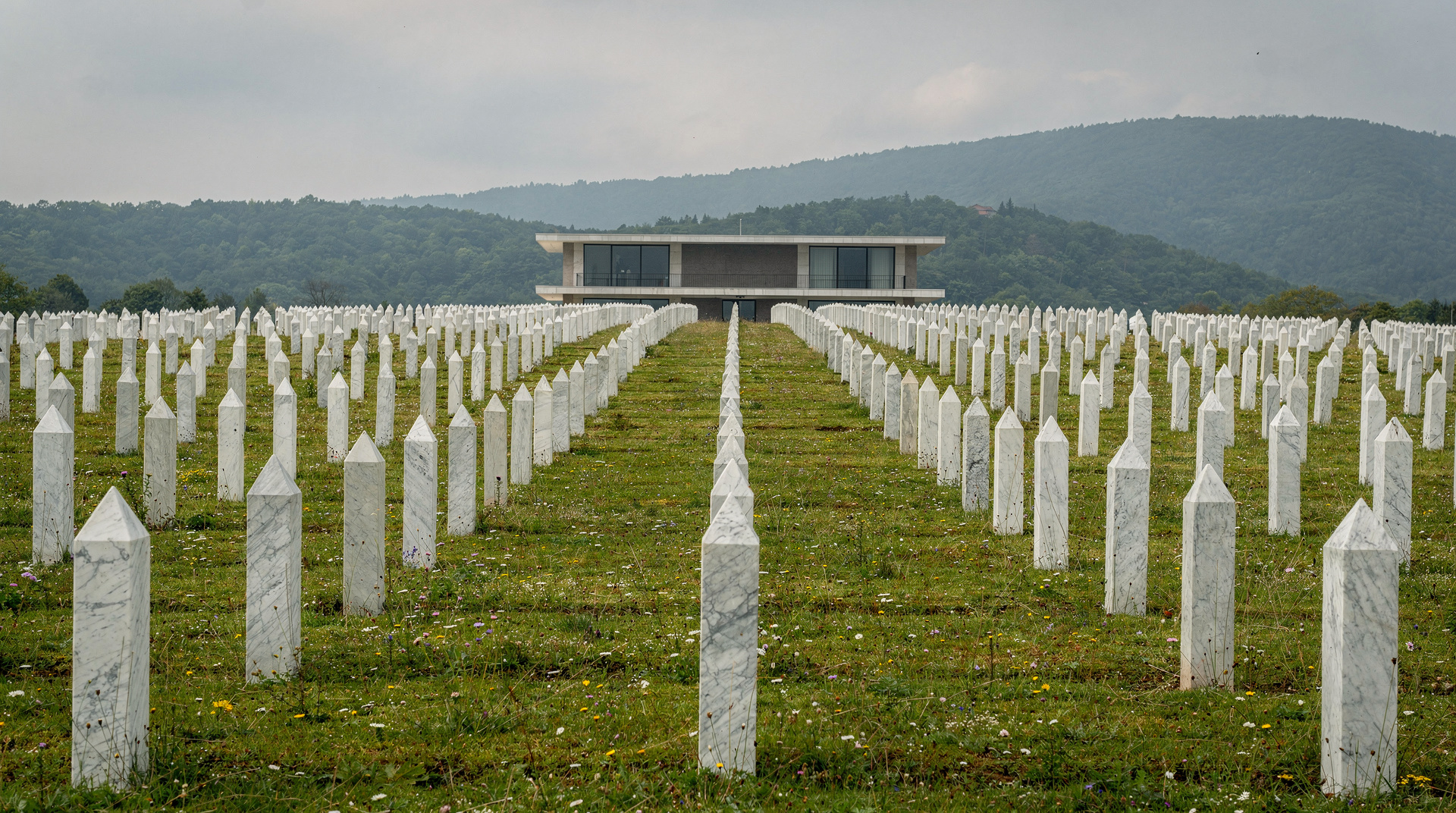
- The Cemetery: Rows of white stone markers stretching across a hillside mark identified victims. New graves are added each year on 11 July as more victims are identified through DNA analysis. The cemetery is open and quiet; spend time here in silence.
- The Wall of Names: A wall bearing the names of the more than 8,000 identified victims.
Entry to the memorial is free. The centre is open daily from 8:00 to 16:00 (extended hours in summer). Photography is permitted in the museum but be discreet and respectful in the cemetery. Do not treat this as a photographic opportunity in the touristic sense.
Visiting with a guide
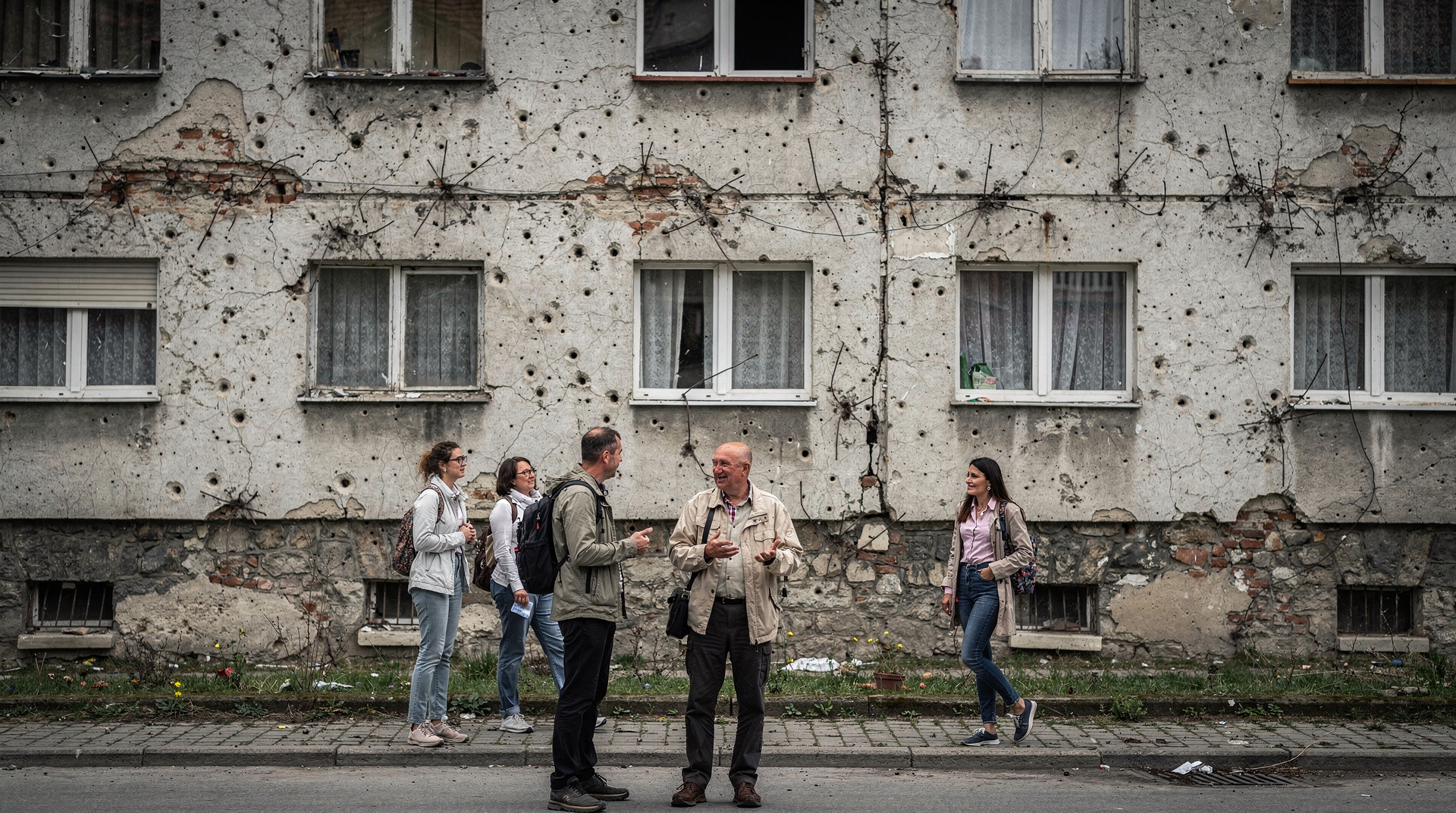
The most meaningful way to visit Srebrenica is with a knowledgeable guide, ideally one who can explain the political and military context, the international response, and the ongoing process of identification and burial. A Srebrenica study tour from Sarajevo includes a guide throughout, transport, and typically a meeting with a survivor or memorial staff member — a dimension that transforms the visit from sightseeing to genuine understanding.
Independent visitors are welcome at the memorial, but without context the exhibition can be difficult to fully absorb. Guided audio tours and printed guides in English are available at the entrance.
A more straightforward Srebrenica day trip from Sarajevo is another option, covering transport and the memorial with a smaller group.
The town of Srebrenica
Srebrenica itself is a small, economically depressed town. Visitors generally spend most of their time at Potočari and do not linger in the town centre beyond a brief stop. There are a few cafes and a small market, but no significant additional sights. The landscape of the Drina valley is quietly beautiful — rolling forested hills, the river below — which makes the weight of what happened here all the more stark.
11 July anniversary
Each year on 11 July, the anniversary of the fall of the enclave, a major commemoration takes place at Potočari. Newly identified victims are buried in a communal ceremony attended by survivors, families, foreign dignitaries and thousands of visitors from across the region and the world. If your dates allow, attending the commemoration is a profoundly moving experience, but be prepared for large crowds and a day of intense emotional weight. Accommodation in the area books out well in advance for this date.
Practical information
- Getting there: By car from Sarajevo, take the E761 east toward Foča/Žepa, then turn north on the R442 toward Srebrenica. The drive is about 130 km and takes approximately 2 hours on winding mountain roads.
- By bus: Infrequent bus services run from Sarajevo; the journey takes 3–3.5 hours. A guided tour handles transport more reliably.
- Accommodation: No tourist accommodation in Srebrenica itself. Base in Sarajevo and visit as a day trip, or book in Tuzla (around 80 km north) if combining with other eastern Bosnia destinations.
- What to bring: Comfortable shoes for walking the cemetery grounds. Dress modestly and avoid bright tourist gear. There is a small café at the memorial centre.
- Emotional preparation: The exhibition is not graphic in the visual sense, but it is relentlessly factual and deeply affecting. Give yourself time and space after the visit.
For background reading before the trip, see the Srebrenica memorial guide and the Yugoslav wars explained guide. The Bosnia war history itinerary places Srebrenica within a broader circuit of war memorial sites across the country.
Understanding the wider context before you go
A visit to Srebrenica is more meaningful with some grounding in the broader Bosnian War (1992-95) beforehand. The Yugoslav wars explained guide covers the political breakup of Yugoslavia and how the war unfolded; the Bosnia history for travelers guide gives a shorter overview aimed specifically at visitors.
Many travellers combine Srebrenica with Sarajevo’s own war history sites, such as the Sarajevo Siege Tunnel of Hope and the Sarajevo roses memorials, to build a fuller picture of the 1990s conflict across the country. The Sarajevo war tour guide covers how these sites are typically combined.
Combining Srebrenica with the rest of eastern Bosnia
Because the drive from Sarajevo passes through quiet, scenic parts of eastern Bosnia, some travellers extend the day rather than returning immediately. Tuzla, about 80 km north of Srebrenica, has a small salt-lake attraction and a functioning tourist infrastructure if you need to overnight in the region rather than basing in Sarajevo. This is a niche add-on, not a requirement — most visitors are well served by a single day trip from Sarajevo and back.
Preparing yourself for the visit
Most people arrive at Potočari having read a little and expecting to feel something specific. What tends to happen is quieter and slower. The exhibition asks you to read, to look at faces in photographs, and to listen to recorded voices, and it does not hurry you. Arrive without a rigid timetable, and decide in advance that nothing else matters that day.
It helps to think about the order of your visit. Starting in the memorial building gives you the chronology, the names of places and the sequence of days, so that the cemetery outside makes sense when you reach it. Walking the grounds first and the exhibition afterwards is also possible, but many visitors find the cemetery harder to take in without the facts behind it.
If you are travelling with a partner or friends, agree beforehand that it is fine to separate and to be silent. People react differently here: some want to talk, others need to stand alone for a while. Younger travellers and families should read the Bosnia with kids guide and think carefully about whether the subject is suitable, since the material is serious and not designed for small children.
Questions of tone and behaviour
A few simple habits make the visit easier for everyone, including the survivors and relatives who may be present on any given day.
- Keep your voice low in the grounds and switch your phone to silent.
- Do not sit or lean on grave markers, and keep to the paths between the rows.
- Ask before photographing a person, and never photograph someone who is grieving.
- Avoid casual conversation about politics with strangers. Opinions about the war remain deeply personal and divided in this part of the country.
- Resist the urge to post a quick social media image; if you share anything afterwards, take time to write something considered.
For a broader sense of how visitors are expected to behave across the country, the is Bosnia safe guide and the landmine safety guide both give useful practical context, particularly if you plan to leave the main road and explore the surrounding countryside.
The journey through eastern Bosnia
The road east from Sarajevo is part of the experience. It leaves the capital’s valley behind and climbs into forested hills, passes small villages and follows river gorges before descending into the Drina valley. Roads here are slower than the map suggests, so leave generous time and do not plan to drive at night. The driving in Bosnia guide covers road conditions, fuel and the habits of local drivers, and the renting a car in Bosnia guide explains what to check before collecting a vehicle.
If you would rather not drive, the getting around Bosnia guide and the buses in Bosnia guide explain how the public network works and why a guided trip is usually the more dependable choice for a destination this far from the main routes.
Along the way you may pass close to other towns marked by the same war. The Višegrad destination page and the Višegrad bridge on the Drina guide cover another Drina valley town with its own complicated history, while the Tuzla destination page describes the larger city to the north, where many survivors and displaced families settled after the war.
Why Srebrenica belongs in a Bosnia itinerary
Bosnia is often sold to visitors as a country of old bridges, mountain villages and good coffee, and all of that is true. But a trip that skips the war entirely can feel incomplete, because the conflict still shapes daily life, politics and the landscape. Srebrenica is the clearest place in the country to understand the consequences of ignoring warnings and failing to protect civilians.
Many travellers place it between lighter days. After a morning among the lanes of Sarajevo, an afternoon at Mostar can seem very different from the memorial, and that contrast is part of understanding the country. If you are planning the order of a longer trip, the how many days in Bosnia guide and the Bosnia 7-day itinerary show how history stops can be balanced with nature and food.
For a gentler way to meet the same story in the capital, the War Childhood Museum guide and the museums of Sarajevo guide offer personal and accessible accounts of the siege years, and they make good companions to a day at Potočari.
After the visit
Give yourself an evening that is deliberately unambitious. A quiet meal back in Sarajevo, a walk, or simply an early night is usually better than a busy programme. Many people find that the visit continues to settle over the following days, and that conversations with local hosts, guides and fellow travellers take on a different depth afterwards.
If you want to keep learning, the Bosnia history for travelers guide and the Sarajevo siege remembered blog post offer personal and historical perspectives that pair well with what you have seen. Listening carefully, avoiding easy conclusions and treating local people with openness are the best ways to honour the visit.
Frequently asked questions about Srebrenica
Is it appropriate to visit Srebrenica as a tourist? Yes, provided the visit is approached respectfully as an act of remembrance and education rather than casual sightseeing. The memorial centre is designed for visitors and welcomes those who come to learn about what happened, particularly with a guide who can provide context.
How much time should I set aside for the whole trip from Sarajevo? Plan for a full day: roughly 2 hours each way by car plus 2-3 hours at the memorial itself, including the exhibition and the cemetery. Most guided study tours run from early morning to late afternoon.
Top experiences
Bookable activities with verified prices and instant confirmation on GetYourGuide.