Where to stay in Sarajevo — best neighbourhoods and hotels
Sarajevo: Old Town to Modern City Walking Tour
What is the best area to stay in Sarajevo?
Baščaršija (the old bazaar neighbourhood) is ideal for first-timers — central, atmospheric and within walking distance of all major sights. Ferhadija and the Austro-Hungarian centre offer more hotel variety. Grbavica and Ilidža suit budget travellers with slightly less convenience.
Sarajevo is a compact city for sleeping in. The main tourist corridor — from Baščaršija through Ferhadija to the Eternal Flame — is about 1.5 km long and the most practical base for a first visit. Understanding which neighbourhood suits your priorities means you won’t spend half your trip on the tram.
At a glance
| Best base for first-timers | Baščaršija old town |
| Typical price | Around 50–130 BAM (26–67 EUR) for guesthouse/private room; 130–280 BAM (67–143 EUR) mid-range/boutique |
| Distance from airport | About 8–12 km; taxi 25–35 BAM, 20–30 minutes |
| Getting around | Compact core is walkable; tram line 3 connects Ilidža to Baščaršija in 30–40 minutes |
| Best time to book | 2–4 weeks ahead for July–August; more flexible off-season |
Baščaršija and the old town — best for first-timers
Who it suits: Anyone visiting for the first time, cultural travellers, anyone who wants to walk to everything.
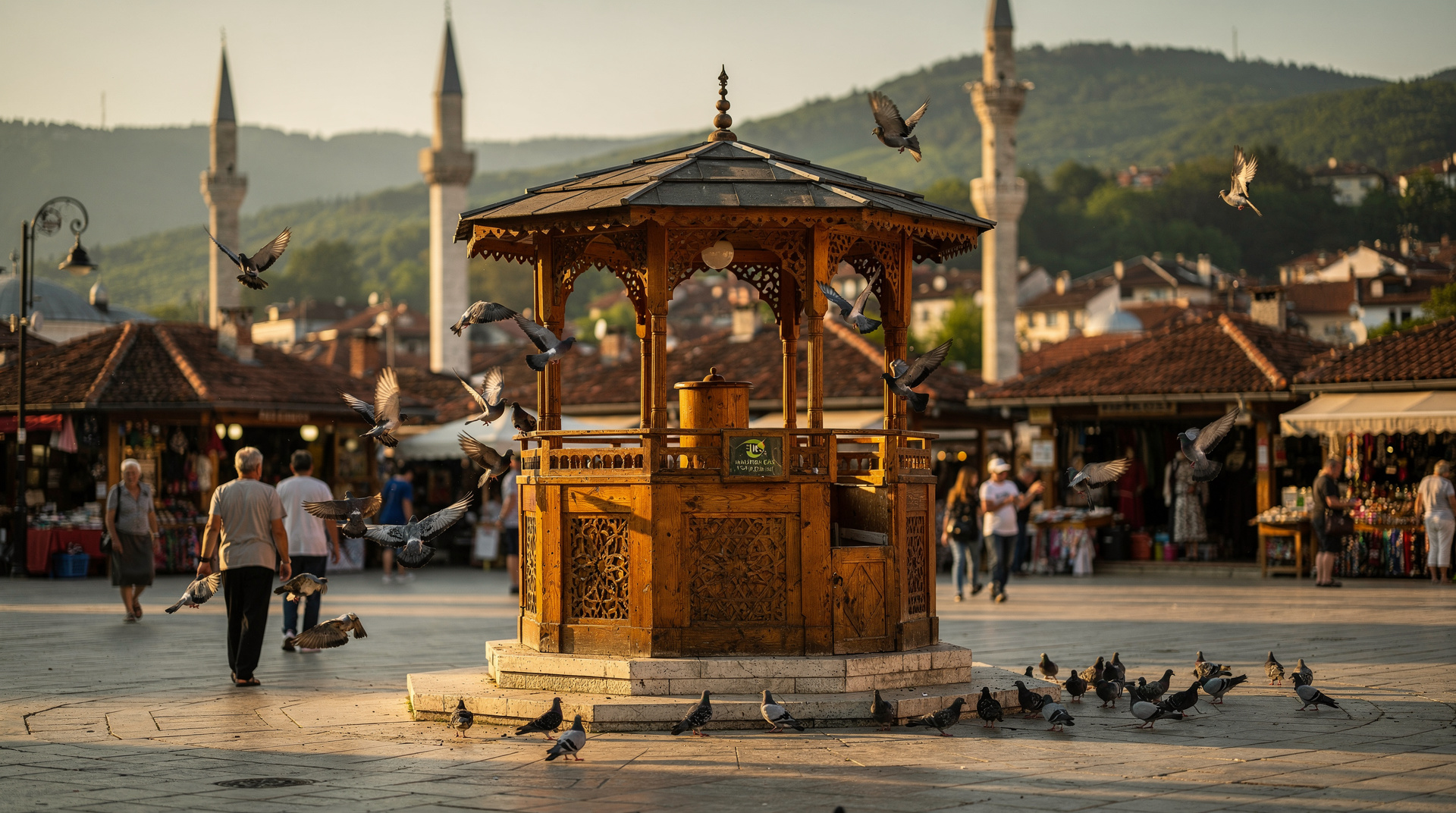
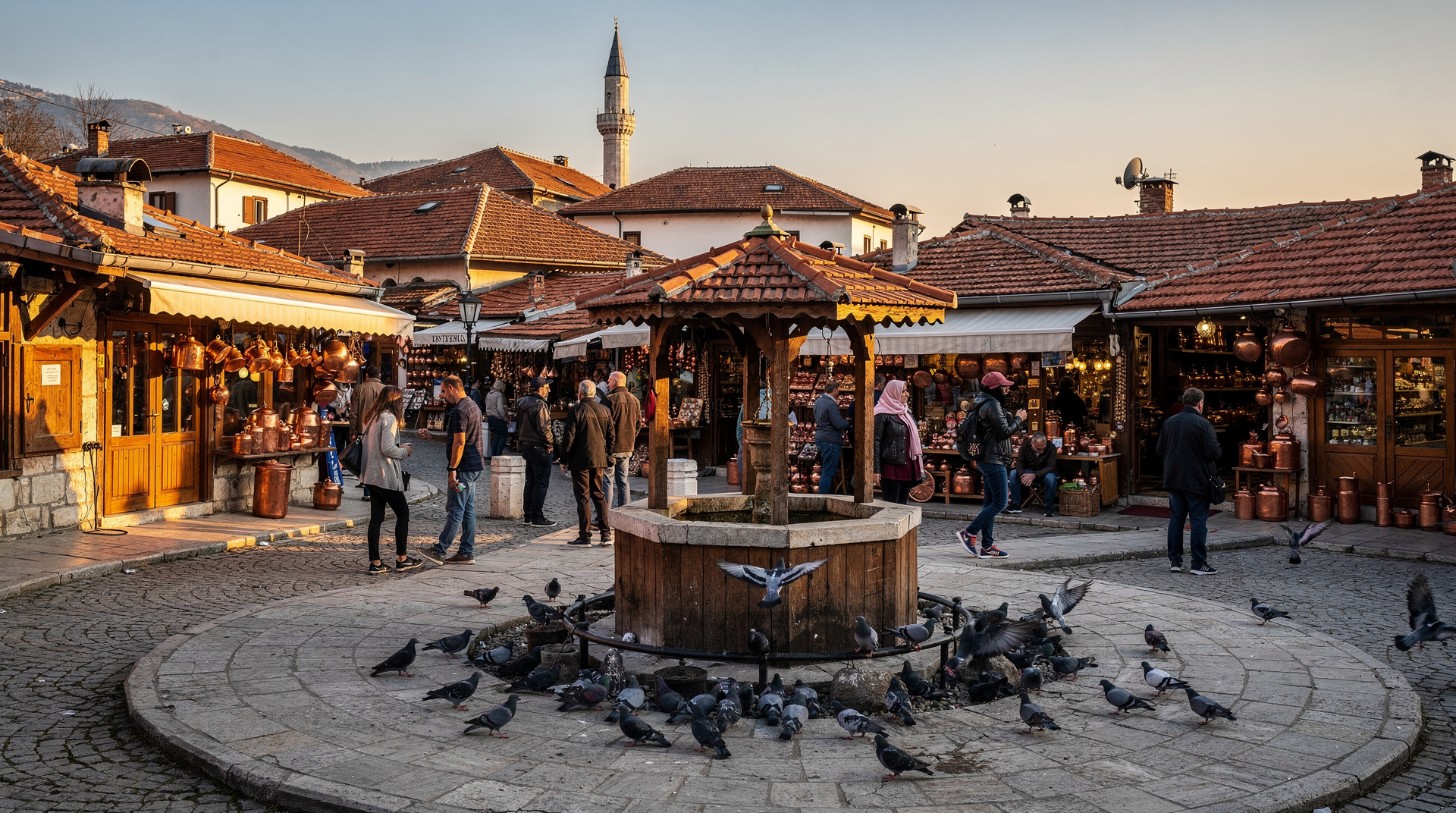
Atmosphere: The Ottoman old bazaar — cobblestones, hammered copper shops, the Sebilj fountain, domed hans. It sounds touristic because it is, but it is also genuinely beautiful and buzzes with real Sarajevo life after the day-trippers leave in the evenings.
Accommodation range: Mostly small guesthouses and pansions in renovated buildings. Boutique hotels have opened in the last decade. Price range: 50–250 BAM (26–128 EUR)/night for private rooms.
Walking distance: All four faith sites (mosque, cathedral, Orthodox church, synagogue), war history museums, the best restaurants, city market, evening kafanas. The Tunnel of Hope requires a taxi or tram.
Noise: Some areas close to the bazaar can be noisy until midnight in summer with café culture. Streets one block back are quiet.
Recommended accommodation types: Heritage houses converted to pansions (Pansion Čobanija, Pansion Boja), small boutique hotels (Residence Rooms), and a handful of well-run hostels (Hana Hostel, Franz Ferdinand Youth Hostel).
Start your Sarajevo stay with an old town walking tour — it covers the Baščaršija core and the four faith sites in 2–3 hours, instantly orienting you to the city’s layout.
Ferhadija and the Austro-Hungarian centre
Who it suits: Mid-range travellers who prefer hotel amenities, business visitors, those arriving late or departing early.
Atmosphere: The Habsburg new town built in the 1880s–1910s — wider streets, neo-Gothic cathedral, trams, a European café culture that sits comfortably alongside the adjacent Ottoman quarter. Less atmospheric than Baščaršija but more familiar to Western European hotel expectations.
Accommodation range: A good concentration of mid-range and business hotels (Hotel Terme, Hotel Saraj, Courtyard by Marriott, Hotel Central). Prices: 120–280 BAM (61–143 EUR)/night.
Walking distance: About 5–10 minutes’ walk from Baščaršija’s western end. The Sacred Heart Cathedral, the National Museum and the Eternal Flame are all in this zone.
Notable hotels: Hotel Europe (a Sarajevo institution since 1882, recently renovated, 200–350 BAM/night), Courtyard Sarajevo (reliable international standard, 160–250 BAM/night), Hotel Terme.
Marijin Dvor and the city centre
Who it suits: Those wanting proximity to museums, the National Theatre and the Vijećnica (City Hall).
Atmosphere: More commercial, less charming. The wide Titova/Zmaja od Bosne boulevard was the front line during the siege — now it is an urban arterial road with glass office buildings and the Holiday Inn (famous from war-era journalism). Not a neighbourhood to linger in, but convenient.
Accommodation range: Larger hotels and some modern apartment rentals. Holiday Inn Sarajevo (240–380 BAM/night) is the big name here. Apartment rentals on Airbnb tend to be cheaper than hotels.
Walking distance: 15 minutes from Baščaršija or one tram stop.
Grbavica and Kovačići — budget options outside the centre
Who it suits: Budget backpackers, long-stay travellers.
Atmosphere: Residential neighbourhoods south and east of the centre, functional rather than beautiful. Named by the excellent Sarajevo food tour operator (the Grbavica food tour is the best in the city — see the food tour guide).
Accommodation range: Cheaper private rooms, some Airbnb apartments. Private rooms from 40–70 BAM (20–36 EUR)/night.
If you sleep here, it is worth turning the neighbourhood into an advantage: a guided food tour through Grbavica’s local eateries lets you eat where residents eat, right on your doorstep, and then walk or tram back to your room.
Transport: Tram lines connect to Baščaršija in 15 minutes. Walkable to the centre via Ferhadija.
Ilidža — near the airport, far from the action
Who it suits: Very early/late flights only.
Atmosphere: A suburban spa town at the western end of the Sarajevo valley. The Vrelo Bosne springs and nature park are nearby and pleasant. But Ilidža is 10–12 km from Baščaršija and the tram journey takes 40 minutes.
Accommodation range: Mid-range hotels catering to business travellers and domestic spa visitors. Hotel Terme Ilidža is the main option.
Recommendation: Don’t stay here unless your flight logistics require it.
Practical checklist for booking
Book ahead for July–August: Sarajevo’s best guesthouses sell out weeks in advance in peak season. The small boutique properties in Baščaršija especially.
Check check-in times: Many small guesthouses have strict check-in windows (e.g. 14:00–22:00). Communicate arrival times in advance.
Parking: Only relevant if driving. Baščaršija has limited parking; hotels in the centre offer paid underground parking (15–25 BAM/day). If you are renting a car, choose accommodation with parking included.
Noise sensitivity: Street-facing rooms in Baščaršija face café noise until late. Request a courtyard room if you are a light sleeper.
Budget per night summary
| Type | Price (BAM) | Price (EUR) |
|---|---|---|
| Hostel dorm | 20–35 | 10–18 |
| Budget private room | 50–80 | 26–41 |
| Guesthouse/pansion | 80–130 | 41–67 |
| Mid-range hotel | 130–200 | 67–102 |
| Boutique hotel | 160–280 | 82–143 |
| High-end hotel | 200–400 | 102–204 |
For context: a budget room in Sarajevo that would cost 75 BAM (38 EUR) typically compares to accommodation that would cost 80–120 EUR in Dubrovnik or 60–90 EUR in Mostar.
Choosing by what you want to see
The right neighbourhood often follows from your trip’s theme. If war history is your focus, a base in or near Baščaršija keeps you close to the Sarajevo war tour guide stops, the siege and Tunnel of Hope guide departure points and the War Childhood Museum. The Sniper Alley guide follows the boulevard that runs past Marijin Dvor, so staying there makes that walk easy to fit in.
If you are drawn to architecture and the layering of empires, the Ferhadija side is the better fit. The Austro-Hungarian Sarajevo guide and the Ottoman heritage guide both start within a short walk of the central hotels, and the mosques guide lists places of worship you can visit without a taxi.
Food-focused travellers should favour the old town too. The best restaurants in Sarajevo, the čevapi guide, the burek and pita guide and the Bosnian coffee culture guide all point to places a few minutes’ walk from the bazaar, which means you can eat late and still walk home.
What to expect from the guesthouses
Small family-run pansions are the signature accommodation of the old town, and they work differently from chain hotels. Reception may not be staffed around the clock, breakfast is often simple and homemade, and hosts are usually happy to suggest where to eat or how to reach the bus and train stations. Many occupy converted heritage houses, which brings charm and a few quirks: steep stairs, compact bathrooms and thick walls that keep rooms cool in summer but can be slow to warm up in winter.
If you are visiting in the colder months, read the winter in Sarajevo and Christmas guide and check that your room has reliable heating before you book. The Sarajevo in winter blog post gives a first-hand feel for how the city behaves when it is cold, and why a central base matters even more when the days are short.
Matching your base to your trip length
On a short stay, convenience beats everything else. Pick the old town or the Ferhadija area, drop your bags and spend your time walking rather than commuting. On a longer visit, you can mix: a few nights in the old town for atmosphere, then a quieter base in a residential area if you plan to use Sarajevo as a hub for excursions.
The best day trips from Sarajevo and the best day hikes from Sarajevo both start from the city, and an early departure is easier when you can reach the pick-up point on foot. For a fuller plan, the Sarajevo 4-day deep dive and the Sarajevo and Mostar in 3 days itinerary show how nights are usually split between bases. If you are travelling the length of the country, the Bosnia 7-day itinerary will help you decide how many nights to give the capital.
Making the most of your first morning
Wherever you sleep, your first morning sets the tone. Hosts in the old town will often suggest a route, but many visitors prefer to have it structured: a guided walking tour through the city’s layers of history and cultures is an easy way to learn the street plan while your room is still being prepared, and it helps you judge whether you chose the right neighbourhood for the rest of your stay.
First-hand impressions
Travellers who write about their stays tend to say the same thing: the old town feels different after dark, when day visitors have gone and the lanes quiet down. The first time in Sarajevo blog post and the Sarajevo cafés we love post capture that atmosphere, and both are good reading before you pick a neighbourhood. For a wider look at the city itself, see the Sarajevo destination page.
Frequently asked questions about staying in Sarajevo
How many nights should I stay in Sarajevo?
For a first visit, two nights is the minimum to cover the key sights without rushing. Three nights is comfortable and allows a day trip (Jajce, Visoko, Konjic, or a Herzegovina excursion). See the how many days guide for full itinerary logic.
Are there good options for families with children?
Yes. Family guesthouses in the outer neighbourhoods tend to have more space. The Holiday Inn and Courtyard Marriott are more family-friendly than boutique Ottoman-house guesthouses (which can have steep staircases and small rooms). See the family activities guide for what to do with children.
Is there a good neighbourhood for nightlife?
Baščaršija and the adjacent Ferhadija street have Sarajevo’s most active evening scene — kafanas, bars, restaurants open late. The Inat Kuća area by the river is atmospheric. Sarajevo is not a party city on the Dubrovnik/Split scale but has a genuine local bar culture.
Getting to and from your hotel
Most travellers arrive via Sarajevo Airport, around 20-30 minutes by taxi from Baščaršija (25-35 BAM). If you’re travelling onward overland, the getting around Bosnia guide covers buses and the scenic Sarajevo–Mostar train, both of which are easiest to reach from a central old-town base. Within the city, Baščaršija and Ferhadija are entirely walkable; anywhere further out relies on Sarajevo’s tram network, which is cheap but adds 20-40 minutes each way depending on the stop.
Your hotel’s distance from Baščaršija decides how much of each day goes on trams, so check the map pin before the photos. A room outside the walkable core can look like a saving until the daily commute is counted, and the Mostar train is easier from a central base. Compare rooms with free cancellation in your chosen area, then read the Booking.com listings for Sarajevo stays.
How Sarajevo compares to Mostar for accommodation
If your trip includes both cities, expect Sarajevo’s old town prices to run slightly higher than equivalent guesthouses in Mostar for a comparable location and standard — see the Mostar where to stay guide for a direct comparison. Both cities reward booking a central, walkable base over a cheaper but inconvenient one; the time saved not commuting by tram or taxi is usually worth more than the price difference. For overall trip budgeting including accommodation, the Bosnia on a budget guide has fuller numbers.
A note on the city’s religious geography
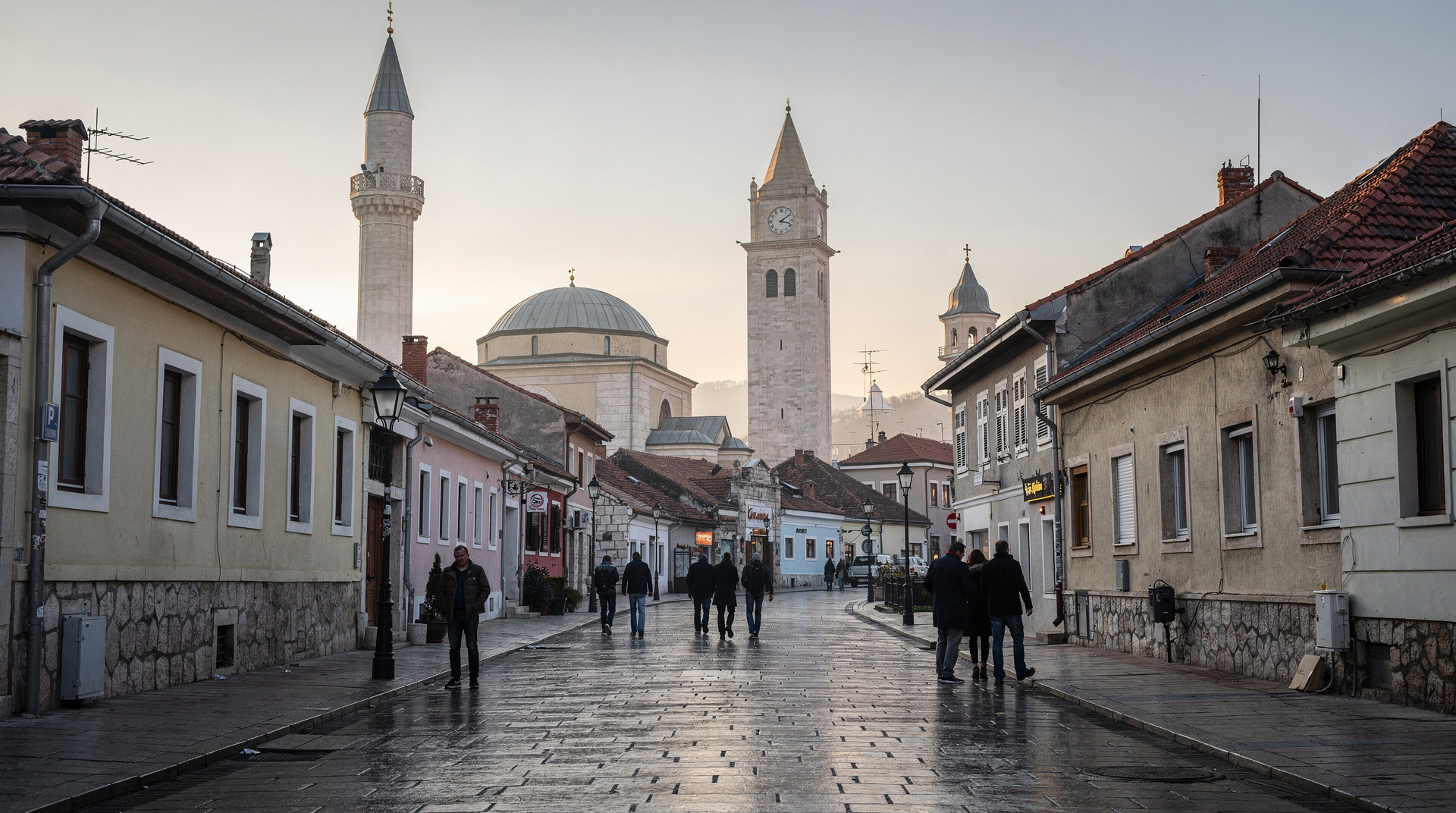
Part of what makes central Sarajevo special as a base is that the Gazi Husrev-beg Mosque, the Sacred Heart Cathedral, the Orthodox Cathedral Church and the Old Synagogue all sit within a few hundred metres of each other in or near Baščaršija — a legacy of Sarajevo’s centuries as a meeting point of faiths. Staying in the old town puts you within walking distance of all four; see the Sarajevo faiths guide for the full story.
Top experiences
Bookable activities with verified prices and instant confirmation on GetYourGuide.