Landmine safety in Bosnia
From Sarajevo: Lukomir Village Hiking Tour with Guide
Are landmines a real danger for tourists in Bosnia & Herzegovina?
Landmines are a real but highly localised hazard. They are not present in cities, on marked tourist routes or along maintained hiking trails. The risk exists in unmarked rural areas, abandoned land and off-trail mountain zones in regions affected by the 1992-1995 war. Staying on marked paths eliminates virtually all risk for tourists.
Bosnia & Herzegovina is a safe and rewarding travel destination. But it carries one hazard that has no equivalent in most other European countries: unexploded landmines, a legacy of the brutal 1992-1995 war that are still present in parts of the countryside more than three decades later.
This is not a reason to avoid Bosnia. It is a reason to understand the risk clearly, know the rules that eliminate it almost entirely, and plan your mountain excursions accordingly.
At a glance
| Where the risk is | Unmarked rural land, abandoned farmland and off-trail mountain zones, mostly in central and eastern Bosnia |
| Where it isn’t | Cities, marked hiking trails, national park visitor areas, all major tourist routes |
| The rule | Stay on the marked path, road or trail — always |
| What to do if unsure | Stop, retrace your steps exactly, call 112 |
| Status | An estimated 65,000-80,000 mines remain uncleared as of 2025; full clearance is not expected before the 2040s |
How the landmine problem came about
The 1992-1995 Bosnian War involved shifting front lines across much of the country. All sides planted landmines — anti-personnel and anti-vehicle — along defensive positions that often ran through forests, mountainsides, agricultural land and village outskirts. When the war ended, the exact location of millions of mines was poorly documented or not documented at all.
Bosnia Mine Action Centre (BHMAC) was established to lead the demining process. Since 1998, enormous progress has been made: hundreds of millions of square metres cleared, thousands of mines and explosive remnants removed. But the scale of the original problem was immense. As of 2025, an estimated 65,000-80,000 mines remain, spread across roughly 1,100 km2 of territory that is still considered potentially contaminated.
That territory is not randomly distributed. It correlates strongly with the former front-line positions and defensive perimeters of the war — not with tourist routes, maintained hiking paths or urban areas.
Where the risk is low or negligible
The following locations and activities carry negligible landmine risk for tourists:
Cities: Sarajevo, Mostar, Banja Luka, Bihać, Trebinje, Tuzla, Zenica and all urban areas are completely clear. Zero risk.
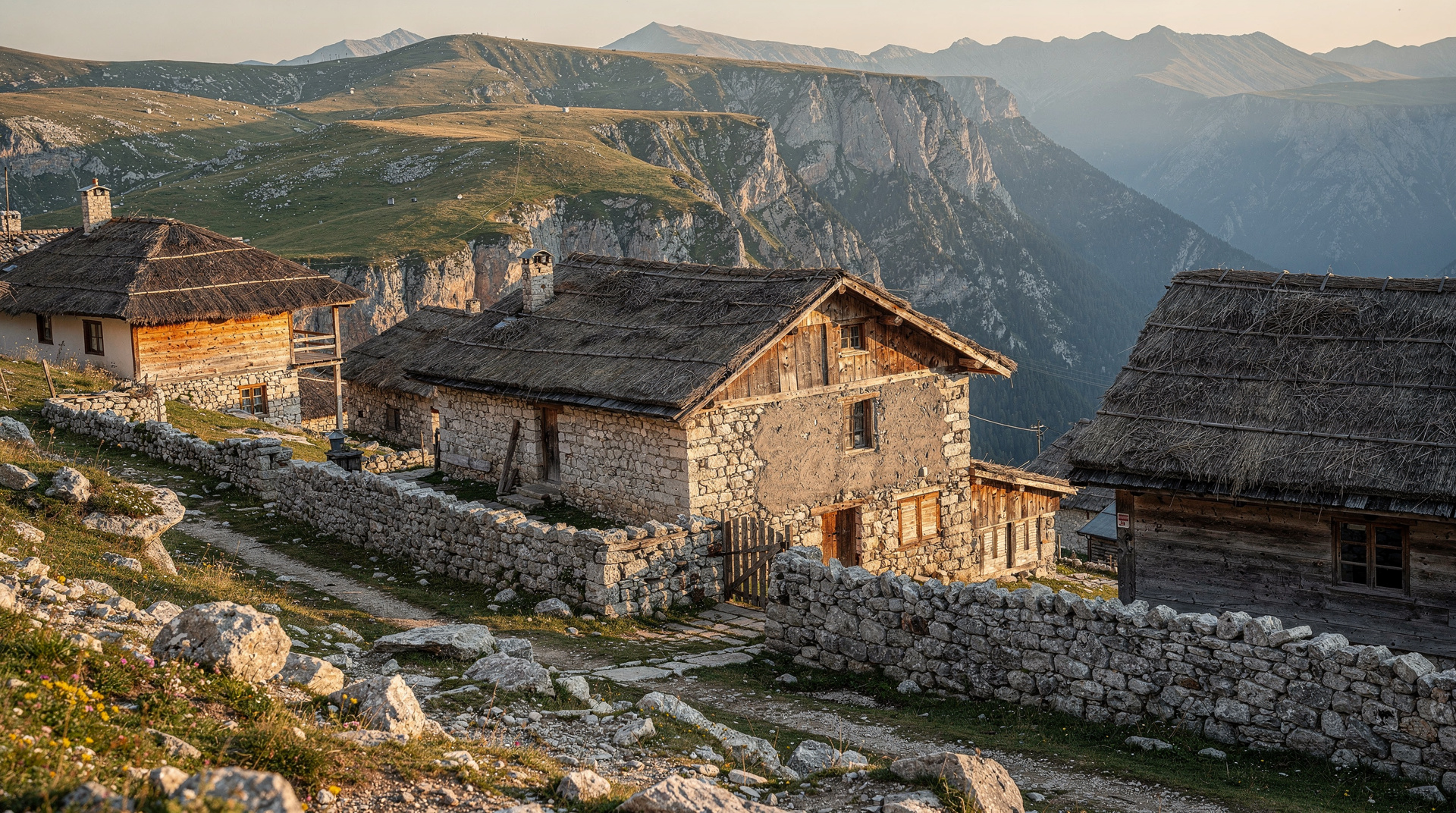
Main tourist routes: The roads and official visitor areas of all national parks (Sutjeska, Una) are cleared and maintained. Marked hiking trails on Bjelašnica, Jahorina, Igman and Trebević are safe. Lukomir village and its access route from Umoljani are regularly used by guided groups. The Neretva canyon road and riverside at Konjic is clear.
Guided tours: Any reputable guided hiking, 4x4 or trekking tour operates only on verified safe routes. Guide operators are fully aware of mined and cleared zones. Booking a guided hike to Lukomir or a Sutjeska trekking tour removes the navigation uncertainty entirely.
Major day-trip destinations: Kravice Falls, Blagaj, Počitelj, Medjugorje, Jajce, Travnik, Višegrad — all are completely safe, with well-maintained access routes.
Specific popular hikes: The Lukomir village hike, the Sutjeska National Park trails around Tjentište, the Maglić summit route and the marked stages of the Via Dinarica in Bosnia are all established, regularly walked routes that carry no meaningful landmine risk as long as you stay on the trail.
Where the risk exists and must be taken seriously
The remaining risk concentrates in specific categories of land:
Abandoned or overgrown farmland: Agricultural land that has been unused since the war, particularly on hillsides and in valleys that were contested front-line positions, may be contaminated. Do not wander into overgrown fields that are not visibly active (no signs of livestock, cultivation or recent human activity).
Forests away from marked trails: Off-trail forest exploration in central and eastern Bosnia — particularly around Srebrenica, Foča, Goražde, the Prenj massif, parts of Sutjeska outside visitor areas and the upper Konjic municipality highlands — carries genuine risk. The mine density is lower than immediately post-war, but the risk of encountering an uncleared mine is not zero.
War-era structures and ruins: Abandoned buildings, bunkers and fortifications from the war era should be approached with extreme caution or avoided entirely. These were the locations of defensive positions and are statistically more likely to have uncleared ordnance nearby.
Mountain zones without trail markings: On high-altitude terrain, trails are sometimes intermittently marked. If you lose the trail and find yourself in unmarked terrain, stop and return on the path you came from. Never cross fields or ridgelines not on the established route.
The four rules for safe hiking in Bosnia
These four rules eliminate virtually all landmine risk for tourists:
-
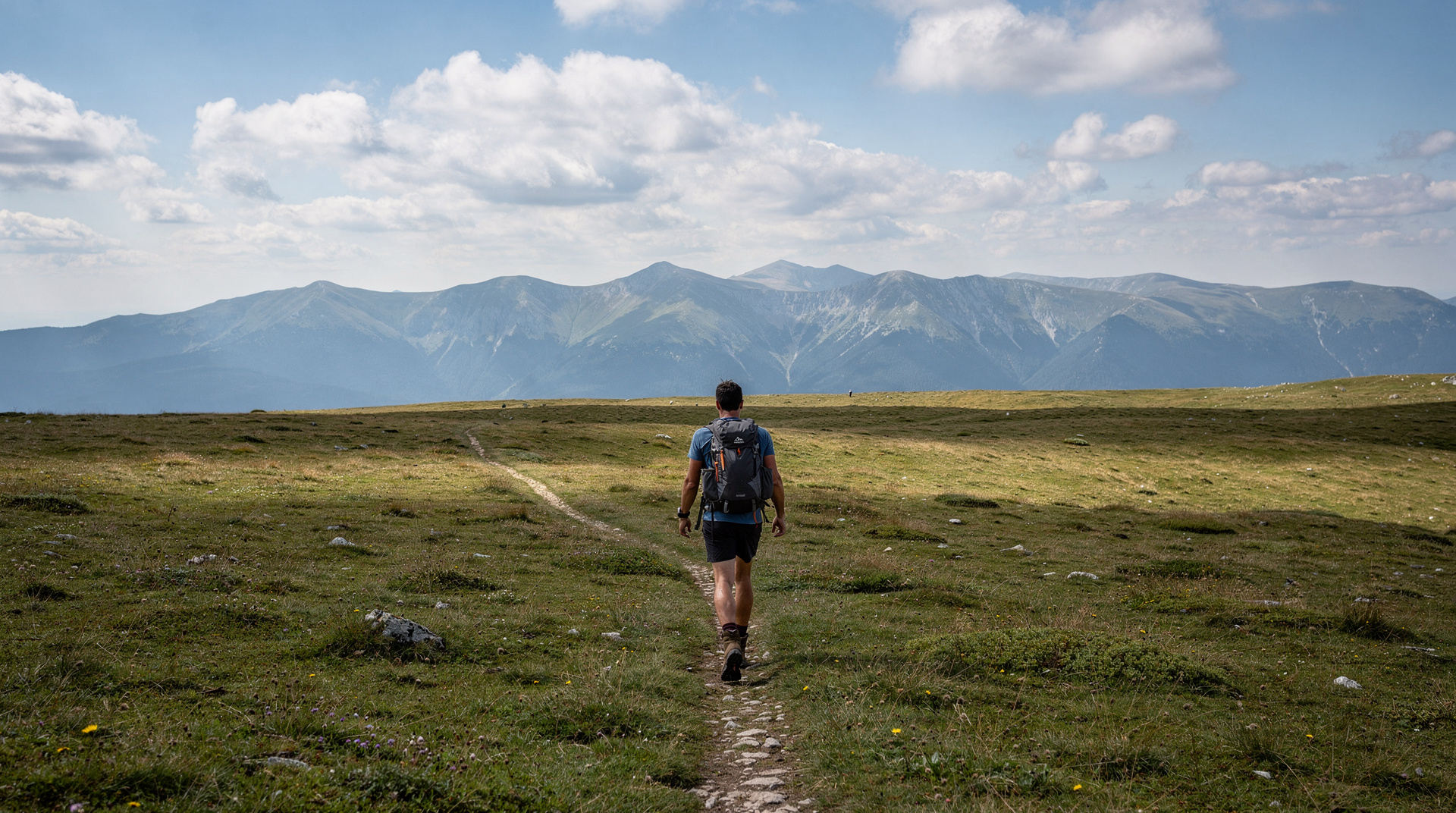
Stay on marked trails. This is the cardinal rule. Do not shortcut, do not explore unmarked terrain, do not follow animal tracks off the established path.
-
Recognise and respect warning signs. Red triangles with MINE or a skull symbol, red/white marking tape, or metal stakes with flag markers all indicate potentially hazardous areas. Stop immediately, do not advance, and retrace your steps exactly.
-
Book guided tours for mountain hiking. Particularly for more remote destinations — Maglić, Zelengora, Prenj, off-trail Sutjeska — a local guide’s knowledge of cleared versus uncertain routes is genuine safety insurance.
-
Do not pick up or touch unknown objects. Metal fragments, unexpected objects partially buried in soil, or anything that looks unusual should not be touched. Report and leave.
What to do if you find yourself in a mined area
If you stumble upon warning signs or suspect you have entered a potentially mined area:
- Stop walking immediately.
- Look carefully at the ground around your feet before moving.
- Retrace your steps exactly — placing your feet in your own footprints if possible.
- Once at a safe, clearly safe location, call 112 (European emergency number, works in Bosnia) to report the location.
Do not panic. Most civilians who enter suspected mined areas do so without incident — the mines are stationary. The risk is from unaware movement, not from simply standing still.
Bosnia’s demining progress and timeline
The demining process in Bosnia is ongoing and funded partly by international donors and partly by the Bosnian state budget. BHMAC estimates the remaining work will take until at least 2040-2045 to complete. The focus is on highest-priority areas — farmland, access routes and populated zones — before remote mountain terrain.
The pace of civilian accidents involving landmines has declined dramatically from the post-war years. The most recent periods have seen very few incidents, and those that occur are overwhelmingly in situations where people left marked areas (wood collectors, hunters, farmers in border zones). Tourist incidents are extremely rare and linked to off-trail exploration.
Planning a hike with the risk in mind
Good preparation does more for your safety than any single piece of gear. Before you leave, decide which trail you are walking, check that it is a recognised, regularly used route, and tell your host or guesthouse where you are going. If your plan relies on a track you found on a map but cannot confirm on the ground, treat it as unverified and choose another. The established routes in the hiking in Bosnia guide are the sensible starting point, and the Bjelašnica hiking guide is a good example of a mountain with well-trodden, marked paths close to Sarajevo.
Seasons matter too. Tall grass, fresh snow and fallen leaves all hide the edges of a path and make it easier to drift off the line without noticing. The best time to visit Bosnia and the seasonal guides for spring and autumn help you choose a window when trails are clearly visible and the weather gives you a margin for error. In bad visibility, turn around rather than pushing on to find the next marker.
Walk with a charged phone, a downloaded offline map and enough daylight to get back without hurrying. Tiredness and rushing are what lead people to cut a corner, and cutting corners is exactly what the rules above warn against. Keep to the group, keep the person in front in sight, and do not let anyone wander off to take a photograph from a tempting ledge or field edge.
Remote areas and the regions that need extra care
Some of the most rewarding places in the country are also the ones where trail knowledge counts most. The Prenj mountain guide and the Zelengora lakes guide describe landscapes that are wild, sparsely marked in places and far from the nearest village. Going with a local guide there is not a luxury but a sensible choice. The same logic applies to the Trnovačko Lake hike and the higher, less-visited parts of the Sutjeska national park.
Around Srebrenica, the Srebrenica day trip guide and the memorial guide cover the visit itself. The memorial and the roads to it are cleared and visited by many people. The surrounding countryside is a different matter, so keep to the memorial grounds, the roads and any route a local host has specifically recommended.
In the north-west, the Una National Park guide and the Bihać area are popular for water activities. Stick to the signed access points, the park paths and the operators’ put-in and take-out spots, and avoid walking through unmanaged riverside scrub to find a quieter spot.
Driving, parking and stopping by the roadside
The danger is not limited to walking. A road that is in regular use is safe to drive, but the verge is not always somewhere to wander. When you stop for a photograph, a picnic or a toilet break in the countryside, use a proper lay-by, a petrol station, a car park or a village. Do not pull onto an overgrown track, a field entrance or an abandoned yard just because it looks quiet. The driving in Bosnia guide and the renting a car in Bosnia page cover the practical side of road trips, and the getting around Bosnia guide compares the alternatives if you would rather not drive remote roads yourself.
The same advice holds for turning round. If a road narrows into an unsurfaced track and you are unsure where it leads, reverse along the way you came rather than looking for a field to turn in. For a more organised way to reach back-country scenery, the 4x4 and quad tours are run by operators who know which tracks are in regular use.
Travelling with children, groups and curious companions
Families can enjoy Bosnia’s outdoors with confidence, provided the adults set the ground rules before leaving the car. Explain the idea plainly: we stay on the path, we never touch strange objects, and if someone sees a sign we all stop. Children are naturally drawn to ruins, shiny metal and shortcuts, so keep them within arm’s reach on any walk outside a town. The Bosnia with kids guide and the family activities guide suggest outings that suit younger travellers and keep everyone on easy, well-used ground.
In a group, agree on one person who watches the route and one who brings up the rear, so nobody is left alone at the back. Dogs should stay on a lead, since an animal that bolts across a field is a problem for everyone.
Understanding the history behind the signs
Knowing why mines are where they are makes the rules feel less abstract. The Bosnia history guide for travelers and the explainer on the Yugoslav wars give the background, while the Sarajevo siege and Tunnel of Hope guide shows how the war shaped daily life in the capital. Walking in the countryside with that context in mind makes it natural to respect marked boundaries and to treat the signs as the serious warnings they are.
If you want to see the mountains without worrying about route-finding, a small-group full-day hiking tour to a highland village leaves the navigation to a local guide who walks the same route regularly. For something with no hiking at all, a guided day out combining Mostar and Tito’s bunker keeps you on established roads and visitor sites. The Bosnia adventure itinerary and the Via Dinarica thru-hike diary show how other travellers have done it on established routes.
Questions locals can help you answer on the spot
Your guesthouse host, a village shopkeeper or a mountain hut keeper will usually know whether a path is in regular use. Ask plainly: do people walk here, and is this the usual way up? A local answer, given with confidence, is worth more than a map. If the response is hesitant, take it as a reason to choose another route. Most hosts are glad to be asked and will point you towards the safest and most scenic option.
In summary
Bosnia’s landmine legacy is real, documented and worth understanding. It is also well-managed, heavily sign-posted and largely confined to zones that tourists have no reason to enter when following normal travel patterns. The rule is simple and effective: marked trail, guided tour, or established road — always. The millions of visitors who follow this rule enjoy Bosnia’s spectacular mountains, waterfalls and highland villages without incident.
For the full safety picture in Bosnia, see the is Bosnia safe guide, which also covers everyday risks like the common scams to avoid. For specific safe hiking destinations, the hiking in Bosnia guide and the best day hikes from Sarajevo cover all major routes with verified safe access.
Frequently asked questions about Landmine safety in Bosnia
Which areas of Bosnia have the highest landmine risk?
Can I hike safely in Bosnia?
What do landmine warning signs look like in Bosnia?
Has Bosnia cleared its landmines?
What should I do if I see a suspicious object on a trail?
Are guided hiking tours safe even in higher-risk regions?
Is it safe to go camping or wild swimming in rural Bosnia?
Top experiences
Bookable activities with verified prices and instant confirmation on GetYourGuide.