Mostar bridge divers truth
Mostar: Old Town Walking Tour with Stari Most & Mosque
Are the Mostar bridge divers a real tradition or a tourist performance?
Both. Diving from Stari Most has been a rite of passage for young Mostar men since at least the 17th century, and the Mostarsko Skakačko Društvo (Mostar Diving Club) trains seriously for the annual Red Bull competition. The commercialisation — approaching tourists for tips and delaying the jump until a target sum is raised — is a modern overlay that does not invalidate the athletic feat, but is worth understanding before you arrive.
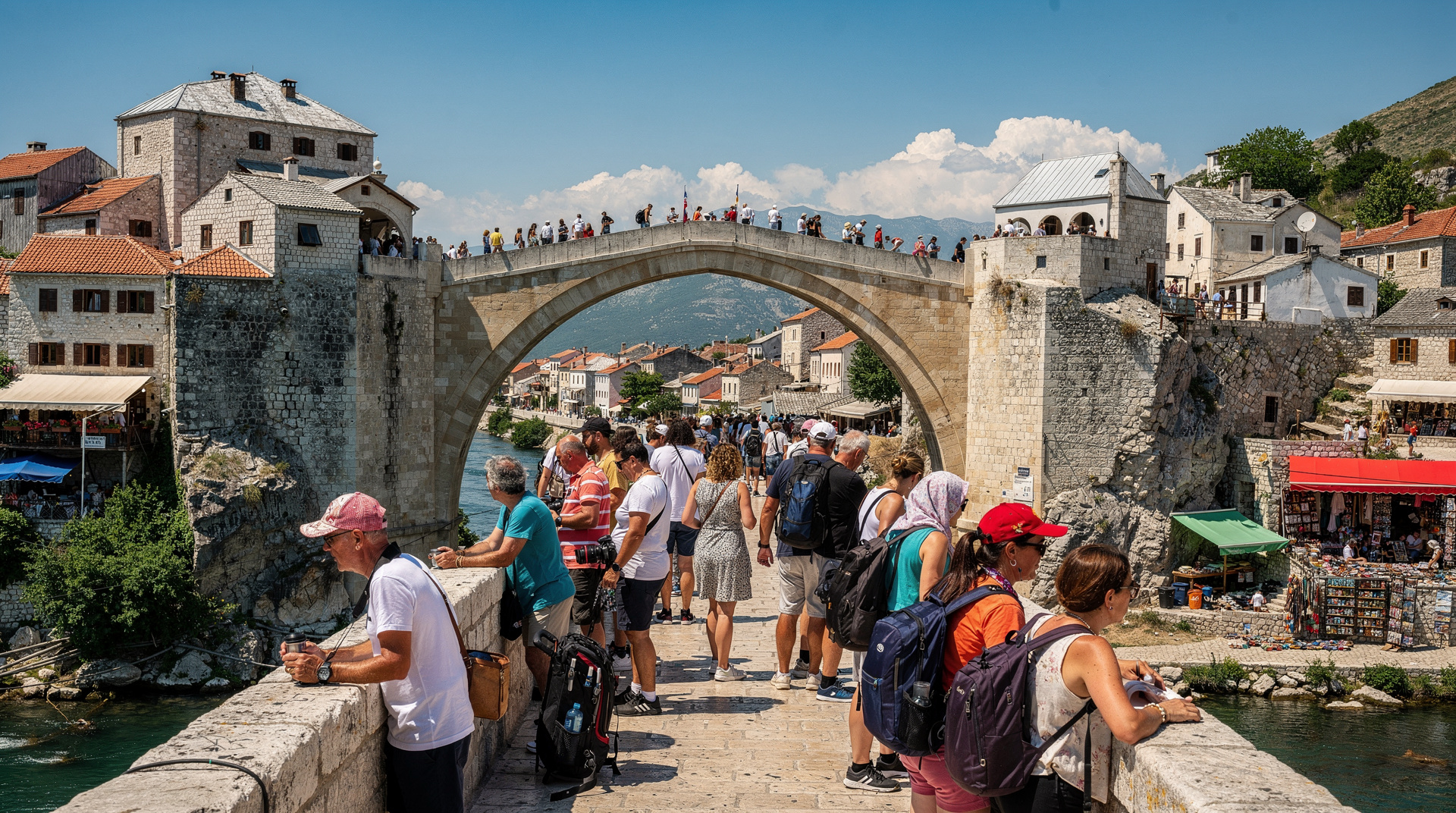
If you stand on or near Stari Most (the Old Bridge) in Mostar long enough, you will almost certainly see a young man in a Speedo and swim cap making a very public show of not jumping. An associate circulates through the crowd collecting money, announcing that the jump will proceed “once we have enough.” Tourists hand over coins and banknotes, uncertain whether this is art, obligation or something else.
Here is the full story — the genuine tradition, the athletic reality, and the commercial system that surrounds it — so you can engage with it on your own terms.
At a glance
| Where | Stari Most (Old Bridge), Mostar old town |
| When to watch | Reliable roughly June-September, mid-morning to mid-afternoon |
| Cost to watch | Free — tipping is optional, around 1-2 EUR is fair if you contribute |
| Jump height | Around 21m above the Neretva |
| Water temperature | Cold year-round, roughly 10-14°C |
| Best viewpoint | Riverbank below the bridge (east side) for the entry, or the bridge itself for the leap |
The tradition: diving from Stari Most
Diving from Stari Most is recorded in accounts going back to the 17th century, not long after the Ottoman bridge was completed in 1566. Young men of Mostar jumped from the bridge as a demonstration of courage — effectively a rite of passage. The tradition survived the destruction of the original bridge in 1993 during the Bosnian War and resumed on the reconstructed bridge (opened 2004).
The Mostarsko Skakačko Društvo (Mostar Diving Club), founded in 1968, formalises the tradition. It has trained generations of Mostar divers and currently competes at international cliff diving events. Red Bull has held its prestigious cliff diving competition from Stari Most on multiple occasions — a genuinely elite athletic event watched by global audiences.
This is not a performance invented for tourists. It is a deep cultural practice that predates tourism by centuries. The men who train for this jump are serious athletes. The dives you see from the bridge are the real thing.
The physics: why this jump is not trivial
From a 21-metre platform, a diver enters the water at approximately 70-75 km/h. The water is cold — 10-14°C year-round, fed by underground karst springs. An untrained person entering cold water at this speed, with incorrect body position, risks losing consciousness on impact or in the water.
Mostar divers train for years. They learn entry technique (feet or head first, depending on style), they acclimatise to cold water, and they train their bodies to absorb the impact of entry. The apparently casual attitude of the divers waiting on the bridge conceals real physical competence.
The commercial overlay: how the tipping system works
The present-day performance looks like this: a diver, in competition gear, stands on the bridge railing. An associate — sometimes several — moves through the crowd of watching tourists. The announcement is made that the dive will happen once a target sum has been collected (typically “we need 50 euros”). Tourists contribute; eventually the diver jumps.
A few things to understand about this system:
The target is theatrical. The dive will happen when the diver decides to jump — the money collection creates artificial tension and social pressure to give more. The practice is modelled on a busking formula, not a genuine crowd-funded event.
The social pressure is real but optional. The associate making eye contact with you is counting on the social awkwardness of refusing. In reality, shaking your head is entirely acceptable and commonly done by locals and experienced travellers.
The divers are not impoverished. The diving club earns income from competitions, photography sales and official club activities. The bridge-side collection supplements this; it is not their sole survival mechanism.
A small tip is fair. If you watch a complete dive, contributing 1-2 EUR to acknowledge the skill is entirely reasonable and consistent with the busking model. Giving more because you feel pressured into it does not add value to your experience.
How to watch the bridge divers well
The best viewing positions are:
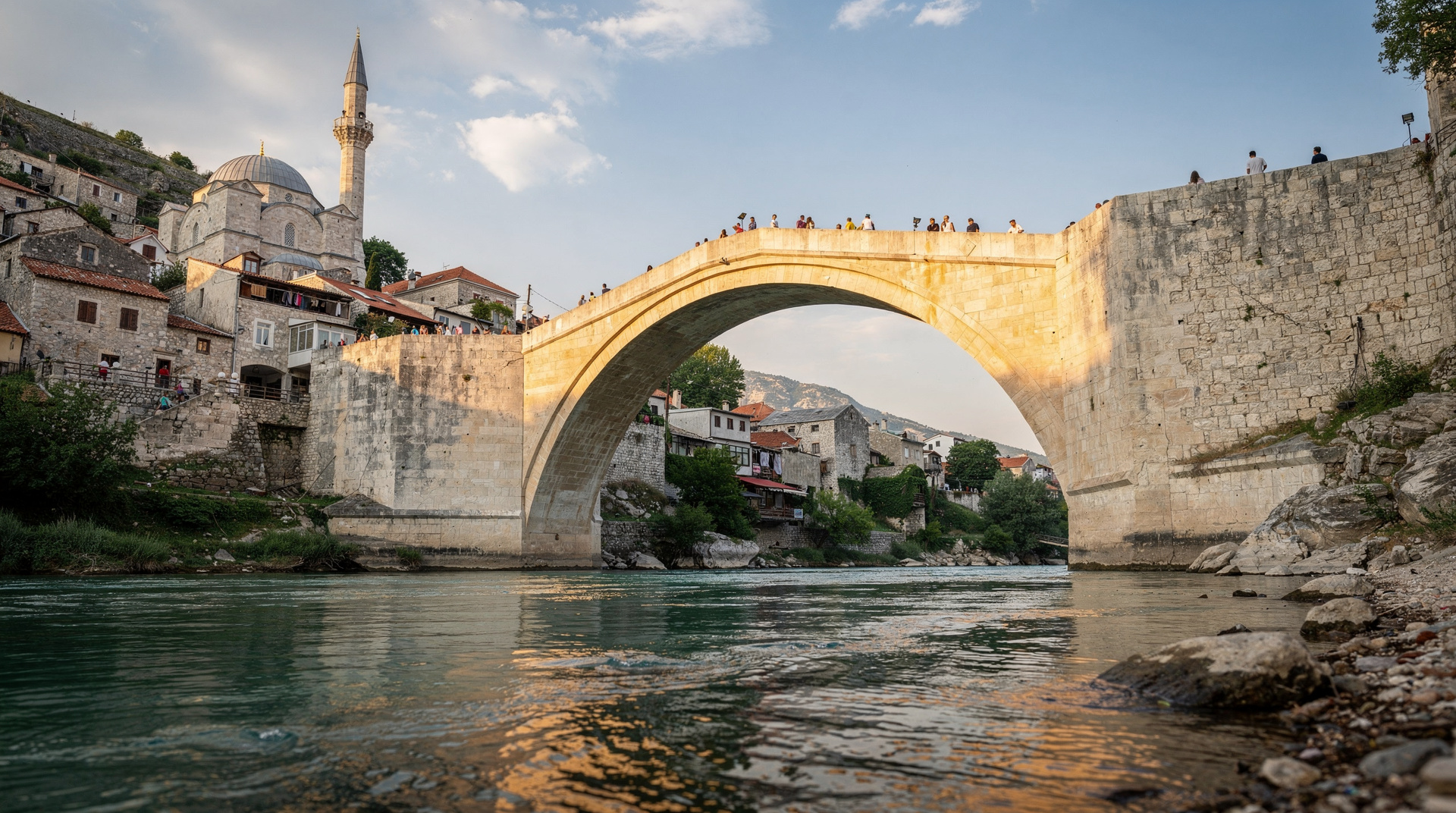
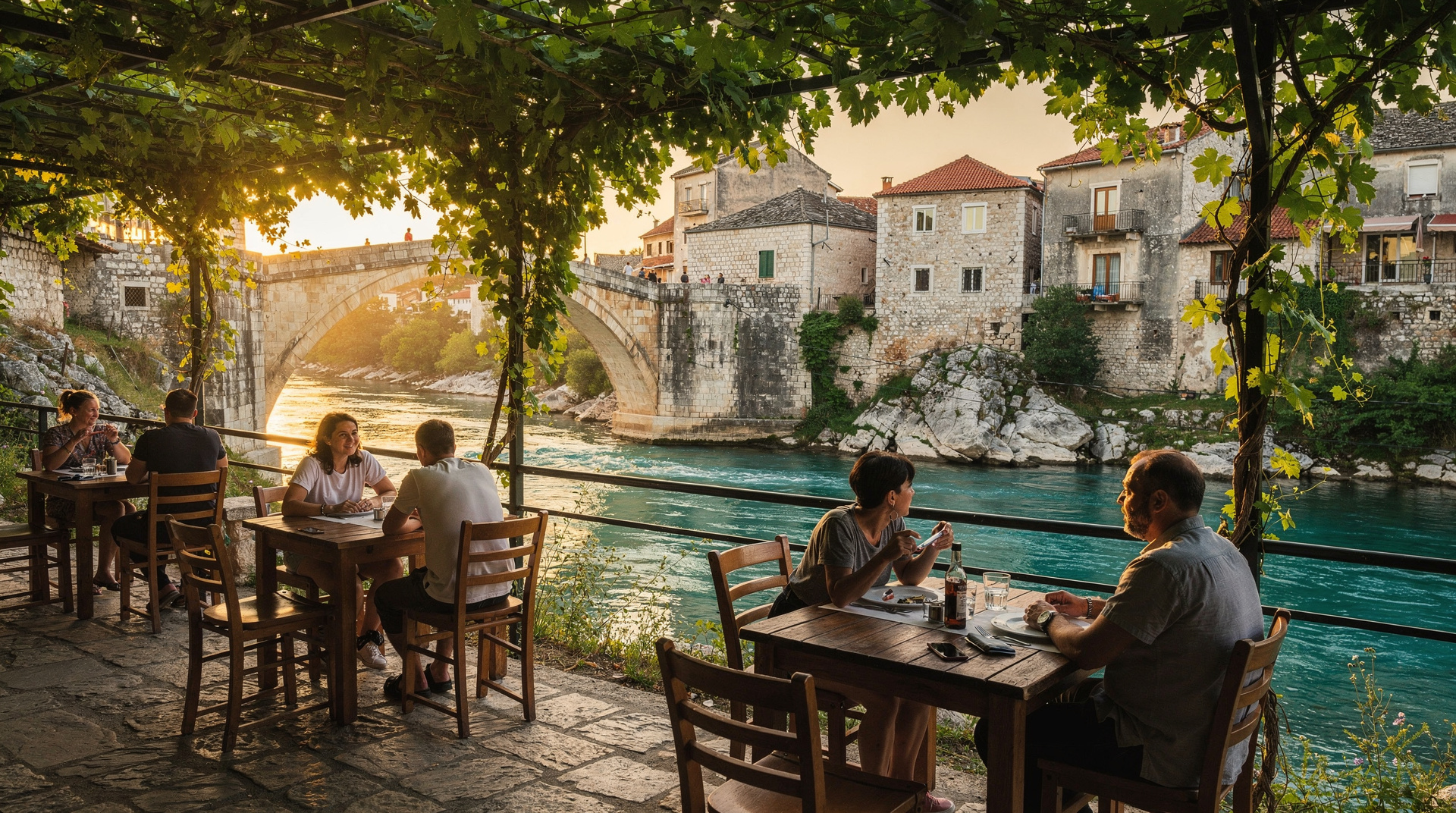
- The riverbanks directly below the bridge (Lučki Most side, east bank) — you see the diver from below and the entry into the water
- The Tara Tower walkway on the east bank — elevated view of the jump and river entry
- The bridge itself — closest view of the diver’s stance and leap, but crowded and you cannot see the water entry
Early morning (before 10:00) and late afternoon (after 17:00) see fewer tourists and fewer dive performances. Midday in July-August is peak crowd time. The water is clearest and most photogenic in morning light.
For comprehensive context on the bridge and old town, a guided walk through the old town and bridge area covers the bridge’s Ottoman history, the 1993 destruction, the UNESCO-listed reconstruction and the diving tradition with real depth.
The Red Bull competition
When Red Bull holds its Cliff Diving World Series event in Mostar (check the current year’s schedule at redbull.com), the bridge is transformed. A raised platform extends from the bridge to the desired height (varies by competition round), and elite athletes from 15-20 countries compete across two or three days. Viewing from the riverbanks is free.
The competition atmosphere is unlike the daily bridge performances — there is live music, crowds of tens of thousands, and genuinely elite athletic achievement on display. If your trip to Bosnia coincides with the event date, planning around it is strongly recommended.
The bridge itself: more than the diving
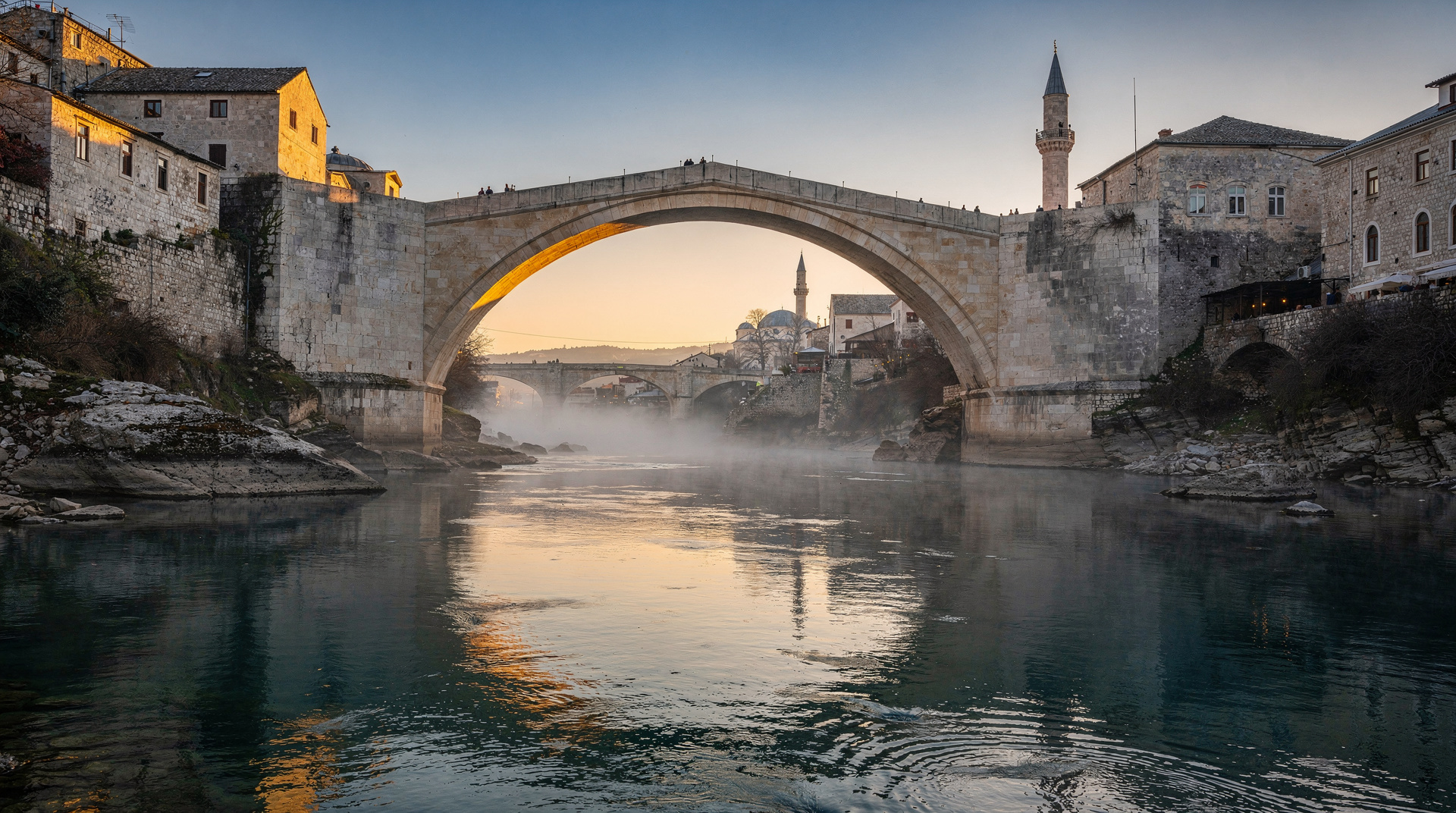
It is easy to focus on the diving as the main event and miss the fact that Stari Most is one of the most beautiful Ottoman bridges in the world. The single-span arch of Tenelija limestone, 21 m above the Neretva at its highest point, was built by the Ottoman architect Mimar Hayruddin in 1566-1567 and stood for 427 years before Croatian forces deliberately shelled and destroyed it on 9 November 1993.
The reconstruction, completed in 2004 and inscribed on the UNESCO World Heritage List (together with the old city) in the same year, used original limestone blocks recovered from the riverbed alongside freshly quarried Tenelija stone. The bridge is authentic to the original design, not a replica.
Walking across it at dawn or dusk — before the crowds arrive — is worth doing just for itself. The sound of the Neretva below, the smell of the river in the gorge, the views of the Ottoman mosque minarets against the hills: this is why Mostar endures in the memory of everyone who visits.
For the full history of Stari Most and the old city, see the Stari Most and Old Bridge guide. For practical Mostar visit planning, the Mostar tourist traps guide covers all the additional situations worth knowing.
Who the divers actually are
The active roster of divers on any given day is a mix of full members of the Mostar Diving Club and younger trainees working their way up through the ranks. Membership is informal but respected locally — divers are recognised faces in Mostar, and many combine the bridge performances with day jobs in tourism, hospitality or trades. The club’s income from Red Bull-affiliated events and sponsorship is real but modest by international sporting standards, which is part of why the daily bridge collections matter to individual divers even though the club as an institution is not struggling.
Trainees typically start on smaller jumps — from the riverbank rocks or lower platforms — for years before attempting Stari Most itself. This is worth knowing if you see a diver hesitate or delay: it is not always theatre. Genuine caution around wind, water level after rain, or an off day physically is common and appropriate given the real risk involved.
Fitting the divers into a day in Mostar
The divers are best treated as one stop in a longer visit, not the reason you plan a whole day around the old town. Most people arrive in Mostar on a day trip, and the bridge is the first thing they head for, which is exactly why it is crowded. If you are coming from the coast, the Mostar from Dubrovnik guide and the Mostar from Split guide explain how those day trips tend to unfold, and the timing matters: groups often reach the bridge together, so the collection and the jump can bunch up around the same hours.
If you are coming from the capital, the Mostar day trip from Sarajevo gives you a realistic idea of how much time you will have on the ground. A sensible plan is to cross the bridge once, look at the divers’ preparations from the riverbank, then move on to the rest of the old town and come back later if you want a second look. Staying overnight changes the whole equation, because you can see the bridge in the quiet hours when the divers are absent and the stone is simply a stone arch over green water.
If you prefer to see the bridge area with someone who knows the local rhythm, a private walking tour with a local guide lets you ask directly about the divers, the club and how the collection works, and a guide can often suggest when to be at the water’s edge. Travellers with limited time may also like a guided walking tour of the city highlights, which fits the bridge into a wider look at the old town without leaving you to improvise.
How to read what you are seeing
A little attention tells you a lot about whether a dive is imminent. A diver who has stopped talking to the crowd, who is standing still and looking at the water, is usually close to jumping. A diver who is chatting, joking and walking along the parapet is still working the crowd. Neither is dishonest; both are part of the show, and both are part of how a young diver builds nerve before a very real drop.
Watch the associates too. In a good-natured version of the system, they are cheerful, make their pitch once and move along. If someone keeps returning to the same person, or follows you across the bridge, you are allowed to be firm and polite. A clear “no, thank you” with a smile is understood everywhere, and the divers themselves generally respect it. The wider pattern of pressure around the old town is covered in the Mostar tourist traps guide, and the general habits that keep you comfortable anywhere in the country are in the guide to scams to avoid in Bosnia.
Photographing the dive
Photographers are often disappointed because the jump is over very quickly. If you want a picture, decide before the diver steps up whether you want the leap or the entry, because you rarely get both from one position. From the riverbank, a camera held ready and already focused on the water below the arch gives you the entry. From the bridge, you get the stance and the push-off, but the crowd presses in and the angle is awkward.
A short video clip works better than a single frame for most phones. Keep your arms steady, stay behind the marked areas, and do not lean over the railing for a better angle. Remember that the person standing beside you is also trying to see, and that the diver is concentrating on the most dangerous few seconds of the day. Quiet respect at that moment is the best thing a spectator can give.
Respect and context
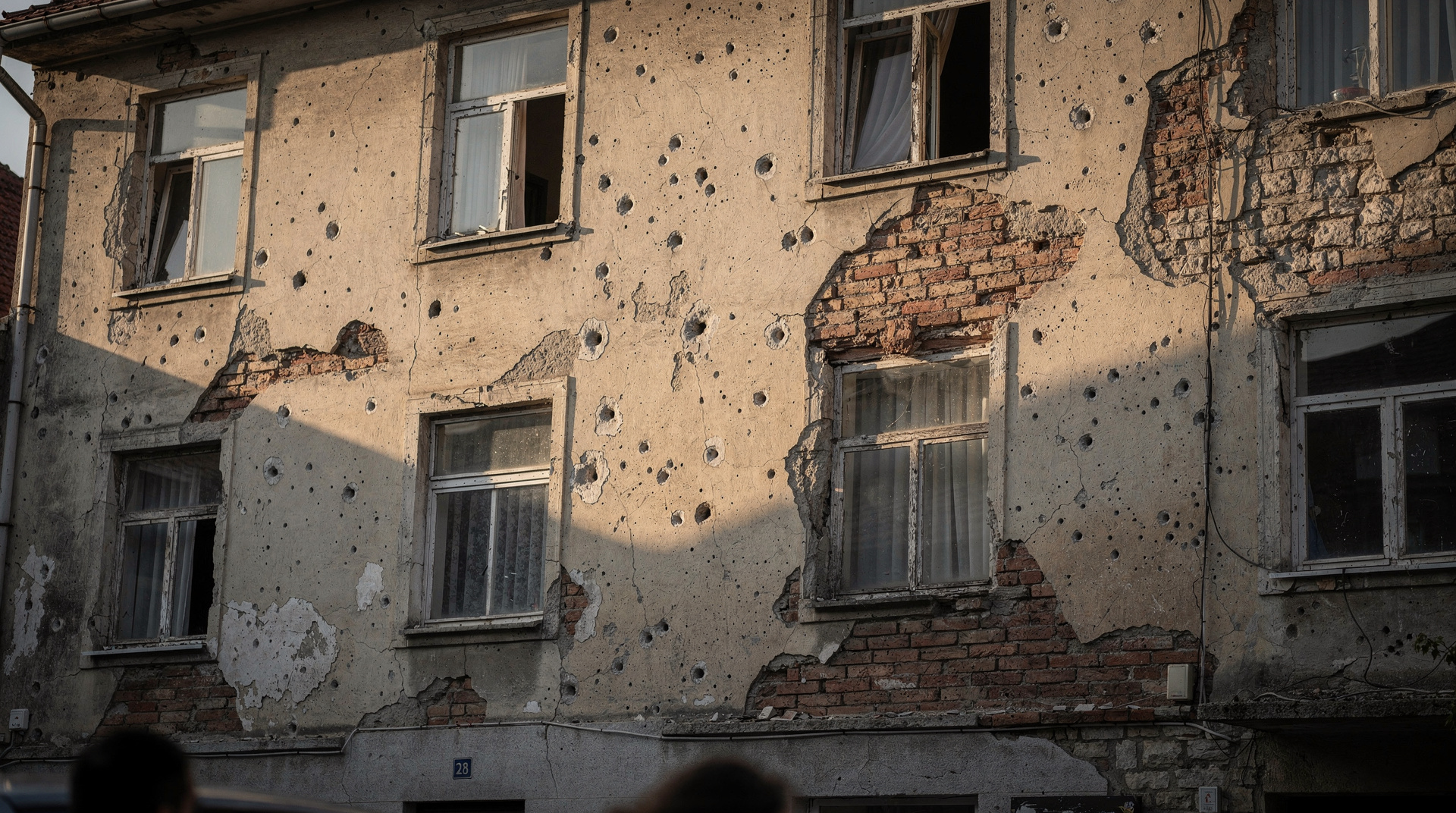
It helps to remember where you are standing. This is the bridge that was destroyed in 1993 and rebuilt, and for many people in Mostar the dive is tied to the idea that the city survived. If you want that wider background before you watch, the Mostar old bridge story is a good personal read, and the Bosnia history guide for travelers puts the whole episode in a national frame. Seen that way, a tip is not a payment for a trick; it is a small acknowledgement of a local practice that has outlasted a great deal.
That context also explains why it is unfair to dismiss the divers as simple hustlers. The money system is clumsy and sometimes pushy, but the skill is real, the tradition is old, and the people doing it are your hosts for the afternoon. Go in curious, give what you honestly feel is fair, and you will leave with a better memory than if you spent the whole time resenting the collection.
If you want to understand more of Mostar’s story
The diving tradition sits inside a much larger Mostar story — Ottoman origins, the 1990s war, and a rebuilt city still visibly divided along old lines. The Mostar war history guide covers the 1993 destruction of the bridge and the wider siege of the city in useful depth, while where to stay in Mostar and avoiding crowds in Mostar help with the practical side of a longer visit. If you are combining Mostar with restaurant planning, see best restaurants in Mostar.
Frequently asked questions about Mostar bridge divers truth
How high is the Stari Most bridge in Mostar?
How much should I tip the bridge divers?
When can I see the bridge divers?
Can tourists do the jump from Stari Most?
Is the Red Bull competition worth planning around?
Top experiences
Bookable activities with verified prices and instant confirmation on GetYourGuide.