Perućica primeval forest guide
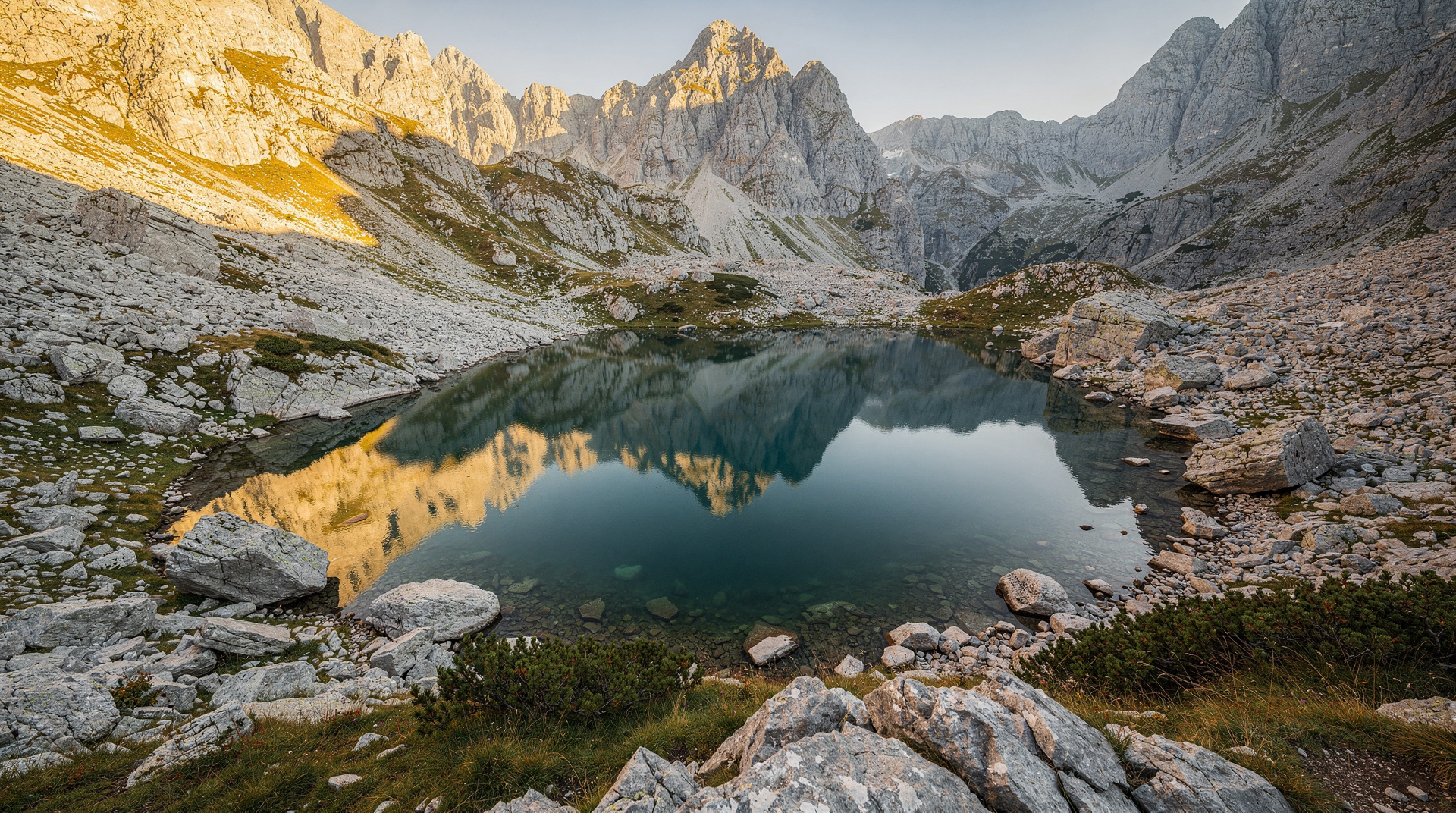
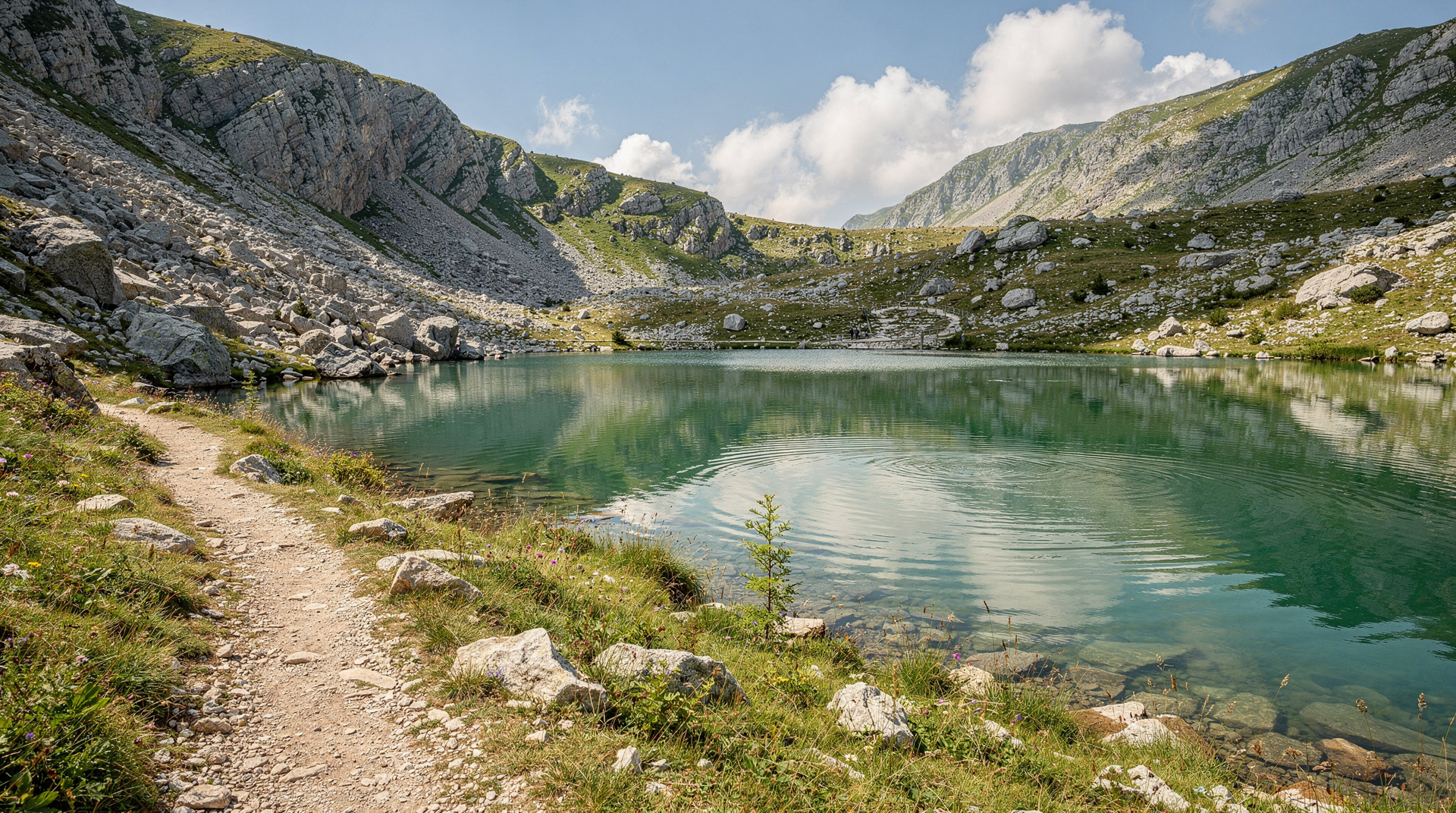
Trnovačko Lake: NP Sutjeska – Maglić Trekking
What is Perućica and why is it significant?
Perućica is one of only two remaining primeval (virgin) forests in Europe — ancient woodland never logged or significantly altered by humans. Located in Sutjeska National Park in eastern Bosnia, it is home to trees over 300 years old, the 75-metre Skakavac waterfall, and an intact old-growth ecosystem found nowhere else in the region.
| Where | Sutjeska National Park, eastern Bosnia, entered via the Tjentište visitor centre |
| Cost | Around 20-30 BAM per person for the guided walk, including park entry |
| Time needed | Half a day for the Skakavac walk; a full day if combining with the wider park |
| Getting there | Own car (~3-4 hours from Sarajevo) or a guided tour with transfer included |
| Best time | Late spring to early autumn; spring gives the fullest waterfall flow |
There are very few places in Europe where you can stand in forest that has been growing, dying, and regenerating without human interference for centuries. Perućica in Sutjeska National Park is one of them — a 1,434-hectare reserve where beech trees that have been alive since before the Ottoman conquest of Bosnia still grow alongside their own dead relatives, where wolf and bear tracks cross the same streams, and where the 75-metre Skakavac waterfall drops through a canyon that no road has ever reached.
What primeval forest means
The word “primeval” is used deliberately and precisely. Perućica is not simply old forest; it is forest in which the normal cycle of growth, death, and decay has proceeded without significant human interruption for a very long time — at least several hundred years, possibly much longer. The scientific term is “virgin forest” or “primary forest,” and the distinction matters.
In managed forest, trees are harvested when commercially valuable; fallen trunks are removed; streams may be channelled; deer populations are controlled. In primeval forest, none of this happens. Dead trees stand for decades, supporting enormous populations of wood-boring beetles, fungi, cavity-nesting birds, and lichens. When they fall, they remain — feeding the soil for another century. The structural complexity that results (multiple canopy layers, abundant dead wood, varied micro-habitats) supports species that simply cannot survive in any managed environment.
In Europe, virtually all original forest cover was cleared for agriculture or logging centuries ago. Białowieża in Poland-Belarus and Perućica in Bosnia are the surviving remnants.
The forest ecosystem
Perućica’s dominant species are European beech (Fagus sylvatica) and silver fir (Abies alba), with Norway spruce and various broadleaved species mixed in. The oldest individuals — beech and fir that have been growing for 300-400 years — reach heights of 50-55 metres and trunk diameters of 2-3 metres. Walking among them gives a visceral sense of scale that no managed forest can match.
The forest floor is layered with centuries of accumulated leaf litter and decomposed wood, creating a spongy, moisture-retaining substrate that supports a remarkable range of fungi, mosses, and ferns. Many of the species found here are rare or absent elsewhere in the region.
Large carnivores and wildlife
Perućica and the wider Sutjeska park retain viable populations of brown bear (Ursus arctos), grey wolf (Canis lupus), and Eurasian lynx (Lynx lynx) — the full set of large carnivores that once inhabited forests across Europe. These animals require large territories, undisturbed habitat, and intact prey populations; Perućica provides all three.
Visitors rarely see large carnivores (bears are shy; wolves are rarely sighted; lynx are nocturnal), but evidence — tracks, scratch marks, scat — is common on trails in and around the reserve. The knowledge that these animals are present makes the forest feel genuinely wild in a way that requires no visual confirmation.
Bird life includes black woodpecker, white-backed woodpecker, three-toed woodpecker, golden eagle, eagle owl, and Ural owl — all dependent on old-growth forest structure.
Reading the forest as you walk
Part of the pleasure of a guided visit is learning to see what is in front of you. A guide will point out the things a casual walker would pass without noticing: a standing dead trunk riddled with woodpecker holes, a fallen giant whose surface has become a nursery for moss and seedlings, a patch of light where an old tree came down and the next generation is racing upward to fill the gap. None of this is tidied away, and that is exactly the point.
Pay attention to sound as well. In a managed plantation the understorey is often quiet and uniform. Here the canopy layers are uneven, the birdsong comes from several heights at once, and the stream is rarely out of earshot. Slow down, let the group stretch out a little, and give yourself a few minutes of silence at a pause point. It is the closest most visitors will come to hearing what lowland Europe sounded like before the farms and sawmills.
Photographers should expect dim, contrasty light under the canopy. A steady hand, patience and a willingness to shoot details rather than grand views will give better results than trying to capture “the whole forest” in one frame. The scale of the trunks only reads properly when a person stands beside one.
Skakavac waterfall
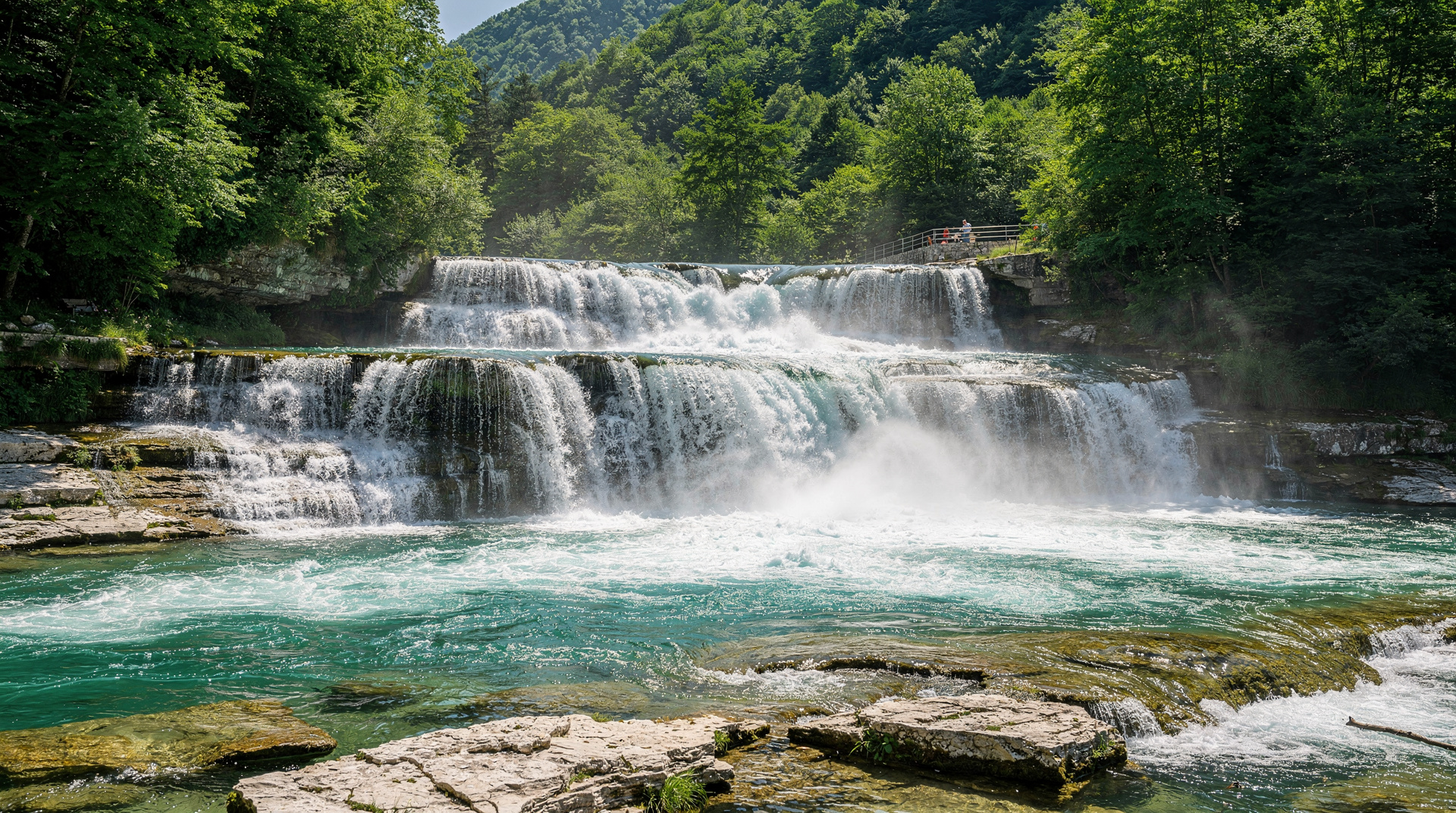
Skakavac (skakavac means “grasshopper” but also “leaper” in the sense of something that jumps) is a 75-metre free-falling waterfall on the Skakavac stream within the Perućica reserve. The stream drops off a limestone ledge and falls freely into a deep plunge pool, creating a permanent mist cloud that supports a microclimate of ferns and mosses on the surrounding rock faces.
The waterfall is visible from the designated visitor trail — you reach it after a 45-60 minute walk from the park visitor centre at Tjentište. The viewpoint is below the fall, giving an upward perspective on the full 75-metre drop. In spring, the flow is substantial; in late summer, it reduces but does not stop.
Skakavac is not swimmable — the pool is deep and cold, and access is restricted. The experience is visual and auditory.
Visiting Perućica: rules and access
The reserve rules are non-negotiable:
- Enter only on the designated trail (marked from the Tjentište visitor centre)
- A registered guide is required for any visit beyond the entrance area
- No camping within the reserve
- No fires, no leaving the path, no collecting anything
- Dogs are not permitted
Guided visits run in small groups (maximum 8-12 per guide). The visitor centre at Tjentište is the booking point; walks depart several times daily in season.
Guided access costs approximately 20-30 BAM per person; this includes the national park entry fee and the guide. Private guide hire for a full day (covering both Perućica and other areas) costs more but gives flexibility.
Walking etiquette and what to bring
The rules above are short, but the spirit behind them is simple: you are a guest in a place that functions without you. Stay behind your guide, keep voices low, and carry out everything you carry in, including fruit peels and wrappers. Resist the urge to pick up a cone, a feather or a piece of bark as a souvenir; the reserve rule against collecting anything applies to the smallest object.
Come prepared for changeable mountain weather. A light waterproof layer is sensible even on a bright morning, because the spray near the waterfall and the damp forest floor keep the air cooler than it feels in the valley. Bring water and a snack for the walk, wear shoes with a decent grip, and keep your phone charged, since signal in the valley can be patchy. Insect repellent is worth packing in warmer months, and so is a small bag to keep your camera dry.
If you are travelling with children, the walk is manageable for those who are used to uneven ground, but it is not a stroller route. The Bosnia with kids guide has broader advice on pacing a family trip, and the family activities guide lists gentler alternatives for days when little legs are tired.
Getting there and guided tours
The Tjentište visitor centre and hotel are the main entry point, 60km south of Foča on the M20 road. From Sarajevo the drive is approximately 3-4 hours.
A private tour from Sarajevo to Sutjeska covers the drive each way plus a full guided day in the park, which typically includes Perućica and Skakavac as its centrepiece.
The Sutjeska trekking tour combining Lukomir and Maglić is a more demanding multi-day option that uses Sutjeska as a base for Maglić ascent and Perućica forest walking.
Planning the trip around the drive
Because Sutjeska sits far from the main tourist axis, the logistics deserve as much thought as the walk itself. Many visitors treat Perućica as the highlight of an overnight stay in the park rather than a rushed excursion, and that is the approach we recommend. Arriving the evening before means you can start the guided walk fresh, with time afterwards for the memorial, the river canyon or simply a quiet evening in the valley.
If you are driving yourself, read the driving in Bosnia guide before you set off, and the car rental guide if you have not yet arranged a vehicle. Mountain roads are slower than the map suggests, so leave generous margins. Those without a car can look at the getting around Bosnia guide, though public transport to Tjentište is limited enough that a tour or a rental is usually the more realistic choice.
Perućica also fits naturally into a longer loop through the east of the country. The Bosnia adventure itinerary shows how to link wild landscapes with rafting and hiking stops, and the Tara River rafting guide is a good companion if you want water as well as woodland. For a wider look at the country’s mountain scenery, the Bosnia travel guide is the place to begin.
Combining with the wider park
A day in Sutjeska ideally combines Perućica and Skakavac with:
- The Tjentište WWII memorial (monumental 1971 sculpture commemorating the 1943 Sutjeska battle)
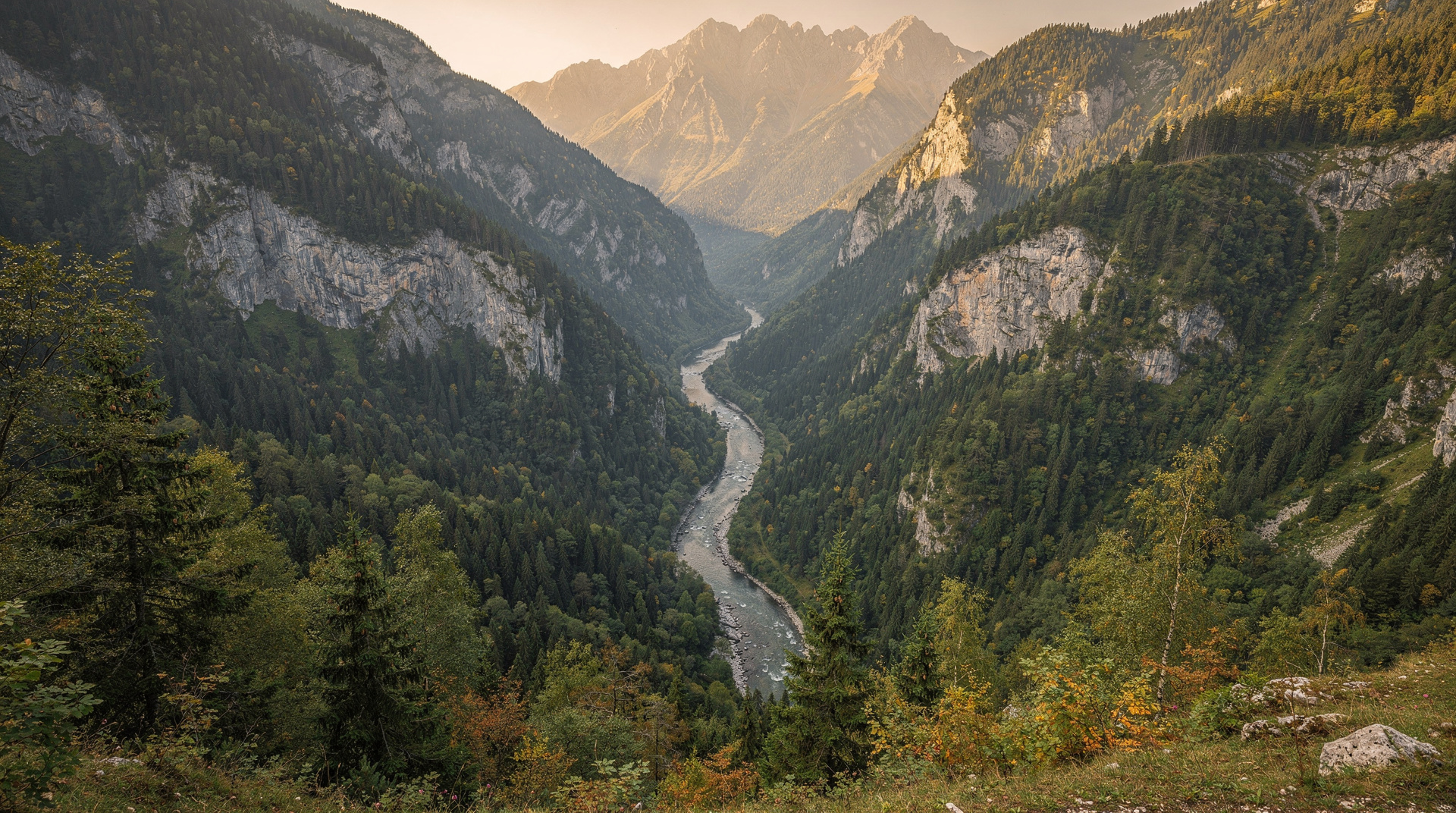
- A walk into the Sutjeska River canyon (30-60 minutes from the valley floor)
- Optionally, an afternoon drive toward the Zelengora plateau
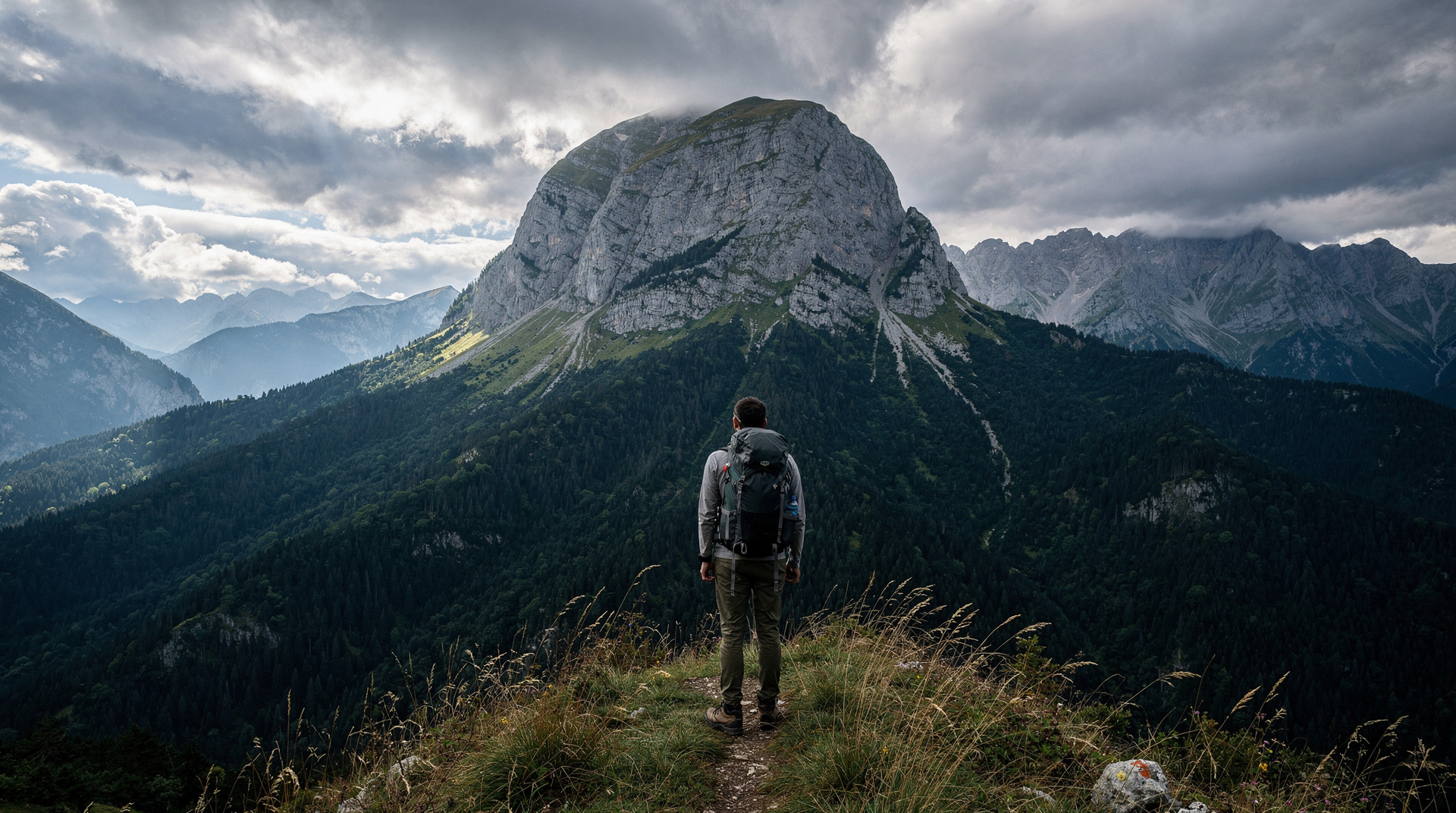
For the full Sutjeska overview, the Sutjeska National Park guide is the starting point. For the mountain side of the park, see the Maglić guide and Trnovačko Lake guide.
Best season to visit Perućica
| Season | Waterfall flow | Forest conditions | Crowds |
|---|---|---|---|
| Spring (April-May) | Strongest — snowmelt feeds Skakavac | Wet trail, vivid green undergrowth | Low |
| Summer (June-August) | Reduced but steady | Dry, shaded, comfortable walking | Moderate, peaks in July-August |
| Autumn (September-October) | Moderate | Beech canopy turns gold; see the autumn colours in Sutjeska blog for the seasonal picture | Low |
| Winter (November-March) | Often reduced access | Guided access can be limited or suspended by snow | Very low, check availability first |
Shoulder months reward flexibility. A spring visit gives you the loudest waterfall and the freshest greens, but trails can be wet and the weather unsettled; early autumn trades some water for steadier conditions and softer light under the beeches. If you are weighing the seasons for the whole country rather than this one forest, the best time to visit Bosnia guide and the Bosnia in autumn guide set out the wider picture.
For a broader sense of Bosnia’s other protected wild areas, the Una National Park guide covers the country’s other major nature reserve, and the hiking in Bosnia guide puts Perućica in context alongside the country’s other multi-day trekking regions.
Why Perućica matters beyond the walk
It is easy to treat a protected forest as a backdrop for a pleasant hike, but Perućica is also a reference point. Researchers value places like this because they show how a European forest behaves when left alone: how gaps open and close, how dead wood feeds new life, how predators and prey settle into balance. Visiting under the rules, with a guide, is part of how the reserve is kept intact, since the fees and the controlled numbers support the very protection that makes the forest worth seeing.
Seen this way, the restrictions stop feeling like obstacles. They are the reason the forest looks the way it does. Travellers who come expecting open access to wander freely are sometimes disappointed; those who arrive curious and willing to follow a guide usually leave with a clearer understanding of what “wild” actually means. If the visit sparks an appetite for more, the Zelengora lakes guide and the Via Dinarica guide point toward longer routes through the same mountain country.
Frequently asked questions about Perućica primeval forest
Can visitors enter Perućica primeval forest freely?
What is Skakavac waterfall?
What animals live in Perućica?
How is Perućica different from a normal old forest?
What is the other primeval forest in Europe?
How difficult is the walk to Skakavac waterfall?
Can I visit Perućica without a guide?
Top experiences
Bookable activities with verified prices and instant confirmation on GetYourGuide.