Medjugorje: a skeptic's visit
I want to be clear about my position before this article starts: I went to Medjugorje as a non-believing traveller in a predominantly Catholic country, curious about a phenomenon that has drawn 40 million pilgrims since 1981 and remains officially unrecognised by the Catholic Church. I did not expect to be converted. I was not converted. I did find it more interesting than I expected.
This is the honest account.
| At a glance | |
|---|---|
| Where | Medjugorje, southwestern Herzegovina, around 25km from Mostar |
| Cost | Free to walk the site and climb the hills; small donations customary, meals/souvenirs extra |
| Time needed | Half a day is enough for a curious non-pilgrim; pilgrims often stay several days |
| Getting there | Day trip from Mostar or as part of a wider Herzegovina route |
| Best time | Spring and autumn avoid the harshest midday heat on the hill climbs |
What Medjugorje is
On 24 June 1981, six young people in the village of Medjugorje in southwestern Herzegovina reported an apparition of the Virgin Mary on a hillside above the village. The apparitions continued — daily, according to some of the visionaries — for months and then years. Four decades later, most of the original six visionaries still report receiving daily messages.
The Catholic Church’s official position has evolved cautiously: in 2024 it approved the site as a place of pilgrimage while not yet making a definitive ruling on the supernatural character of the apparitions themselves. Forty million people have visited since 1981. The village of Medjugorje, which had a few hundred residents before 1981, now has hotels, restaurants, souvenir shops, and a visitor infrastructure that would not look out of place at a major European tourist city.
If you want the wider backdrop before reading on, Bosnia history for travelers and the Yugoslav wars explained help explain why this corner of Herzegovina looks the way it does, and the Sarajevo faiths guide shows how many traditions share the country.
What it looks like on arrival
The first thing that strikes a secular visitor is the scale. Medjugorje is not a small pilgrimage spot. The main church, St James, is enormous — built in phases since the apparitions to accommodate the flow of pilgrims. The surrounding area has been developed extensively: hotels, guesthouses, cafés, religious goods shops selling everything from rosaries to LED-lit statues of the Virgin.
The commercialisation is substantial. This is not unusual for major pilgrimage sites — Lourdes, Fatima, Santiago de Compostela — all have significant commercial infrastructure. But it is more visible in Medjugorje because the village was not built around pilgrimage; it was transformed by it.
Apparition Hill
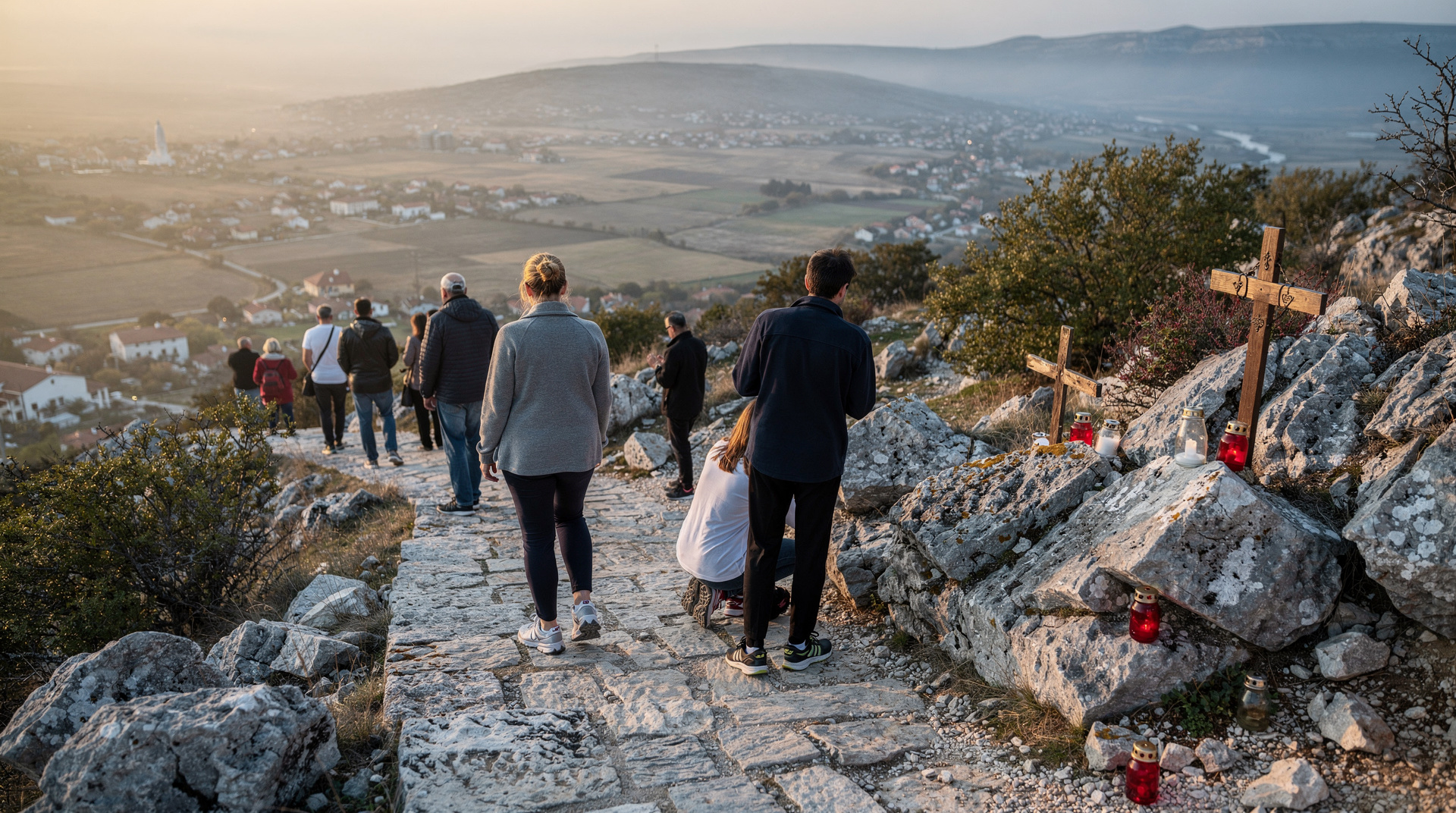
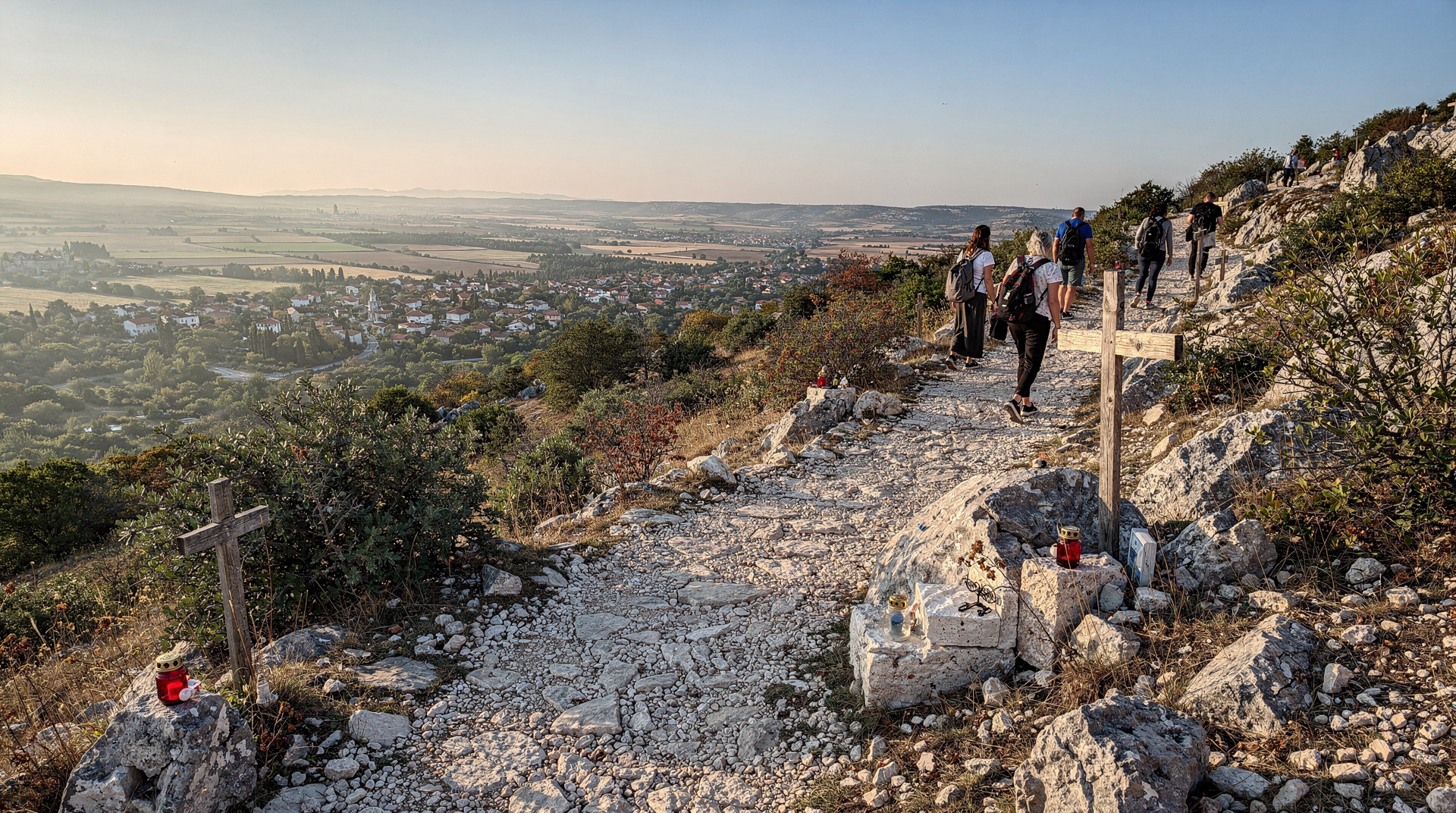
The primary pilgrimage site is Apparition Hill (Podbrdo), where the original 1981 events occurred. A path winds up the limestone hillside to a bronze statue of the Virgin installed at the spot. The rock surface of the path is sharp and irregular; many pilgrims climb it barefoot as an act of devotion.
The hill itself is steep, the path is rough, and in summer the heat is significant (Medjugorje has a proper Mediterranean microclimate — 35°C days are common in July). I climbed it in morning light when it was cooler. The view from the top over the Herzegovinian valley is genuinely good.
What struck me was the intensity of the experience for other visitors. People praying, weeping, kneeling on the sharp rock. The emotional register was far removed from typical tourist site behaviour. Whatever I felt about the theology, the sincerity of the pilgrims was evident and worth respecting.
If the hill itself is what interests you, the dedicated Apparition Hill guide goes into the climb in more detail. Wear shoes with a decent grip, take water, and treat the ascent as a slow walk rather than a hike to be rushed.
Cross Mountain
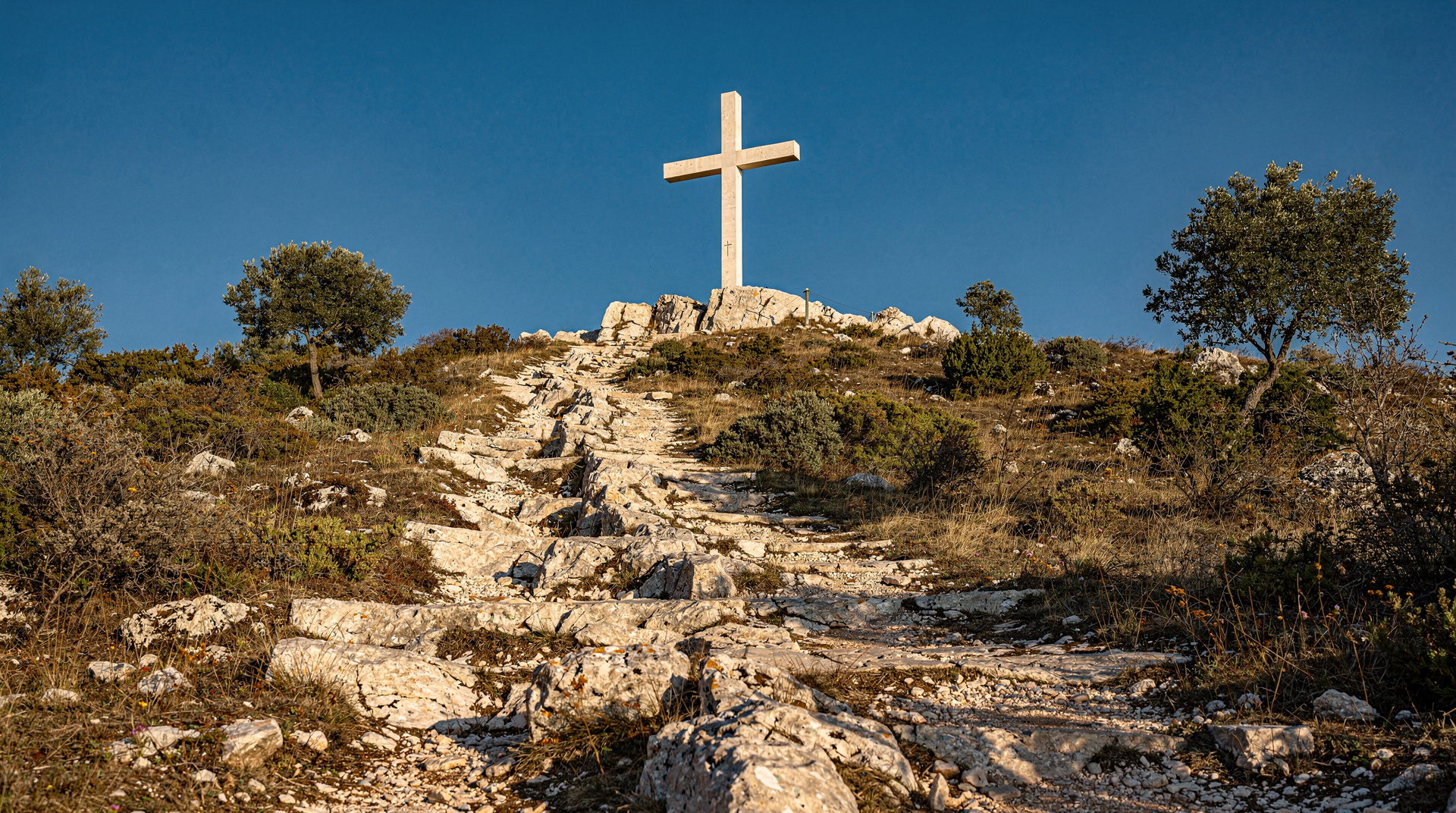
The larger pilgrimage trek is Cross Mountain (Križevac), 520 metres above the village with a large concrete cross at the top installed in 1934. The path is longer and steeper than Apparition Hill. The Stations of the Cross line the route. The views from the summit are more extensive.
Again, the experience at the cross itself — pilgrims praying, singing in various languages, sitting in silence — is entirely different from secular tourist experience of a viewpoint. If you are there as a non-believer, be aware that you are visiting a place of active, sincere devotion and behave accordingly.
The village itself
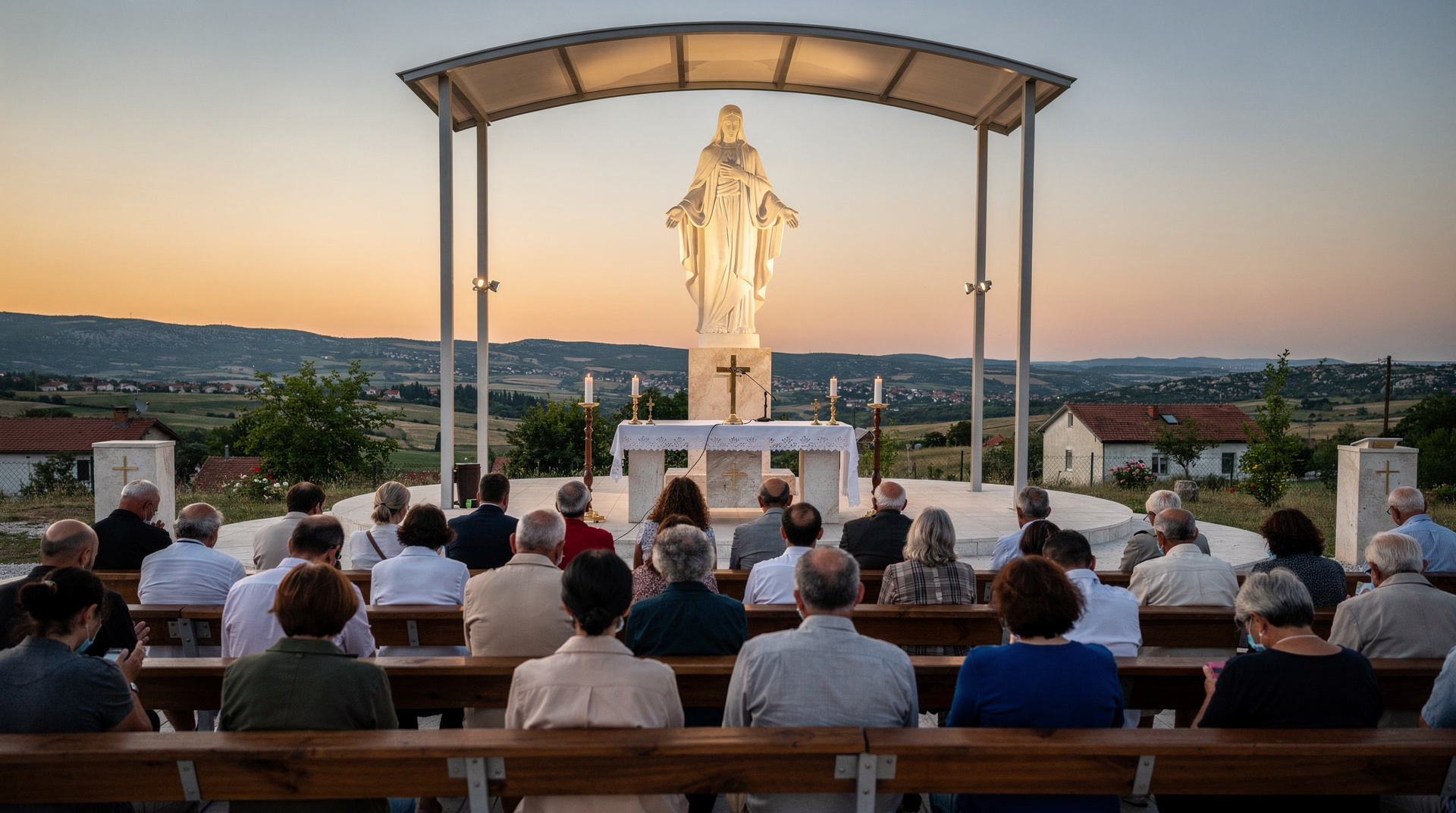
Away from the two hills, the village centre around St James church is where the pilgrimage economy is most visible. Evening Mass at St James draws large crowds in multiple languages during peak season, with the church grounds often overflowing onto the surrounding plaza. Even a non-believer can find the atmosphere of a multilingual outdoor evening service — candles, quiet singing, thousands of people in the same posture of attention — worth witnessing once.
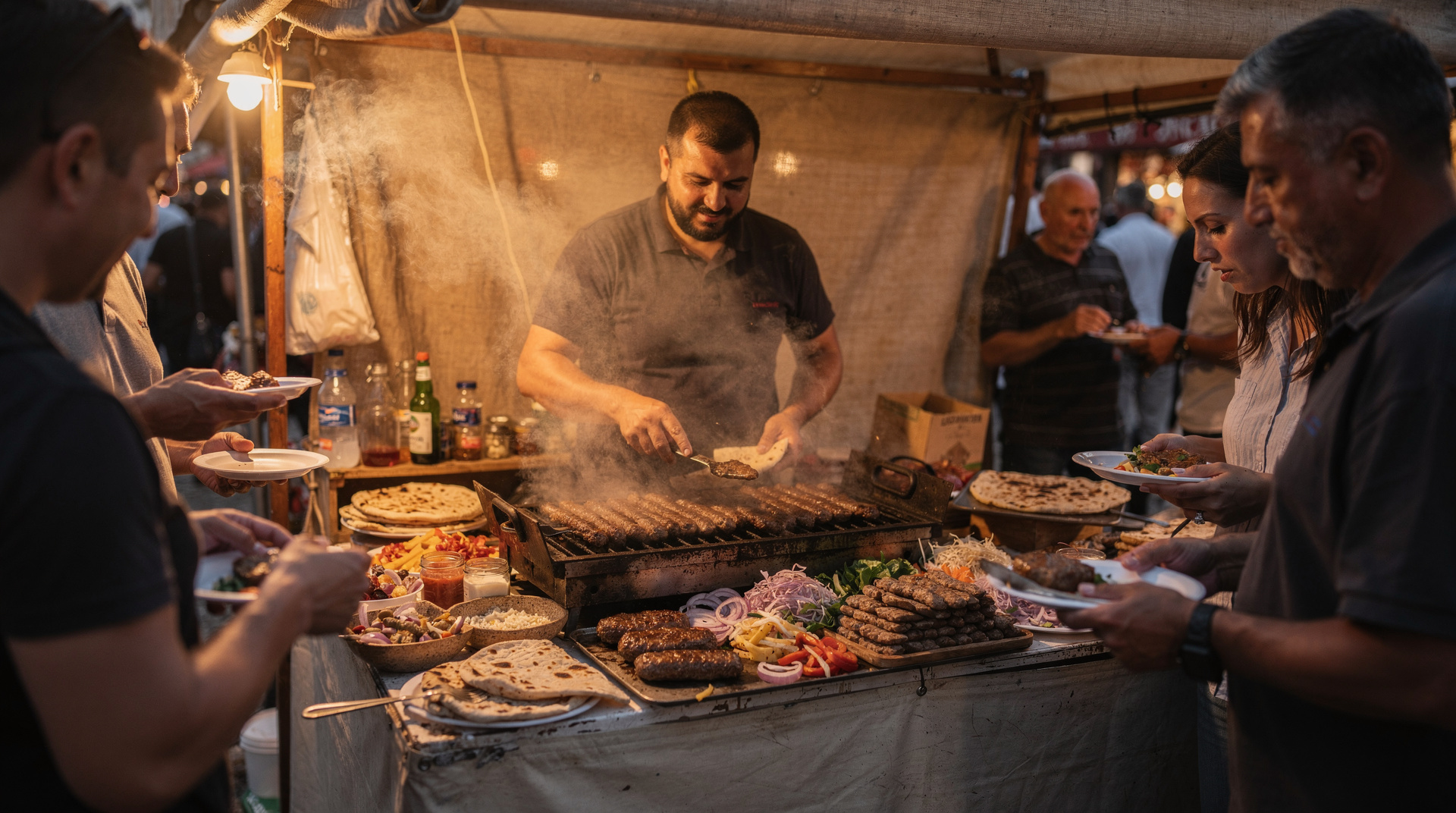
The practical infrastructure around the church is aimed squarely at pilgrims: religious goods shops, budget guesthouses built specifically for pilgrimage groups, and restaurants that lean toward large-group service rather than culinary ambition. Do not expect Mostar-level dining here; the food is functional.
Before your first evening in the village
A few habits make the visit smoother for a non-believer. Arrive with no agenda beyond watching and listening. Keep your voice low near the church and on both hills, ask before photographing anyone who is praying, and dress modestly enough that you would not feel out of place stepping inside St James. If you are driving, the driving in Bosnia guide and the car rental guide cover the practicalities, while those without a car can look at getting around Bosnia and the bus guide.
If you come from the coast, the Dubrovnik to Sarajevo route and the Neum corridor crossing guide explain the border logic, and the Split to Sarajevo route works similarly from the north. Travellers coming from Split may prefer the Mostar from Split guide as a base for the day.
If you would rather not organise it yourself
Not everyone wants to handle parking, border logic and timing alone. For a non-believer, a guided visit has one real advantage: someone explains what you are looking at, which helps when you arrive without any background. From the coast, a small-group pilgrimage day trip from Dubrovnik is the usual way in, and a small-group Međugorje experience starting in Dubrovnik keeps the logistics out of your hands. If you are already based inland, a private tour combining Apparition Hill with Mostar pairs the two contrasting stops covered further down this page, and for the history behind the town you can read the Medjugorje destination page first.
Getting oriented before you go
For anyone weighing whether to make the trip at all, the is Medjugorje worth it guide walks through the decision in more practical terms than this personal account does — useful if half a day of your Herzegovina itinerary is at stake and you are unsure it fits.
The full guide vs this article
The Medjugorje pilgrimage guide and the is Medjugorje worth it guide cover the practical details — getting there, timing, what to see, who it suits — in more detail.
This article is specifically for the visitor who is not a pilgrimage traveller but is curious. The honest advice:
Go if: You are in the area (Mostar is 25 kilometres away), you are curious about religious pilgrimage culture as a phenomenon, or you want to see one of the more unusual transformations a place can undergo in 40 years.
Don’t go if: You expect a typical cultural-historical attraction. Medjugorje is not that. The apparitions are its entire reason for existence, and that is present in every aspect of the visit.
Be respectful regardless. The pilgrims here are serious, and many have made significant sacrifices to come. The appropriate posture — for a non-believer visiting any site of sincere religious practice — is respectful curiosity rather than critical distance.
Pairing with Mostar
Medjugorje and Mostar are 25 kilometres apart. Many day trips combine both — the Mostar and Herzegovina itinerary from Dubrovnik includes both.
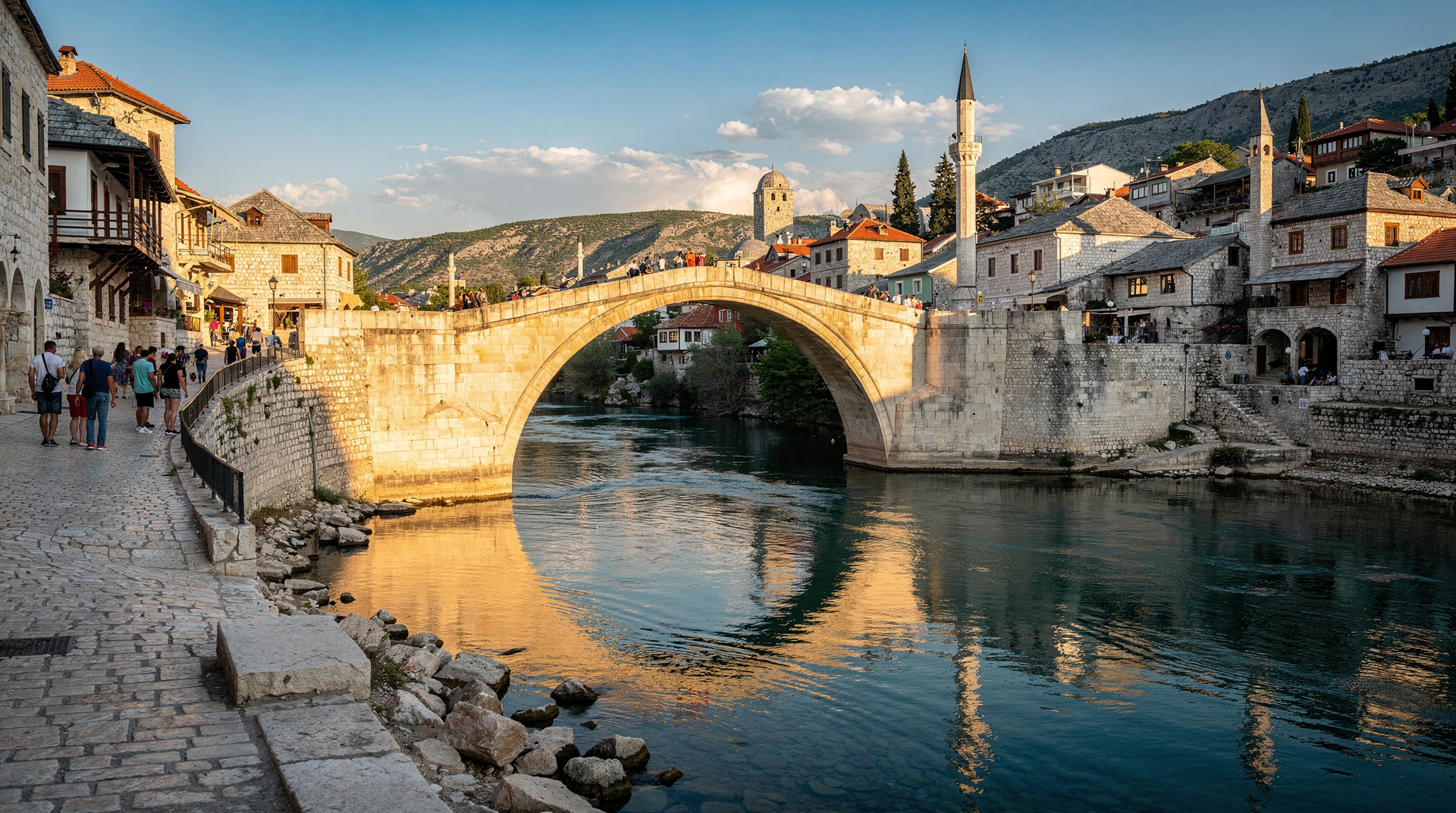
In terms of contrast: there are few sharper juxtapositions in Herzegovina than Stari Most (a medieval bridge that was rebuilt after deliberate wartime destruction, now a secular tourist phenomenon) and Medjugorje (a pilgrimage site that grew from nothing in four decades around reported supernatural events). Both are authentic expressions of something deep in the regional culture.
Building it into a longer trip
Medjugorje slots easily into a Herzegovina weekend itinerary or a Sarajevo and Mostar plan. For other angles on the same area, see the Herzegovina day trip guide, the best day trips from Mostar, and the Kravice waterfalls guide for a contrast in mood. Readers who liked this personal account may also enjoy the story of the Old Bridge and Trebinje, the other Herzegovina.
The honest bottom line
Medjugorje is not for everyone. The commercialisation is real, the theological question is unresolved (and likely will remain so for the foreseeable future), and the experience for a non-believer is distinctly different from that of a pilgrim.
But it is genuinely interesting as a cultural phenomenon, worth half a day if you are in the area, and worth taking seriously rather than dismissing.
Frequently asked questions about Medjugorje
Is Medjugorje officially recognised by the Catholic Church? As of 2024 the Vatican approved it as a place of pilgrimage while still not issuing a definitive ruling on the supernatural nature of the reported apparitions themselves — a deliberately cautious middle position.
Can you visit Medjugorje as a day trip from Mostar? Yes — it is about 25 kilometres away, roughly a 30-40 minute drive, making it an easy half-day addition to a Mostar or wider Herzegovina itinerary.
Top experiences
Bookable activities with verified prices and instant confirmation on GetYourGuide.