Sutjeska National Park
Explore Sutjeska National Park: Perućica primeval forest, Maglić summit (2386m), Trnovačko heart-shaped lake and the Tjentište WWII memorial.
Private Tour from Sarajevo: Sutjeska National Park
Quick facts
- Region
- Eastern Bosnia / Federation BiH
- Days needed
- 1-2
- Currency
- BAM (1 EUR = 1.95583 KM)
- Distance from Sarajevo
- ~170 km, 2h30 by car
- Highest point
- Maglić, 2386 m
- Park entry
- ~5 BAM / 2.5 EUR
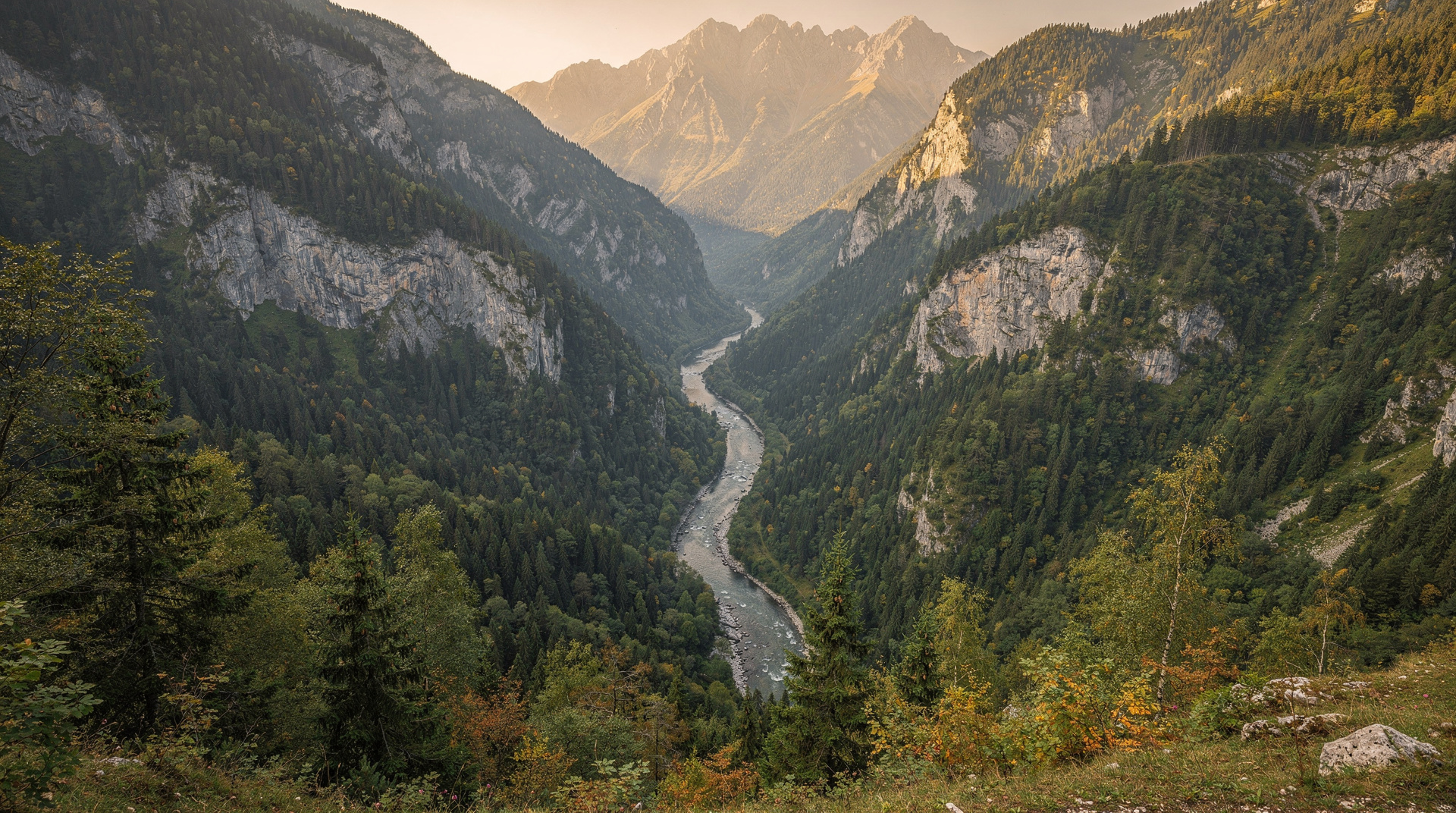
Sutjeska National Park is Bosnia and Herzegovina’s oldest and largest national park, established in 1962. Its 175 km² protect a landscape of exceptional ecological and geological importance: one of Europe’s last surviving primeval forests, the country’s highest mountain, a deep river gorge, and a series of glacial lakes. The park is also home to the Tjentište memorial, one of the most significant World War II monuments in the former Yugoslavia. Sutjeska is not a polished tourist destination — infrastructure is basic and the terrain is demanding — but that is precisely why those who make the effort find it so rewarding.
| At a glance | |
|---|---|
| Where | Eastern Bosnia, ~170 km south of Sarajevo, on the Montenegro border |
| Cost | Park entry around 5 BAM; Perućica guide fee around 30-50 BAM |
| Time needed | 1-2 days for a good visit, more for the full Maglić circuit |
| Getting there | Self-drive or private tour from Sarajevo; no direct public bus |
| Best time | June-September for open trails and accessible forest |
Best time to visit, month by month
| Period | Conditions | Notes |
|---|---|---|
| June | Trails opening, forest lush | Wildflowers, occasional lingering snow at altitude |
| July-August | Peak season, warmest | Best chance of stable weather on Maglić; book accommodation ahead |
| September | Cooler, quieter | Good hiking conditions, fewer visitors than midsummer |
| October | Trails closing | Snow risk increases at altitude; check with the visitor centre |
| November-May | Largely closed to hiking | Snow-covered; the Tjentište memorial remains accessible |
Getting to Sutjeska
From Sarajevo, the drive is approximately 170 km south via Foča on the M20 road; allow 2 hours 30 minutes. The road follows the Neretva and Sutjeska river valleys, with increasingly dramatic mountain scenery as you approach the park. There is no direct public bus; the most practical option without a car is a private tour.
A private Sutjeska National Park tour from Sarajevo covers transport and a guide, allowing you to focus on the hiking rather than logistics.
Accommodation at the park entrance (Tjentište) is limited to the Hotel Mladost and a few bungalows operated by the national park authority. Book well in advance for summer weekends.
Perućica primeval forest
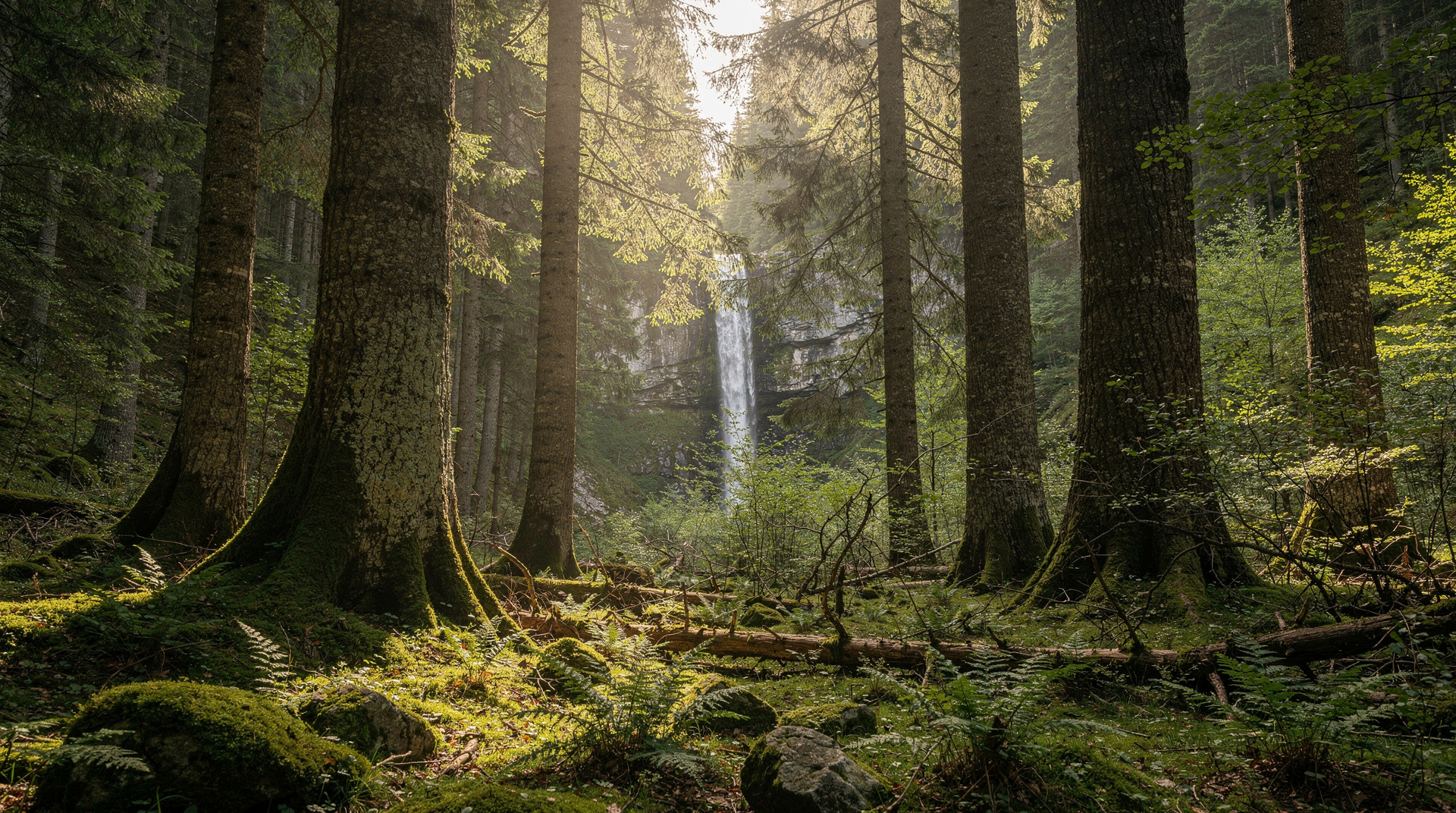
Perućica is one of only two remaining primeval (virgin) forests in Europe. Covering around 1,434 hectares, the forest has never been logged or managed; trees here die and fall naturally, creating a layered habitat of living and dead wood that supports extraordinary biodiversity. Beech, fir and spruce dominate; individual trees exceed 50 metres in height and several hundred years in age.
Access to Perućica is strictly controlled. Visitors must enter with a licensed national park guide — solo or unguided entry is not permitted, and this rule is enforced. The guided walk lasts 3–4 hours and passes through old-growth stands to the Skakavac waterfall, a 75-metre drop that is one of the highest in the Balkans and plummets into the forest below. The guide fee is around 30–50 BAM (15–26 EUR) per person; tickets must be arranged at the park visitor centre in Tjentište.
The forest is accessible from approximately June through October, depending on snow levels. Trail conditions can be wet and slippery after rain — bring proper footwear.
For more detail on the forest ecology and visit logistics, see the Perućica primeval forest guide.
Maglić — Bosnia’s highest summit
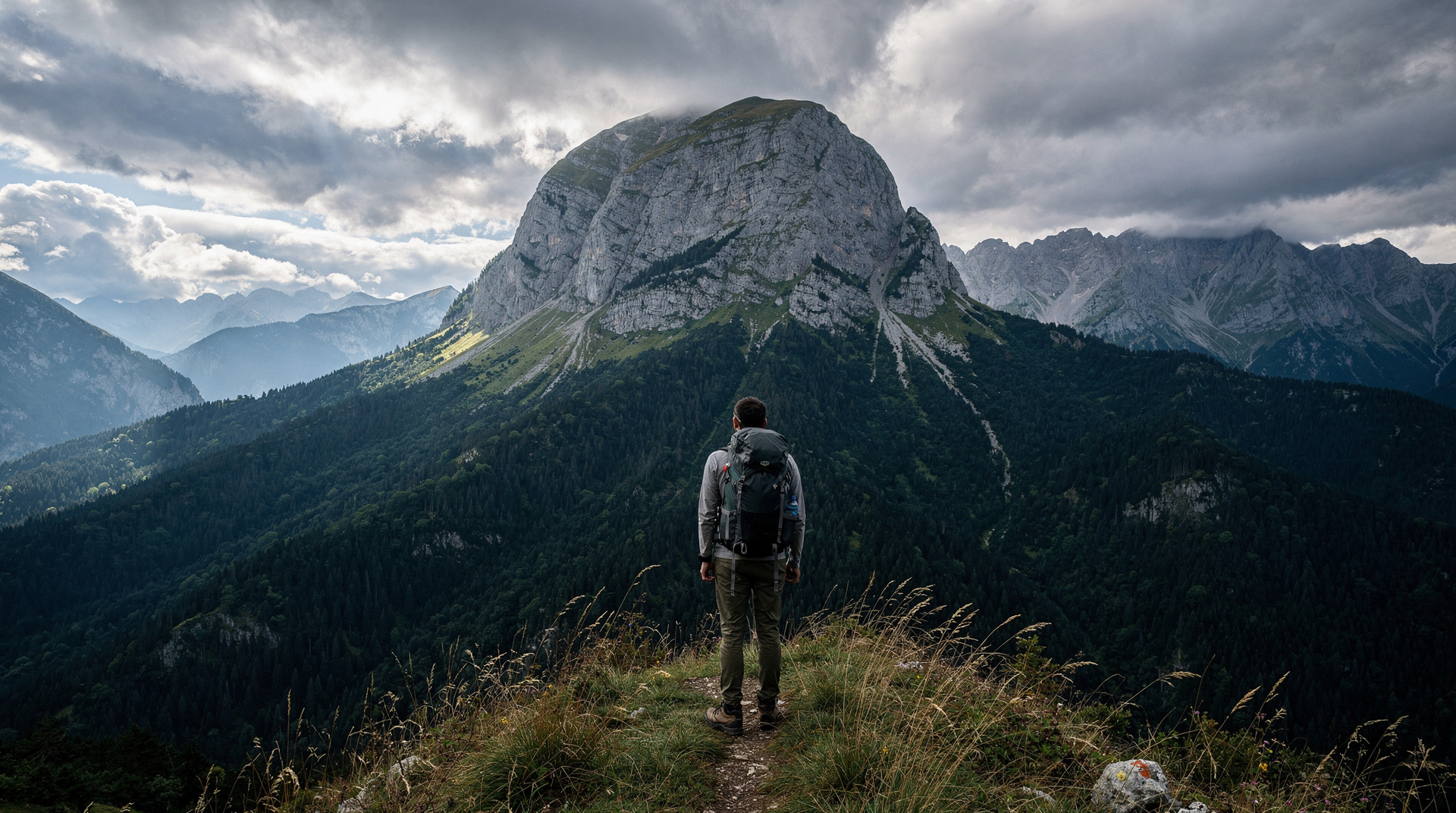
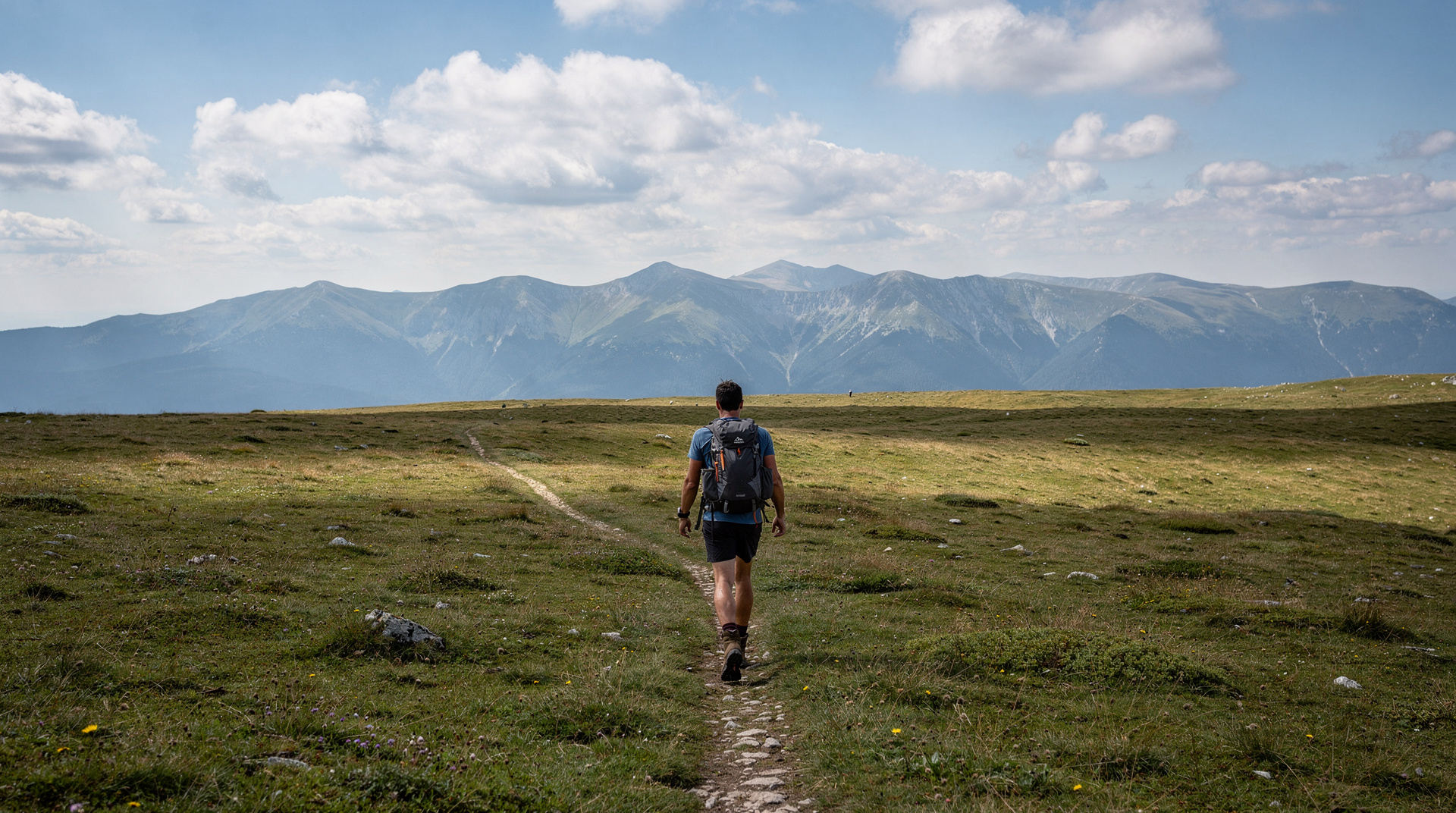
Maglić stands at 2,386 metres on the border between Bosnia and Montenegro, making it the highest peak in Bosnia and Herzegovina. The standard ascent from the Sutjeska valley takes around 6–7 hours return from the Trnovačko Lake area (see below) and requires a reasonable level of fitness, solid footwear, and appropriate clothing layers. The summit provides panoramic views across the Dinaric Alps and, on a clear day, as far as the Adriatic coast.
The route is marked but not maintained to alpine trail standards. Navigation requires a map (available at the park visitor centre) or GPS. The guided Lukomir to Sutjeska and Maglić trekking tour covers the full Sutjeska hiking circuit including the Maglić summit across two days.
Snow can cover the summit trails from October through May. Do not attempt the summit in poor weather or without adequate equipment.
Trnovačko Lake
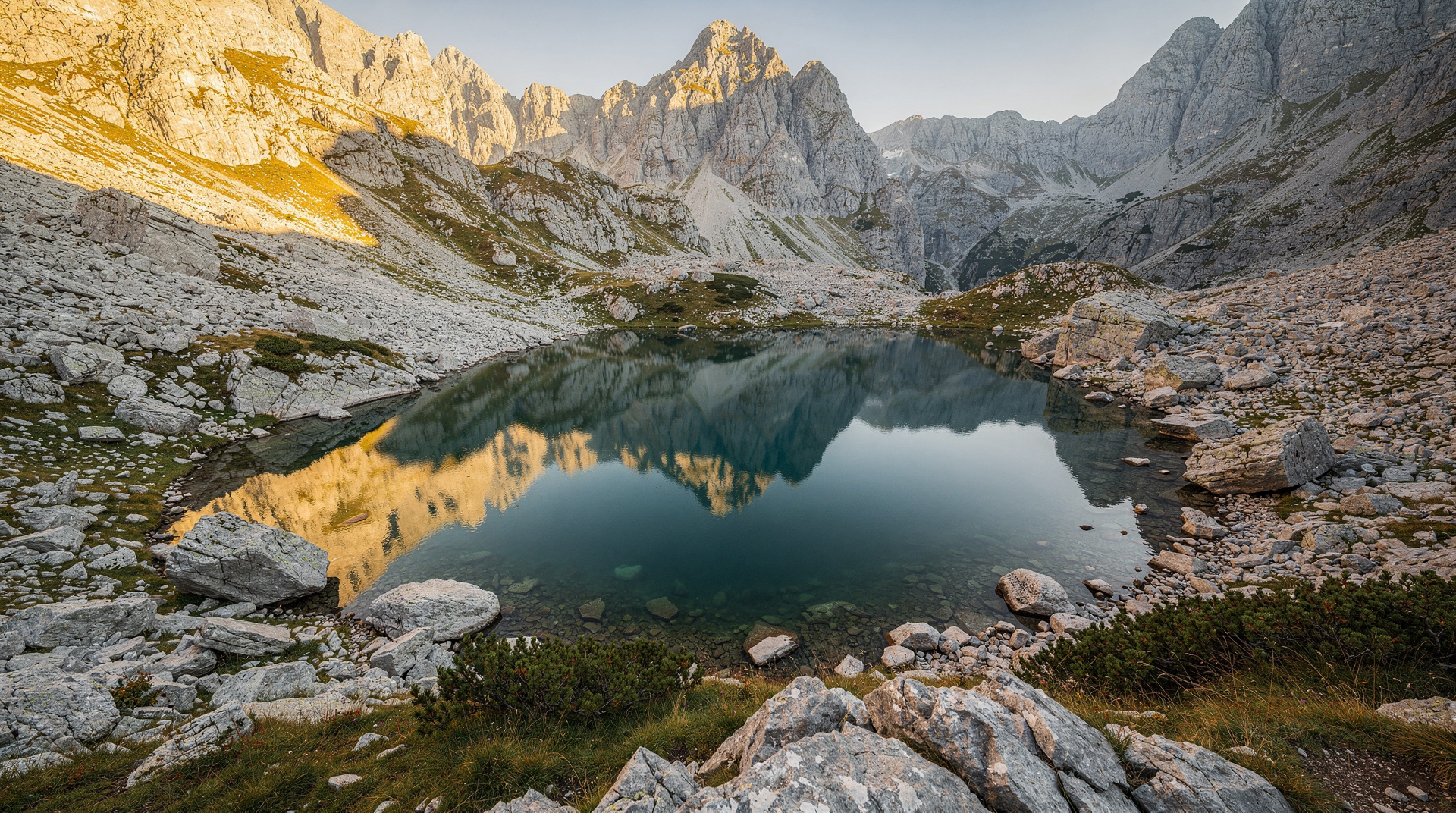
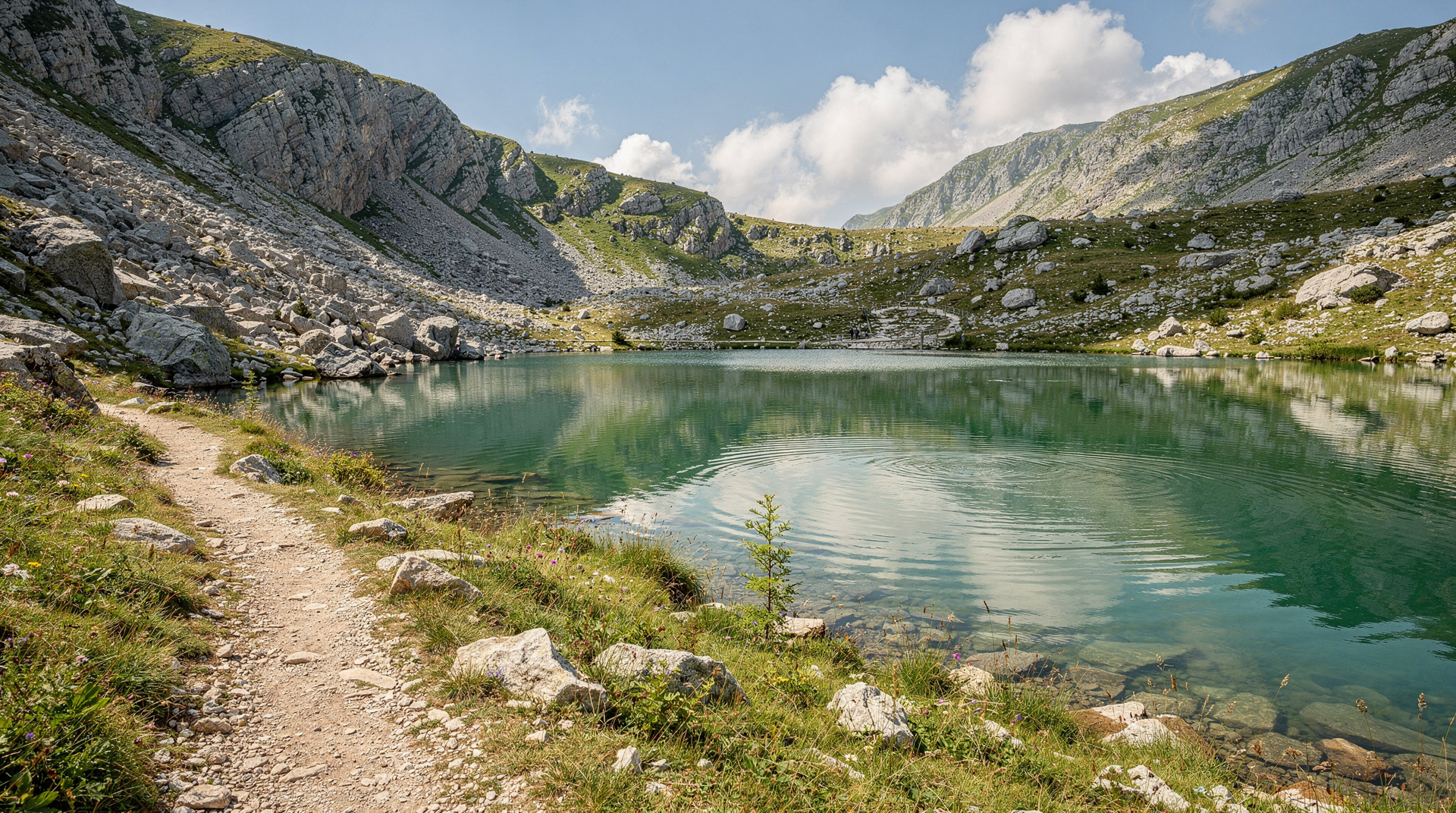
Trnovačko jezero (Trnovačko Lake) lies at approximately 1,700 metres altitude in a glacial cirque on the slopes of Maglić. The lake is famous for its heart-shaped outline, visible from the ridge above, and for the extraordinary clarity of its water. It is one of the most photographed natural sites in Bosnia — and in person it lives up to the photographs.
The hike to Trnovačko from the Sutjeska valley takes around 3–4 hours return (moderate fitness required). The Maglić and Trnovačko Lake hiking tour from Sarajevo combines the lake with a summit attempt on Maglić for a full mountain day.
The area around the lake has basic camping possibilities; check with the national park authority for current rules and permits.
For the full hiking guide, see Trnovačko Lake hike guide and Maglić mountain climb guide.
Tjentište and the WWII memorial
Tjentište is the small settlement at the park entrance — the functional base with the visitor centre, hotel, and the historic memorial. In May-June 1943, the Battle of Sutjeska took place here: Yugoslav Partisan forces under Tito withstood a massive German-led offensive (Operation Schwartz) in the surrounding mountains. Around 7,500 Partisans died in the battle; the Axis forces failed to destroy the Partisan movement.
The Sutjeska Monument (Tjentište Memorial), completed in 1971, is a major work of Yugoslav memorial architecture — two abstract concrete wings rising from the valley floor, flanked by bronze reliefs depicting the fighting. The scale and boldness of the design have made it a landmark of 20th-century socialist monumental sculpture. Entry is free and the monument is accessible year-round.
A small museum in the Tjentište visitor centre documents the battle with photographs, maps and artefacts. The surrounding valley contains several marked positions and plaques from the 1943 fighting.
The memorial should be approached with the same sober respect as any war memorial. The battle was part of a brutal occupation and resistance that caused enormous civilian and military casualties across Yugoslavia.
Zelengora mountain
North of the Sutjeska gorge lies Zelengora, a high plateau at around 1,700–1,800 metres dotted with a dozen glacial lakes. The landscape is softer and more open than the Maglić massif — rolling alpine meadows, lake basins, and isolated shepherd huts. The Zelengora mountain lakes guide covers the main trails and the best overnight options on the plateau.
Wildlife
Sutjeska is one of the most biodiverse areas in the Balkans. Brown bears, wolves, lynx and chamois are all present, though sightings are rare. The park holds the largest population of brown bears in Bosnia. Birdlife includes golden eagle, peregrine falcon and several species of woodpecker. The Sutjeska River supports the Huchen (Danube salmon).
Safety and access notes
Sutjeska National Park is genuine mountain terrain. Several important points:
- Stay on marked paths at all times. Some areas in and around the park boundaries were affected by mines during the 1992-1995 war. The main hiking routes (Maglić, Perućica, Trnovačko) are cleared and well-walked, but deviating into forested or unmarked areas carries risk. See the mine safety guide.
- Mountain weather: Conditions on Maglić and Zelengora can deteriorate rapidly. Check forecasts before setting out.
- Altitude: Some visitors underestimate the altitude gain involved. Trnovačko Lake is at 1,700 m and Maglić at 2,386 m — acclimatisation is not necessary but physical preparation is.
- Permits for Perućica: Required; obtain at the visitor centre in Tjentište before entering the forest.
Practical information
- Park entry: Around 5 BAM (2.5 EUR) per person at the main gate.
- Visitor centre: Tjentište; open June-September with maps, guides and permits. More limited service in off-season.
- Accommodation: Hotel Mladost (Tjentište), national park bungalows, and mountain huts on the Zelengora plateau. Book in advance for July-August.
- What to bring: Proper hiking boots, waterproofs, sun protection, and water. No services on the trails beyond Tjentište.
- Season: June-September for trails; the park is snow-covered from November through April. The monument is accessible year-round.
For a broader hiking overview see hiking in Bosnia guide and the Bosnia adventure itinerary.
Combining Sutjeska with Lukomir and the highlands
Sutjeska is remote enough that most visitors either commit to a dedicated one-to-two-day trip from Sarajevo, or combine it with other highland destinations along the way. The village of Lukomir, Bosnia’s highest and most isolated permanent settlement, lies roughly on the route between Sarajevo and Sutjeska and pairs naturally with a multi-day mountain itinerary. The Lukomir to Sutjeska and Maglić trekking tour links the two in a single guided trip for hikers who want the full eastern Bosnia highland experience rather than a single-park visit.
What makes Sutjeska different from Bosnia’s other parks
Compared with Una National Park in the northwest, which is built around whitewater and waterfalls with relatively easy access, Sutjeska is higher-altitude, more remote, and demands more from visitors — longer drives, guided-only access to the primeval forest, and genuine mountain hiking rather than riverside walks. It rewards travellers who want wilderness and are prepared to plan around limited infrastructure, rather than a quick nature stop. See the Una National Park guide for the contrast.
Shaping your days in the park
The most satisfying visits give the park room to breathe. A first day works well for the Tjentište memorial and museum, followed by the guided Perućica walk, which keeps the legs fresh for a bigger mountain day afterwards. Maglić or Trnovačko Lake then deserves its own early start, ideally with a settled weather forecast. If you have only the shorter option, the Trnovačko Lake hike guide shows how to approach the cirque without committing to the summit. Those who want the full summit story will find the route details in the Maglić mountain climb guide, and the broader park overview sits in the Sutjeska National Park guide.
Seasons change the character of the trip more than any other factor. Early summer brings green slopes and wildflowers, while autumn is quieter and the light is softer; the Bosnia in autumn guide and the blog story on the autumn colours of Sutjeska show what that looks like on the ground. For help choosing dates across the whole country, the best time to visit Bosnia guide puts the park in context.
Getting the logistics right
Because Sutjeska is remote, the practical side deserves attention before you leave. Read the driving in Bosnia guide if you plan to drive yourself, and the renting a car in Bosnia guide if you still need wheels. Visitors without a car can compare options in the getting around Bosnia guide, though the park remains much easier to reach with your own transport or a guided trip. Fuel, food and water are worth sorting out in advance, since little is available once you are on the trails.
Where to go before or after
Sutjeska fits naturally into a longer loop through the highlands and the south. Many travellers arrive from the capital, so the Sarajevo destination page is the usual starting point, and the Bjelašnica and Igman page offers an easier mountain warm-up. Heading south afterwards, Trebinje and Mostar give a very different, warmer and more Mediterranean mood. Hikers building a longer route can browse the Bosnia 7-day itinerary and the Via Dinarica Bosnia guide for ideas on stringing several mountain days together. For a first-hand account of walking the region, the Via Dinarica thru-hike diary is a good companion read.
Respect, patience and pace
Sutjeska rewards slow travel. Services are modest, distances feel longer than they look on a map, and the weather decides what is possible on any given day, so build a spare day into your plan if you can. Treat the forest as a living laboratory rather than a backdrop: stay with your guide, leave dead wood where it lies, and carry out everything you bring in. At the memorial, keep voices low and remember the human cost behind the monument; the Bosnia history for travelers guide and the Yugoslav wars explained give wider background for the region’s layered past.
Frequently asked questions about Sutjeska National Park
Do I need to be an experienced hiker to visit Sutjeska? Not for the Tjentište memorial or a guided walk to the edge of Perućica, which are manageable for most reasonably fit visitors. The Maglić summit and the full Trnovačko Lake hike are genuine mountain routes requiring good fitness, proper footwear and hiking experience.
Is Sutjeska National Park doable as a day trip from Sarajevo? It is possible but tight: with a 2h30 drive each way, a single day leaves only a few hours in the park, enough for the Tjentište memorial and perhaps a short guided taste of Perućica. An overnight at Tjentište is strongly recommended to properly hike Maglić or Trnovačko Lake.
Top experiences
Bookable activities with verified prices and instant confirmation on GetYourGuide.