Bosnia vs Croatia — which Balkans destination?
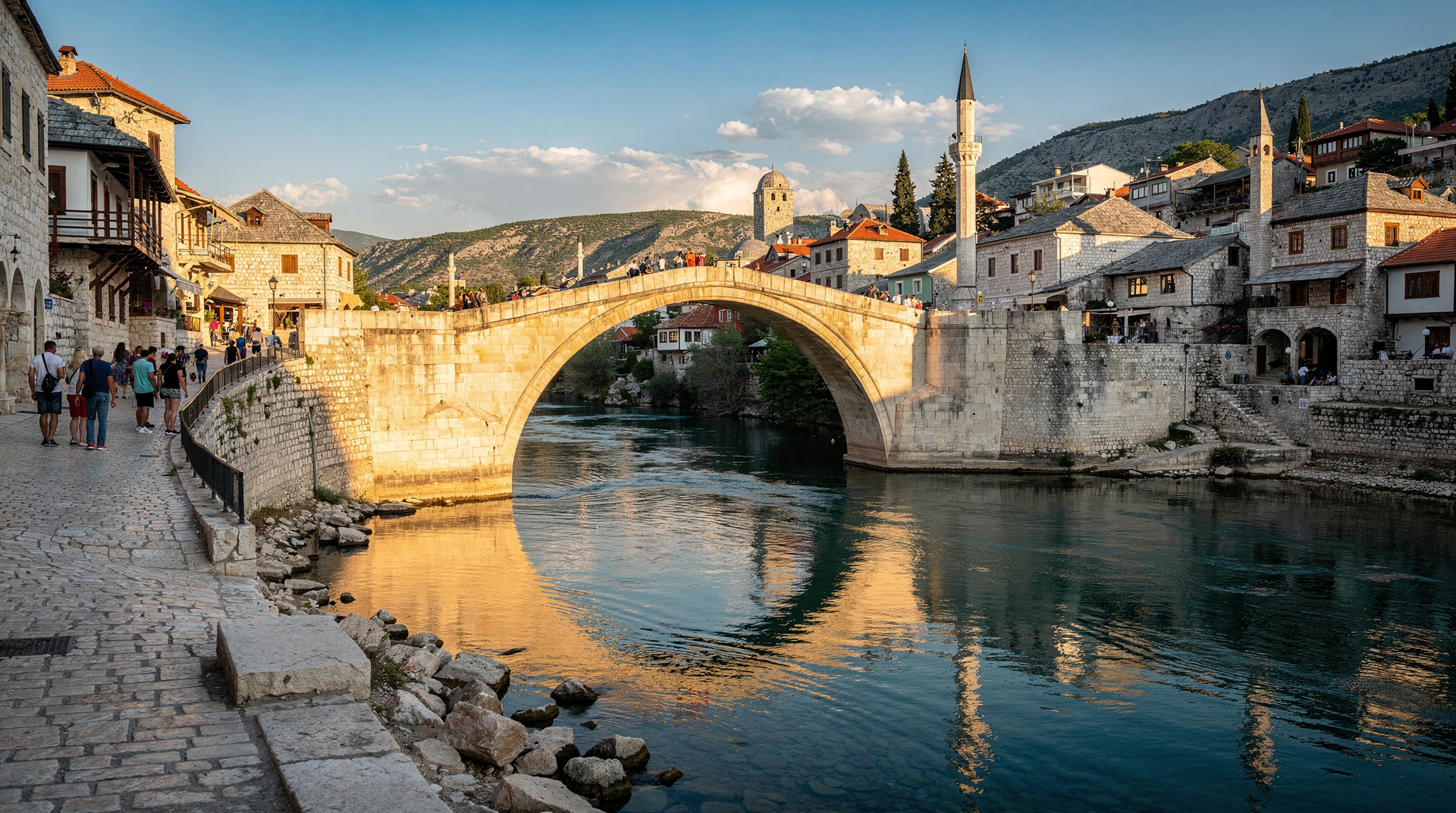
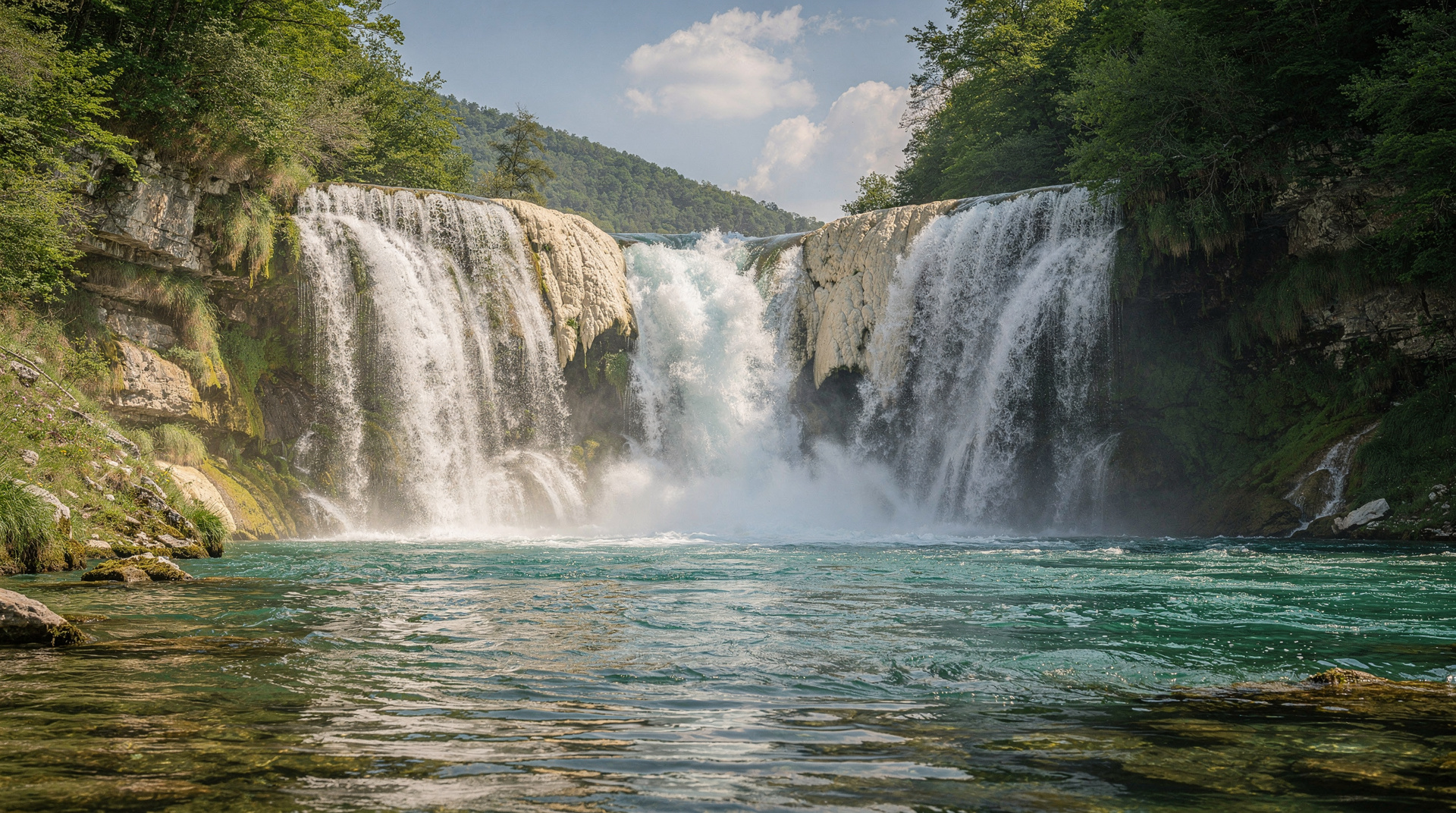
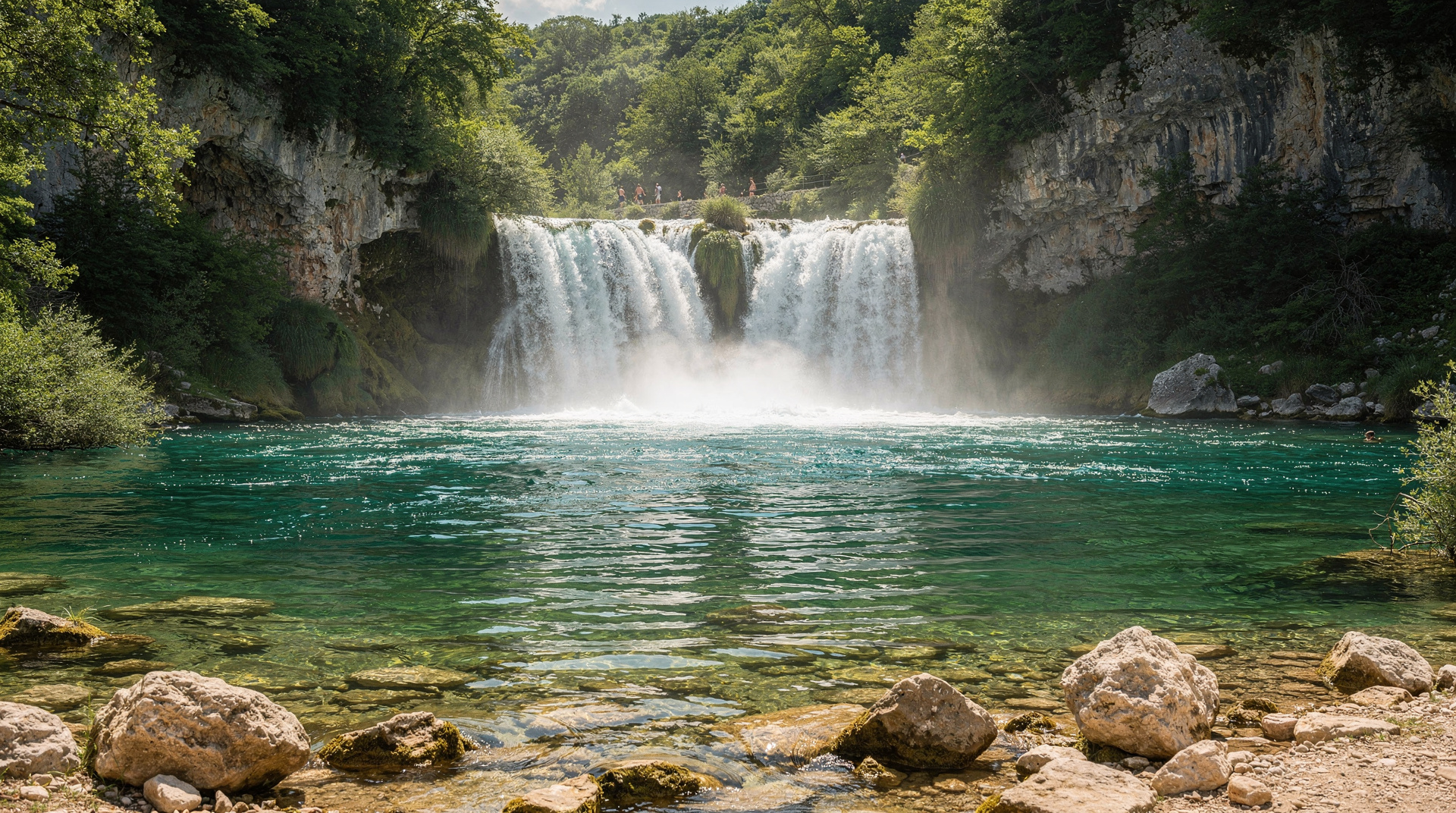
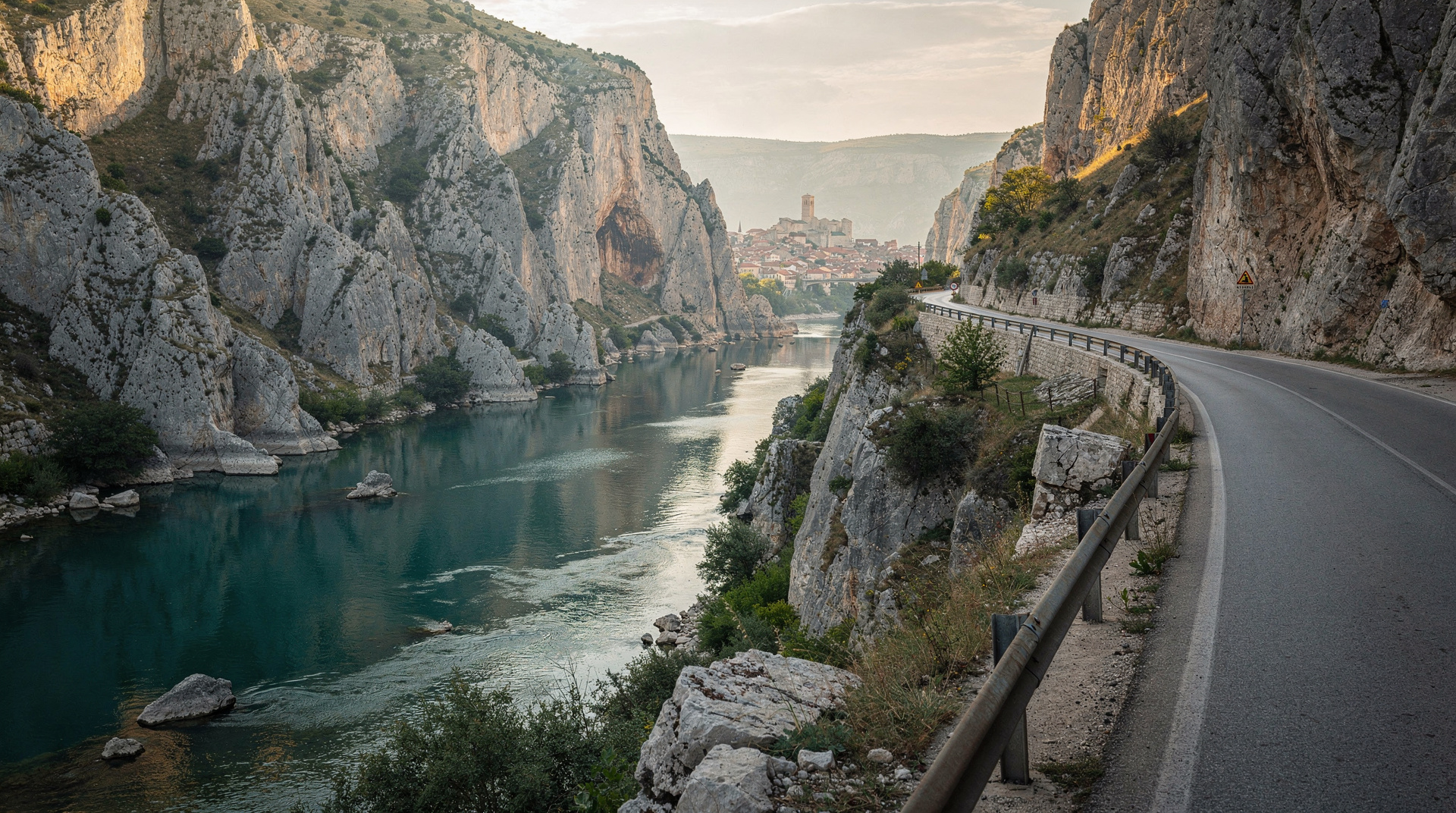
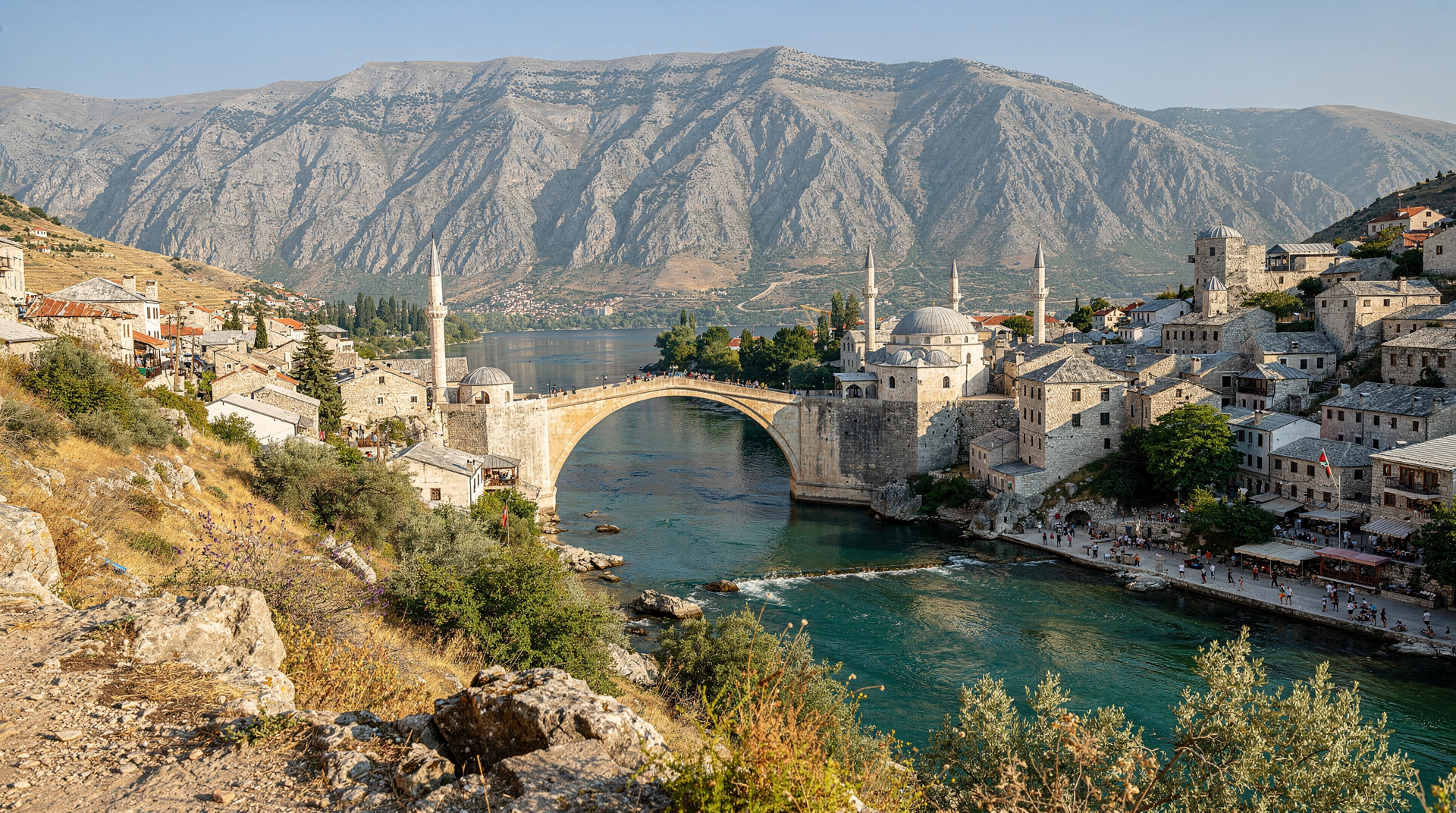
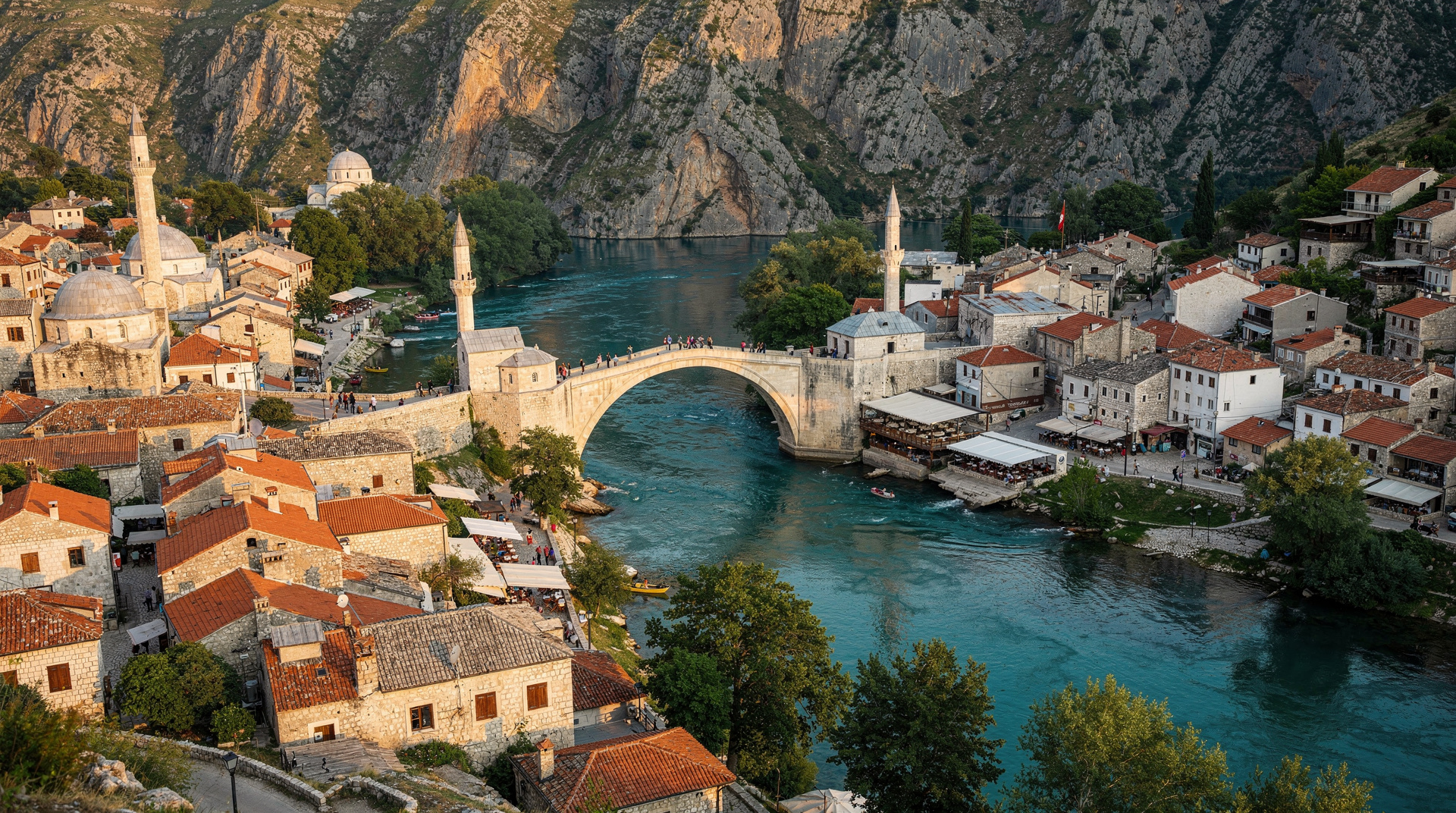
From Dubrovnik: Mostar and Kravica Waterfall Day Trip
Should I visit Bosnia or Croatia?
They are complementary, not competing. Croatia offers beaches, islands and polished Adriatic towns. Bosnia offers depth, authenticity, history and adventure at a fraction of the cost. Most visitors do both — Dubrovnik or Split as base, Bosnia for a day trip or overnight, or vice versa.
At a glance
| Bosnia strengths | History, adventure, value, authenticity |
| Croatia strengths | Beaches, islands, infrastructure, seafood |
| Typical combo | Coastal Croatia base (Dubrovnik/Split) + Bosnia day trip or overnight |
| Crossing time | Around 2-4 hours by bus/car between the coast and Mostar |
| Cost difference | Bosnia runs roughly 40-60% cheaper than coastal Croatia |
Bosnia and Croatia are the most popular Balkans combination, and for good reason — they complement each other almost perfectly. Croatia’s polished Adriatic coast and Bosnia’s rugged, historically layered interior create a contrast that is more satisfying than either country alone. This guide is for travellers deciding how to split their time.
The fundamental difference
Croatia is a Mediterranean-Adriatic country with a beach culture, island-hopping tradition, seafood-heavy cuisine and well-developed tourist infrastructure. Dubrovnik and Split are major international destinations with hotels, restaurants and services to match. The tourism economy is mature, prices are high by Balkan standards and crowds in summer are intense.
Bosnia is a landlocked mountain country with Ottoman, Austro-Hungarian and Yugoslav-war heritage. Tourism is less developed, prices are much lower and the authentic experience of a country still working through its post-war recovery is palpable. The contrast with polished Croatia is stark and for many travellers is the most memorable aspect of the region.
Cost comparison
| Category | Bosnia | Croatia (Dubrovnik/Split) |
|---|---|---|
| Budget accommodation | 40-80 BAM/night (€20-41) | €60-150/night |
| Mid-range hotel | 100-180 BAM/night (€51-92) | €120-250/night |
| Local restaurant meal | 10-20 BAM (€5-10) | €15-30 |
| Coffee | 1.50-3 BAM (€0.75-1.50) | €2.50-4.50 |
| Bus between major cities | 20-25 BAM (€10-13) | €15-30 |
| Day trip tour | 60-100 BAM (€31-51) | €80-150 |
Bosnia is consistently 40-60% cheaper than coastal Croatia. For budget travellers, extending a Croatia trip with Bosnia days is extremely cost-effective.
What each country does best
Croatia excels at:
- Beaches and sea: Bosnia is landlocked; the short Bosnian coast (Neum) has minimal infrastructure. Croatia’s islands — Hvar, Brač, Korčula, Vis — are genuinely beautiful.
- Infrastructure: Croatian roads, airports and tourist services are more developed and predictable.
- Nightlife: Dubrovnik and Split have a well-established summer nightlife and restaurant scene.
- Day sailing and island-hopping: Croatia’s archipelago is one of Europe’s best sailing areas.
- Seafood: Dalmatian cuisine is Mediterranean-leaning, with excellent fish and shellfish.
Bosnia excels at:
- Historical depth: Multiple layers of culture (Ottoman, Austro-Hungarian, Yugoslav) in concentrated form. The war history of the 1990s is handled honestly and thoughtfully.
- Adventure: Rafting (Neretva, Una, Tara), hiking (Via Dinarica, Maglić, Lukomir), canyoning, 4x4 tours.
- Authenticity: Less polished, more genuine contact with local life. Markets, kafane, rural villages.
- Value: Dramatically lower prices across all categories.
- Off-the-beaten-track: Beyond Sarajevo and Mostar, Bosnia has remarkable destinations (Trebinje, Bihać, Sutjeska) with virtually no mass tourism.
The Neum corridor: Bosnia’s brief coast
Bosnia has a 9 km stretch of Adriatic coast centred on the small town of Neum. This seemingly arbitrary geography is a historical consequence of the 1699 Treaty of Karlowitz, which gave the Ottoman Empire (later Bosnia) this coastal access to prevent Venice from dominating the entire Adriatic.
Neum functions primarily as a domestic summer resort — some duty-free shopping, a handful of hotels, a small beach. It is worth knowing about it as a transit point on the Split–Dubrovnik coastal road, but it is not a travel destination.
The Pelješac Bridge (opened 2022) now allows Croatian traffic to bypass Neum entirely, removing the need for two border crossings on the coast road. Most tourist traffic now uses the bridge.
Combining Bosnia and Croatia: itinerary options
Option 1 — Bosnia as a day trip from Croatia
From Dubrovnik: Mostar and Kravice Falls day trip — the most popular Bosnia experience for Croatia-based tourists. About 8-10 hours from Dubrovnik, covers the Old Bridge, a tour of the old town and the waterfall.
From Dubrovnik: Mostar and Kravica Waterfall day tripFrom Split: Mostar and Herzegovina full day — similar content to the Dubrovnik version, slightly longer drive.
Option 2 — Bosnia as a 2-3 night extension
Fly into Dubrovnik or Split, spend 3 days on the coast, take an overnight bus or private transfer to Sarajevo, spend 3-4 days in Bosnia (Sarajevo, Mostar, Herzegovina circuit), return to Croatia by bus or fly from Sarajevo.
Option 3 — Bosnia as the primary destination with Croatian bookends
Fly into Sarajevo, spend 7-10 days in Bosnia, exit via Dubrovnik or Split. This is the best way to experience Bosnia properly without rushing. Use the Bosnia 7-day itinerary as a planning resource.
If you would rather not organise the Bosnian leg yourself, a guided option such as a private three-day tour through Sarajevo, Mostar and Jajce takes care of the driving and the logistics.
Choosing by travel style
The honest way to decide is to start from what you want your days to feel like, not from the country names.
If your ideal day is a swim, a long lunch and an evening stroll along a stone waterfront, Croatia delivers that reliably and Bosnia simply cannot. If your ideal day involves a river, a trail or a conversation with someone who has lived through remarkable history, Bosnia is the stronger choice. Active travellers will find the rafting in Bosnia guide and the hiking in Bosnia guide far more relevant than anything the Croatian coast offers in the same vein.
History-minded travellers should lean towards Bosnia. The Bosnia history guide for travellers and the Yugoslav wars explained give the context that makes a visit to Sarajevo or Mostar far more meaningful. Croatia has its own layers of history, but they are presented in a more polished, museum-and-monument way.
Food-focused travellers get two different kitchens. Croatia’s coast leans towards fish, olive oil and Mediterranean habits, while Bosnia’s table is built around grilled meats, pastry, dairy and strong coffee. The Bosnian food guide and the burek and pita guide show what you would be missing if you stayed on the coast, and the Herzegovina wine guide proves that the wine scene is not limited to Croatia.
Families can use both countries in different ways: beach days on the Croatian side, then a gentler, hands-on Bosnian stop. The Bosnia with kids guide explains what works for younger travellers and what is better skipped.
Budget-conscious travellers should treat Bosnia as the place where the trip pays for itself. The Bosnia on a budget guide shows how to stretch a daily spend while still seeing the highlights, which is the practical reason so many people add a few Bosnian days to an otherwise expensive Croatian itinerary.
Cultural and historical connections
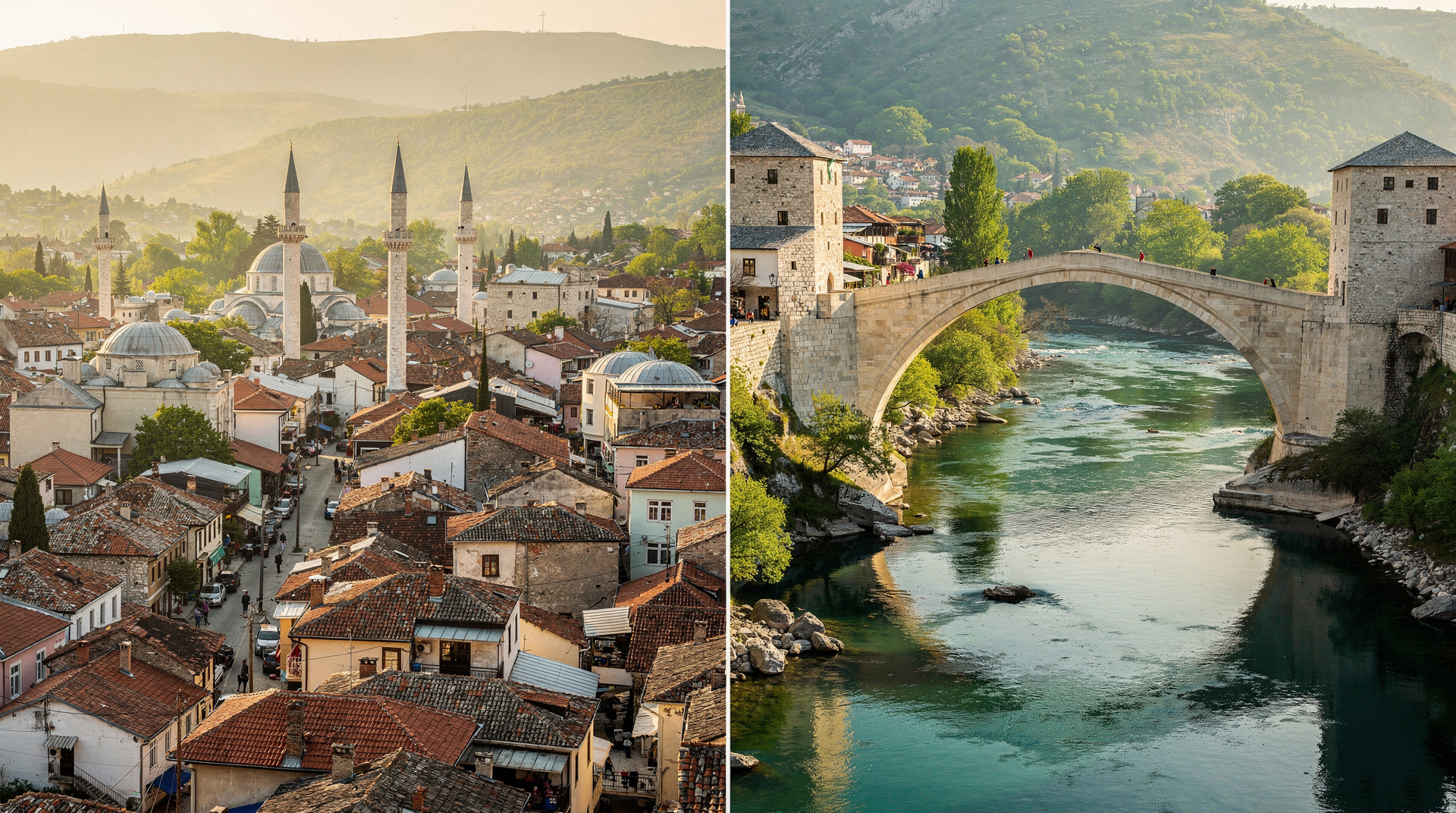
Bosnia and Croatia share centuries of intertwined history. The Croatian coast (Dubrovnik/Ragusa, Split/Spalato) was historically Venetian and Austro-Hungarian, while Bosnia’s interior was Ottoman. The border between these spheres of influence is still visible in architecture, cuisine and religion.
The mixed heritage of people in both countries — particularly in Herzegovina, where Bosnian Croats are the majority ethnic group — means that Bosnia and Croatia are linked in ways that make visiting both more enriching than either alone.
Trebinje, just 30 km from Dubrovnik, is a Bosnian Serb town with an elegant old town and excellent local wine. The Trebinje guide covers it.
For travellers who want to see several countries without handling the borders themselves, a small-group tour combining Bosnia and Montenegro from Dubrovnik is one way to do it.
What the crossing feels like
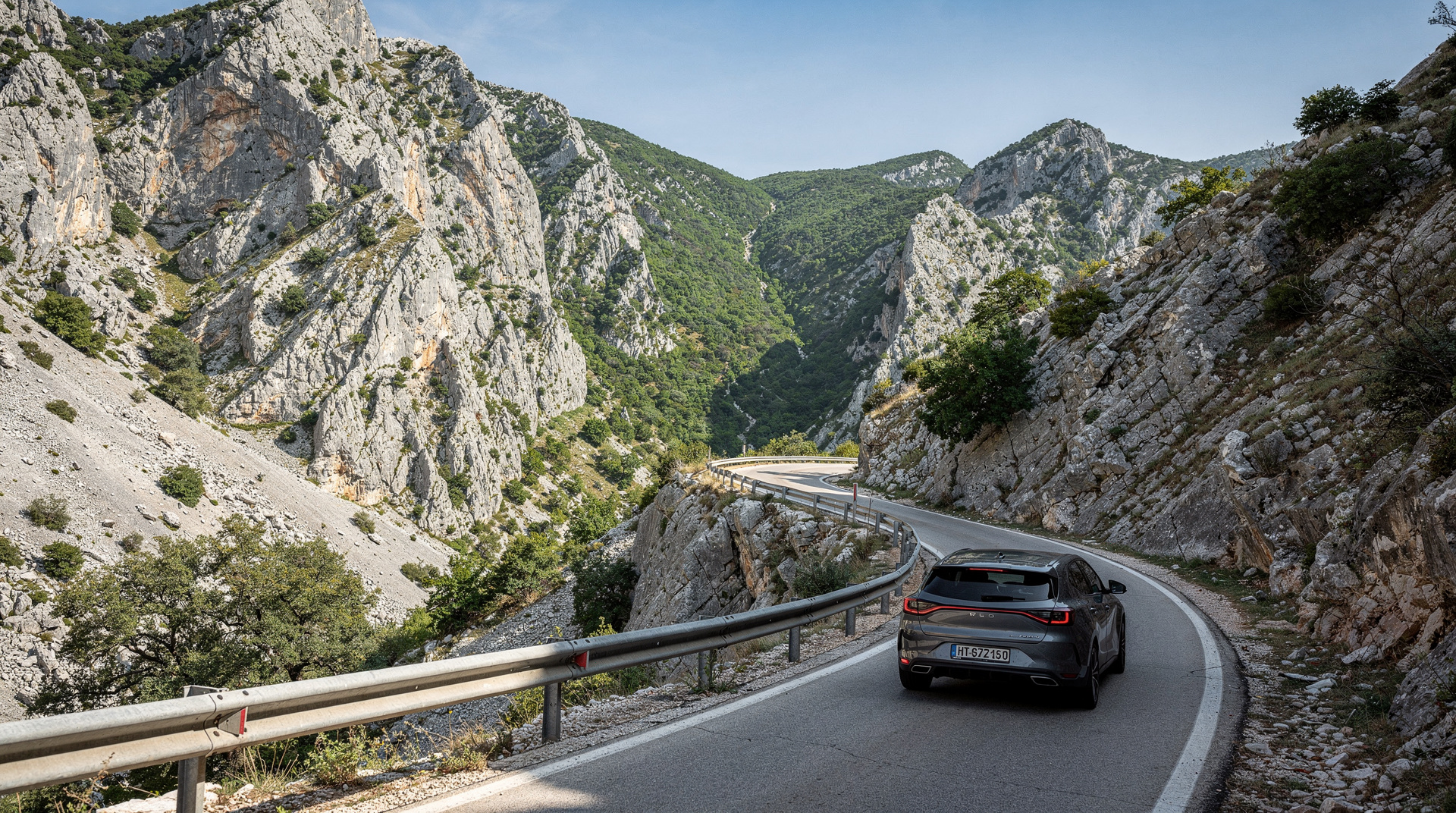
Many travellers expect the border to be the dramatic moment, but the real change happens gradually once you are inside Bosnia. The roads narrow, the landscape turns greener and more mountainous, minarets appear next to church towers, and the pace of everything slows down. Stopping at a roadside restaurant for grilled lamb or fresh river trout is often the first moment the two countries feel genuinely different.
Come prepared for a more relaxed relationship with schedules. Services are friendly but less standardised than on the Croatian coast, so build a little slack into travel days. The driving in Bosnia guide and the getting around Bosnia guide explain what to expect on the road and on public transport, and the Bosnia money and currency guide helps you handle the switch from euros without confusion.
Practical logistics
Currency: Croatia uses the Euro (since 2023). Bosnia uses the BAM, pegged at 1 EUR = 1.95583 BAM. Crossing the border requires managing two currencies, though EUR is accepted in some Bosnian border areas at the fixed rate.
Border crossings: Multiple crossings between Croatia and Bosnia. Queues in summer (July–August) can be significant at the main coastal crossings. Allow extra time.
Driving: Both drive on the right. A green card (international insurance certificate) is technically required for Bosnia if driving a Croatian-registered or Croatian-rented car. See the renting a car guide.
Frequently asked questions about Bosnia vs Croatia
Is Bosnia safe like Croatia?
Both are safe for tourists. Croatia has more developed tourism infrastructure and fewer rough edges. Bosnia has greater economic challenges and the post-war context requires more awareness (particularly regarding mines in remote areas), but the main tourist cities are safe.
Which country is better in summer?
Croatia’s coast is best in June and September (July–August is overcrowded and expensive). Bosnia’s interior is better in May–June and September–October. In high summer, Bosnia’s mountains are cooler than Croatia’s baking Dalmatian stone.
Do I need a visa for Bosnia if I have a Croatian visa?
No. Bosnia has its own visa rules. EU, UK, US, Canadian, Australian and many other nationals can enter both countries visa-free. Check current rules for your nationality.
Is public transport good between the two countries?
Buses connect Dubrovnik and Split with Mostar and Sarajevo. Journey times are 3-5 hours depending on route. Flixbus also covers Sarajevo–Split. For flexibility, renting a car covers both countries more efficiently.
How much time should I split between the two?
For a two-week Balkans trip, a rough split of 60% Croatia / 40% Bosnia works well for first-timers, since Croatia’s coast has more distinct sub-destinations (islands, multiple towns). Repeat visitors or history-focused travellers often flip that ratio, using the Bosnia 10-day itinerary as a base and treating Croatia as bookends.
City-level comparisons
If you’re deciding between specific pairings rather than the countries in the abstract, the sharpest comparisons are Sarajevo vs Mostar for choosing a Bosnia base, and the route guides for Mostar from Split vs Mostar from Dubrovnik for deciding which Croatian coastal city to pair Bosnia with. Both Croatian gateway cities work equally well logistically; the choice usually comes down to which one your flights serve.
Planning the mix
Once you have decided to include both countries, resist the temptation to cram too much into the Bosnian leg. A common mistake is treating Bosnia as a box to tick between two Croatian stops. Spending a night or two in Mostar lets you see the Old Bridge after the day-trip crowds have left, and adding Sarajevo turns the visit into a real introduction to the country. The Sarajevo and Mostar in 3 days itinerary is a practical template for this, while the Croatia and Bosnia in 2 weeks itinerary shows how to balance coast and interior across a longer trip.
If you are unsure about timing, the best time to visit Bosnia guide helps you match the Bosnian leg to the season, and the how many days in Bosnia guide is a useful reality check before you fix your dates. Travellers who want to understand the safety picture first can read the is Bosnia safe guide.
What repeat visitors say
Travellers who have done the Croatia-only coastal trip before and add Bosnia on a return visit consistently describe it as the more memorable leg — not because Croatia disappoints, but because Bosnia’s contrast (history, price, pace) stands out precisely because it follows a more polished, familiar Mediterranean experience. The Balkans multi-country guide covers how Montenegro fits into a longer version of this same idea.
Top experiences
Bookable activities with verified prices and instant confirmation on GetYourGuide.