Renting a car in Bosnia guide
Sarajevo, Mostar & Jajce: 3-Day Best of Bosnia Private Tour
Can I rent a car in Bosnia and drive freely?
Yes. You can rent a car at Sarajevo Airport or in the city. Check your rental includes a green card for Bosnia and that cross-border driving into Croatia or Montenegro is permitted. Roads are good on main routes but slow through mountains.
A rental car transforms your Bosnia trip. The country’s highlights — Sutjeska National Park, Lukomir village, Una National Park, Trebinje — are either impossible or deeply inconvenient to reach by public transport. With a car, you can set your own pace, stop at roadside springs, and explore the mountain villages that make Bosnia genuinely different from its Adriatic neighbours. This guide covers everything you need to know before picking up the keys.
| At a glance | |
|---|---|
| Where | Pick up at Sarajevo Airport (SJJ) or in the city centre |
| Cost | Around 50-80 BAM/day for an economy car, more for SUVs |
| Time needed | Book at least a few days ahead in summer for the best availability |
| Getting there | International and local brands both operate at the airport arrivals hall |
| Best time | Spring and autumn for mountain driving; avoid high passes November-April |
Why rent a car in Bosnia
Bosnia lacks a complete motorway network and bus services outside the main corridors are infrequent. A rental car is particularly useful if you want to:
- Explore Sutjeska National Park and the Perućica rainforest
- Drive the Herzegovina circuit including Trebinje
- Reach Una National Park near Bihać
- Visit Lukomir village and the high plateau above Sarajevo
- Combine Bosnia with Croatia or Montenegro without relying on bus timetables
For those sticking to Sarajevo and Mostar, a car is less necessary — both cities are walkable, and buses link them reliably. But once you want to go beyond the triangle, wheels make all the difference.
Picking up your rental car
Sarajevo Airport (SJJ) is the easiest pickup point. The main international brands — Hertz, Avis, Europcar, Sixt — all have desks in the arrivals hall. Reserve in advance during summer and for larger vehicle classes; availability can be tight.
Picking up in the city centre is possible through local companies and international chains, but parking in Sarajevo is challenging. Arriving by airport pickup and heading straight to your first destination outside the city is usually the smoother option.
If you are travelling overland from Croatia and want to pick up in Bosnia, some companies allow cross-border rentals but charge a fee. Confirm this before booking.
Insurance: the green card rule
This is the most important thing to understand about driving between Croatia and Bosnia.
A green card (zelena karta / zielona karta) is an international motor insurance certificate that confirms you have third-party liability coverage valid in Bosnia & Herzegovina. Bosnia is not in the EU, and many standard European car insurance policies — including CDW provided by rental companies — technically require a green card for BiH entry.
Practical rule: If you rent a car in Bosnia, insurance is included and valid in-country. If you rent in Croatia and drive into Bosnia, ask the rental company explicitly: “Is a green card included for Bosnia?” Most reputable international companies include it, but you should see it stated in your documents. Never assume.
Without a green card at a Bosnian border crossing, you may be required to purchase local third-party insurance at the border (around 30-60 BAM depending on duration).
Costs
Car rental in Bosnia is affordable by European standards. Expect:
- Economy car (e.g. VW Polo class): 50-80 BAM/day (€26-41)
- Compact SUV (e.g. Renault Captur class): 70-100 BAM/day (€36-51)
- Full insurance (CDW + TP): often included; check the excess
- Fuel per tank (50 L): ~100-115 BAM (€51-59)
Local Bosnian rental companies are often 20-30% cheaper than international brands, but read the fine print on cross-border permissions and insurance cover.
Road conditions in Bosnia
Bosnia’s roads range from smooth European-standard main routes to challenging mountain tracks. Know what to expect:
Main roads (Magistralne ceste, M-routes) connect all major towns and are generally well maintained, though narrow and winding in mountain sections. Two-lane, no overtaking lanes — progress is slower than a GPS estimate suggests.
The A1 motorway runs from the Croatian border south of Banja Luka through Zenica to Sarajevo and on towards Mostar. It is modern and fast but covers only part of the country. There are toll booths (cash, a few BAM) on some sections.
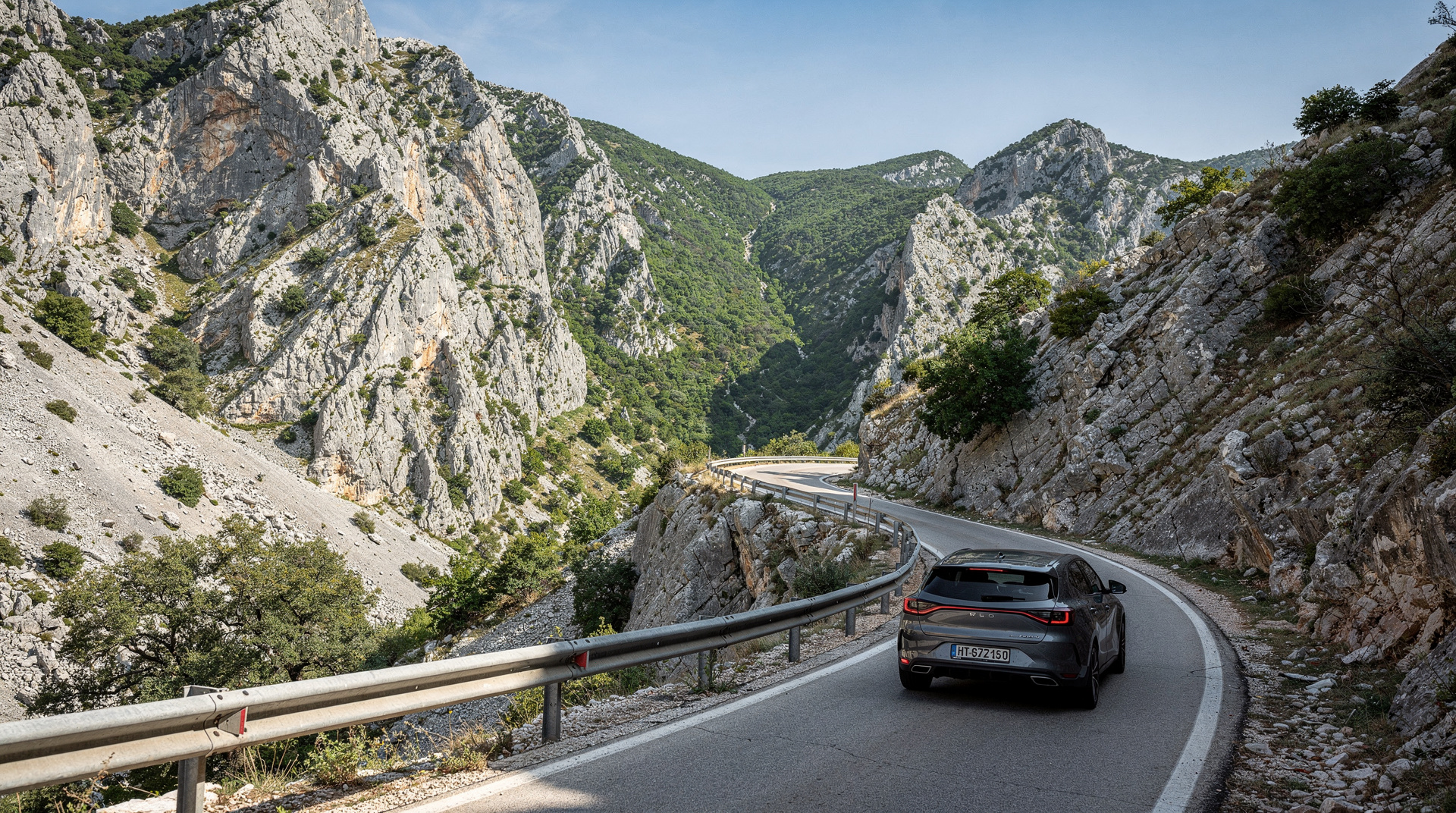
Mountain roads in areas like Sutjeska, Prenj and the Dinara are spectacular but require confidence and a vehicle with reasonable ground clearance. Snow and ice close high passes from roughly November to April — the Via Dinarica mountain spine can have snow into May.
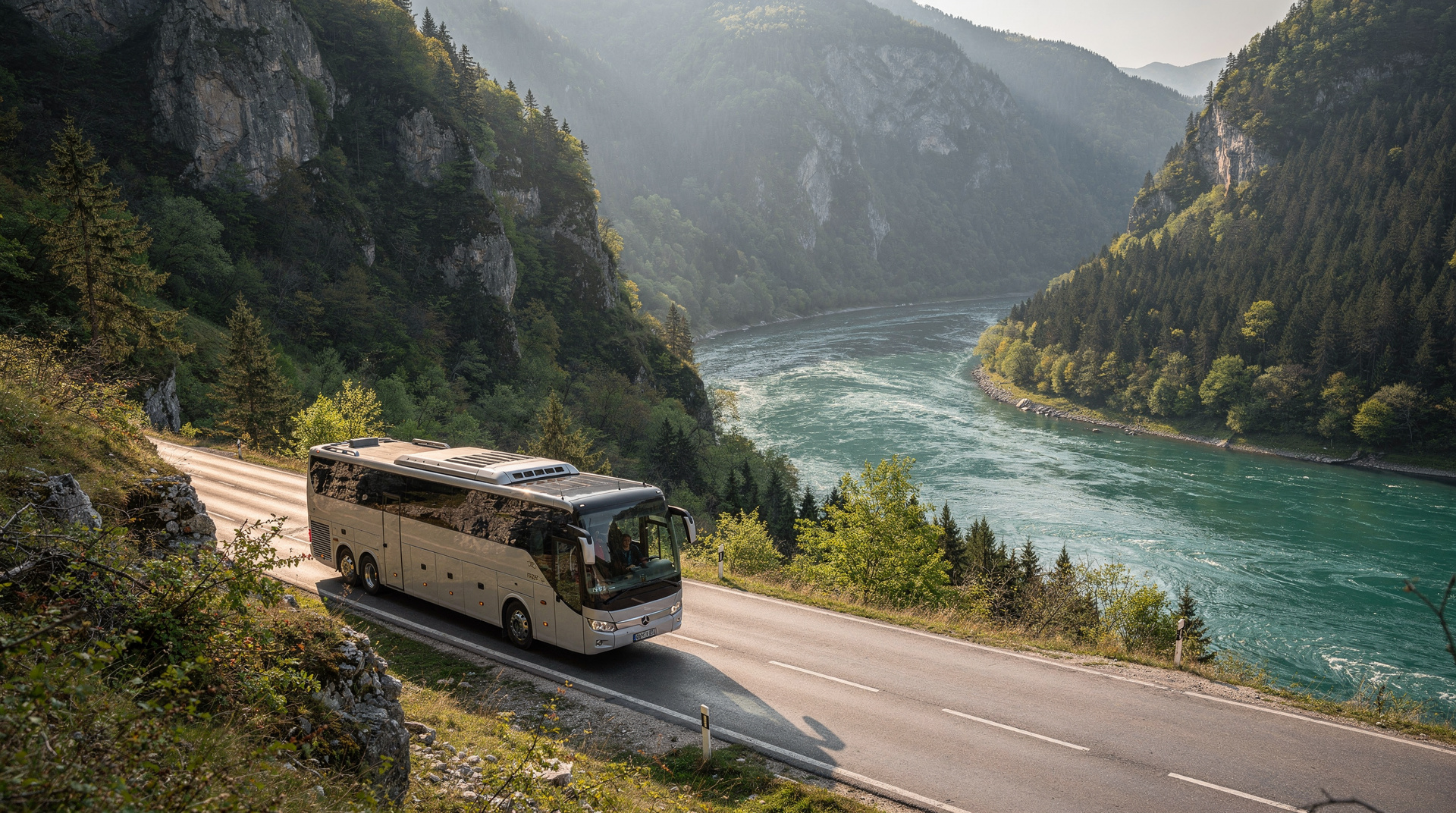
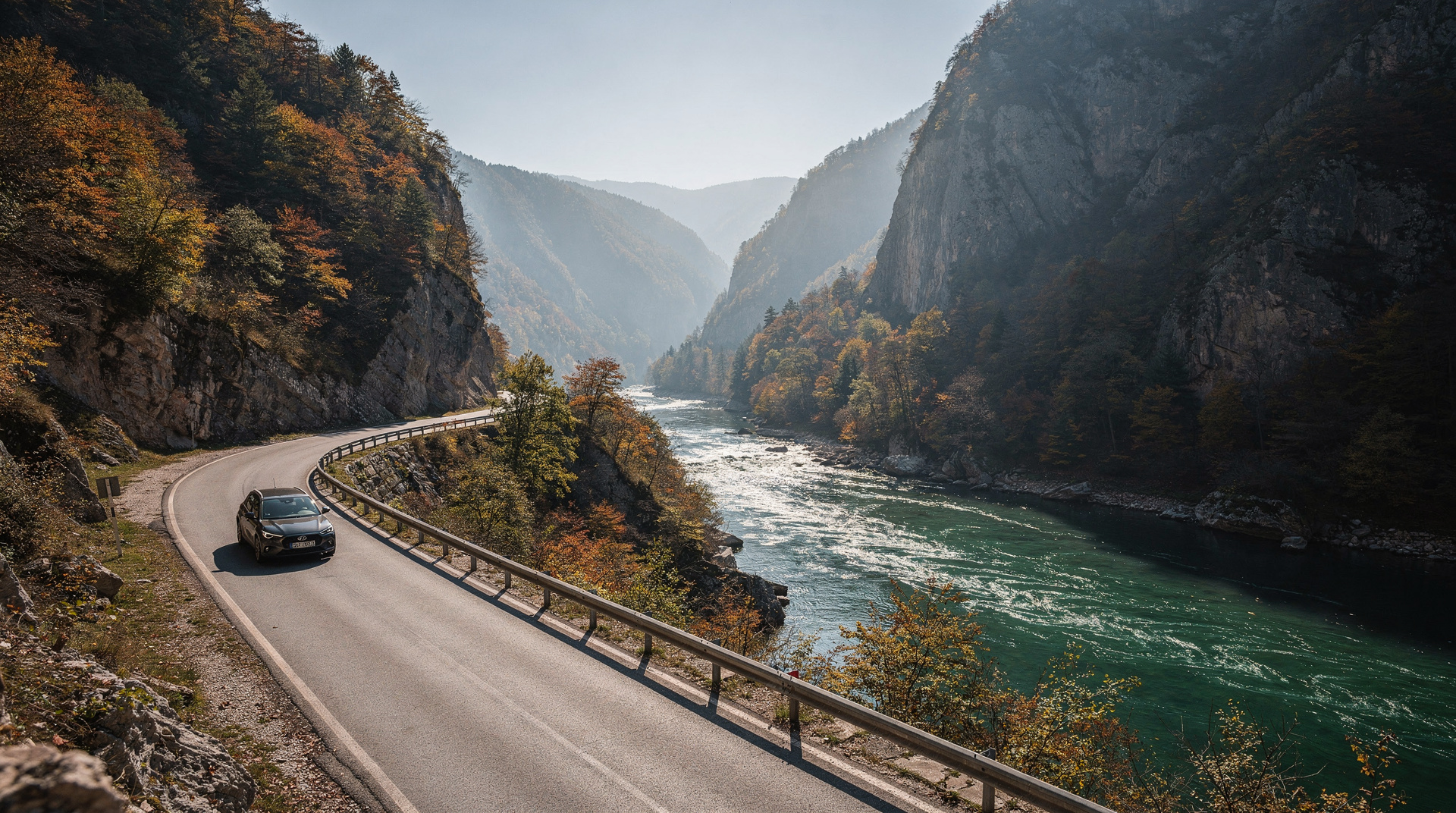
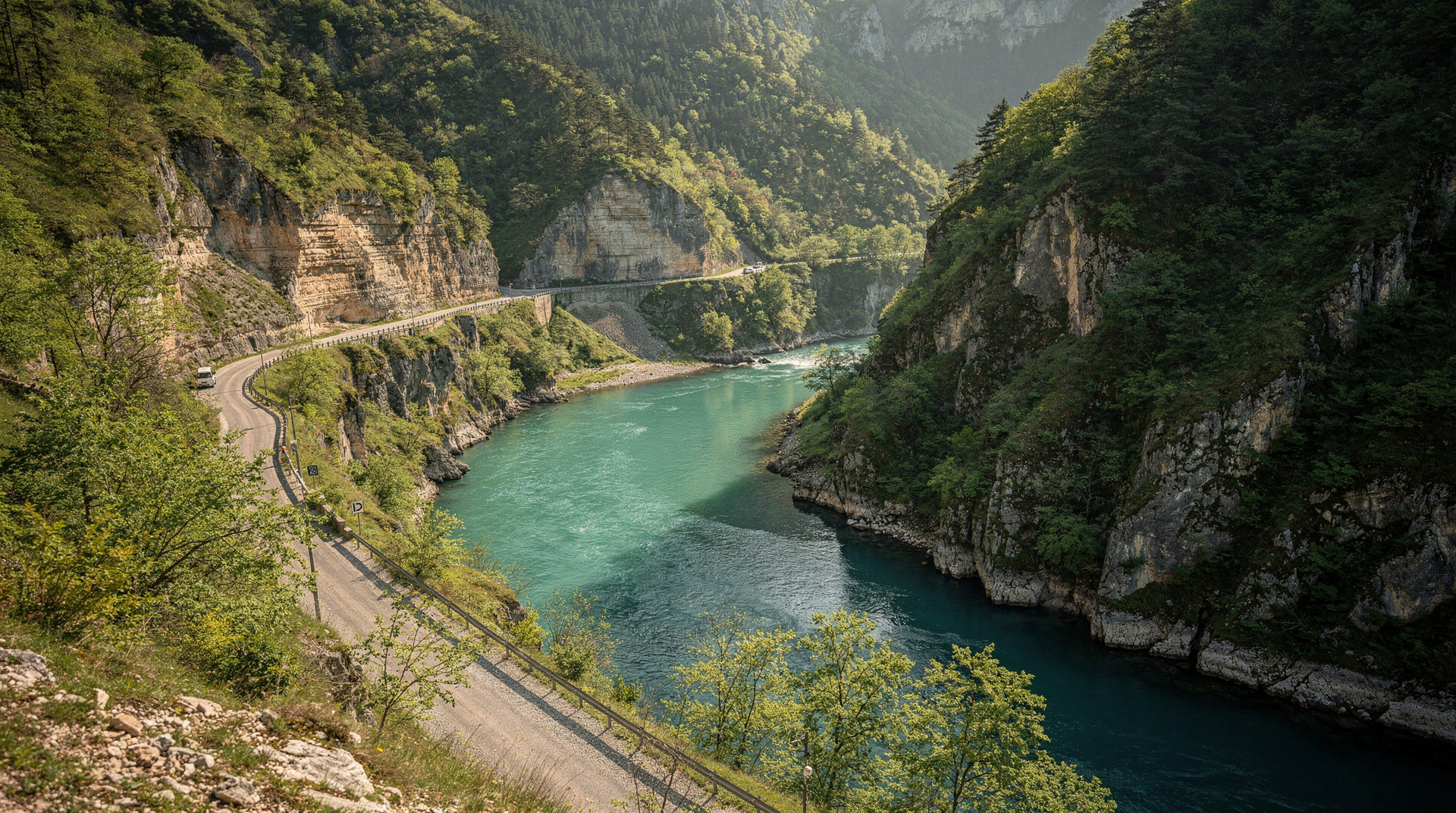
Sarajevo to Mostar via the M-17 through the Neretva canyon is one of Bosnia’s great drives — winding, dramatic, slow, beautiful. Allow 2h30-3h. The road condition is generally good but there are long sections with no overtaking and heavy truck traffic.
Cross-border driving
Bosnia borders Croatia, Montenegro and Serbia. Each crossing has its own quirks.
Bosnia–Croatia crossings are busy in summer. The Neum corridor on the Split–Dubrovnik coastal road means two border crossings within a few kilometres — queues can stretch to an hour on summer weekends. The Pelješac Bridge now bypasses Neum, so if you’re driving the Dalmatian coast you can often avoid this.
Bosnia–Montenegro via Trebinje–Nikšić is a scenic mountain route. Border formalities are usually quick.
Always carry your full documentation: passport or EU ID, driving licence, vehicle registration, insurance documents with green card.
Parking in cities
Sarajevo: City centre parking is metered and can be hard to find near Baščaršija. Use the Skenderija underground car park or the park-and-ride at the end of the tram line in Ilidža if you’re a day visitor to the old town. Paid parking zones operate Monday–Saturday.
Mostar: Street parking near the old bridge is chaotic in summer. Several small paid lots operate on the western bank. Consider parking further out and walking 10-15 minutes.
Smaller towns: Largely free street parking.
Fuel and service stations
Fuel stations (benzinska pumpa) are found on all main roads and in every town of any size. In rural mountain areas, fill up when you see a station — gaps of 40-60 km are possible in places like Sutjeska or the Dinara range. The main fuel brands are INA (Croatian-owned, ubiquitous), NIS (Serbian) and local Bosnian operators.
Payment is usually cash or card — carry some BAM for rural stations where card readers are unreliable.
Driving tips specific to Bosnia
- Speed limits: 50 km/h in towns, 80 km/h on open roads, 100-130 km/h on motorways. Speed cameras are increasingly common near towns.
- Alcohol limit: 0.03% BAC — effectively zero tolerance. Do not drink and drive.
- Landmines: Do not drive off-road in areas outside mapped tracks, particularly in mountain terrain away from major roads and national parks. Post-war mine clearance is ongoing. Stick to paved and marked surfaces.
- Animals on roads: Sheep, cattle and horses cross mountain roads freely, especially at dawn and dusk. Drive cautiously in mountain areas.
- Winter tyres: Mandatory from 15 November to 15 April. Rental cars should already comply — confirm this if picking up in winter.
Renting a car versus taking a tour
For popular routes like Sarajevo–Mostar or Mostar–Kravice–Blagaj, guided tours often work out comparable in price to a rental car, especially for solo travellers or couples. Tours make particular sense if you want local knowledge, don’t want to navigate unfamiliar roads, or prefer to enjoy a glass of Herzegovina wine without worrying about driving.
See the day trips from Sarajevo guide for organised options. For more remote destinations like Sutjeska or Una, the rental car advantage is clearer.
A sensible compromise is to mix both. If you want a driver for the long cross-country stretch, a private multi-day tour linking Sarajevo, Mostar and Jajce covers the main highlights without any navigation, parking or insurance paperwork on your side. And if you plan to pick the car up only after a few days in the capital, spending your first day on a full-day guided tour of Sarajevo means you never have to hunt for city parking, and you collect the keys when you are ready to leave town.
Frequently asked questions about renting a car in Bosnia
Can I drive a rental car from Croatia into Bosnia?
Usually yes, but you must confirm with your rental company that the vehicle is cleared for cross-border travel and that your insurance (or a green card) covers Bosnia. Most major companies allow this with no extra fee, but document it.
Is it safe to drive in Bosnia at night?
Main roads are generally safe at night. However, unlit mountain roads with livestock and occasional potholes make night driving on secondary routes inadvisable. If you arrive late at Sarajevo Airport, the drive into the city is straightforward — but save mountain excursions for daylight.
What happens if I break down in Bosnia?
BIHAMK (the Bosnian Automobile Club) operates roadside assistance on +387 1282 or +387 33 285 555. International rental companies generally provide their own roadside assistance — check the number in your rental documents before you set off.
Do I need an SUV or can I manage with a small car?
For standard tourist routes (Sarajevo, Mostar, Herzegovina valley, coastal border crossings), a small economy car is fine. For Sutjeska, Lukomir plateau, Prenj or the Krajina backcountry, a higher ground clearance and ideally 4WD is advisable, especially outside summer.
What is the minimum age for car rental in Bosnia?
Most companies require drivers to be at least 21, and some charge an under-25 surcharge. Check with your specific rental company when booking.
Local versus international rental companies
| Local Bosnian companies | International brands | |
|---|---|---|
| Price | Often 20-30% cheaper | Standard European rates |
| Cross-border clarity | Confirm in writing, more variable | Usually clearly stated, more consistent |
| Fleet age/condition | Can vary, ask to inspect first | Generally newer, standardised |
| Airport desk | Some have counters, others meet-and-greet | Desks in the arrivals hall |
| Best for | Budget trips staying inside Bosnia | Cross-border trips to Croatia/Montenegro |
Driving to specific regions
A car opens up parts of the country buses barely reach. For Sutjeska National Park and the Perućica primeval forest, the drive from Sarajevo takes around 2.5-3 hours through increasingly remote valleys. Heading north instead, Una National Park near Bihać is a full day’s drive from Sarajevo but far more manageable as a loop from Croatia. Closer to the capital, the road up to Lukomir, Bosnia’s highest permanently inhabited village, is only partially paved — a compact SUV is genuinely useful there, not just a marketing upsell.
One-way rentals and combining with Croatia or Montenegro
Several international companies allow one-way drop-offs between Sarajevo and Dubrovnik or Split, useful if you’re doing a Bosnia from Kotor or Dubrovnik to Sarajevo style route. One-way fees can be substantial (often 100-300 BAM) — always get the exact figure before booking rather than assuming it’s included.
Before you sign at the rental desk
Take a few minutes at the counter and you save yourself an argument on the way back. Walk around the car with the agent, photograph every scratch and dent, and make sure each one is marked on the paperwork. Check the spare wheel and the jack, because a puncture on a mountain road is a poor moment to discover that something is missing. Ask what the fuel policy is and keep the final fuel receipt. If you plan to cross a border, make sure the cross-border permission appears on the contract itself, not only in an email. The Bosnia scams to avoid guide covers the few tricks worth knowing about, and a careful pickup removes most of them.
Building a route around your car
A car rewards a loose plan with a few fixed anchors. Many travellers start in Sarajevo, head to Herzegovina and finish on the Adriatic, and the Bosnia 7-day itinerary shows how that fits together. If you have more time, the Bosnia 10-day itinerary and the 14-day grand tour leave room for the mountain detours that only a car makes practical. Not sure how long to give the country? The how many days in Bosnia guide helps you decide before you reserve the car for a set number of days.
For a shorter trip, the Herzegovina weekend itinerary works well with a car, linking Mostar, Blagaj and Počitelj at your own speed. Travellers who want something more adventurous can follow the Bosnia adventure itinerary, and the western Bosnia and Krajina itinerary is a natural fit for a road trip through the north-west.
Seasons and the car you choose
The time of year changes what you should ask for at the desk. Spring and autumn are comfortable for long drives, and the best time to visit Bosnia guide explains the trade-offs. In winter, mountain roads call for caution, so read the Bosnia in winter guide before planning anything high, and the skiing in Bosnia guide if your goal is the slopes. In summer the heat in the south is strong, so air conditioning is worth insisting on, and the Bosnia in summer guide describes what to expect on the road and at the sights.
Combining driving with other transport
You do not have to drive every kilometre. Many travellers use a car for the countryside and leave it behind in the cities, where walking and public transport are easier. The getting around Bosnia guide compares the options, and the Sarajevo public transport guide shows how to move around the capital without the car. If you would rather skip the wheel for part of the journey, the Bosnia by public transport itinerary shows what is possible without one. For the coastal approach, the Mostar from Dubrovnik guide and the Neum corridor crossing guide explain what to expect at the border, and the Bosnia road trip notes from the blog give a first-hand feel for the smaller roads.
Top experiences
Bookable activities with verified prices and instant confirmation on GetYourGuide.