Bosnian Pyramids at Visoko — what's real, what's not
From Sarajevo: Visoko And Bosnian Pyramid Mystery
Are the Bosnian Pyramids real?
No — not in the sense their promoters claim. The mainstream scientific and archaeological consensus is that the pyramid shapes at Visoko are natural geological formations (flatirons) that happen to have pyramidal silhouettes, not human-made ancient structures. The claims of a 12,000-year-old pyramid complex have been comprehensively rejected by Egyptologists, archaeologists and geologists. However, the site is interesting to visit as a curio and a case study in pseudo-archaeology, and the town of Visoko itself has genuine medieval history.
The Bosnian Pyramid story is one of the most successful pseudo-archaeological claims of the 21st century. Since 2005, the “Pyramid of the Sun” at Visoko, 30 km north-west of Sarajevo, has attracted hundreds of thousands of visitors, generated a documentary film series and sustained a foundation with international supporters. It has also been comprehensively and repeatedly rejected by every mainstream scientific institution that has examined it. This guide tries to untangle the real from the invented — and explain why visiting Visoko can still be worthwhile.
| At a glance | |
|---|---|
| Where | Visoko, about 30 km north-west of Sarajevo |
| Cost | Around 15-20 BAM for Foundation park entry and tunnel access |
| Time needed | Half a day including travel from Sarajevo |
| Getting there | Frequent buses from Sarajevo (about 45-50 minutes), or a 40-minute drive |
| Best time | Any season; the hillside paths can be muddy after rain |
What the promoters claim
Semir Osmanagic, a Bosnian-American businessman, announced in October 2005 that several hills near Visoko were in fact ancient pyramids buried under earth and vegetation. The largest, Visocica Hill (429 metres), he named the Pyramid of the Sun — claiming it was larger than the Great Pyramid of Giza. Adjacent hills were named the Pyramid of the Moon, the Pyramid of the Dragon and other designations.
Osmanagic’s Bosnian Pyramid of the Sun Foundation subsequently excavated on and around the hills, claiming to find: ancient concrete (identified as “monolith slabs”), underground energy beams measured by devices that mainstream physicists do not recognise, an extensive tunnel system (“Ravne tunnels”) that he links to the pyramids, and evidence of a civilisation 12,000 years old or more.
The site has been marketed internationally, generating tourist revenue for Visoko and considerable publicity for Osmanagic.
What the scientists say
The response from mainstream science has been consistent and clear. In 2006, the European Association of Archaeologists issued an open letter signed by European archaeologists calling the project “a cruel hoax” that was “wasting the attention of archaeologists and the resources of the international archaeological community.” The letter noted that no credentialed archaeologist endorsed the claims.
Specific scientific responses:
Geology: The pyramidal shapes are natural geological formations — specifically flatirons, produced by the tilting of sedimentary rock layers and subsequent erosion. This is a well-documented geological process. The hills have the angles and orientation expected from their geological structure, not from human construction.
The “ancient concrete”: Analysis by geologists and materials scientists identifies the slabs as natural conglomerate (naturally cemented gravel and stone), a common geological feature in the area. The mineral composition is consistent with natural formation and inconsistent with human-made concrete.
The Ravne tunnels: Archaeologists who examined the tunnels identified them as consistent with medieval mining galleries — well-attested in the region — that have been cleaned out and extended by the Foundation. The claim that they are part of an ancient underground complex is not supported by evidence.
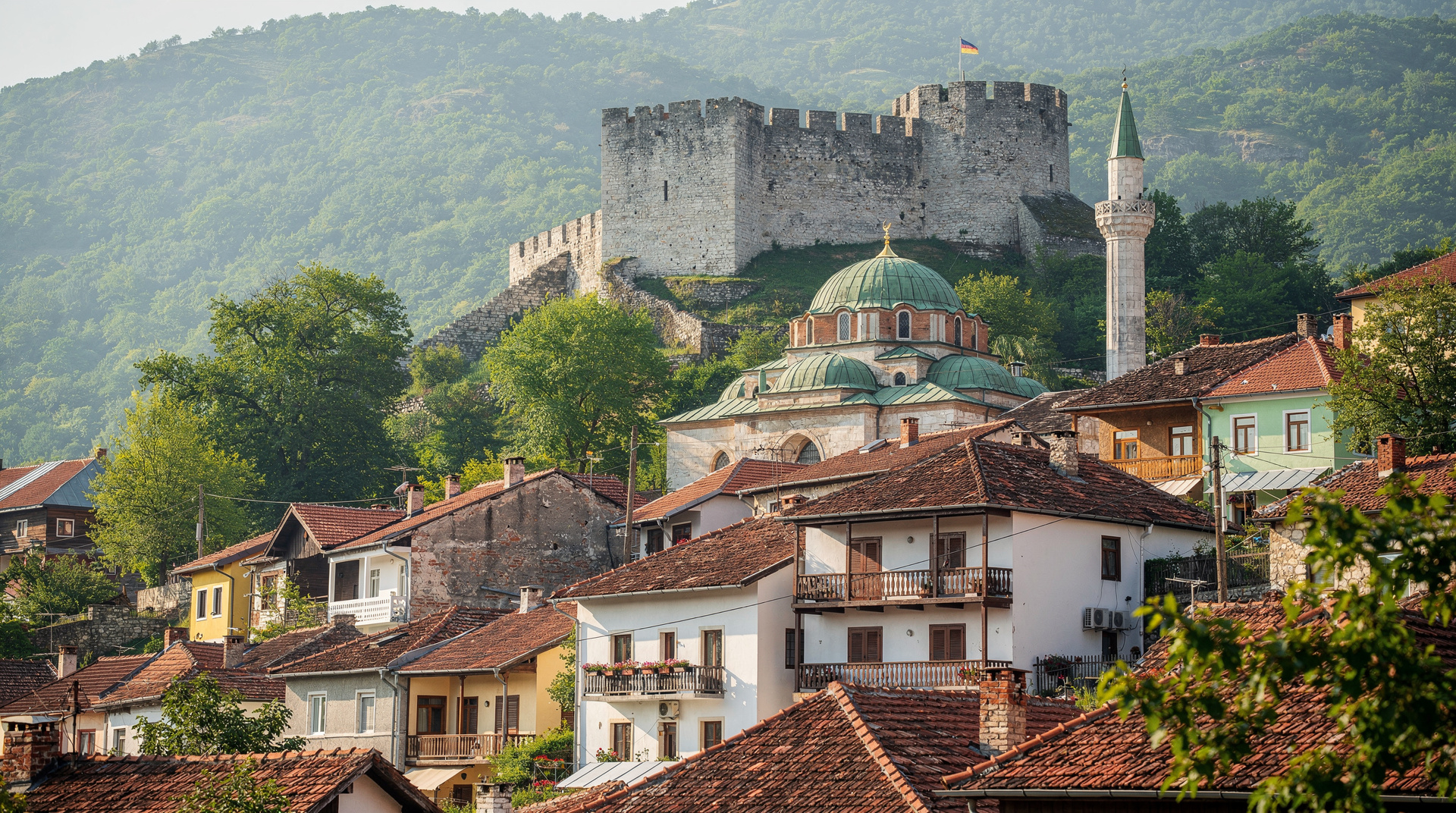
Medieval archaeology: The real archaeological significance of Visocica Hill is that it was the site of Visoki, a medieval Bosnian fortress and the seat of the Bosnian rulers in the 14th and early 15th centuries. This genuine history has received less attention than the pyramid claims. The Foundation’s excavations are conducted without the methodological standards of professional archaeology, meaning the actual medieval archaeological record has potentially been damaged by the search for imaginary ancient pyramids.
A day tour from Sarajevo to Visoko and the Bosnian Pyramid provides transport and a local guide who can explain both the claims made by the Foundation and the scientific context — more informative than visiting independently.
Why people believe it
The Visoko pyramid claims persist despite the scientific consensus for several reasons:
Nationalism: In the immediate post-war period (the excavations began in 2005, a decade after Dayton), a discovery that placed Bosnia at the centre of an ancient civilisation had obvious emotional appeal for a country whose recent history had been one of destruction and humiliation. Many Bosnians support the claims partly as an expression of national pride.
Tourism economy: Visoko was a depressed former industrial town. The pyramid complex generates significant tourist revenue — entry fees, guided tours, café income, souvenirs. The local economy benefits regardless of the archaeological truth.
Media amplification: The visual drama of pyramidal hills, mysterious tunnels and claims of ancient energy makes compelling TV. Documentary series have carried the claims to audiences who never see the scientific rebuttals.
The structure of pseudo-archaeology: The Foundation uses the trappings of scientific procedure — excavations, measurements, laboratory analysis — without the peer review or methodological standards that give science its credibility. The gap between “we measured something” and “mainstream science acknowledges our discovery” is obscured.
What to actually expect on a visit
The site is centred on the Bosnian Pyramid of the Sun Foundation’s park area. Tickets for entry and underground tunnel access cost approximately 15-20 BAM. The “excavation sites” on the hillside show slabs of natural conglomerate that the Foundation claims are pyramid cladding. The Ravne tunnels are damp, low-ceilinged and not especially dramatic; they have been decorated with stones and crystals by New Age visitors who travel to Visoko for spiritual reasons.
The view from the summit of Visocica Hill is genuinely good — the Bosna valley and Sarajevo’s direction are visible on clear days. The medieval fortress remains on the summit are real, though not prominently marked.
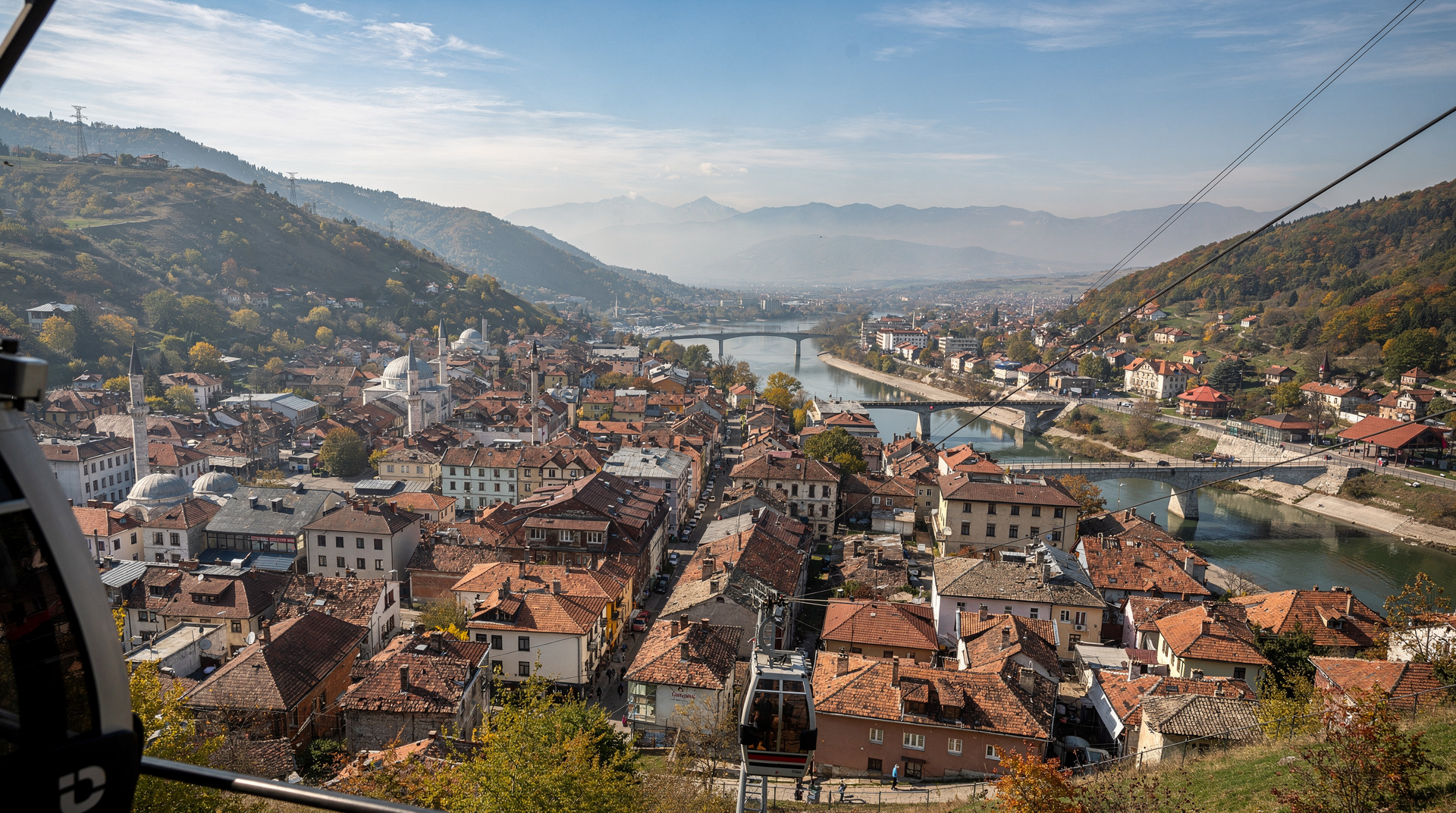
The town of Visoko itself has a pleasant old centre and is relaxed. The Visoko destination page gives more context on the town and surroundings.
The genuine medieval history
The key facts: Visoki fortress was the seat of the Bosnian ban (ruler) from at least the early 14th century. Stjepan II Kotromanic, who expanded Bosnia into a major regional power, held court here. The fortress remained important until the capital moved to Jajce in the 15th century. After the Ottoman conquest, the fortress was occupied and modified by the Ottomans.
Excavations of the actual medieval site — the fortress, not the “pyramid” claims — would be valuable archaeology. This genuine history is far more interesting than the invented ancient civilisation narrative, but it receives much less attention.
Practical information
Distance from Sarajevo: About 30 km, 40 minutes by car. The road via Ilidža is the fastest.
By bus: Buses from Sarajevo to Visoko run frequently (every 30-60 minutes, journey time about 45-50 minutes). The Foundation’s site is a short walk or taxi from the bus station.
Entry fees: Foundation entry and tunnel tour approximately 15-20 BAM.
Combining with other sites: Visoko is on the main road north-west from Sarajevo; it can be combined with a stop at Kiseljak or continued towards Travnik and Jajce for a longer day.
Honest recommendation: Go with realistic expectations — an interesting curiosity and a lesson in how myths are made — not as a genuine ancient wonder. The medieval history is real; the pyramids are not.
For genuine ancient and medieval history in Bosnia, the Ottoman heritage guide and the Jajce fortress guide cover the real historical record.
How this compares to Bosnia’s other historical sites
Visoko sits oddly alongside Bosnia’s genuinely documented heritage. The Ottoman-era town of Travnik and the Franz Ferdinand assassination sites in Sarajevo offer verified, well-researched history with none of the controversy. If your time is limited and you want documented history over pseudo-archaeology, prioritise those first and treat Visoko as a curiosity add-on, not a headline stop.
Combining Visoko with a wider Sarajevo day trip
Because Visoko is a short detour rather than a full day, it pairs well with other short excursions covered in the best day trips from Sarajevo guide. Some visitors combine it with Ilidža and Vrelo Bosne on the way back into the city, turning a single-site visit into a fuller half-day loop.
What guides on-site actually tell you
Foundation guides at Visoko generally repeat the pyramid narrative rather than the scientific rebuttal — reasonable, since it’s their livelihood. If you want the mainstream archaeological context alongside the visit, read this guide beforehand and treat the on-site tour as one side of the story, not a neutral briefing. For more on how Bosnia’s Ottoman and medieval past actually developed, see the Bosnia history for travelers guide.
How to read the site critically
A visit is more rewarding if you arrive with a few questions in mind. When a sign or a guide says a slab is cladding, ask what a geologist would call the same rock. When you are told a tunnel is ancient, ask who else in this region dug tunnels and why. When a measurement is presented, ask who else has repeated it and published the result. None of this needs special training, and none of it is meant to spoil the day. It simply turns a passive walk into an exercise in separating evidence from storytelling, which is the real lesson Visoko has to offer.
It also helps to keep two things apart in your head. The first is the natural landscape: hills with regular slopes, shaped by the tilting and erosion of rock layers. The second is the layer of interpretation that has been placed on top of it since 2005. Both are visible from the same path, and the contrast between them is what makes the place memorable.
Planning the day from Sarajevo
Visoko works best as a relaxed half-day. If you are staying in the capital, the Sarajevo destination page and the Sarajevo where to stay guide will help you pick a base with easy access to the bus station or the road north-west. Travellers without a car can read the buses in Bosnia guide and the Sarajevo public transport guide before setting out, while those who prefer to drive will find the driving in Bosnia guide and the renting a car in Bosnia guide useful.
Wear shoes with grip, since the hillside paths are earthy and can be slippery. Bring water and a layer for the tunnels, which feel cooler and damper than the open hillside. Start in the morning if you can: the light on the Bosna valley is kinder, and you leave the afternoon free for the return trip or a second stop.
Pairing Visoko with real history
The most satisfying way to use Visoko is as a counterpoint to documented sites. Spend the morning on the hill, then spend the rest of your trip with places whose history stands on firm ground. The Sarajevo siege and Tunnel of Hope guide and the museums of Sarajevo guide show how professional curation presents evidence. The Austro-Hungarian Sarajevo guide and the Yugoslav wars explained guide give the wider context for why a national origin myth can feel appealing in a country that has been through so much.
If you are building a longer trip, the Bosnia 7-day itinerary and the Sarajevo 4-day deep dive both leave room for a short detour like this one. The Bosnia travel guide is the best place to see how Visoko fits into the whole country.
Questions worth asking your guide
Whoever leads you around, a few polite questions will tell you a great deal. Ask which parts of the site have been examined by independent archaeologists. Ask how the medieval fortress on the summit is being protected. Ask what the tunnels were used for before the Foundation arrived. Good-natured curiosity usually gets a more honest answer than a challenge, and the replies, whatever they are, add useful material for your own judgement.
You may also want to read a couple of personal accounts before or after your visit. The Bosnia off the beaten path blog post and the why visit Bosnia post give a traveller’s sense of the country beyond its headline sights.
A respectful way to approach the debate
Many people in Visoko take real pride in the site, and for some visitors it has genuine spiritual meaning. You can hold a clear view on the science and still be a courteous guest. Listen, ask questions, avoid mocking anyone, and keep your own conclusions for later. The town has its own story, its own livelihoods and its own hospitality, and the day goes better when you treat residents as hosts rather than as characters in a debate.
Other ways to spend the rest of the day
If you would rather not organise the transfers yourself, a guided excursion that also takes in the historic sites of Visoko keeps the medieval side of the town in view alongside the pyramid story. Travellers who want to follow the hill with something heavier and better documented can add a guided tour on the Bosnian war and the break-up of Yugoslavia on another day.
A few other pages help you build a day around the visit. The Sarajevo war tour guide and the Sniper Alley guide cover the recent past in the capital, while the Bascarsija guide is the natural choice for an evening stroll after a muddy hillside. For food, the Bosnian food guide and the Bosnian coffee culture guide explain what to order once you are back in town.
If you are weighing Visoko against longer excursions, the best day trips from Sarajevo comparison, the Mostar day trip from Sarajevo and the Konjic day trip guide show what else is within reach. The Tito bunker guide is another off-beat stop for readers who enjoy unusual sites, and the Sarajevo vs Mostar comparison helps you decide where to base yourself. The Bosnia scams to avoid guide is worth a skim before any paid tour, and the Bosnia vs Croatia comparison gives context if you arrive from the coast.
Frequently asked questions about Bosnian Pyramids at Visoko — what's real, what's not
Who started the Bosnian Pyramid claims?
What does mainstream science say?
What are the underground tunnels at Visoko?
Is there any real ancient history at Visoko?
Should I visit the Bosnian Pyramids?
Top experiences
Bookable activities with verified prices and instant confirmation on GetYourGuide.