Sarajevo — the Jerusalem of Europe
Sarajevo in a Day – History, Tradition, War, Gastronomy
Why is Sarajevo called the Jerusalem of Europe?
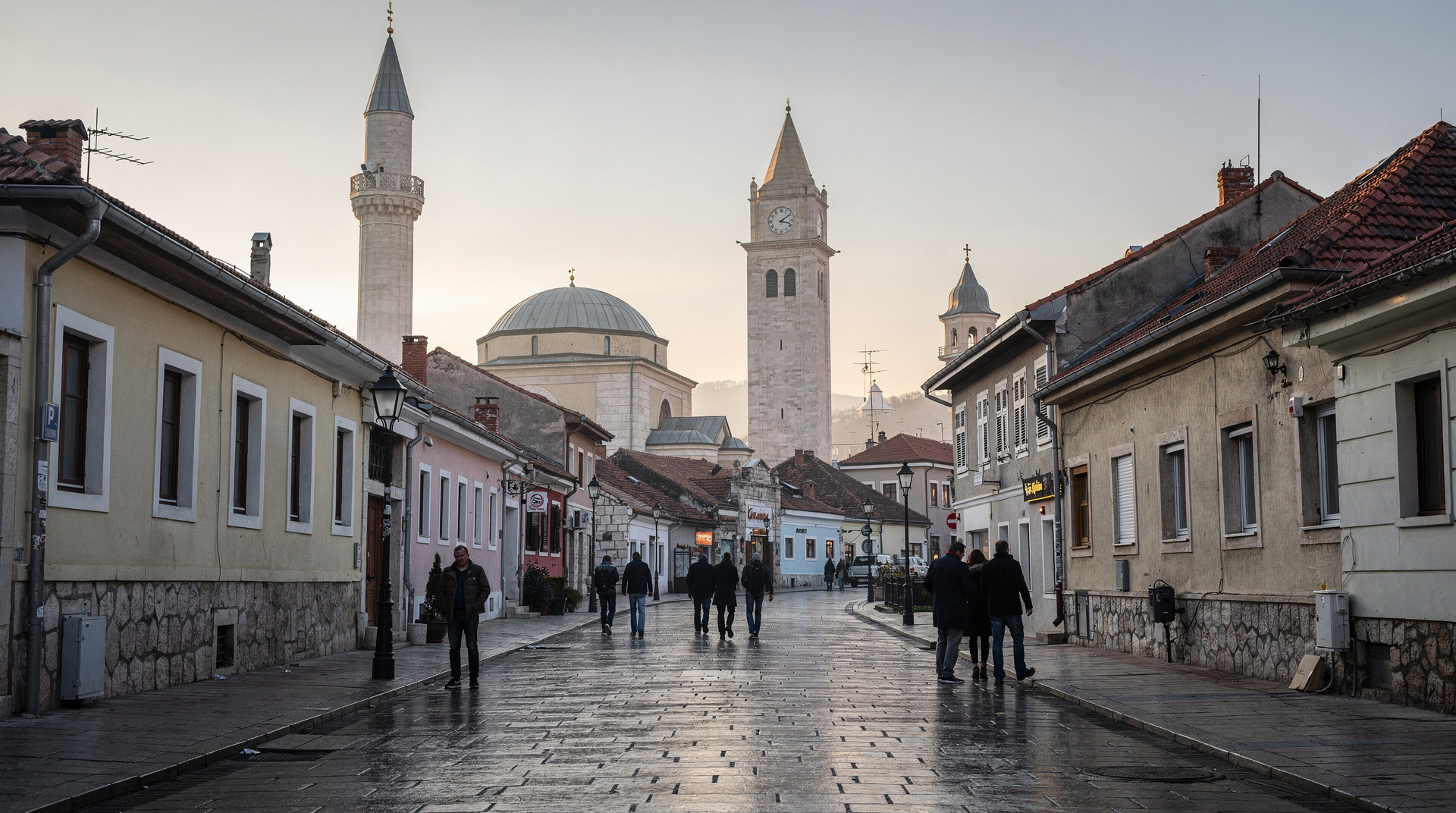
Sarajevo earned the name Jerusalem of Europe because it is one of the few cities in the world where a mosque, a Catholic cathedral, an Orthodox church and a synagogue stand within a few hundred metres of each other. Four faith communities — Muslim Bosniaks, Catholic Croats, Orthodox Serbs and Sephardic Jews — have coexisted in the city for centuries, each maintaining distinct cultural institutions while sharing the same urban space.
Sarajevo is the only city in Europe where you can hear the Muslim call to prayer, Catholic church bells and Orthodox church bells in succession, all within the sound of the same streets. The nickname “Jerusalem of Europe” — first applied by the Austrian writer Paul Morand in 1933 — captures the density of faith communities, religious monuments and cultural layers compressed into one city. Understanding this density is the most rewarding way to experience Sarajevo.
| At a glance | |
|---|---|
| Where | Central Sarajevo, all sites within roughly 800 metres of the Sebilj fountain, Baščaršija |
| Cost | Free to walk the circuit; individual sites (Jewish Museum, National Museum) around 5 BAM entry |
| Time needed | Around 2-3 hours self-guided; half a day with a guide and stops inside each site |
| Getting there | Walkable from anywhere in central Sarajevo; tram to the Baščaršija stop if staying further out |
| Best time | Late morning on a weekday, avoiding the Friday midday prayer at the mosques |
Four communities in one city
The four faith communities of Sarajevo each arrived at different moments in the city’s history, and each left architectural and cultural marks that are still visible:
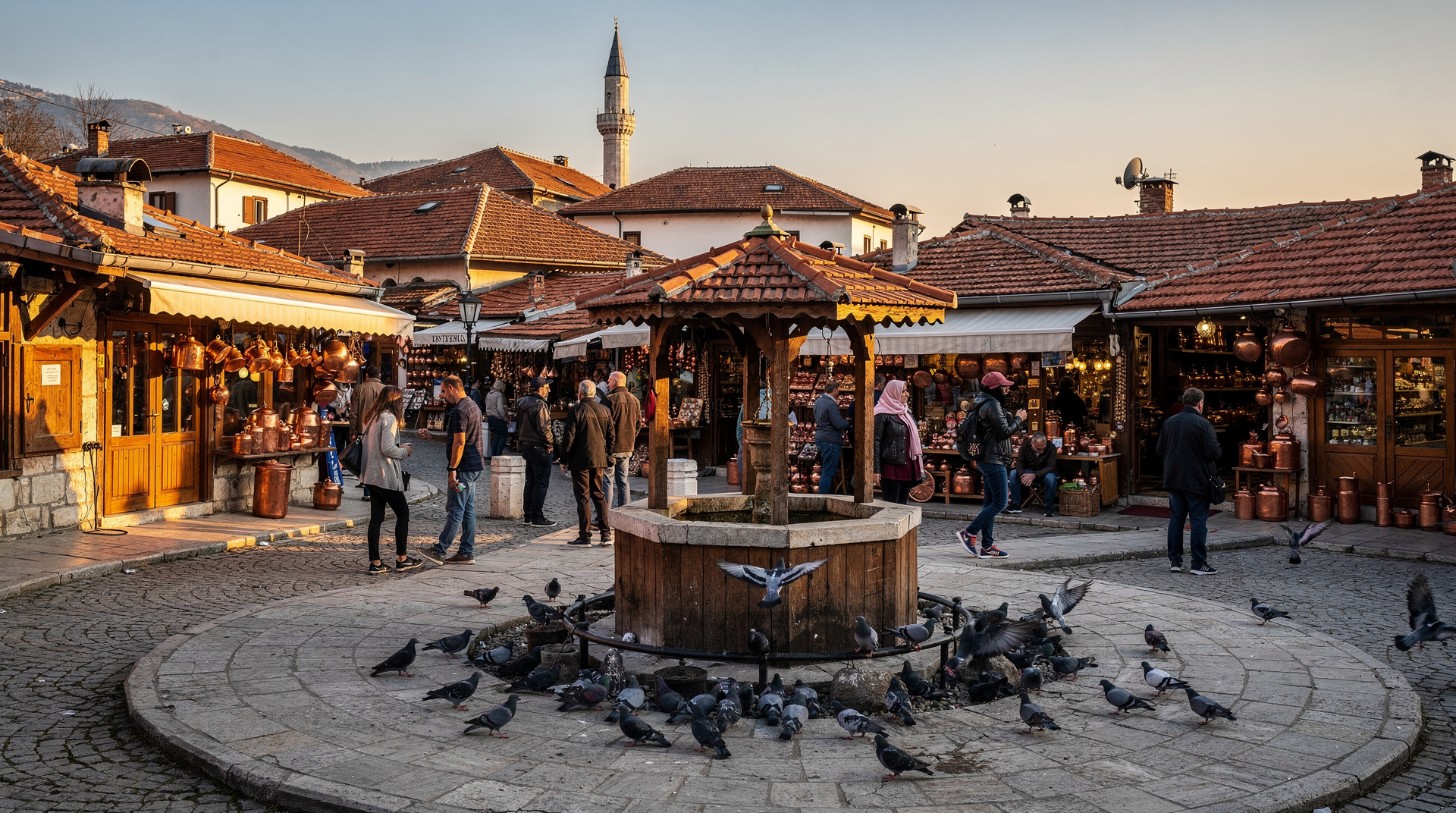
Bosniak Muslims are the founding community of Ottoman Sarajevo, established in the 1460s. The mosques, bazaar layout, coffeehouses, fountains and architectural traditions of Baščaršija all descend from Ottoman-era Muslim culture. Islam is the majority religion of Sarajevo today.
Sephardic Jews arrived in the 16th century, expelled from Spain and Portugal. The Ottomans welcomed Jewish refugees who would bring skills, commerce and capital. The Jewish quarter of Sarajevo (Mala Carsija, the Small Bazaar) developed adjacent to Baščaršija. The community established two synagogues — the Sephardic (Il Kal Grande, later converted to the Jewish Museum) and the Ashkenazi (still functioning). The Sarajevo Haggadah, produced in Barcelona around 1350, arrived with these refugees and is now one of the world’s most important Jewish manuscripts.
Orthodox Serbs have been present in the area since the medieval period, predating the Ottoman conquest. The Orthodox cathedral in Sarajevo was built in 1872, during the late Ottoman period — the Ottomans permitted Christian church construction as the empire modernised in the 19th century. The Orthodox community has its own residential quarter and cultural institutions.
Catholic Croats arrived in greater numbers with the Habsburgs after 1878, though Franciscan priests had maintained a Catholic presence in Bosnia through the Ottoman period (the Ottomans generally tolerated Catholic religious orders). The Cathedral of the Sacred Heart (1889), a neo-Gothic structure visible from the main pedestrian zone, is the Catholic community’s main monument.
The sacred geography of central Sarajevo
Within a 500-metre radius of the Sebilj fountain in Baščaršija, you can find:
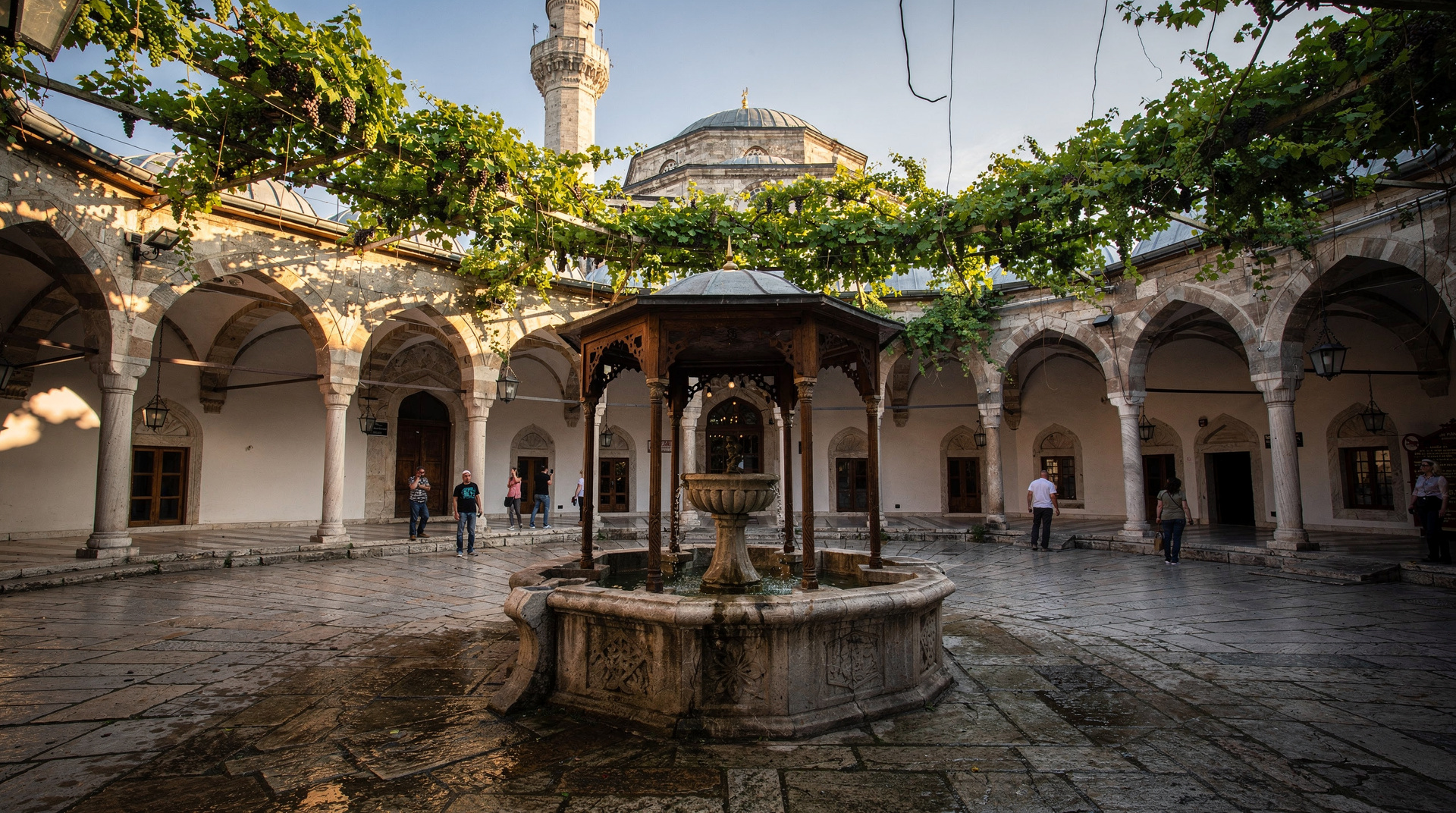
- The Gazi Husrev-beg Mosque (1531) — the largest Ottoman mosque in the Balkans
- The old Sephardic synagogue (now the Jewish Museum of Bosnia-Herzegovina)
- The Orthodox Cathedral of the Nativity (1872)
- The Catholic Cathedral of the Sacred Heart (1889, 800 metres further west)
No other city in mainland Europe has this density of major worship places of four different faiths within walking distance. The layout is not accidental: the Ottoman system allowed each community (millet) to maintain its own institutions and neighbourhood while sharing the commercial and civic space of the bazaar.
Sarajevo in a Day — a comprehensive tour covering history, tradition, war and gastronomy provides guided access to all four faith communities’ sites, with a local guide explaining how they related historically and how they relate today.
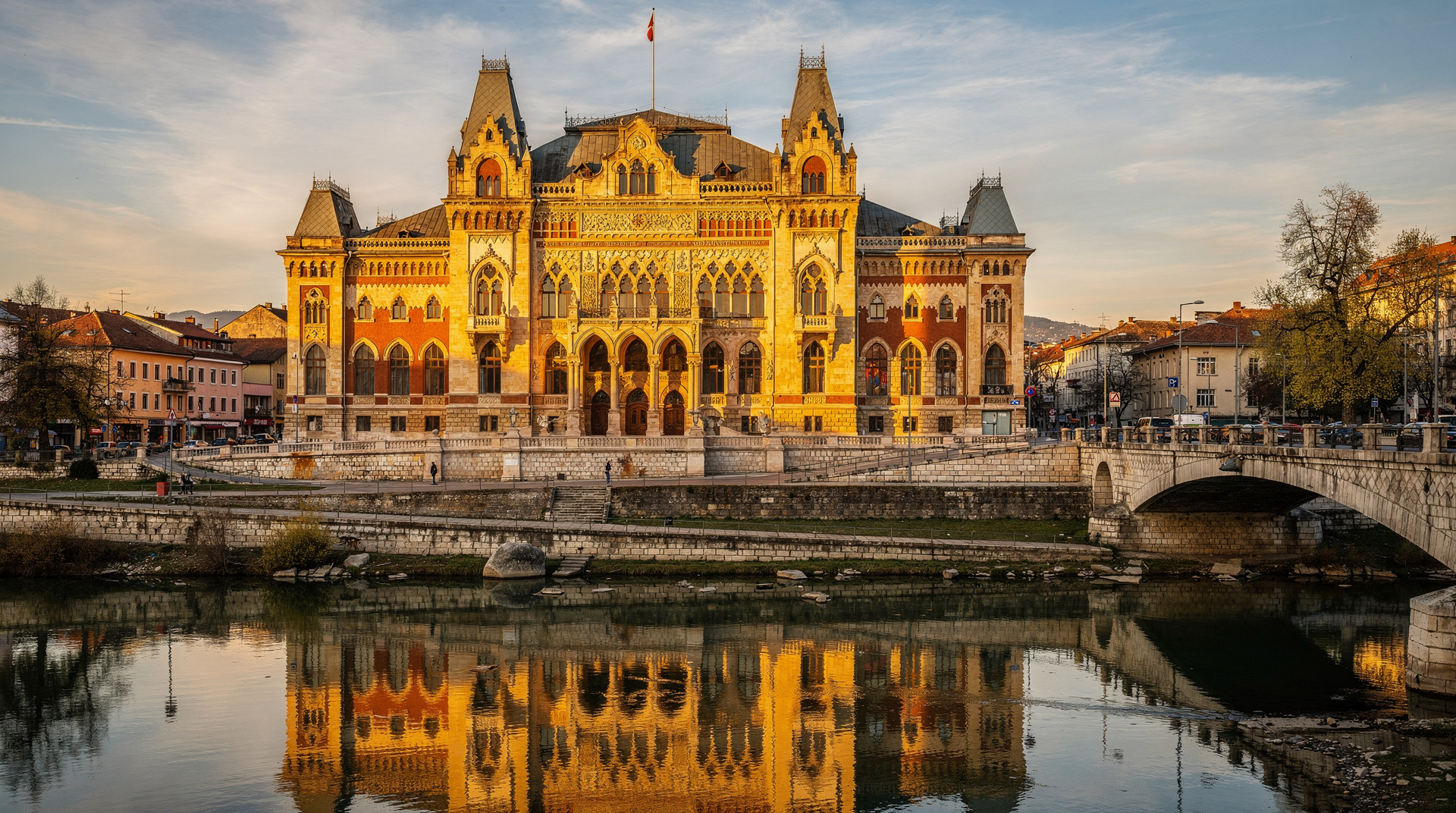
A mosque, a synagogue, an Orthodox church and a Catholic cathedral stand within a few hundred metres of one another here, which is a fact about the city’s building history rather than a slogan: a walking tour through the soul of Sarajevo walks that short distance and explains what put each one there.
The Sarajevo Haggadah
The most tangible symbol of Sarajevo’s Jewish heritage is the Sarajevo Haggadah, a Passover prayer book produced in Barcelona around 1350 and brought to Sarajevo by the Sephardic refugees in the 16th century. The manuscript is illustrated with 34 full-page miniature paintings depicting scenes from the Book of Exodus and Jewish religious life — extraordinarily rare for Jewish manuscript art, which generally avoids figurative representation.
The Haggadah survived the Ottoman period, the Habsburg occupation, the Nazi occupation (when it was hidden by a Muslim librarian, Dervis Korkut, who saved it at personal risk), the Communist era (when it was locked in a bank vault) and the 1992-1995 siege (when it was moved to an undisclosed location for safekeeping). It has been exhibited internationally and is now kept at the National Museum.
The Jewish Museum
Housed in the former Sephardic synagogue (Il Kal Grande, built in 1580 and rebuilt in the 19th century), the Jewish Museum of Bosnia-Herzegovina documents the history of Sarajevo’s Jewish community from the 16th century to the present. The museum covers the Sephardic arrival, the cultural life of the community, the Holocaust and the survival of individual families. Entry is approximately 5 BAM.
Ottoman-era tolerance and its limits
The Ottoman millet system — by which non-Muslim communities were governed by their own religious laws in personal matters while paying the jizya (poll tax) — was not equality, but it was a form of organised coexistence that European states did not achieve for most of the same period. The Venetians expelled their Jews; the Spanish executed theirs. The Ottomans took them in.
This tolerance had limits. Non-Muslims faced restrictions on church building, horse riding and weapons carrying (though these were variably enforced). The devshirme levy conscripted Christian boys for Ottoman service. But the broad picture of multi-community coexistence in Ottoman Sarajevo is real and documented.
Wartime and aftermath
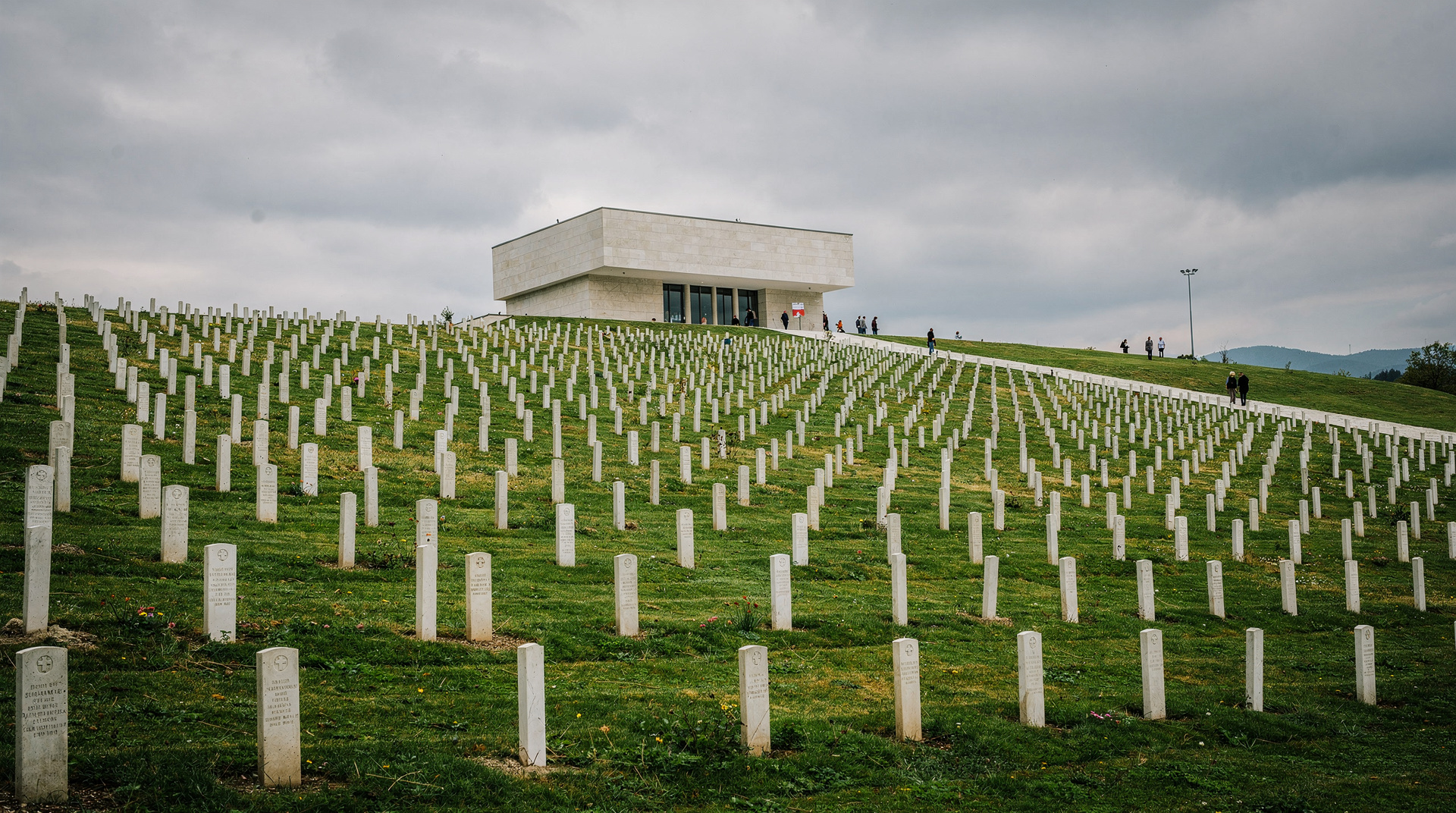
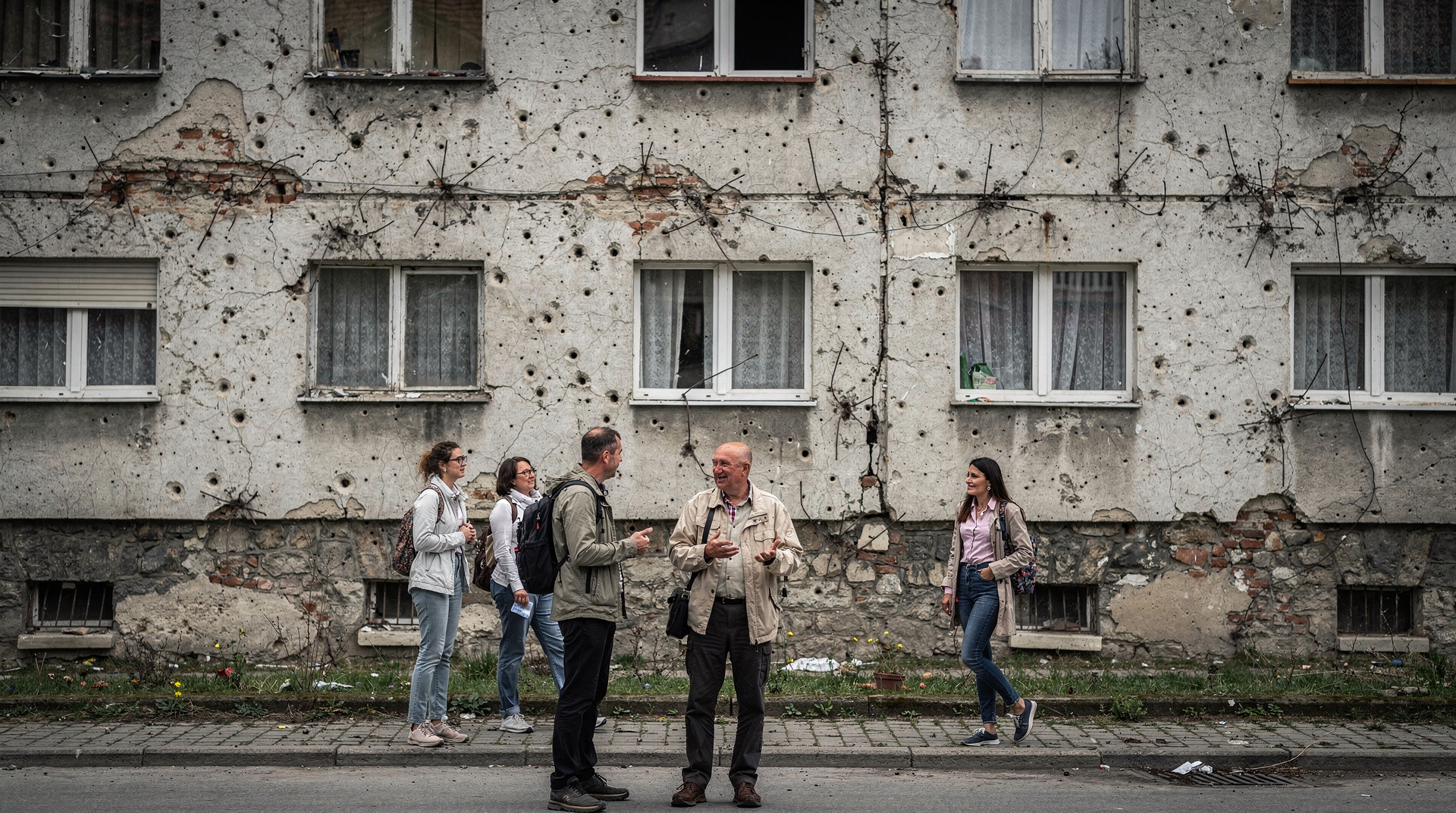
The 1992-1995 siege tested Sarajevo’s multicultural identity severely. The siege was imposed by Bosnian Serb forces, motivated by ethnic nationalism. The city’s population — predominantly Bosniak but including significant numbers of Sarajevo Serbs, Croats, Jews and others who chose not to leave — endured 44 months under shellfire and sniper fire with water, food and fuel shortages.
The Sarajevo siege guide covers the military history; the Sarajevo Roses guide explains the physical memorials. For the purpose of understanding Sarajevo’s multicultural identity, the siege matters because the city’s defenders were explicitly multi-ethnic and explicitly defending a multi-confessional urban culture against an ethnic nationalist project. That self-understanding remains central to Sarajevo’s identity today.
A walking circuit: four faiths
A focused walk covering the four faith communities’ main sites takes approximately two to three hours:
Start: Sebilj fountain, Baščaršija — the centre of Ottoman Muslim Sarajevo. Walk north to the Gazi Husrev-beg Mosque (30 minutes including the courtyard).
Continue east along the bazaar lanes to Ferhadija street, then south a few blocks to find the Jewish Museum in the old Sephardic synagogue.
Walk west along Ferhadija to the pedestrian zone. Turn north to find the Orthodox Cathedral (about 200 metres from Ferhadija).
Continue west along Ferhadija to the Cathedral of the Sacred Heart — the Catholic centrepiece, about 800 metres from Baščaršija.
Return east along Mula Mustafe Bašeskije street (or the parallel lanes) to Baščaršija for coffee at Morića Han.
This circuit requires no transport and no major hill climbs. A guide adds significant value — the history of the four communities is layered enough that a guided walk is worthwhile. See the guide to Sarajevo’s four faiths for more detail on each community.
Practical information
The individual sites are all described in dedicated guides:
- Baščaršija and the mosques of Sarajevo
- Sarajevo’s main mosques
- The museums of Sarajevo
- Austro-Hungarian Sarajevo
All central Sarajevo sites are walkable from each other. The tram lines on Ferhadija and the Appel Quay connect the main zones. See the Sarajevo public transport guide for tram routes.
Why the coexistence held for so long
The durability of Sarajevo’s multi-faith fabric owes less to sentiment than to structure. The Ottoman millet system organised each community around its own courts, schools and charitable endowments (waqf), so that Bosniak Muslims, Sephardic Jews, Orthodox Serbs and (later) Catholic Croats each had a self-sufficient institutional life running in parallel rather than in competition.
When Austria-Hungary took over in 1878, it layered a modern bureaucracy and new church-building rights on top of this system rather than dismantling it — which is why a neo-Gothic Catholic cathedral, a 16th-century mosque and a 19th-century Orthodox cathedral all still function within the same few blocks. The Austro-Hungarian Sarajevo guide covers this transition period in detail, and the Bosnia history for travelers guide sets it in the wider national story.
Beyond the walking circuit: sites worth a second visit
Travellers with more than a single afternoon can go deeper into any one of the four traditions. The Baščaršija guide covers the Ottoman bazaar in full, including the caravanserais and covered market that funded the Gazi Husrev-beg complex. For the Islamic side specifically, the Sarajevo mosques guide profiles five mosques beyond the ones on this circuit. The museums of Sarajevo guide lists opening hours and practical details for the National Museum, where the Sarajevo Haggadah is held, and for the smaller faith-specific collections.
How to read the city as you walk
The circuit works best if you treat it as a conversation between architectures rather than a checklist of buildings. In the bazaar, the low rooflines, the fountain and the courtyards belong to the Ottoman layout, where trade and worship sat side by side. A few minutes west, the street grid, the façades and the tall church spires belong to the Habsburg decades. Stand on Ferhadija and you can feel the seam between the two: the same pavement carries you from one city to the other, and nobody announces the change. The Baščaršija guide and the Austro-Hungarian Sarajevo guide are the best companions for this part of the walk.
It also helps to notice what is ordinary. Locals cross between these zones on their way to work, to cafés and to the market without treating any of it as a monument. Sit down for a coffee and watch for a while; the Bosnian coffee culture guide explains the ritual, and the Sarajevo cafés we love post suggests places to try it. A pause like this tells you more about coexistence than any plaque.
Etiquette at each kind of site
Each of the four traditions has its own expectations, and a little preparation makes the visit smoother for you and for the people who worship there.
- Mosques: dress modestly, remove your shoes at the entrance and keep your voice low. Visitors are generally welcome outside prayer times, but prayer always comes first. The Sarajevo mosques guide goes through what to expect.
- Synagogue and Jewish Museum: treat it as a place of memory as much as a museum. Take your time with the exhibits on the Holocaust and on individual families, and avoid photographing people.
- Orthodox and Catholic churches: services may be under way, so enter quietly, cover your shoulders and step out if you need to take a call. The Sarajevo faiths guide describes each community in more depth.
Across all four, the simplest rule holds: these are working places of worship first and sights second.
Pairing the circuit with other Sarajevo visits
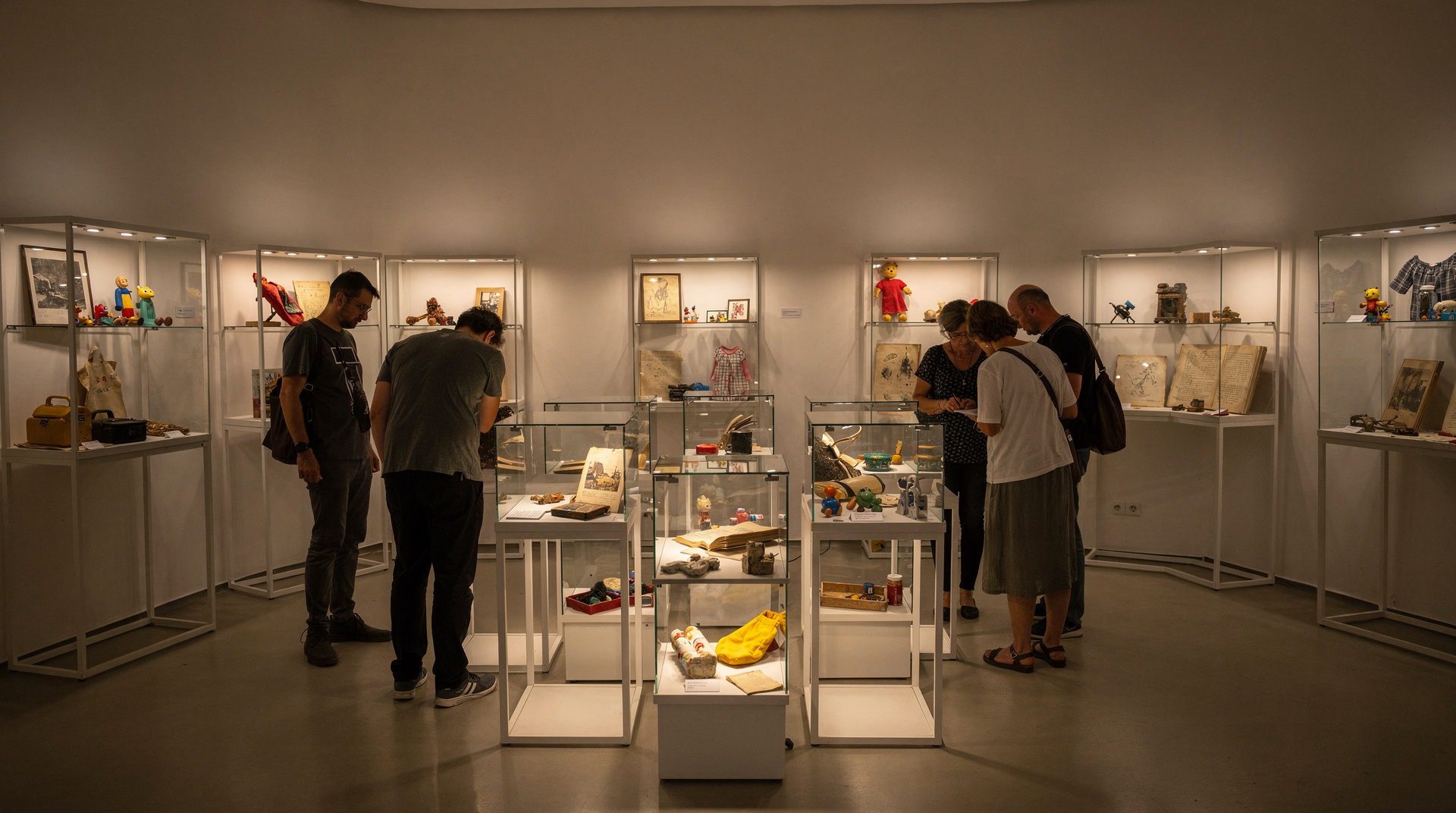
The walk fits naturally into a longer stay. Many visitors do the faith circuit on one morning and give the next to the war history of the city, using the Sarajevo siege and Tunnel of Hope guide and the Sniper Alley guide. Doing the two in this order gives the war its context: you have first seen what the city was, and then what it defended. The War Childhood Museum guide adds a quieter, more personal angle for those who want it.
If you are still choosing where to sleep, the Sarajevo where to stay guide helps you pick a base close enough to Baščaršija that the circuit can be done on foot at a relaxed pace. For a fuller plan around this walk, the four-day Sarajevo deep dive itinerary shows where it can sit, and the Sarajevo destination page gathers everything else in one place. If you would rather read a first-hand account before you go, first time in Sarajevo is a good place to start.
Questions to carry with you
Rather than arriving with a list of facts, arrive with a few questions. Why did each community settle where it did? Which buildings were built with permission and which in spite of restrictions? What did the neighbours do when the city came under fire? You will not get tidy answers, and that is the point. The history is layered, and the honest way to engage with it is to stay curious and to listen to the people who live here. For the wider story, the Bosnia history for travelers guide and the Yugoslav wars explained guide give the background that makes the city’s present easier to understand.
Frequently asked questions about Sarajevo — the Jerusalem of Europe
What four faiths coexist in Sarajevo?
When did Jews first arrive in Sarajevo?
What happened to Sarajevo's Jewish community in World War II?
Is the famous Haggadah of Sarajevo viewable?
How do the four communities relate today?
Top experiences
Bookable activities with verified prices and instant confirmation on GetYourGuide.