Best museums in Sarajevo — a practical guide
Sarajevo: Best of Sarajevo Full-Day Tour
What are the best museums in Sarajevo?
The top museums in Sarajevo are the War Childhood Museum (personal objects from the 1992-1995 siege), the National Museum (archaeology, natural history and the Sarajevo Haggadah), the History Museum of Bosnia (Communist and war-era displays), the Olympic Museum (1984 Winter Games), the Tunnel of Hope Museum and the Jewish Museum. A focused two-day museum route covers all of them.
Sarajevo punches significantly above its weight as a museum city. A town of 300,000 people has produced some of Europe’s most innovative cultural institutions — partly because it has an extraordinary amount of history to process, and partly because the post-war generation has been determined to document it in ways that international visitors can access. This guide covers the essential museums and how to visit them efficiently.
| Where | Central Sarajevo, mostly within walking distance of Baščaršija; the Tunnel of Hope is at Butmir, a short taxi ride out |
| Cost | Around 5-20 BAM per museum; budget ~45-55 BAM for a full circuit of six |
| Time needed | A focused two-day museum route, or one intense day hitting the top three |
| Getting there | On foot or by tram in the centre; taxi (~12-15 BAM) for the Tunnel of Hope |
| Best time | Weekday mornings — smaller institutions like the History Museum can feel crowded with tour groups mid-morning on weekends |
Which museum for which interest
Not every visitor wants the same thing from Sarajevo’s museum scene, and the six main institutions genuinely differ in tone.
| Museum | Entry (approx.) | Time needed | Best for |
|---|---|---|---|
| War Childhood Museum | 7-8 BAM | 1-1.5 hrs | Personal, emotional siege history |
| National Museum | 5 BAM | 2-4 hrs | Archaeology, the Sarajevo Haggadah |
| History Museum | 5 BAM | 1 hr | 20th-century political/war context |
| Olympic Museum | 5 BAM | 45 min | 1984 Games, lighter contrast to war history |
| Tunnel of Hope | ~20 BAM | Half-day incl. travel | The physical experience of the siege lifeline |
| Jewish Museum | ~5 BAM | 30-45 min | Sarajevo’s multi-faith heritage, Sephardic history |
War Childhood Museum
The War Childhood Museum is, by international critical consensus, the most affecting museum in Bosnia. Opened in 2017 by founder Jasminko Halilovic, it grew from a social media project asking Sarajevo residents to complete the sentence “War childhood is…” The responses became a book, then a collection of physical objects.
The museum displays hundreds of everyday objects donated by people who were children in Sarajevo during the 1992-1995 siege: a pair of worn shoes (the only footwear a child had for two years), a board game played for months without going outside, a cassette tape of favourite music, a school notebook from lessons held in the basement. Each object comes with a brief first-person account from the owner, typically a few sentences long. The cumulative effect is unlike anything in a conventional war museum.
The War Childhood Museum has won the Council of Europe Museum Prize and been credited with influencing the approach of war memorial institutions globally. It is in a central Sarajevo location, near the National Theatre. Entry is approximately 7-8 BAM; allow 1-1.5 hours.
The Best of Sarajevo Full-Day Tour covers the city’s highlights including the key museum sites with a local guide, giving context that makes the individual exhibits more meaningful.
National Museum (Zemaljski Muzej)
The National Museum of Bosnia-Herzegovina, housed in a grand neoclassical quadrangle from 1888 on the western edge of the city centre, is the largest museum in the country. After a period of closure (2012-2015) due to disputes about funding and governance between the entities of the country, it has reopened and is operating regularly.
The collections span:
Archaeology: An important collection of prehistoric, Illyrian and Roman material from Bosnia, including jewellery, tools and sculpture. The medieval section includes examples of stecak — the distinctive carved stone tombstones of medieval Bosnia, found across the country and inscribed on the UNESCO World Heritage List in 2016. The museum has some of the finest stecak in any collection.
The Sarajevo Haggadah: The 14th-century illuminated Spanish Jewish manuscript (see the Jerusalem of Europe guide) is kept here and is occasionally displayed in a special exhibition space. When on display it is extraordinary. Check current exhibition status before visiting.
Ethnography: An extensive collection of Bosnian folk costumes, textiles, agricultural tools and domestic objects from the Ottoman and Habsburg periods.
Natural history: Botanical and geological collections of regional scope.
Entry is approximately 5 BAM. Allow at least 2 hours; a full visit takes 3-4 hours. The courtyard garden contains a reconstructed Roman mosaic from the site at Stolac and a collection of stecak.
History Museum of Bosnia-Herzegovina
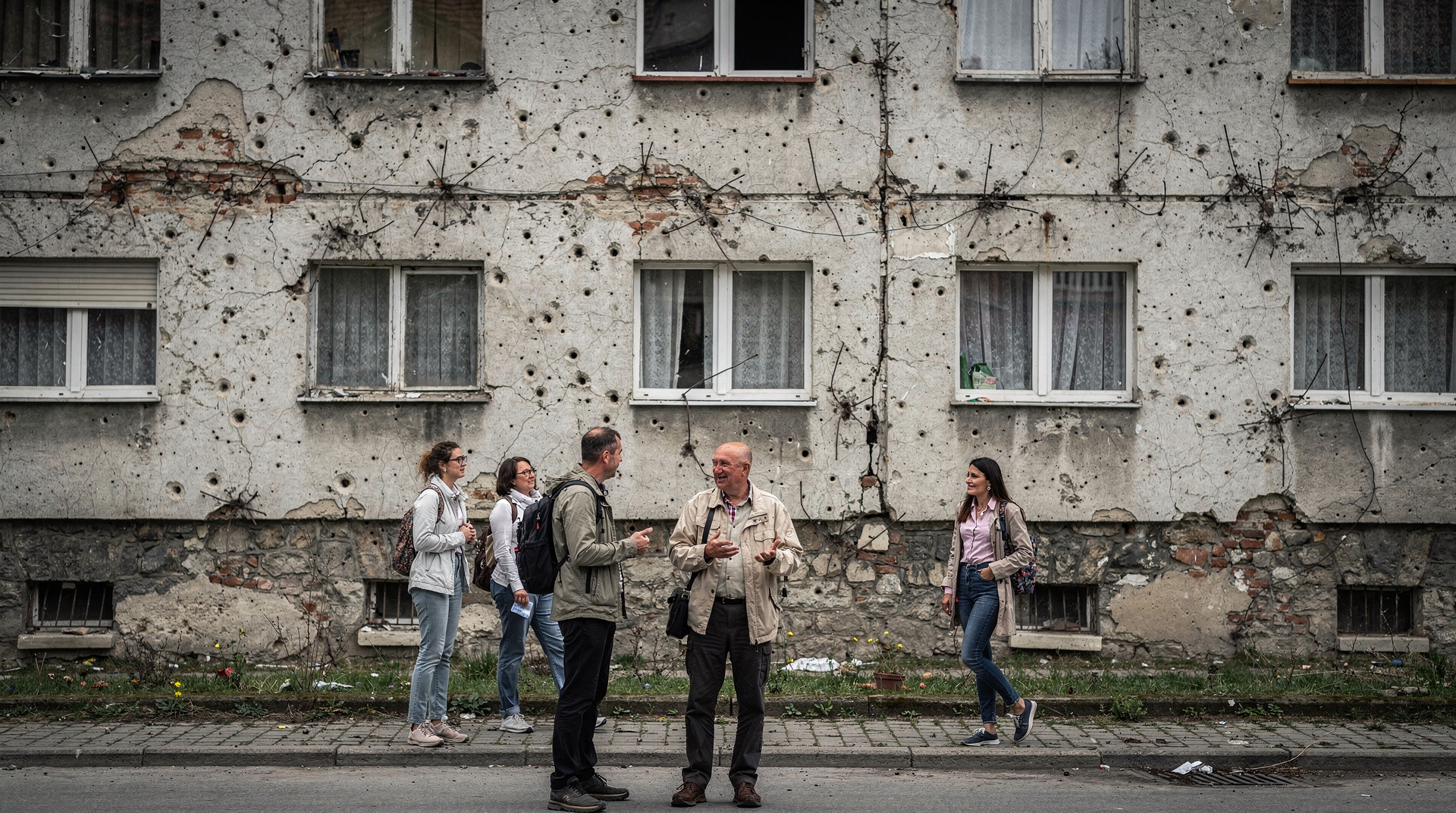
A smaller and more focused institution than the National Museum, the History Museum concentrates on the 20th century: the Yugoslav period, Tito’s era and — most powerfully — the 1992-1995 siege. The siege display includes original objects from daily life in the besieged city: homemade candles, wood-gas car conversions, improvised cooking equipment, letters and photographs. Sarajevo residents lived under shellfire and sniper fire for 44 months — the longest siege of a capital city in modern European history — and this museum documents what that meant in daily practice.
The museum building itself was damaged during the war and has been partly restored. Entry is approximately 5 BAM; allow 1 hour.
Olympic Museum
Sarajevo hosted the 1984 Winter Olympics — a remarkable achievement for a medium-sized city in Communist Yugoslavia that was then not especially well known internationally. The games were largely considered a success: the infrastructure was built on time, the atmosphere was friendly and several memorable athletic performances occurred (including Jayne Torvill and Christopher Dean’s perfect-score ice dance).
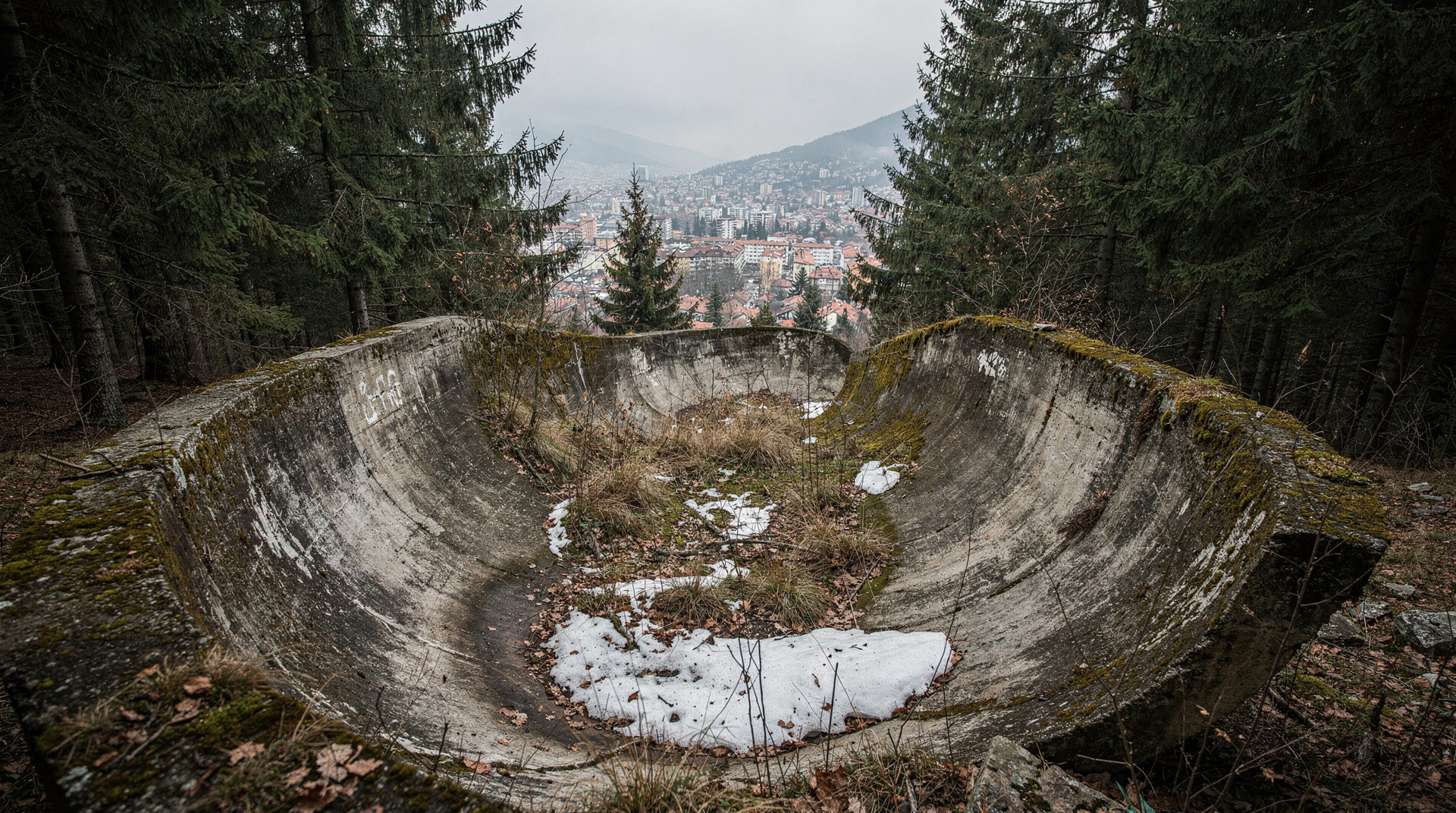
The Olympic Museum at the Zetra venue covers the preparation, execution and legacy of the games, with displays of equipment, clothing, medals, mascots (Vucko the wolf) and footage. The contrast between the optimistic images of 1984 and what followed eight years later — the Zetra Ice Hall was used as a temporary morgue during the siege, and the Olympic bobsled track was used by Serb forces as a gun position — gives the display an involuntary melancholy.
Entry is approximately 5 BAM; allow 45 minutes.
Jewish Museum (Old Synagogue)
The Jewish Museum of Bosnia-Herzegovina occupies the 16th-century Sephardic synagogue (Il Kal Grande), the oldest surviving synagogue building in Bosnia. The museum documents the history of Sarajevo’s Sephardic Jewish community from the 16th century arrival from Spain and Portugal, through the Ottoman period (when the community was prosperous and relatively protected), the Habsburg era (when Sarajevo Jews obtained full civil rights), World War II (when most were deported and killed) and the post-war decades.
The most important exhibit is the documentation of the Haggadah’s wartime rescue and subsequent history. The building itself — the interior of the synagogue — is worth seeing. Entry is approximately 5 BAM.
Tunnel of Hope Museum
The Tunnel of Hope (Tunel nade) was a 800-metre tunnel dug beneath the Sarajevo Airport in 1992-1993, linking the besieged city to Bosnian government-controlled territory at Butmir. Through the tunnel — which was hand-dug under fire in four months — flowed food, fuel, weapons, medicine and, most importantly, the people of Sarajevo who needed to enter or leave the city for months at a time while the airport surface was closed. It is estimated that around one million people passed through the tunnel over three years.
The museum occupies the house where the tunnel began (the Kolar family house). A preserved section of the original tunnel — about 25 metres — is still walkable by hunching down. Photographs, film footage and equipment explain the construction and operation. The displays are basic but the physical experience of the tunnel is affecting.
Entry is approximately 20 BAM including the tunnel section. The museum is 8 km from the city centre; taxi costs about 12-15 BAM. The Tunnel of Hope guide gives the full history. If you would rather not arrange the transfer yourself, a guided war tour that includes entry to the tunnel museum handles the trip out to Butmir and puts the displays in context.
Gazi Husrev-beg Madrasa Museum
Within the Gazi Husrev-beg complex in Baščaršija, the 16th-century madrasa (Islamic school) has been partly converted into a small museum of Islamic art and manuscripts. The collection includes Qurans, calligraphy, Ottoman metalwork and decorative arts. Entry is minimal. Worth 30 minutes if you are already in Baščaršija.
Practical information
War Childhood Museum: Central location, 10 minutes from Baščaršija. Open approximately 10:00-18:00. Entry ~7-8 BAM.
National Museum: Western edge of city centre, 20 minutes’ walk from Baščaršija (or tram). Open approximately 10:00-17:00 Tue-Fri, 10:00-14:00 weekends. Entry ~5 BAM.
History Museum: Adjacent to the National Museum. Similar hours, ~5 BAM.
Olympic Museum: Zetra Ice Hall, Skenderija, 15 minutes from Baščaršija. Hours vary; check locally. Entry ~5 BAM.
Tunnel of Hope: Butmir, taxi required. Open daily approximately 08:30–17:00 (1/4–31/10), 09:00–16:00 (1/11–31/3). Entry ~20 BAM.
Jewish Museum: Baščaršija area. Open approximately 10:00-16:00 Mon-Fri. Entry ~5 BAM.
A two-day museum itinerary for Sarajevo might look like: Day 1 — War Childhood Museum (morning) + National Museum (afternoon); Day 2 — Tunnel of Hope (morning, half-day including travel) + Olympic Museum + History Museum (afternoon).
See the Sarajevo war tour guide for war-specific sites, and the Baščaršija guide for the Ottoman cultural layer. Travellers who prefer a single guided session for the siege story can choose a tour covering the Bosnian and Yugoslav wars with a tunnel museum stop in place of the self-guided route.
Setting the context before you go
Sarajevo’s museums reward a little preparation. If the 1990s are only a blur for you, read the Yugoslav wars explained primer and the broader Bosnia history for travelers first; the exhibits then land as chapters of one story rather than isolated displays. The Franz Ferdinand assassination guide and the Austro-Hungarian Sarajevo guide fill in the earlier layers that the National Museum and the History Museum touch on, while the Ottoman heritage guide explains the world behind the madrasa collection.
The War Childhood Museum guide goes deeper into that single institution, and it is worth reading beforehand if you want to know what to expect from the first-person texts. For a first-person account of the city’s wartime years, the blog post Sarajevo siege remembered pairs well with a visit.
Pacing the day so the material stays bearable
The siege museums are not light. A sensible rhythm alternates heavy and gentler stops: one siege-focused museum in the morning, then something calmer after lunch, such as the Jewish Museum, the madrasa collection or a slow walk through the old town. The Sarajevo faiths guide is a good companion for that gentler half of the day, since the Jewish Museum sits within the same multi-faith story as the mosques, churches and synagogue nearby.
Outdoor memorials make a natural bridge between indoor visits. The Sarajevo Roses memorials guide and the Sniper Alley guide show how the same events left marks on the pavement and the streets, and the Sarajevo war tour guide links them into a longer route. Take breaks. Sit in a café, drink some water and let the morning settle before the next building.
Many travellers find that the order matters. Starting with the personal stories of the War Childhood Museum and then seeing the History Museum’s wider political frame tends to work better than the reverse, because the objects give the dates and decisions a human face. If you are short on time, pick the pairing that matches your own interest rather than trying to follow a fixed script.
Fitting museums into a longer Sarajevo stay
If museums are only one part of your trip, the Sarajevo 4-day deep dive shows where they sit among the walks, meals and day trips, and the Sarajevo destination page gives the wider picture of the city. For a first visit, the blog post first time in Sarajevo is a friendly introduction to what the city feels like on the ground.
Getting between sites is easy once you know the options; the Sarajevo public transport guide explains the trams and buses that connect the central museums, and the Sarajevo where to stay guide helps you choose a base within walking distance of most of them. Travelling with children needs extra thought for the heavier exhibits, so read the Sarajevo with family guide before deciding which museums suit younger visitors. To keep the day enjoyable, finish with a meal from the best restaurants in Sarajevo, and read the Sarajevo tourist traps guide so that a long day of culture is not spoiled by an avoidable overcharge.
Booking ahead and avoiding crowds
None of the museums on this list require advance booking for individual visitors — you can simply turn up and buy a ticket at the door. The exception is if you are travelling with a larger group or during Sarajevo Film Festival (August), when the War Childhood Museum in particular can have short queues at peak midday hours. Guided group tours, including the Best of Sarajevo full-day tour, pre-arrange entry and skip most of this friction.
If you are building your own route, see the avoiding crowds in Bosnia guide for wider timing advice, and pair museum mornings with a Sarajevo food tour or a Bosnian coffee break in the afternoon to break up the intensity of the war-history material.
Frequently asked questions about Best museums in Sarajevo — a practical
Is the National Museum (Zemaljski Muzej) open?
What is the War Childhood Museum?
Where is the Tunnel of Hope Museum?
What is the Olympic Museum in Sarajevo?
How much time do the museums need?
Can I buy a combined ticket for Sarajevo museums?
Which Sarajevo museum should I skip if I only have one day?
Top experiences
Bookable activities with verified prices and instant confirmation on GetYourGuide.