Sarajevo's mosques — a complete guide
Discover Sarajevo Walking Tour with Local Guide
What are the main mosques in Sarajevo?
Sarajevo's most important mosques are the Gazi Husrev-beg Mosque (1531), the largest Ottoman mosque in the Balkans and Sarajevo's architectural centrepiece; the Emperor's Mosque (Careva džamija, 1457), the oldest mosque in the city; and the Ali Pasha Mosque (1560), known for its elegant proportions. All are in or near Baščaršija and open to non-Muslim visitors outside prayer times.
| At a glance | |
|---|---|
| Where | Baščaršija and immediate surroundings, central Sarajevo |
| Cost | Free entry to all mosques listed here; a small donation (around 2-5 BAM) is appropriate |
| Time needed | 20-30 minutes per mosque including the courtyard; half a day to see all five |
| Getting there | Walkable from the Baščaršija tram stop |
| Best time | Mid-morning or mid-afternoon, avoiding prayer times and especially the Friday midday Džuma |
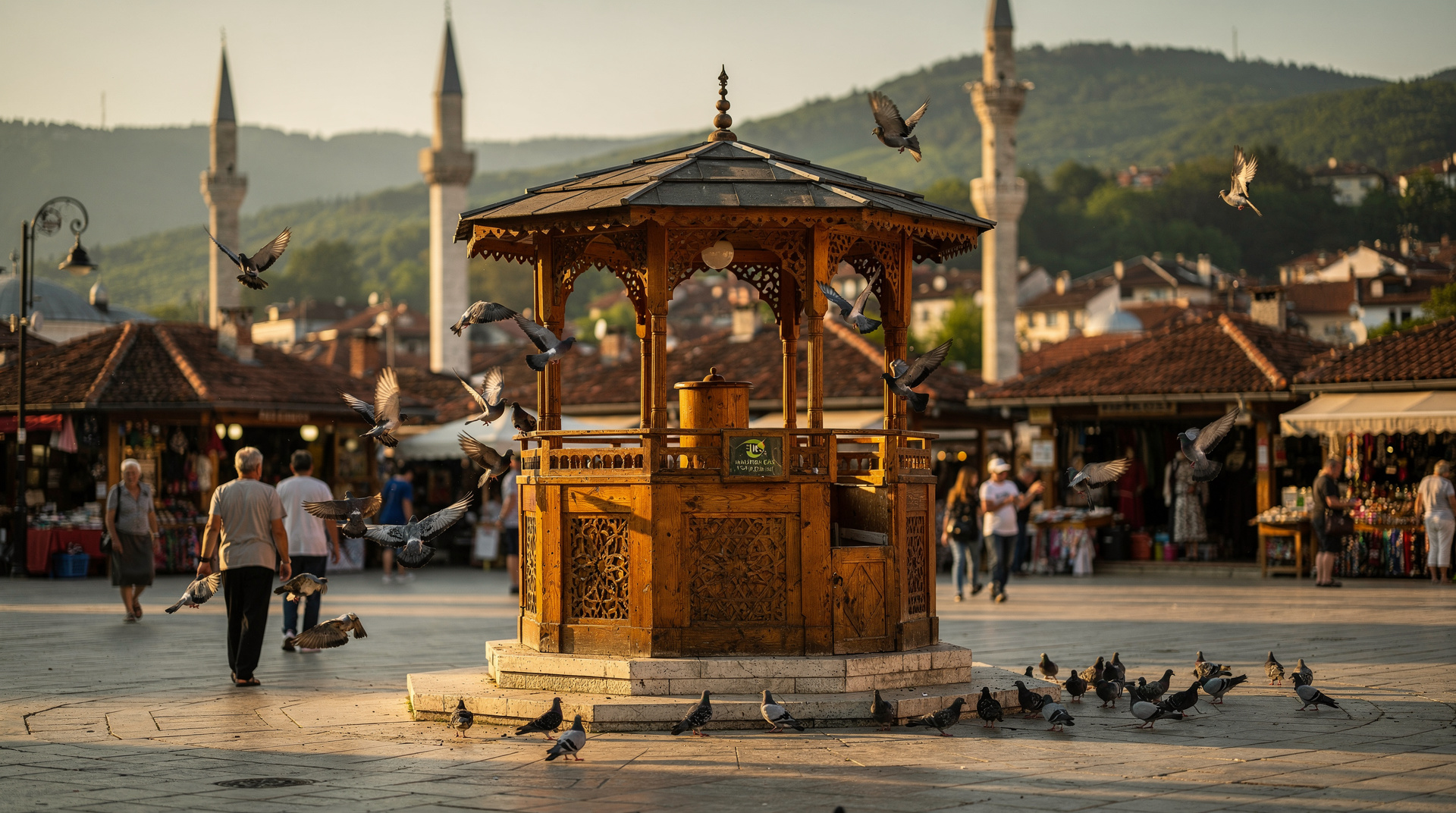
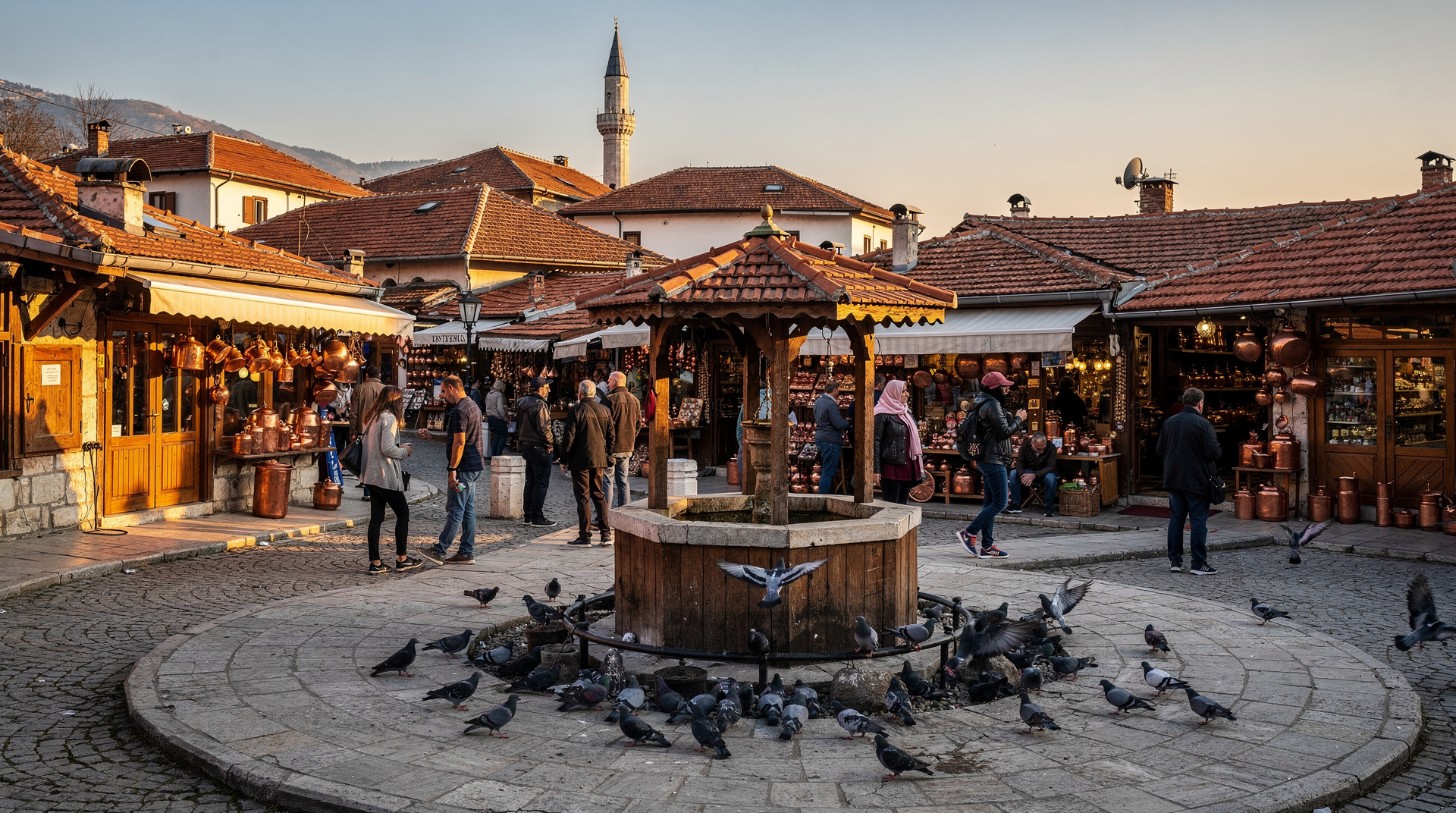
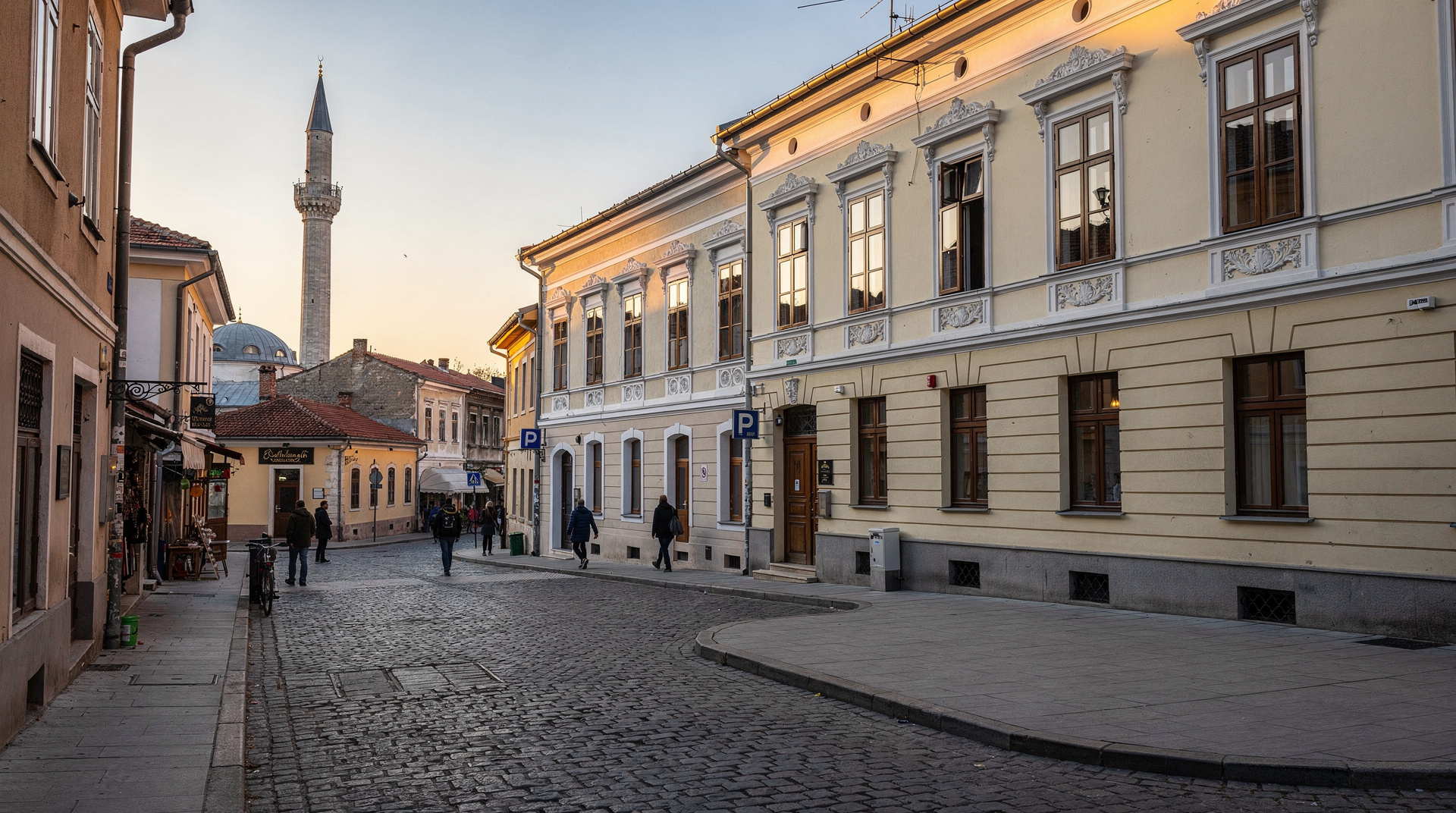
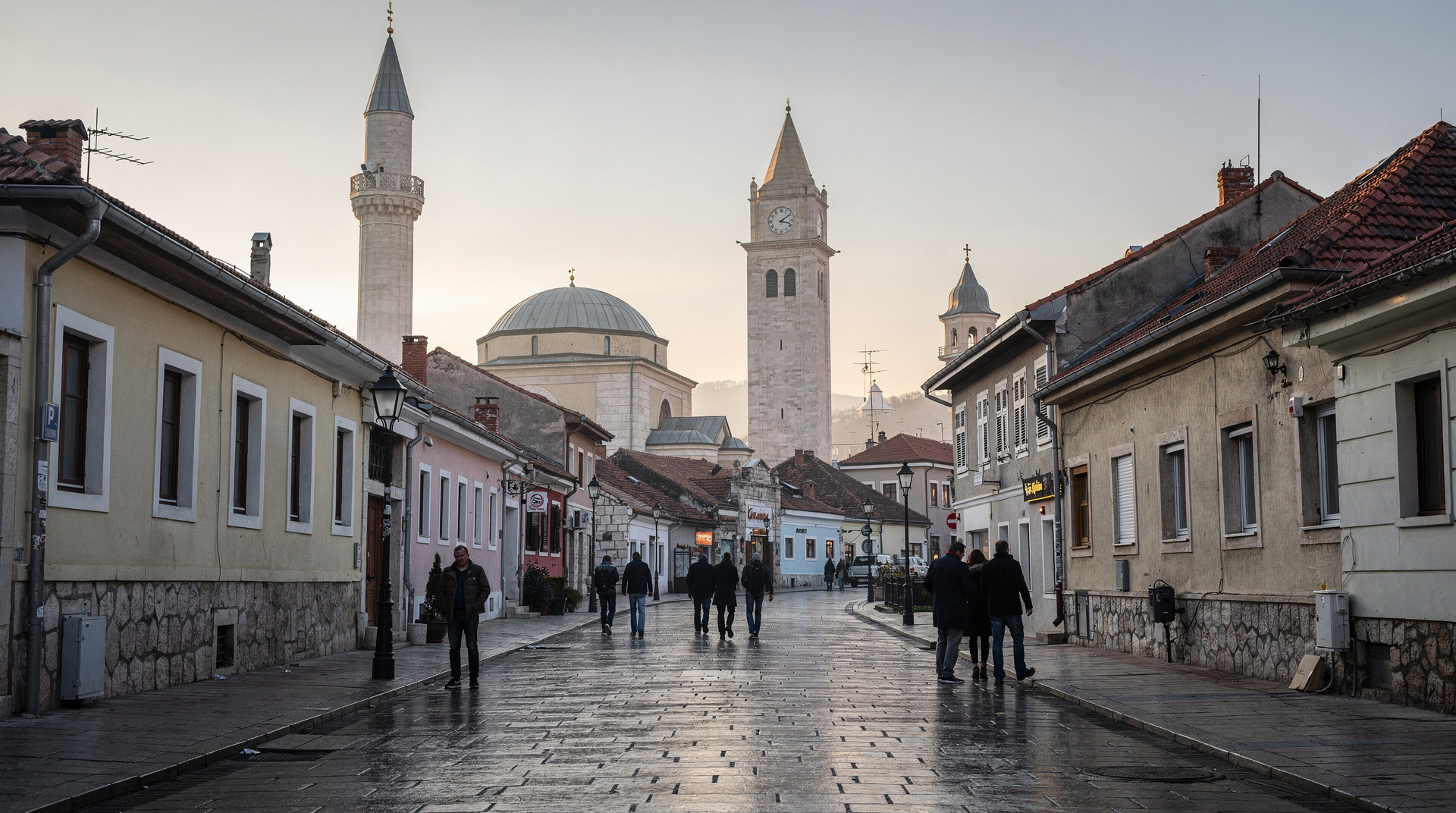
Sarajevo is sometimes called the “city of mosques” — an epithet that overstates things (Istanbul has more, as do many Middle Eastern cities) but captures the density of Islamic architecture in the old city. Within Baščaršija and its immediate surroundings, five significant Ottoman mosques stand within a 10-minute walk of each other, all from the 15th to 17th centuries. This guide covers the main ones and explains how to visit respectfully.
Gazi Husrev-beg Mosque
The Gazi Husrev-beg Mosque (Gazi Husrev-begova džamija) is the most important mosque in Bosnia-Herzegovina and the most architecturally significant in the Balkans outside Turkey. Built in 1531 under the Ottoman governor Gazi Husrev-beg, it was designed in the classical Ottoman style associated with the period of Suleiman the Magnificent — a single dome over the prayer hall, an elegant three-arched portico, and a single slender minaret rising to 47 metres.
The interior is the finest in Sarajevo: a high central dome on a square prayer hall, with elegant calligraphic inscription bands, painted ornament and a chandelier lowered on a long chain close to the floor in the traditional manner. The wooden minber (pulpit) and muezzin’s gallery are original 16th-century work. The mihrab (prayer niche indicating the direction of Mecca) is finely carved limestone.
The mosque’s waqf (religious endowment) funded by Husrev-beg was the economic engine of early Sarajevo — the income from the bazaar and caravanserai he also built supported the mosque and its attached institutions for centuries.
The mosque is open to visitors outside prayer times. Entry is free; donations appreciated. Women should cover their heads (scarves sometimes available at the door). Shoes must be removed.
The Discover Sarajevo Walking Tour with a local guide covers the mosque and the surrounding Ottoman complex in context, explaining the waqf system and the role of the mosque in Ottoman city life.
Emperor’s Mosque (Careva džamija)
The Emperor’s Mosque is a few minutes’ walk south of the Gazi Husrev-beg complex, near the Miljacka river. Despite its name, it is unpretentious — a single-domed structure with a small forecourt. It was originally built in 1457, making it the oldest mosque in Sarajevo, though it was substantially rebuilt in the early 16th century under Sultan Suleiman and again after later damage.
The name “Emperor’s Mosque” (careva = emperor’s, i.e. the sultan’s) distinguishes it from mosques built by provincial governors as private endowments — this mosque was funded directly from the imperial treasury. The interior is simple and peaceful; it sees fewer tourists than the Gazi Husrev-beg mosque.
The mosque is near the Baščaršija tram stop, a 5-minute walk from the Sebilj fountain. Entry free; remove shoes; head covering for women.
Ali Pasha Mosque (Ali-pašina džamija)
Built in 1560-1561 by Ali Pasha of Cengic, the Ali Pasha Mosque is known among Sarajevans as one of the most elegantly proportioned in the city. It is slightly off the main tourist circuit — on the south bank of the Miljacka, a 10-minute walk from Baščaršija — which means it is usually quiet. The single dome, octagonal drum and slender minaret form a particularly harmonious composition. The interior is painted in blue, green and gold in a scheme from the 19th century.
This mosque is less visited than the Gazi Husrev-beg complex but offers a more authentic experience of an active neighbourhood mosque. Entry free.
Ferhadija Mosque (Ferhat-begova džamija)
Built in 1562 by the governor Ferhad-beg Vucjakovic, the Ferhadija Mosque stands near the western edge of Baščaršija. It is architecturally important as an example of the classical Ottoman provincial style — dome, portico, single minaret — but is most notable for its location: it stands at the very point where the Ottoman city transitions into the Habsburg quarter, with the Bezistan covered market hall nearby.
Baščaršija Mosque
One of the smaller and less celebrated mosques in Baščaršija, the Baščaršija Mosque (also called Atmejdan džamija) sits in a small courtyard just south-west of the Sebilj fountain. It is often overlooked by visitors following the main tourist circuit to the Gazi Husrev-beg complex. The mosque dates from the 16th century and has been restored. It is very peaceful in the early morning.
Visiting etiquette
All of Sarajevo’s main mosques are active places of worship. These are the key points of etiquette:
Timing: Do not enter during the call to prayer (which lasts about 5 minutes) or during the actual prayer (10-15 minutes after the call). The Friday midday prayer is the most important; access for non-Muslims is restricted before and during Džuma (approximately 12:00-13:30, time varies seasonally).
Shoes: Remove shoes at the entrance threshold. Shoe storage is usually provided near the door.
Dress: Women must cover their heads. A scarf is essential; borrow one from the entrance if you have not brought one. Men should wear long trousers, not shorts. Both sexes should cover shoulders.
Photography: Ask permission before photographing inside the prayer hall. In many Sarajevo mosques this is permitted, but be discreet and do not photograph people praying. The exterior and courtyards are generally fine to photograph.
Silence and behaviour: Speak quietly; phones should be silent. Do not interrupt prayers or enter the prayer hall if prayers are underway.
Donations: A small donation (2-5 BAM) is appropriate when visiting as a tourist. Many mosques have a collection box near the entrance.
Context: Islam in Bosnia
Bosnian Islam, developed over four centuries of Ottoman rule and subsequent exposure to Central European culture, has its own character. Bosnian Muslims (Bosniaks) are predominantly Sunni with Hanafi legal tradition, the same mainstream Ottoman school as Turkey. The Sufi orders (tariqas) were historically influential; the Bektashi and Qadiri orders had dervish lodges in Bosnia. The Blagaj Tekija (see the Blagaj guide) is the best-surviving example.
Bosnian Muslim religious practice is generally moderate by comparison with the Arabian peninsula; the veil is not universal and alcohol is served in Sarajevo without restriction. The Communist period (1945-1992) suppressed public religious practice to varying degrees; the post-war period saw a revival of mosque attendance and Islamic institution-building, partly as an identity statement after the genocide.
For the full context of four faiths in Sarajevo, see the Jerusalem of Europe guide. For Ottoman heritage beyond the city, the Ottoman heritage guide places the mosques in the broader regional picture.
Which mosque to prioritise if you only visit one
If time is short, the Gazi Husrev-beg Mosque is the clear priority: it is the architectural and historical centrepiece, its interior is the finest of the group, and it anchors the whole Baščaršija bazaar complex that Husrev-beg’s endowment originally funded. The Emperor’s Mosque is the second priority for its age and its quieter atmosphere. The Ali Pasha and Ferhadija mosques reward travellers who already have a day or two in Sarajevo and want to see how the same architectural formula (dome, portico, single minaret) varies between imperial and provincial patronage.
Mosques beyond the old town
Sarajevo has well over 100 mosques, and a handful outside Baščaršija are worth knowing about if you’re staying longer. The King Fahd Mosque in the modern Čengić Vila district, funded by Saudi Arabia and completed in 2000, is the largest mosque in the Balkans by capacity — a striking contrast to the intimate 16th-century mosques of the old town, and useful if you want to see how contemporary Gulf-funded religious architecture differs from Ottoman tradition. It is a 15-20 minute tram ride from Baščaršija along the main line; see the Sarajevo public transport guide for the route.
Photographing the mosques respectfully
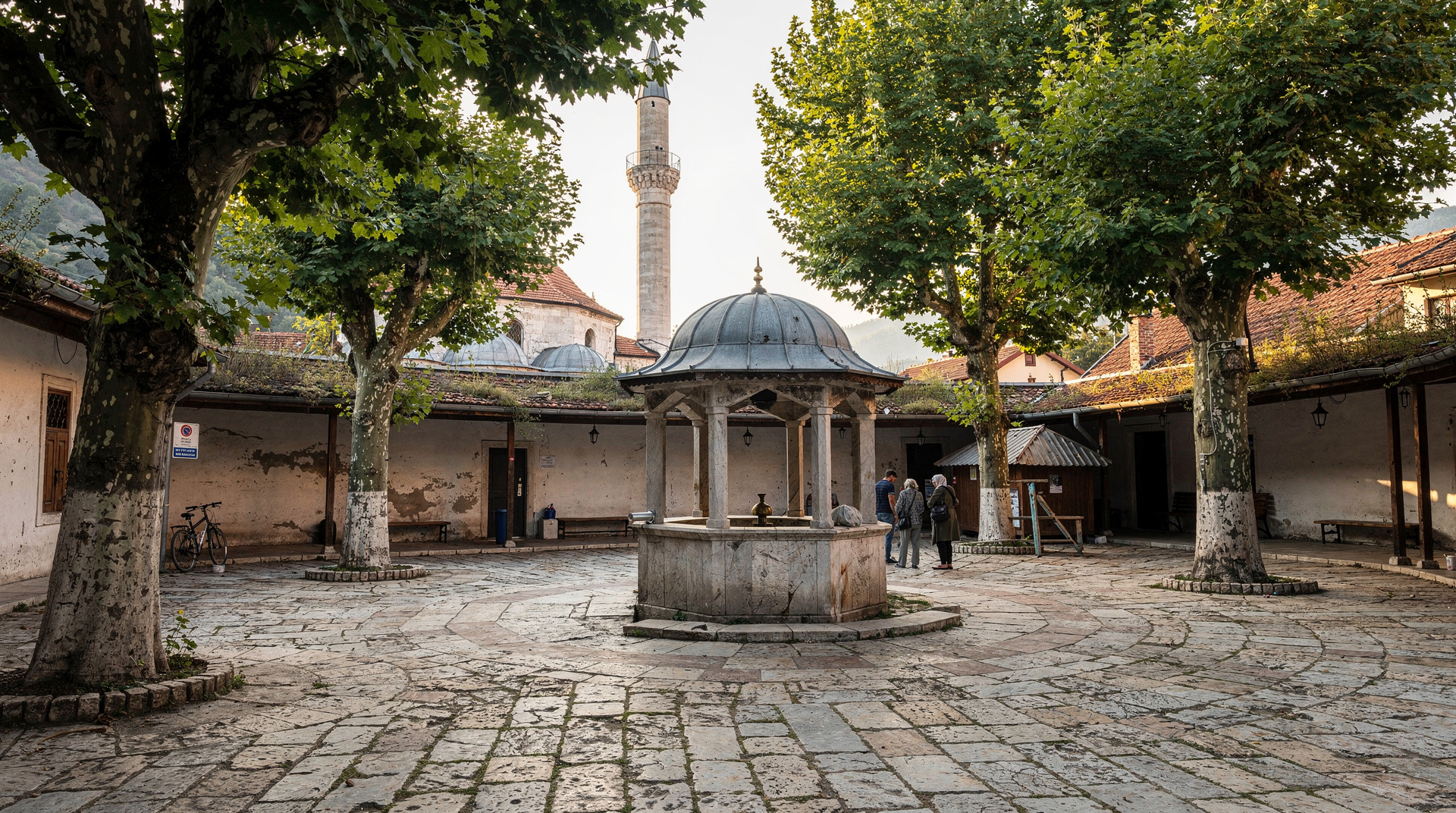
The exteriors, courtyards and minarets are always fine to photograph, and the Gazi Husrev-beg’s courtyard fountain and stone paving make for some of Sarajevo’s best architectural photos. Inside the prayer hall, ask before using a camera; avoid photographing anyone at prayer even if permission for general photography has been given, and never use flash near the mihrab or minber. A guided visit, such as the Discover Sarajevo Walking Tour, usually clarifies what’s appropriate at each specific site.
Building a mosque walk into your day
The mosques of the old town work best as stops on a wider stroll rather than as a checklist. Start in the morning, when the bazaar is still waking up and the courtyards are at their calmest, and let the walk follow the logic of the streets: the Gazi Husrev-beg complex first, then the Emperor’s Mosque, then a slow crossing of the Miljacka towards the Ali Pasha Mosque. Leave the Ferhadija and the smaller Baščaršija Mosque for the moment when you drift back through the bazaar. Everything is close enough that you never need transport, so you can adjust the order around prayer times without losing the thread of the day.
Between mosques, the Baščaršija guide is the natural companion: it covers the coppersmith lanes, the caravanserai and the cafés where a pause fits naturally. A cup of coffee served the traditional way is part of the same cultural world as the mosques, and the Bosnian coffee culture guide explains how to order it and what the little copper pot and sugar cubes are about. If you would rather eat than sip, the Sarajevo food tour guide and the burek and pita guide suggest where to refuel before the next courtyard.
Reading the architecture
Once you have seen two or three mosques, the pattern becomes a pleasure to spot. The classical Ottoman formula is simple: a domed prayer hall, a portico of small domes or arches at the entrance, a courtyard with an ablution fountain, and one minaret. The differences lie in the details: the proportions of the dome and drum, the carving of the portico, the colour and age of the painted interior, and the way each building sits among its neighbours. Look at the stonework around the doors, at the muqarnas-style hollowing under the minaret balcony, and at how the courtyard fountain is used by worshippers before prayer.
It also helps to place the mosques against the other layers of the city. A few minutes’ walk west, the streets change character completely, with the façades of the Habsburg era; the Austro-Hungarian Sarajevo guide shows how the two worlds meet within a single short walk. For the churches and synagogue that stand close by, the Sarajevo faiths guide turns this walk into a fuller tour of the city’s religious life.
Mosques and the memory of the war
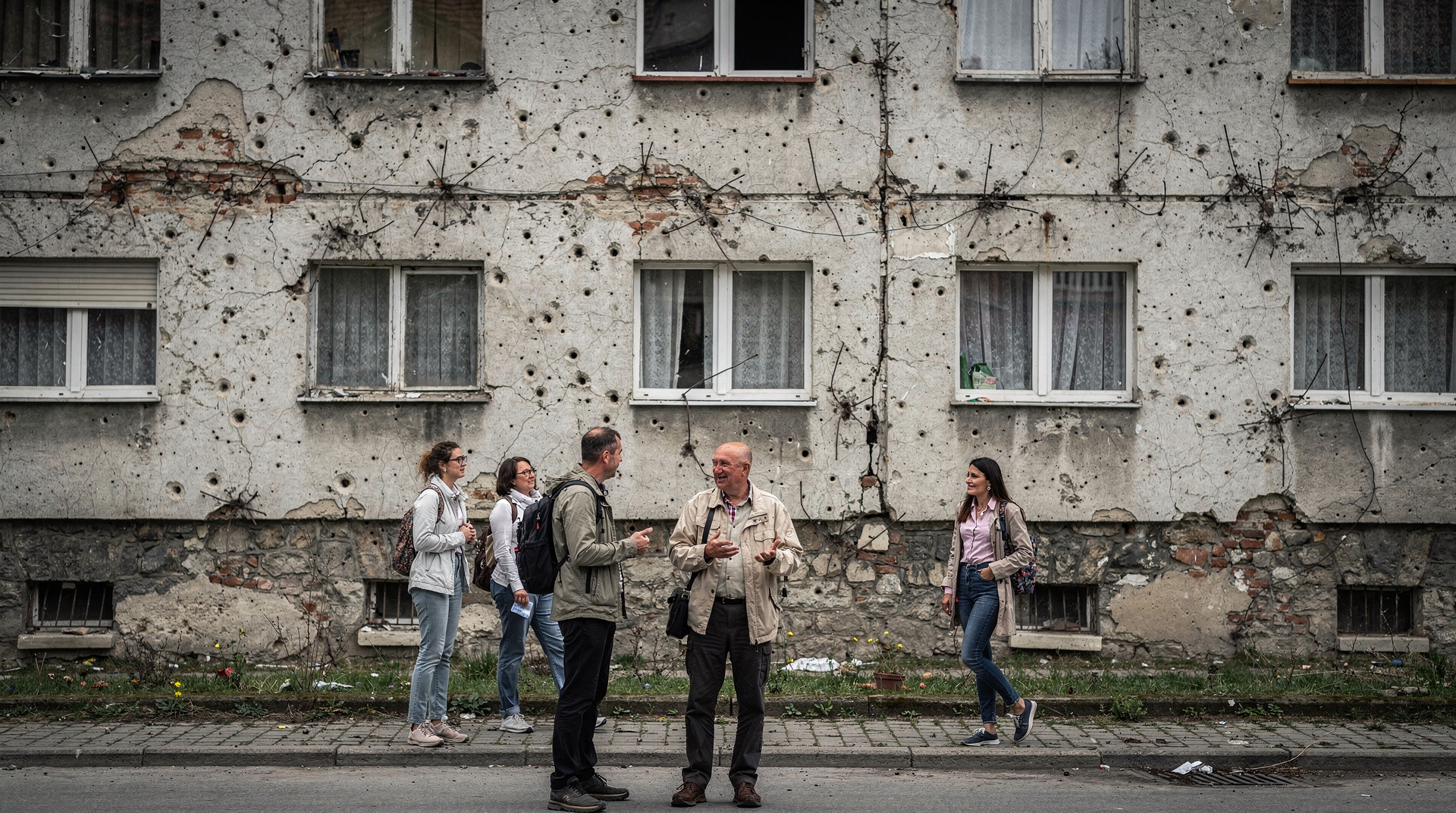
Many of Sarajevo’s religious buildings were damaged during the siege of the 1990s, and several of the mosques you visit today have been restored since. You do not need to look for the evidence: it appears in the details, in repaired stonework, in memorial plaques and in the way locals speak about their neighbourhood mosque. Treat that history with the same quiet respect you bring to the prayer hall. If you want to understand the wider story, the Sarajevo war tour guide and the Bosnia history guide for travellers give the background in a form that suits a visitor, and the Sarajevo siege remembered blog post offers a more personal account.
Practical tips for a smoother visit
- Carry a light scarf and a layer that covers the shoulders, even in warm weather, so that you can step into any mosque without needing to borrow anything.
- Keep small change for the donation box, as described in the etiquette section above.
- Check prayer times before you leave your accommodation, since they shift through the year, and plan the mosque stops for the quieter gaps between them.
- Wear shoes that are easy to slip on and off; you will be doing it several times.
- Go slowly. The value of these buildings is in the atmosphere, and ten unhurried minutes in one courtyard is worth more than a rushed tick at five.
- If you are staying in the old town, the where to stay in Sarajevo guide helps you choose a base close enough to visit at dawn or dusk, when the light on the minarets is at its best.
Where to go next
If the mosques have sparked an interest in Ottoman Bosnia, the Sarajevo in four days itinerary shows how to fit them into a longer stay alongside museums, memorials and mountain views. Travellers heading onwards can follow the Ottoman thread to Mostar, where the old bridge and the mosques beside it tell a related story, or take a look at the Sarajevo destination page for everything else the city has to offer.
Frequently asked questions about Sarajevo's mosques — a complete
Can non-Muslims visit mosques in Sarajevo?
What are the prayer times I need to avoid?
Is there an entrance fee for the Gazi Husrev-beg Mosque?
What is the oldest mosque in Sarajevo?
How many mosques are in Sarajevo?
Top experiences
Bookable activities with verified prices and instant confirmation on GetYourGuide.