Austro-Hungarian Sarajevo — the Habsburg city
Crossroads of Cultures – Sarajevo Walking Tour
What is the Austro-Hungarian legacy in Sarajevo?
Austria-Hungary occupied Bosnia in 1878 and administered it until 1918. In Sarajevo, Habsburg governors built a Western European-style city centre immediately west of the Ottoman bazaar — an administrative quarter of neoclassical, Moorish-revival and art nouveau buildings that still lines the Miljacka river. The most famous are the Vijećnica (city hall, 1896) and the Latin Bridge, where Archduke Franz Ferdinand was assassinated in 1914.
| At a glance | |
|---|---|
| Where | Central Sarajevo, west of the Baščaršija bazaar along Ferhadija |
| Cost | Streets and cathedrals free; Vijećnica, National Museum and Latin Bridge museum each around 5 BAM |
| Time needed | About 2 hours for a relaxed walking circuit |
| Getting there | Walkable from the Baščaršija tram stop; most central hotels are within the quarter |
| Best time | Morning for fewer crowds on Ferhadija; any season, as this is an indoor/outdoor mix |
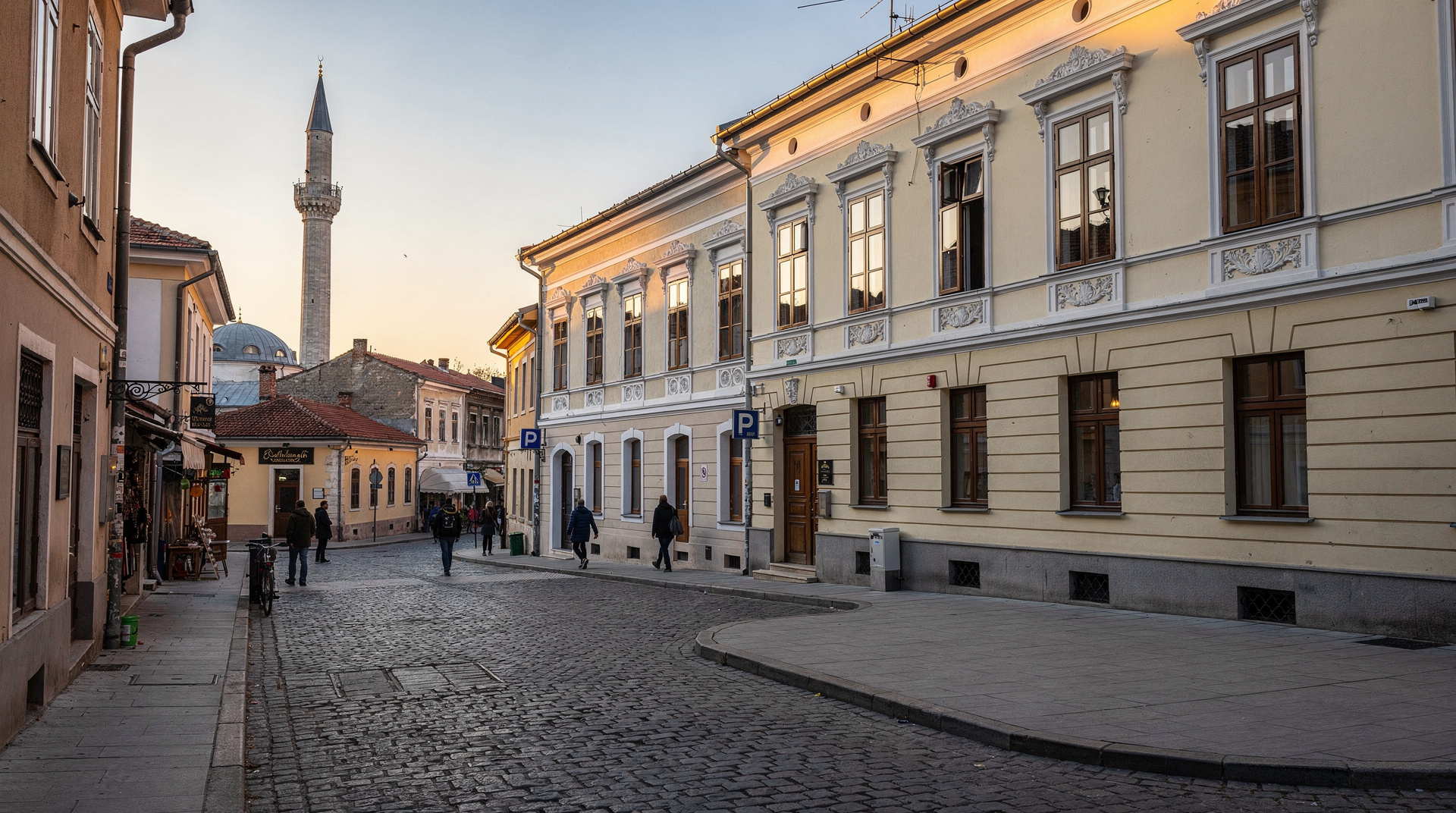
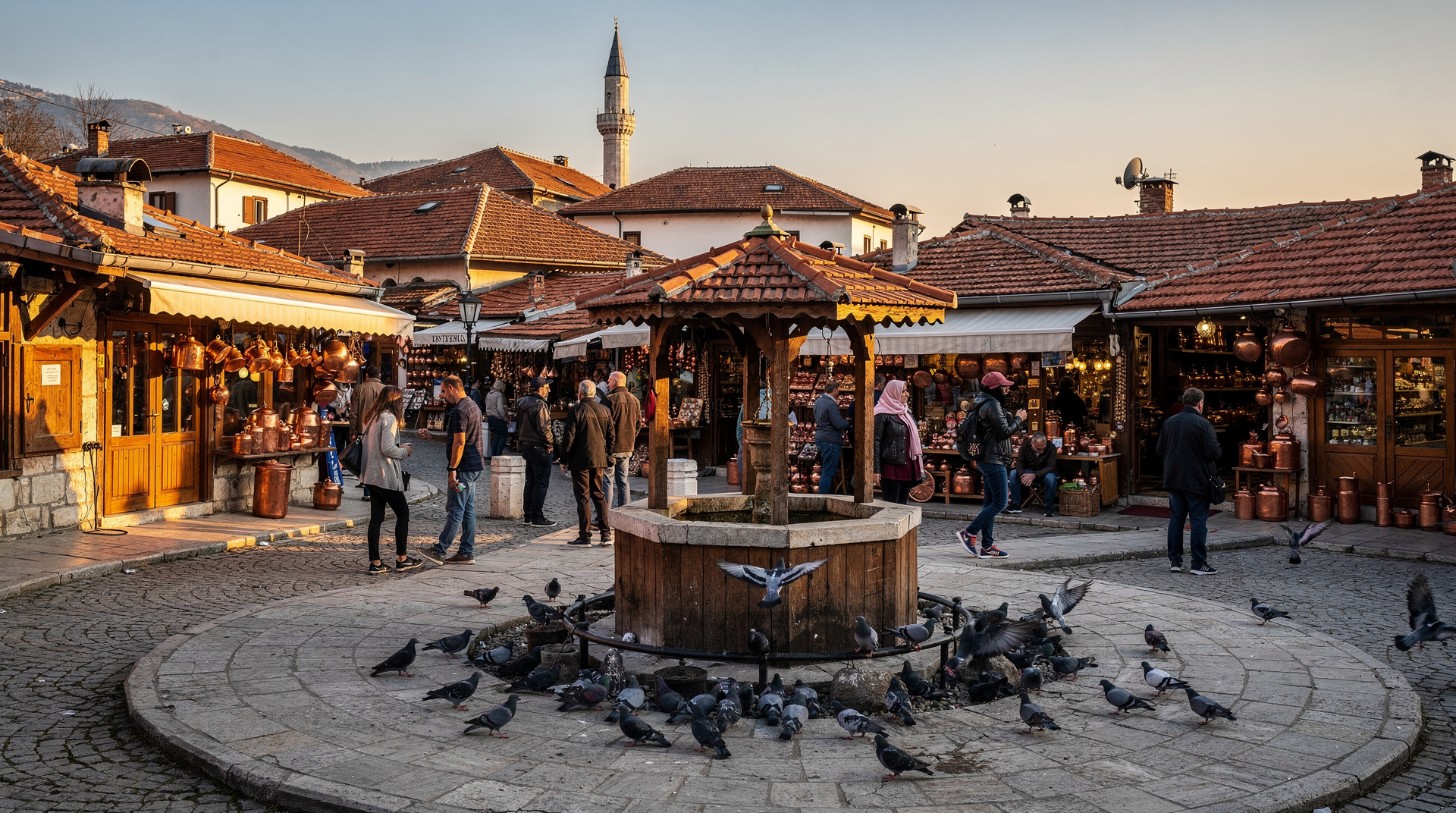
Walk west along Sarajevo’s Ferhadija street from the Ottoman bazaar and within 200 metres the city changes entirely. The minarets and copper workshops give way to neoclassical facades, wide pavements and a Catholic cathedral. This is Austro-Hungarian Sarajevo — a European administrative city grafted onto an Ottoman town in a period of forty years, from 1878 to 1918. It is one of the most visually arresting urban transitions in Europe.
The Habsburg occupation
Austria-Hungary took formal occupation of Bosnia-Herzegovina in 1878 following the Congress of Berlin, which reorganised the Balkans after the Russo-Ottoman War of 1877-1878. The Ottoman Empire ceded administrative control; Bosnia was neither fully incorporated into Austria-Hungary nor granted independence, but governed as a condominium of the two halves of the empire.
The Habsburgs approached Bosnia as a project. They brought railways, roads, a legal system, mining infrastructure and modern medicine. They also brought architecture. The joint Finance Ministry in Vienna — the department responsible for administering Bosnia — commissioned a series of ambitious public buildings for Sarajevo designed to express Habsburg modernity and legitimacy.
The Bosnian administration was led by two figures above all: Benjamin Kállay, joint Finance Minister from 1882-1903, who oversaw the economic development; and Count Eduard Taafe as Governor. Together they authorised a building programme that physically remade the city west of the Miljacka. The architects used a mixture of neoclassical, neo-Moorish (to signal respect for Bosnian Ottoman culture), Romanesque revival and early art nouveau styles.
Ferhadija: the boulevard where two worlds meet
Ferhadija is the pedestrian spine of central Sarajevo, running west from the Ottoman quarter to the Catholic cathedral. This is where the two cities become one street. At its eastern end, Ferhadija transitions into Sarači, which leads into Baščaršija; at its western end it widens into a European-style square with the cathedral.
The buildings on Ferhadija range from 1880s to 1910s construction. The old post office building (now repurposed as a shopping arcade) is a fine example of Viennese functionalism. Several cafes and restaurants occupy ground floors; the pedestrian lane has been renovated several times but retains its Habsburg-era character.
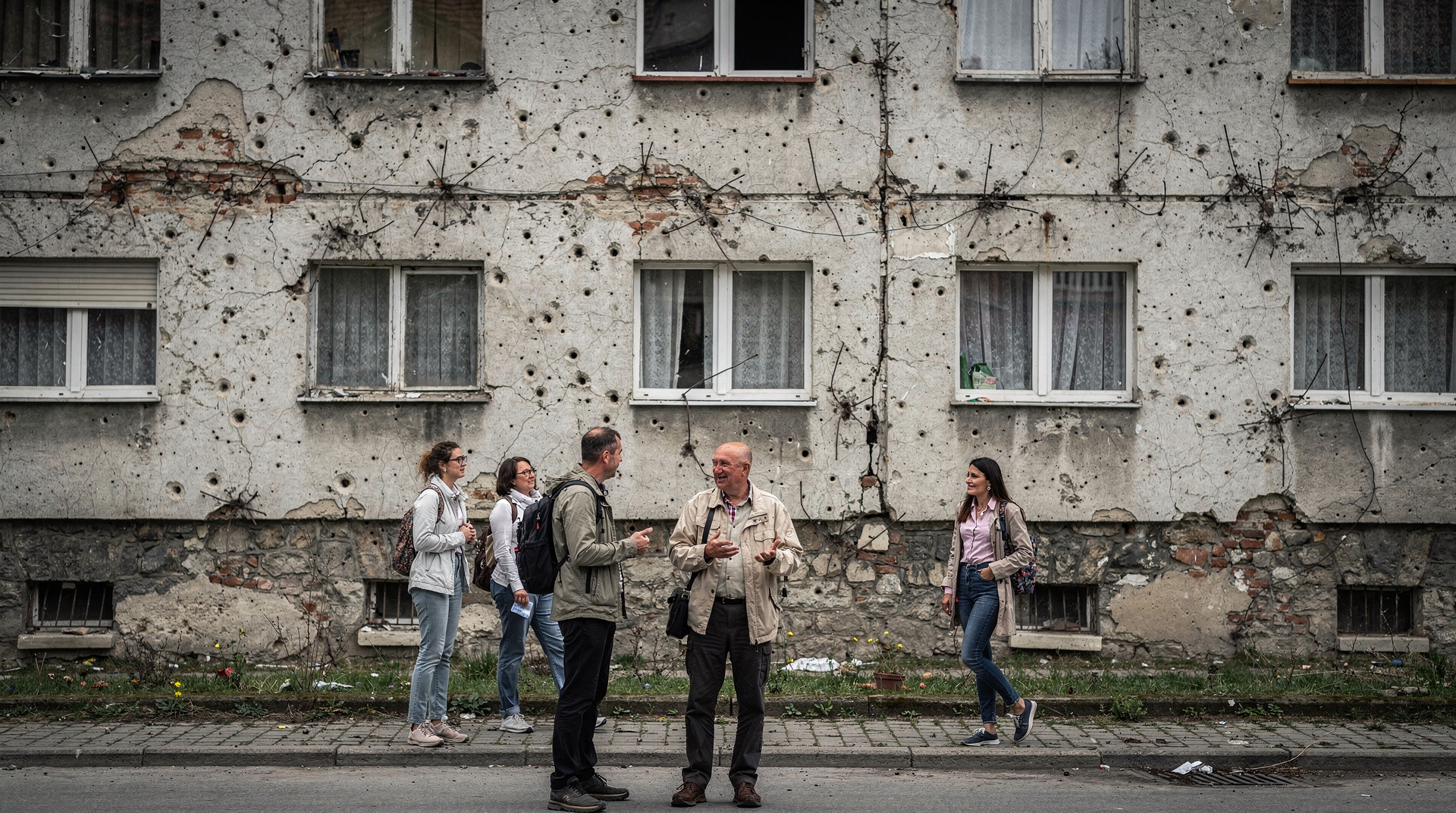
The Sarajevo Roses — patches of shrapnel damage in the pavement filled with red resin — are visible on Ferhadija and nearby streets. These marks, created by mortar explosions during the 1992-1995 siege, are preserved as memorials to the dead; the guide to Sarajevo Roses explains their significance.
The Crossroads of Cultures walking tour of Sarajevo takes in both the Ottoman and Habsburg layers of the city, with a guide who can explain how the two urban cultures coexisted and how the Habsburg period is remembered today.
The Vijećnica: the city hall
The Vijećnica (Vijećnica means “council house” in Bosnian) is the most spectacular of Sarajevo’s Habsburg buildings. Completed in 1896, it was designed by Aleksandar Wittek and Karl Panek in a neo-Moorish style — pointed horseshoe arches, coloured stonework in cream and red horizontal bands, Arabesque ornamentation. The intention was to create a building that referenced the Ottoman heritage of the city while asserting Habsburg authority. The result is extraordinary: it looks like a Viennese dream of what an Islamic public building should look like.
The Vijećnica housed the City Council and, from the 1940s, the National and University Library of Bosnia-Herzegovina. On 25 August 1992, during the siege, Serb incendiary shells set the building on fire. The resulting conflagration destroyed approximately 90% of the library’s holdings — including irreplaceable Ottoman-era manuscripts and rare books. It was one of the largest acts of deliberate cultural destruction in modern European history.
The building was painstakingly restored, funded by the European Union among others, and reopened on 9 May 2014. The interior is now used for exhibitions, concerts and events. The renovation work revealed original decorative elements hidden under later layers. Admission is approximately 5 BAM; it is worth paying.
The Latin Bridge and Franz Ferdinand
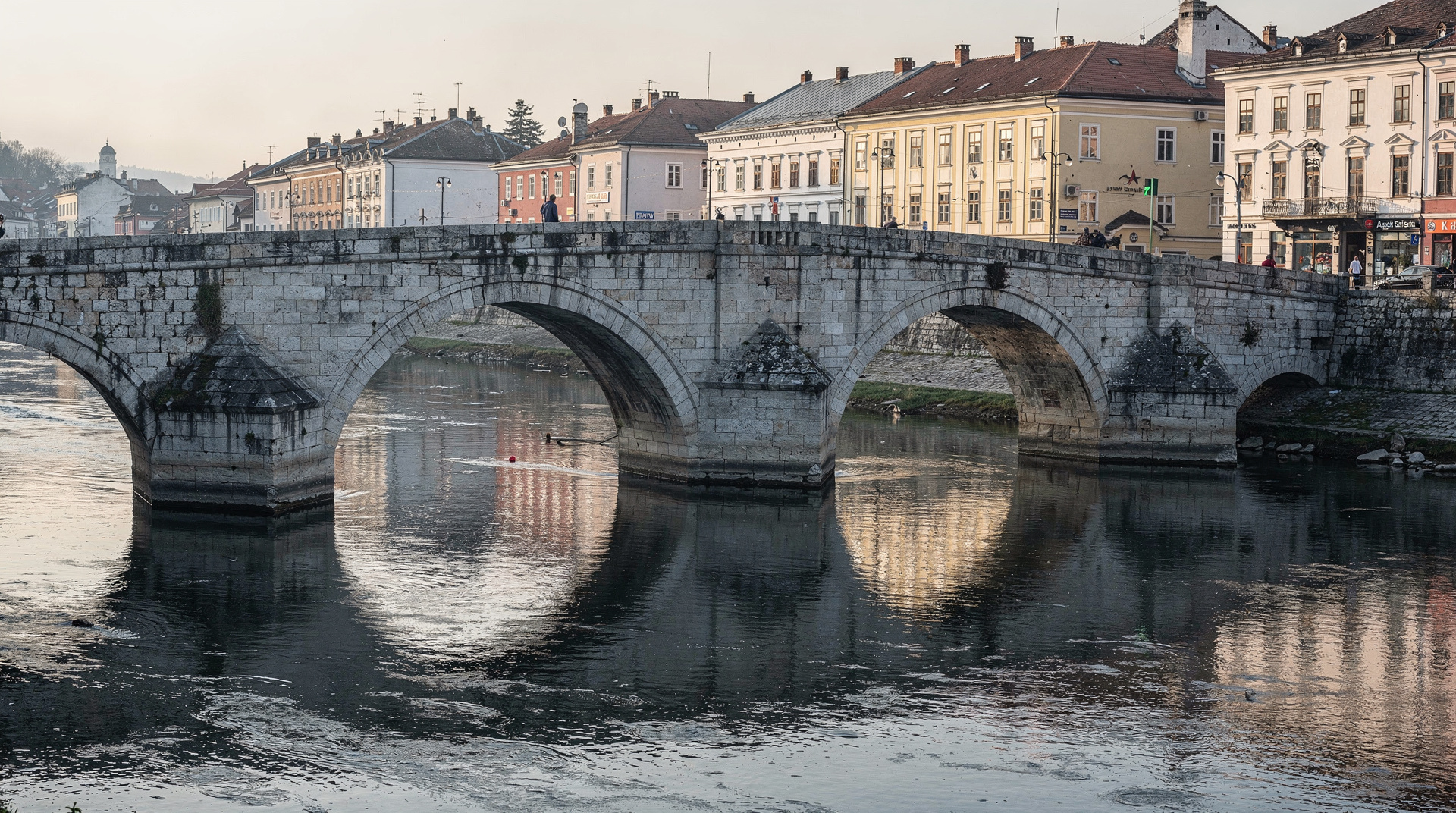
The Latin Bridge (Latinska cuprija), a late Ottoman stone bridge over the Miljacka near the city hall, was the site of the assassination of Archduke Franz Ferdinand on 28 June 1914. Franz Ferdinand, heir to the Austro-Hungarian throne, was visiting Sarajevo on a ceremonial military inspection — an unfortunate choice of date: 28 June is Vidovdan, St Vitus’s Day, a charged date in Serbian nationalist memory.
A group of young Bosnian Serb nationalists, organised by the Black Hand secret society, were positioned along the Appel Quay to assassinate the Archduke. The first attempt failed (a bomb thrown at the car bounced off and exploded under a following vehicle). Franz Ferdinand continued to the Town Hall, gave his speech, then was diverted back along the quay to visit the wounded from the bomb blast. A wrong turn brought the car into Franz Josef Street; the driver stopped to reverse near the corner of Latin Bridge where Gavrilo Princip was standing. Princip shot the Archduke and his wife Sophie at point-blank range.
The resulting diplomatic crisis, as Austria-Hungary demanded satisfaction from Serbia and the alliance systems clicked into place, led to World War I. The Latin Bridge is a short walk from the Vijećnica. A small museum at the corner of the bridge (entry approximately 5 BAM) marks the spot. The Franz Ferdinand assassination guide covers the full story.
Standing on the corner with a guide who can retell the sequence of events street by street is a very different experience from reading a plaque. a guided visit built around the assassination and the start of the First World War is the natural choice if this episode is the main reason you came.
Other Habsburg buildings
Cathedral of the Sacred Heart (1889): The main Catholic cathedral of Sarajevo is a neo-Gothic structure in a pleasant square just west of the Vijećnica. It is the largest Catholic church in Bosnia; the interior is well-maintained and open to visitors. Free admission.
Orthodox Cathedral of the Nativity (1872): Built shortly before the Habsburg takeover, the Orthodox cathedral was actually commissioned under Ottoman rule. It stands on a square a few blocks west of the bazaar and is a fine example of Serbian Orthodox ecclesiastical architecture. Free admission.
The Appel Quay (Obala Kulina Bana): The riverside boulevard built by the Habsburgs as Sarajevo’s main ceremonial street. Wide, tree-lined and facing the Miljacka, it retains much of its original character. The Hotel Evropa on this street has operated since the Habsburg era.
Zemaljski Muzej (National Museum, 1888): The Habsburg-era museum building on the western edge of the city is one of the grandest in the Balkans, housing collections on natural history, archaeology and ethnography. Entry approximately 5 BAM. The archaeological collection includes the famous Bosnian stećci (medieval tombstones). See the museums guide for details.
The Habsburg quarter today
The area between the Vijećnica and the cathedral — roughly corresponding to the Habsburg administrative district — is now Sarajevo’s commercial centre. Shops, restaurants and cafes line Ferhadija. The covered market (Markale) a few blocks north was the site of two notorious mortar attacks during the siege (1994 and 1995) that killed dozens of civilians; a memorial plaque marks the spot.
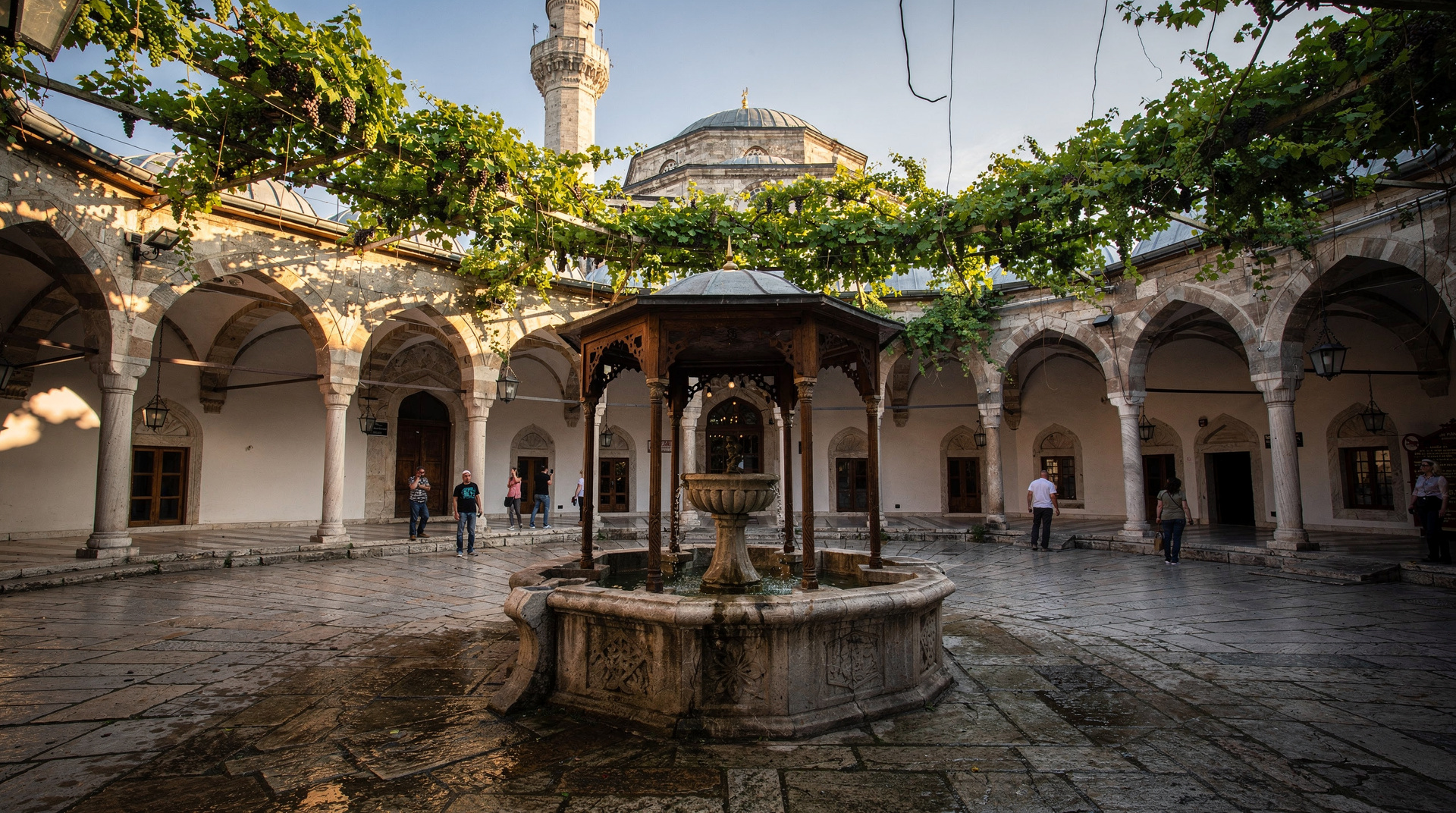
The transition from the bustling commercial Ferhadija to the quieter Ottoman lanes near the Gazi Husrev-beg Mosque is one of the most distinctive short walks in any European city. The Sarajevo meeting of cultures guide explains how four faith communities and two distinct architectural zones coexist in the same city centre.
Practical information
Getting there: The Habsburg quarter is immediately accessible from the Baščaršija tram stop — walk west along Sarači and Ferhadija. Most central Sarajevo hotels are within this zone.
Vijećnica: Open approximately 10:00-18:00 (check locally). Admission approximately 5 BAM. The interior is worth 30-40 minutes.
Latin Bridge museum: Open approximately 10:00-16:00 on weekdays. Admission approximately 5 BAM.
Best walking circuit: Start at the Sebilj fountain (Ottoman), walk west along Ferhadija, visit the Vijećnica, cross to the Latin Bridge, continue west to the cathedral, then back east through the Jewish quarter (Mula Mustafe Bašeskije street). Total approximately 2 hours at a relaxed pace.
Tours: The Sarajevo Grand Walking Tour and the Crossroads of Cultures tour both cover this terrain, and a local guide adds considerable value in explaining the political and cultural dynamics of the Habsburg period.
How to read the quarter as you walk
The easiest way to make sense of the Habsburg district is to look up. Ground floors have changed hands many times and now hold phone shops and cafes, but the upper storeys still carry the cornices, balconies and window frames of the period. Slow down at each corner and compare the facades: some lean on Vienna, others borrow from the Moorish repertoire, and the contrast with the low timber-and-stone workshops of the bazaar next door is the whole point of the walk.
Pair the walk with a coffee stop. The Bosnian coffee culture guide explains how to order and what to expect, and the Sarajevo cafes we love blog post lists places to sit while you watch the street. If you are hungry afterwards, the best restaurants in Sarajevo and the cevapi guide point you towards lunch within easy reach of the quarter.
Where this fits in a Sarajevo trip
If you would rather not plan the route yourself, a longer walking tour through the city’s different eras and cultures strings the Ottoman and Habsburg districts together with commentary along the way.
The Habsburg circuit works best as one block of a longer stay rather than a stand-alone outing. Those with a single day can follow the first time in Sarajevo account for a realistic pace, while a longer stay is covered by the Sarajevo 4-day deep dive. If your interest is the twentieth-century story, the Bosnia war history itinerary links the Habsburg era to the siege years, and the Sarajevo siege remembered essay gives a personal account of the same streets.
Choosing a base matters too. The Sarajevo where to stay guide explains which areas put you closest to the Habsburg quarter, and the Sarajevo public transport guide covers the tram that runs along the river, a convenient way to cover the long boulevards when your feet need a rest. Arriving by air? The Sarajevo airport guide sets out the options for reaching the centre.
Beyond the Habsburg centre
The administrative quarter is only one layer of the city. For a wider picture, the Sarajevo destination page gathers every guide in one place, and the Sarajevo tourist traps guide helps you avoid the usual disappointments around the busiest streets. Travellers who enjoy period architecture will find a different chapter in the Ottoman heritage of Bosnia guide, which shows what the Habsburg planners were building alongside and, in places, against. The Sarajevo with family guide suggests how to keep younger visitors interested on a history-heavy walk, and the Sarajevo vs Mostar comparison helps if you are deciding how to divide your time between the two cities.
Habsburg Sarajevo and the road to war
The forty years of Austro-Hungarian rule (1878-1918) were transformative but also planted the seeds of the crisis that ended them: Bosnian resentment of foreign administration, competing national projects among Bosniaks, Serbs and Croats, and the annexation crisis of 1908 all fed into the tensions that exploded with the 1914 assassination.
Visitors interested in the fuller arc of Bosnian history — Ottoman period through Habsburg rule through Yugoslavia and the 1990s war — will find useful context in the Bosnia history for travelers guide and the Yugoslav wars explained guide, both of which help situate the Habsburg quarter within the longer story the city tells about itself.
A walk that spans four faiths
The Habsburg quarter’s western end sits close to Sarajevo’s other religious landmarks, making it possible to visit sites sacred to four different faith communities within a single short walk: the Gazi Husrev-beg Mosque (Islam) near Baščaršija, the Orthodox Cathedral, the Catholic Cathedral of the Sacred Heart and the old Sarajevo Synagogue, a few streets further. This density of coexisting religious architecture is one of the reasons Sarajevo earned its historic nickname “Jerusalem of Europe.” The Sarajevo faiths guide and Sarajevo mosques guide cover the Islamic and interfaith landmarks in more depth than fits here.
Frequently asked questions about Austro-Hungarian Sarajevo — the Habsburg city
Why did Austria-Hungary take Bosnia in 1878?
What buildings did the Habsburgs build in Sarajevo?
What happened at the Latin Bridge?
Is the Vijećnica open to visitors?
How does the Austro-Hungarian quarter compare to the Ottoman quarter?
Top experiences
Bookable activities with verified prices and instant confirmation on GetYourGuide.