Balkans 3-country itinerary
From Dubrovnik: Mostar and Kravica Waterfall Day Trip
Three of the western Balkans’ most compelling destinations — Croatia’s Dubrovnik coast, Bosnia’s Ottoman heartland and Montenegro’s Bay of Kotor — sit within a few hours’ drive of each other. This 10-day itinerary connects all three in a roughly circular route, starting and ending at Dubrovnik airport, with Bosnia as the substantial centrepiece.
| At a glance | |
|---|---|
| Route | Dubrovnik (Croatia) → Mostar & Sarajevo (Bosnia) → Trebinje → Kotor (Montenegro) → return |
| Countries | 3 (Croatia, Bosnia & Herzegovina, Montenegro) |
| Time needed | 10 days, roughly 3 driving days out of 10 |
| Car | Essential — rent at Dubrovnik airport, cross-border authorisation required |
| Best time | Late May–June or September for mild weather and lighter traffic at the borders |
| Rough budget | Mid-range, around 70–100 EUR/day per person including car, food and entries |
Day 1: Dubrovnik — the walled city
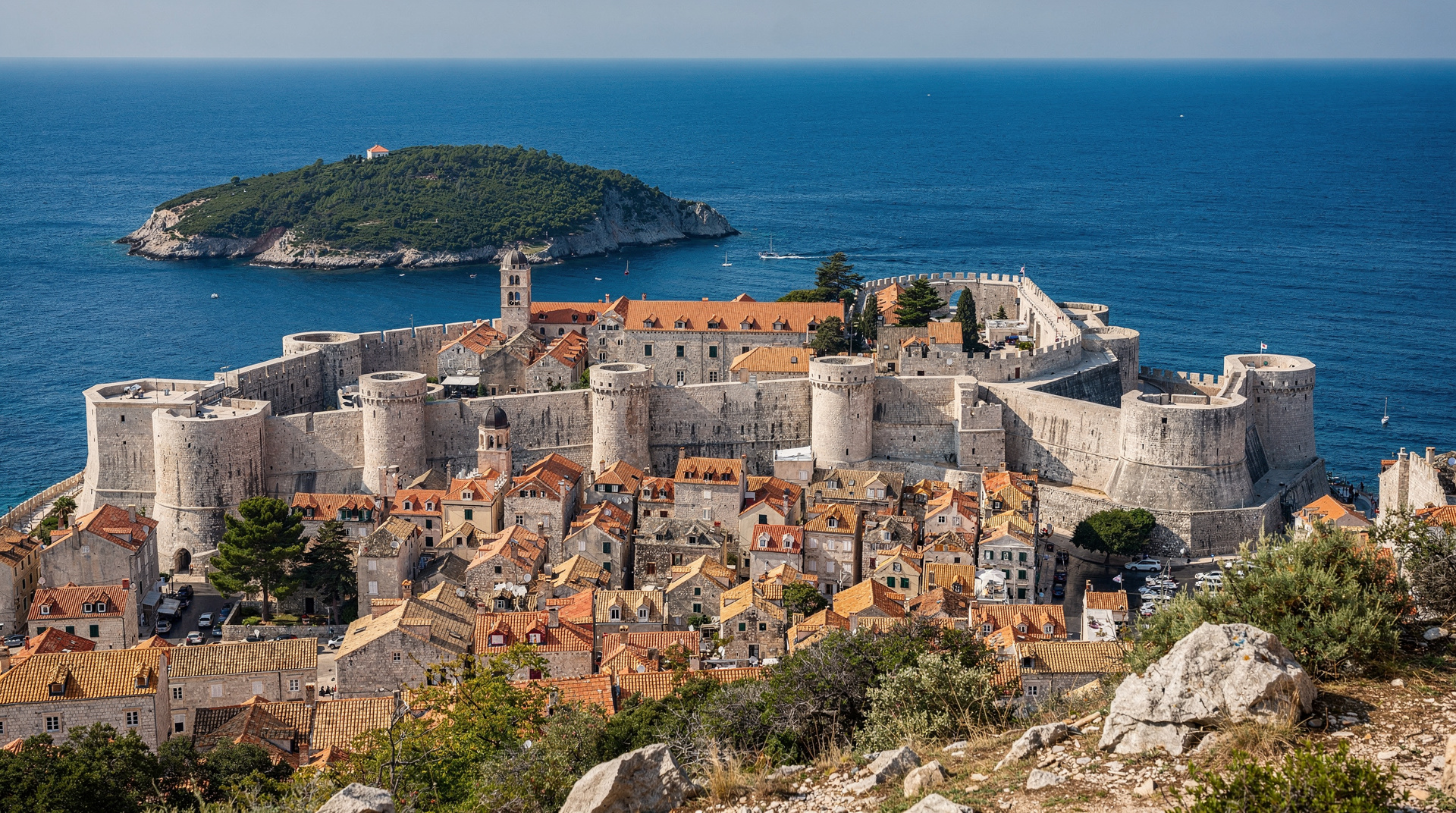
Arrive at Dubrovnik airport. Dubrovnik is extraordinary and overcrowded in July–August; outside peak season it is simply extraordinary. Walk the 2-km city walls in the morning (ticket ~200 HRK / ~27 EUR; arrive at opening to avoid queues), explore the Stradun boulevard, and visit the Rector’s Palace museum. Take the cable car to Srđ hill for a view of the Adriatic and the red rooftops. In the evening, dine just outside the walls on the Lapad peninsula where prices are lower and quality is comparable.
Note: The Dubrovnik to Mostar and Kravice day trip is the most popular tour in Dubrovnik. If you are tight on time, this single day covers Bosnia’s headline sights — useful context before the deeper dive that follows.
Days 2–3: Bosnia — Mostar and Herzegovina
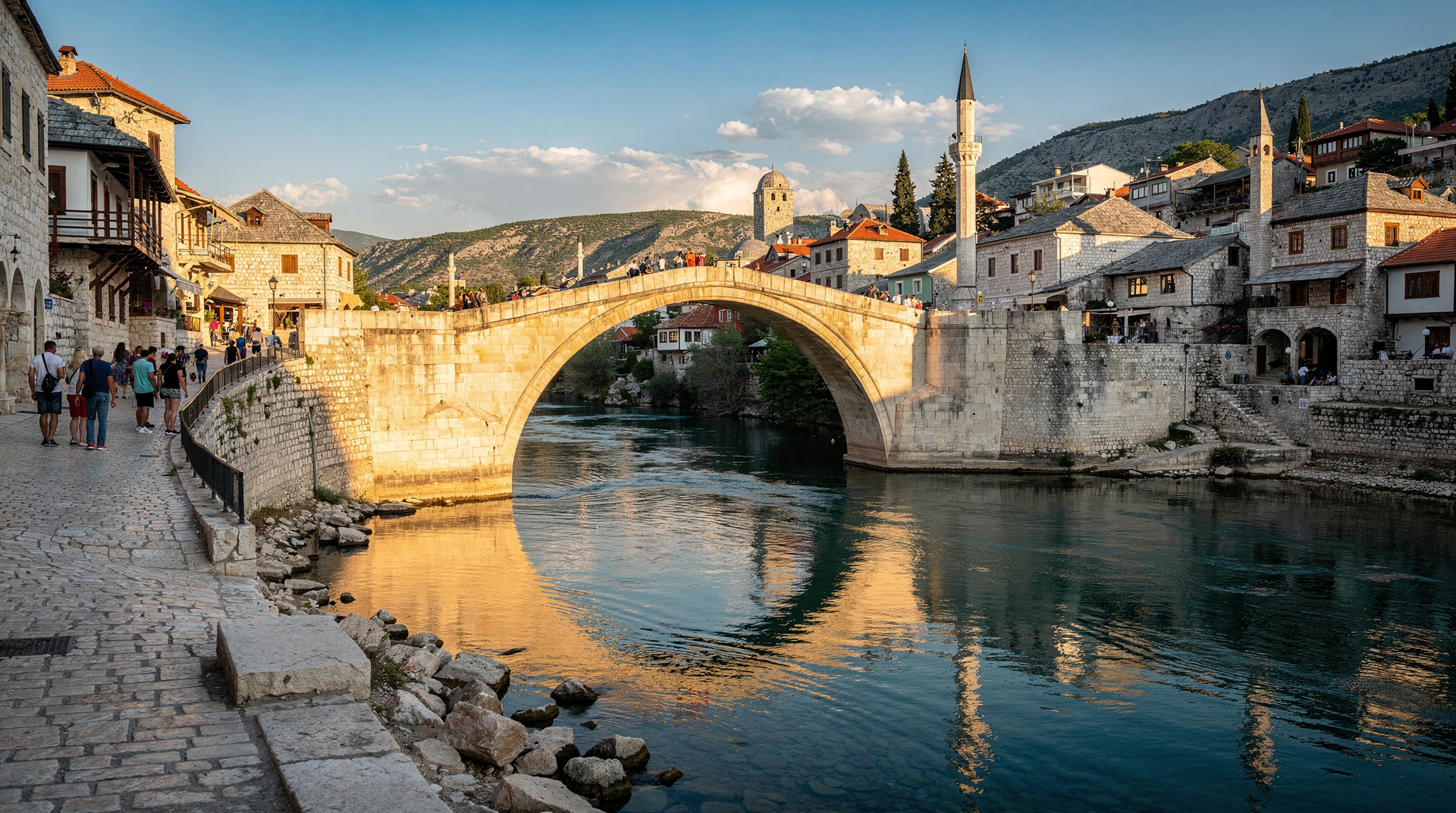
Drive from Dubrovnik to Mostar — 2 h 30 min via the coastal highway through the brief Neum corridor (two short border crossings, ID/passport required). The approach to Mostar through the Neretva canyon is one of the most dramatic drives in the region.
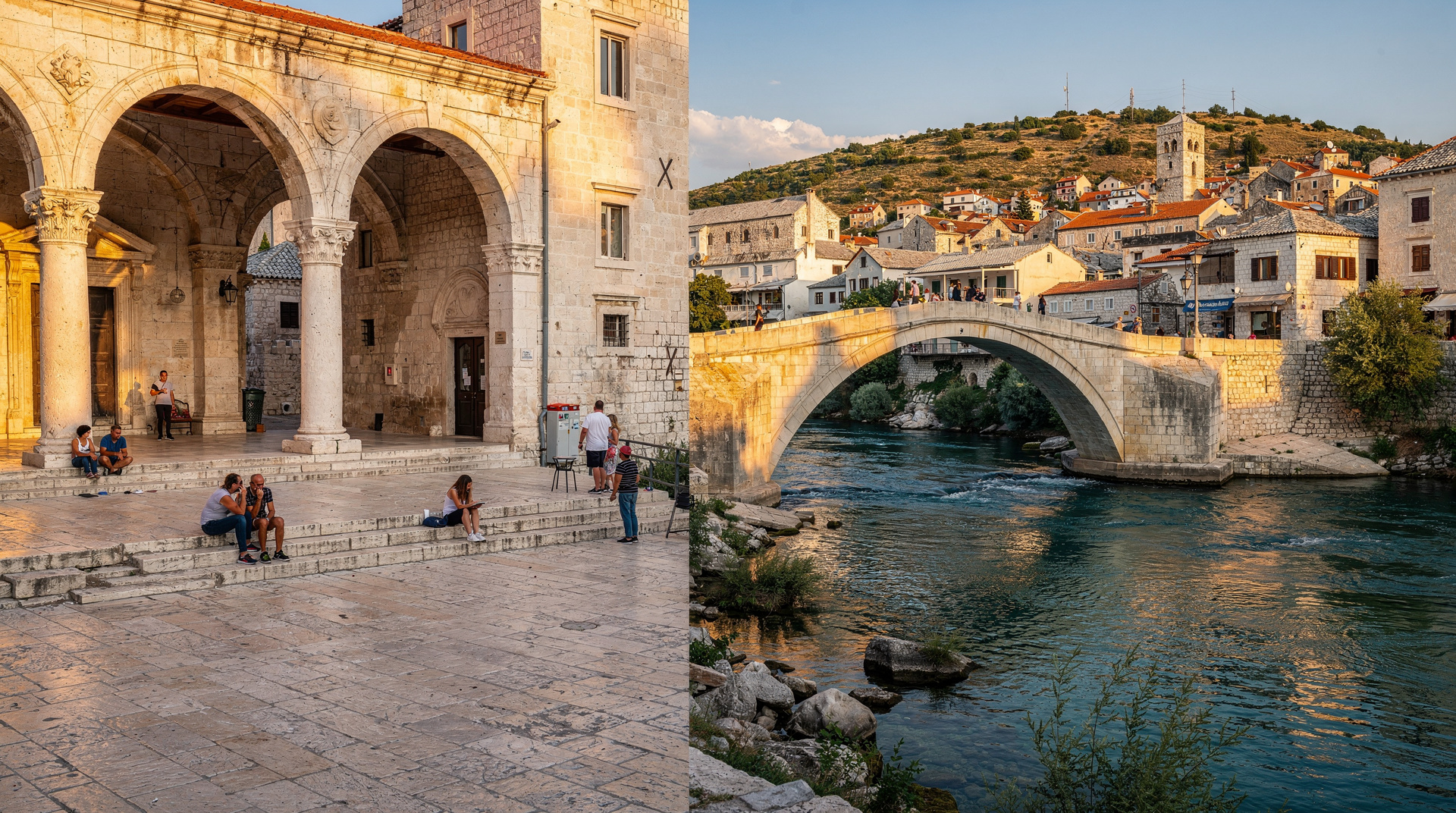
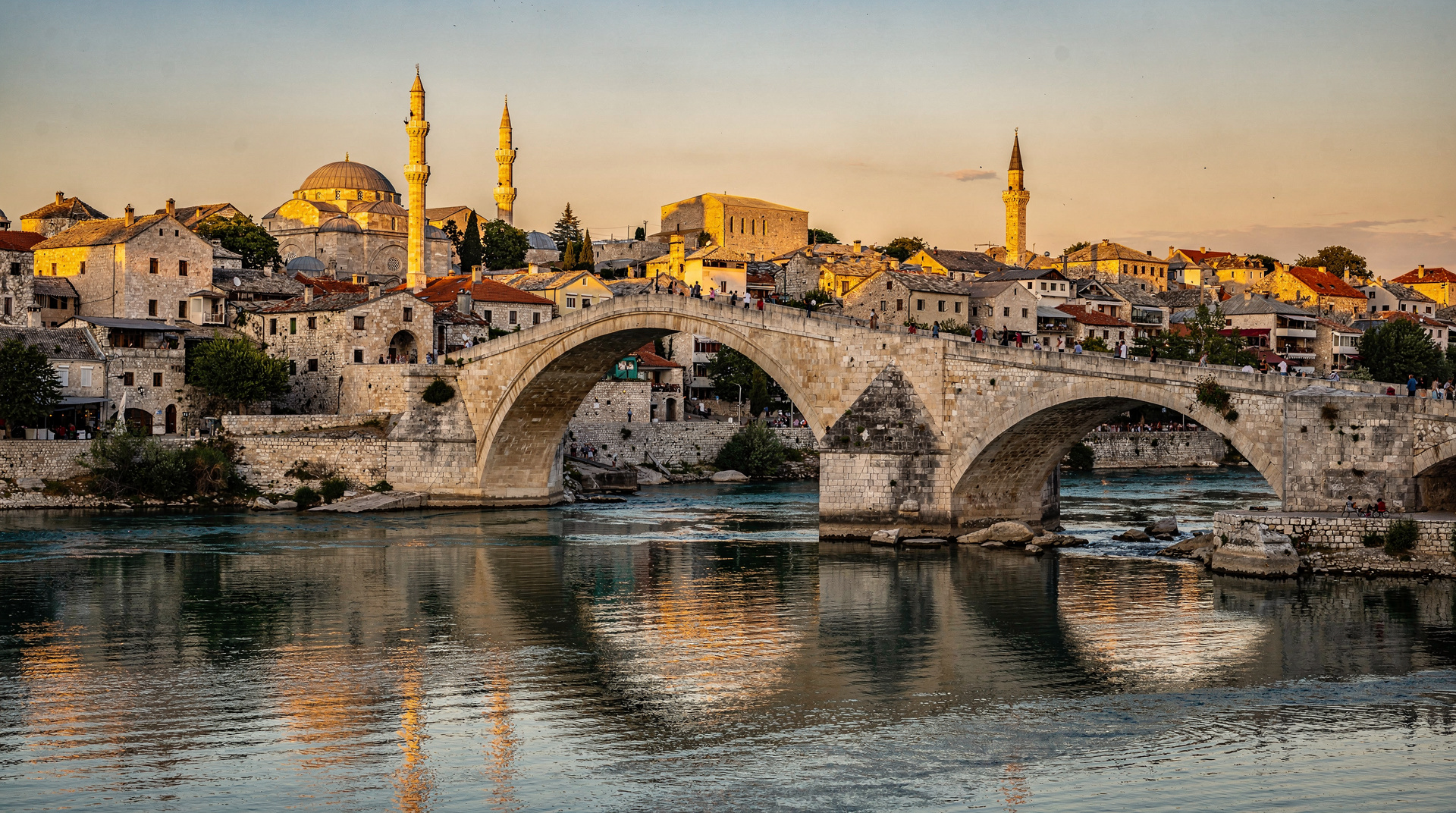
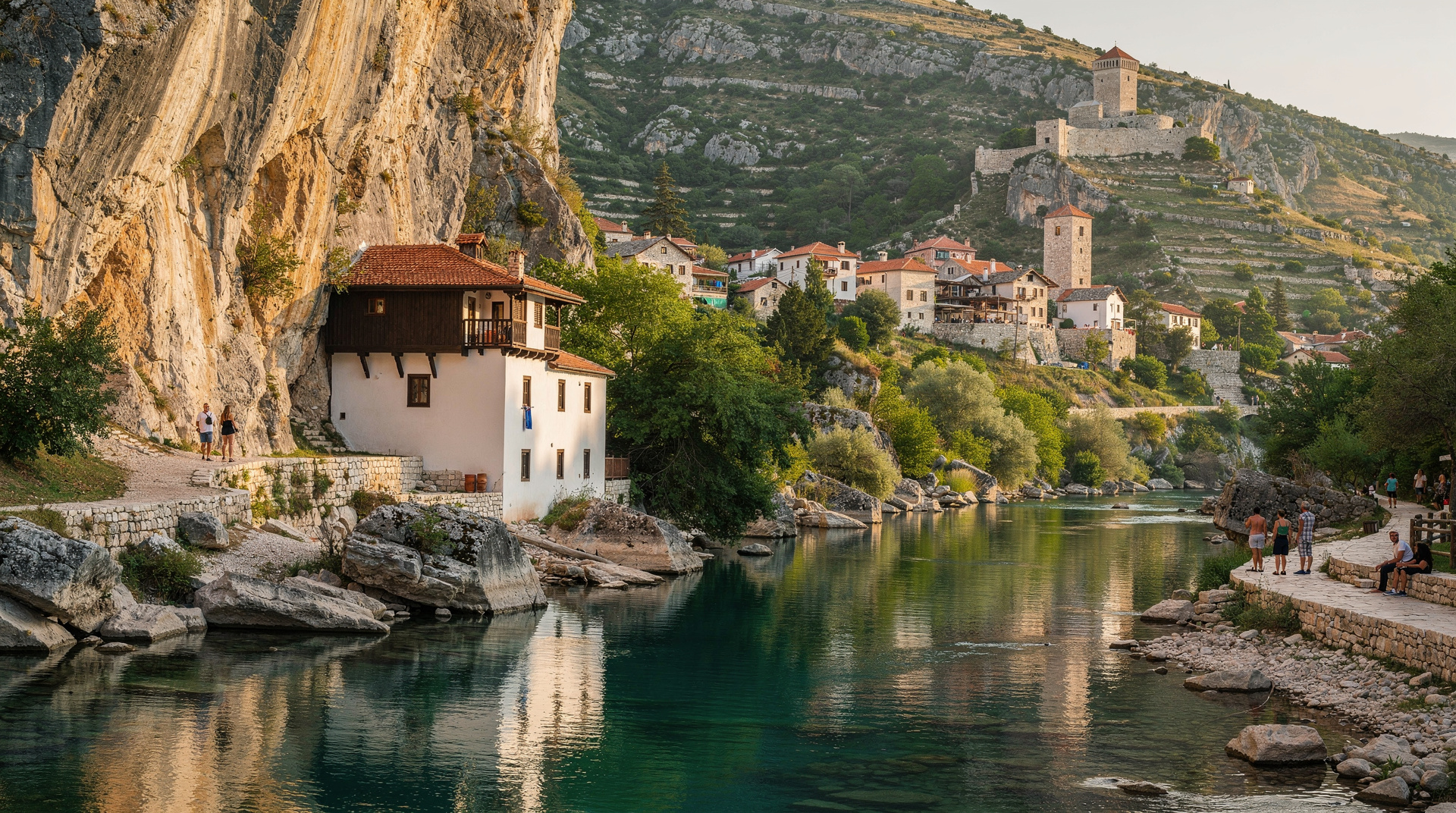
Two nights in Mostar with a day trip to Blagaj, Počitelj and Kravice Waterfalls. The Herzegovina countryside — terraced vineyards, Ottoman villages and turquoise rivers — is completely different from the Dalmatian coast and genuinely rewards the detour.
Budget shift: A full dinner in Mostar costs 25–40 BAM (~13–20 EUR). You will notice the price drop immediately.
Days 4–5: Sarajevo — the Balkans’ most complex city
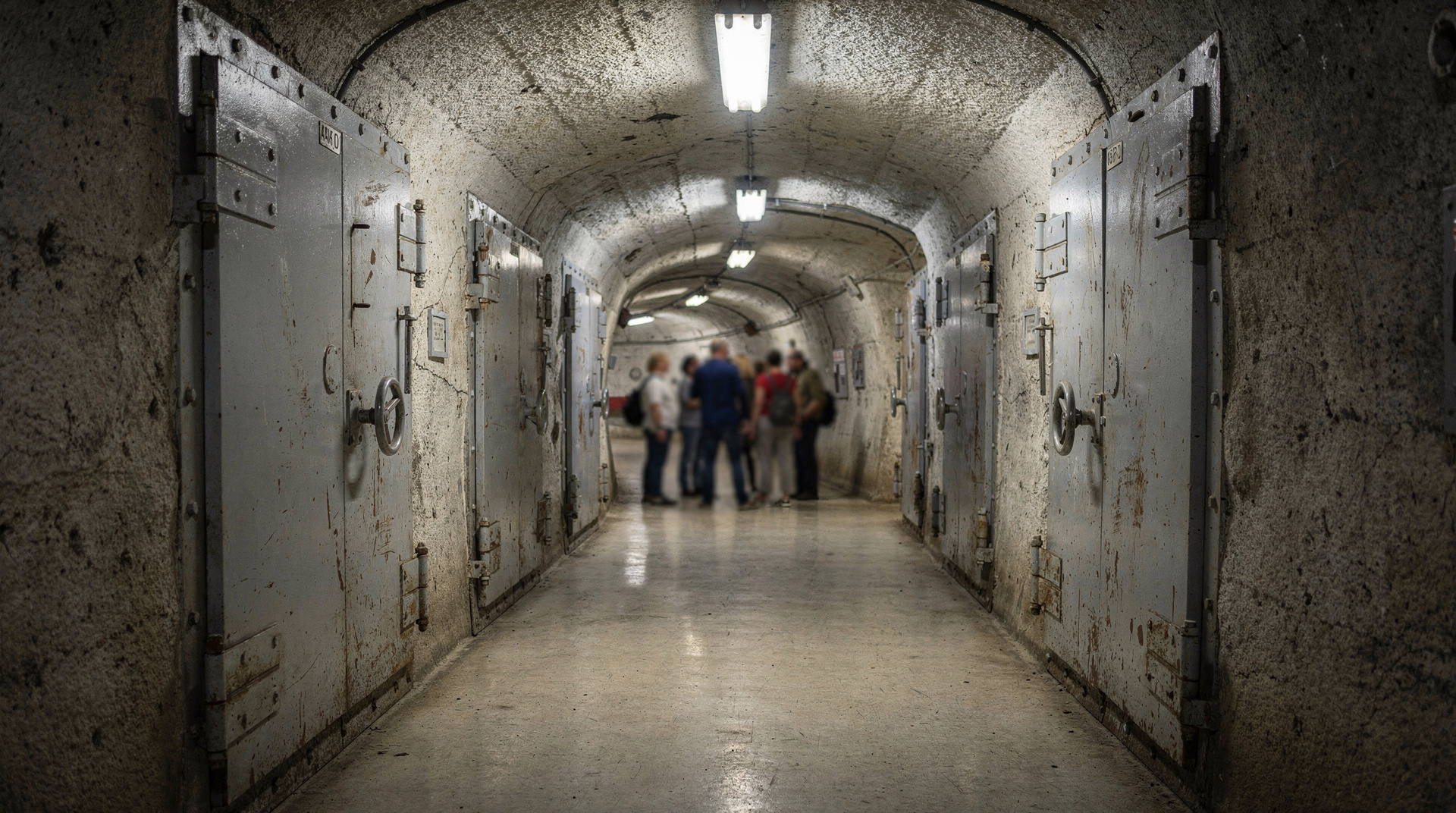
Drive north from Mostar through the Neretva canyon to Sarajevo — about 2 h 30 min. Stop in Konjic for Tito’s nuclear bunker ARK D-0 (book ahead), which adds 2–3 hours to the journey but is one of the most singular Cold War sites in Europe.
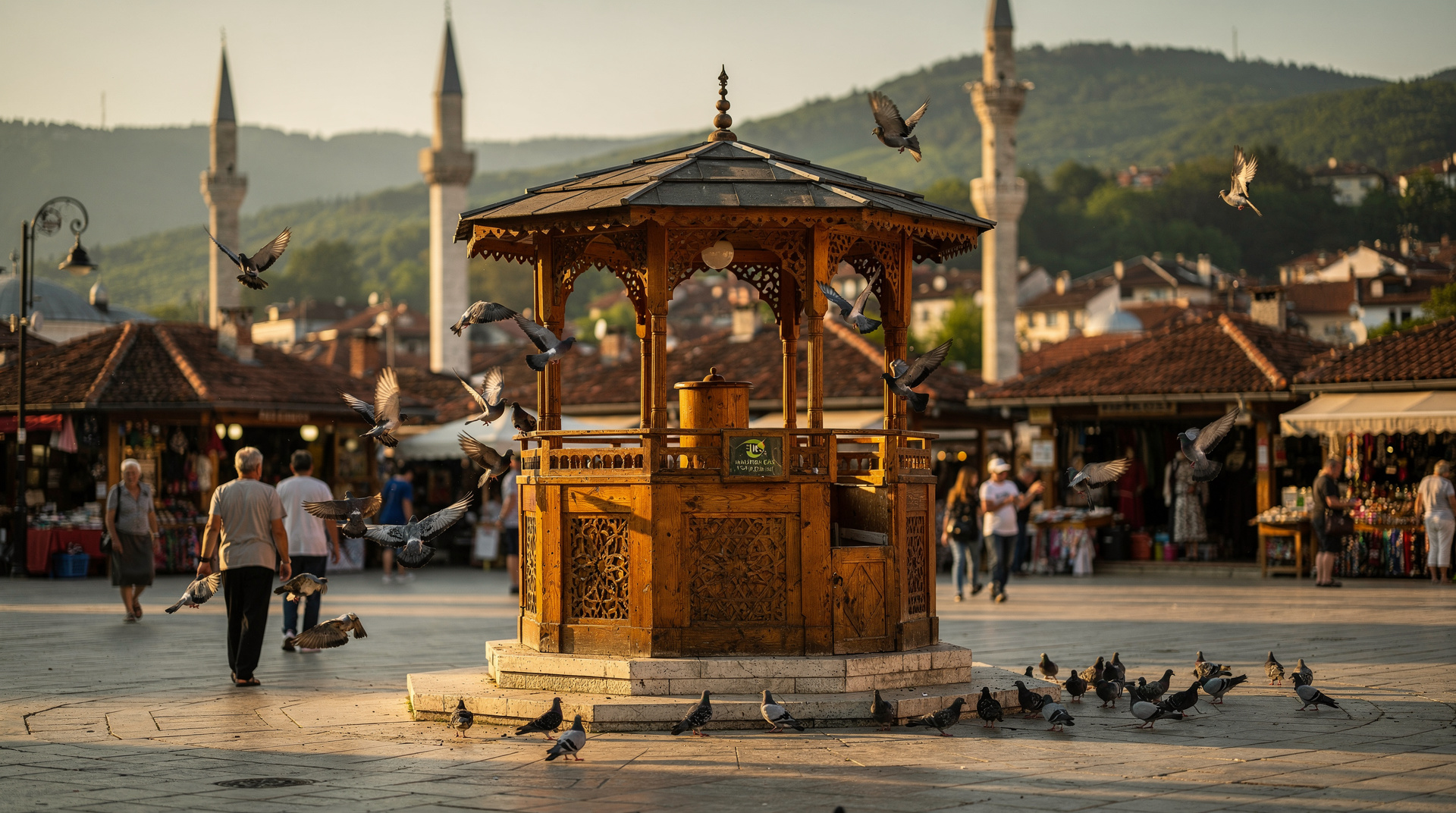
Two nights in Sarajevo: one day for Baščaršija and the guided Old Town walking tour, one day for the Tunnel of Hope Museum and the war history sites. Sarajevo’s four-faith urban fabric — mosques, Catholic and Orthodox cathedrals and a synagogue within minutes of each other — is the best argument against the Balkan stereotype of ethnic incompatibility.
Day 6: Sarajevo to Trebinje
Drive south from Sarajevo to Trebinje — 3 hours via Mostar. Trebinje is Herzegovina’s most under-visited town and is conspicuously absent from most Balkans itineraries. The Ottoman stari grad on the Trebišnjica river, the hilltop Hercegovačka Gračanica church and the surrounding Žilavka vineyards make for a genuinely relaxed afternoon. Overnight in Trebinje; guesthouses from 80 BAM (~41 EUR).
Day 7: Trebinje to Kotor — entering Montenegro
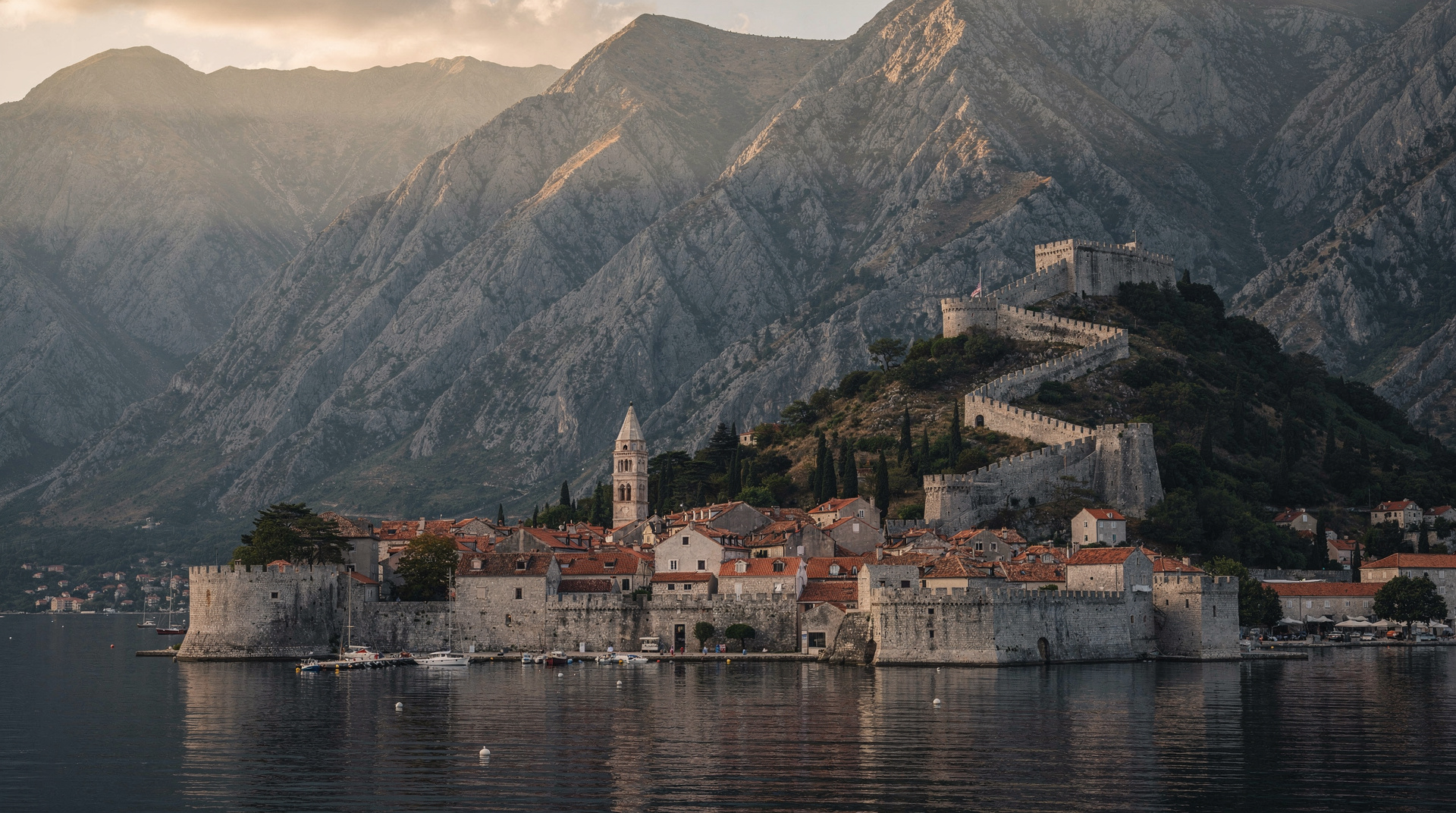
Drive south-east from Trebinje to Kotor in Montenegro — about 1 h 30 min via Herceg Novi and the Boka Kotorska bay road. The Bay of Kotor (Boka Kotorska) is a drowned river canyon that resembles a fjord: ringed by 1,800-metre limestone mountains, dotted with Venetian-era fortified towns. UNESCO-listed Kotor walled city sits at the bay’s innermost point.
Walk the city walls (admission ~8 EUR) for the best views. The Church of Saint Tryphon, the Maritime Museum and the Cats Museum (Muzej Mačaka — yes, really) are the main sights inside the walls. Evening: the Škurda river valley north of the old town for dinner away from the tourist strip.
Days 8–9: Montenegro — Bay of Kotor and coast
Two days along the Boka Kotorska. Day 8: Perast (25 min from Kotor) and the boat trip to the island of Our Lady of the Rocks — a baroque church built on an artificial islet in the middle of the bay, completed in 1725. Day 9: drive south along the Montenegrin Riviera to Budva or Sveti Stefan if beaches are on the agenda, or return to Kotor for a further boat trip to Mamula island or a kayak on the bay.
Note: Montenegro uses the euro. Prices are generally higher than Bosnia but lower than Dubrovnik.
Day 10: Kotor to Dubrovnik — return
Drive back to Dubrovnik airport: 2 h via Herceg Novi and the border crossing at Debeli Brijeg. Montenegro to Croatia crossing is quick (5–15 min). Return the rental car and fly out.
Alternative ending: Fly directly from Tivat airport (30 min from Kotor) if your routing allows — Ryanair and easyJet serve Tivat from several European cities.
Multi-country driving logistics
Car rental: Rent at Dubrovnik airport and return there. Most international agencies allow cross-border driving to Bosnia and Montenegro, but you must inform them explicitly and receive a letter of authorisation for each country. Budget extra ~20–30 EUR for the BiH cross-border permit.
Border crossings on this route:
- Dubrovnik → Bosnia via Neum corridor: two brief crossings, ID/passport.
- Bosnia → Croatia (various): passport/ID check.
- Bosnia → Montenegro via Trebinje → Vilusi crossing: straightforward, 10–15 min.
- Montenegro → Croatia at Debeli Brijeg: can queue in summer; 15–45 min.
Currencies: Bosnia uses BAM (1 EUR = 1.95583 BAM). Montenegro and Croatia (since 2023) use EUR. You will need BAM cash for Bosnia; cards are widely accepted in hotels but less so at village restaurants.
Mobile data: An EU SIM card works in Croatia and Montenegro (EU roaming). Bosnia is not in the EU — check if your operator charges extra for BiH. A local Bosnian SIM (BH Telecom or m:tel) costs ~10 BAM and gives 4G data.
Day-by-day summary
| Day | Base | Highlights |
|---|---|---|
| 1 | Dubrovnik | City walls, Stradun, cable car to Srđ |
| 2–3 | Mostar | Blagaj, Počitelj, Kravice Waterfalls |
| 4–5 | Sarajevo | Baščaršija, Tunnel of Hope, Konjic bunker en route |
| 6 | Trebinje | Ottoman old town, Hercegovačka Gračanica |
| 7 | Kotor | City walls, Church of Saint Tryphon |
| 8–9 | Kotor / coast | Perast, Our Lady of the Rocks, Budva or a bay kayak |
| 10 | Return | Drive back to Dubrovnik or fly from Tivat |
Is this route better than picking one country?
Compared with a single-country Bosnia 10-day itinerary, the multi-country loop trades depth for breadth: you get three distinct cultures and landscapes but only 4–5 days actually inside Bosnia, which is not enough to see the east (Višegrad, Sutjeska) or the northwest (Bihać, Una).
If Bosnia itself is the draw rather than a Balkans overview, see our Bosnia vs Croatia comparison and our dedicated Balkans multi-country planning guide before committing to the loop. Travellers coming specifically from the coast should also check the Dubrovnik to Sarajevo route and Split to Sarajevo route guides for alternative entry points.
Shortening or extending the loop
If 10 days is tight, cut Kotor and the Montenegro coast to a single overnight and add the saved day to Sarajevo — the war history sites alone justify an extra half-day. Travellers with more time should look at the Croatia–Bosnia 2 weeks itinerary for a slower version of the same corridor, or fold in Herzegovina’s weekend itinerary sights (Blagaj, Trebinje wine country) as a standalone extension rather than a rushed pass-through.
Frequently asked questions about Balkans 3-country itinerary
Do I need a visa for all three countries on this route? Most EU, UK, US, Canadian and Australian passport holders can enter Croatia, Bosnia and Montenegro visa-free for short stays, but rules vary by nationality — check current requirements for each country before booking, especially if crossing borders multiple times on one passport.
Can I do this loop without a rental car? Not comfortably. Buses connect the main towns but schedules are infrequent between Trebinje and Kotor and around Herzegovina’s smaller sights (Blagaj, Počitelj). A car is what makes the circular route work in 10 days; without one, consider the shorter Sarajevo–Mostar 3 days itinerary using buses and day tours instead.
Top experiences
Bookable activities with verified prices and instant confirmation on GetYourGuide.