Croatia and Bosnia 2-week itinerary
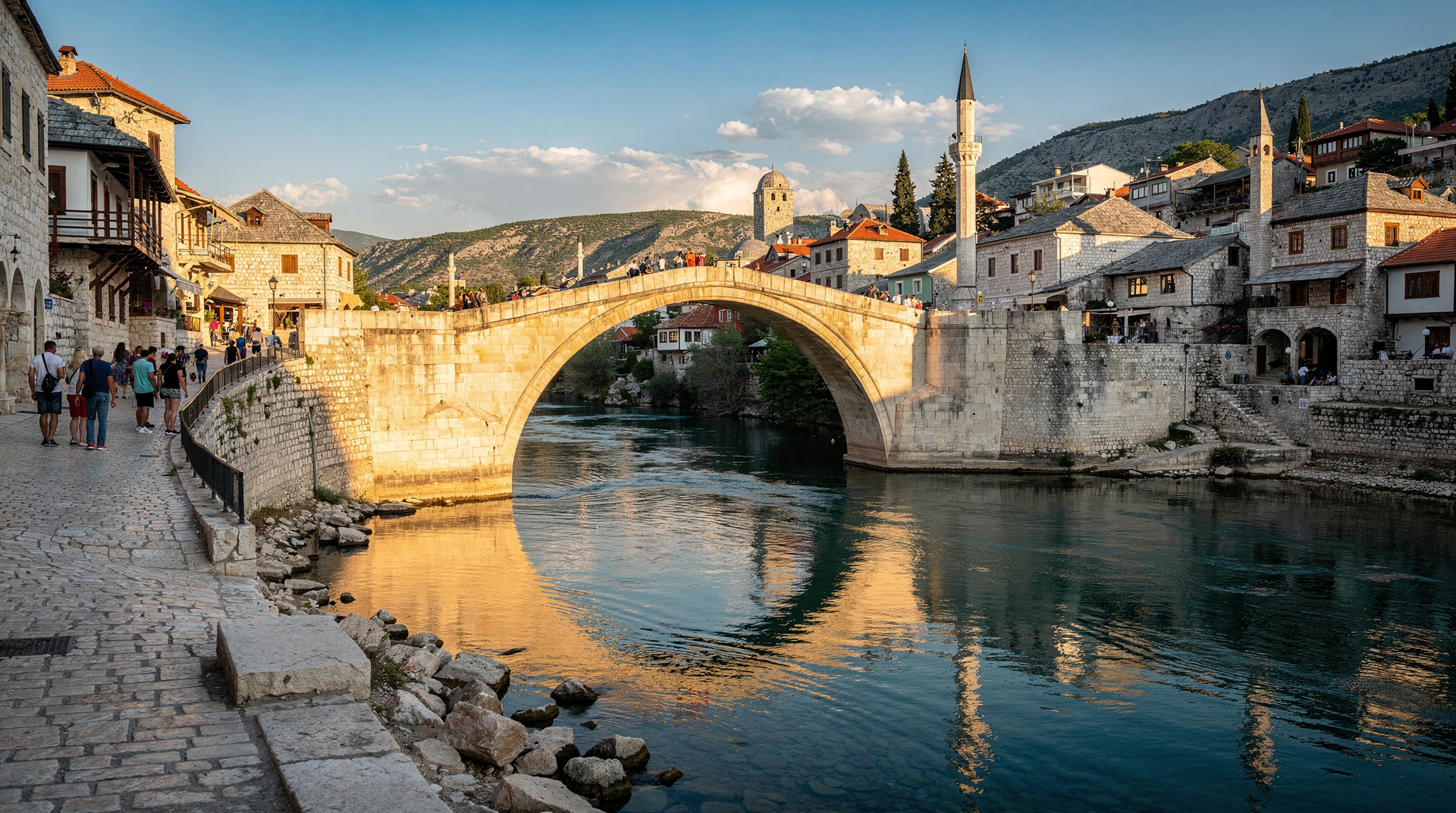
Mostar and Kravice Waterfalls Full-Day Tour from Split
Croatia’s Dalmatian coast and Bosnia’s river-carved interior complement each other perfectly — one provides swimming, island-hopping and Roman ruins; the other provides Ottoman culture, war history, waterfall hikes and cheap, excellent food. This two-week loop starts and ends at Split and can be adapted for a Dubrovnik-to-Dubrovnik arc.
| At a glance | |
|---|---|
| Route | Split → Mostar → Sarajevo → Trebinje → Dubrovnik (or back to Split) |
| Cost | mid-range overall; Bosnia legs run far cheaper than Croatia legs — see budget table below |
| Time needed | 14 days as written; a tighter version is possible by cutting Trebinje |
| Getting there | fly into Split, out of Dubrovnik (or return to Split); rental car required |
| Best time | May–June or September, when Croatia and Bosnia’s shared shoulder season avoids the worst Adriatic coast crowding and border queues |
For a shorter version of the same cross-border concept, see the 3-country Balkans itinerary or the compact Sarajevo–Mostar 3-day itinerary if two weeks is too much.
Days 1–3: Split and the Dalmatian coast
Fly into Split airport. The city’s UNESCO-listed Diocletian’s Palace — an entire Roman emperor’s retirement complex converted into a living city centre — is one of Europe’s most extraordinary ancient sites. Wander the peristyle, explore the apartments built into the palace walls, and eat at one of the konoba restaurants inside the fortifications. Day 2: island ferry to Brač or Hvar (day return, fast catamaran from Split port). Day 3: Trogir, 30 minutes north-west of Split — another UNESCO medieval old town on a small island — or the Krka waterfalls inland (~1 h 30 min by car).
Budget note: Croatia is significantly more expensive than Bosnia. A mid-range dinner in Split runs 200–300 HRK (~26–40 EUR); accommodation in a comfortable apartment costs 100–200 EUR/night.
Day 4: Split to Mostar — your first Bosnia crossing
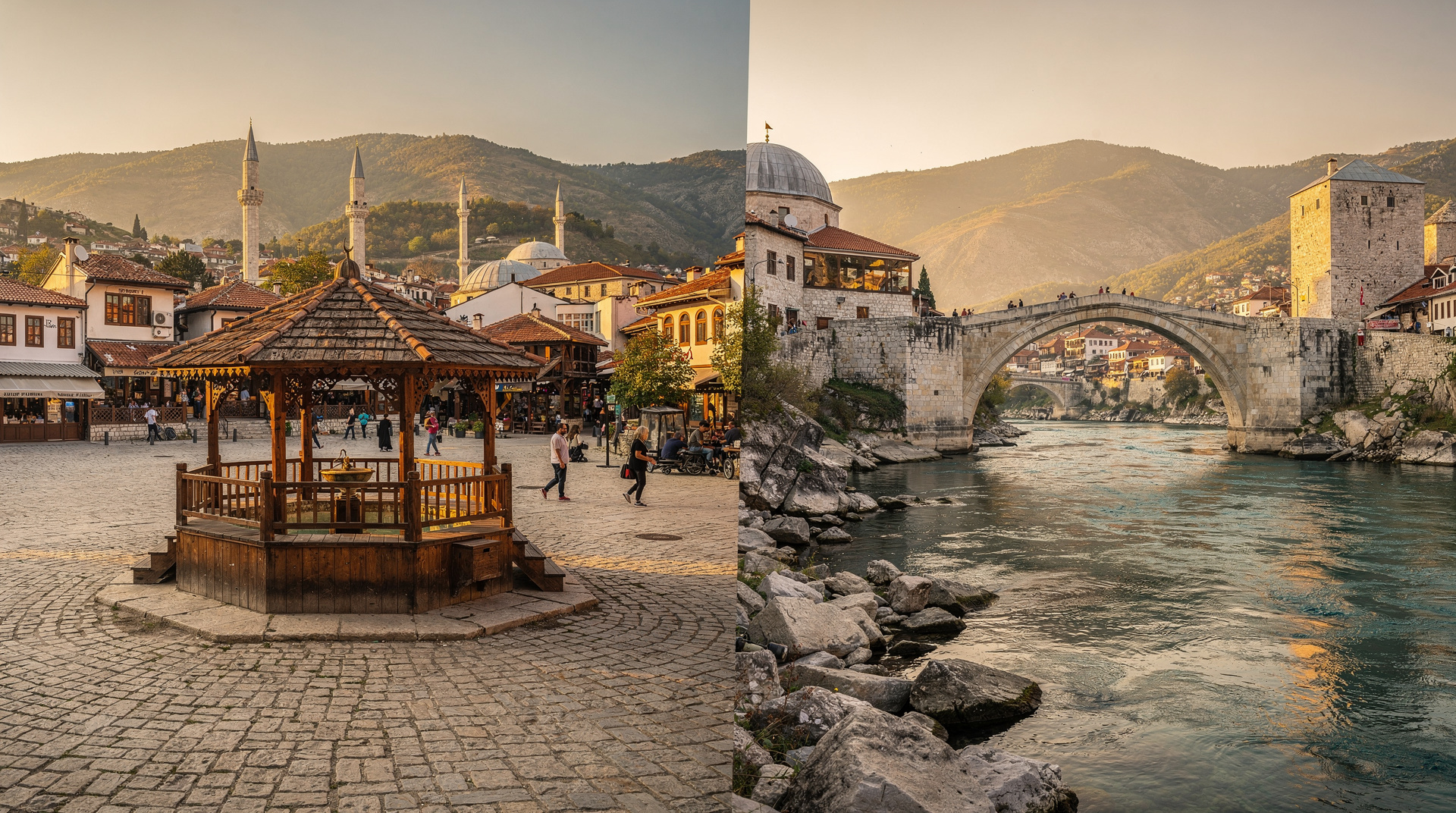
Drive south-east from Split on the A1 motorway, then branch off towards Imotski and the border crossing at Vinjani Donji (one of the faster crossings). Total drive: about 2 h 30 min. You are now in Mostar, and the contrast with Croatia is immediate and exhilarating — cheaper, less polished, more Ottoman, with the Neretva running emerald-green between limestone cliffs.
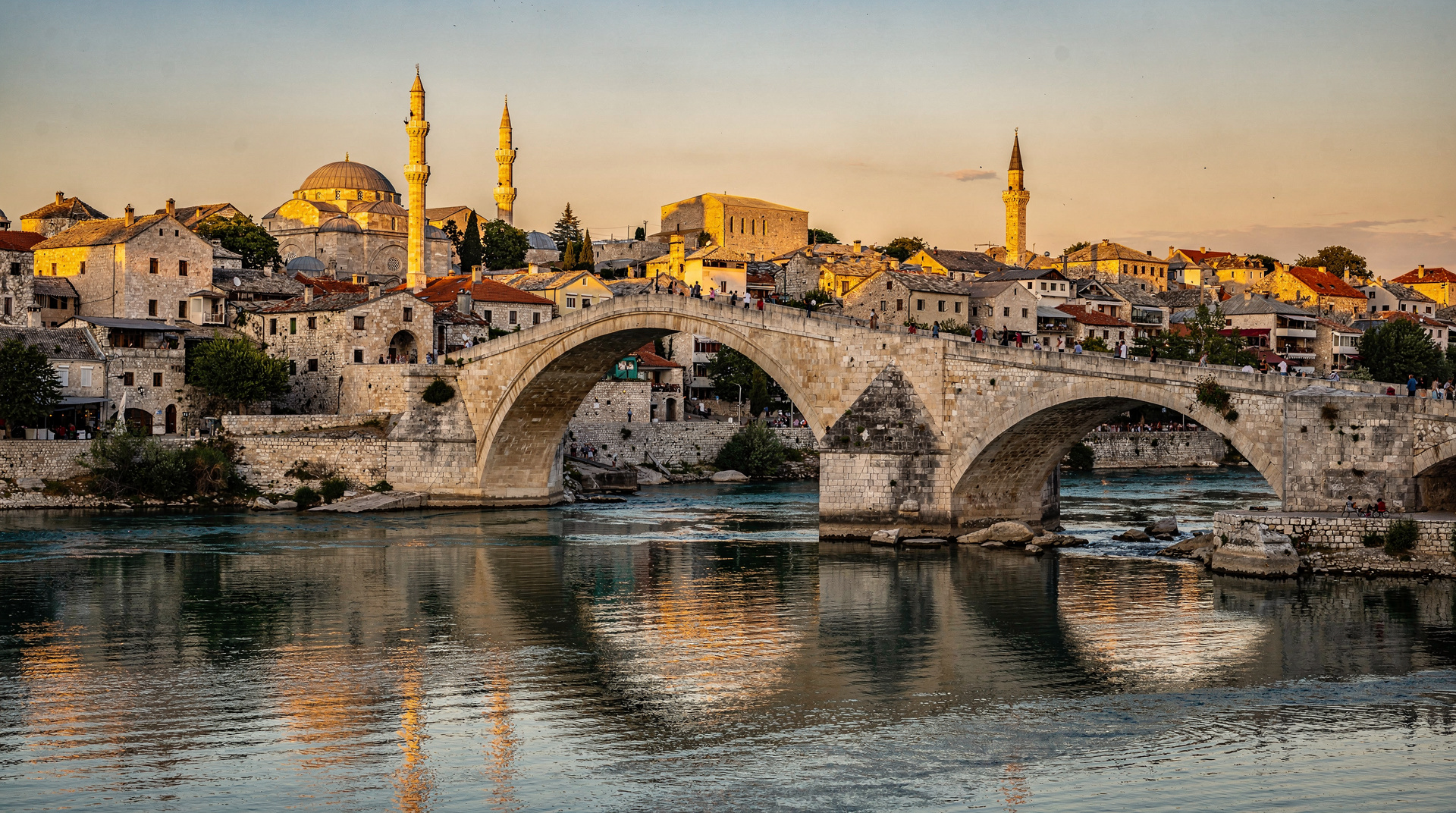
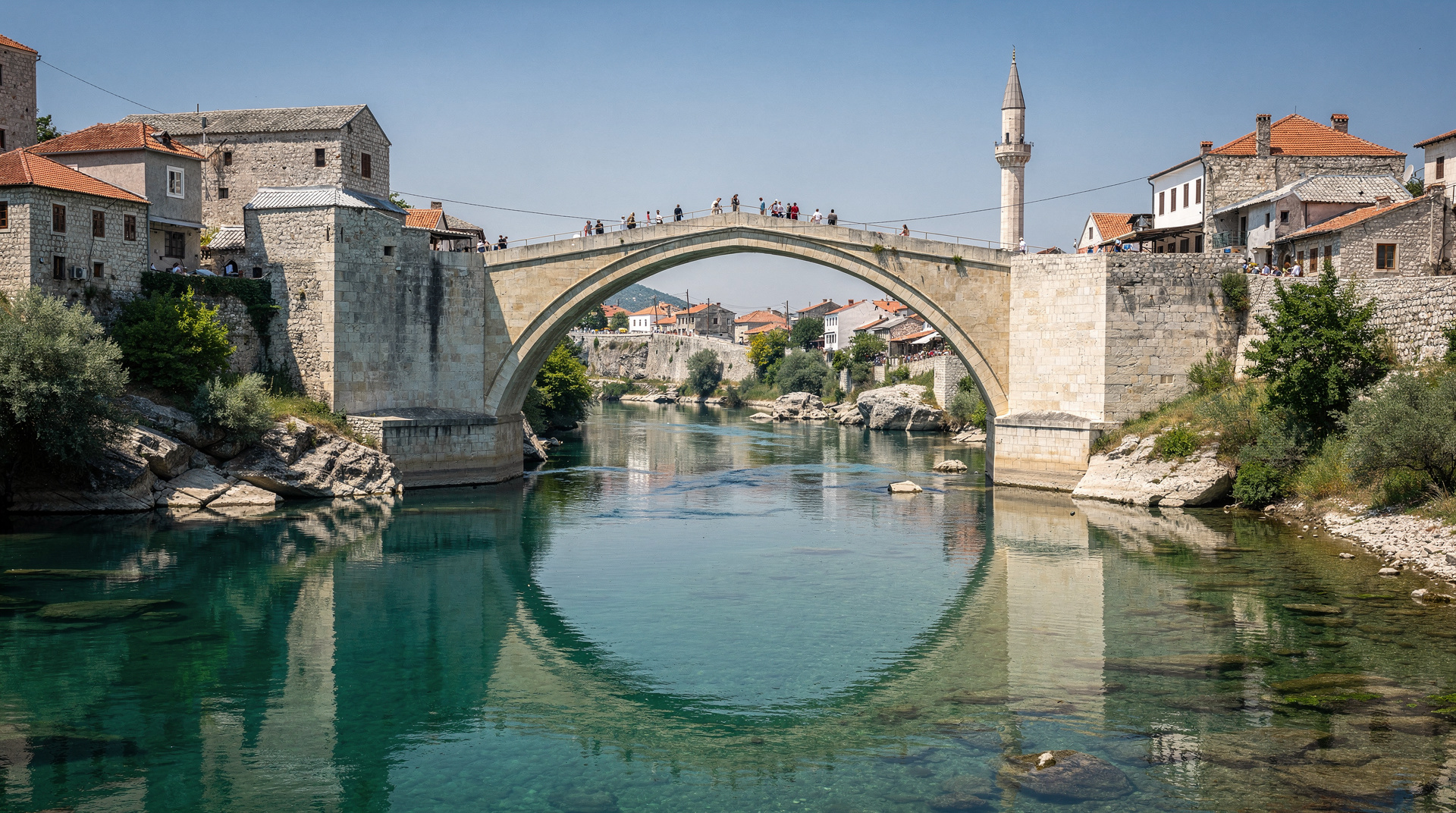
Check in to the old town. Walk Stari Most in the evening. Take a Mostar and Kravice full-day tour from Split if you prefer not to drive independently.
Day 5: Herzegovina day trip — Blagaj and Kravice Waterfalls
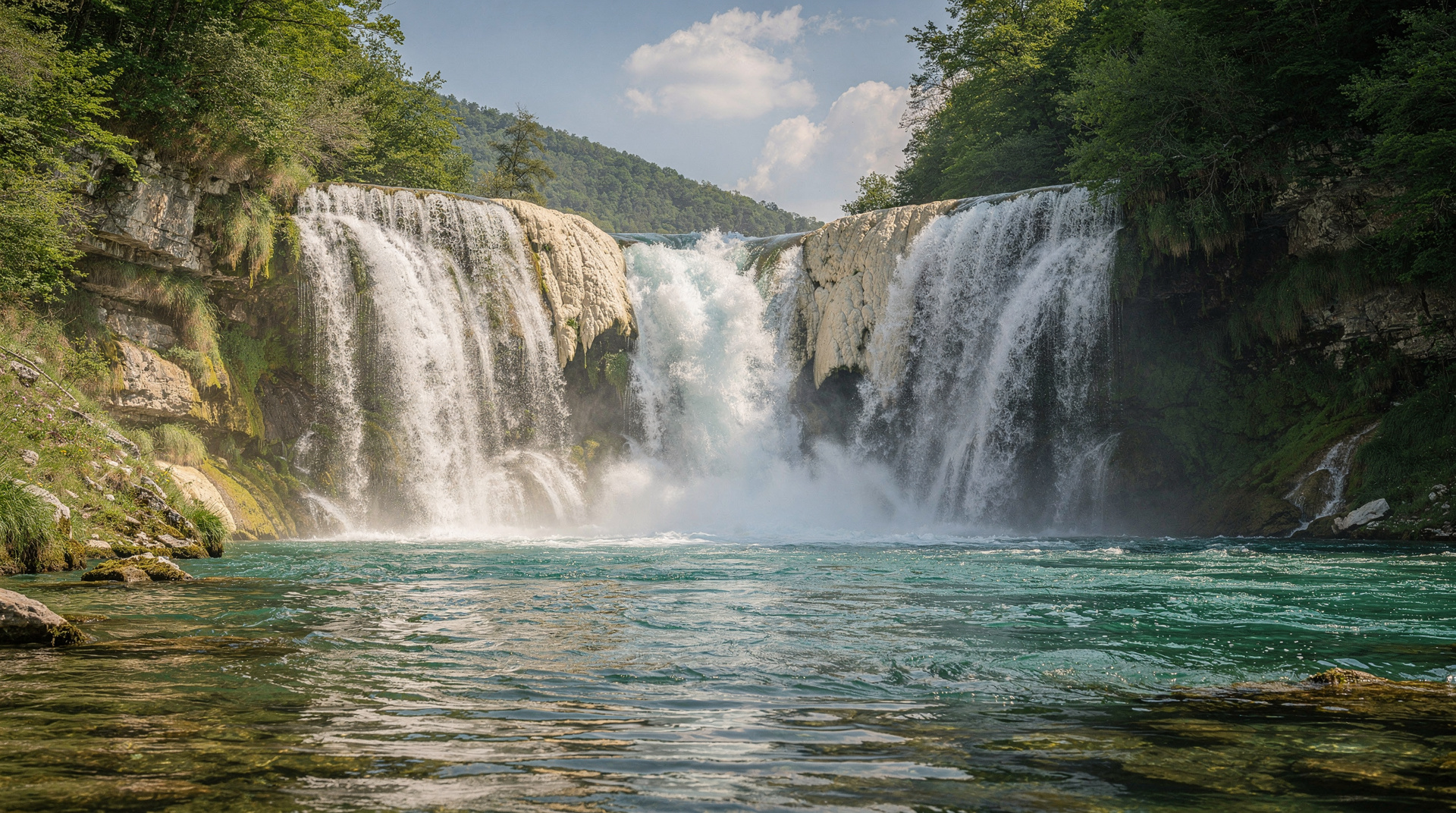
A compact circuit: Blagaj Tekija (30 min from Mostar), Kravice Waterfalls (50 min south), and Počitelj (35 min south) fit neatly into a day with a car. Alternatively, take a guided tour from Mostar that covers all three.
Kravice is swimmable from June to September (water temperature ~17–20°C even in July). Arrive before 09:30 or after 16:00 in July–August. Entrance: 20 BAM (~10 EUR).
Day 6: Mostar to Sarajevo via Konjic
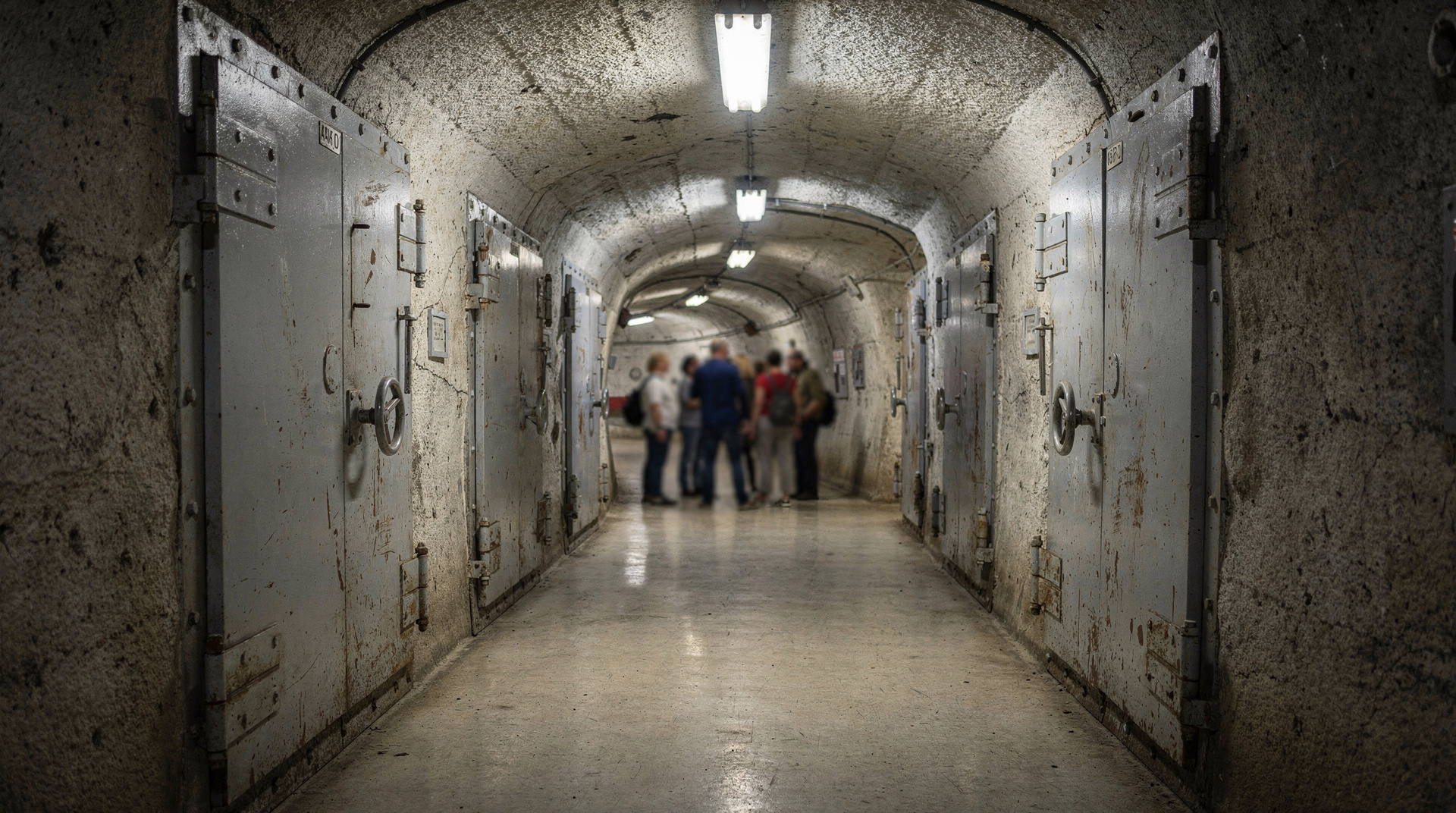
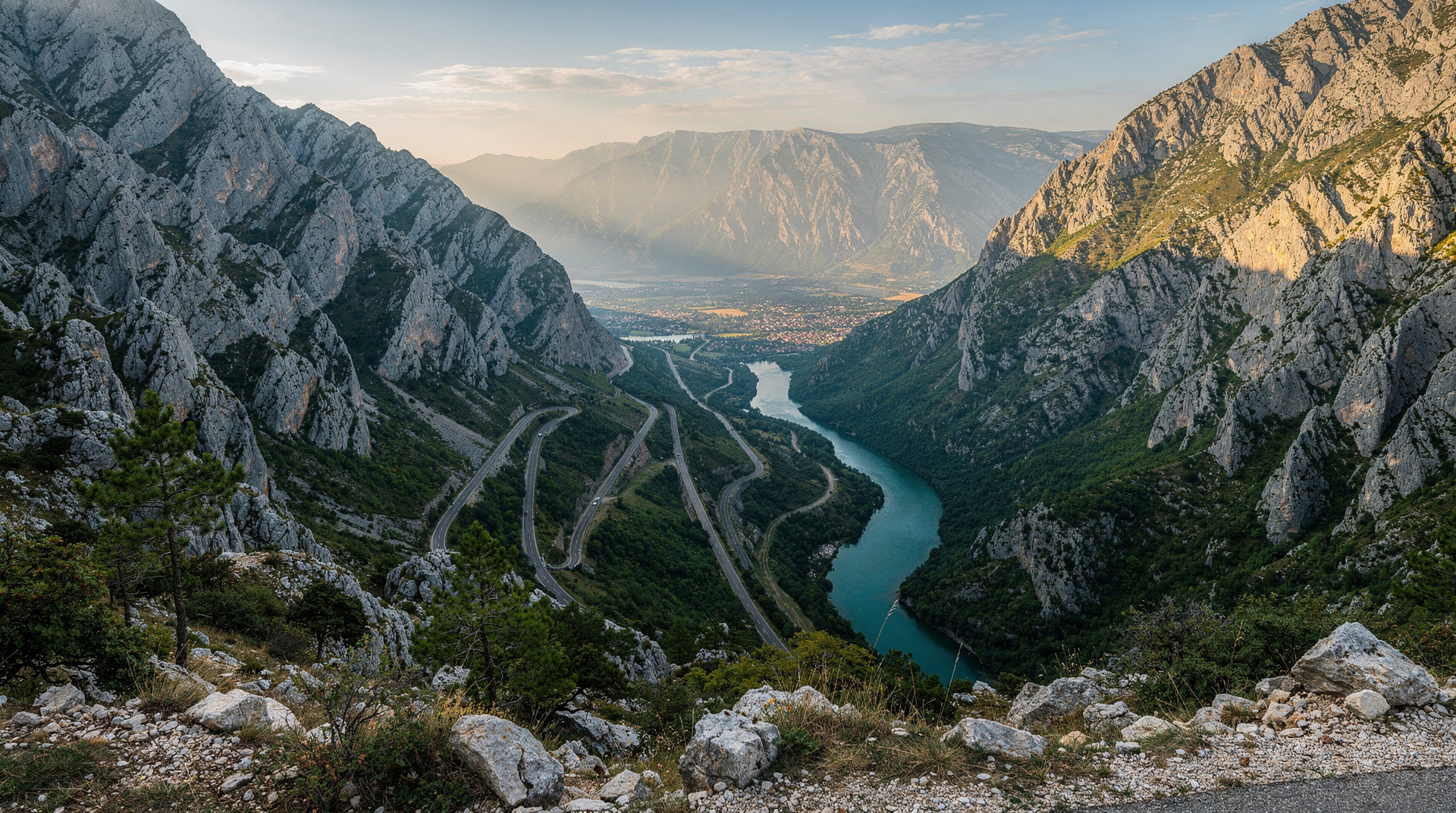
Drive north on the M17 through the Neretva canyon — one of the most dramatic roads in the Balkans, with the blue-green river far below between limestone walls. Stop at Konjic for Tito’s ARK D-0 nuclear bunker (book the bunker tour before you arrive) and the reconstructed Ottoman covered bridge. Continue to Sarajevo — a further 60 km, about 1 hour. Total drive with Konjic stop: ~3 h 30 min.
Days 7–9: Sarajevo — three full days
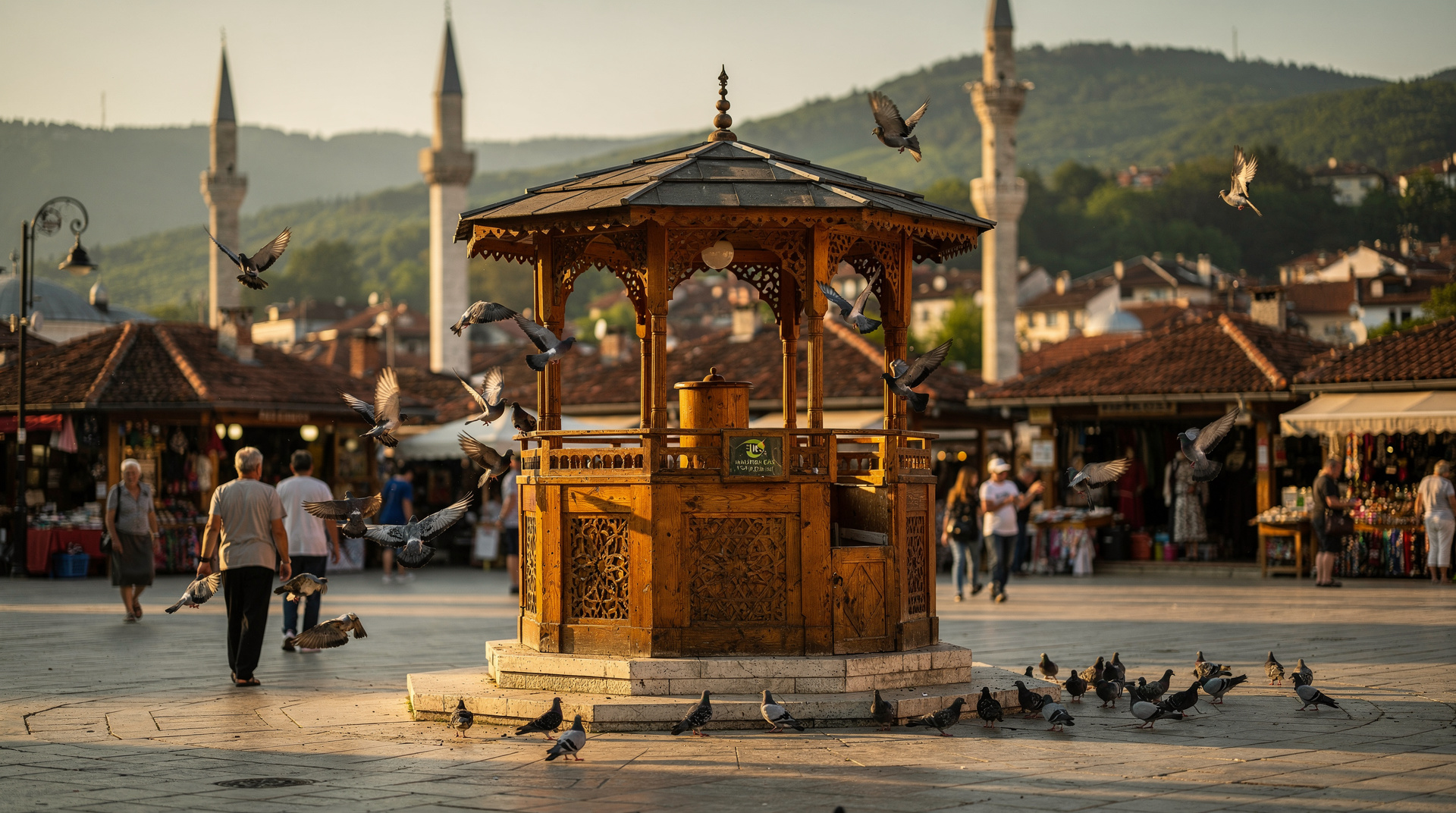
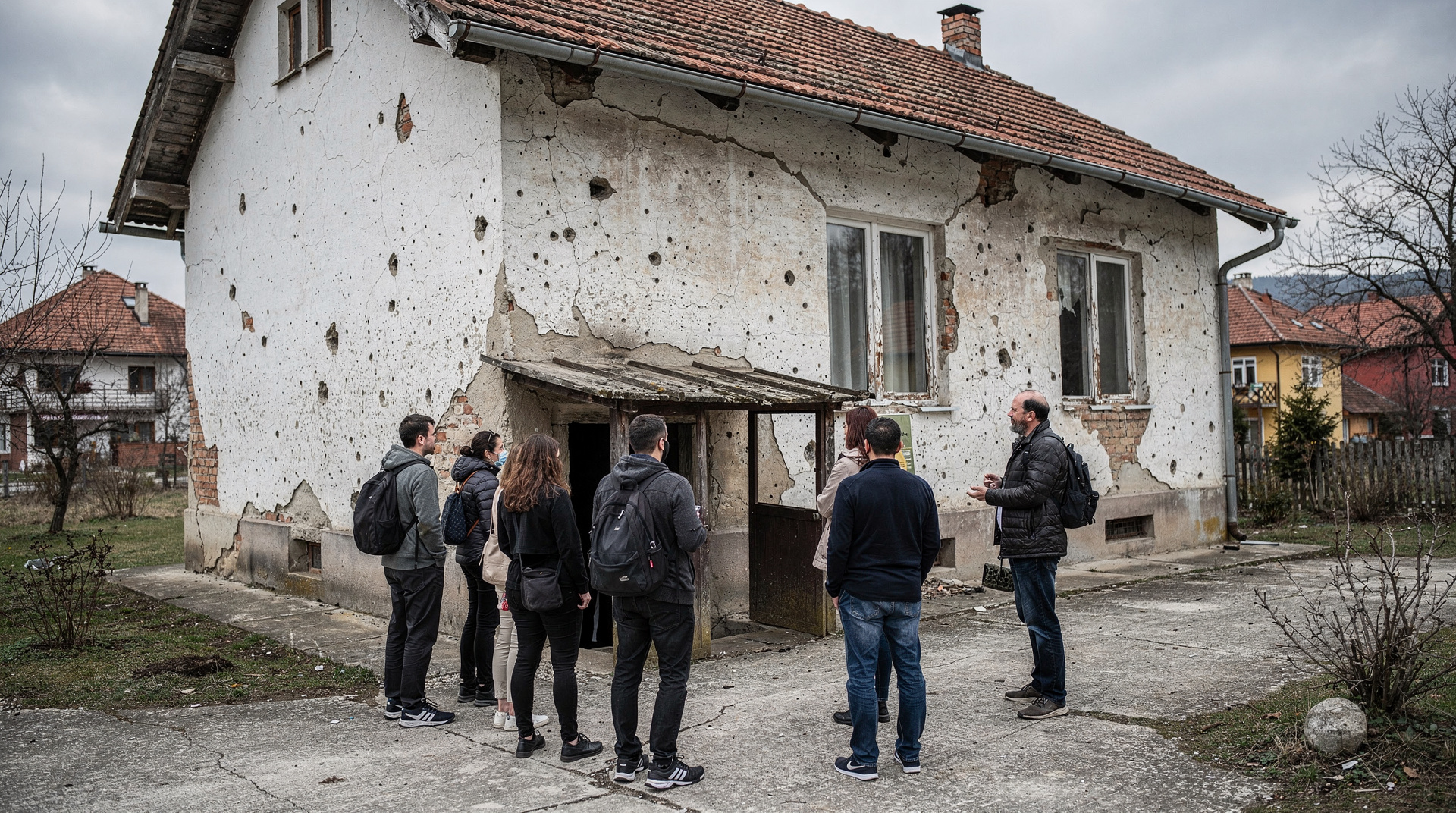
Three days is the right amount for Sarajevo if you want to move beyond the tourist circuit. Day 7: the guided Old Town walking tour covering Baščaršija, the four-faith quarter and the Austro-Hungarian ring. Day 8: the Bosnian War and Fall of Yugoslavia tour with the Tunnel of Hope Museum. Day 9: Trebević cable car, the Olympic bobsled track and an afternoon free for the National Museum, the War Childhood Museum or a Bosnian coffee workshop.
Where to stay: Guesthouses in Baščaršija cost 60–100 BAM (~31–51 EUR) for a double; design hotels and boutique options run 120–180 BAM (~61–92 EUR).
Food: Bosnia is extraordinarily affordable. A full sit-down lunch with soup, main and local wine costs 25–40 BAM (~13–20 EUR).
Day 10: Sarajevo — the surroundings
With a car, day 10 opens up the mountains. The Lukomir plateau hike (guided, departs Sarajevo by minibus) is the single best day hike in central Bosnia. Alternatively, drive 20 km south to Ilidža and Vrelo Bosne springs park, or 30 km to the Bijambare caves. If the weather is poor, Sarajevo’s indoor options are underrated: the History Museum, the 1878–1918 Museum and the Ali Pasha Mosque.
Day 11: Sarajevo to Trebinje
Drive south through Mostar (stop for lunch if you skipped its day trips earlier) to Trebinje — about 3 h from Sarajevo. Trebinje is Herzegovina’s most quietly beautiful town: an Ottoman stari grad (old town) on the Trebišnjica river, excellent local wine and almost no mass tourism. The hilltop Hercegovačka Gračanica church offers panoramic views over the Popovo Polje valley. For wine, the region produces Žilavka white and Blatina red from vines grown on the limestone karst around town.
Days 12–14: Dubrovnik
Trebinje to Dubrovnik is 30 minutes. Drop the rental car at Dubrovnik airport if your return flights route through there, or keep it for city parking (expensive and difficult inside the walls; park outside and walk or take a bus). Three days in Dubrovnik covers the old city walls, Lokrum island, the Lapad peninsula beaches and a day trip to Montenegro or the Elaphiti islands.
Alternatively: Return to Split from Trebinje — 3 h via Mostar or 3 h 30 min via the coast road. Drop the car at Split airport.
How to pace the two weeks
The loop works best when you treat the coast and the interior as two different moods. Croatia is about slow mornings, swimming and lingering over dinner; Bosnia rewards earlier starts, longer conversations and a willingness to let a coffee stretch into an hour. If you are torn on where to spend extra time, the comparison in Bosnia vs Croatia helps you decide what each country does best, and how many days in Bosnia explains why the interior deserves more than a rushed overnight.
Keep one buffer afternoon in your plan. Mountain roads, a long lunch in Mostar or a swim at Kravice that simply runs late are the usual reasons a tight schedule slips. Having a spare half-day around the Sarajevo or Trebinje legs means a delay never costs you a booked tour.
Choosing your Mostar base
Most travellers sleep in the old town on the night of Day 4, and that is the right call: the bridge is quiet after the day-trip buses leave, and the lit-up evening walk is the best moment of the visit. For neighbourhood-by-neighbourhood advice, see where to stay in Mostar. Before you go, read Mostar tourist traps and the truth about the bridge divers so the famous sights do not catch you out, and Stari Most and the old bridge gives the story behind what you are crossing. For dinner, best restaurants in Mostar is a good place to start.
Getting the most from Sarajevo
Sarajevo is the emotional centre of the trip, and the days there land harder if you know a little of the background first. Bosnia history for travelers and the Yugoslav wars explained are short reads that make the war tour and the museums far more meaningful. On the lighter side, Bosnian coffee culture and the Sarajevo food tour guide cover the daily pleasures that balance the heavier history, while where to stay in Sarajevo helps you pick a base that suits your own pace. If you have more time in the capital than this loop allows, the 4-day Sarajevo deep dive lays out how to use it.
Money and daily rhythm in Bosnia
Bosnia uses its own currency, and a few small habits make the switch from Croatia painless: carry some cash for small cafés and roadside stops, and keep your cards for hotels and larger restaurants. Bosnia money and currency explains how it works, and Bosnia scams to avoid is worth a skim before you arrive. If the cost of Croatia has already stretched your budget, Bosnia on a budget shows where the interior saves you the most. Travellers with specific worries can also check whether Bosnia is safe.
Crossing the Bosnia–Croatia border
The main crossings used on this route:
- Vinjani Donji (Split→Bosnia direction, towards Mostar): typically fast, 5–15 min.
- Neum corridor (coastal route, Split↔Dubrovnik): two brief stops, passport/ID check. Average 5 min each in low season, up to 30 min in July–August peak.
- Trebinje→Dubrovnik (Ivanica crossing): very fast, 5 min.
All border crossings require a valid passport or EU ID card. Car insurance must be valid for Bosnia — most standard European car hire agreements cover BiH. Ask explicitly when booking.
Budget comparison: Croatia vs Bosnia
| Item | Croatia (Split) | Bosnia (Sarajevo) |
|---|---|---|
| Guesthouse double | 80–150 EUR | 31–51 EUR |
| Lunch (main + drink) | 20–35 EUR | 8–14 EUR |
| Coffee | 2–3 EUR | 1–1.50 EUR |
| Fuel (per litre) | ~1.60 EUR | ~1.38 EUR |
Bosnia makes the Balkans affordable for travellers who find Croatia stretching the budget in peak season.
Renting a car for this route
Almost every Split, Dubrovnik and Sarajevo rental agency will let you cross into Bosnia, but you must confirm cross-border coverage explicitly at booking — a car turned away at the Bosnian border because of missing insurance paperwork is a genuinely common problem. See driving Croatia to Bosnia and renting a car in Bosnia for the specifics on green cards and cross-border clauses. Once in Bosnia, driving in Bosnia covers mountain road conditions, fuel stops and speed limits that differ from Croatia.
Frequently asked questions about Croatia and Bosnia 2-week itinerary
Can I do this itinerary without a rental car? Not comfortably — several legs (Konjic stop, Trebinje, the Neum corridor drive) are far more practical with a car. For a car-free alternative within Bosnia, see Bosnia by public transport.
Is two weeks enough for both Croatia’s coast and Bosnia’s interior? Yes, if you accept trade-offs — this itinerary gives 3 days to Split, 6 to the Bosnia interior, and 3 to Dubrovnik. Travellers who want more island time should extend the Split leg and shorten Sarajevo to two days.
Top experiences
Bookable activities with verified prices and instant confirmation on GetYourGuide.