Buses in Bosnia guide
Sarajevo: Old Town to Modern City Walking Tour
How good is the bus network in Bosnia?
Bosnia has a reliable inter-city bus network run mainly by Centrotrans and regional operators. Sarajevo, Mostar, Banja Luka and Tuzla are well connected. Flixbus also serves the main corridor. Expect slower journey times on mountain routes.
Bosnia & Herzegovina has a surprisingly dense bus network for a country of its size. If you plan to travel without renting a car, buses are your main tool — and for many routes, they’re perfectly adequate. This guide covers everything you need to know about travelling Bosnia by bus, from finding the right terminal to buying a ticket.
| Where | Bosnia-wide; main hub is Sarajevo’s East Sarajevo terminal near Skenderija |
| Cost | Around 10-35 BAM depending on route length |
| Time needed | 1h30 to 4h for domestic routes, longer for international |
| Best time to travel | Weekdays for guaranteed seats; book ahead for summer weekends |
| Getting tickets | Station counter, or online via Centrotrans/Flixbus |
Understanding the bus network
Bosnia does not have a centralised national bus system. Instead, a patchwork of operators share the routes. The biggest domestic company is Centrotrans-Eurolines, which operates routes across Bosnia as well as international services to Croatia, Serbia and Germany. On popular corridors like Sarajevo–Mostar or Sarajevo–Banja Luka, several competing operators run parallel services throughout the day.
Flixbus has expanded into Bosnia in recent years, connecting Sarajevo with Zagreb, Split, Dubrovnik and Belgrade. Prices are competitive and the booking platform is reliable, which makes it popular with international travellers.
For shorter hops and rural connections, you’ll find local minibuses (kombiji) that run on less regular schedules. These are usually pay-on-board with no advance booking.
Main routes and journey times
The key domestic routes by bus are:
- Sarajevo–Mostar: ~2h30, 20-25 BAM one way, buses run roughly every hour during the day
- Sarajevo–Banja Luka: ~3h30-4h, 30-35 BAM, several departures daily
- Sarajevo–Tuzla: ~3h, 20-25 BAM, frequent service
- Sarajevo–Travnik: ~1h30, 10-15 BAM, regular service
- Sarajevo–Jajce: ~2h30-3h, 18-22 BAM, a few departures daily
- Mostar–Dubrovnik: ~3h (with border crossing), 25-35 BAM
- Mostar–Split: ~3h-3h30, 25-30 BAM
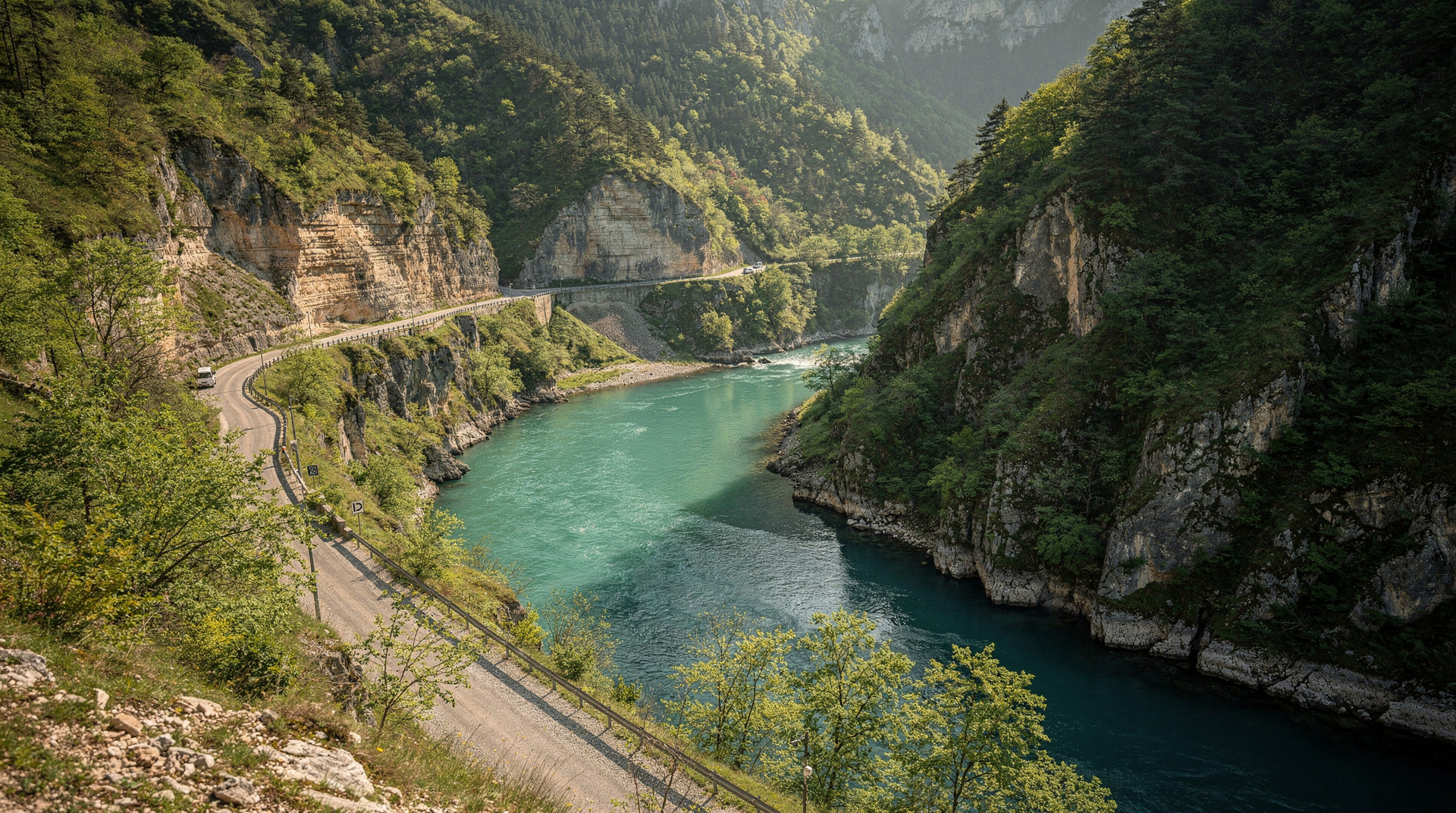
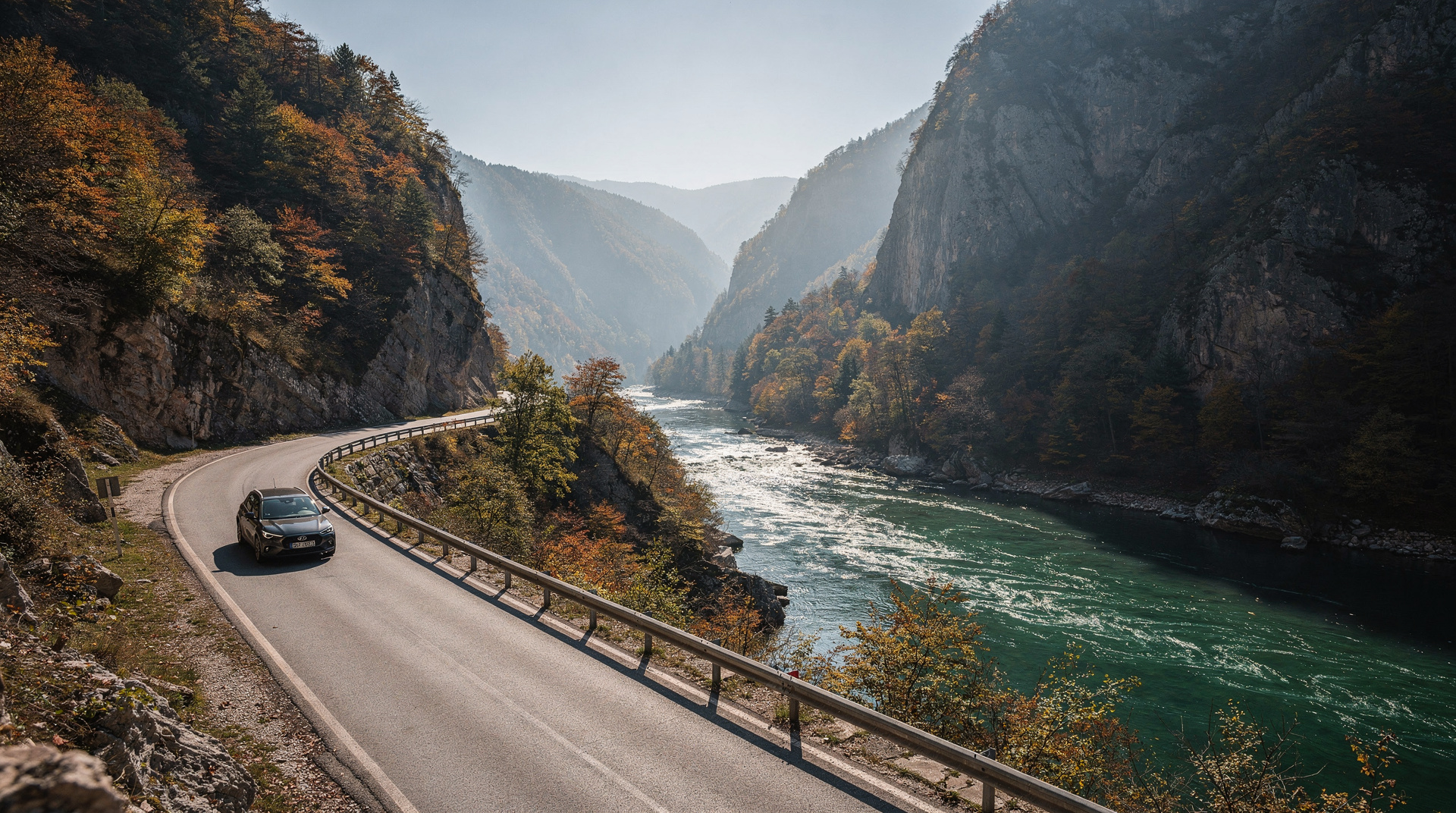
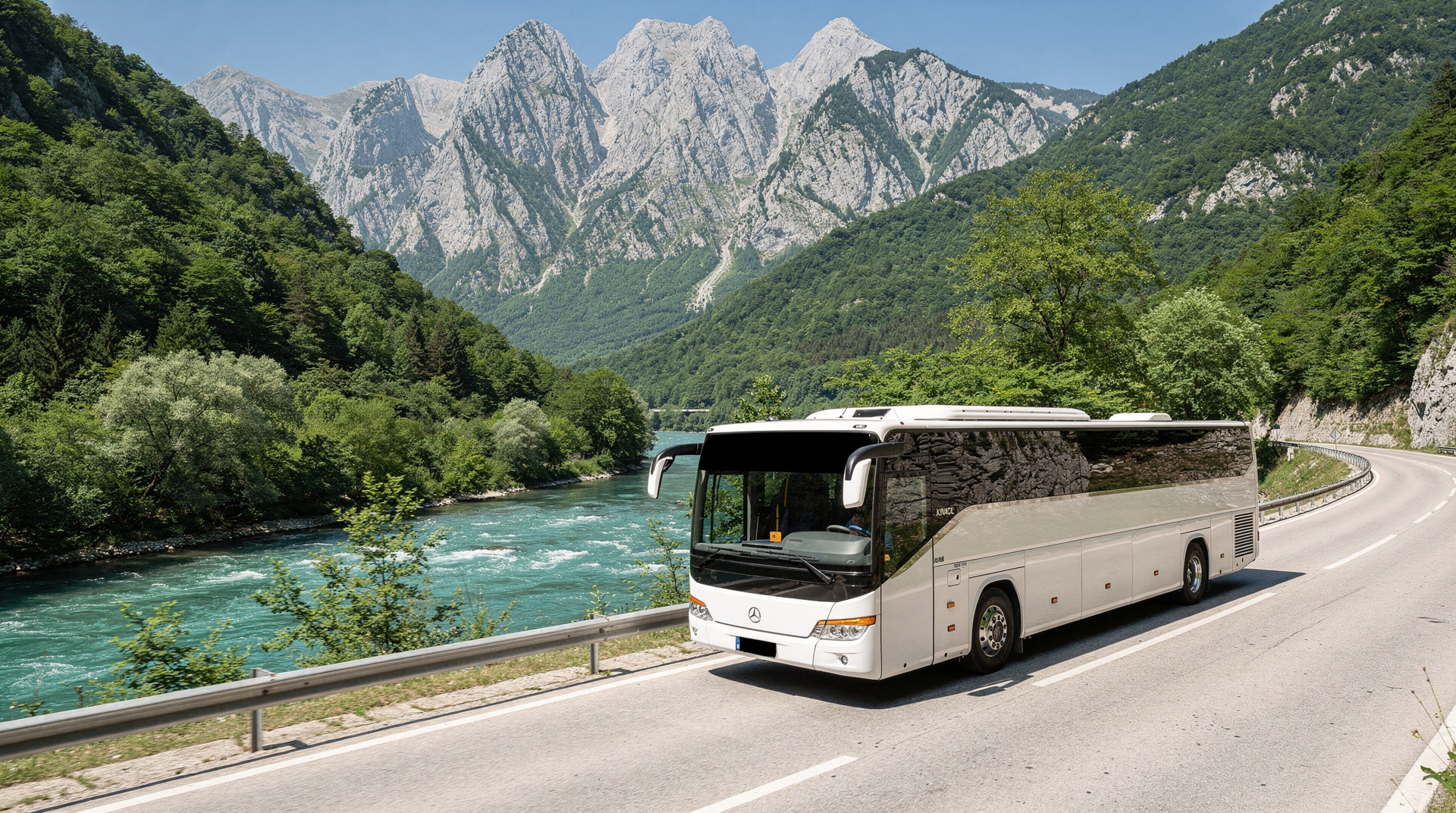
Note that times on mountain roads should be treated as approximations. The route between Sarajevo and Mostar winds through the Neretva canyon and there is no motorway for most of the journey — the road is scenic but slow.
Sarajevo bus terminals
Sarajevo has two bus terminals, which causes confusion for first-time visitors.
East Sarajevo International Bus Terminal (near Skenderija, city centre) handles most long-distance domestic routes, including buses to Mostar, Banja Luka, Tuzla, Zenica and Travnik, as well as international services to Croatia, Serbia, Montenegro and Germany. This is the terminal you will use for the majority of trips. Trams and trolleybuses serve the area well.
Ilidža Bus Terminal is further west, near the Ilidža tram terminus. It mainly handles certain inter-entity routes and some local western Bosnia services. If you’re going to Kiseljak or some Krajina destinations, double-check which terminal your bus departs from.
The ticketing halls at both stations have helpful staff, but signage is only partially in English. Arrive with the name of your destination and departure time written down to smooth communication.
Mostar bus station
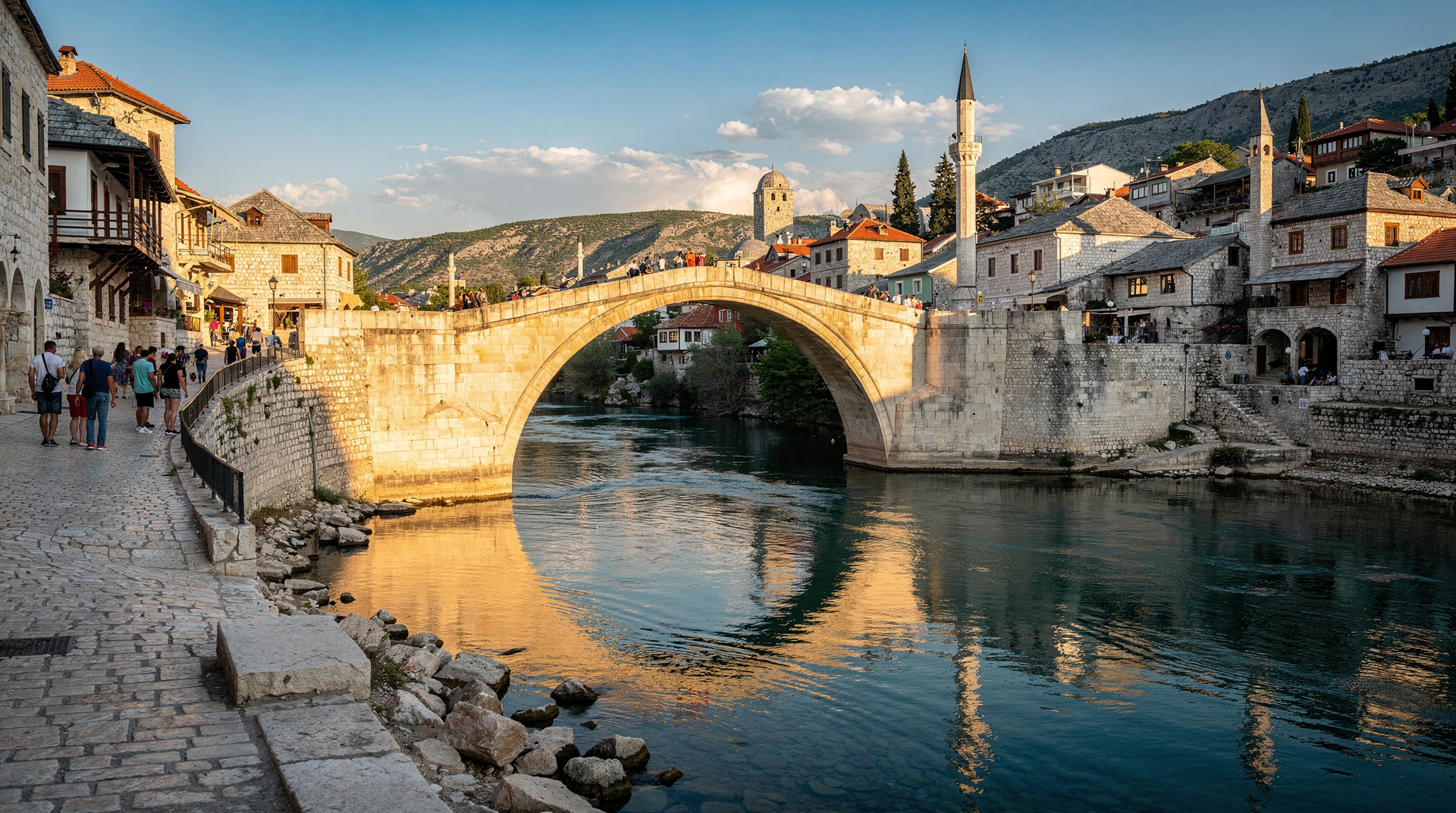
Mostar’s bus station (Autobuska stanica Mostar) sits on the east bank of the Neretva, roughly 700 metres from Stari Most. It handles routes to Sarajevo, Split, Dubrovnik and local Herzegovina connections. Taxis are available outside; the walk to the old bridge takes about 10-12 minutes.
International buses from Bosnia
Centrotrans runs regular international services to Germany (Munich, Stuttgart, Frankfurt) — a popular route used by the Bosnian diaspora. These journeys are long (16-20 hours) but affordable. Flixbus covers Zagreb (about 5h from Sarajevo), Split (about 5h) and Belgrade (about 6h).
When crossing into Croatia, expect a border stop of 10-45 minutes depending on queues — much longer in summer. The Neum corridor on the Split–Dubrovnik coastal route means crossing two land borders (into and out of Bosnia’s short coastal strip), which adds time to that journey. The Pelješac Bridge (opened 2022) now provides an alternative that bypasses Neum entirely — check whether your specific bus uses the bridge or the old coastal road.
Tips for travelling by bus in Bosnia
Book ahead for weekend and holiday travel. Summer weekends (especially July–August) on Mostar and coastal routes fill up fast. Weekday travel is rarely a problem.
Carry cash. Some smaller operators only sell tickets at the station or on the bus. Even where card payment is technically available, machines can be unreliable.
Check the actual platform. Larger stations have multiple platforms, and buses sometimes depart from a different platform than the ticket indicates. Ask a driver or station staff to confirm.
Luggage goes in the hold. Most inter-city buses have luggage compartments below. There is usually a small charge (1-2 BAM) for larger bags checked into the hold — have coins ready.
Toilets on board are rare. Most buses do not have an onboard toilet. On longer routes (3h+) there is usually a rest stop at a petrol station or roadside café. Keep this in mind if you’ve had a lot of Bosnian coffee.
Travel with a light jacket. Air conditioning on Bosnian buses is generous to a fault — bring a layer even in summer.
Budget comparison
Buses are significantly cheaper than renting a car. The Sarajevo–Mostar return trip by bus costs about 40-50 BAM (€20-26), compared to a one-day car rental that starts at 50-80 BAM (€26-41) before fuel and parking.
For solo travellers and backpackers, buses make sense on the main corridors. For groups of three or more, a rental car often works out similar in price while offering far more flexibility. See the renting a car in Bosnia guide for a detailed comparison.
Combining buses and day trips
If you don’t have a car, guided tours are an efficient way to see places beyond the bus network. Day trips from Sarajevo to Mostar, Jajce or Srebrenica are widely available and competitively priced compared to bus-and-accommodation costs. They’re particularly worth considering for sites like Lukomir village or Sutjeska National Park, which have little or no public transport.
Once your bus has dropped you in the capital, a guide is also a good way to make sense of the city without worrying about timetables. Many travellers pair an arrival day with a walking tour of the old town with a local guide, which keeps everything on foot near the terminal tram lines. If you would rather link several cities without handling schedules at all, a private multi-day tour covering Sarajevo, Mostar and Jajce replaces the bus legs entirely. Both are optional: the bus network above remains the cheapest way to cover the same ground.
Bus versus train
Bosnia has a limited rail network. The scenic Sarajevo–Mostar train runs seasonally and is worth taking for the experience, but buses are faster and more frequent on this route. For most destinations beyond the Sarajevo–Mostar–Konjic corridor, the train is not a practical option.
Cross-border logistics
If travelling by bus from Bosnia into Croatia, make sure your car hire insurance (if you have a vehicle) includes a green card for Bosnia. Bus passengers don’t need to worry about this, but it’s worth knowing if you’re combining bus and car travel.
For day-trippers arriving from Dubrovnik or Split, the most practical option is often a guided tour with transport included rather than navigating international bus schedules.
Buses to Herzegovina and the coast
Beyond the main Sarajevo corridors, buses also connect Mostar onward to Herzegovina towns. Trebinje, in the far south near the Montenegrin border, is served by a handful of daily buses from Mostar and Sarajevo, though the journey is long — a guided day trip from Mostar is often more time-efficient if you only have a day. For visitors combining Bosnia with the Adriatic coast, buses between Mostar and Dubrovnik or Split run daily in season, though schedules thin out in winter.
When a bus isn’t the right tool
Some of Bosnia’s best destinations are effectively unreachable by scheduled bus. Kravice Waterfalls, the Lukomir highland village and Sutjeska National Park either have no public bus service or only a single inconvenient daily departure. For these, renting a car (see the driving in Bosnia guide) or booking a guided tour with transport is the practical choice.
Planning a trip around the bus timetable
The easiest way to enjoy Bosnia by bus is to build the trip around the corridors where service is good, and to treat everything else as an add-on. Start from Sarajevo, where most routes begin, then move south to Mostar and, if time allows, continue towards the coast. Our Bosnia by public transport itinerary shows how those pieces fit together, and the Sarajevo and Mostar in three days plan works well if you want a short loop without a car.
If you have a little more time, the 7-day Bosnia itinerary can be adapted to buses by dropping the remote stops and keeping the towns. Not sure how long to stay? The how many days in Bosnia guide helps you decide how much ground a bus-only traveller can realistically cover.
Practical rhythm of a bus travel day
Bus travel in Bosnia rewards an early start. Morning departures are usually the most dependable, and leaving early gives you a margin if a mountain road is slow or a border queue builds up. Arrive at the station with time to find the right platform, buy your ticket, and pay for any luggage. Once on board, expect a relaxed atmosphere: drivers know their roads, passengers chat, and the scenery through the window is often half the reason to come.
When you arrive, plan the last leg before you leave. In Sarajevo, the Sarajevo public transport guide explains how to continue from the terminal into the old town. In Mostar the walk to the bridge is short, and our Mostar where to stay guide points out which neighbourhoods keep the bus station within easy reach. For Sarajevo, the where to stay in Sarajevo guide does the same, which matters when you are carrying luggage off a bus.
Seasons and buses
Frequency and comfort change with the seasons. Summer brings heat, crowds and fuller buses on routes to Mostar and the coast; winter brings thinner schedules and, in the mountains, slower roads. Read the best time to visit Bosnia guide before fixing dates, and the Bosnia in winter guide if you plan to travel when snow can affect mountain passes. Spring and autumn are often the sweet spot for bus travellers: pleasant temperatures, fewer crowds at the stations and better light for the views along the Neretva.
Money and common sense on the road
Keep small notes of local currency within reach for tickets, luggage and snacks at rest stops; the Bosnia money and currency guide covers how the convertible mark works and where to find cash machines. Bus stations, like any busy transport hub, attract the occasional opportunist, so keep your day bag in sight and read the Bosnia scams to avoid guide if you want to know what to watch for. In general, though, Bosnian bus travel is safe and friendly, and the is Bosnia safe guide gives the wider picture.
From the bus station to your next stop
A bus gets you to the town; the rest is on foot, by taxi or on a short local ride. Think of each arrival as the start of a small day of its own. From Mostar, the Blagaj and Počitelj stops are natural follow-ons if you can arrange local transport, and Počitelj rewards an unhurried visit. From Sarajevo, the best day hikes from Sarajevo offer an easy way to stretch your legs after a long ride. And if you decide halfway through the trip that the bus timetable is holding you back, the getting around Bosnia guide lays out every alternative side by side.
Frequently asked questions about buses in Bosnia
Is it easy to find buses between cities in Bosnia?
On the main corridors (Sarajevo–Mostar, Sarajevo–Banja Luka, Sarajevo–Tuzla), buses run frequently throughout the day and you can usually find a seat without pre-booking on weekdays. Smaller towns like Trebinje, Jajce or Bihać are served by fewer daily buses, so check timetables in advance.
Are there overnight buses in Bosnia?
Some international routes (notably to Germany or Belgrade) operate overnight. Domestic overnight buses are rare. Most domestic services run between early morning and early evening.
How do I buy a bus ticket in Bosnia?
At the station ticket window, or via the Centrotrans or Flixbus website for their respective services. Some drivers also sell tickets on board for shorter routes, but this is less reliable.
What should I do with my luggage on a Bosnian bus?
Large bags go in the hold under the bus. Pay the hold fee (usually 1-2 BAM) to the driver or a station worker before boarding. Keep valuables and documents in your day bag inside the cabin.
Can I travel Bosnia entirely by public transport?
Yes, with planning. The main tourist triangle of Sarajevo–Mostar–Jajce is accessible by bus. More remote destinations like Sutjeska, Una National Park or Trebinje require careful planning, early buses and sometimes taxi connections. The Bosnia by public transport itinerary gives a practical route.
Is it cheaper to bus or fly between Bosnian cities?
For domestic travel, buses are always cheaper — Bosnia has no meaningful domestic flight network. Sarajevo Airport mainly serves international connections; see the Sarajevo airport guide for arrival transport options.
Do I need to reserve a specific seat on Bosnian buses?
Not usually on domestic routes — tickets are typically unassigned or lightly assigned. Flixbus and some Centrotrans international services do assign seats at booking. On popular weekend departures, arriving 20-30 minutes early secures a good seat even without formal reservation.
Top experiences
Bookable activities with verified prices and instant confirmation on GetYourGuide.