Driving in Bosnia guide
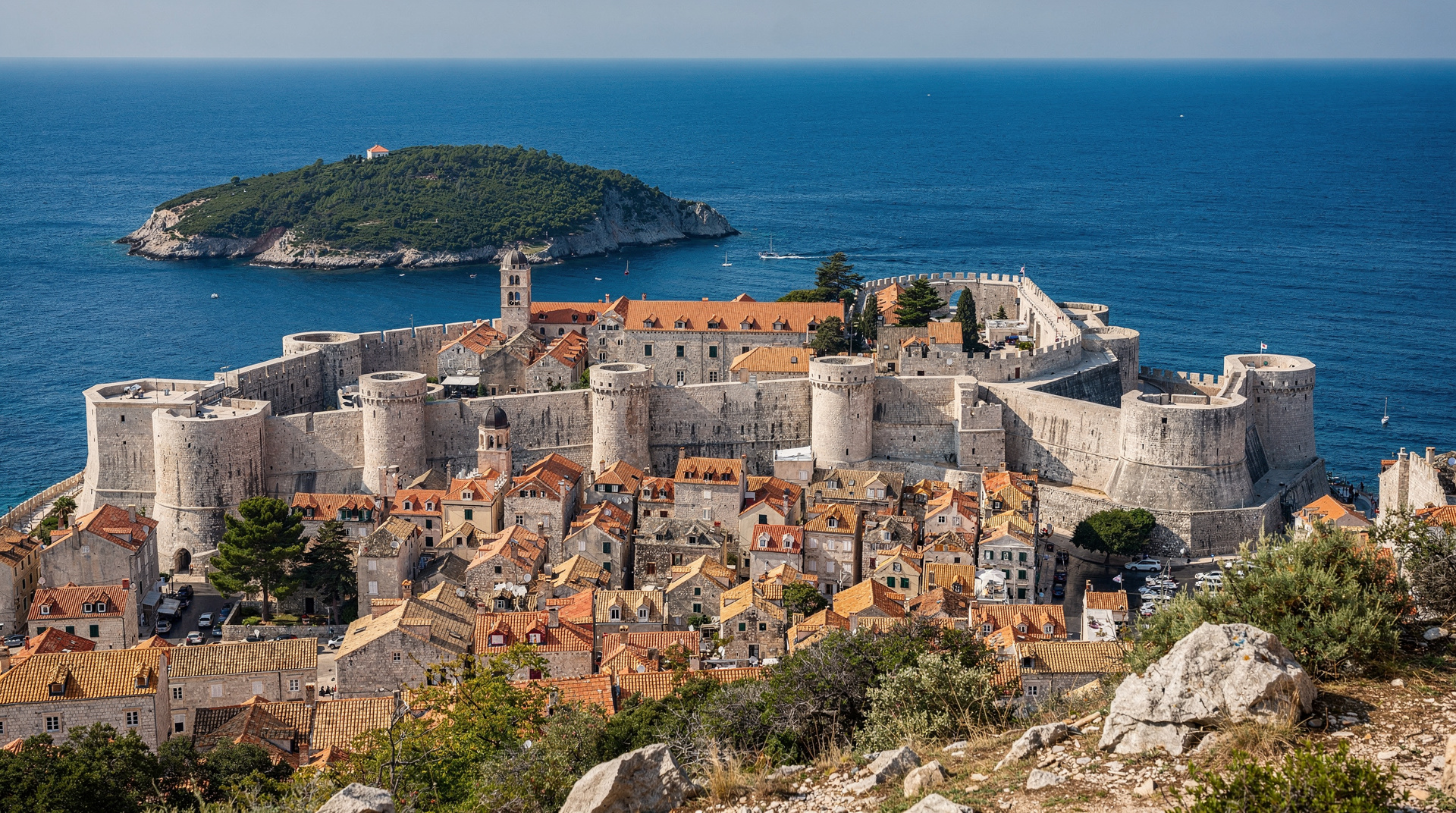
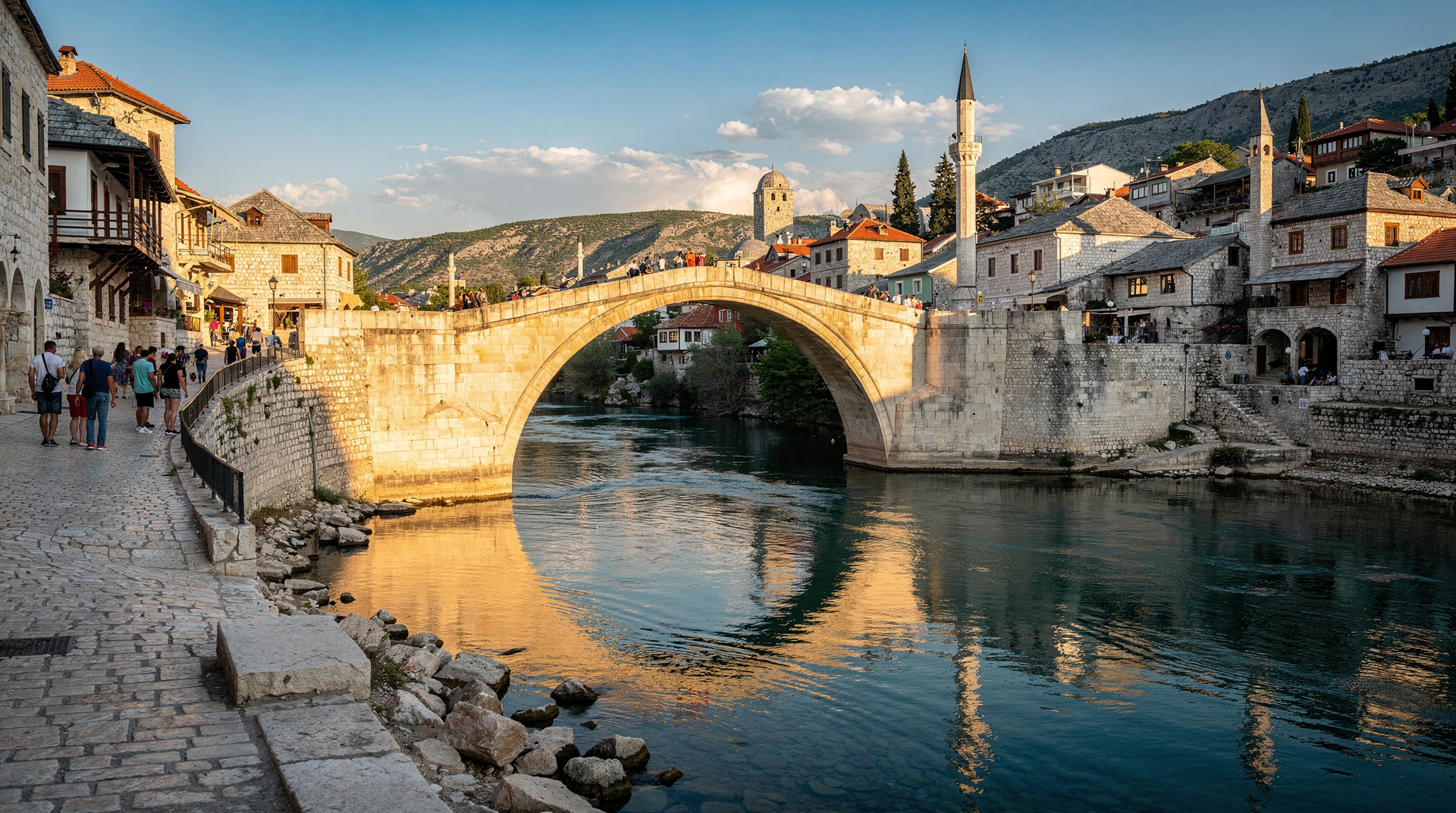
Mostar – Bosnia and Herzegovina Day Trip from Dubrovnik
Is it safe and easy to drive in Bosnia?
Yes, with preparation. Main roads are well-maintained. Mountain routes are slow and winding. Key rules: zero alcohol tolerance, winter tyres November–April, green card insurance required when entering from Croatia, and never drive off-road in unmarked rural areas (landmine risk).
Driving is the best way to see Bosnia properly. The country’s most spectacular landscapes — the Neretva canyon, the Sutjeska primeval forest, the Una valley, the high plateau above Sarajevo — are all far more accessible by car than by public transport. This guide covers everything you need to know about driving in Bosnia: rules, road conditions, hazards and the best routes.
| Where | Nationwide — main routes are the M-17 Sarajevo-Mostar corridor and the A1 motorway |
| Cost | Fuel around 2.00-2.30 BAM/L; tolls typically 2-5 BAM per motorway section |
| Time needed | Allow 2h30-3h for Sarajevo-Mostar (130 km); mountain roads run slower than GPS estimates |
| Getting there | Rent in Sarajevo, Mostar or at Sarajevo Airport — see the renting a car in Bosnia guide |
| Best time | Spring to autumn for easiest conditions; winter tyres mandatory 15 November-15 April |
Road network overview
Bosnia has a patchwork road network that reflects its mountainous terrain and complex political history.
A1 Motorway (autocesta): The main modern road, running from Banja Luka through Zenica and Sarajevo towards Mostar and the Adriatic coast. The Banja Luka–Sarajevo section is fully open and offers fast, smooth driving. South of Sarajevo towards Mostar, completion has been gradual and some sections remain single-lane or unfinished — check current status before a high-speed run.
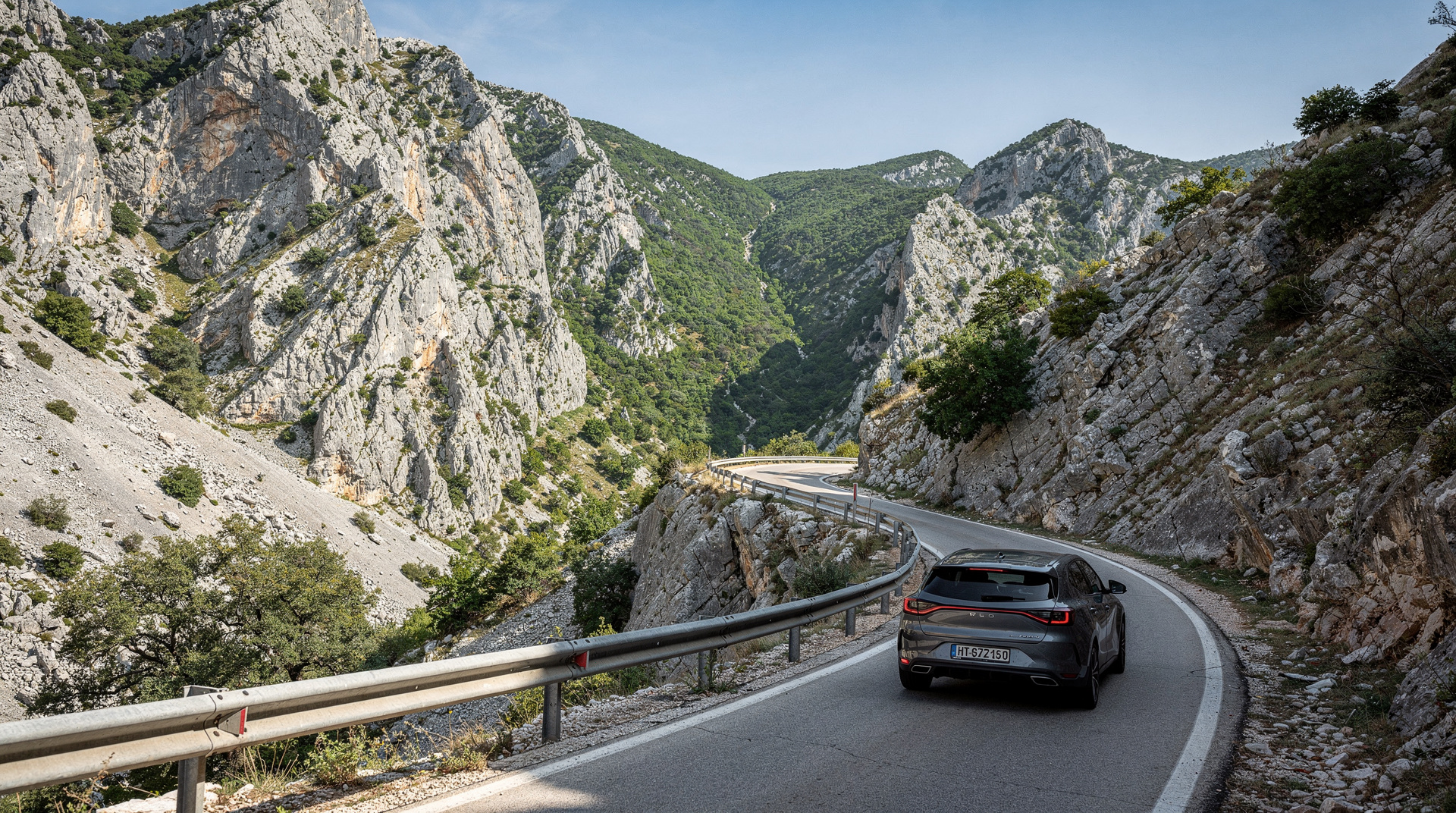
M-routes (Magistralne ceste): National main roads connecting all major cities and towns. Generally well-surfaced, two lanes, no overtaking lanes. These are the roads you will use most. They are slow by Western European standards — 60-80 km/h is realistic average speed on mountain sections.
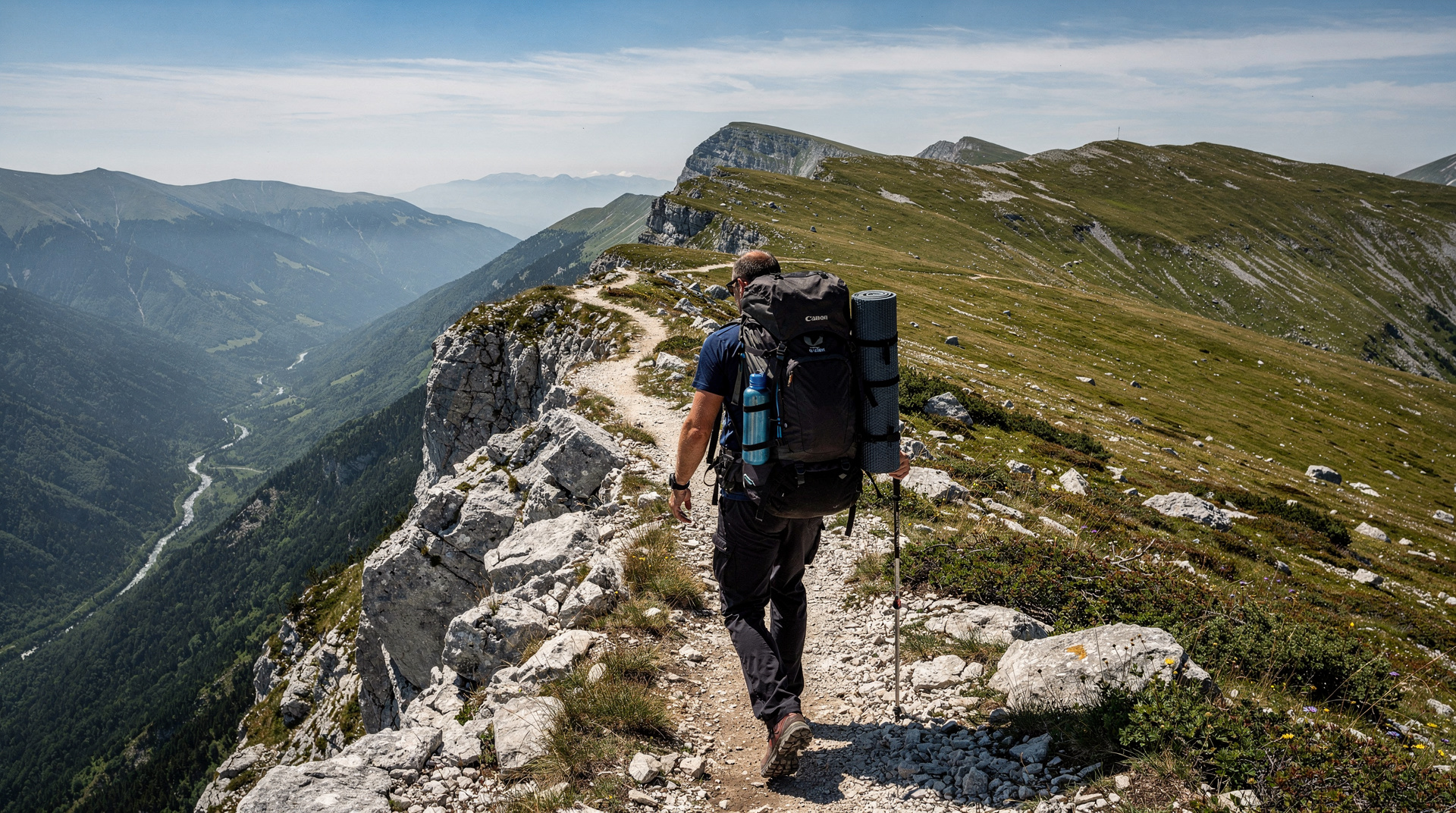
Regional and local roads (R-routes): Variable quality. Well-maintained near towns, potentially rough in mountain areas. Some forest roads leading to hiking trailheads are unpaved and require a vehicle with ground clearance.
Because mountain M-routes are slow and some forest roads leading to trailheads are unpaved, choose the car for the roads you actually plan to take: a model with ground clearance matters more than speed if hiking is on your list. Check what the pick-up location offers and what the rental terms say about unpaved roads, then compare vehicles for your Bosnian route on DiscoverCars for Bosnia.
Speed limits and traffic laws
| Zone | Limit |
|---|---|
| Built-up area | 50 km/h |
| Open road | 80 km/h |
| Expressway | 100 km/h |
| Motorway | 130 km/h |
Enforcement has increased in recent years. Speed cameras (radarni uređaji) are present near town limits, school zones and known accident hotspots. Fines start at 80-100 BAM and can be much higher for excessive speeds.
Alcohol limit: 0.03% BAC — this is effectively zero tolerance. Do not drink and drive. Police conduct roadside checks, especially on summer weekends and public holidays.
Mobile phones: Prohibited while driving unless using a hands-free system.
Seat belts: Mandatory for all occupants.
Headlights: Must be on at all times, day and night.
Winter driving and seasonal rules
Winter tyres are mandatory from 15 November to 15 April. If you rent a car in this period, the rental company must provide a vehicle with winter tyres — confirm this before accepting the vehicle. Driving without winter tyres in winter conditions is illegal and unsafe on Bosnia’s mountain roads.
Snow chains are advisable for high passes (above 1,000 m) in December–March. The passes over Prenj, Bjelašnica and the roads towards Sutjeska can be snowbound into late April.
Ice and black ice are common on mountain roads from November onwards. Drive slowly, brake early and give extra space to trucks, which can slide on steep descents.
The Neretva canyon drive (Sarajevo to Mostar)
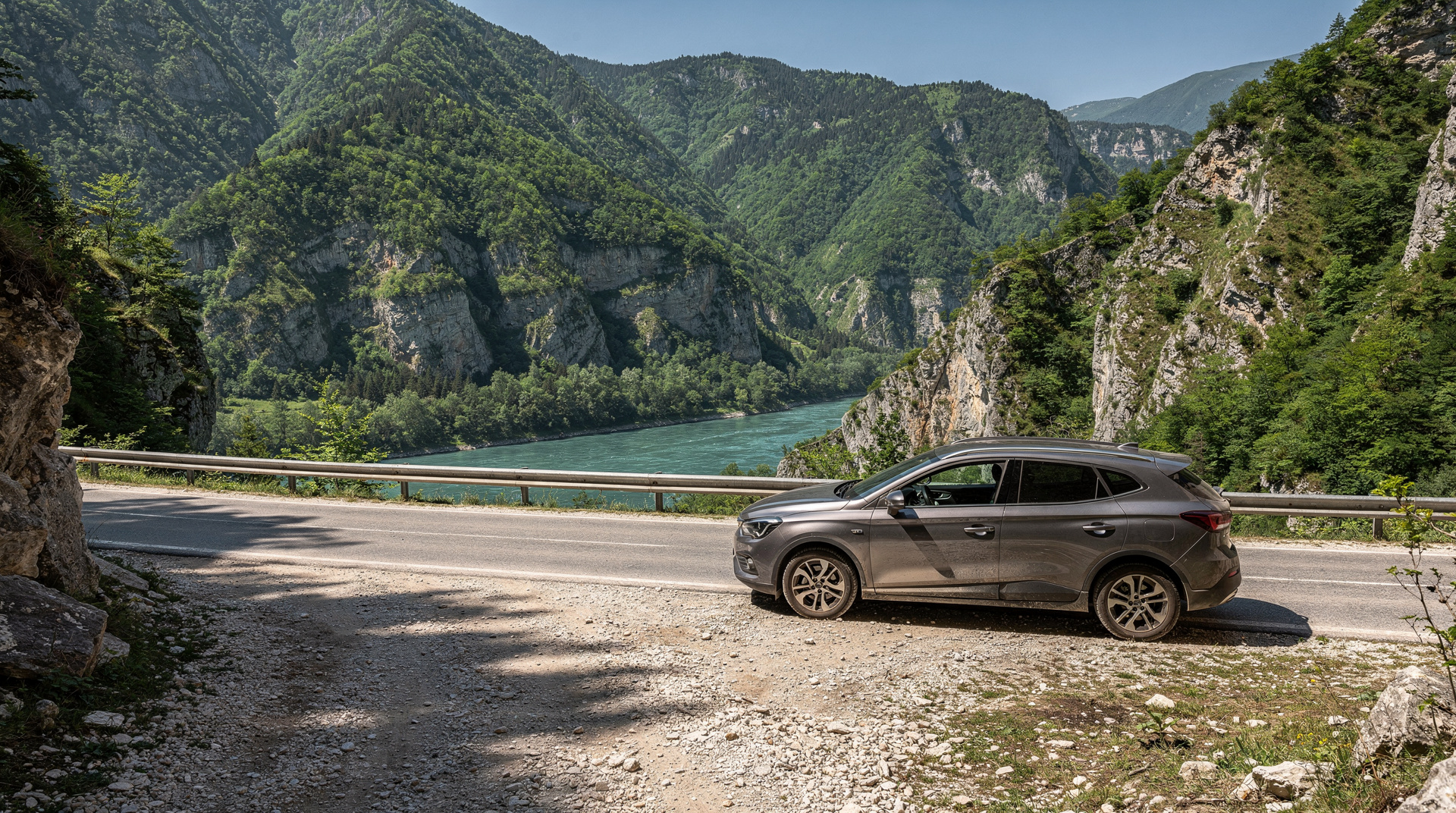
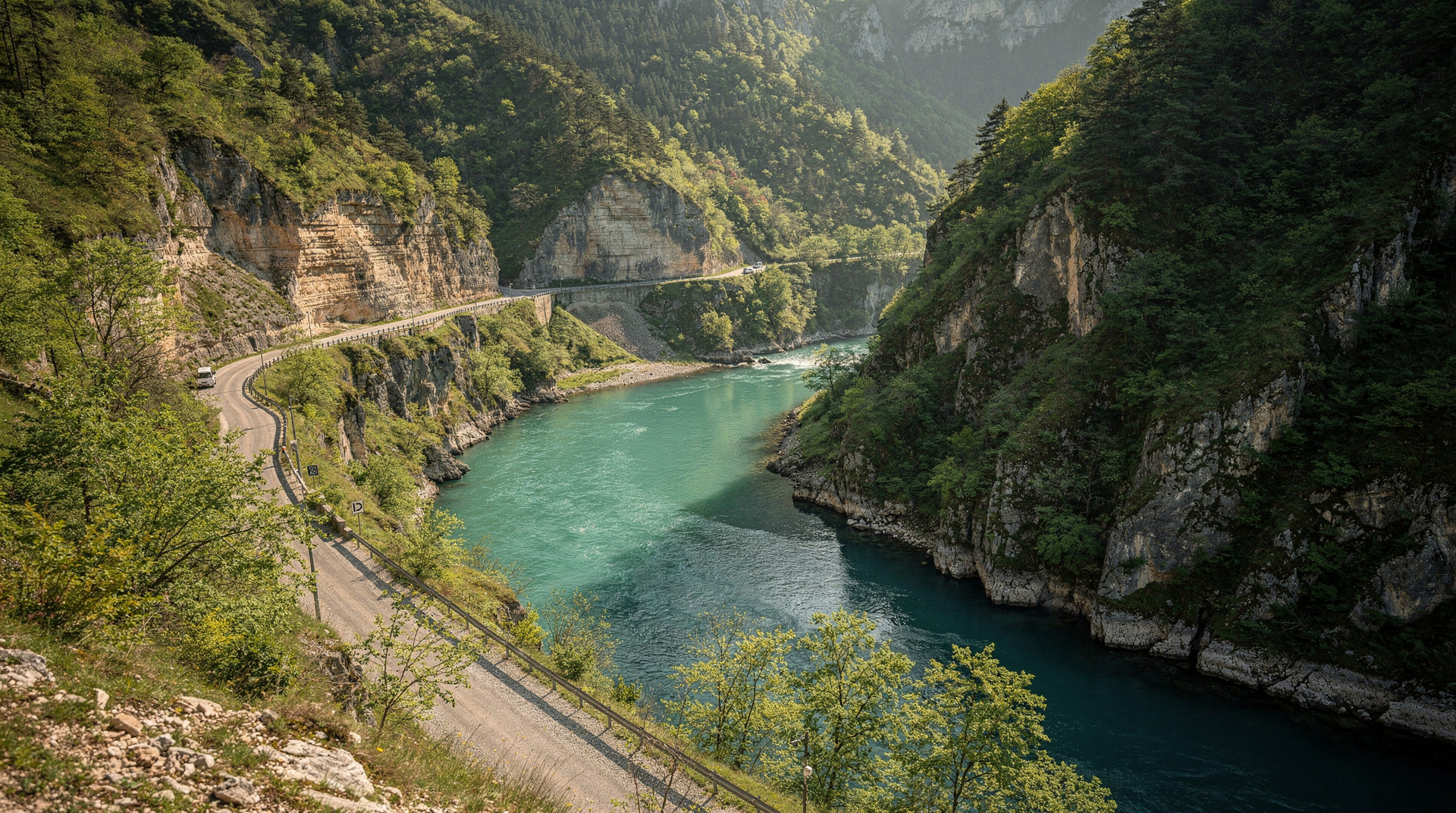
The M-17 road from Sarajevo to Mostar through the Neretva canyon is Bosnia’s most famous driving route — and for good reason. The river is emerald green, the canyon walls are hundreds of metres high, and the road hugs the cliff in ways that feel almost Alpine.
Distance: ~130 km
Time: 2h30-3h (do not trust GPS)
Notable stops: Konjic (old stone bridge, wood market), Jablanica (wartime railway bridge), Blagaj junction (Tekke dervish monastery)
The road is well-maintained but narrow in canyon sections. Truck traffic is heavy as this is the main freight corridor to the Adriatic. Do not rush — the views reward a relaxed pace.
Mountain roads and remote areas
Bosnia’s interior highlands are extraordinary to drive through, but demand more from drivers and vehicles.
Bjelašnica and the Lukomir plateau: The road from Sarajevo to the Bjelašnica ski resort and the plateau above is paved, but steep and winding. Access to Lukomir village involves a rough track — a 4WD vehicle is needed in wet conditions and essential in winter.
Sutjeska National Park: The main road through Sutjeska is paved. Side roads to hiking trailheads are partially gravel. The road over Zelengora mountain to Tjentište is paved but slow.
Una National Park (Bihać area): Roads in the Una valley are good. The route from Bihać to the Štrbački Buk waterfall involves forest tracks — doable in a regular car in dry summer conditions.
Vran mountain and Prenj: These remote highlands have limited roads and no tourist infrastructure. 4WD is required for any exploration beyond the main valley routes.
Landmines: the off-road rule
Bosnia still has areas affected by post-war landmines, primarily in rural mountain terrain away from towns and major roads. The clearance process is ongoing but not complete.
The practical rule for drivers is simple: stay on paved and marked surfaces. Do not drive or walk off-road in mountain areas unless you are with a local guide or on a clearly established trail. On main tourist routes (the Neretva canyon, Una valley, Sutjeska main trail, Bjelašnica resort) there is no risk. The danger is in remote mountain terrain away from marked paths.
The landmine safety guide gives full context for hikers and drivers in remote areas.
Fuel
Petrol stations are found on all main roads and in every town of any size. In remote areas (Sutjeska, the Krajina highlands), fuel stations can be 40-60 km apart — fill up before venturing into rural highlands.
Fuel costs (approximate 2026):
- Unleaded 95 petrol (benzin): ~2.00-2.30 BAM/L (€1.02-1.18)
- Diesel (dizel): ~2.00-2.20 BAM/L (€1.02-1.12)
Payment at most stations is cash or card. Carry some BAM for remote stations.
Main brands: INA (Croatian, most common), NIS (Serbian), local Bosnian operators (Energopetrol, Lukoil franchise).
Tolls
Bosnia has no national vignette system. Tolls are charged at booths on the A1 motorway — typically 2-5 BAM per section. Pay in cash (BAM or EUR usually accepted).
Regional roads and passes have no tolls.
Border crossings by car
Croatia–Bosnia: Multiple crossings along a long shared border. The main ones used by tourists:
- Karamatići/Bijača (Split/Makarska → Mostar)
- Izačić (Zagreb → Bihać)
- Novi Grad (Banja Luka area)
Queues in summer (July–August) at the main coastal crossings can be 30-90 minutes. The Neum corridor adds two crossings on the Split–Dubrovnik coastal road — the Pelješac Bridge now offers an alternative route.
Montenegro–Bosnia: Main crossing via Trebinje or near Foča/Šćepan Polje. Usually faster than Croatian crossings.
Always carry your full document set: passport or EU ID card, driving licence, vehicle registration, insurance documents and green card for Bosnia.
Parking
- Sarajevo: Metered street parking in the city centre (1-3 BAM/hour). Underground car parks at Skenderija and near Holiday Inn. Park-and-ride at Ilidža terminus if visiting the old town.
- Mostar: Small paid lots on the western bank near the old town. Summer is chaotic — park further out and walk.
- Other towns: Usually free street parking; pay car parks in central Banja Luka and Tuzla.
Best road trip routes in Bosnia
Classic circuit (6-7 days): Sarajevo → Konjic → Mostar → Blagaj → Trebinje → Foča → Sutjeska → Sarajevo. About 500 km.
Krajina adventure (5-6 days): Sarajevo → Travnik → Jajce → Bihać (Una National Park) → Banja Luka → return. About 600 km.
Cross-border loop (8-10 days): Split → Mostar → Sarajevo → Srebrenica → Foča → Kotor → Dubrovnik. Combines Croatia, Bosnia and Montenegro.
The Bosnia 7-day itinerary and Bosnia 10-day itinerary have detailed driving routes with accommodation suggestions.
Planning a driving day
Bosnian roads reward a loose schedule. Because mountain sections are slower than any map suggests, the most comfortable way to plan is to pick one main goal per day and treat everything else as a bonus. A day that ends with a swim at Kravice waterfalls or a slow walk through Počitelj feels far better than one spent chasing a tight timetable between three towns.
Start early. Morning light is best for photography in the canyon, traffic is thinner, and you keep a buffer for roadworks, slow trucks or a long stop at a viewpoint. In summer the heat builds quickly in Herzegovina, so the cooler hours are also the most pleasant for driving with children or older passengers.
Keep offline maps downloaded before you leave your accommodation. Mobile signal can drop in canyons and high valleys, and a map that still works without data removes most of the stress of an unfamiliar junction. A paper note of your next hotel’s address is a sensible backup too.
Driving from the coast
Many visitors arrive by car from Croatia, either on a self-drive trip or on a rental picked up in Dubrovnik or Split. The driving from Croatia to Bosnia guide walks through the paperwork and the crossings in detail, and the Neum corridor crossing guide explains what happens on the short stretch of Bosnian coast that interrupts the Croatian highway. If you would rather leave the driving to someone else for a day, the Mostar from Dubrovnik guide and the Mostar from Split guide cover organised alternatives.
Not every trip suits a rental car. If you are based on the coast and only want a single day in Herzegovina, a guided day trip to Mostar from Dubrovnik removes the border queues, the parking and the mountain driving in one go. For travellers starting in the interior who prefer a driver over a rental, a private three-day tour linking Sarajevo, Mostar and Jajce covers the main highlights without any of the road stress described above, and a day tour combining Montenegro and Bosnia from Kotor does the same for the Bay of Kotor side.
For a longer trip that links the coast with the interior, the Dubrovnik to Sarajevo route and the Split to Sarajevo route show how to string the main stops together sensibly, while the Croatia and Bosnia two-week itinerary spreads the same ground over a relaxed pace.
Road etiquette and what to expect
Local drivers tend to be assertive. Overtaking on two-lane roads is common, sometimes in places where you would not choose to do it yourself, so keep a generous following distance and let faster traffic pass when it is safe. Trucks on the main freight corridors are slow uphill and quick downhill, which is a good reason to stay patient and avoid tailgating.
Expect livestock, cyclists and tractors on rural roads, particularly in the evening. Villages often sit directly on the main road with little warning, so slow down when buildings appear. Pedestrians and parked cars at the roadside are normal in small towns.
If you are stopped by police, stay calm, be polite and have your documents ready. Routine checks are part of normal driving, and a courteous attitude makes them short. Never pay a fine on the spot without an official receipt; ask for the paperwork instead.
Combining driving with other transport
You do not have to drive every kilometre. In Sarajevo the city centre is compact, and many visitors leave the car parked and use the Sarajevo public transport guide for local trips. In the same way, a car is more of a burden than a help in the old centre of Mostar, so book accommodation with parking or choose a base from the where to stay in Mostar guide.
For a first visit, the Bosnia travel guide helps you decide which regions deserve a car and which are easier on foot. If your route includes Sarajevo airport, the Sarajevo airport guide explains how to get from arrivals to the road.
Frequently asked questions about driving in Bosnia
Do I need an international driving permit for Bosnia?
EU/EEA driving licences are accepted without an international driving permit. Visitors from the USA, UK, Canada, Australia and most other countries should carry an International Driving Permit (IDP) alongside their national licence, though many travellers report no issues with just a national licence. Carry the IDP to be safe.
Are road signs in English?
Most road signs use standard international symbols. Town name signs are in Latin script (Bosnian, Croatian or Serbian depending on the entity/municipality) — English is not used on road signs. A GPS with Bosnian maps and offline capability is strongly recommended.
Is driving in Bosnia at night safe?
Main roads between cities are generally safe at night. Mountain secondary roads — poor lighting, livestock, potholes — are best avoided after dark if you are not familiar with the route.
What if I have an accident in Bosnia?
Call the police (122) and document the scene with photos before moving vehicles. Both parties need to complete a European Accident Report form (or local equivalent). Contact your rental company or insurer immediately. Emergency medical number: 124.
Can I drive in Republika Srpska with a car rented in the Federation?
Yes. Bosnia has two administrative entities (Federation of BiH and Republika Srpska) but they function as one country for drivers. There are no internal border controls or road restrictions between entities.
How does driving in Bosnia compare to taking the bus?
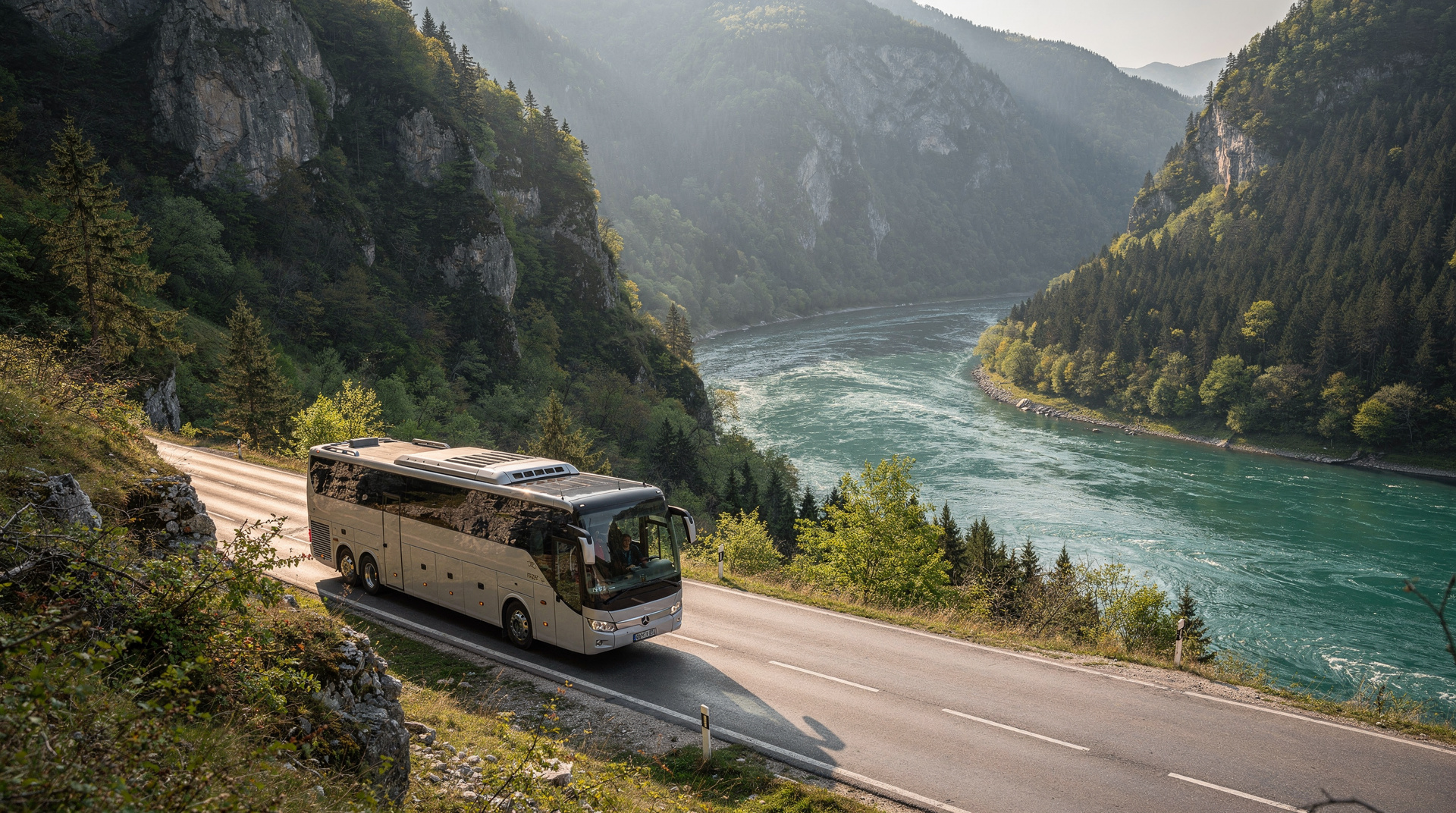
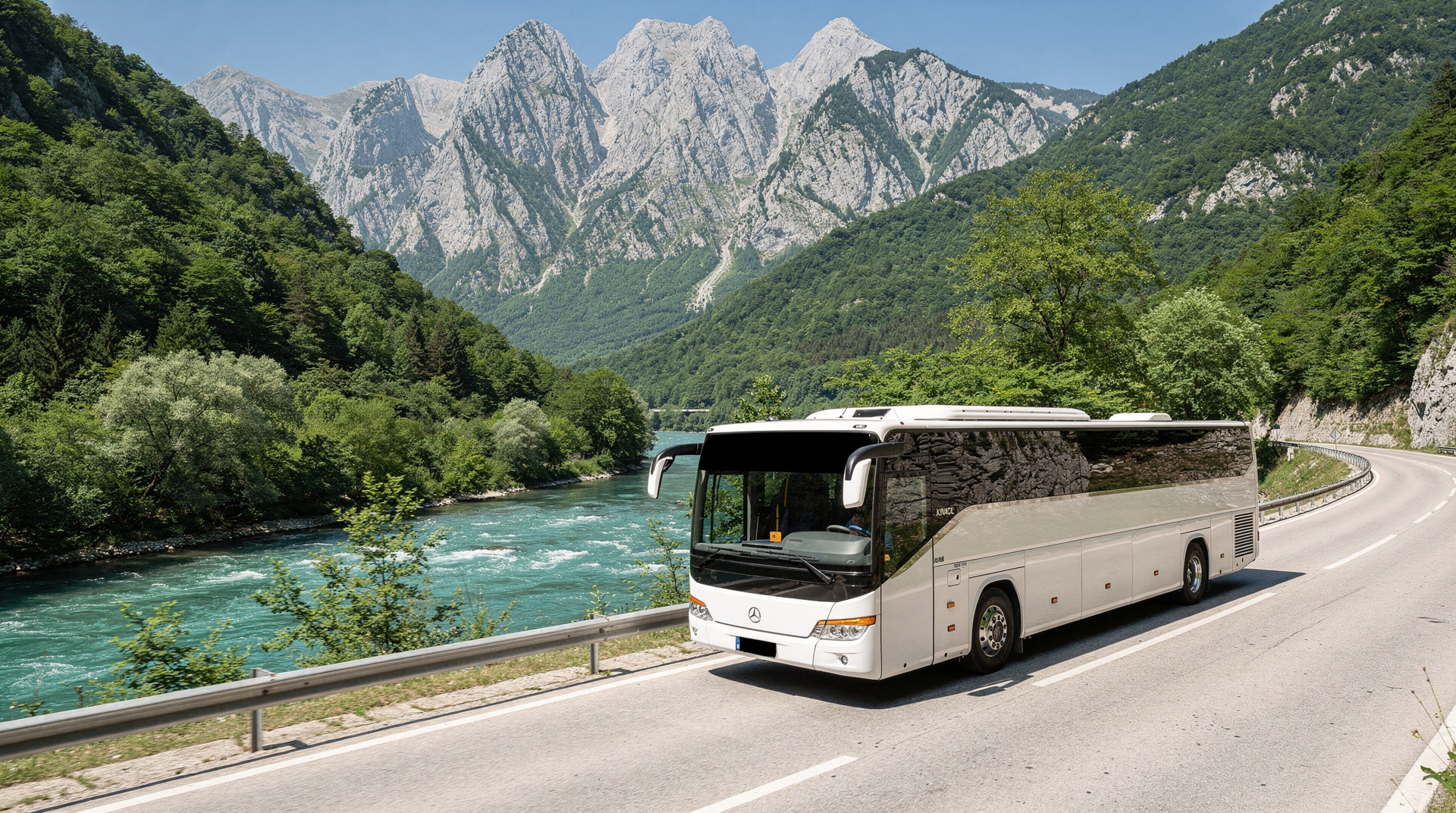
Driving gives access to mountain villages, waterfalls and national parks that buses do not reach, and lets you set your own pace on scenic routes like the Neretva canyon. Buses are cheaper and stress-free for the main Sarajevo-Mostar corridor but limit spontaneous stops. The buses in Bosnia guide and getting around Bosnia guide cover the public transport alternative in detail.
Top experiences
Bookable activities with verified prices and instant confirmation on GetYourGuide.