Sarajevo public transport guide
Sarajevo: Old Town to Modern City Walking Tour
How do you get around Sarajevo by public transport?
Trams run east–west along the main valley corridor from Baščaršija to Ilidža. Trolleybuses serve the northern hill neighbourhoods and the airport. City buses reach the suburbs. A single ticket costs 2.20 BAM.
| At a glance | |
|---|---|
| Where | Central Sarajevo valley corridor, Baščaršija to Ilidža |
| Cost | Around 2.20 BAM per single journey; day pass 7.10 BAM |
| Time needed | Trams every 8-15 minutes, 5 AM to around midnight |
| Getting there | Baščaršija tram stop is the eastern terminus and most useful starting point |
| Best time to travel | Outside rush hour (7-9 AM and 4-7 PM) for a seat and less crowding |
Sarajevo’s public transport is one of the most charming — and occasionally confusing — aspects of visiting the city. The tram network, which dates back to 1895, runs through a long narrow valley that physically defines how the city is laid out. Understanding a few key lines will make your visit far more comfortable.
The geography of Sarajevo’s transport
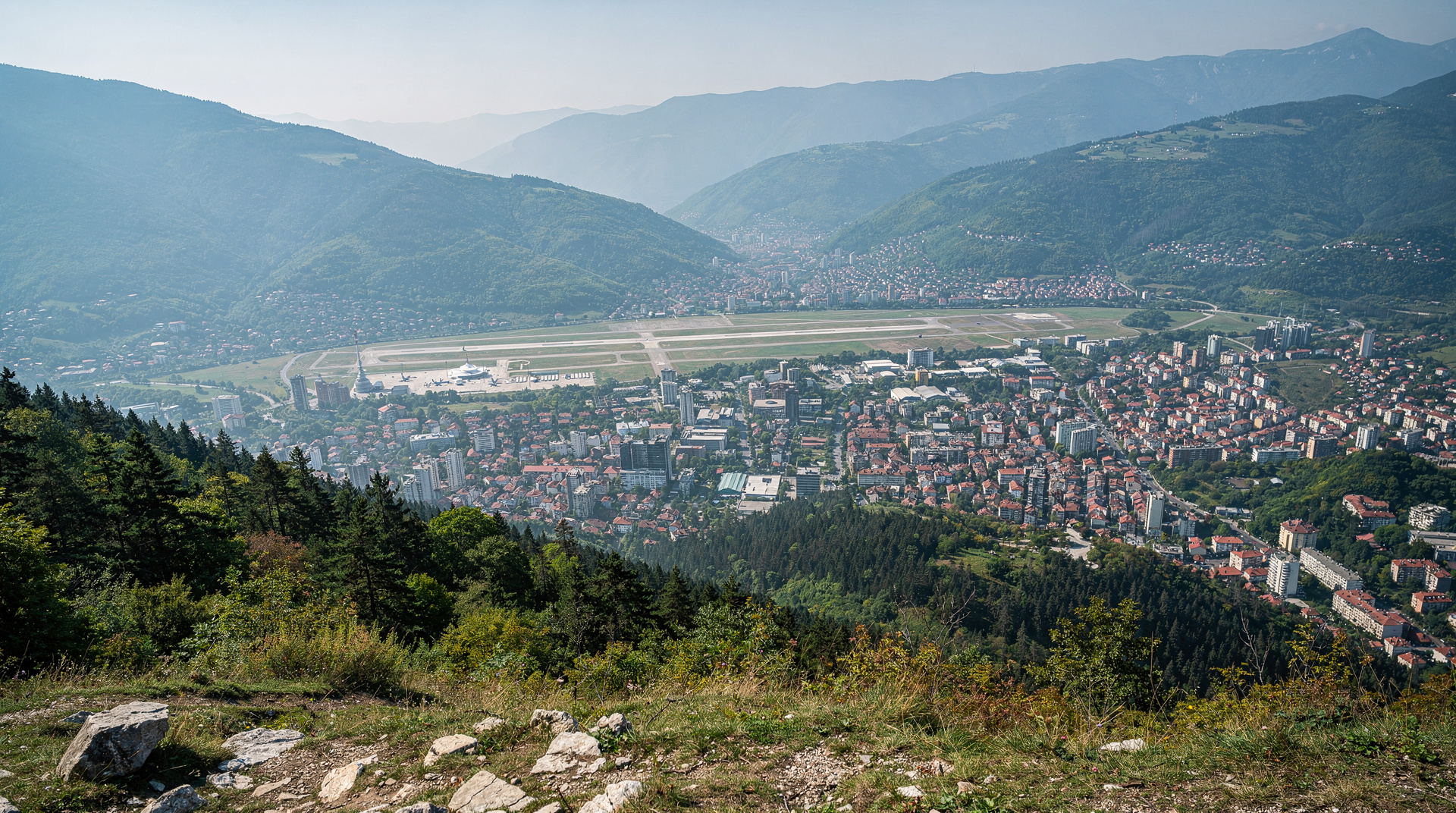
Sarajevo sits in a river valley (the Miljacka) surrounded by steep hills. This geography created a natural transport spine: trams run east–west along the valley floor, while trolleybuses and buses climb the hillside neighbourhoods. The city stretches about 12 km from the old town (Baščaršija) in the east to the suburb of Ilidža in the west.
Most of what you want to see as a tourist — Baščaršija, the war tunnel museum area, the Olympic mountains cable car base — is accessible from this main corridor.
Trams (tramvaj)
Sarajevo’s trams are operated by GRAS (Gradski saobraćaj Sarajevo) and run on a single main track along the valley. There are three main lines:
Tram 1: Baščaršija → Ilidža (the main tourist route, passes all city centre landmarks)
Tram 2: Bjelave → Ilidža
Tram 3: Nedžarići → Baščaršija
For tourists, tram line 1 is the essential service. It connects the old town at Baščaršija (start of the Old Town) with the city centre (National Theatre, the pedestrianised Ferhadija Street zone, the Holiday Inn — famous for its wartime role as the journalists’ base). From Ilidža, you can reach Vrelo Bosne nature park on foot or by horse-drawn carriage.
Trams run from approximately 5 AM to midnight, with frequency every 8-15 minutes on the main line.
Sardine conditions during morning and evening rush hours are real. Outside rush hours, trams are comfortable and usually have seats.
Trolleybuses (trolejbus)
Trolleybuses connect the hillside neighbourhoods and provide some of the most useful tourist routes.
Line 103: The most important route for visitors — runs from Baščaršija through the city centre, south through Ilidža and on to Sarajevo Airport (SJJ). Takes about 30-40 minutes from the old town to the airport.
Line 101/102: Connect central Sarajevo with the western neighbourhoods. Less useful for tourists.
Line 104: Baščaršija to Alipašino Polje via a northern route.
Trolleybuses share the tram corridor in central Sarajevo, then branch off towards hillside districts and the airport. They are quiet and comfortable — electric, of course.
A note on the airport bus: Trolleybus 103 is the official public transport connection to SJJ airport. It terminates at the departure hall and serves arrivals as well. For a full airport transport guide, see the Sarajevo Airport guide.
City buses (autobus)
GRAS operates a large network of bus routes serving the wider Sarajevo area, including suburbs beyond the tram/trolleybus lines. For tourists, buses are most useful for:
- Reaching Trebević mountain cable car base (eastern hills)
- The suburb of Hrasnica near the Tunnel of Hope area
- Eastern Sarajevo and the city’s outskirts
Bus routes are less intuitive than trams and not as well signposted. Google Maps has reasonable coverage of Sarajevo’s GRAS network — use it to plan specific journeys.
Tickets and payment
Single journey ticket: 2.20 BAM (~€1.12) — valid for one journey, no transfers
Day pass: available at some kiosks, approximately 7.10 BAM
Weekly pass: available at GRAS offices
Where to buy tickets:
- GRAS kiosks (small booths near major tram/trolleybus stops)
- Newsstands (trafike) throughout the city
- From the driver: you can buy on board, but have exact change — drivers appreciate it
Validation: Some older trams have conductors who check tickets. On newer trams, you validate at the ticket machine inside the tram. Keep your ticket for inspection.
Contactless payment is not yet standard on Sarajevo public transport (2026). Cash or pre-purchased paper tickets are the norm.
Key stops for tourists
| Stop name | What’s nearby |
|---|---|
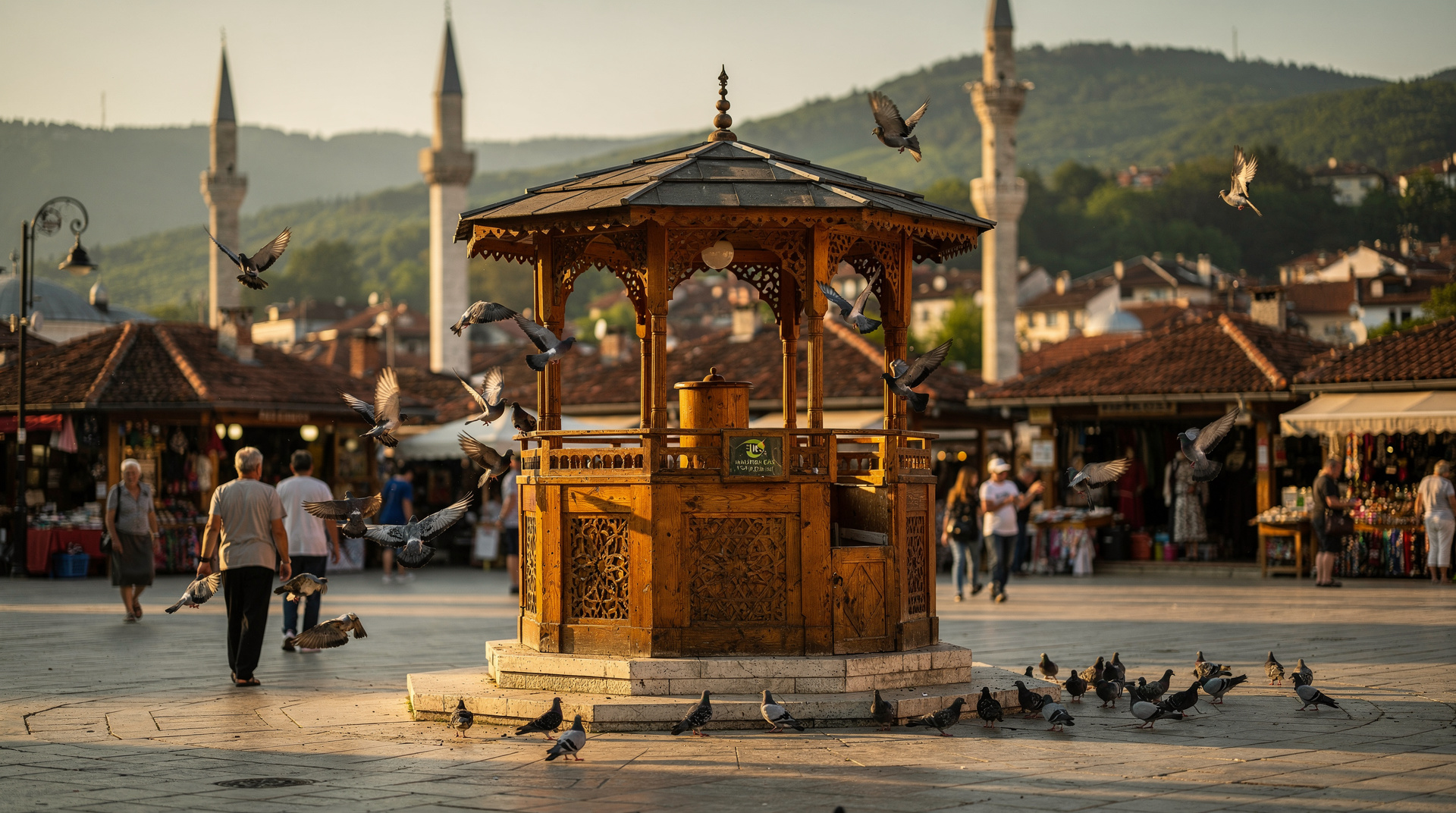
| Baščaršija | Old town, bazaar, mosque, starting point |
| Vijećnica | National Library (beautiful Austro-Hungarian building), eastern old town |
| Latinska ćuprija | Latin Bridge (where Franz Ferdinand was shot) |
| Ferhadija | Pedestrian shopping street, café zone |
| Narodno pozorište | National Theatre, war memorial eternal flame |
| Marindvor | Holiday Inn, Bosnian Parliament area |
| Ilidža | Vrelo Bosne nature park terminal |
Getting around on foot
Sarajevo’s compact old town is almost entirely walkable. Baščaršija to the Latin Bridge is a 5-minute walk; the National Theatre is about 25 minutes on foot from Baščaršija along the Ferhadija pedestrian street. Walking is often the most practical way to explore the historic centre.
Hill neighbourhoods (Kovači, Vratnik, Logavina) require some climbing but are well worth the effort for views over the valley.
Taxis and ride apps
Bolt is the most reliable app-based taxi service in Sarajevo. Download it before you arrive — it’s significantly cheaper than hailing street taxis and you see the price in advance.
Radio Taxi (official yellow taxis) are metered and generally honest. Starting fare is around 1.50-2 BAM, then 0.80-1 BAM/km. A ride across the city centre should be 5-10 BAM.
Avoid informal taxi touts offering flat rates, particularly at the bus station and near the airport. Always insist on the meter.
Walking tours and city orientation
The best way to understand Sarajevo’s layout — the Ottoman eastern quarter, the Austro-Hungarian ring, the socialist Yugoslavia west — is to take a guided walking tour on your first day. This also orients you to where the main tram stops are and what neighbourhood you’re in.
Sarajevo old town walking tour with a local guideWalking tours typically start at Baščaršija — the same point where the tram drops you — and cover the essential streets in 2-3 hours.
If you would rather see the wider city without working out stops and connections yourself, a full-day guided tour of the main sights links the old town, the Austro-Hungarian centre and the outer districts in one go, with transport handled for you. It suits travellers with limited time, who would otherwise spend part of the day waiting at stops.
Getting to day-trip destinations from Sarajevo
For most day trips beyond Sarajevo, public transport becomes more complex. Buses to Mostar, Jajce and Srebrenica depart from the East Bus Terminal (Autobuska stanica Sarajevo Istok, near Skenderija), which is served by trams on the main line.
For destinations like Lukomir village, Bjelašnica ski resort, or Sutjeska National Park, public transport does not reach adequately — guided tours or a rental car are necessary. See the day trips from Sarajevo guide for options.
Planning your days around the tram line
Because the main corridor is so linear, the easiest way to organise a visit is to treat the tram as a spine and hang each day’s sights off it. A first morning in Baščaršija and the surrounding old town needs no transport at all; the tram becomes useful when you head west towards the Austro-Hungarian streets described in the Austro-Hungarian Sarajevo guide and the museums covered in the museums of Sarajevo guide. If you are building a longer stay, the Sarajevo 4-day deep dive shows how to pace these areas without constant backtracking.
Where you sleep changes how much you rely on public transport. Staying close to Baščaršija or the pedestrian centre means you can walk most of the day and ride only for longer hops; staying further west towards Ilidža makes the tram part of every outing. The Sarajevo where to stay guide compares the neighbourhoods, and the Ilidža and Vrelo Bosne destination page explains why the western terminus is worth a visit in its own right. For the park itself, see the Vrelo Bosne guide.
Using transport for the city’s history sites
Many of the places visitors come to Sarajevo for sit near the tram line, which makes the network a practical tool rather than a novelty. The Sarajevo war tour guide and the page on Sniper Alley follow the same western stretch of road the trams use, so riding along it gives useful context before you stop and walk. The Tunnel of Hope guide explains the museum on the airport side of the city, and it is worth reading before you decide between a taxi and a tour. For a quieter reflection on the city’s past, the Sarajevo Roses memorials guide points out markers you will pass on foot.
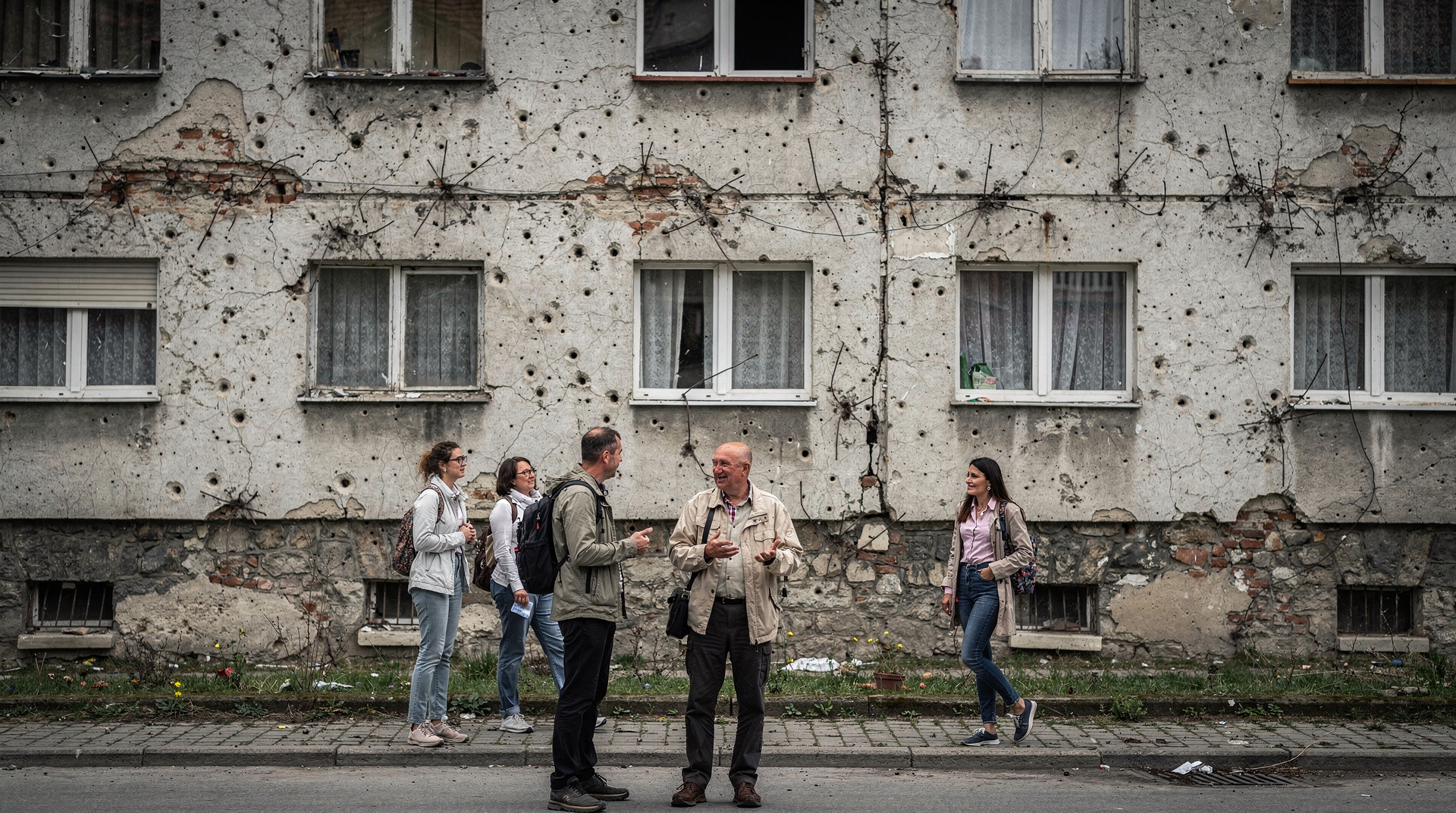
If you prefer context from someone who lives here, a guided walking tour that looks beyond the headlines pairs well with a tram ride, since the guide explains the recent history of the streets you then cross by tram.
If you want to see how the city’s different traditions sit side by side, the Sarajevo meeting of cultures guide is a good companion to a slow tram ride, since the carriage window moves you through several of those layers in a single journey.
Mountains and the Olympic heritage
The hills above the city are where public transport thins out. The cable car and mountain areas around Trebević are among the easier excursions to organise, and the Sarajevo 1984 Winter Olympics guide gives the background to the abandoned bobsled track you may want to see. For anything further into the mountains, read the Bjelašnica and Igman destination page and the best day hikes from Sarajevo guide before you commit, as timetables and connections are not designed around hikers.
Practical habits that make rides easier
A few small habits help. Look at which way the tram is heading before you board, because the same stop serves both directions and the terminus name on the front is your guide. Keep your valuables zipped away during crowded rides; the Sarajevo tourist traps guide covers the usual petty annoyances, and the Bosnia scams to avoid guide is useful if a taxi driver quotes a suspicious flat rate. For general reassurance about moving around at night, see the is Bosnia safe guide.
Travellers combining Sarajevo with other cities should also read the getting around Bosnia guide and the Bosnia by public transport itinerary, which show how the city network fits into longer rail and coach journeys. If you are heading on to the south, the Sarajevo to Mostar transport guide is the natural next read, and the Sarajevo destination page gathers everything else in one place.
Frequently asked questions about Sarajevo public transport
Which tram stop is closest to Baščaršija?
The tram stop called “Baščaršija” is right at the entrance to the old town bazaar — it’s the eastern terminus of the main tram lines and the most useful stop for tourists.
Can I buy a Sarajevo public transport card?
GRAS sells paper multi-journey cards at their offices and some kiosks. There is no tap-and-go smart card system akin to London Oyster or Berlin BVG (as of 2026). Cash or pre-bought tickets are the standard approach.
How do I get from the old town to the war tunnel (Tunnel of Hope)?
Take tram 1 or 3 towards Ilidža to the Ilidža terminus, then either walk (it’s too far) or take a taxi to the Tunnel of Hope Museum (Tunel spasenja). Alternatively, take trolleybus 103 part of the way — check GRAS maps. Most tourists find a taxi or guided tour more practical for this specific journey.
Is public transport safe at night in Sarajevo?
Generally yes. The main tram corridor is well-lit and used by locals late at night. Avoid isolated stops in poorly lit outer suburbs. Trams run until midnight; after that, taxis or Bolt are the option.
How does the Sarajevo public transport compare to other Balkan cities?
Sarajevo’s tram network is one of the older in the region and charming in a heritage sense. It is not as frequent or modern as Ljubljana or Belgrade’s systems, but it is functional, cheap and genuinely useful for navigating the city’s main axis.
Which mode to choose
| Mode | Best for | Cost | Notes |
|---|---|---|---|
| Tram (lines 1-3) | Old town to city centre, Ilidža | ~2.20 BAM | Most frequent, most tourist-relevant |
| Trolleybus (103) | Airport, hillside districts | ~2.20 BAM | Line 103 is the official airport connection |
| City bus | Suburbs, Trebević cable car base, Hrasnica | ~2.20 BAM | Less signposted; use Google Maps |
| Bolt / taxi | Late night, day trips, direct routes | 5-10 BAM city centre ride | More reliable than street taxi touts |
| Walking | Old town, Ferhadija to National Theatre | Free | Often faster than waiting for a tram over short distances |
Getting from the centre to day-trip departure points
Beyond the main tram corridor, visitors heading out of Sarajevo for the day need to know where buses actually leave from. Long-distance and regional buses to Mostar, Jajce, Srebrenica and other destinations depart mainly from the East Bus Terminal near Skenderija, itself reachable by tram. For an overview of intercity coach travel once you’re at the terminal, see the buses in Bosnia guide. If you’re driving instead, the renting a car in Bosnia guide and driving in Bosnia guide cover what public transport can’t reach, including Lukomir and Sutjeska National Park.
Top experiences
Bookable activities with verified prices and instant confirmation on GetYourGuide.