Bosnia 10-day itinerary
From Sarajevo: Travnik, Jajce, Pliva Lakes & Watermills Trip
Ten days gives you the breathing room to push beyond the classic Sarajevo–Mostar loop and discover the royal fortresses of central Bosnia and the dramatic river-carved east. This route works best with a rental car — pick it up at Sarajevo International Airport (SJJ) and return it there on day ten.
| At a glance | |
|---|---|
| Region | Sarajevo, central Bosnia, the east (Višegrad, Sutjeska), Herzegovina |
| Time needed | 10 days, single loop starting and ending in Sarajevo |
| Getting around | Rental car recommended; some legs possible by bus with more planning |
| Cost | Mid-range, around 60–90 EUR/day per person including car, food and entries |
| Best time | May–June or September–October |
Days 1–2: Sarajevo — the crossroads city
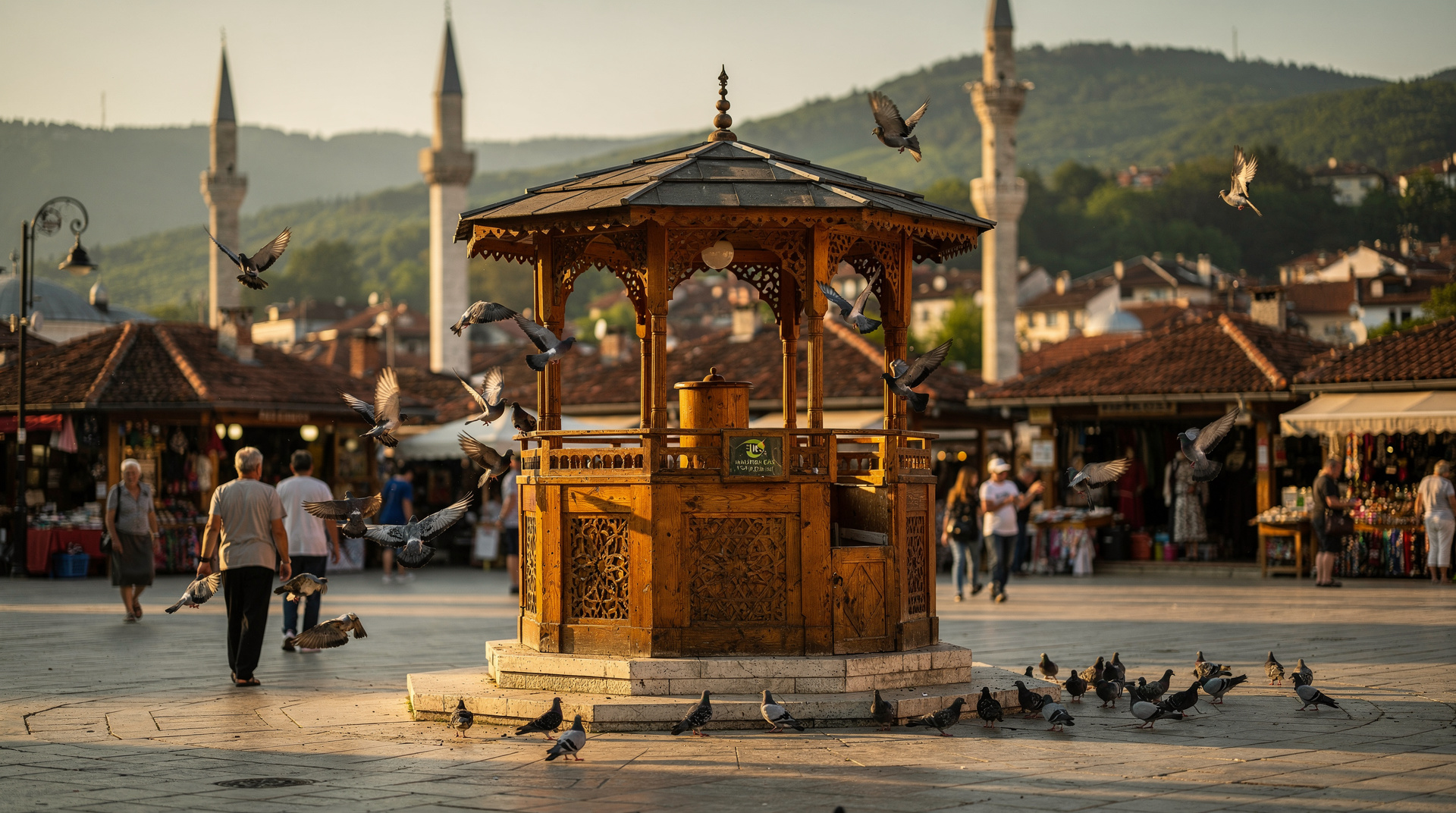
Fly into Sarajevo and drop your bags in Baščaršija. On day one, join a guided Old Town walking tour that threads through the Ottoman quarter, the Gazi Husrev-beg Mosque and the Austro-Hungarian boulevard known as the “Sarajevo street.” The café at Inat Kuća on the Miljacka bank is the right spot for your first Bosnian coffee — served with a small piece of loukoum and a glass of cold water.
Day two belongs to war history. Visit the Tunnel of Hope (Tunel spasa) in the Butmir suburb — a 800-metre wartime lifeline dug beneath the UN-controlled airport runway — and walk the former Sniper Alley. The War Childhood Museum near Marijin Dvor is small but quietly devastating, and admission costs only 7 BAM (~3.50 EUR). End the evening in the artisan district of Kovači with ćevapi and a glass of Herzegovinian wine.
Budget tip: Accommodation in Baščaršija runs 50–90 BAM (~25–46 EUR) for a guesthouse double; mid-range hotels start around 130 BAM (~66 EUR).
Day 3: Travnik & Jajce — Bosnia’s royal heartland
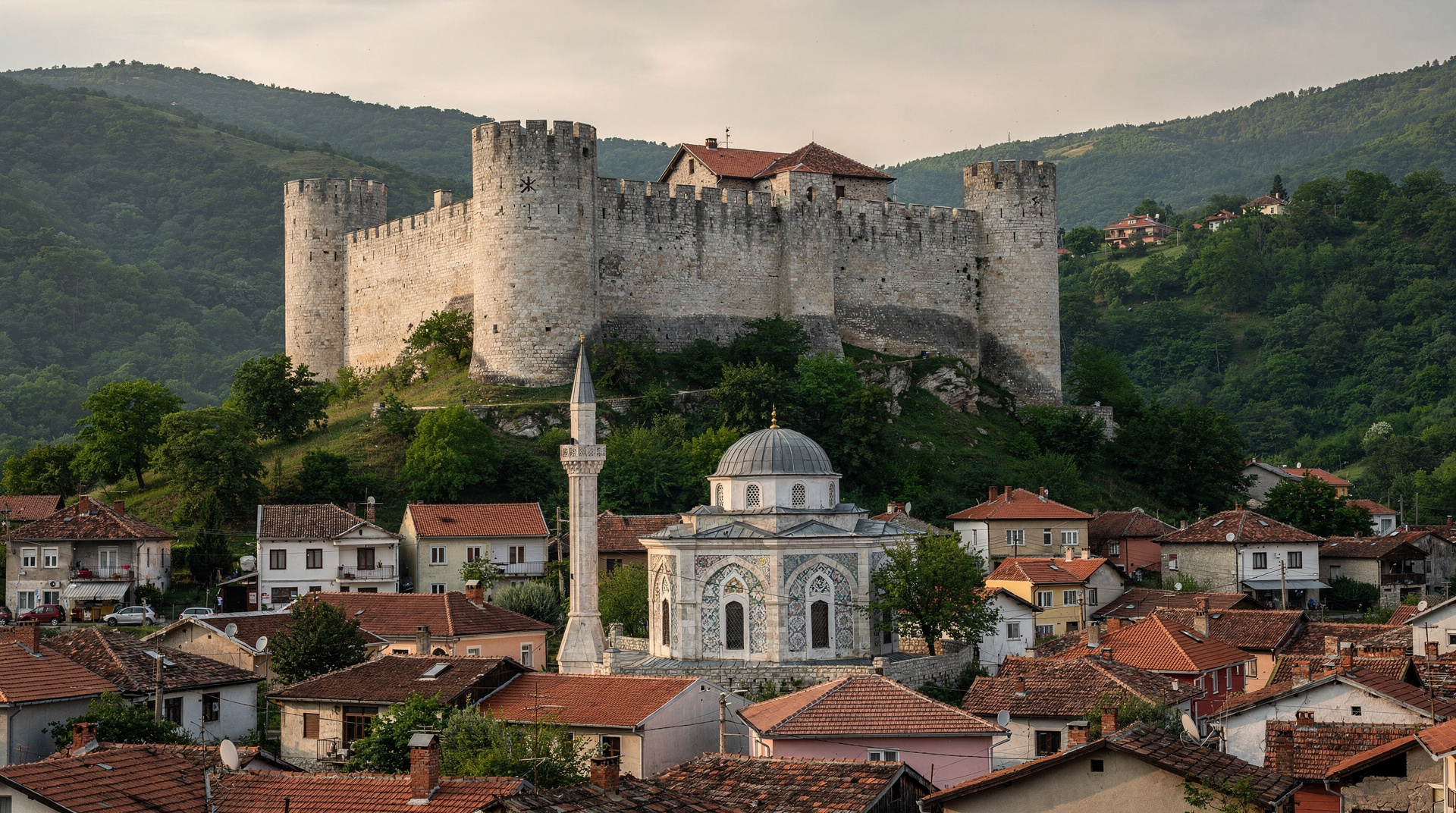
This is a long drive day (~2 h 30 min north-west on the M17 and M5), so start early. Travnik is best appreciated in two hours: the colourful clock tower, the Many-coloured Mosque (Šarena džamija) and the imposing Ottoman fortress above town are all walkable. Grab a burek from one of the bakeries on the main street — Travnik burek is famously flakier than the Sarajevo version.
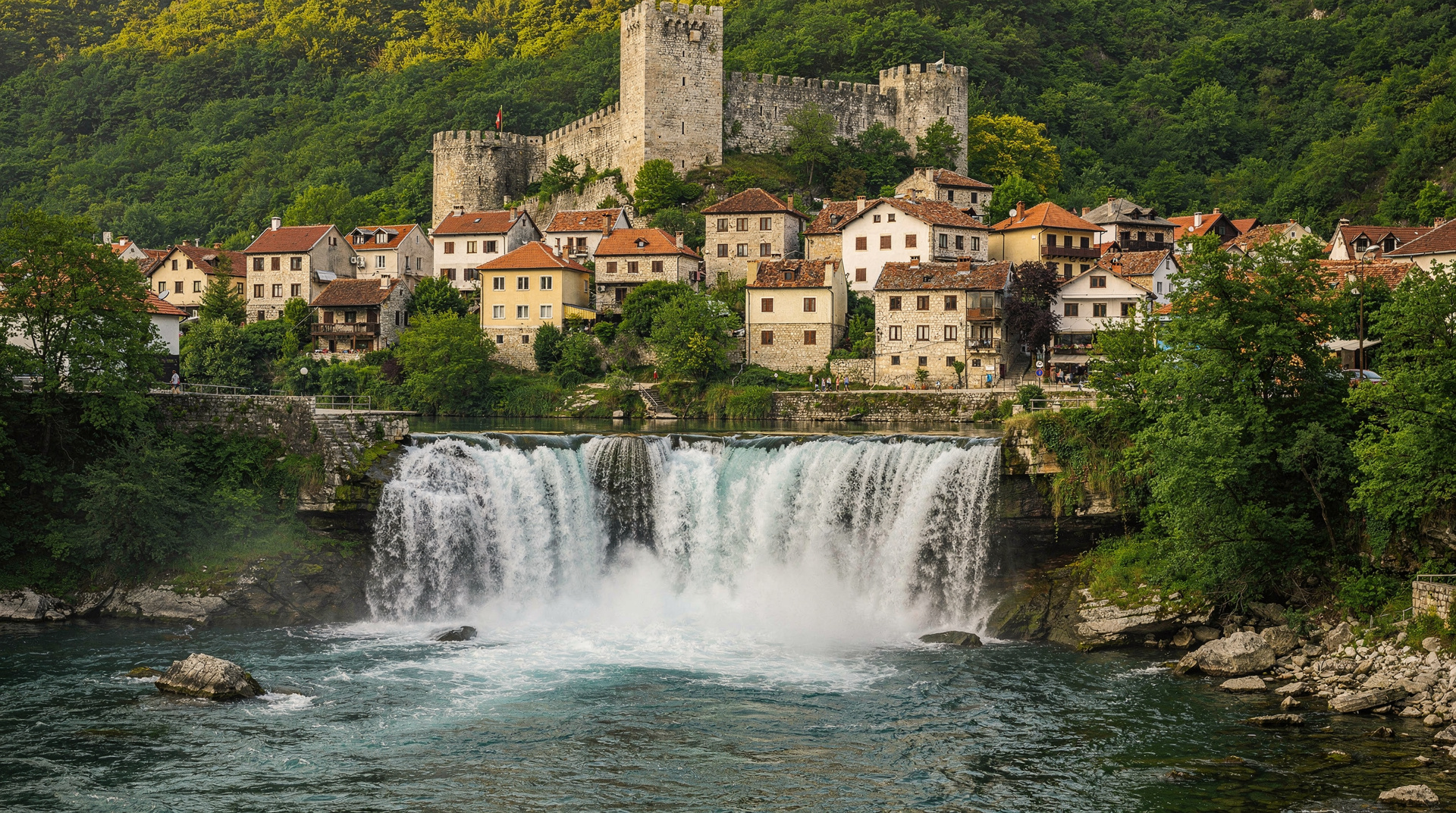
Forty minutes further west, Jajce earns its reputation as one of Bosnia’s most photogenic towns. The 17-metre Pliva waterfall drops inside the city boundary (unique in Europe for a town waterfall of this scale), and the Lukavica hill fortress above offers panoramic views for the price of a 20-minute climb. The Pliva Lakes watermills — a cluster of wooden structures on an isthmus between two lakes — are photogenic in any season. Overnight in Jajce; guesthouses average 80–110 BAM (~41–56 EUR).
Day 4: Jajce to Sarajevo via the back roads
The mountain road south (via Han Bila and the Vlašić plateau) takes about 2 hours 45 minutes but passes through genuinely unspoilt landscapes. Stop at the Pliva Lakes once more in the morning light before the tourist coaches arrive. Back in Sarajevo, this evening is free for the Baščaršija night market and a meal at one of the riverside mehana restaurants.
Day 5: Sarajevo to Višegrad — Andrić country
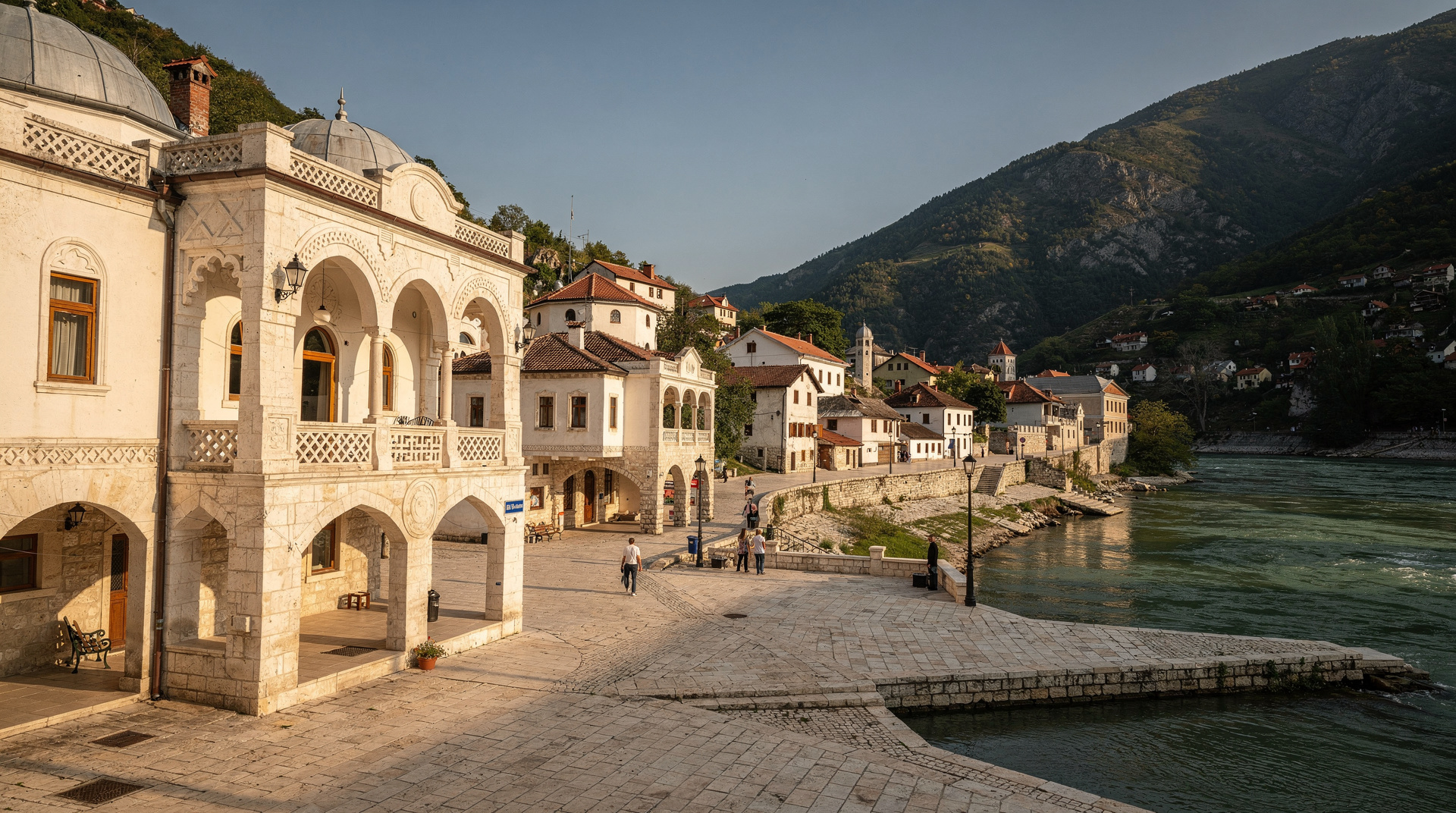
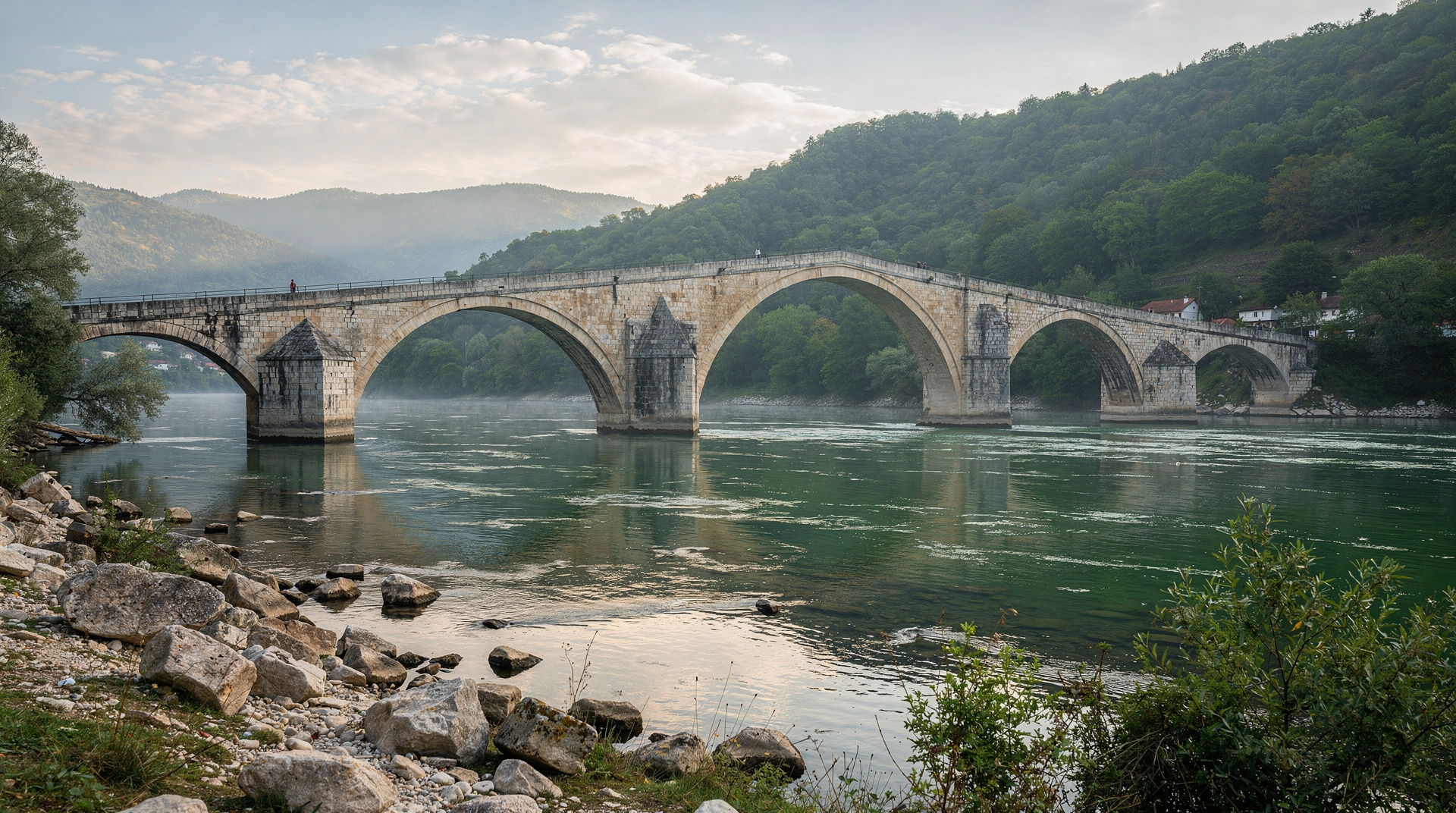
Head east on the E73/M20 towards Višegrad (about 2 h 30 min). The drive through the Prača valley and past the deep-blue Jablanica reservoir is one of the most scenic in Bosnia. Višegrad is famous for two things: the UNESCO-listed stone bridge built by Ottoman architect Sinan in the 16th century (the setting for Ivo Andrić’s Nobel-winning novel The Bridge on the Drina) and the controversial Andrićgrad neo-historical town built by film director Emir Kusturica. Take a guided day tour from Sarajevo if you prefer not to self-drive, though with a car you have the option of continuing on to Foča for the night (45 min further south).
Driving note: The road from Sarajevo to Višegrad involves mountain passes; in winter (November–March) carry snow chains.
Day 6: Foča to Sutjeska National Park
If you overnighted in Višegrad or Foča, the approach to Sutjeska National Park is about 1 hour south on the M20. Sutjeska is the oldest national park in the former Yugoslavia and home to Perućica, one of Europe’s last primeval forests. Entry to the park is free; guided hikes into Perućica require a park ranger (book at the Tjentište visitor centre, ~30 BAM per person). The Skakavac waterfall inside Perućica is technically off-limits without a ranger — worth booking ahead.
For adventure-seekers: the Tara River canyon on the Bosnia–Montenegro border is the deepest gorge in Europe and a world-class rafting destination. Day-trip rafting runs depart from Foča or Šćepan Polje from April to October.
Day 7: Sutjeska to Konjic
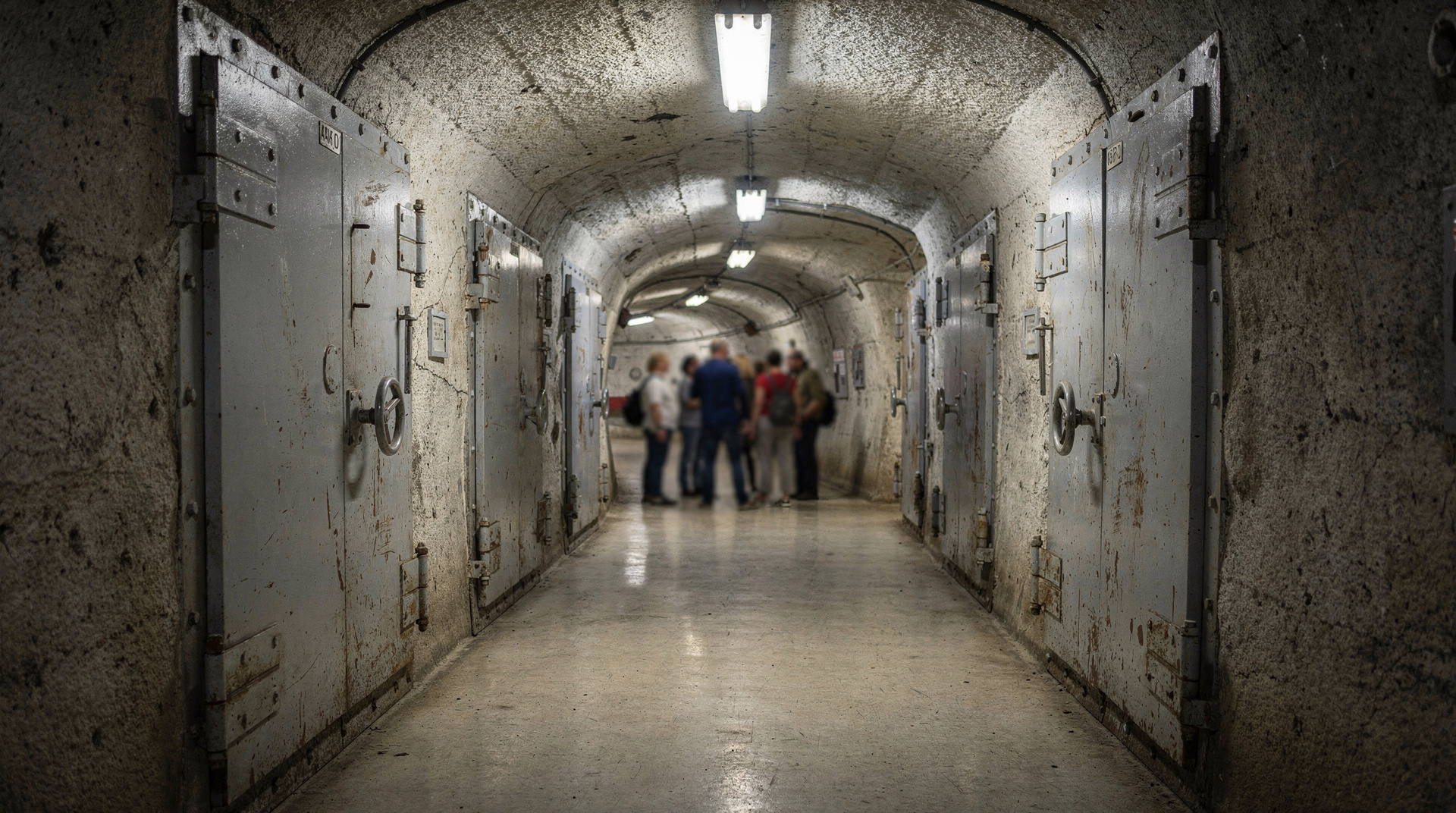
Driving time from Tjentište to Konjic is about 2 hours via Foča and the Neretva canyon road. Konjic’s covered wooden bridge over the Neretva — rebuilt post-war — is one of the most photographed in the country. The afternoon’s main attraction is Tito’s Bunker, known officially as ARK D-0: a Cold War underground complex carved into the Zlatar mountain during the 1950s to shelter Yugoslav leadership from a nuclear strike. It was declassified in 1992 and is now open for tours (admission ~30 BAM). Book the ARK D-0 visit at least a day in advance, especially in July–August.
Days 8–9: Mostar & Herzegovina
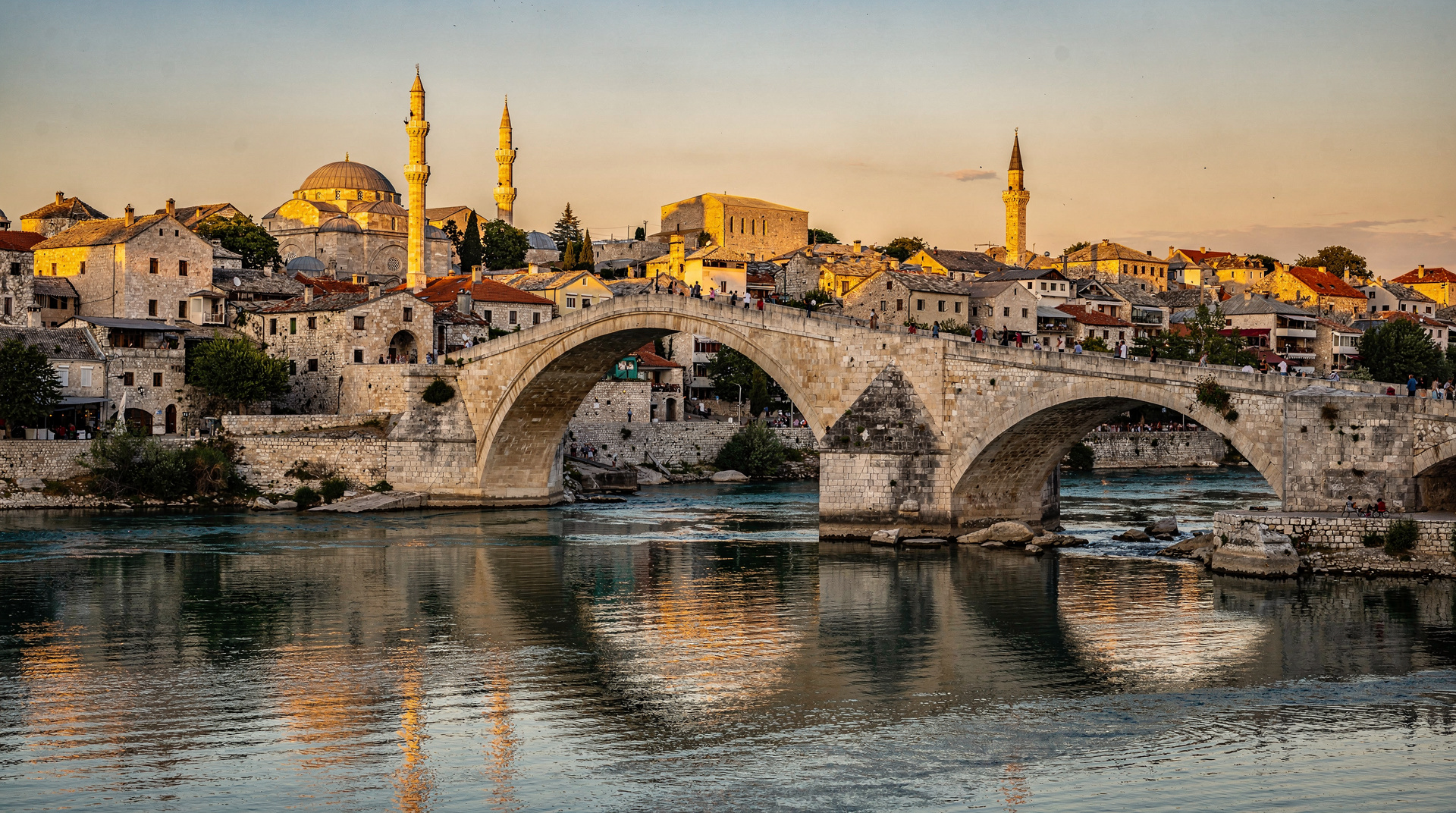
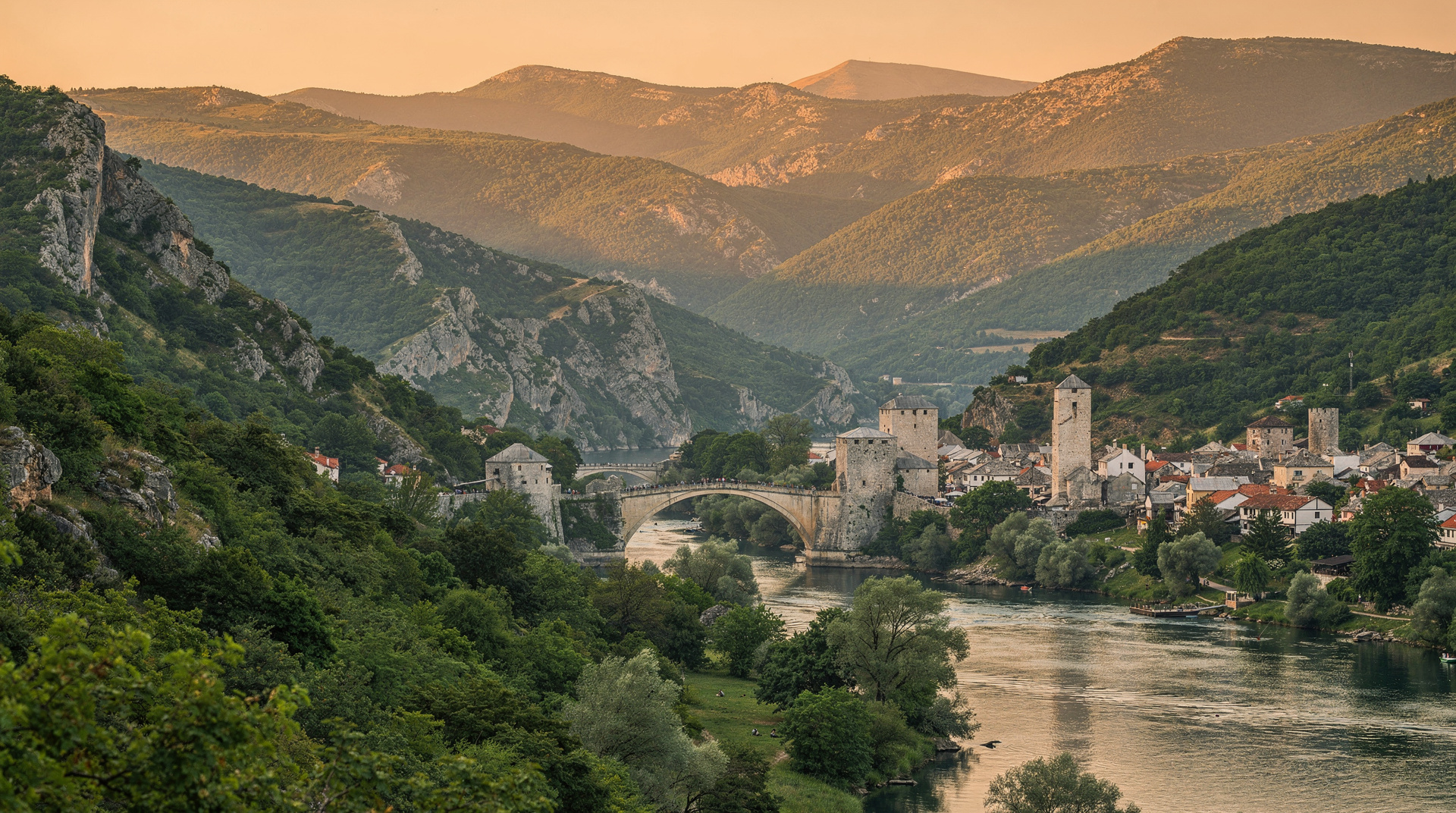
It is 50 minutes from Konjic south to Mostar on the M17 through the spectacular Neretva gorge — one of the most dramatic drives in the Balkans. Check into a guesthouse in the old town and walk Stari Most at dusk when the day-trip crowds have left.
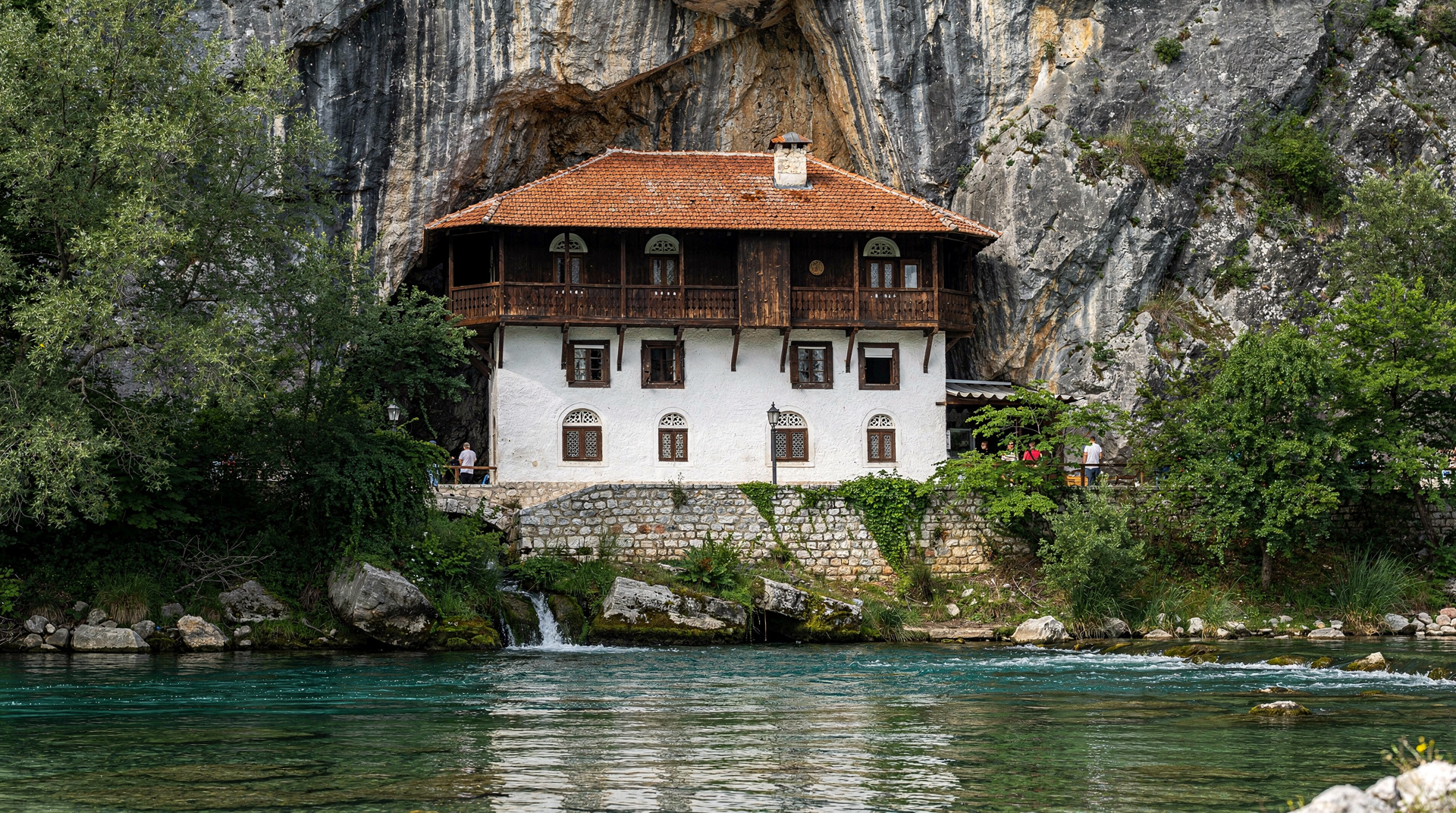
On day nine, take a guided half-day tour covering Blagaj, Počitelj and Kravice Waterfalls: the Blagaj Tekija dervish monastery sits at the base of a cliff above the source of the Buna river, Počitelj is a near-intact Ottoman walled village on a hillside, and Kravice is a 25-metre horseshoe waterfall on the Trebižat river (swim from June to September). The Mostar day tour to Blagaj, Počitelj and Kravice departs daily from the old town.
Mostar practical notes: Taxis in Mostar are mostly unmetered — agree the fare before you get in. The old town is crowded from 10:00 to 18:00 in July–August; arrive before 09:00 for a quiet walk on the bridge. Entry to most mosques is free with modest dress.
Day 10: Trebinje and return
Drive south-east from Mostar to Trebinje — about 1 hour 15 min via Neum (you will pass through a 9-km strip of Bosnian coastline on the Adriatic, crossing into and out of Croatia with minimal border formalities). Trebinje is Herzegovina at its most relaxed: a handsome Ottoman old town (stari grad) on the Trebišnjica river, lively café terraces, and the vineyards that produce Žilavka white and Blatina red within sight of the town. The hilltop church of Hercegovačka Gračanica, modelled on Gračanica monastery in Kosovo, gives views over the whole town. From Trebinje it is 3 hours back to Sarajevo airport for an evening flight, or 30 minutes to Dubrovnik airport if your routing allows.
Practical planning notes
Car rental: Pick up at Sarajevo airport; international rental companies (Budget, Hertz, Sixt) are present. Notify the agency you are entering Croatia — a brief entry via the Neum coast on day 10 counts as a border crossing. Bosnian KM fuel prices run about 2.65–2.80 BAM/litre (~1.35–1.43 EUR) for unleaded.
Money: Keep BAM on hand. ATMs are plentiful in Sarajevo and Mostar; less so in villages like Tjentište. Cards widely accepted at hotels; cash needed at small restaurants and park entrances.
Best season: May–June and September–October for mild temperatures, less tourist traffic and negotiable accommodation prices. Avoid driving the mountain roads Sarajevo–Konjic–Mostar in heavy snow (December–February).
Distances summary:
- Sarajevo → Travnik: 90 km (~1 h 20 min)
- Travnik → Jajce: 40 km (~40 min)
- Jajce → Sarajevo: 140 km (~2 h 45 min)
- Sarajevo → Višegrad: 130 km (~2 h 30 min)
- Višegrad → Foča: 45 km (~45 min)
- Foča → Tjentište (Sutjeska): 60 km (~1 h)
- Tjentište → Konjic: 110 km (~2 h)
- Konjic → Mostar: 50 km (~50 min)
- Mostar → Trebinje: 95 km (~1 h 15 min)
- Trebinje → Sarajevo: 210 km (~3 h)
Adjusting the pace
This route front-loads history (Sarajevo, Višegrad) and back-loads nature and Herzegovina. If war history is not a priority, compress days 1–2 to a single day and add the extra time to Sutjeska or Konjic for a slower hike or rafting run — see the dedicated Bosnia adventure itinerary for how those activities are best paced.
Travellers short on time should compare this against the tighter Bosnia 7-day itinerary, which drops the Višegrad–Sutjeska loop entirely and stays in the Sarajevo–Mostar corridor. Those with more time should look at the Bosnia 14-day grand tour, which adds Banja Luka and Una National Park in the northwest.
Eating well on this route
Central Bosnia and the east are less geared to tourism than Mostar, so restaurant quality varies more. In Travnik, stick to bakeries near the clock tower for burek; in Jajce and Višegrad, ask guesthouse owners for a recommendation rather than relying on the first place you see. Our Bosnian food guide and burek and pita guide cover regional variations worth tasting along the way, and the Bosnian coffee culture guide explains the ritual you’ll be offered constantly.
Frequently asked questions about Bosnia 10-day itinerary
Is 10 days enough to see all of Bosnia? No single trip covers everything, but 10 days is enough to combine Sarajevo, central Bosnia, the east and Herzegovina without feeling rushed. For the northwest (Banja Luka, Una National Park) you would need the 14-day grand tour instead.
Can I skip the car and use buses for this route? Partially. Buses connect Sarajevo, Mostar, Trebinje and Višegrad reasonably well, but Jajce, Travnik and Sutjeska National Park are much harder without a car — see the getting around Bosnia guide for realistic bus timings before deciding.
Top experiences
Bookable activities with verified prices and instant confirmation on GetYourGuide.