Franz Ferdinand assassination — where WWI started in Sarajevo
Sarajevo: Franz Ferdinand Assassination & the Start of WWI
Where did World War I start in Sarajevo?
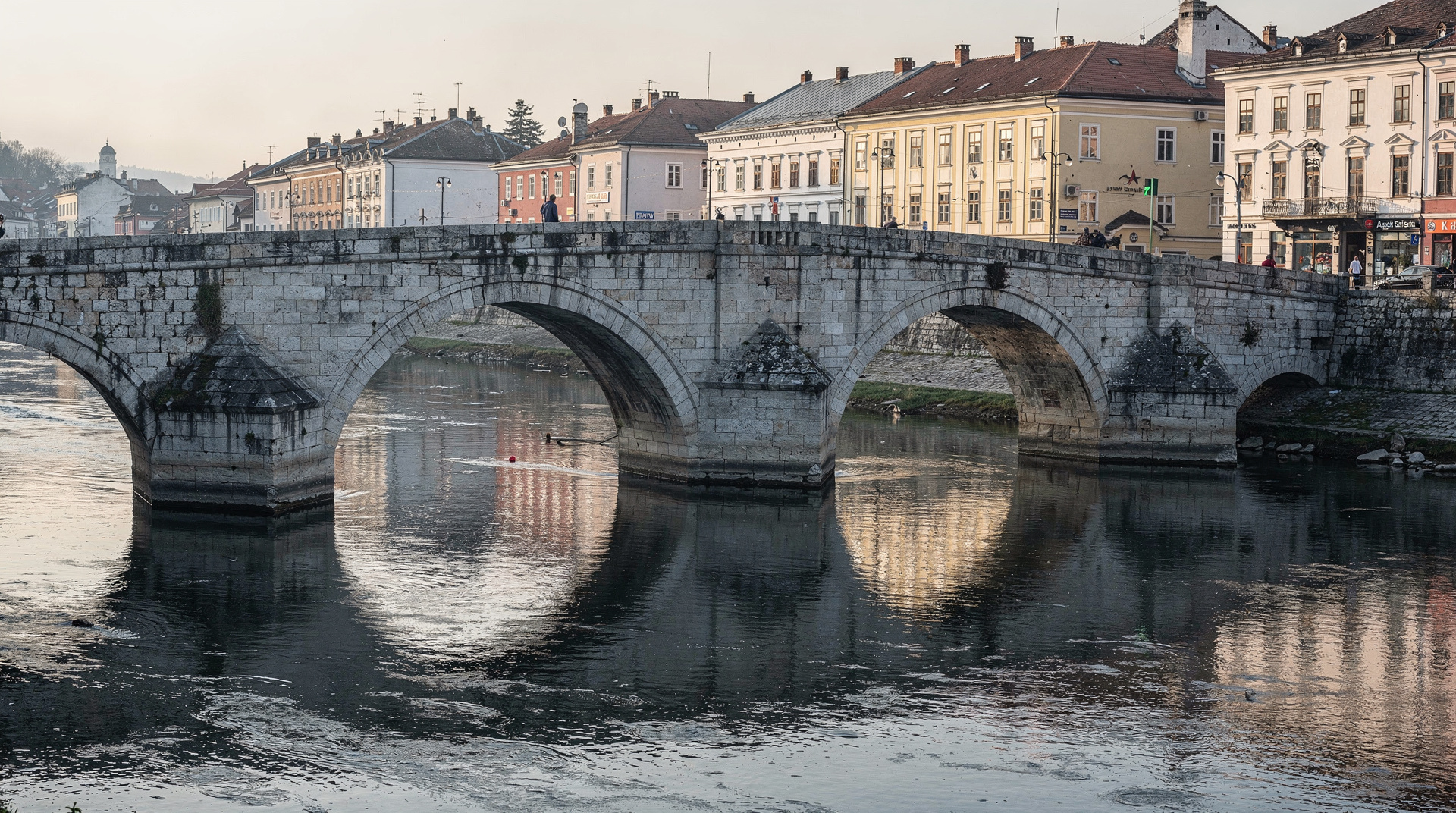
Archduke Franz Ferdinand of Austria-Este was assassinated on 28 June 1914 on Franz Josef Street (now Zelenih beretki) near the Latin Bridge over the Miljacka river. The exact spot is marked, and the adjacent Museum of Sarajevo 1878–1918 documents the events leading to the First World War.
On the morning of 28 June 1914, a nineteen-year-old student stood on a Sarajevo street corner and fired two shots that triggered the First World War. The assassination of Archduke Franz Ferdinand, heir to the Austro-Hungarian throne, set off a chain of ultimatums, mobilisations and declarations that drew every major European power into a conflict that killed seventeen million people.
Walking to the spot today — the corner near the Latin Bridge, on the right bank of the Miljacka river, five minutes from the old town’s main bazaar — takes about fifteen minutes from most Sarajevo hotels. It is one of the most historically significant small patches of pavement in the modern world.
| Where | Corner of Zelenih beretki street, by the Latin Bridge, old town Sarajevo |
| Cost | Site itself is free; the Museum of Sarajevo 1878-1918 is around 6 BAM |
| Time needed | 45-60 minutes for the museum, plus 15-20 minutes at the bridge and plaque |
| Getting there | 10-15 minute walk from most old-town hotels or from Baščaršija |
| Best time | Early morning or late afternoon, when the old town is quieter and light on the Miljacka is best for photos |
The political context: Bosnia under Austria-Hungary
Bosnia was annexed by Austria-Hungary in 1908 following thirty years of Austro-Hungarian administration. The annexation was controversial and deeply resented by Serbia, which had hoped to incorporate Bosnia (with its large South Slav population) as part of a greater Serbian state. Among Bosnian Serbs and Croats, there was growing agitation for South Slav unification — a movement known as Yugoslavism.
The years 1908–1914 were marked by increasing nationalist violence in the Balkans. The two Balkan Wars of 1912–1913 had reshaped the region and emboldened Serbian nationalists. By 1914, several Bosnian nationalist groups were in contact with officers of the Serbian military intelligence, known as the Black Hand.
Gavrilo Princip and his co-conspirators had been trained in Serbia and provided with Browning pistols and hand grenades before crossing the border into Bosnia. The group of seven conspirators positioned themselves along the Appel Quay — the route planned for the Archduke’s motorcade — on the morning of 28 June 1914.
The day of the assassination
Franz Ferdinand had arrived in Sarajevo on 26 June with his wife Sophie, Duchess of Hohenberg. The visit was both a ceremonial inspection of Austro-Hungarian troops and a gesture of confidence in the stability of Bosnia. The date — 28 June — was St Vitus Day (Vidovdan), the anniversary of the 1389 Battle of Kosovo, a date of deep symbolic significance to Serb nationalists.
The motorcade drove along the Appel Quay in the morning. At approximately 10:10, one of the conspirators, Nedeljko Čabrinović, threw a hand grenade at the Archduke’s car. The grenade bounced off the folded-back roof and exploded under the following vehicle, wounding several people. Franz Ferdinand’s driver accelerated and the motorcade continued to the city hall.
After the city hall reception, the Archduke decided to visit the injured officers in hospital. His driver was not clearly informed of the route change. At the intersection near the Latin Bridge, the lead car turned onto Franz Josef Street (now Zelenih beretki). Realising the mistake, the driver stopped and began to reverse.
Gavrilo Princip was standing at the corner — reportedly at a delicatessen after the failed first attempt. Finding the car stopped directly in front of him, he stepped forward and fired two shots from a distance of about 1.5 metres. The first bullet struck the Archduke in the jugular vein; the second struck Sophie in the abdomen. Both died within an hour.
The site today: Latin Bridge and the museum
The Latin Bridge (Latinska ćuprija) is a sixteenth-century Ottoman stone bridge over the Miljacka. It is one of the most photographed bridges in Sarajevo and a beautiful piece of architecture independent of its historical significance. The corner where Princip stood is a short walk north of the bridge, on the right bank.
The Museum of Sarajevo 1878–1918 occupies the corner building. It is also known informally as the Franz Ferdinand Museum. The permanent exhibition covers Sarajevo’s Austro-Hungarian period: the architecture, the urban development (the city was transformed under Austrian rule), and the events of June 1914 in considerable detail — the conspirators, the timeline of the day, the political aftermath. Admission is around 6 BAM; open most days 10:00–18:00.
On the pavement outside, you will find a small plaque and a set of footprints marking the approximate position where Princip stood. The footprints have had an interesting history — they were installed under Yugoslav rule when Princip was celebrated as a hero of South Slav liberation, removed after the war as part of debates over the assassination’s legacy, and reinstated in a more neutral commemorative form.
Sarajevo: Franz Ferdinand assassination and the start of WWIFrom Sarajevo to world war: the July Crisis
Within a month of the assassination, Europe was at war. Austria-Hungary blamed Serbia for the conspiracy and issued an ultimatum with ten demands, most of which Serbia accepted — but not all. Austria-Hungary declared war on Serbia on 28 July 1914. Russia mobilised in Serbia’s defence; Germany declared war on Russia; France and Britain were drawn in. By August 1914, the war was continent-wide.
The debate among historians about the chain of responsibility for the July Crisis has continued for over a century. The assassination was clearly the trigger; whether it was a necessary or sufficient cause of the war is a more complex question. What is not in doubt is that the events on a Sarajevo street corner on 28 June 1914 set the sequence in motion.
Guided tours of the assassination site and Austro-Hungarian Sarajevo
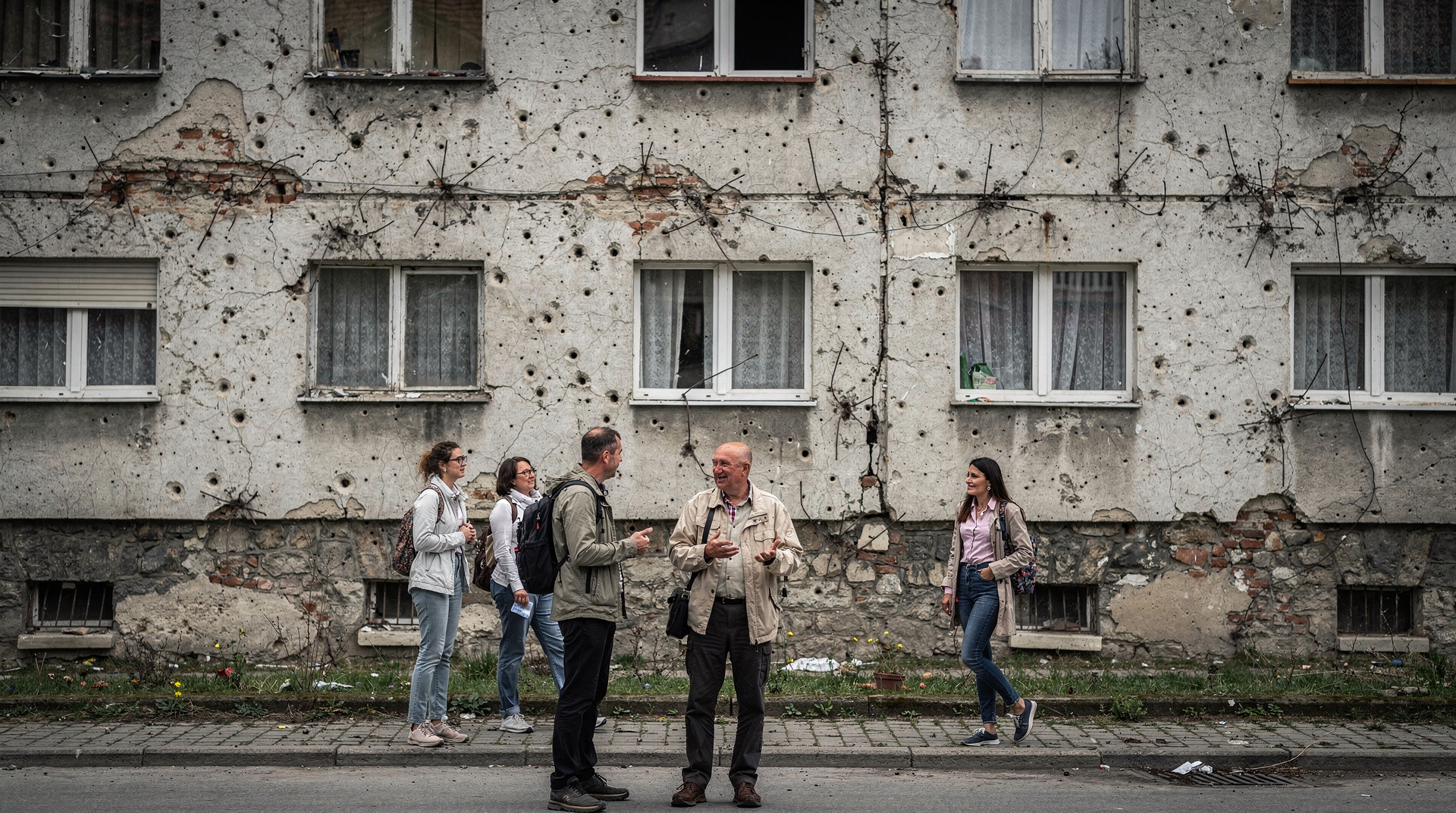
A number of guided walking tours in Sarajevo include the Latin Bridge and assassination site as part of a broader historical narrative. The best of these connect the Ottoman, Austro-Hungarian and Yugoslav periods of Sarajevo’s history into a coherent story — helping visitors understand why Sarajevo has always been a place where large historical forces intersect.
Sarajevo: Start of the First World War tourDedicated WWI-themed tours focus specifically on the political and conspiratorial background of 1914 — tracing the route of the motorcade, standing at the first ambush point on the Appel Quay, and visiting the museum. These are particularly valuable for visitors with a prior interest in the causes of WWI.
Austro-Hungarian Sarajevo: the broader architecture
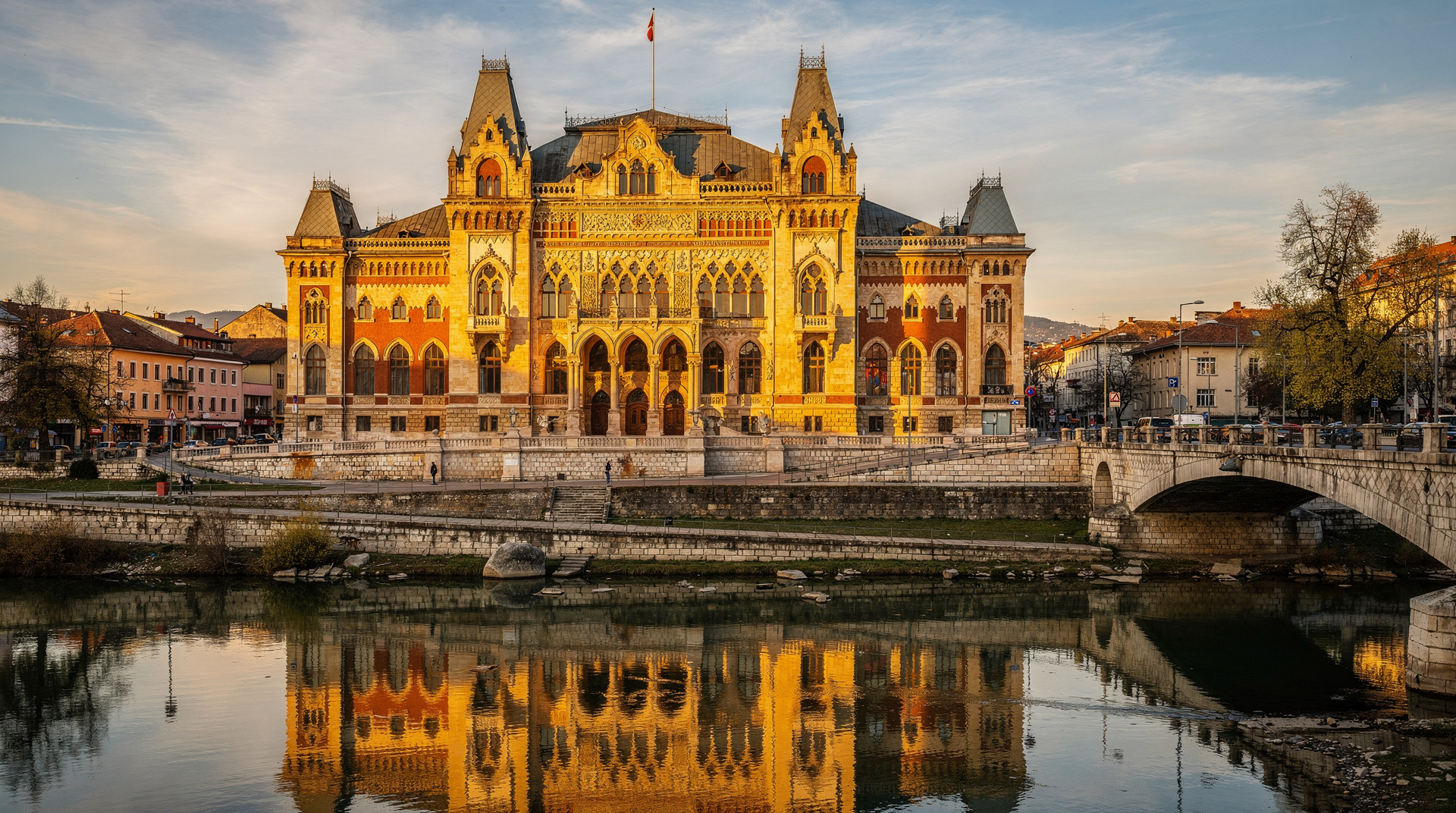
The Austro-Hungarian period (1878–1918) left a profound mark on Sarajevo’s urban landscape. Walking from the Latin Bridge westward along the Miljacka, you pass buildings in the Viennese Secessionist style that sits incongruously — and fascinatingly — alongside the Ottoman Baščaršija. The Vijećnica (City Hall / National Library), the Cathedral of the Sacred Heart, the National Museum and the Post Office are all Austro-Hungarian constructions.
Our Austro-Hungarian Sarajevo guide covers the architectural legacy in detail. For a broader picture of Sarajevo as a “meeting of cultures” across Ottoman, Austro-Hungarian and Yugoslav periods, see the Sarajevo meeting of cultures guide.
Connecting the dots: Sarajevo’s layers of history
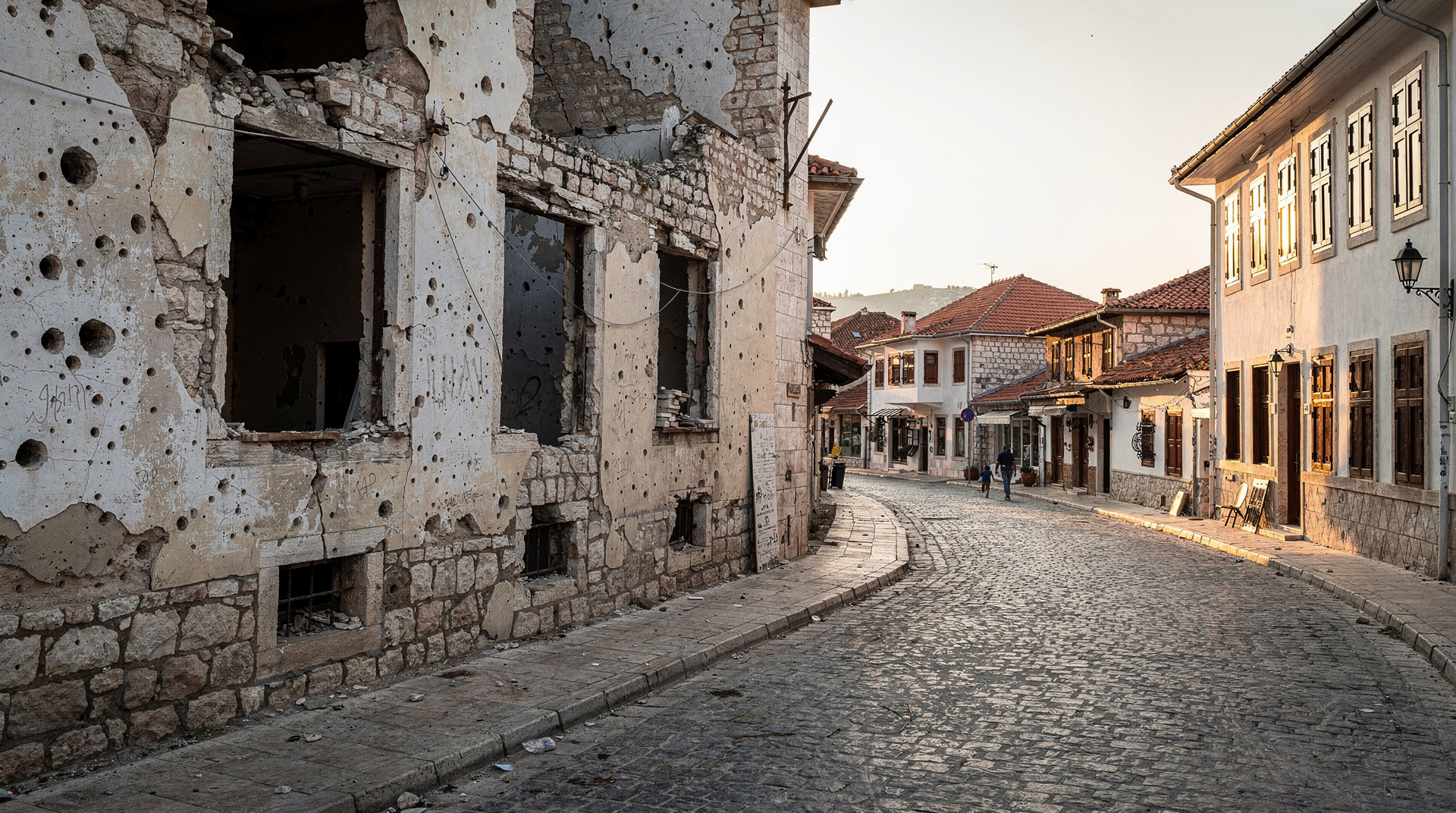
What makes Sarajevo unusual among European cities is the density of its historical layering. The same city that saw the start of the First World War also survived the longest siege of a capital in modern history. The Sarajevo war tour guide covers the 1992–1996 siege; the Bosnia history for travellers guide sets both events in a longer timeline.
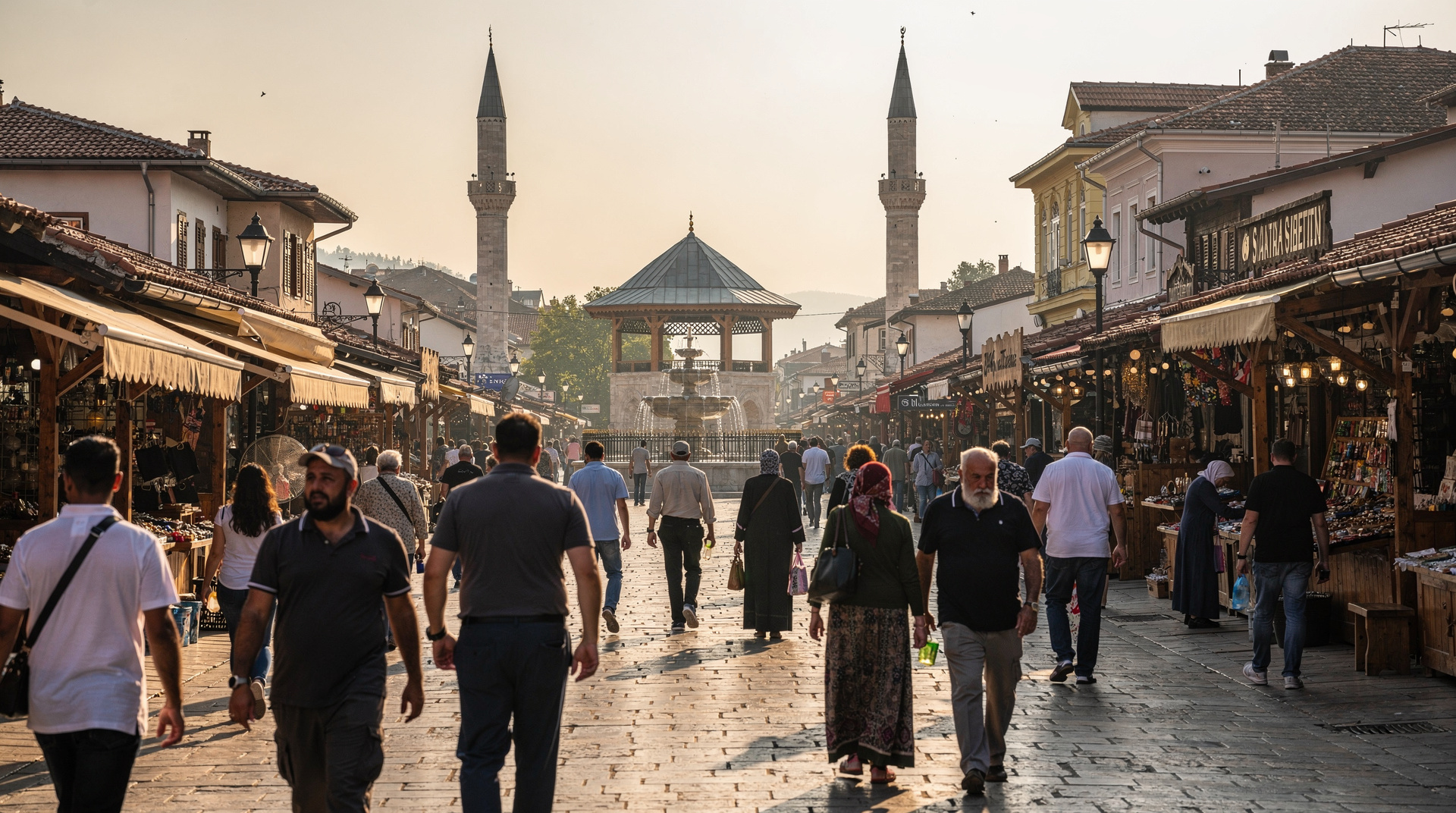
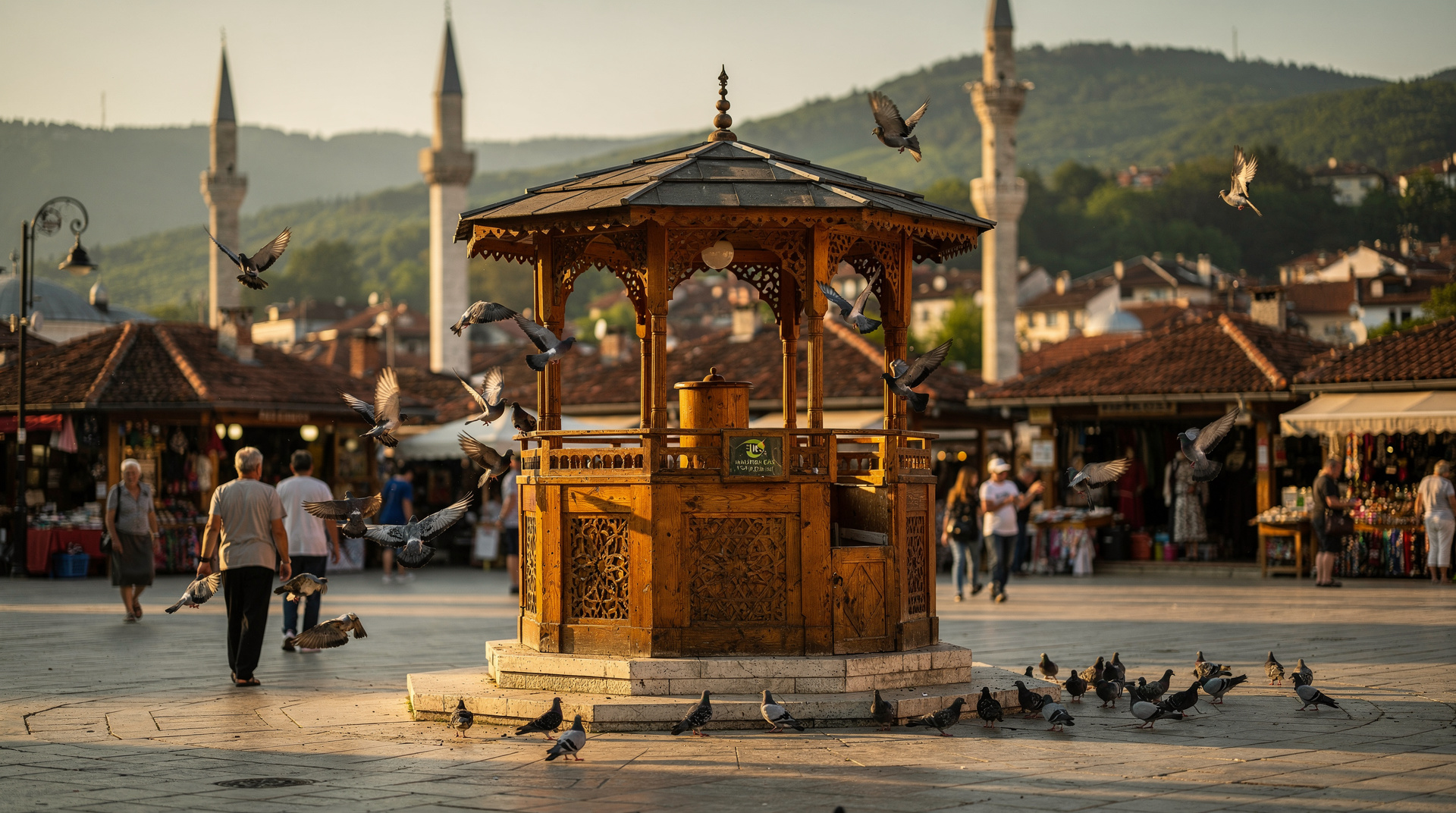
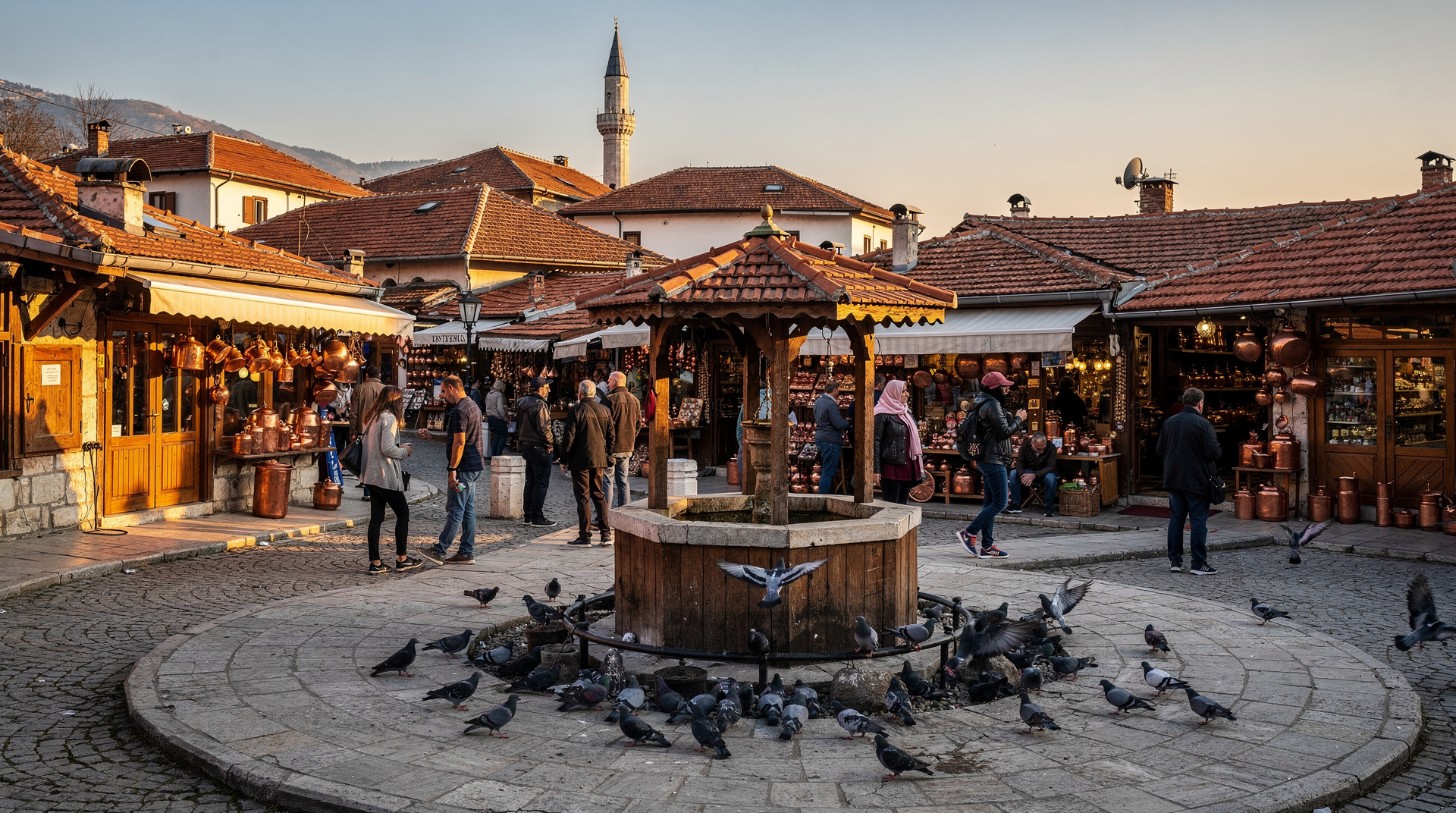
For context on how all of these histories connect, the Baščaršija guide offers a ground-level introduction to the old town and its layers of meaning, just a ten-minute walk from the Latin Bridge.
Practical visit information
The Latin Bridge and assassination site are in the old town and freely accessible at any time. The museum is open most days from approximately 10:00 to 18:00; admission is around 6 BAM. Allow 45 minutes to an hour for the museum, plus time for the bridge and the surrounding area. The site is fully wheelchair accessible. There are cafés and restaurants within a one-minute walk.
The assassination site is easy to combine with the Baščaršija bazaar and the adjacent Sarajevo mosques in a single morning walk — all are within ten minutes of each other on foot.
Beyond the plaque: why this corner still matters
Unlike many assassination sites turned into solemn shrines, the Latin Bridge corner sits in the middle of everyday Sarajevo life — trams cross the nearby junction, cafés spill onto the pavement, and locals walk past the plaque without a glance. That everyday quality is part of what makes the site worth visiting: it underlines how ordinary the moment looked before it became one of the hinges of twentieth-century history. Pair the visit with the Sarajevo faiths guide or the Sarajevo meeting of cultures guide to understand the wider Austro-Hungarian-era city that Franz Ferdinand was touring that week.
For travellers who want the assassination in a broader Bosnian historical arc, the Bosnia history for travelers guide and the Yugoslav wars explained guide trace the line from Austro-Hungarian rule through to the 1992-95 siege, giving the Latin Bridge visit more context than the plaque alone can provide.
How to read the site on the ground
The corner makes more sense if you arrive with the sequence of the day in your head. Start at the Latin Bridge, look along the embankment toward the Appel Quay, then turn to the corner and picture the car stopping where the street narrows. The scale surprises most visitors: everything that mattered happened within a very short stretch of the river. Reading the museum panels first and then stepping outside is a good order, because the plaque and footprints suddenly carry the detail you have just absorbed.
Take your time with the footprints themselves. Their changing treatment over the decades says as much about how Bosnia has argued with its own past as the events of 1914 do. Princip is remembered very differently depending on who you ask in the region, and a respectful visit means listening rather than settling the question. The Bosnia history for travelers guide and the Ottoman heritage guide help explain why a bridge built under one empire became the backdrop for the end of another.
Building a half-day around the assassination site
Because the corner sits in the heart of the old town, it slots naturally into a slow walking day. A sensible pattern is the museum and bridge first, then a coffee break, then the bazaar. If you want to understand the coffee ritual that fills the nearby cafés, the Bosnian coffee culture guide explains what to order and how it is served. For lunch, the Sarajevo food tour guide and the ćevapi guide for Sarajevo point to the dishes the old town is known for, and the best restaurants in Sarajevo list helps if you want a sit-down meal.
History-minded travellers can continue the theme in the afternoon. The museums of Sarajevo guide compares the city’s collections so you can choose the next one without repeating yourself, and the Sarajevo roses memorials guide shows how the later war left its own marks on the same streets. If you have longer in the city, the Sarajevo 4-day deep dive itinerary places this stop among the other essentials, while the Bosnia war history itinerary links it to the wider story across the country.
Practical tips for a thoughtful visit
- Visit with the museum’s account of the day fresh in mind, then walk the route in reverse to see how the motorcade’s path unfolded.
- Bring a camera for the bridge but be aware of other visitors; the pavement is narrow and people pause to read the plaque.
- Keep the tone respectful. Two people died here, and the site is also part of a neighbourhood where people live and work.
- If you are staying nearby, the Sarajevo where to stay guide shows which areas keep the old town within easy walking distance.
- Getting around is simple on foot, but the Sarajevo public transport guide covers trams and buses if you are coming from further out.
- Pickpockets are uncommon but not unknown in busy spots, so the Sarajevo tourist traps guide is worth a quick read before you set out.
Why the wider Sarajevo story deepens the visit
Many visitors come only for 1914, then discover that the city holds several other chapters within walking distance. The Sarajevo siege and Tunnel of Hope guide and the Sniper Alley guide cover the 1990s, while the Sarajevo 1984 Winter Olympics guide shows the city at a moment of optimism between the two wars. Taken together, they explain why a visit that begins at one small corner can easily fill several days.
If the history leaves you wanting a lighter day, the best day trips from Sarajevo offer a change of pace, and the Sarajevo with family guide suggests how to pace a visit when younger travellers are along.
Frequently asked questions about Franz Ferdinand assassination — where WWI started in Sarajevo
Where exactly was Franz Ferdinand shot?
Who killed Franz Ferdinand and why?
What happened on the day of the assassination?
Is there a museum about the Franz Ferdinand assassination in Sarajevo?
Can you visit the Franz Ferdinand assassination site on a tour?
Top experiences
Bookable activities with verified prices and instant confirmation on GetYourGuide.