Sarajevo cafés we love — and what makes them worth your time
| Where | Baščaršija and the surrounding neighbourhoods |
| Typical cost | around 2 BAM neighbourhood kafana, 4–6 BAM tourist strip |
| Time needed | 30–60 minutes per stop, a full café crawl fits an afternoon |
| Best time | any season; winter concentrates the culture indoors |
Sarajevo runs on coffee. Not in the functional caffeination sense of some cities, but in a deeper social way: the kafana, the café, the corner spot with the džezva always on — these are where decisions are made, friendships maintained, and afternoons productively spent.
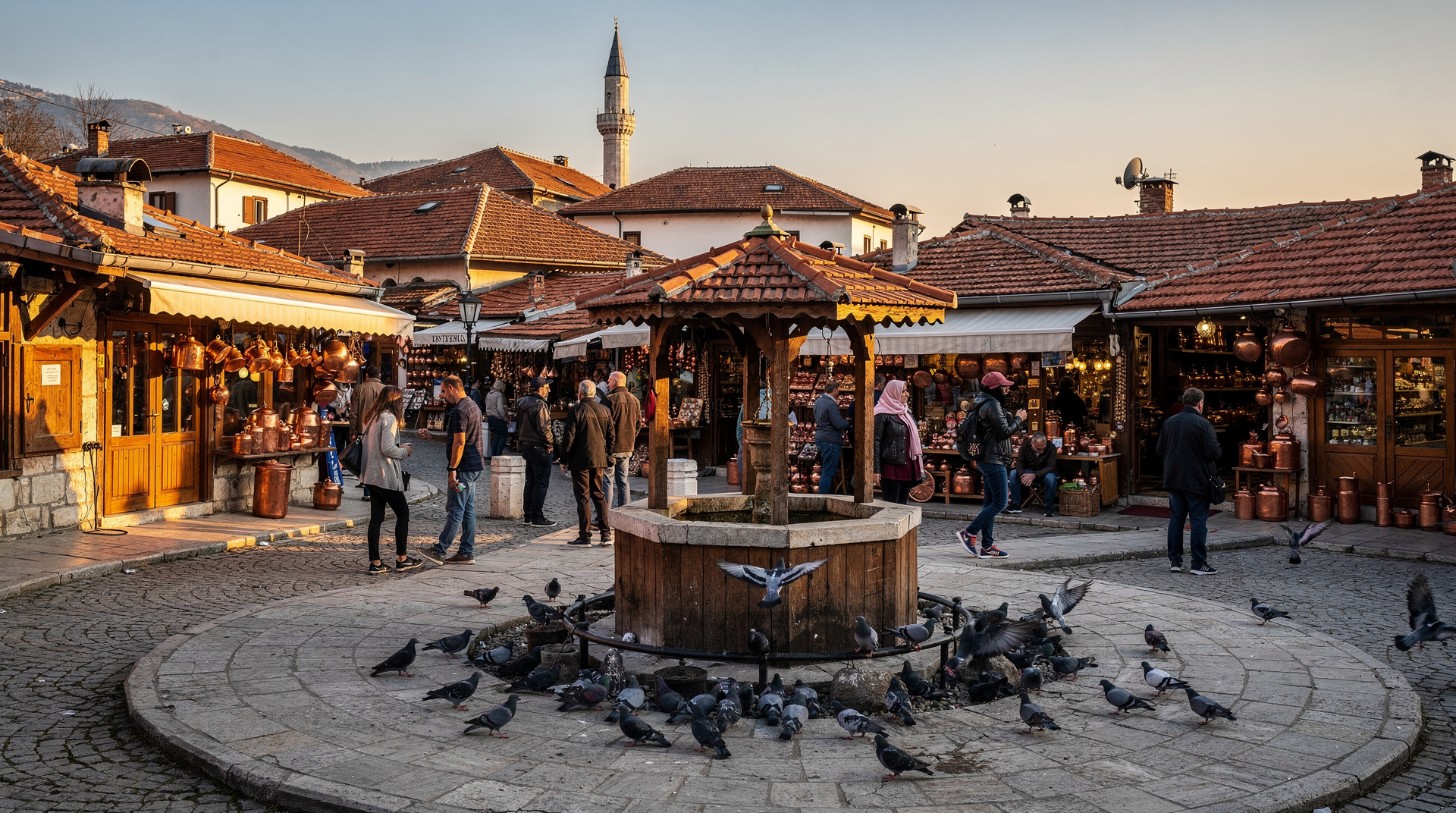
The problem for visitors is that the best places are not always the most visible ones. The tourist-facing strip along Ferhadija and the Baščaršija square has good spots, but the most atmospheric places tend to be slightly off the main drag, in courtyards, up stairways, or in neighbourhoods that tourists rarely reach without a reason.
Here are some of the places we return to.
Morića Han courtyard
Morića Han is one of the last remaining Ottoman hans (caravanserais) in the Balkans. Built in the sixteenth or seventeenth century, it served for centuries as a staging post for merchants travelling through Sarajevo. The building has been partially restored; the courtyard — a square of stone arcades and wooden balconies — is now home to craft shops and, critically, a café in the corner.
The café itself is unremarkable in terms of decor. What it offers is the setting: coffee in a four-hundred-year-old courtyard in the heart of Baščaršija, where the noise of the bazaar lanes outside is replaced by something quieter and more interior. In summer, the courtyard is shaded and cool. In winter, the indoor seating is warm.
Location: off Bravadžiluk, near the Gazi Husrev-beg Mosque complex. Open daily.
Café Divan
A kafana-style café near the Vijećnica (City Hall), Divan does traditional Bosnian coffee as well as filtered alternatives and a small selection of cakes. The interior is dark wood and good lighting — the kind of place designed for staying, not passing through.
What makes it worth the visit beyond the coffee is the proximity to some of Sarajevo’s most significant history: the Vijećnica was burned in 1992 and housed one of the world’s greatest library collections, mostly destroyed. It has been restored. Divan sits in the shadow of this building, though it doesn’t make a performance of the fact.
Zlatna Ribica
On Kaptol street, slightly east of the main tourist zone, Zlatna Ribica is a small antique-filled bar-café that has operated in roughly the same form for decades. The walls are covered in vintage objects — clocks, photographs, curiosities — and the atmosphere is distinctly local.
Coffee is good. The music tends toward old Yugoslav-era compositions and occasionally vinyl jazz. It is not a tourist destination; it is a neighbourhood institution that tourists sometimes find. If you are looking for a quiet mid-afternoon drink away from the crowds, this is a reliable option.
Kafana Inat Kuća
Inat Kuća — “The Spite House” — gets its name from a genuine piece of Sarajevo stubbornness: when the Austro-Hungarian administration wanted to demolish a house to build the Vijećnica, the owner refused. The administration had the house physically moved across the river, stone by stone, to its current location. The owner, having proved his point, accepted the relocation.
The kafana today is primarily known as a restaurant (good traditional Bosnian food) but functions equally well as a coffee stop. Sit on the terrace above the Miljacka River for the view toward the Vijećnica and old city wall.
The neighbourhood kafanas
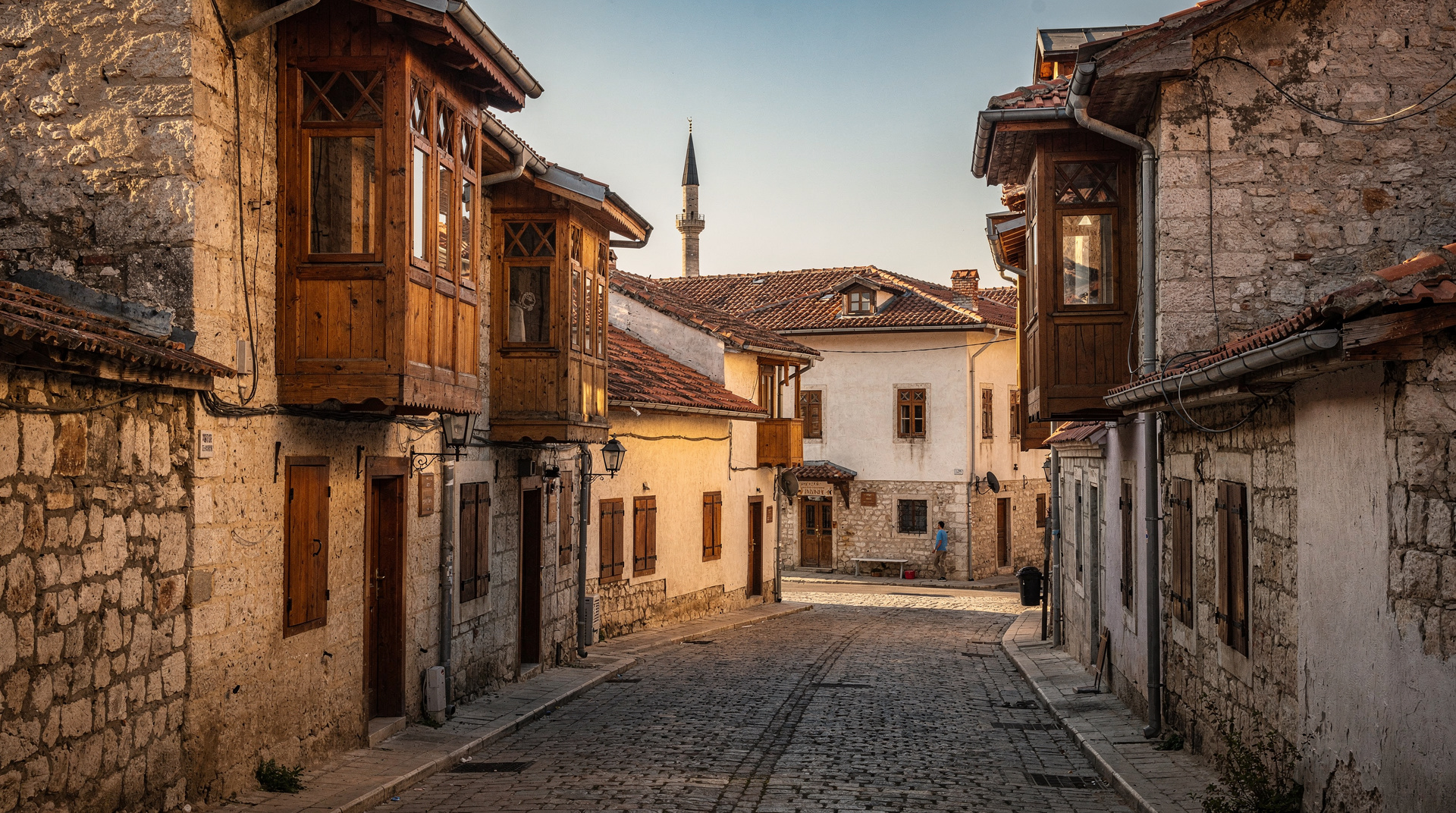
The best coffee experience in Sarajevo, honestly, is often in no-name kafanas in residential neighbourhoods. The areas of Kovači and Bistrik above Baščaršija, and the Grbavica and Hrasno neighbourhoods south of the river, have dozens of small local spots where the clientele is entirely Sarajevan.
These places will not be on any list. They will be identifiable by the džezvas behind the counter, the local newspaper on the table, the television showing a match or turned off entirely. The coffee will cost 2 BAM. The atmosphere will be completely free of performance.
Walk uphill from Baščaršija into Bistrik and sit at the first kafana you find that looks like locals use it. That is the recommendation.
The tourist strip and when it’s fine
The cafés along Ferhadija and around the Baščaršija square are not bad. Some are genuinely good. The issue is more that they operate at a price point (4–6 BAM for coffee, 12–15 BAM for a pastry) that reflects tourist traffic rather than Sarajevo norms, and the atmosphere is calibrated for people who will be there for twenty minutes and move on.
If you want somewhere comfortable and efficient on a busy day of sightseeing, they serve that purpose. If you want the actual Sarajevo coffee experience — the džezva, the fildžan, the absence of hurry — the places above are better.
Building a café circuit into your Sarajevo days
Coffee stops work best as punctuation between the heavier parts of a visit. After a morning with the city’s difficult history, for example in the Sarajevo war tour guide or at the Tunnel of Hope, a slow kafana hour gives you room to absorb what you have seen. The museums of Sarajevo pair well with a nearby café in the same way.
If you are still choosing a base, the Sarajevo where to stay guide helps you pick a neighbourhood with kafanas on the doorstep, which makes the unhurried morning coffee part of the routine rather than a detour. The wider Sarajevo destination page shows how the old town and the surrounding districts fit together.
For a first visit, our first time in Sarajevo story shows how a café stop can anchor a day, and the Sarajevo 4-day deep dive leaves natural gaps where a kafana fits. If the Austro-Hungarian side of the city interests you, the Austro-Hungarian Sarajevo guide covers the architecture around the Vijećnica, close to Divan.
A note on winter visiting
Winter in Sarajevo is when the café culture becomes most concentrated. The outdoor courtyard spots give way to the warm interiors; the kafanas fill with locals who aren’t anywhere else on a cold December afternoon. If you are visiting in winter, the café circuit is one of the most genuinely pleasant ways to spend an afternoon.
The Bosnian coffee ritual guide explains the preparation and customs in detail if you want to understand what you’re being served and why.
How to order like a local
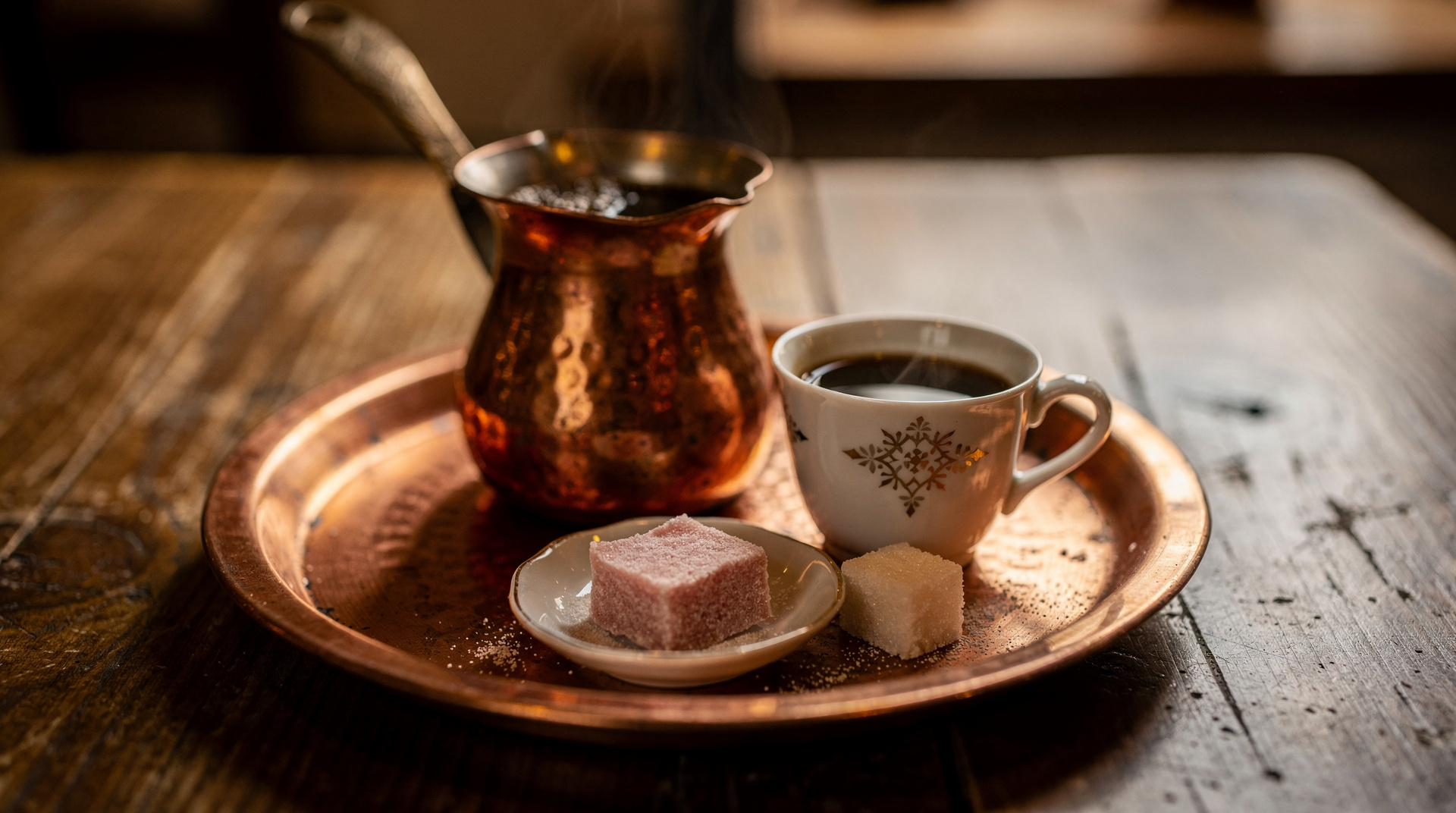
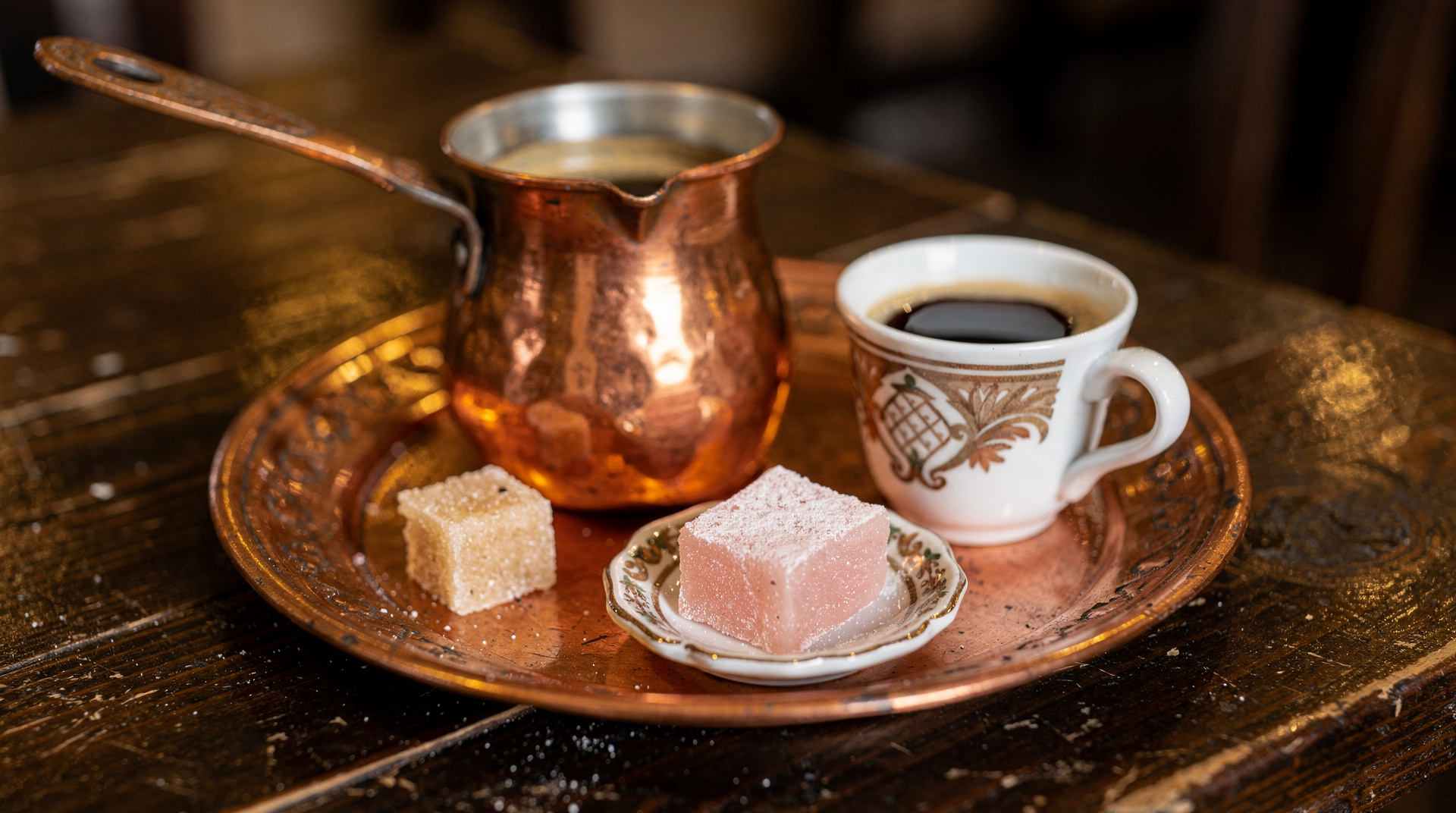
Bosnian coffee (kafa) is served in a small copper džezva alongside a fildžan cup, a cube of Turkish delight (rahat lokum), and a glass of water. The etiquette: drink the water first to cleanse the palate, let the coffee grounds settle before sipping, and don’t stir vigorously — the thick sediment at the bottom is meant to stay there. Asking for “Bosnian coffee” rather than “Turkish coffee” is the polite local phrasing, even though the preparation is nearly identical. The Bosnian coffee ritual guide covers the full sequence in more depth.
If your café stop is doubling as a meal, pair coffee with a slice of burek or a piece of baklava — most kafanas and cafés in Baščaršija sell both, and the Bosnian food guide covers where to find the best versions nearby.
Frequently asked questions about Sarajevo cafés we love — and what makes them worth your time
What’s the difference between Bosnian coffee and Turkish coffee? Preparation is nearly identical — finely ground coffee simmered in a džezva — but Bosnian coffee is traditionally poured into the fildžan without the foam being distributed the same way, and it’s always served with a cube of rahat lokum and a glass of water rather than sugar stirred in. Locally, calling it “Bosnian coffee” is the polite convention.
Is Sarajevo café culture different from a regular coffee shop? Yes — a Sarajevo kafana is closer to a living room than a coffee shop. People linger for an hour or more over one cup, conversation is the point, and nobody expects you to order a second round quickly or leave once you’ve finished.
The honest note on coffee tourism
There are now Bosnian coffee workshops in Sarajevo — proper sessions where a local teaches you the preparation, the history, and the ritual. These are genuinely good if you want to take the practice home with you. The coffee workshop experience is covered in the dedicated guide.
The workshops are not necessary for enjoying coffee in the city, but they contextualise something that is easy to experience without fully understanding. Your call on whether that matters to you.
If you want the hands-on version, a Bosnian coffee workshop with a brewing lesson lets you make the džezva yourself rather than just watch it arrive at the table. If you would rather have the stops chosen for you, a walking tour of the old town built around local food and coffee links several tastings in one outing and leaves you free to return to your favourite spot afterwards.
For visitors who want the city’s story alongside the coffee, a walking tour of the old town with a local guide is a sensible first morning, and it helps you spot which lanes and courtyards deserve a second visit once you are on your own.
Top experiences
Bookable activities with verified prices and instant confirmation on GetYourGuide.