The Bosnian coffee ritual — a beginner's guide
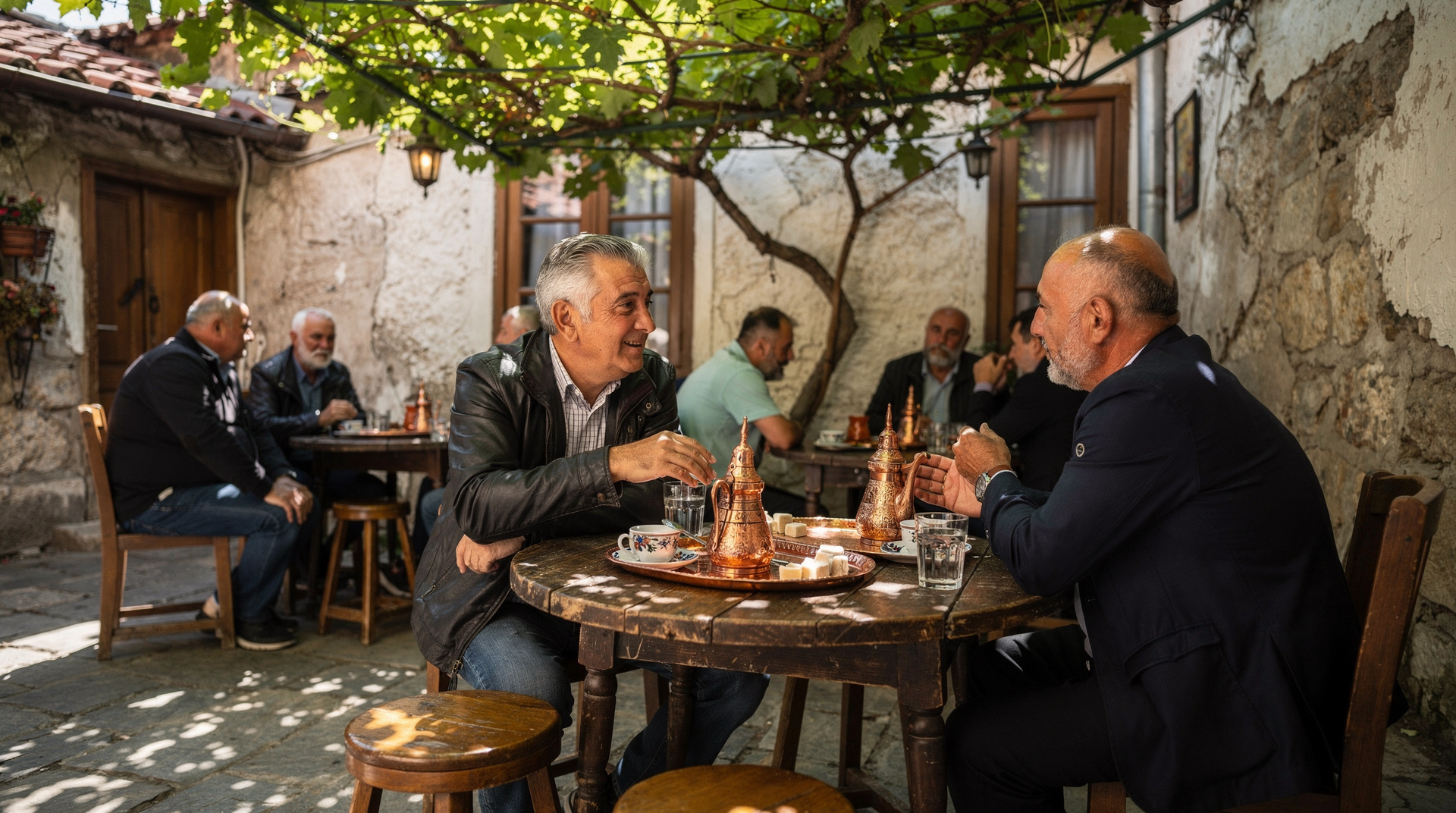
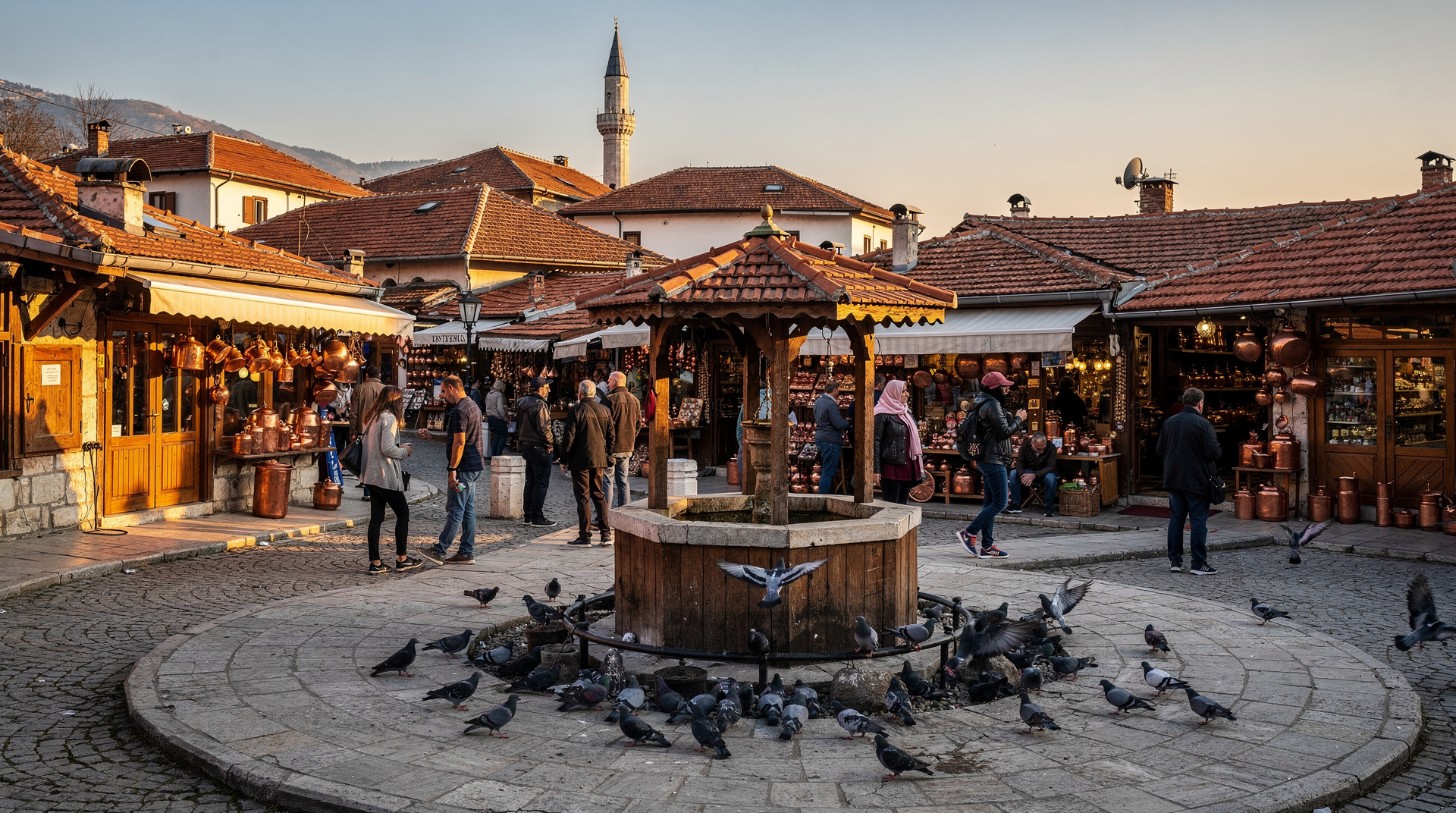
There is a particular rhythm to mid-morning in Baščaršija. The market lanes are still cool enough to be comfortable. A thin haze from the grills hangs in the air. And everywhere, people are sitting — in the courtyards of old hans, on stools outside tiny cafés, on benches — doing very little at high speed.
They are drinking Bosnian coffee.
| Where | Baščaršija cafés, and any pekara or kafana across the country |
| Cost | Around 2–5 BAM (roughly 1–2.50 EUR) per džezva |
| Time needed | 30–45 minutes to do it properly; it is not a to-go drink |
| Best time of day | Mid-morning or mid-afternoon, when cafés are unhurried |
| Where to learn more | Bosnian coffee culture guide |
What makes it Bosnian
Ask a Sarajevan whether Bosnian coffee is the same as Turkish coffee and you will get a patient but firm correction. The preparation is related, yes. Both use finely ground coffee in a small metal pot. But the method is different, the result is different, and — this part matters enormously here — the meaning is different.
Turkish coffee, in the tradition of its neighbouring countries, is often prepared by boiling the grounds directly with the water (and sometimes sugar) in the pot. Bosnian coffee — kafa, or bosanska kafa — is prepared by pouring near-boiling water over the grounds in the džezva. The coffee blooms, rises briefly, is settled with a few drops of cold water to sink the grounds, and then is poured carefully at the table. The grounds stay in the džezva.
The taste is strong and clear, with a sediment layer at the bottom of the džezva that you leave there. It has a slightly different texture and flavour profile from espresso or Turkish-style coffee — less acidic than espresso, less thick than Turkish.
And then there is the speed at which it is consumed.
Bosanska kafa is not meant to be rushed. It is not a fuel stop. It is an event. You sit, you pour slowly, you talk or you sit in silence that is comfortable rather than awkward. Refills from the džezva happen at intervals. A single džezva can provide two or three cups over the course of forty minutes. The café is not in a hurry to clear your table.
The ritual in practice
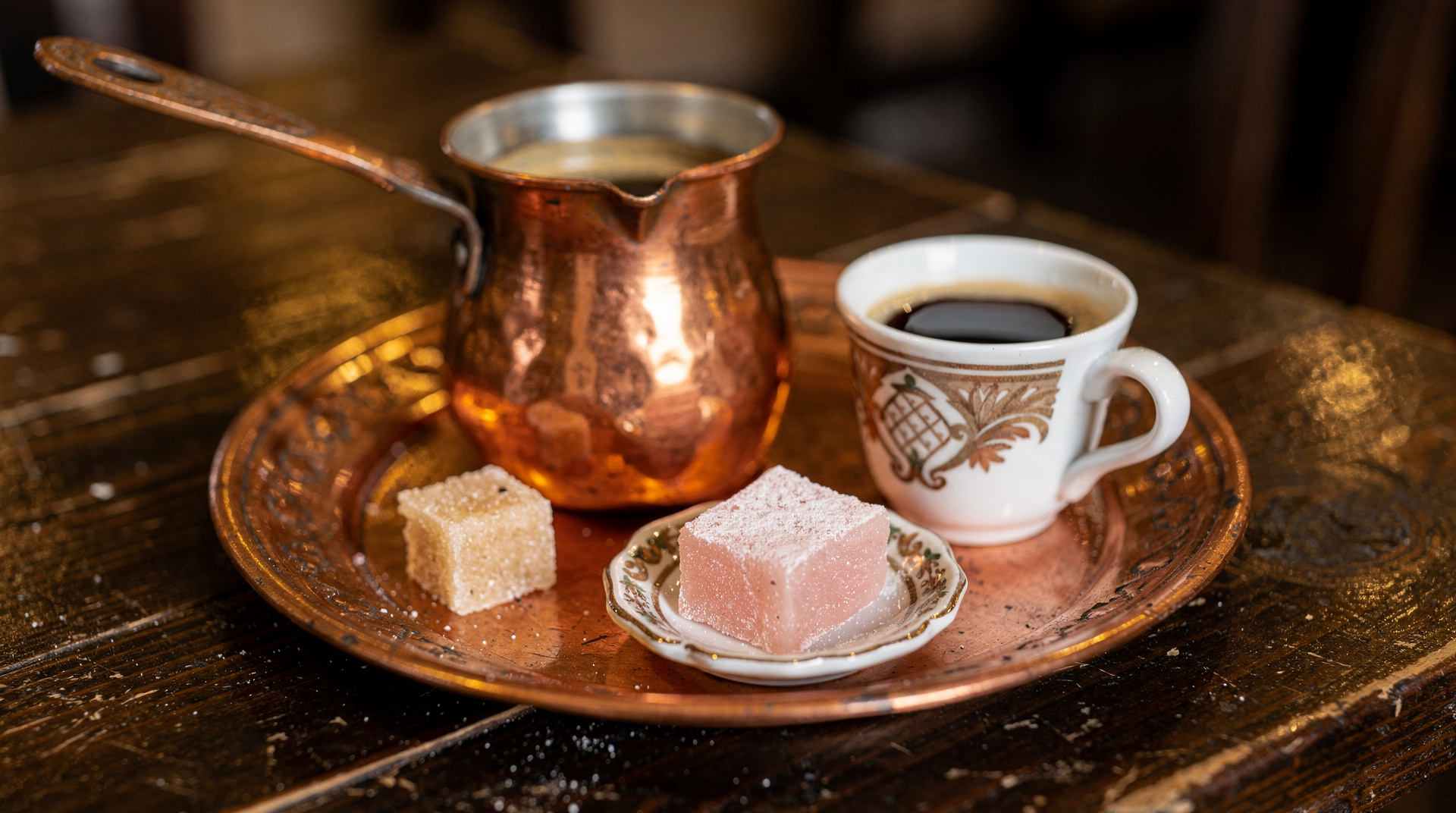
A traditional Bosnian coffee arrives with a small tray carrying the džezva, a small fildžan (handle-less cup), a cube of sugar, sometimes a piece of rahat lokum (Turkish delight), and a small glass of water.
You drink the water first — to cleanse the palate.
Then you pour a little coffee from the džezva into the fildžan. Not a full cup — you are leaving room for more. Let it sit for thirty seconds to let any disturbed grounds settle.
The sugar cube can be handled two ways: the traditional method is to hold it between the front teeth and sip the coffee through it, so the sweetness dissolves gradually. The modern (and entirely acceptable) alternative is to drop it into the cup and dissolve it. If you don’t take sugar, simply leave the cube on the saucer.
Sip. Refill from the džezva when ready. Take your time.
Where to drink it in Sarajevo
The best experience is in one of the old courtyard cafés in Baščaršija. Look for places that serve coffee in the traditional džezva-and-fildžan format rather than espresso machine cups. Many of the most atmospheric spots are in the lanes around the Gazi Husrev-beg Mosque complex.
Some local favourites:
- The courtyard of Morića Han (one of the last remaining Ottoman hans in the city) is a classic setting
- Kafana AS on Kundurdžiluk is unpretentious and consistent
- The smaller lanes branching off Baščaršija Square have several traditional meyhanes worth exploring
Expect to pay 2–3 BAM (approximately 1–1.50 EUR) per džezva. Larger tourist-facing cafés may charge 4–5 BAM, which is still cheap. The experience, in either case, is the same.
If you want a deeper introduction, a Bosnian coffee workshop in the old town takes you through the history, the preparation, and the etiquette in an hour or so — good for coffee-curious visitors who want to take the ritual home with them.
The social dimension
Coffee in Bosnia is rarely drunk alone. Or rather — it is drunk alone physically sometimes, but it is understood as an inherently social practice. Inviting someone for coffee is an invitation to spend time, not to consume caffeine efficiently. Declining a coffee offer without a strong reason is mildly impolite.
This has practical implications as a traveller. If someone at a market stall or a small shop offers you coffee while you browse, it is not a sales tactic (though some of those exist too). It is genuinely hospitality, a reflex of generosity that runs deep in Bosnian culture.
Accept when you can. Sit for the full duration. Don’t check your phone.
Coffee beyond Sarajevo
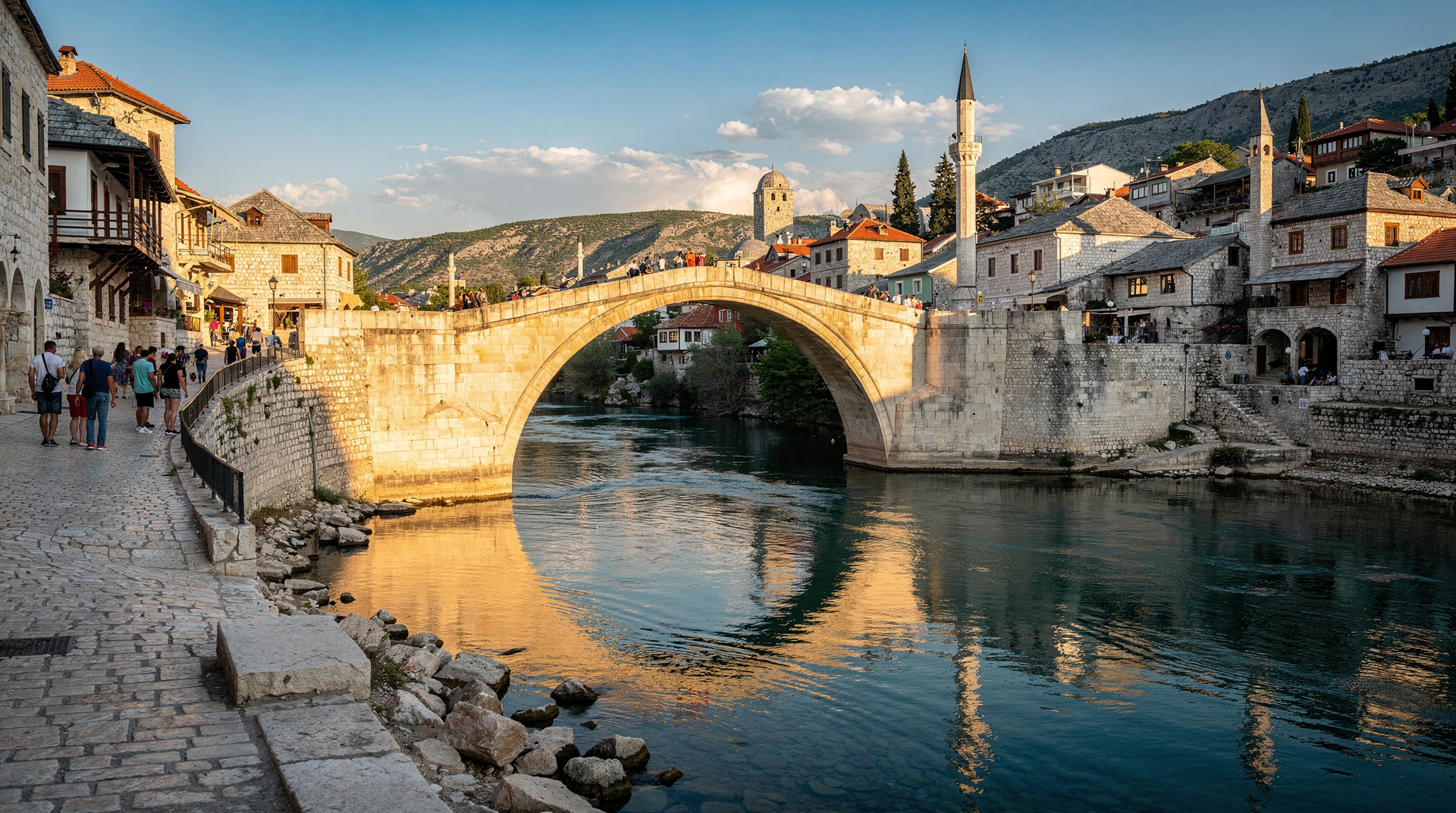
Bosnian coffee is a national drink, not just a Sarajevo one. You will find it in the same form in Mostar’s old town, in the wooden cafés of Travnik, in the courtyards of Trebinje, in small towns off the main tourist routes where you may be the first foreign visitor of the month.
Outside the main cities, prices drop further — sometimes to 1–1.50 BAM. The ritual remains identical.
Making it a habit, not a photo
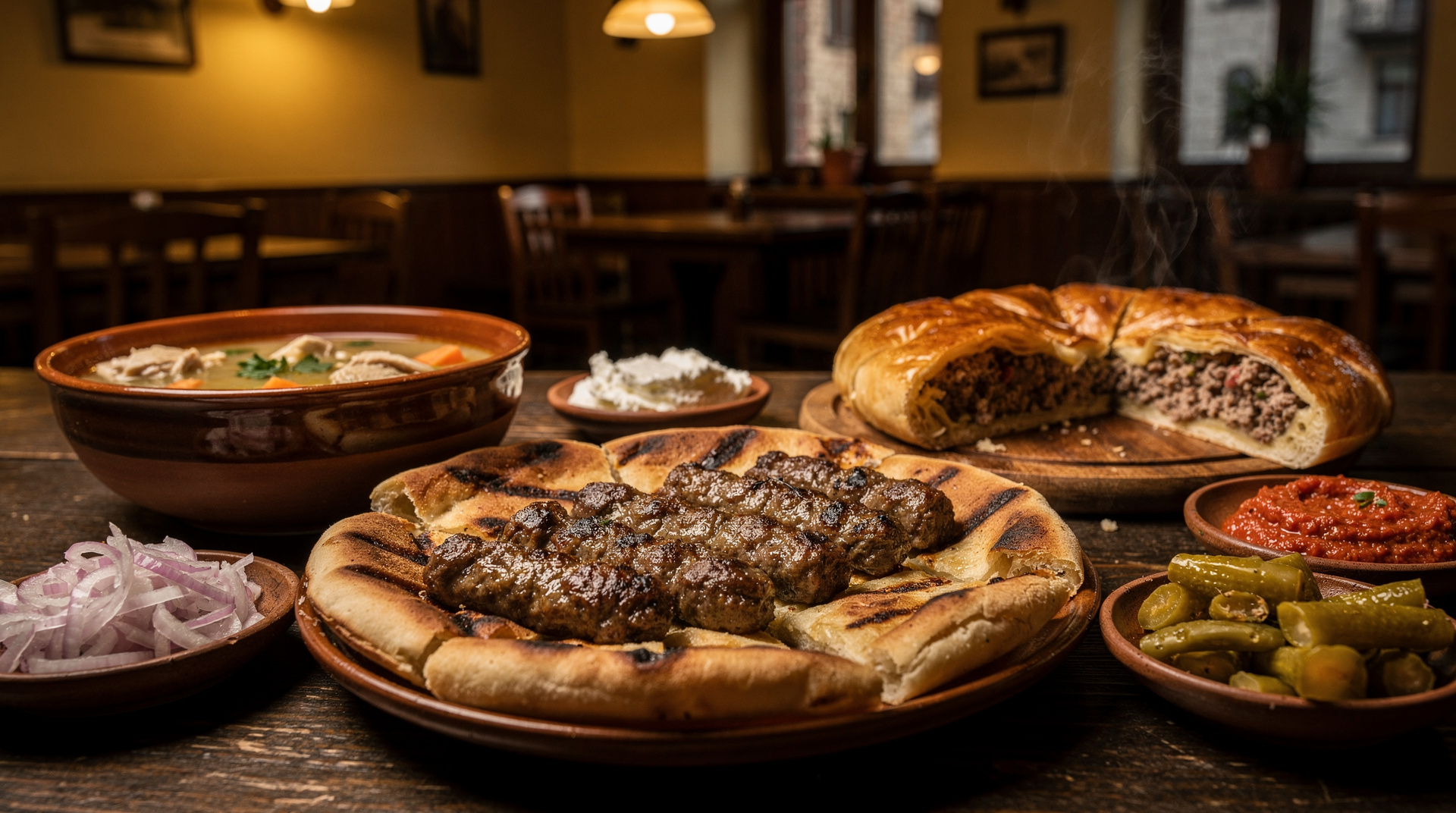
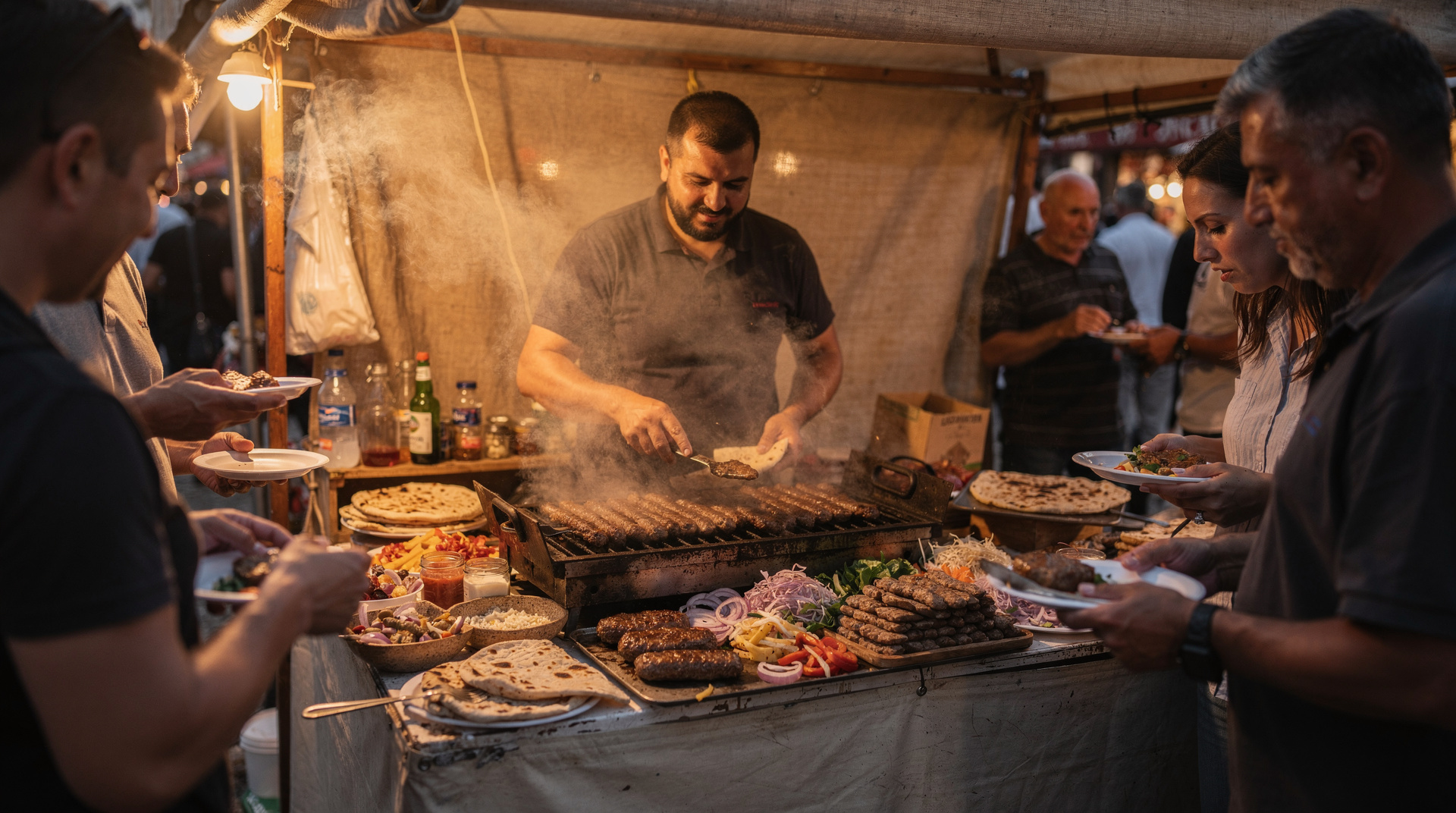
It is easy to treat the coffee ritual as a single box to tick — one džezva photographed in Baščaršija, then back to the itinerary. The better version is to build it into the rhythm of the day the way locals do: a fildžan before you start sightseeing, another mid-afternoon when the heat (or the museum fatigue) sets in. Pair it with a piece of burek from a pekara for a proper Bosnian breakfast, or fold it into a longer Sarajevo food tour that covers coffee alongside ćevapi and pita. If you would rather have a guide set the pace, a walking tour of the old town that pairs local dishes with coffee lets you taste the ritual in context.
Coffee and the rest of the Bosnian table
Coffee sits at the centre of a wider food culture, and it makes more sense once you see its neighbours. After a heavy meal of ćevapi in Sarajevo, a džezva is the natural full stop: it is how a long lunch ends, not an extra. The same goes for the broader Bosnian food guide, where coffee turns up as the quiet constant between every course and every conversation. If you want the longer story of how the kitchen developed, Bosnian cuisine beyond ćevapi is a good follow-up.
Sweet things travel with it too. Rahat lokum on the tray is a small nod to the Ottoman past, and that history is worth understanding if you want the ritual to mean more than a pretty photograph. The Ottoman heritage in Bosnia guide explains where the hans, the fildžan and the unhurried café life came from.
Planning coffee into your days
You do not need a dedicated coffee day. The ritual fits between other plans, which is part of its charm. In Sarajevo, slot it between a walk through the old town and a visit to the museums of Sarajevo, or use it as a pause after a heavy morning at the Sarajevo siege and Tunnel of Hope sites, when a quiet half hour in a courtyard is exactly what you need. Anyone who enjoys learning by doing might also try a hands-on Bosnian cooking class, which fits neatly around a coffee break. If it is your first visit, first time in Sarajevo shows how a few days can be paced so that coffee breaks are built in rather than squeezed out.
Travelling on, the habit goes with you. A Sarajevo to Mostar trip gives you several chances to compare cafés, and the Bosnia 7-day itinerary leaves enough slack for a fildžan in each town. In Sarajevo itself, where to stay in Sarajevo is worth a look if you would like to wake up within walking distance of the old courtyards.
Etiquette at the café table
A few small habits make you a better guest. Do not ask for the bill the moment the cups are empty; the table is yours for as long as you want it. Do not wave the waiter over repeatedly, because nobody is timing you. If you are invited, expect the host to pay and return the favour on another day, which is how the friendship of coffee works. And if you are curious about the café lanes themselves, Sarajevo cafés we love and the Bosnian coffee culture guide go deeper on specific places and customs.
A small note on proportions
First-time drinkers often pour too much too quickly and end up with cold coffee or murky sediment-heavy sips. The trick is restraint: pour a third of a cup, drink it while it’s still warm, then pour more. The džezva keeps the remainder warm better than an empty cup does.
And if you make it at home — use a fine grind (finer than espresso), bring the water to just below boiling before pouring, and do not stir after the first bloom. Let it settle. Let it wait. Some things improve when you stop rushing them.
That, more or less, is the Bosnian coffee philosophy. It applies to more than coffee.
Top experiences
Bookable activities with verified prices and instant confirmation on GetYourGuide.