Bosnia vs the rest of the Balkans — what makes it different
Most Balkans trips include Bosnia as a chapter in a longer story: a day in Mostar on the way between Dubrovnik and Sarajevo, or a day trip from the Croatian coast. The country is seen as an add-on — a detour, a side trip, a one-day experience en route to somewhere else.
This article is an argument against that approach. Bosnia is different from its neighbours in ways that matter, and those differences are precisely what make it worth more than a single day.
| Where | Bosnia-Herzegovina, bordered by Croatia, Serbia and Montenegro |
| Minimum time to do it justice | Around 4–5 days minimum (see how many days in Bosnia) |
| Cost vs neighbours | Roughly half the daily cost of Croatia or Slovenia |
| Getting there | Overland from Dubrovnik, Split or Kotor, or fly into Sarajevo |
| Best time to compare-and-decide | Late spring or early autumn, when both Bosnia’s mountains and the Croatian coast are pleasant |
How much time to actually allocate
The trap most itineraries fall into is treating Bosnia as a rounding error in a Croatia-centred trip. If you are weighing a multi-country route, the Bosnia 7-day itinerary and the shorter Sarajevo-Mostar 3-day itinerary both show what is realistically achievable once you commit real days rather than a single afternoon.
The history is not like Croatia’s
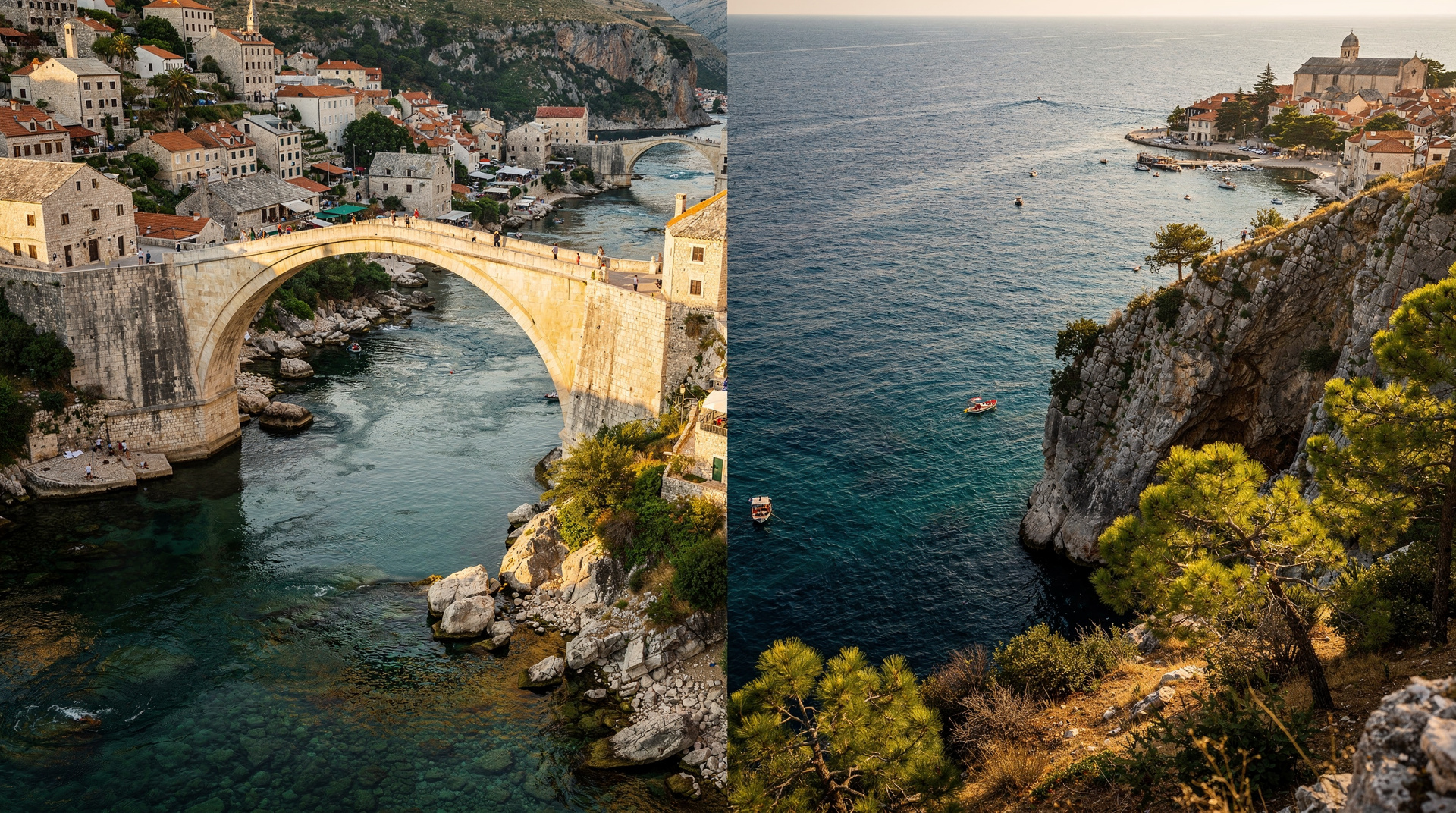
Croatia presents its history elegantly: ancient Roman settlements (Diocletian’s Palace in Split), medieval walled cities (Dubrovnik), the Adriatic. The dark chapter of the 1990s war is present but generally backgrounded in the tourist experience.
Bosnia cannot background its recent history because it is too visible and too recent. Sarajevo’s war is physically present in the pavements, the buildings, the faces of people who were teenagers during the siege. The Tunnel of Hope is not a museum to something that happened long ago; it is a site of survival that the guides remember firsthand.
This is more confronting than Croatia’s tourism positioning. It is also considerably more honest. Bosnia forces visitors to engage with the 1990s in a way that no other country in the region quite does. If that subject matters to you — and it should, because it reshaped the map of Europe — Bosnia is where to go.
The culture is genuinely multi-layered
Croatia’s culture is largely Roman Catholic and Mediterranean in character. Serbia is predominantly Eastern Orthodox. Montenegro is a complicated mix. Bosnia-Herzegovina is all three layers simultaneously — plus the Ottoman inheritance that Croatia and Serbia don’t carry in the same way.
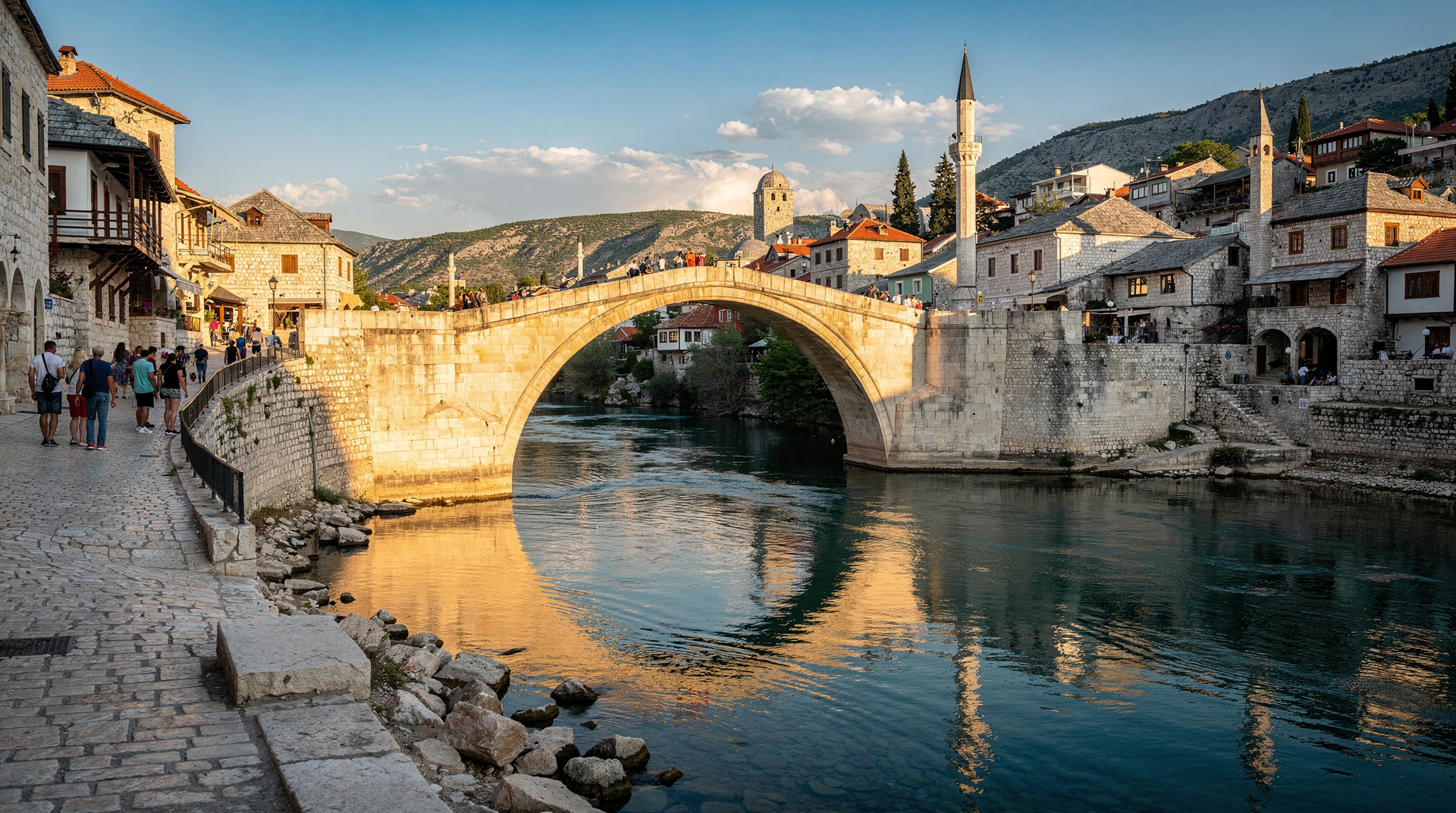
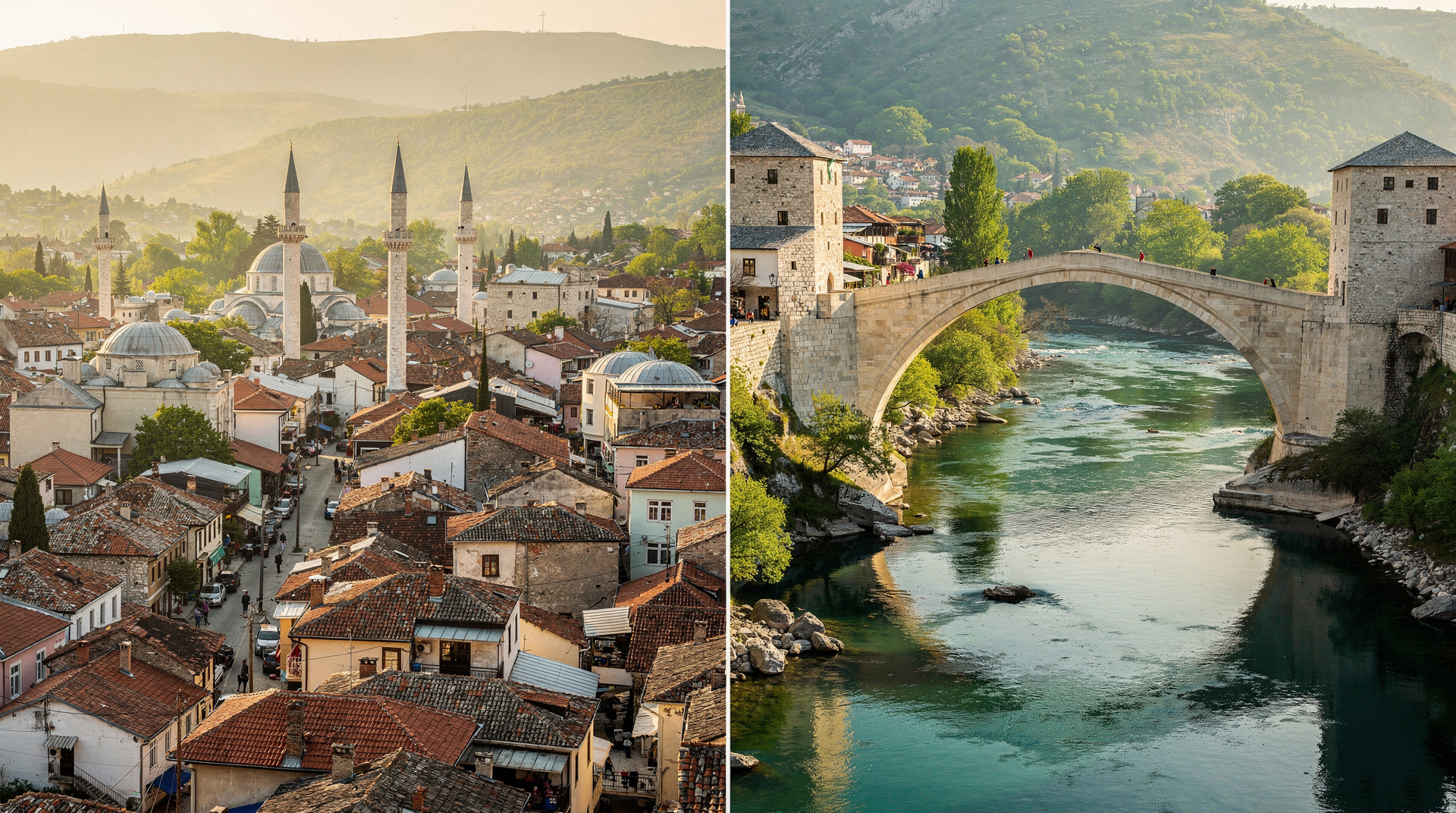
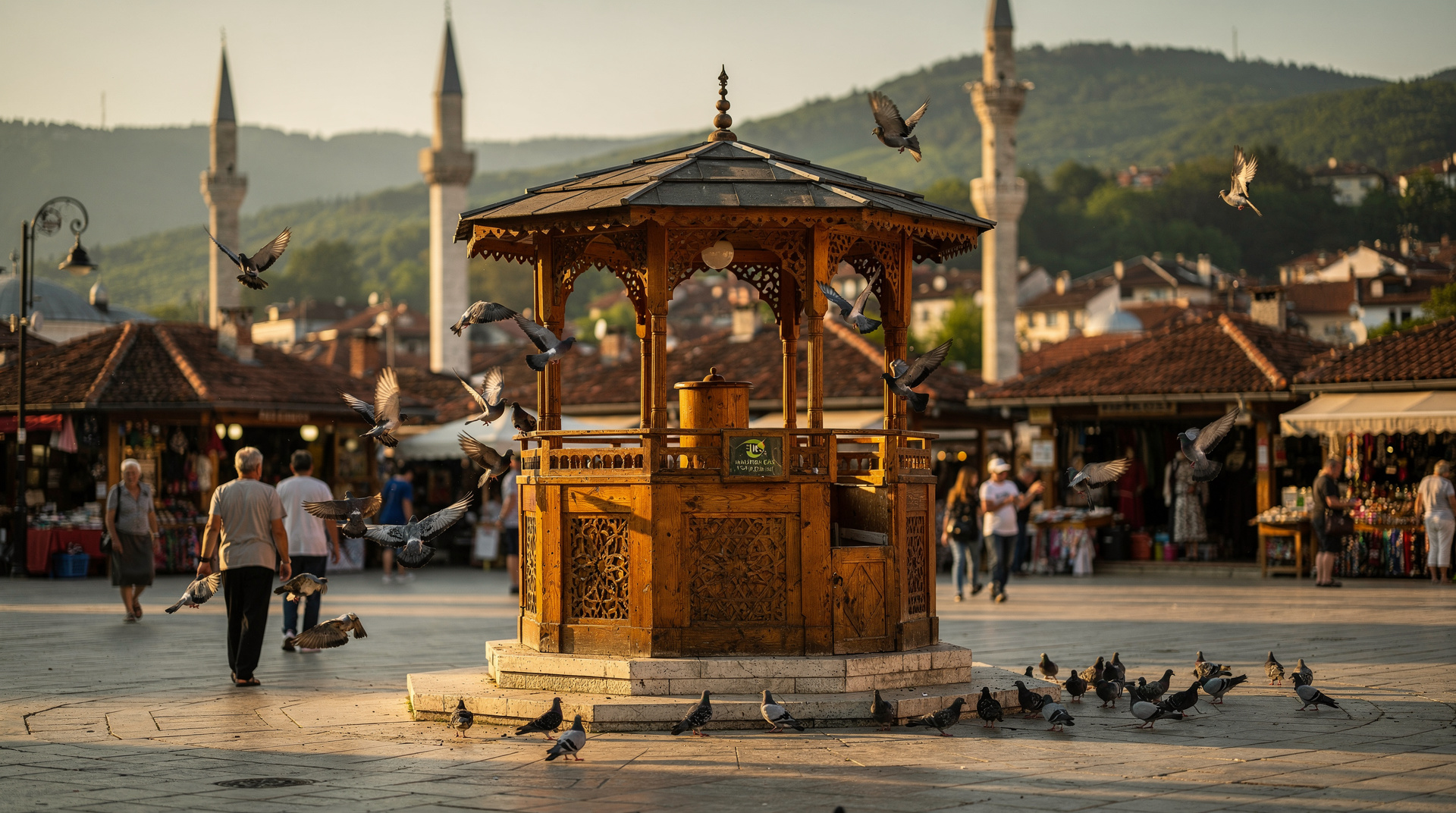
Sarajevo’s four-faith geography — mosque, cathedral, Orthodox church, and synagogue within walking distance of each other — is not a tourist brochure claim. It reflects five centuries of actual coexistence that, while not always peaceful, produced a genuinely distinctive urban culture. The Baščaršija bazaar is not a Croatian old town. The coffee ritual is not Serbian café culture. The Ottoman-era architecture, the dervish monasteries, the hammams — none of it has an equivalent elsewhere in the western Balkans.
The nature is wilder and less developed
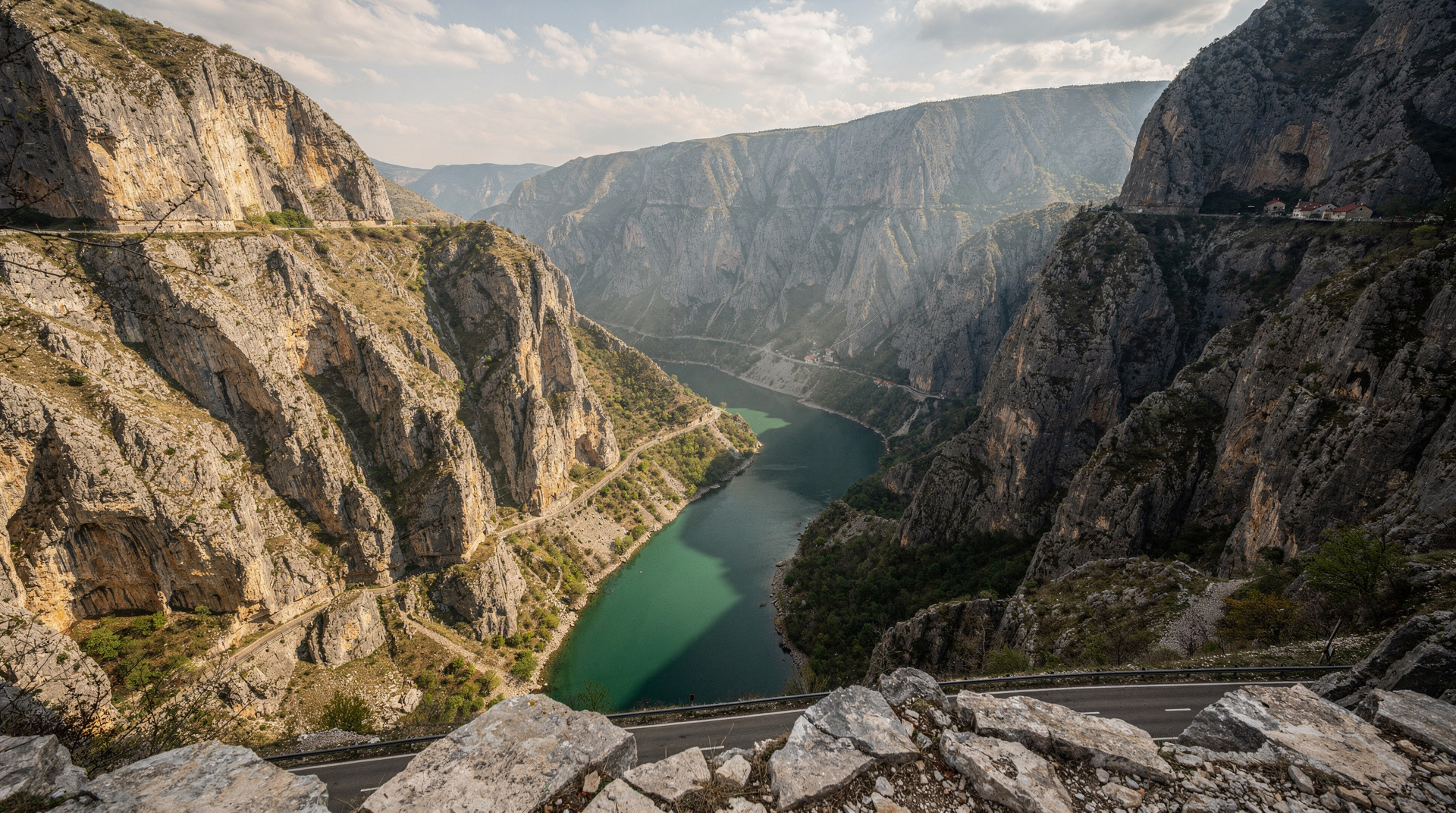
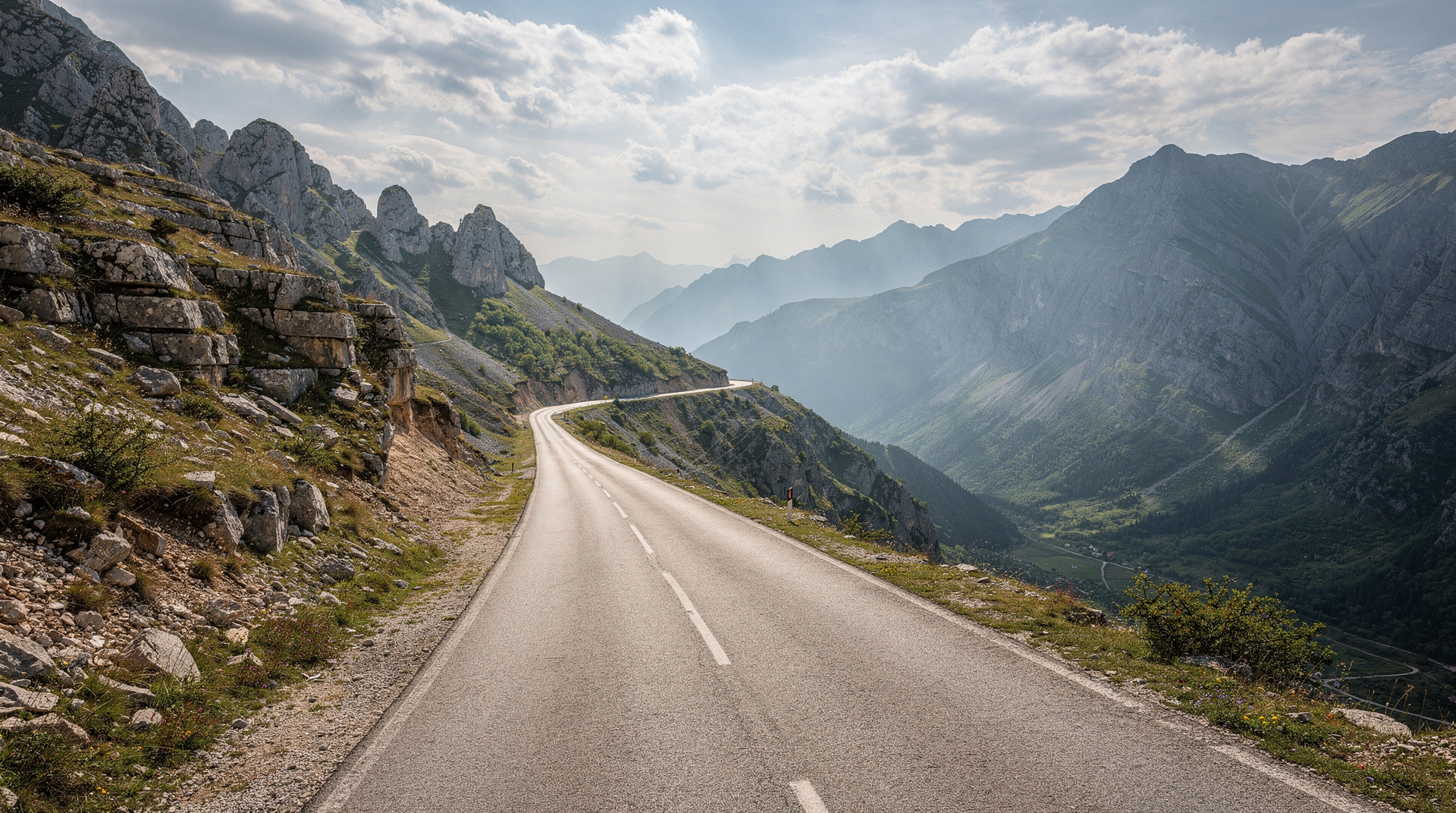
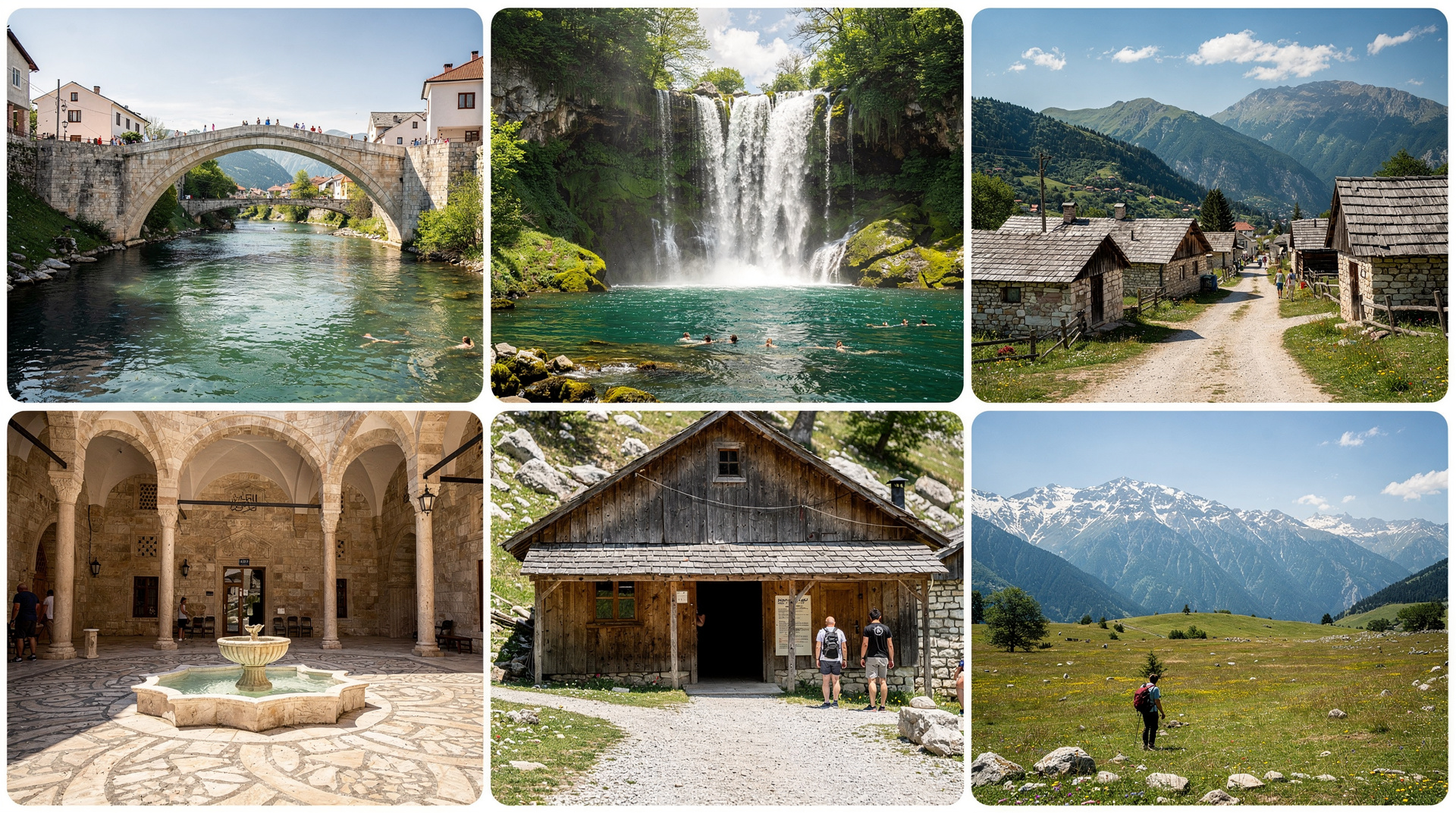
Croatia’s national parks (Plitvice, Krka) are beautiful and extremely busy. Slovenia’s Triglav National Park is well-managed and not exactly wild. Bosnia’s Sutjeska National Park has a primeval forest that has never been logged, a peak nearly 2,400 metres high, and a fraction of the visitor numbers of any comparable site in the region.
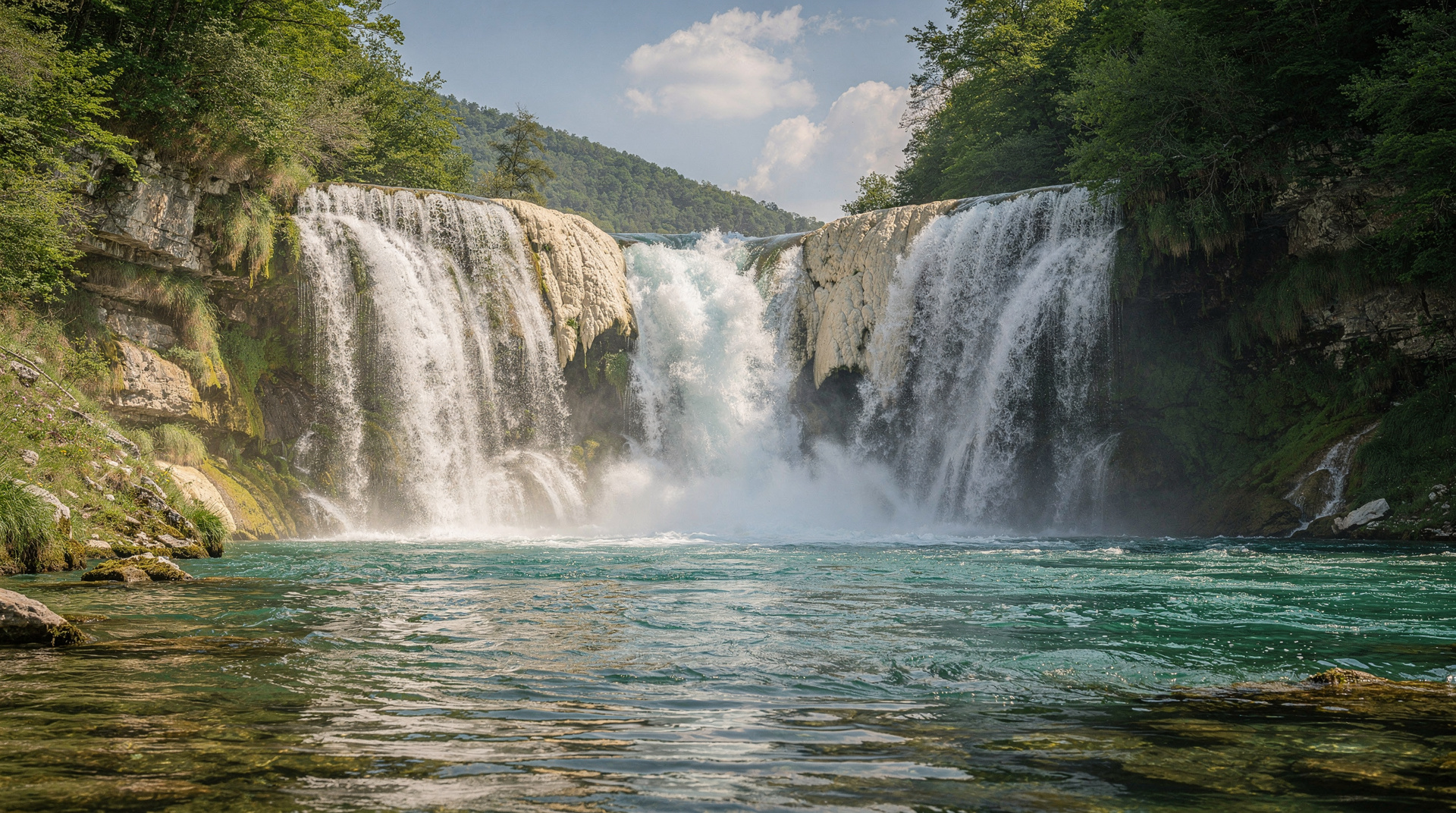
The Una National Park near Bihać offers turquoise river rafting at a level of quality comparable to anything in Slovenia, without the queues or the €30 entry fees. The hiking around Lukomir and Prenj mountain is technically demanding and genuinely remote.
Bosnia is the right destination for travellers who want outdoor experience without the managed, well-signed, busy version of it.
The price difference is significant
Bosnia’s daily costs are roughly half those of Croatia or Slovenia. A restaurant meal that would cost 20 EUR in Dubrovnik costs 8–10 EUR in Mostar. A hotel that would be 80 EUR per night in Split is 40–50 EUR in Sarajevo. Coffee at 1–1.50 EUR rather than 3 EUR.
This is not because Bosnia is poor and the services are bad. The food is good, the accommodations are clean and often hosted by families who treat guests with genuine hospitality. The value is real.
Food and daily rhythm
The table is where the difference becomes easiest to feel. Bosnian cooking sits between the grill culture of the region and the Ottoman kitchen, and it rewards slowing down: a long coffee, a plate of ćevapi, a slice of burek or pita from a bakery counter. Our Bosnian food guide explains what to order, and the coffee culture guide covers why nobody rushes you out of the café. For a local spirit to finish the meal, see the rakija guide.
Which Bosnia suits which traveller
Bosnia is not one experience, and that is part of the argument. History-minded visitors will build a trip around the Bosnia war history itinerary. Outdoor travellers will lean towards the Bosnia adventure itinerary and the rafting guide. Those who simply want a taste of Herzegovina’s stone villages and wine can start with the Herzegovina weekend itinerary. None of these resembles a Croatian coastal week, which is exactly the point.
What Bosnia does not have
A comparison should be honest:
Coastline: Bosnia has 9 kilometres of Adriatic coast at Neum — enough for a swim, not enough for a beach holiday. If beach time is a priority, Croatia is the answer.
Infrastructure and convenience: Croatia’s tourism infrastructure is highly developed: booking systems work, signage is clear, English is spoken everywhere, roads are excellent. Bosnia’s infrastructure is improving but less consistent. Getting to Sutjeska or Bihać requires more planning than getting to Plitvice.
Visa simplicity: Bosnia requires separate currency (BAM), has different roaming charges for some mobile plans, and involves different border formalities. None of this is a real barrier, but it adds friction that some travellers prefer to avoid.
Where Serbia and Montenegro fit in the comparison
Serbia is not a coastal comparison at all — it is a Belgrade-and-inland proposition, with a nightlife and food scene that draws a different kind of traveller than the one weighing Bosnia against Croatia. Montenegro splits the difference: the Bay of Kotor gives it Croatia-like coastal drama at a smaller scale, and it is close enough to Bosnia that combining the two (see the Bosnia from Kotor guide) is one of the more efficient regional routes available. If your trip already includes Kotor, adding Mostar and Sarajevo is a natural extension rather than a detour. If you would rather not organise the border crossing yourself, a single day that covers both Montenegro and Bosnia gives a quick taste, and a small-group tour of Bosnia and Montenegro starting from Dubrovnik leaves more room to see how the two countries differ.
How to think about combining them
The Balkans multi-country guide covers Croatia-Bosnia-Montenegro combinations in detail. The honest advice: if you are on a two-week trip including Croatia and Bosnia, do not try to do Bosnia in one or two days. Sarajevo alone needs three days. Mostar needs an overnight. Travellers who only have a day from the coast can at least choose a full-day tour from Dubrovnik into Bosnia and Herzegovina over a rushed self-drive, then decide whether the country deserves a longer return visit.
The Bosnia vs Croatia comparison guide goes deeper on the specific trade-offs for visitors choosing between them — or deciding how much time to allocate to each.
Practical points before you commit
Getting around works differently here from the coast, so read the guides on getting around Bosnia, renting a car and the border crossing at Neum before locking in dates. If money is part of the decision, the Bosnia money and currency guide and the budget guide keep surprises to a minimum. Questions about safety are answered plainly in is Bosnia safe, and the best time to visit Bosnia helps you match the season to the kind of trip you want. Coming from the coast, the Mostar from Dubrovnik guide and the Mostar from Split guide show the usual way in, and a traveller’s own account in the week in Bosnia trip report shows how it feels on the ground.
The short answer
If you want sea, consistent infrastructure, and good wine in a restaurant where the staff speak fluent English, go to Croatia.
If you want layered, complicated, surprising history; mountain wilderness; excellent value; and a city (Sarajevo) that tells a story no other European capital can, add Bosnia to the itinerary and give it proper time.
The two countries are complementary rather than substitutes. Bosnia repays the extra effort.
Top experiences
Bookable activities with verified prices and instant confirmation on GetYourGuide.