Why visit Bosnia & Herzegovina?
Bosnia & Herzegovina is one of Europe’s most rewarding and least crowded destinations. Here is why it deserves a place on your list.
Living history
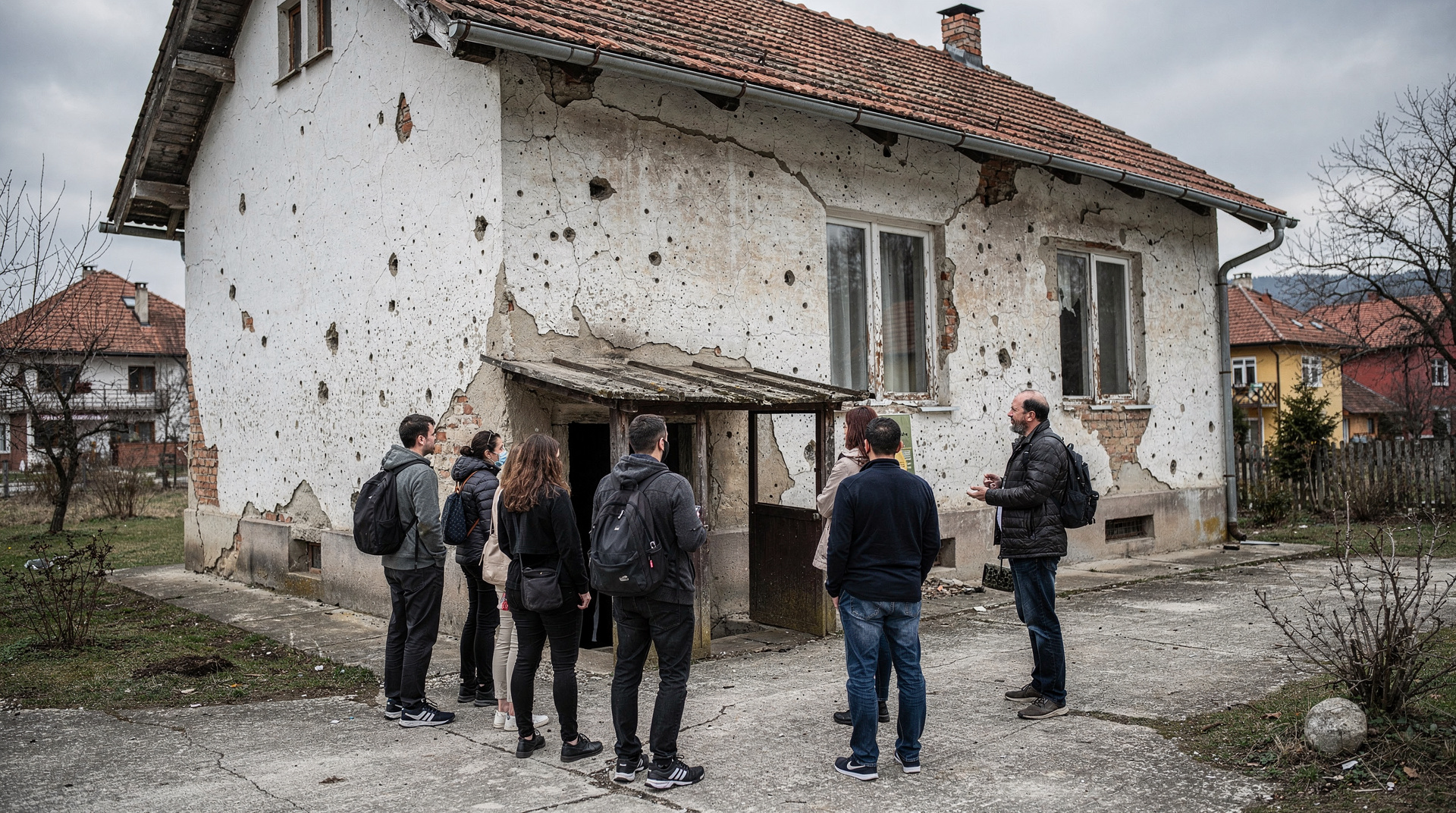
Few cities tell their story as vividly as Sarajevo. A Tunnel of Hope tour turns headlines into human stories. Beyond the tunnel, the War Childhood Museum and the scattered Sarajevo Roses memorials tell the same story from different angles, and Konjic’s Cold War-era Tito’s Bunker adds an earlier chapter of the same region’s turbulent 20th century.
Wild rivers and waterfalls
The Una, Neretva and Tara offer some of Europe’s best rafting, while the Kravice falls are a summer favourite. The Neretva gorge near Konjic delivers genuine Class III-IV whitewater within an hour of Sarajevo — see the Neretva rafting guide — while the Una in the northwest is arguably the more scenic of the two and far less crowded than Croatia’s Plitvice across the border, as the Una National Park guide explains. For a full comparison of the three rivers, the rafting in Bosnia guide is the place to start.
Ottoman old towns and Mediterranean Herzegovina
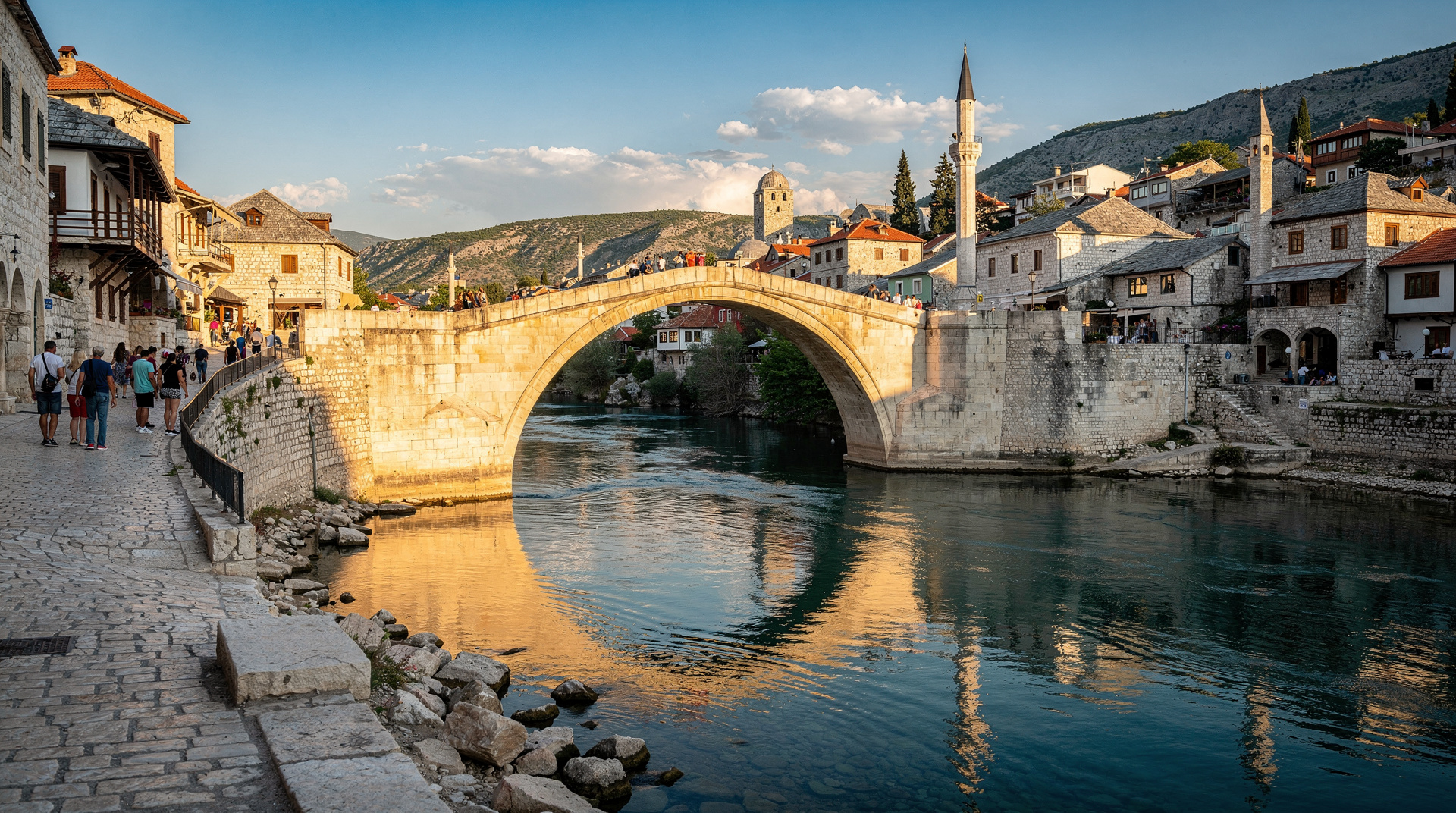
Sarajevo’s Baščaršija and Mostar’s Stari Most bridge are the headline stops, but the smaller towns are just as rewarding. Počitelj’s fortified stone terraces, Blagaj’s Dervish monastery built into a cliff face beside a spring, and sunny Trebinje near the Montenegrin border each show a different side of the country. The Ottoman heritage guide ties these sites together, and the Stari Most guide covers Mostar’s most photographed landmark and its famous bridge divers. Travellers based in Sarajevo who are short on time can also join a guided day tour to Mostar and the Herzegovina countryside.
Food, coffee and hospitality
Bosnian hospitality shows up first at the table: ćevapi in fresh somun bread, burek pulled straight from the oven, and thick Bosnian coffee served with a ritual all its own. The Bosnian food guide and ćevapi guide cover the essential dishes, while Bosnian coffee culture explains why the coffee ceremony is as much about conversation as caffeine. If you would rather taste it all with a local guide, a walking tour of the old town built around Bosnian dishes and coffee is an easy way to start.
Mountains and off-the-beaten-path villages
Beyond the headline cities, Bosnia’s interior is heavily forested mountain country that most visitors never see. Lukomir, perched above the Rakitnica canyon, is the country’s highest and most isolated permanent village and a genuinely rewarding day hike from Sarajevo — see the Lukomir village hike guide. Further south, Sutjeska National Park protects one of the last primeval forests left in Europe, Perućica, alongside Bosnia’s highest peak; the Sutjeska National Park guide covers access and trails.
Long-distance hikers increasingly use Bosnia as a core section of the Via Dinarica trail through the Balkans, detailed in the Via Dinarica Bosnia guide. If independent, off-the-beaten-path travel appeals to you, the Bosnia off the beaten path blog post and the avoiding crowds in Bosnia guide go further into where to go instead of the well-trodden circuit.
Unbeatable value
Your money goes far here — excellent coffee, hearty food and comfortable rooms cost a fraction of Western Europe. Budget travellers manage comfortably on €40-55 a day and mid-range travellers rarely spend more than €110, even with a rental car and a couple of guided tours — see the Bosnia on a budget guide for a full breakdown. For first-time planning, the Bosnia travel guide and the Bosnia 7-day itinerary are the best starting points.
A country of several faiths and layers
What surprises many first-time visitors is how many traditions share the same streets. Mosques, Orthodox and Catholic churches and synagogues stand within a short walk of each other in the capital, and the Sarajevo faiths guide and the Sarajevo, a meeting of cultures article show how that mix feels on the ground. Ottoman lanes give way to Austro-Hungarian boulevards, a contrast explored in the Austro-Hungarian Sarajevo guide. If you want the background before you arrive, Bosnia history for travelers and the Yugoslav wars explained give a clear, unhurried primer that makes every museum and memorial easier to understand.
Getting around and choosing your season
Bosnia rewards a little planning rather than a rigid schedule. Distances feel longer than they look on a map because roads wind through mountains, so it helps to read the getting around Bosnia guide and the driving in Bosnia guide before deciding between a rental car and buses. If you would rather not drive, the Bosnia by public transport itinerary shows a workable route. Each season has its own appeal: the best time to visit Bosnia page compares them, with separate pages for spring, summer, autumn and winter. Skiers will want the skiing in Bosnia guide, while anyone with children can start with Bosnia with kids.
Honest answers before you commit
A good reason to visit is that the country does not pretend to be something it is not. It is not a polished resort destination, and a few things deserve straight talk: the is Bosnia safe guide and landmine safety in Bosnia explain how to stay on marked paths and travel with confidence, and the Bosnia scams to avoid page covers the small annoyances so they stay small. Comparing neighbours? Bosnia vs Croatia lays out the trade-offs, and the Bosnia vs the Balkans post puts the country in regional context. For a first-hand voice, the week in Bosnia trip report follows a traveller through a real loop, and how many days in Bosnia helps you decide how long to stay.
Top experiences
Bookable activities with verified prices and instant confirmation on GetYourGuide.