Planning a Bosnia trip in 2026 — everything you need to know
Bosnia-Herzegovina is gaining recognition faster than its infrastructure is expanding. This is both a reason to go soon and a reason to plan carefully. Here is the practical guide to planning a Bosnia trip in 2026 — what is working, what requires advance thought, and how to build an itinerary that actually delivers.
| Best time | May–June or September–October |
| Minimum time needed | around 5 days (Sarajevo + Mostar) |
| Recommended time | 7–10 days for the full loop |
| Currency | BAM (convertible mark), pegged to EUR — not the euro itself |
| Getting there | fly into Sarajevo, or overland from Split/Dubrovnik/Zagreb |
| Rough daily budget | around 50–90 EUR/person mid-range, less on buses and guesthouses |
Why 2026 is a good year to visit
Tourism to Bosnia has grown steadily year on year. The country is past the obscurity that made it genuinely undiscovered five years ago, but it has not yet reached the saturation point of Croatia’s main coastal cities or Slovenia’s Bled. The sweet spot — interesting enough for the infrastructure to support a comfortable visit, not so popular that the main sites are overwhelmed — is still intact.
Several infrastructure improvements are arriving or consolidating in 2025–2026:
- Continued motorway extension reducing Sarajevo transit times
- Improved booking systems for the main heritage sites
- Better English-language signage at national parks
- Growing accommodation options in mid-range categories
The currency is still the BAM at its long-standing peg to the EUR. Bosnia remains significantly cheaper than Croatia, Slovenia, or any Western European destination.
When to go in 2026
May and June remain the best months overall. Weather is warm without being extreme, the spring vegetation is at its best, rivers are at full flow for rafting, and the tourist crowds (present but manageable) have not reached August levels. The Neretva rafting season opens in April and is at its best in May and June.
September and October are excellent alternatives. The late-summer crowds have thinned, the autumn colours begin in the mountains, temperatures are comfortable, and the outdoor activity season is still fully open through September. Sutjeska National Park is particularly impressive in October.
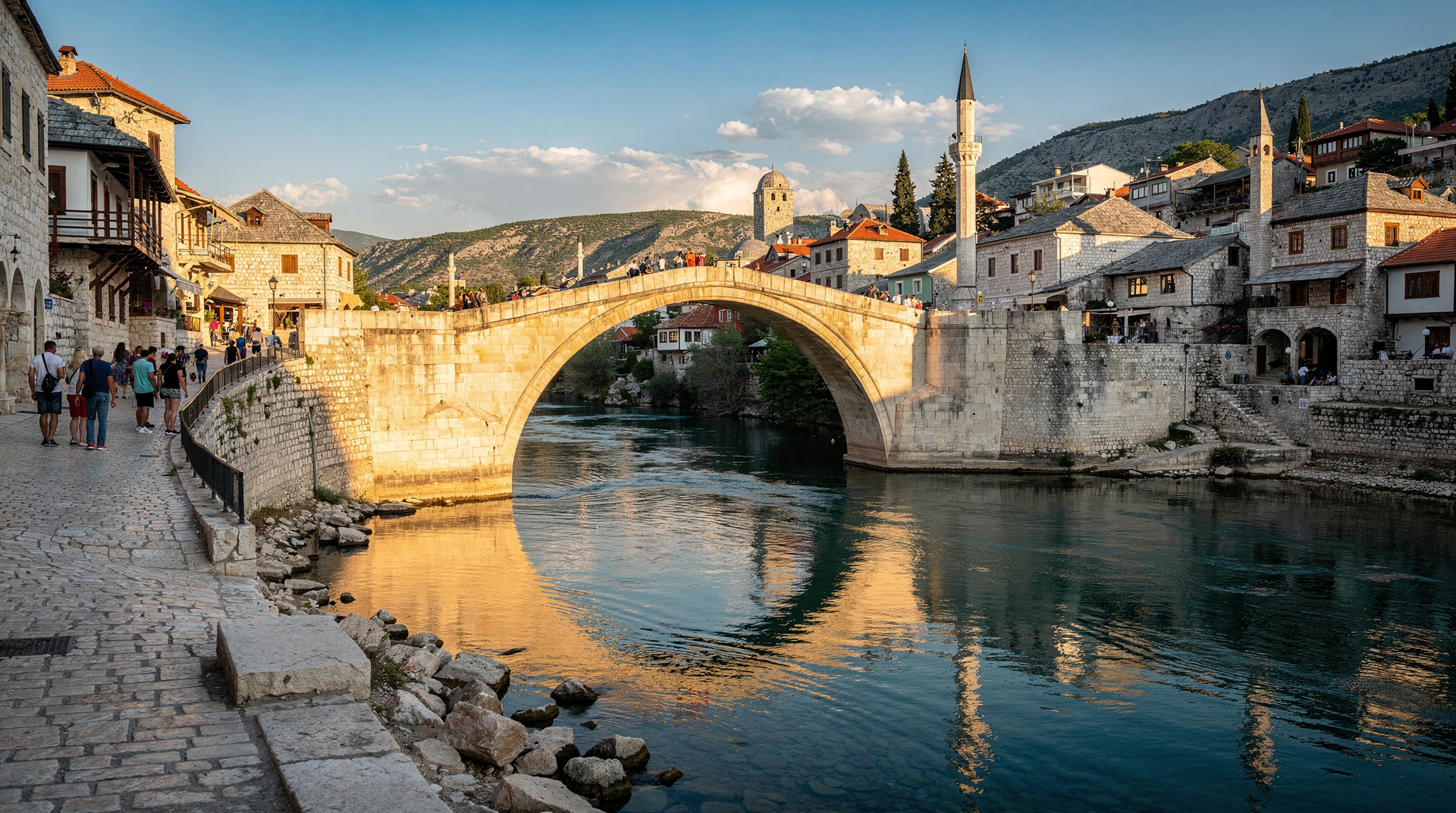
July and August are viable but busy. Mostar’s old bridge area is at peak crowding in July–August. Kravice Falls can be shoulder-to-shoulder in late July. Sarajevo handles the summer better than Mostar. If you must visit in high summer, early arrival at key sites is essential.
Winter (December–March) is excellent for Sarajevo city visits and skiing at Jahorina/Bjelašnica. Most outdoor adventure activities (rafting, hiking) are unavailable or limited.
How long to spend
Minimum for a meaningful visit: 5 days. Three nights in Sarajevo, two nights in Mostar with day trips into Herzegovina.
Recommended: 7–10 days. This allows for Sarajevo properly (3 nights), Konjic with rafting and Tito’s Bunker (1–2 nights), Mostar and Herzegovina (2–3 nights), and either Trebinje or a northern excursion.
For a deep-dive Bosnia trip: 12–14 days. Add the Una/Bihać area (2 nights), Jajce and Travnik (1 night), and possibly Sutjeska National Park (2 nights). This covers the country comprehensively.
The how many days in Bosnia guide covers different trip lengths with specific itinerary suggestions.
The essential bookings to make in advance
Several things are worth booking well ahead, particularly for summer travel:
Tunnel of Hope Museum: Advance booking recommended for any weekend between May and September. The Sarajevo war and tunnel tour includes admission and context.
Tito’s Bunker (ARK D-0) in Konjic: Guided tours run at fixed times with limited group sizes. Book at bihdestinations.ba or through a Konjic/Sarajevo operator. Essential on weekends.
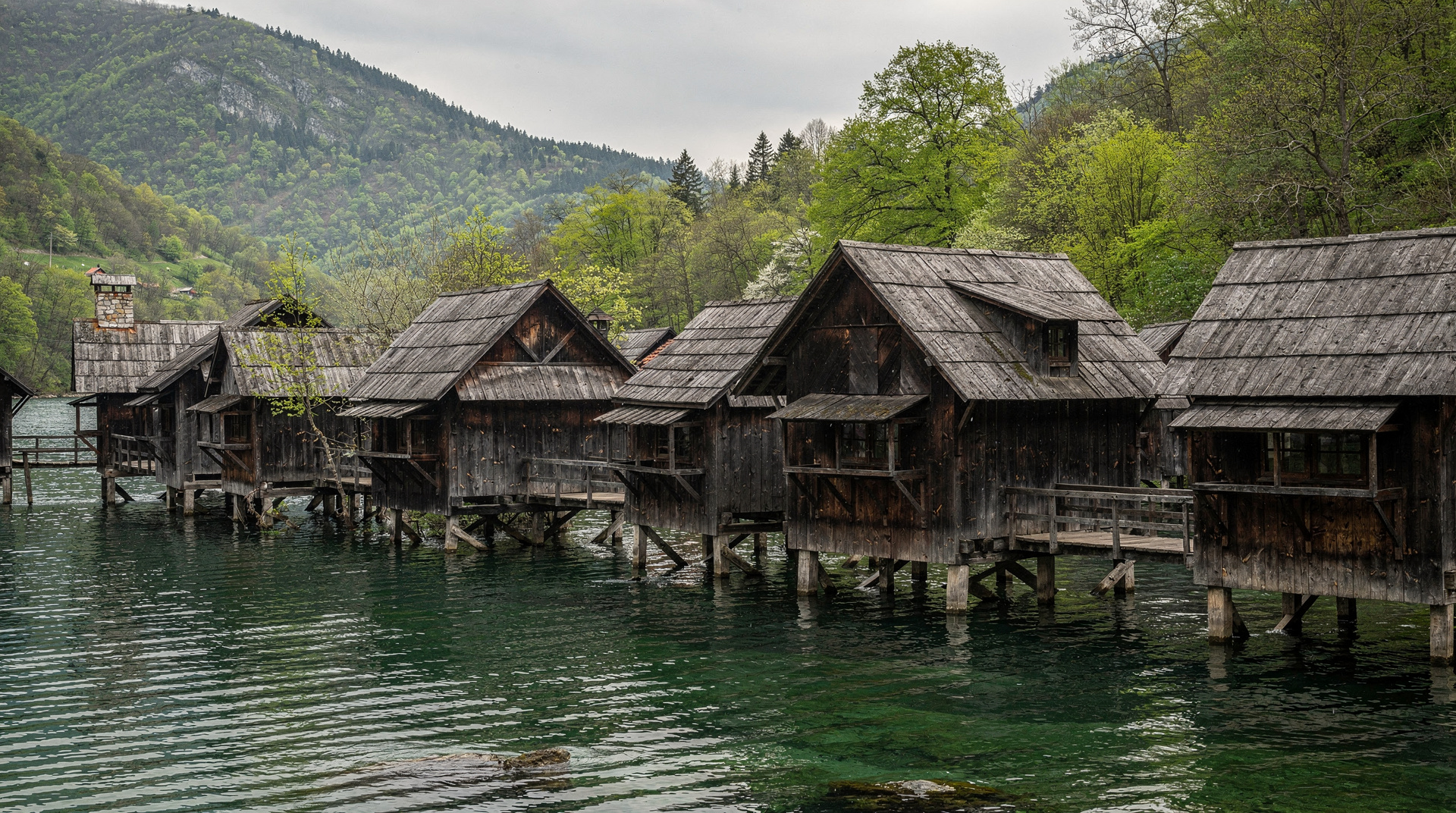
Rafting operators: The best Neretva and Una operators fill in advance for summer weekends. Book 1–2 weeks ahead minimum. Neretva rafting from Konjic and the Una river rafting from Bihać are the primary options. If your plans lean towards the north-west of the country, a guided day trip from Sarajevo through Travnik and Jajce to the Pliva watermills is a relaxed way to see that side without a car.
Sarajevo accommodation: Book 4–6 weeks ahead for summer; mid-range options near Baščaršija are limited and fill quickly.
Routes: the main options for 2026
Classic loop (7 days, no car needed): Sarajevo (3 nights) → Mostar by bus (2 nights) → Herzegovina day trips → back to Sarajevo or fly/bus to Dubrovnik.
Expanded loop with car (10 days): Sarajevo (3 nights) → Konjic/rafting (1 night) → Mostar (2 nights) → Trebinje (1 night) → back north via Jajce/Travnik (1 night) → Sarajevo (1 night).
Adventure focus (10 days, car essential): Sarajevo (2 nights) → Sutjeska/Maglić (2 nights) → Konjic/Neretva rafting (1 night) → Mostar (2 nights) → Bihać/Una (2 nights) → Sarajevo.
Multi-country (14 days): Split or Dubrovnik → Mostar (2 nights) → Sarajevo (3 nights) → Konjic (1 night) → Mostar return → Dubrovnik. See the Croatia-Bosnia 2-week itinerary.
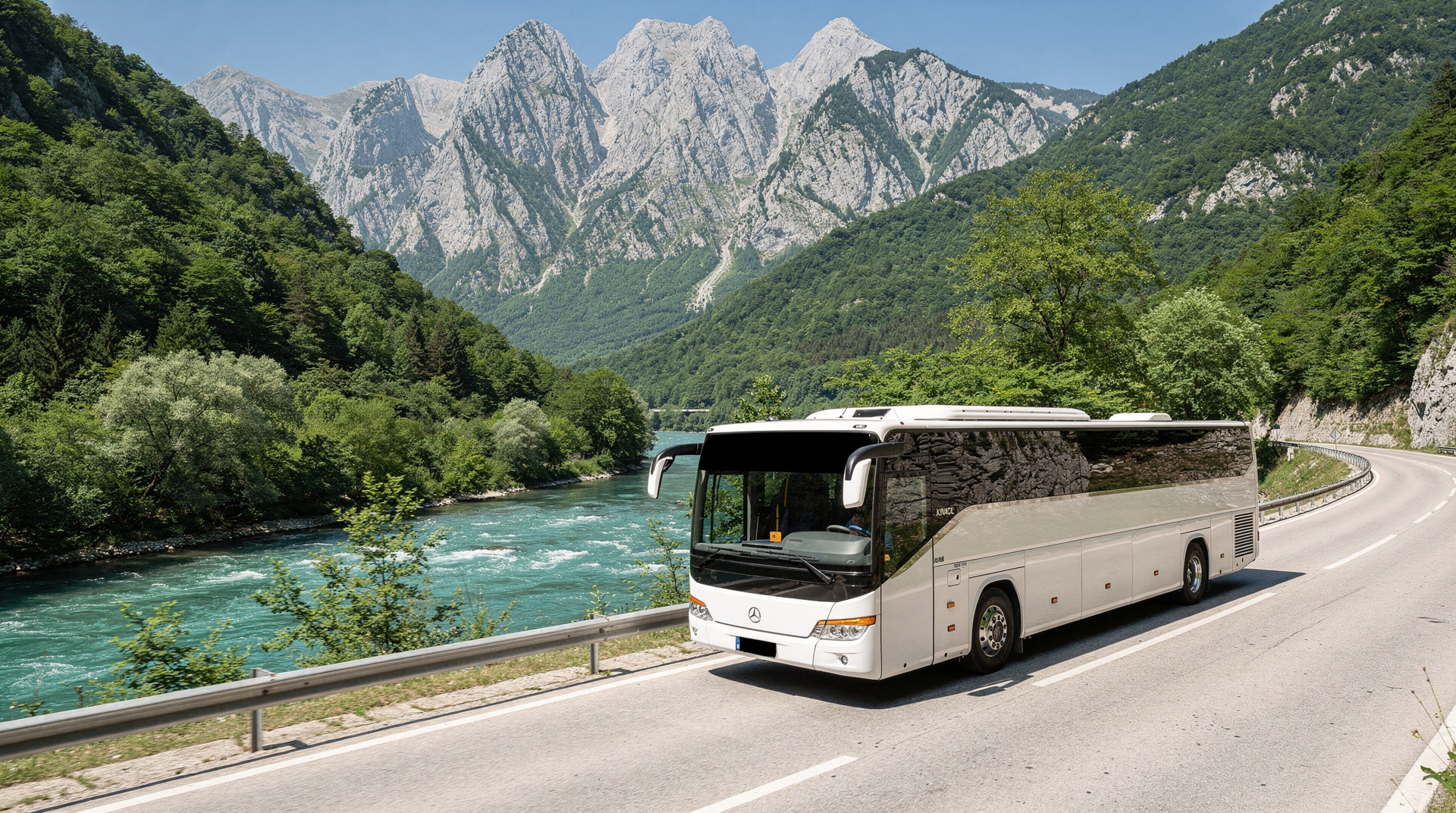
If you prefer a ready-made structure, the 7-day itinerary, the 10-day itinerary and the 14-day grand tour each lay out these loops day by day. Travelling without a car is perfectly workable on the classic loop; the buses in Bosnia guide explains how the intercity services work.
Choosing where to base yourself
Two bases do most of the work on any first trip. In the capital, the Sarajevo where to stay guide helps you weigh the old town against quieter neighbourhoods, and in Herzegovina the Mostar where to stay guide does the same for the old bridge area versus its surroundings. Whichever you choose, book early for the busy months and read the cancellation terms before paying.
Practical logistics for 2026
Currency: BAM, pegged to EUR. Always exchange or withdraw BAM. Avoid paying in EUR in tourist areas — the rate used is typically less favourable than the official 1.956 peg.
SIM card: Roaming charges apply for some non-EU plans. Buying a local SIM on arrival (A1, BH Telecom, HT Eronet are the three operators) gives data coverage for navigation at low cost.
Driving: A car opens up Bosnia significantly. Required for Sutjeska, Una/Bihać, and much of the mountain hiking. The renting a car in Bosnia guide covers cross-border insurance rules (important if collecting from Croatia).
Mines: Stay on marked trails in rural and mountain areas. The landmine safety guide is a practical read before hiking anywhere off established routes.
Safety: Bosnia is safe. Standard precautions apply. The is Bosnia safe guide covers the specifics including the mines context.
Money, connectivity and paperwork
For a fuller picture of how money works on the ground, see the Bosnia money and currency guide, and skim the Bosnia scams to avoid page before you leave so nothing catches you off guard.
Cash still matters. Cards are widely accepted in Sarajevo and Mostar hotels and restaurants, but smaller guesthouses, rural konobas, kafanas and market stalls are cash-only. Withdraw BAM from ATMs rather than carrying euros — dynamic currency conversion at Bosnian ATMs (being offered a EUR total instead of BAM) is a bad rate; always choose to be charged in BAM.
Travel insurance. Bosnia is not in the EU and standard EHIC-style coverage does not apply. A basic travel insurance policy covering medical treatment and activity coverage for rafting/hiking is worth the modest cost, particularly if your itinerary includes the Neretva rafting or backcountry hiking near Sutjeska.
Entry rules. Most EU, UK, US, Canadian and Australian passport holders can enter Bosnia visa-free for up to 90 days; check current rules for your nationality before booking, since these do shift.
Combining Bosnia with neighbouring countries
Many 2026 trips are not Bosnia-only. The classic pairing is a Croatia coast start or end, since Dubrovnik and Split both have short overland connections into Herzegovina — see the Split to Sarajevo route and the Dubrovnik to Sarajevo route for the practicalities of the border crossing and the Neum corridor. If you would rather not drive the border yourself, a guided day trip to Mostar from Dubrovnik is an easy way to sample Herzegovina before committing to a longer stay. A wider Balkans loop taking in Montenegro is covered in the balkans multi-country guide.
Frequently asked questions about Planning a Bosnia trip in 2026 — everything you need to know
Do I need a car to see Bosnia in 2026? Not for a Sarajevo–Mostar loop — buses cover that route well and the Sarajevo to Mostar transport guide lays out the options. A car becomes genuinely useful once you add Sutjeska, the Una region, or want flexibility for smaller villages like Lukomir.
Is Bosnia still cheaper than Croatia in 2026? Yes, noticeably. Accommodation, food and tours in Bosnia generally run well below equivalent Croatian coastal prices, though Sarajevo’s popular central guesthouses have risen in cost during peak summer weekends.
The honest planning note
Bosnia is not a country that rewards rushing. The best experiences — the Tunnel of Hope with a good local guide, the Neretva rafting through the canyon, a morning in Lukomir before anyone else arrives, a slow afternoon in Trebinje’s old town — all require time. They require the patience to stay rather than pass through.
The gap between the visitors who do Bosnia in two days and the ones who do it in ten is not just quantity — it is a qualitatively different experience of the same country. Plan more time than you think you need. You will use it.
Top experiences
Bookable activities with verified prices and instant confirmation on GetYourGuide.