Sarajevo Roses — the city's shell-crater memorials explained
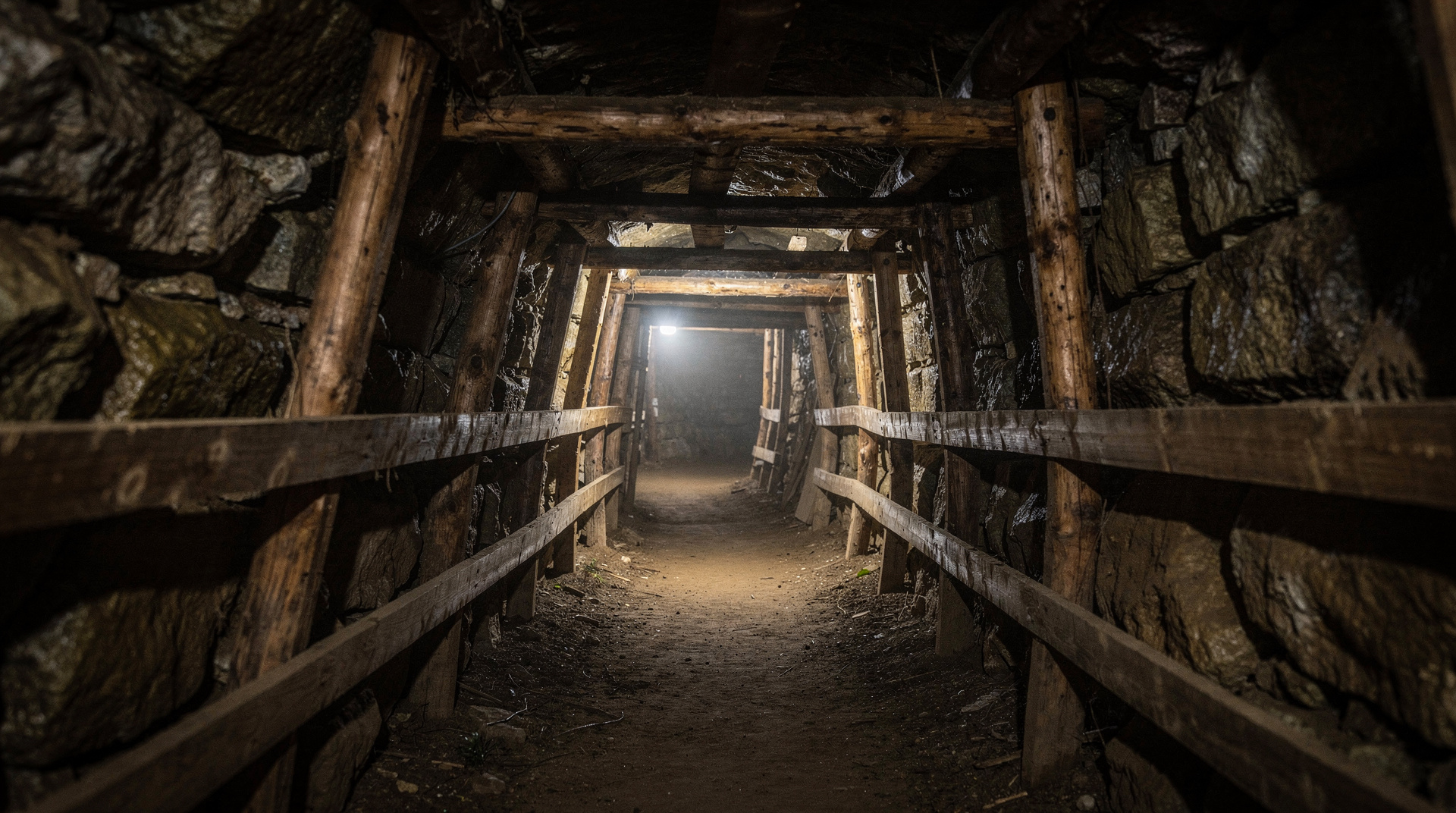
Sarajevo: Guided City Highlights Tour with Sarajevo Tunnel
What are the Sarajevo Roses?
Sarajevo Roses are shell craters left by mortar explosions during the 1992–1996 siege that have been filled with red resin to mark locations where at least three civilians were killed. They appear on pavements and streets throughout the old town and city centre as permanent, weather-resistant memorials.
| At a glance | |
|---|---|
| Where | Ferhadija pedestrian street, Markale market area, near Vijećnica, central Sarajevo |
| Cost | Free — they’re part of the public pavement |
| Time needed | Around 20 minutes for the main Ferhadija cluster; an hour for a fuller walk |
| Getting there | Walkable from Baščaršija; no transport needed |
| Best time | Daylight hours — the resin is easiest to spot in good light and quiet streets |
Walk along Ferhadija, the pedestrian street that connects the old Ottoman bazaar of Baščaršija with the Austro-Hungarian city centre, and you will notice them underfoot: irregular red shapes set into the pavement, looking at first like abstract decorations or old repairs. They are neither.
Each red-filled crater marks a location where at least three civilians were killed by a mortar shell during the Siege of Sarajevo (1992–1996). The craters are real — the impact points of real shells that fell during real shelling — filled with red resin and left in the pavement of the city as permanent, unlabelled memorials. They are called Sarajevo Roses.
The physics of a mortar shell and the shape of the rose
A mortar shell detonating on a concrete surface sends shrapnel outward in all directions, fracturing the surface in a radial pattern. The fracture lines spread from the impact point like the petals of a flower. This is coincidence — physics rather than intention — but it is the coincidence that gives the memorials their name.
The craters were not created as memorials. They were simply there in the pavement after the shelling, repaired in the years after the war with standard materials. At some point, a decision was made to preserve a subset of them — those where the number of deaths exceeded a particular threshold — and to fill them with red resin rather than grey concrete. The result is a set of marks that are simultaneously part of the street surface and apart from it: visible to anyone looking down, invisible to anyone not already looking.
The Markale marketplace massacres
The most significant cluster of Sarajevo Roses in the old town relates to the Markale marketplace, which was shelled twice during the siege.
First Markale massacre, 5 February 1994: A single 120 mm mortar shell landed in the open-air marketplace when it was crowded with people. 68 people were killed and 144 wounded. The ICTY found that the shell was fired from a VRS position and that the attack was deliberate. This massacre triggered NATO’s ultimatum to the VRS to withdraw heavy weapons from around Sarajevo.
Second Markale massacre, 28 August 1995: A second shell landed in the same market, killing 43 people and wounding 75. This attack triggered NATO’s Operation Deliberate Force — the air campaign against VRS positions that, combined with ground operations, brought the war to its end within months.
The Markale market is still functioning today, on Mula Mustafe Bašeskije street — it sells fruit, vegetables, meat and everyday goods. Several Sarajevo Roses in and around the market area mark the sites of these events.
Where to find Sarajevo Roses
The roses are distributed throughout the old town and city centre. The highest concentrations are on:
Ferhadija (the main pedestrian street): several roses on the pavement between the old town and the Catholic Cathedral area.
The Markale area (Mula Mustafe Bašeskije): near the market entrance.
Near the National Library (Vijećnica): the library itself was set ablaze by shells in August 1992 and burned for three days; roses in the surrounding area mark mortar impacts nearby.
Along the Miljacka riverbank: near the crossing points that were among the most exposed during the siege.
Some roses have been lost over decades of road and pavement repairs. Urban renovation has covered a number of them. The remaining ones have no labels, no plaques, no explanation — they require knowledge to read, and a guide to find with any certainty.
Sarajevo: guided city highlights tour with Sarajevo TunnelWalking the roses: a route
A self-guided walk from Baščaršija to the Eternal Flame (Vječna Vatra) along Ferhadija takes about 20 minutes and passes most of the roses in the old town area. The Eternal Flame itself — lit in 1946 to commemorate victims of the Second World War, kept continuously alight through the siege — is at the end of the pedestrian zone and is itself a layered memorial.
For a properly contextualised walk, a war-history tour will locate the roses accurately, explain the specific incidents they mark, and connect them to the broader geography of the siege. Most Sarajevo war-history walking tours pass through this area.
Sarajevo: Bosnian War and fall of Yugoslavia tour with TunnelThe roses in the context of Sarajevo’s war memory
The roses occupy an interesting space in Sarajevo’s landscape of memory. They are not monuments in the conventional sense — there is no bronze, no inscription, no dedicated institution to visit. They are part of the street, embedded in the infrastructure of everyday life, encountered by tourists and locals equally, often without recognition.
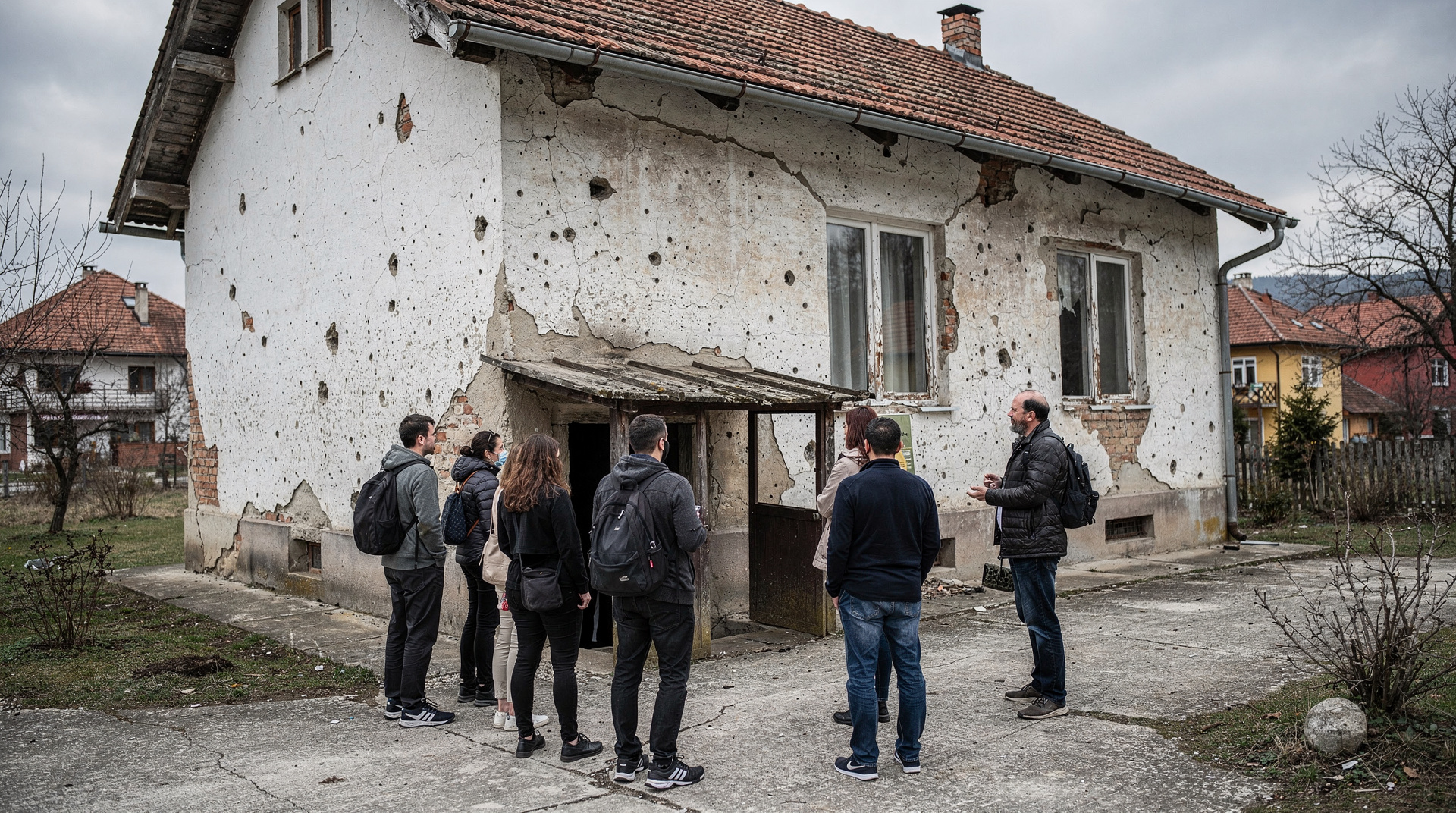
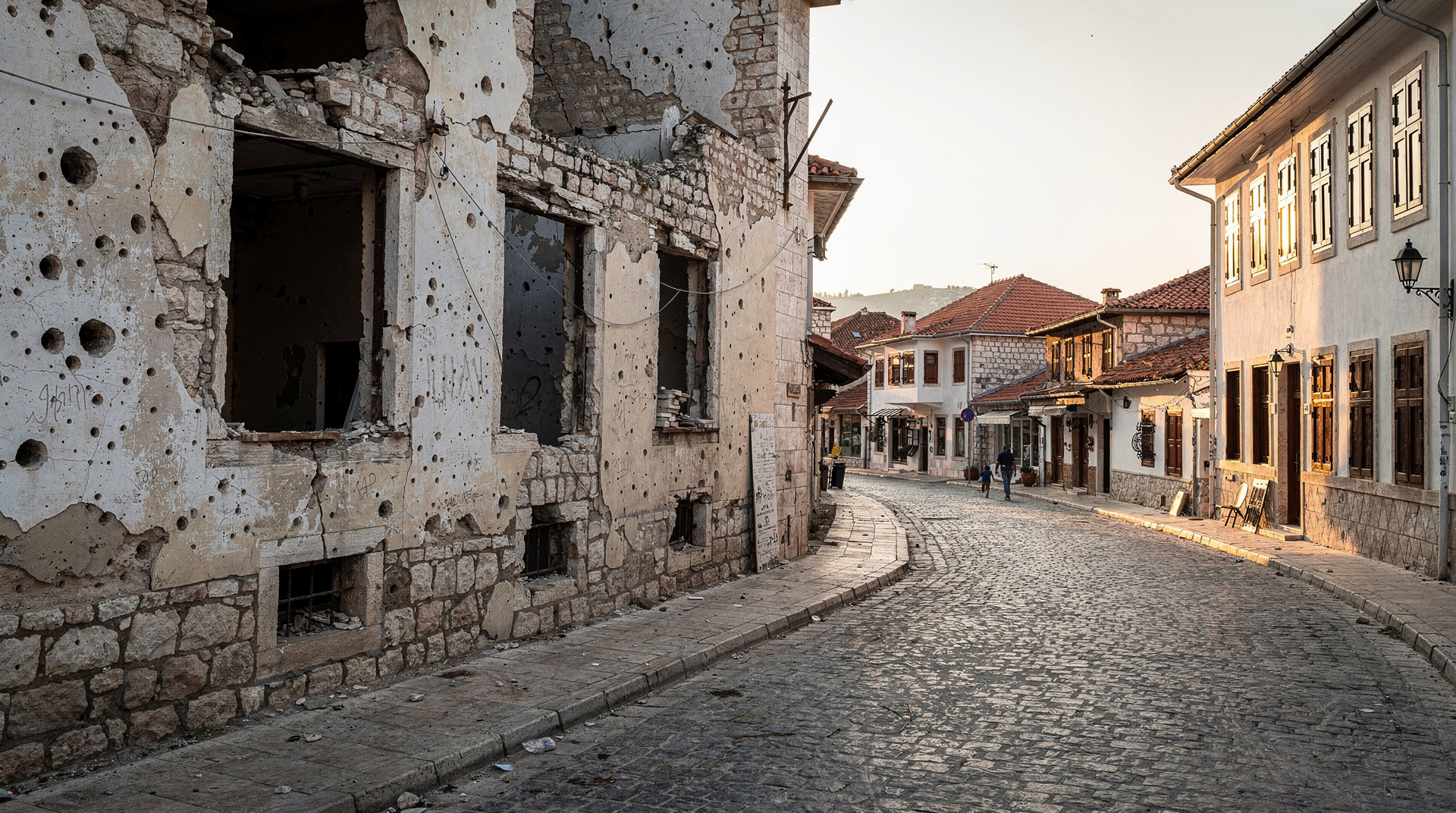
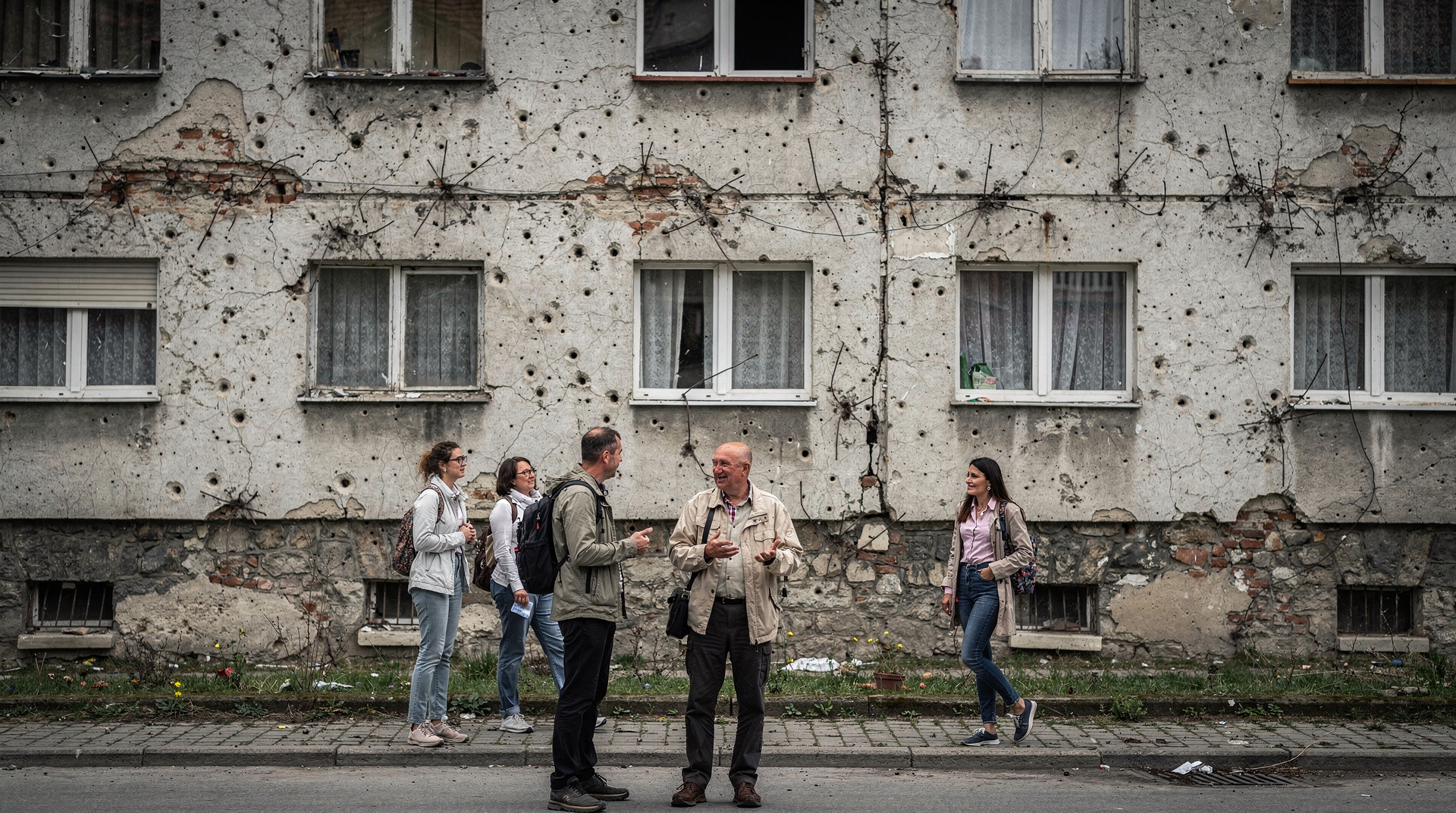
This quality — the memorial embedded in the ordinary — reflects something about how Sarajevo has chosen to carry its history. The city has not built a single large memorial site or museum of the siege (the History Museum’s exhibition and the Tunnel of Hope come closest). Instead, the traces of the siege are distributed across the city, visible in pavements, in shrapnel-scarred facades, in the gaps where buildings once stood.
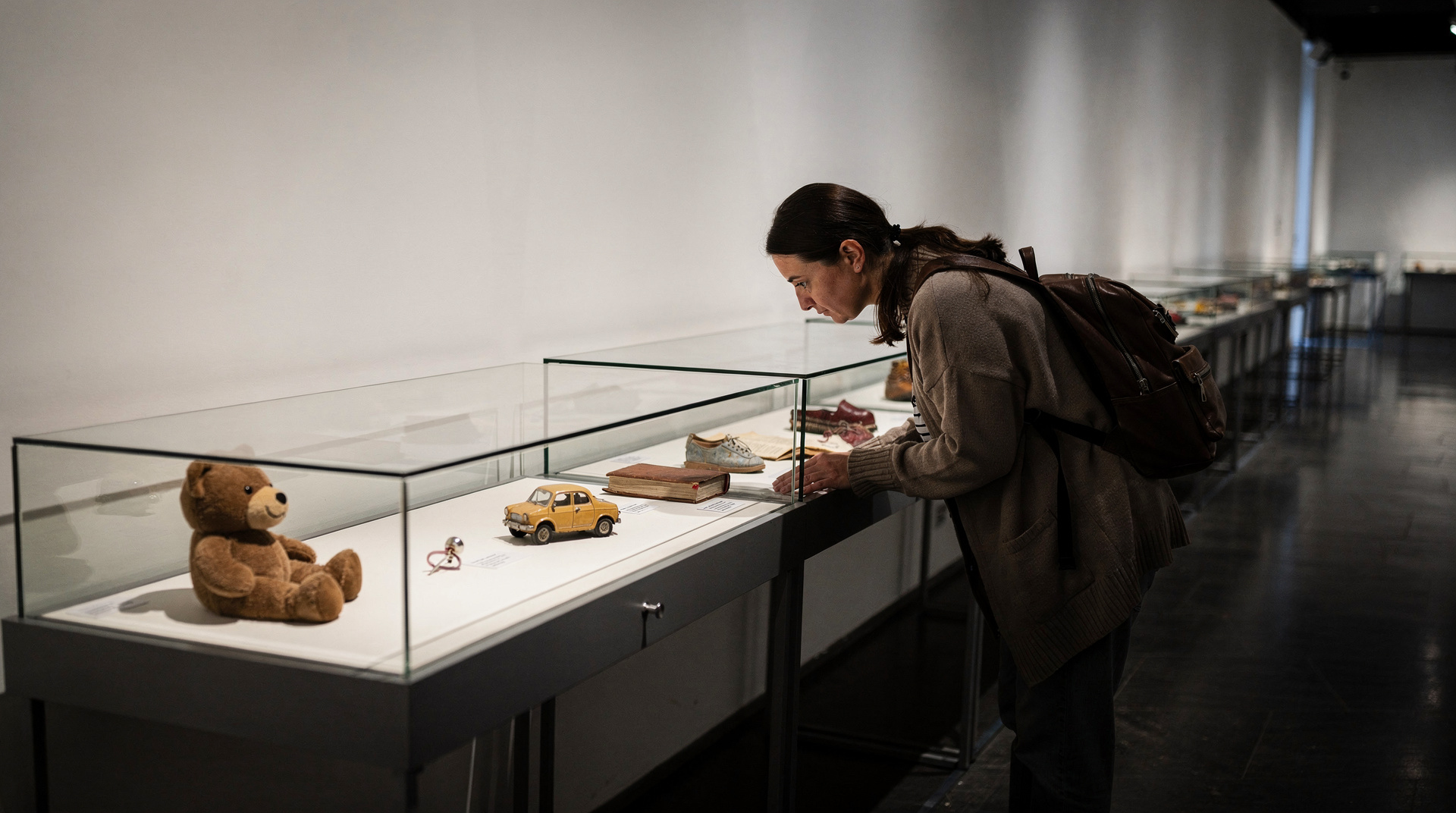
The War Childhood Museum operates differently — it is a formal institution with curated objects and testimonies. The roses, by contrast, are uncurated, informal, embedded. Together they represent two modes of memory: the institutional and the environmental.
For visitors spending time in Sarajevo, spending an hour walking the area between Baščaršija and Ferhadija with the roses in mind — noticing the ones you might have missed, pausing at the Markale market — is one of the most honest ways to take the city’s history seriously without it becoming a performance.
The Sarajevo destination guide covers how to structure two to four days in the city across war history, culture, food and the mountains above. The Bosnia war history itinerary extends the journey to Srebrenica, Konjic and Mostar.
Reading the roses without a guide
If you’re walking without a guide, a practical approach is to slow down deliberately on Ferhadija rather than scan for the shapes at a normal walking pace — the resin has weathered over the decades and some roses are subtler than others against worn paving. Look particularly at the transition zone where the pedestrian street widens near the market stalls; this stretch saw the highest concentration of shelling given its role as a daily gathering point. Comparing what you find against the sniper alley guide, which covers the exposed boulevard further south, helps build a fuller picture of how the siege reached into both crowded streets and open roads simultaneously.
Sarajevo Roses in the wider landscape of Balkan war memory
Sarajevo’s approach — distributed, unlabelled, embedded in ordinary infrastructure — contrasts with more conventional memorial sites elsewhere in the region, such as the formal genocide memorial at Srebrenica, which uses names, dates and a curated visitor experience. Seeing both approaches on the same trip, if your itinerary allows it, illustrates two legitimate but very different ways a society can choose to remember mass violence: the institutional, didactic model at Srebrenica, and the informal, encountered-by-accident model of the roses in Sarajevo’s streets.
Before you go: the background worth knowing
The roses make the most sense when you already have a sense of why Sarajevo was besieged and how the city ended up divided by front lines. The history of Bosnia for travelers gives the long view, and the Yugoslav wars explained sets out how the country came apart in the early 1990s. If you prefer to start further back, the story of the assassination of Franz Ferdinand shows how often this small city has found itself at the centre of events far larger than itself.
None of this needs to be read in one sitting. A short read the evening before is enough to change what you notice the next morning on Ferhadija: the way a patch of pavement is slightly different, the way a facade nearby still carries pockmarks, the way locals walk past without looking down.
How the roses sit alongside the rest of the old town
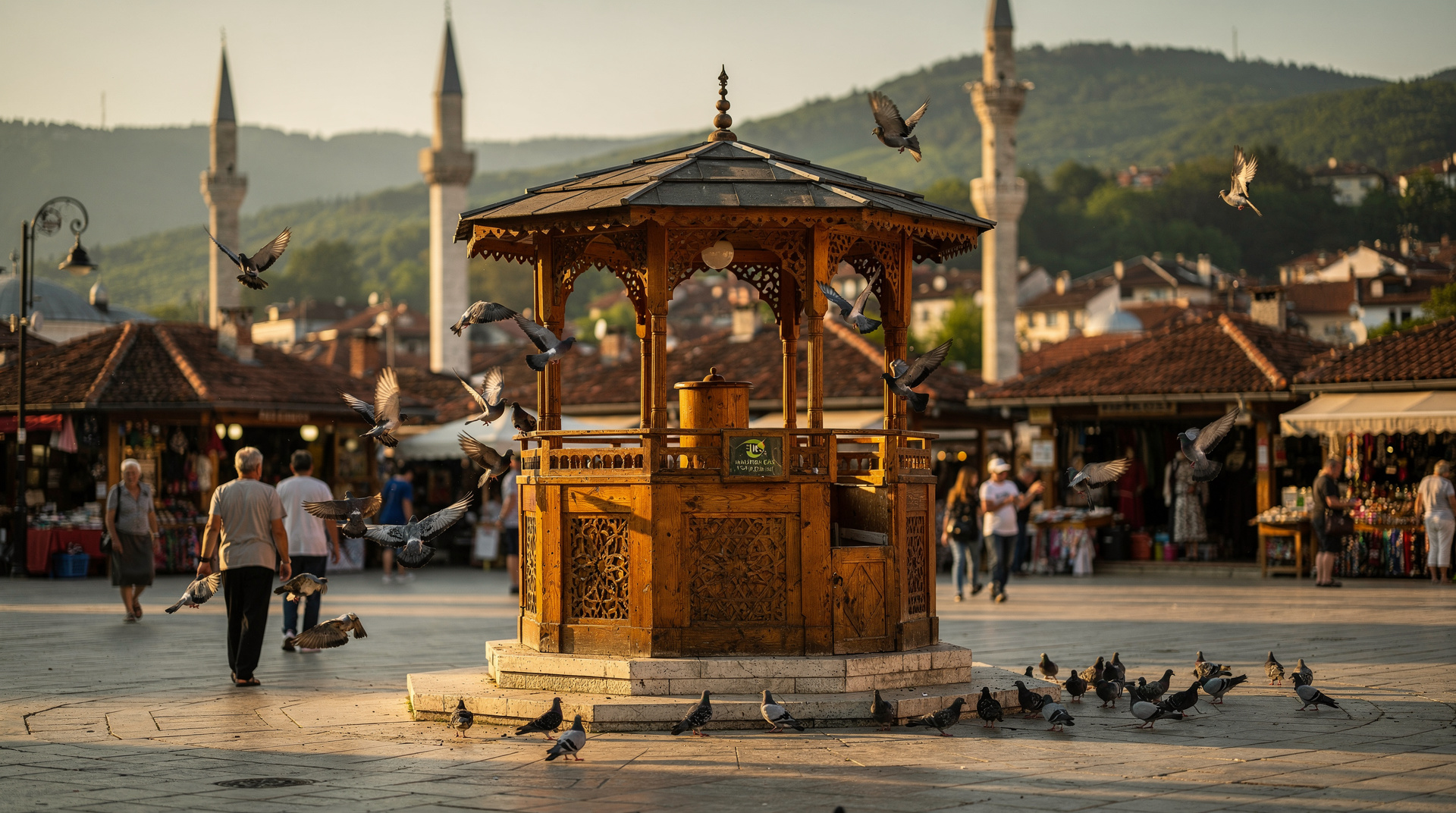
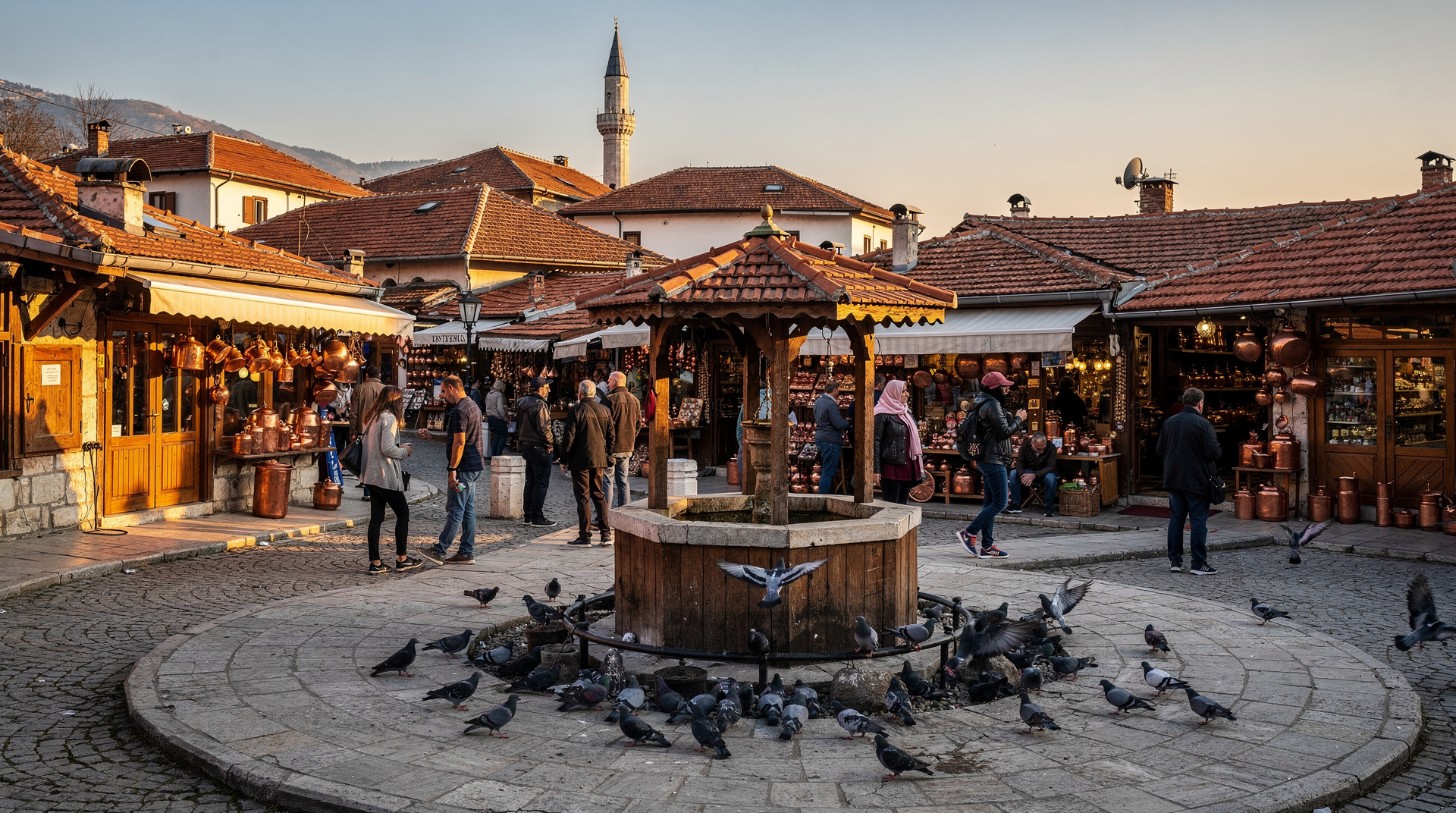
One of the odd features of walking this part of Sarajevo is how many layers of the city sit within a few minutes of each other. The Ottoman-era bazaar lives in Baščaršija, the Habsburg-era boulevards are covered in the guide to Austro-Hungarian Sarajevo, and the mix of mosques, churches and synagogues is the subject of the Sarajevo faiths guide. The roses add one more layer, the most recent and the most painful, to a district that is otherwise easy to read as a sequence of pleasant cafés and shopfronts.
That contrast is part of the experience. You can stand on a rose, or rather beside it, with the smell of coffee and grilled food drifting from the next street. The Sarajevo meeting of cultures guide explores how the city holds together traditions that other places keep apart, and the roses are a reminder that this coexistence was tested severely and not abandoned.
A respectful way to walk
The roses are public, free and unguarded, which means their treatment depends entirely on visitors. A few habits help:
- Walk around, not across. Many locals step around the resin without thinking about it. You do not have to, but it is a quiet courtesy that people notice.
- Keep your voice down. The streets are busy and cheerful, yet some of the people around you will have lived through the events these marks record.
- Photograph with care. A single image of the resin and the surrounding pavement says everything. Posing for portraits on top of a rose does not.
- Resist the urge to turn it into a checklist. You do not need to find every rose. Finding two or three and understanding what they mean is a better outcome than ticking off a map.
The first-time-in-Sarajevo blog post and the reflections in Sarajevo siege remembered give a traveller’s perspective on this same tension between a lively city and a heavy past, and are worth a read if you want to hear how other visitors approached it.
Combining the roses with other stops
Because the roses cost nothing and take little time, they fit easily into a longer day. A natural pairing is the city’s collection of museums of Sarajevo, where the war is told through objects, documents and testimony rather than through the street itself. Visitors interested in the broader story of the city in the 1980s may also want to look at the 1984 Winter Olympics, whose venues on the surrounding mountains, including Trebević, later became part of the siege landscape.
If you are building a full programme, the four-day Sarajevo deep dive places a walk like this alongside food, culture and time in the hills, so that the war history never becomes the only thing you take from the city. For a first visit, the Sarajevo food tour guide and the guide to Bosnian coffee culture make good counterweights after a morning spent on heavier subjects.
Practical notes for the walk
The area is compact and flat, so the walk suits most visitors, and it works well in the early morning when the pedestrian street is quiet. If you are choosing where to base yourself, the guide on where to stay in Sarajevo explains which neighbourhoods put you within a short stroll of the old town. A few visitors are tempted by pushy sellers and inflated offers near the busiest squares; the Sarajevo tourist traps guide helps you spot them without letting them spoil the walk.
Travelling with family raises the question of how much to explain. The roses can be a gentle way to introduce older children to what happened, since there is nothing graphic to see, only a mark in the ground and a conversation to have. The Sarajevo with family guide and the broader advice on visiting Bosnia with kids discuss how to pace a trip so that heavier sites are balanced by lighter ones.
Some travellers also ask whether the city is safe for a walk like this. The roses lie on busy, well-used central streets, and the general picture is covered in the is Bosnia safe guide. If you extend your trip into the countryside, take the landmine safety guidance seriously and stay on marked paths.
Where to go next
Visitors who want to continue the thread beyond Sarajevo have several options. The Srebrenica day trip guide covers a very different kind of memorial visit, and the Mostar war history guide shows how the conflict shaped another of Bosnia’s best-known cities. Whichever direction you take, the roses are a useful first lesson: much of what happened here is still written into ordinary places, and it is up to the visitor to look.
Frequently asked questions about Sarajevo Roses — the city's shell-crater memorials explained
How many Sarajevo Roses are there?
What is the criteria for creating a Sarajevo Rose?
Where can I find the most visible Sarajevo Roses?
Why red?
Are there plaques or labels beside the Sarajevo Roses?
Top experiences
Bookable activities with verified prices and instant confirmation on GetYourGuide.