First time in Sarajevo — what to expect
Sarajevo sits in a valley so narrow that the city simply had to climb the hillsides. From Žuta Tabija fortress, perched above Baščaršija, you can see the whole mosaic: Ottoman minarets, Austro-Hungarian facades, Yugoslav-era high-rises, and the scarred concrete of buildings that have only recently been repaired. Nothing quite prepares you for how layered this place is.
I arrived on a grey October evening, stepped off the bus at the main terminal, and spent the first twenty minutes slightly lost on purpose. That is, I think, the right way to arrive in Sarajevo.
| At a glance | |
|---|---|
| Where to base yourself | Baščaršija or the Ferhadija corridor for walkability |
| Minimum time needed | 3 days; 4–5 if you want day trips too |
| Rough daily budget | Around 40–70 BAM (20–35 EUR) mid-range, food and local transport included |
| Getting there | Sarajevo International Airport, or bus from Mostar, Split, or Dubrovnik |
| Best time to go | Late spring or early autumn — see the best time to visit Bosnia guide |
The city is smaller than you think — and larger
Sarajevo proper has around 300,000 people. The historical core — Baščaršija and the old bazaar quarter — is compact enough to walk end to end in half an hour. And yet the city keeps revealing new layers. The Latin Bridge where the Austro-Hungarian heir was shot in 1914. The Tunnel of Hope dug under the airport runway during the siege. The yellow “Sarajevo roses” — mortar impact craters filled with red resin, embedded in pavements across the city.
Give yourself at least three days. Two is survivable but rushed. One day is not enough.
If you like to understand a place before you walk it, two background reads pay off here. Bosnia history for travellers gives the long view, and Sarajevo, a meeting of cultures explains why mosques, churches and a synagogue ended up as neighbours. The Austro-Hungarian Sarajevo guide is the one to open before you walk west of the bazaar, and the Ottoman heritage guide does the same for the old quarter.
Which neighbourhood to base yourself in
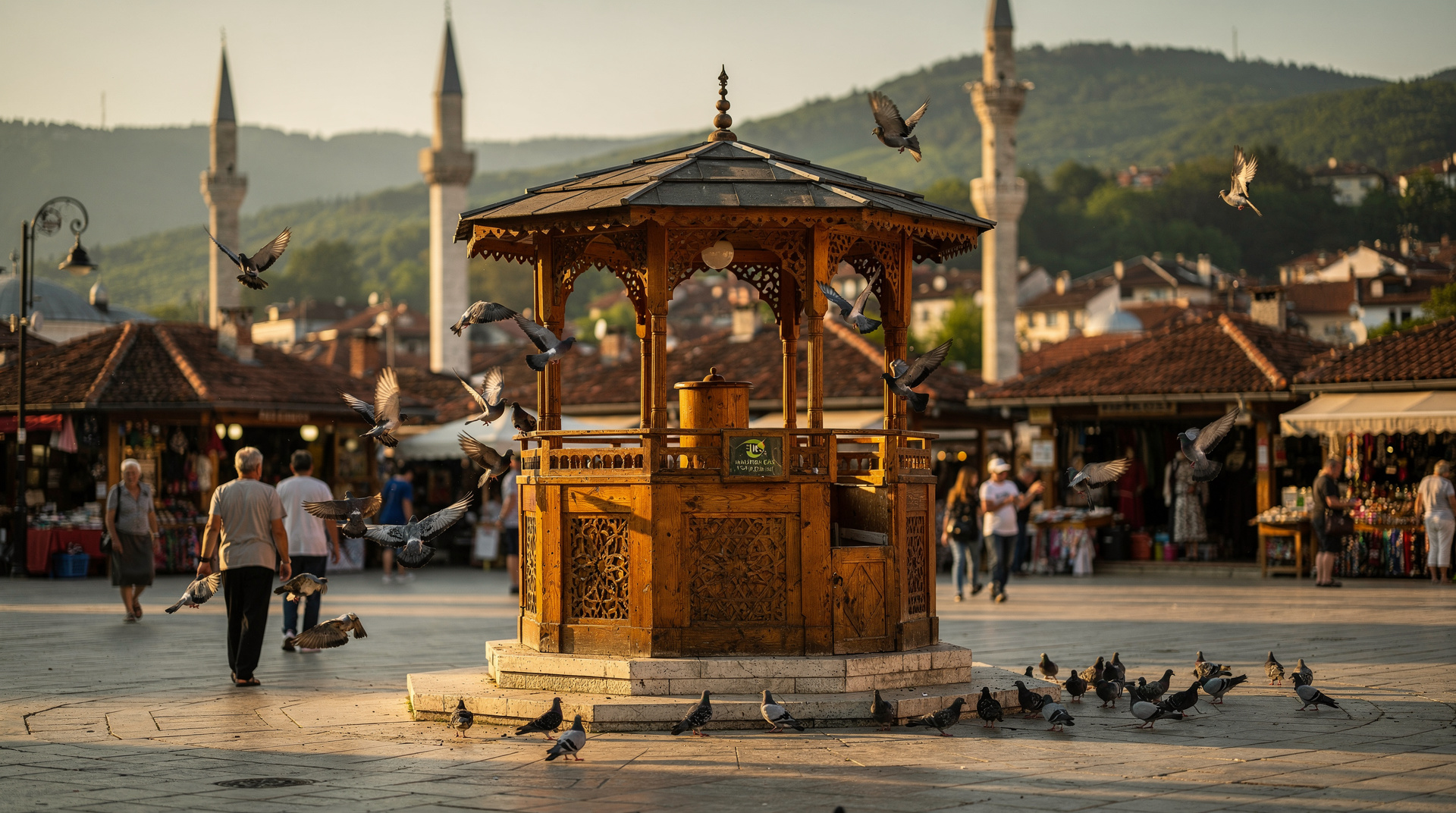
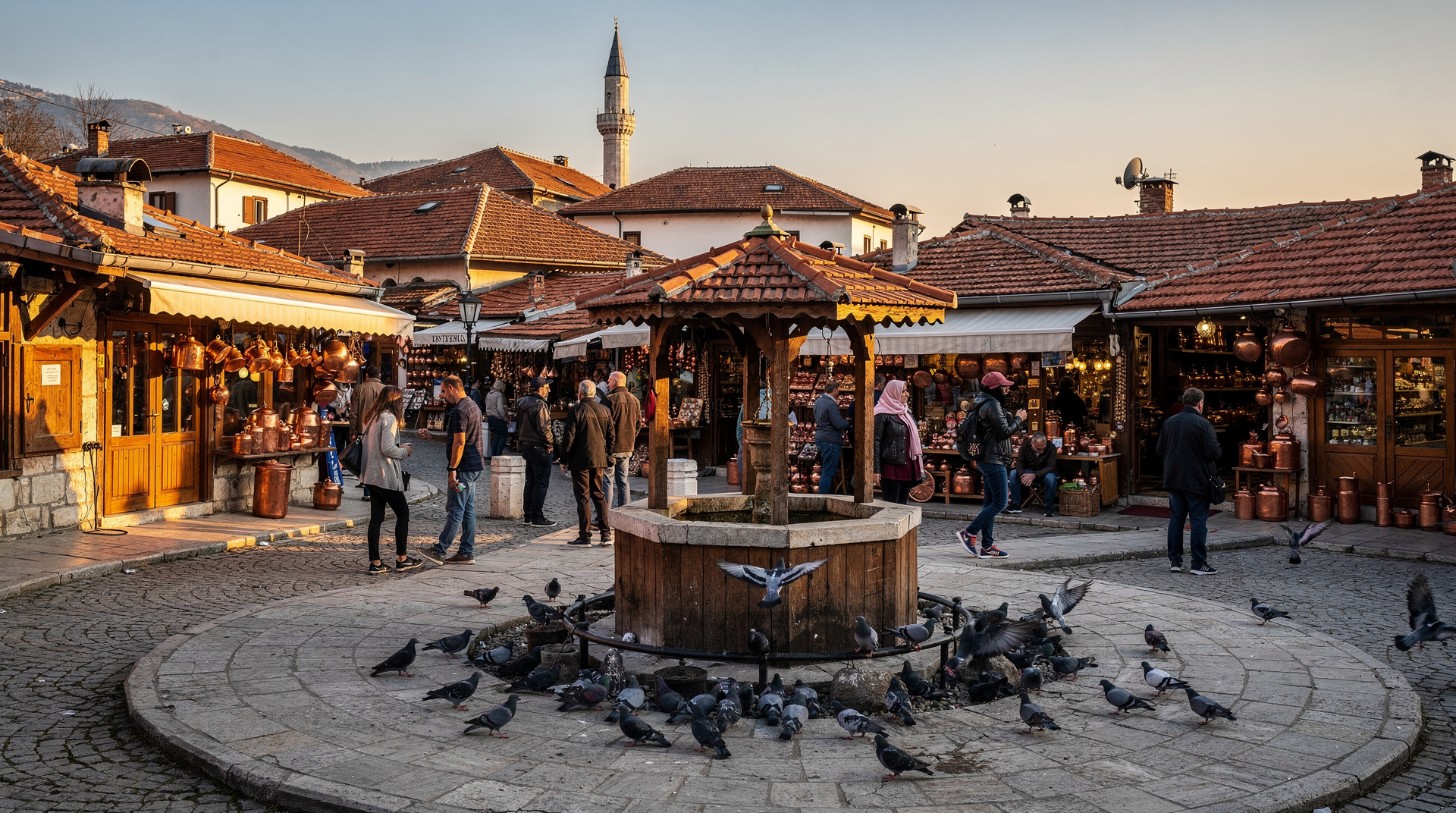
Most first-timers stay in or near Baščaršija, and for good reason: it puts everything within walking distance. The old bazaar, the Gazi Husrev-beg Mosque, the river, the market streets — all of it is on your doorstep. Budget options cluster here too, from small family guesthouses to a handful of well-run hostels.
The Ferhadija street corridor connects Baščaršija to the Austro-Hungarian zone to its west. Here the architecture shifts abruptly — you cross an invisible line where minarets give way to Habsburg-era coffeehouse arcades. It is one of the more disorienting (and delightful) urban transitions in Europe.
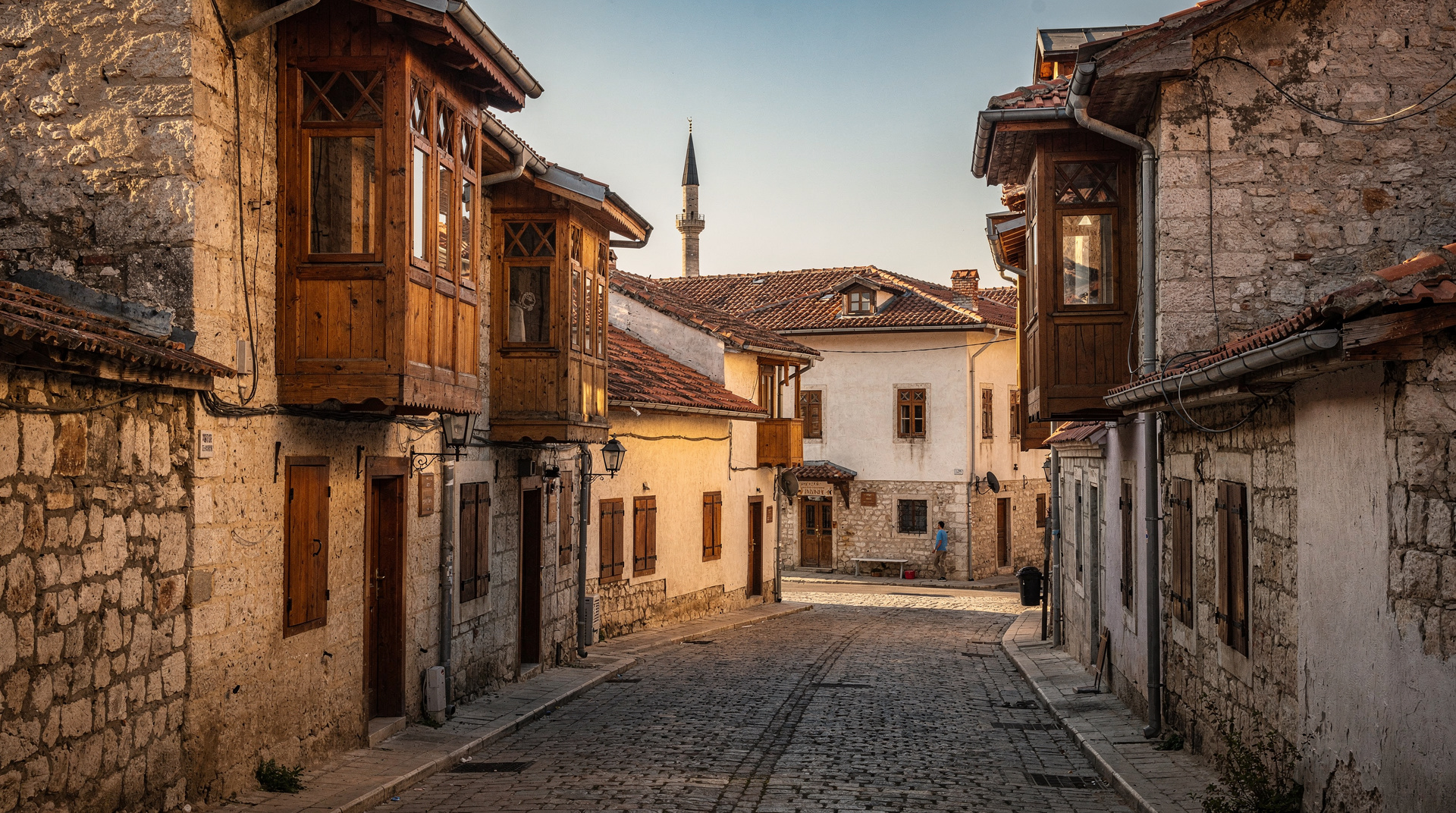
For a quieter stay, the Kovači and Bistrik hillside neighbourhoods above Baščaršija are genuinely lovely: steep cobblestone lanes, fewer tourists, views down over the minarets.
See the full Sarajevo where to stay guide for neighbourhood breakdowns and accommodation picks.
On your first morning, a walking tour of the old town with a local guide is a gentle way to get your bearings before you strike out alone.
The siege is still visible
The 1992–1995 siege of Sarajevo was the longest siege of a capital city in modern warfare. Nearly four years. Nearly 14,000 dead. And it ended less than three decades ago.
This is not ancient history — many of the people you will meet were here. Bullet holes remain on walls that haven’t been replastered. The yellow roses are everywhere once you start looking. The War Childhood Museum near the main street is one of the most quietly devastating exhibitions I have ever walked through.
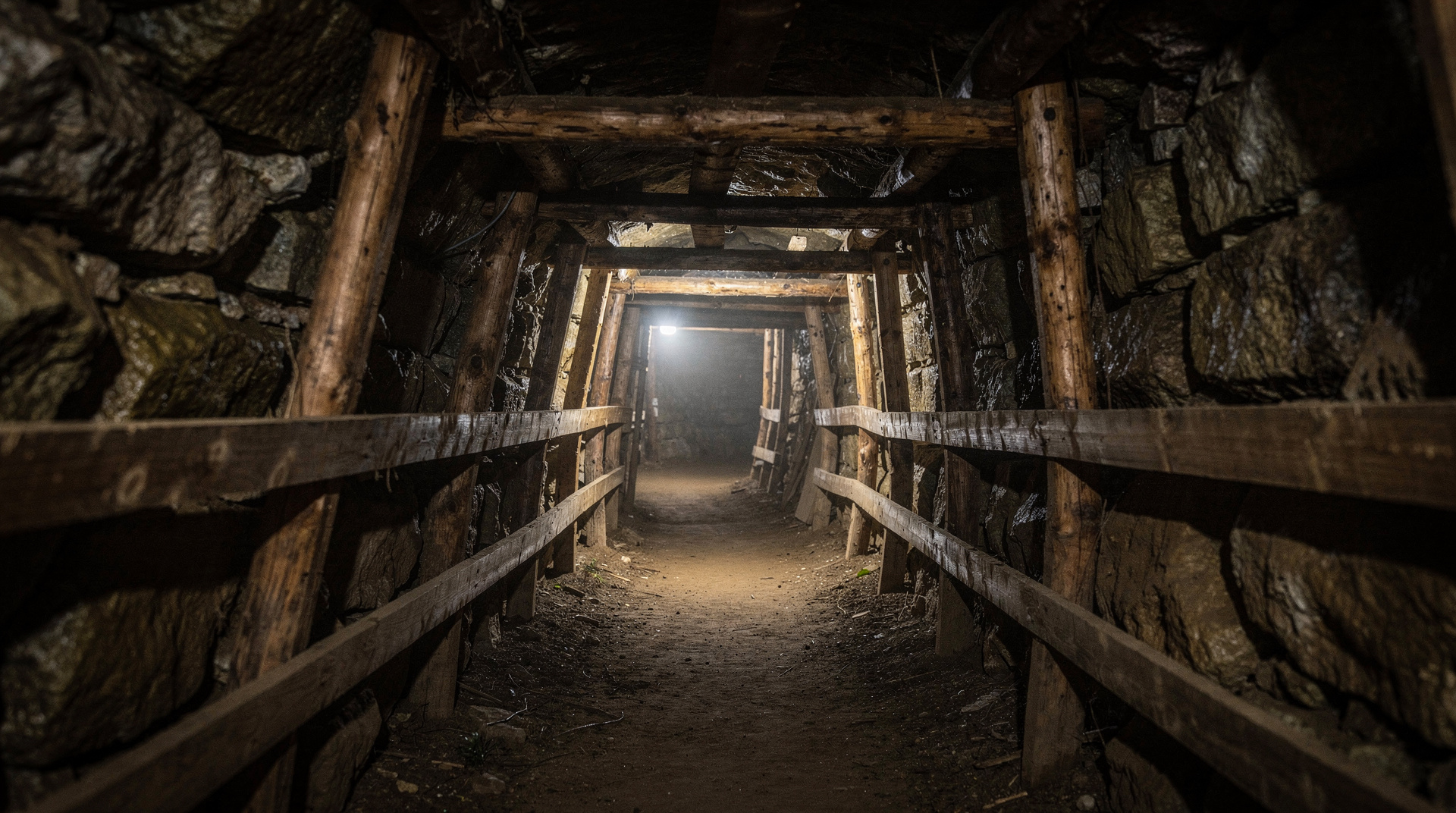
A Bosnian War and Tunnel of Hope tour is, in my view, the single most important thing you can do in Sarajevo. Not for grief tourism, but for understanding. A good local guide turns context into story, and the Tunnel of Hope — dug by hand to smuggle food and weapons under the UN-controlled airport — is extraordinary as a physical space.
Walking the city with the past in mind changes what you notice. The Sarajevo roses and memorials guide helps you read the resin-filled marks on the pavements, and the Sniper Alley guide explains the long avenue you will almost certainly cross on your way in from the airport or station. If the wider story matters to you, the Yugoslav wars explained sets the siege in its context, and the Sarajevo war tour guide compares the ways of seeing it with a guide. Take your time, and do not try to fit all of it into one afternoon.
The coffee situation
Bosnian coffee is not espresso. It is not Turkish coffee, despite the visual similarity. It is its own ritual, and first-timers usually get it slightly wrong.
A džezva (the small copper pot) arrives at your table with a small cup, a sugar cube, and sometimes a piece of rahat lokum. The coffee has already brewed in the pot. You do not stir it. You let it sit for a minute, then gently pour — leaving the sediment at the bottom of the džezva. You sip slowly. The sugar cube can be dissolved in the coffee, or held between the teeth in the traditional way.
You will find cafés all over Baščaršija serving this. Budget around 2–3 BAM (roughly 1–1.50 EUR) per cup. If you want to understand the ritual better, there are Bosnian coffee workshops in the old town.
If you would rather learn the brewing by doing it, a hands-on Bosnian coffee workshop with a brewing lesson lets you make your own džezva under guidance.
The museums that matter most
Sarajevo has an unusually dense cluster of small, serious museums, and first-timers rarely have time for all of them. If you only prioritise two, make it the War Childhood Museum — first-person objects and testimony from people who were children during the siege — and one of the city’s mosques or faith sites, covered in the Sarajevo faiths guide, which explains how mosques, an Orthodox cathedral, a Catholic cathedral, and a synagogue all sit within a few streets of each other. The fuller museums of Sarajevo guide ranks the rest by how much time they actually deserve.
Coffee is also the easiest way to take a break from the heavier parts of the city. Sit for a while, watch the street, and let the afternoon slow down. The longer Bosnian coffee ritual story and the Sarajevo cafés we love are good companions if you want somewhere specific to settle.
Food: what to order
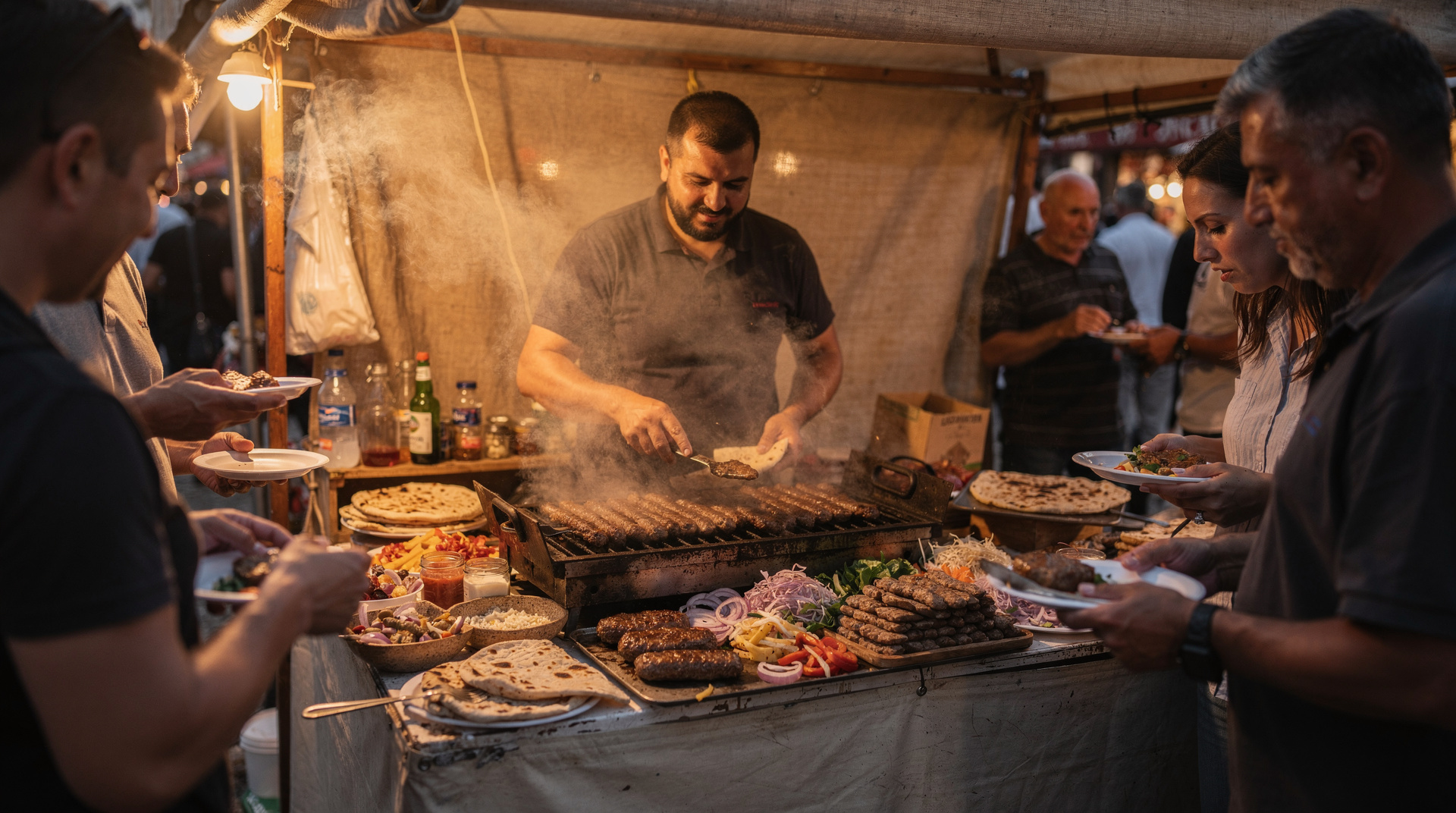
Start with ćevapi — small minced meat sausages served in somun flatbread with raw onion and kajmak (a clotted cream). The debate over whose ćevapi is best (Aščinica Inat Kuća? Petica Sarajevo?) is practically a civic institution. Get at least two portions over your stay to form your own opinion.
Beyond ćevapi, try burek (flaky pastry filled with meat, cheese, or spinach), dolma (stuffed vegetables), and grilled trout if you venture outside the city towards the rivers. The Sarajevo food scene rewards anyone willing to step off the main tourist drag.
If you want to go deeper than a single plate, the ćevapi in Sarajevo guide and the burek and pita guide explain what to order and how. A Sarajevo food tour is a sensible first-evening plan, and the wider Bosnian food guide covers the rest of the country’s table.
If you prefer someone else to choose the stops, a walking tour of the old town built around local food and coffee covers the classics in one relaxed outing.
Budget note: meals at a traditional restaurant in Baščaršija run 10–18 BAM (5–9 EUR) including a drink. The tourist-facing spots on the riverfront charge more for less.
Getting around
Most of what you need in central Sarajevo is walkable. Trams connect the city east to west — the number 1 and 3 lines run through the centre. Trams cost around 2.20 BAM and require a card or advance ticket (drivers don’t always sell tickets — buy from kiosks).
For the Tunnel of Hope on the city’s western outskirts, you’ll need a taxi or a tour. Taxis are metered and generally honest — around 10–12 BAM from Baščaršija. The ride-hailing app Bolt works well in Sarajevo. The Sarajevo public transport guide covers tram routes, tickets, and the funicular to Trebević in more detail.
Day trips worth planning from day one
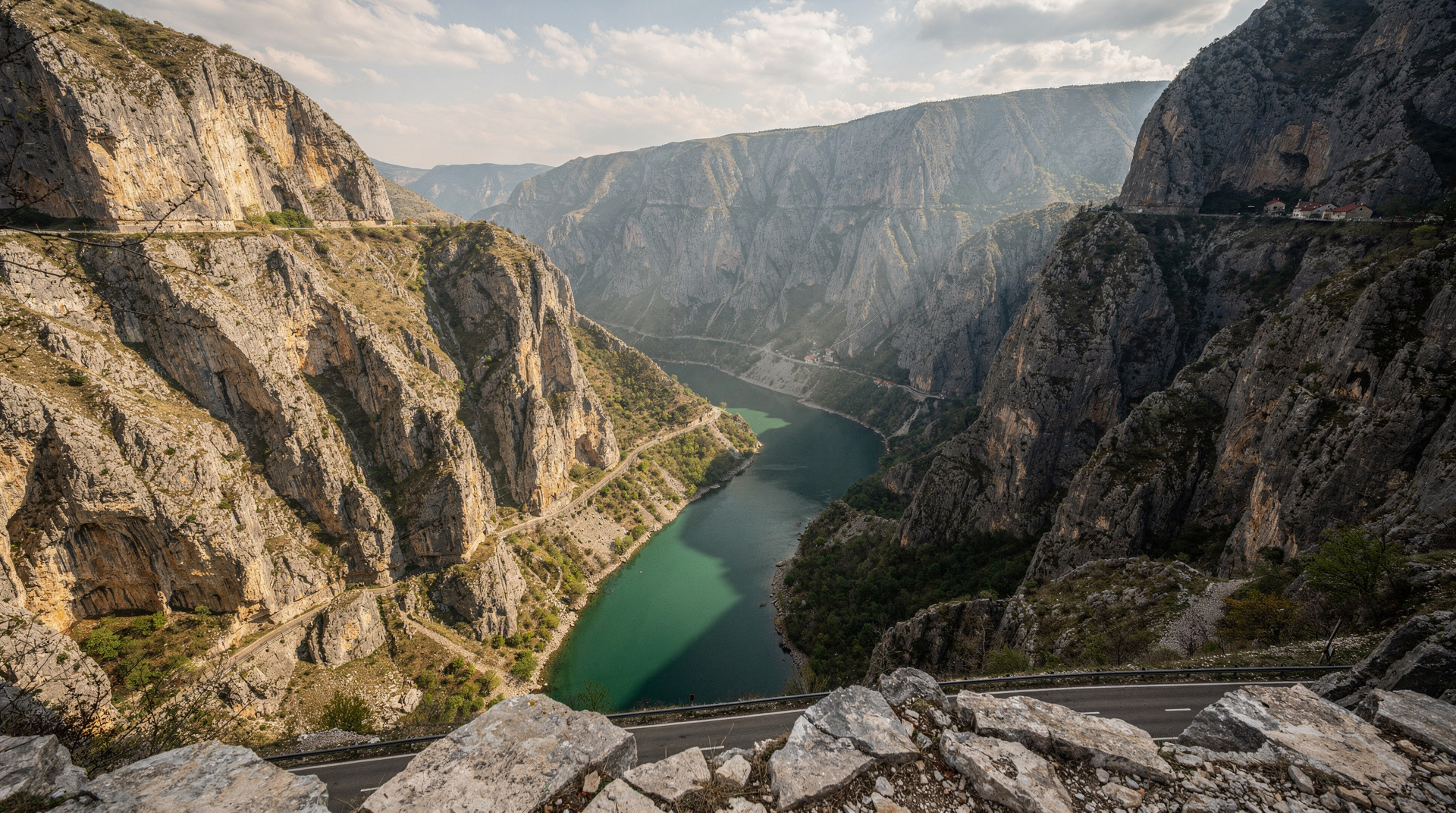
Sarajevo is a natural base for much of Bosnia. Konjic and Tito’s Bunker are about 50 kilometres south along the Neretva canyon — close enough for a half-day or full day. Mostar is around 130 kilometres south — doable as a day trip, better as an overnight.
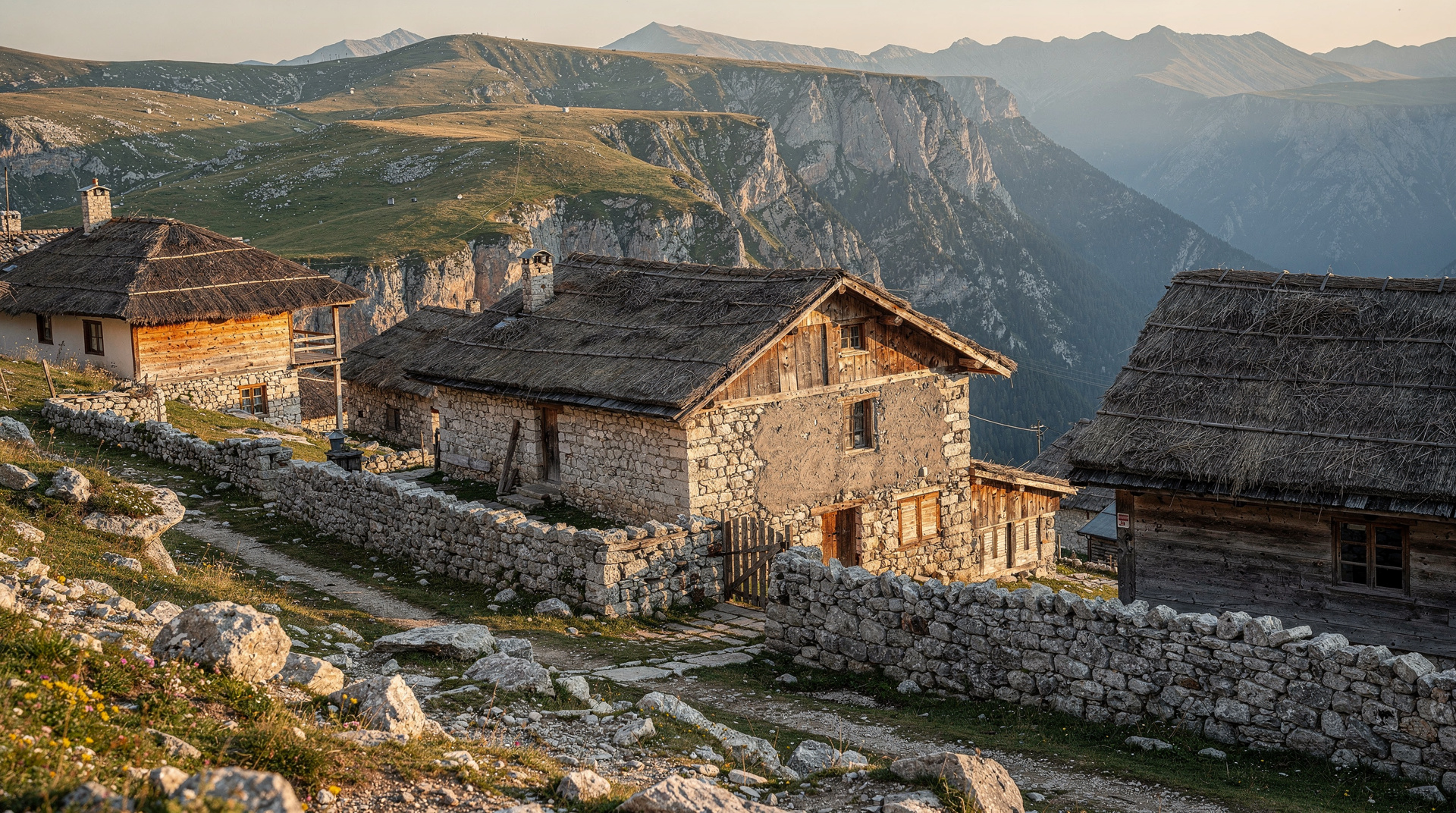
If you have four days or more, factor in Lukomir (Bosnia’s highest inhabited village, a hiking favourite) and possibly Travnik and Jajce to the northwest. Both are covered in the best day trips from Sarajevo guide.
Once you have your bearings, choose how long to stay and what else to add. The Sarajevo 4-day deep dive itinerary lays out a pace that works for a first visit, and Sarajevo and Mostar in three days suits anyone who wants both cities. If Bosnia is only one stop on a longer trip, how many days in Bosnia helps you split your time, and Sarajevo with family is worth a look if you travel with children. The Sarajevo destination page pulls the rest together.
A few honest caveats
The main tourist trap in Sarajevo is not anything alarming — it’s just overpriced restaurants on the Ferhadija tourist strip. Walk one block off the main drag and prices drop significantly. The Sarajevo tourist traps guide has the fuller list, including a couple of “war tour” operators worth being selective about.
Pickpockets exist on the markets, as they do everywhere. Usual precautions. The city is otherwise very safe for solo travellers, couples, and families.
One logistical note: Bosnia uses the Bosnian Convertible Mark (BAM), pegged firmly to the euro at roughly 1.956 BAM per EUR. ATMs are everywhere in the centre. Cards are accepted at most restaurants and hotels, but carry some cash for smaller cafés and market stalls.
Frequently asked questions about First time in Sarajevo — what to expect
Is Sarajevo safe for first-time visitors? Yes — Sarajevo is a safe city by European standards, with the usual precautions around markets and pickpockets. See the is Bosnia safe guide for a fuller country-wide answer, including the landmine question that sometimes worries first-timers (it does not affect any area a normal visitor goes near).
How do I get from Sarajevo Airport into the city? A taxi from the airport into the centre takes about 15–20 minutes and costs roughly 15–20 BAM; there’s also a city bus route. The Sarajevo airport guide covers both options and what to expect on arrival.
The part that stays with you
I had read about Sarajevo before I came. I thought I understood it. What I hadn’t expected was how alive it felt — how the weight of history sits not as a burden but as a kind of alertness in the people here. The cafés full of students and professionals. The weekend markets. The pride in the city’s complexity, in its improbable survival.
Sarajevo doesn’t need you to be solemn. It needs you to pay attention.
Top experiences
Bookable activities with verified prices and instant confirmation on GetYourGuide.