Bosnian cuisine beyond ćevapi — what else to eat
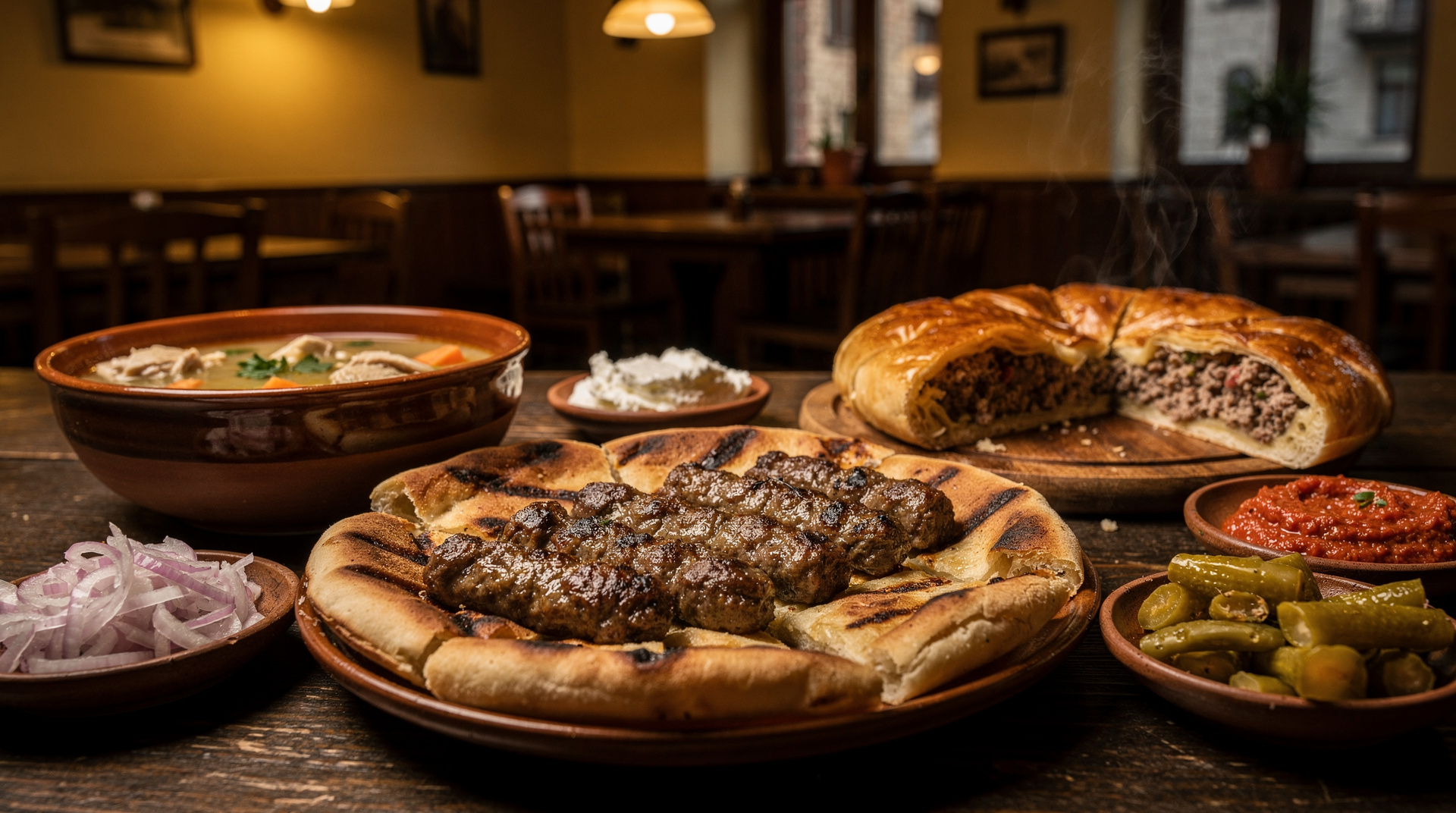
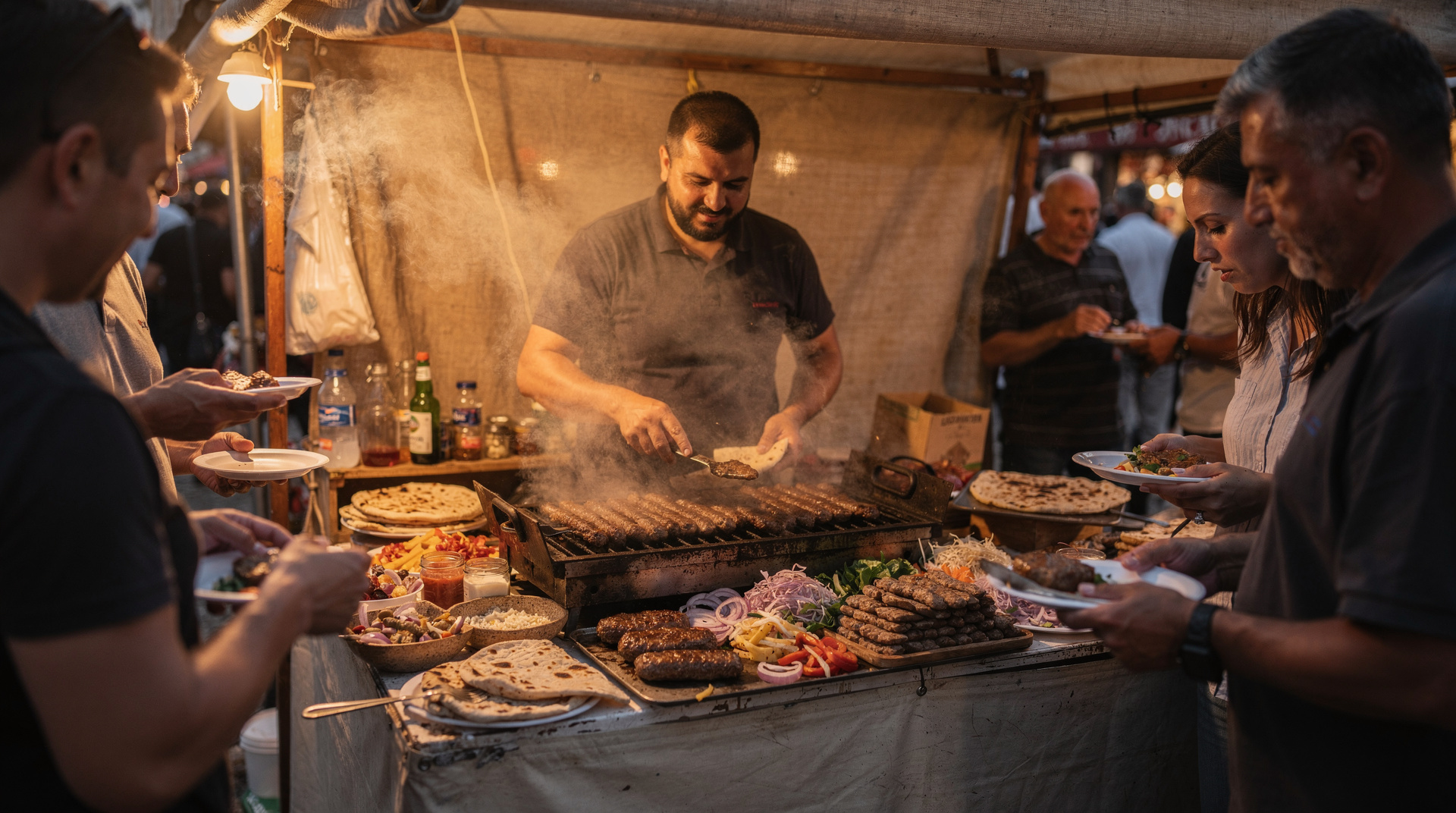
Every visitor to Bosnia eats ćevapi. The small grilled sausages in somun flatbread with kajmak and raw onion are the national dish, and they are good. But focusing exclusively on ćevapi is like visiting France and only eating croissants — perfectly understandable, missing most of the story.
Bosnian cuisine is an Ottoman-influenced, mountain-adapted, beef-and-lamb-forward tradition with genuinely excellent things in it. Here is what else to order.
| Where | Pekaras, aščinicas and traditional restaurants nationwide, strongest in Sarajevo, Mostar and Herzegovina |
| Cost | Around 2–3 BAM for pastry, 15–25 BAM for a full traditional meal |
| Time needed | Most dishes are quick; lamb under the sač needs advance ordering |
| Best introduction | A guided Sarajevo food tour covering several dishes in one morning |
| Best time to visit for food | Any season, though lamb under the sač and hearty stews suit autumn/winter best |
Burek and the pekara system
Bosnia has an exceptional pastry culture centred on the pekara (bakery). Every town has at least one, usually several, open from early morning. The pekara produces a range of phyllo pastry items collectively called pita:
Burek: Phyllo layered with seasoned ground meat, rolled into a spiral. The classic version. Sold by weight — a 300-gram portion is a meal.
Sirnica: The same phyllo technique but filled with bijeli sir (a fresh white cheese). Slightly lighter than burek.
Zeljanica: Filled with spinach and cheese. The vegetarian option and an excellent one.
Krompiruša: Filled with potato and onion. More substantial than it sounds.
Pekara prices are extremely low — 2–3 BAM for a generous piece. This is where local workers eat breakfast; it is also where you should eat breakfast. The tourist restaurants on the main drag do not do this better; they just charge more for it.
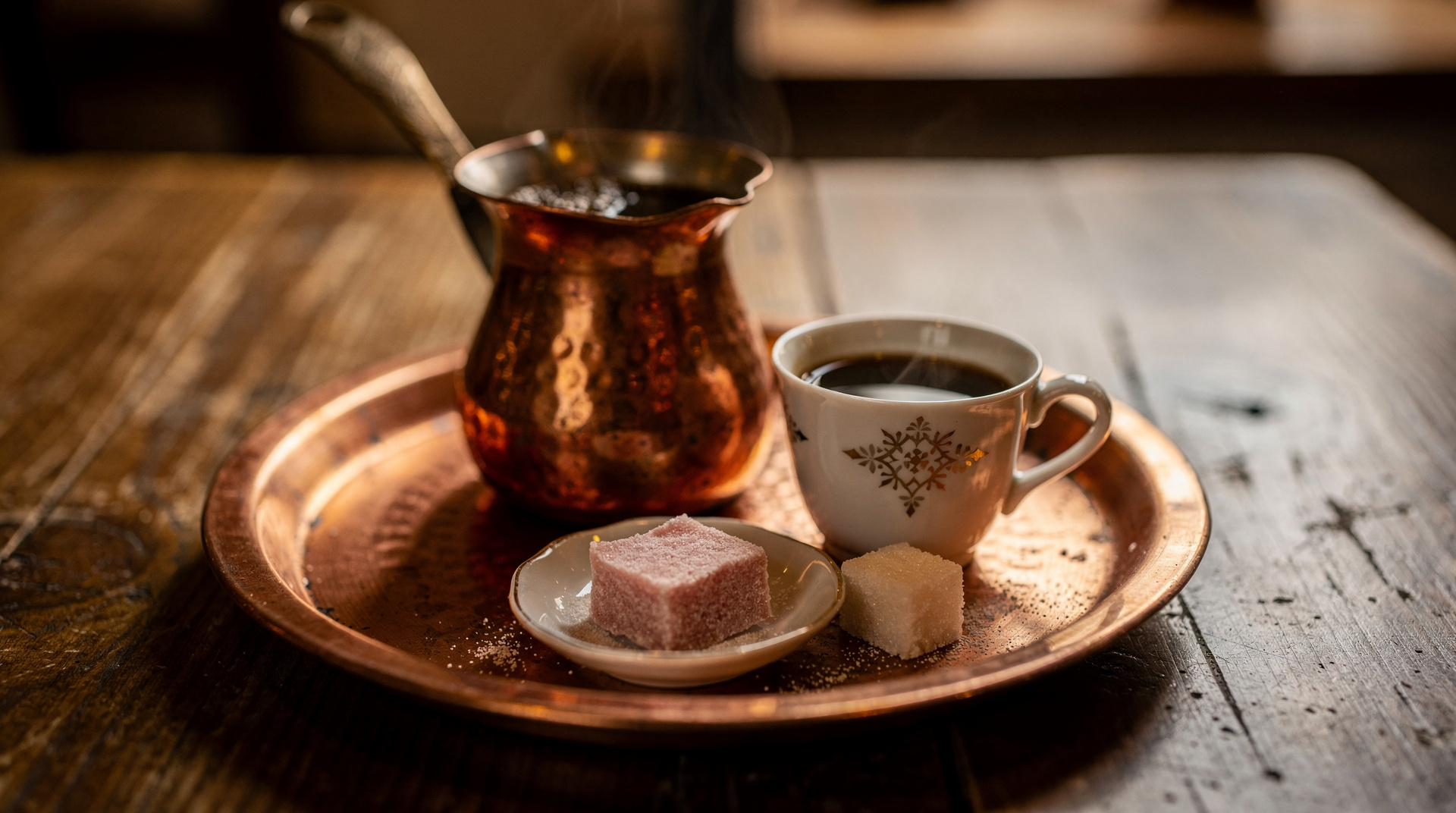
If pastry becomes a habit on your trip, the burek and pita guide explains how to tell the types apart and what to ask for at the counter. A pekara breakfast also pairs naturally with the ritual described in our Bosnian coffee culture guide, and a good plan for a first morning in the capital is to start at a bakery before walking through Baščaršija.
Tarhana soup
Tarhana is a fermented soup base made from vegetables and yoghurt, dried into a powder or pellets and reconstituted. Bosnian tarhana soup — a winter staple — is warming, slightly sour, thick, and made from local tradition that predates any of the country’s more famous dishes.
It is not always on menus but is worth asking for in traditional restaurants, particularly in colder weather.
Dolma and stuffed vegetables
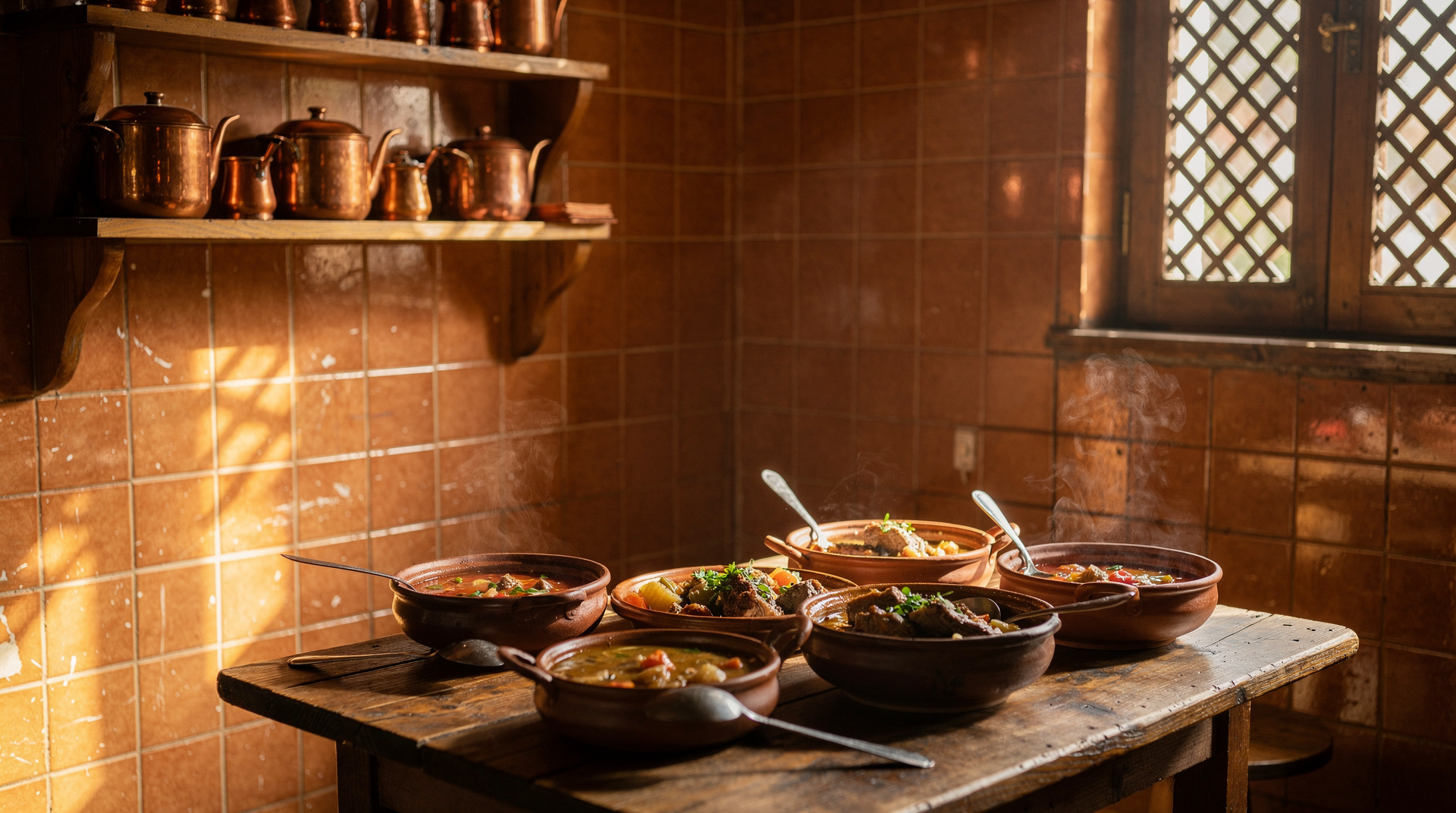
Ottoman influence on Bosnian cooking is most visible in the dolma tradition: vegetables (peppers, tomatoes, cabbage leaves, onions) stuffed with a mixture of rice and minced meat, slow-cooked in a light tomato-based sauce. The result is dense and satisfying in a way that feels specifically unlike anything Western European.
Dolma appears on menus at traditional aščinicas (the Bosnian equivalent of a working-class canteen, often excellent). Good versions take time to make and are better at lunch — the dolmas made that morning, at peak.
Lamb and the sač
The sač is a clay bell used for slow cooking — the food is placed in a fireproof pot, the bell covers it, and hot embers are piled over the bell. The result, after several hours, is meat that has essentially braised in its own fat and moisture.
Lamb under the sač is the prestige dish of Herzegovina. It is available in restaurants in the Herzegovina valleys (the area around Mostar, Trebinje, and particularly the mountain villages) and in some traditional restaurants in Sarajevo. It needs to be ordered in advance — typically by phone the day before — because the preparation time is significant.
If you are in Herzegovina for two or more nights, asking your accommodation to help arrange this is worth the effort.
Staying in or near Mostar makes the logistics simplest, since you can ask your host to phone the restaurant for you. Our Mostar where to stay guide helps with choosing a base, and the Herzegovina weekend itinerary leaves room for a slow lunch of this kind. In the villages around Trebinje the dish is often part of a long family-style meal rather than a quick stop, so plan the rest of your day lightly.
River fish
Bosnia’s mountain rivers — the Una, Neretva, Vrbas, Bosna — carry excellent trout and, in some sections, huchen (a large salmonid, locally called mladica). Riverfront restaurants in Konjic, Bihać, Jajce, and along the Bosna at Visoko all serve fresh trout from local sources.
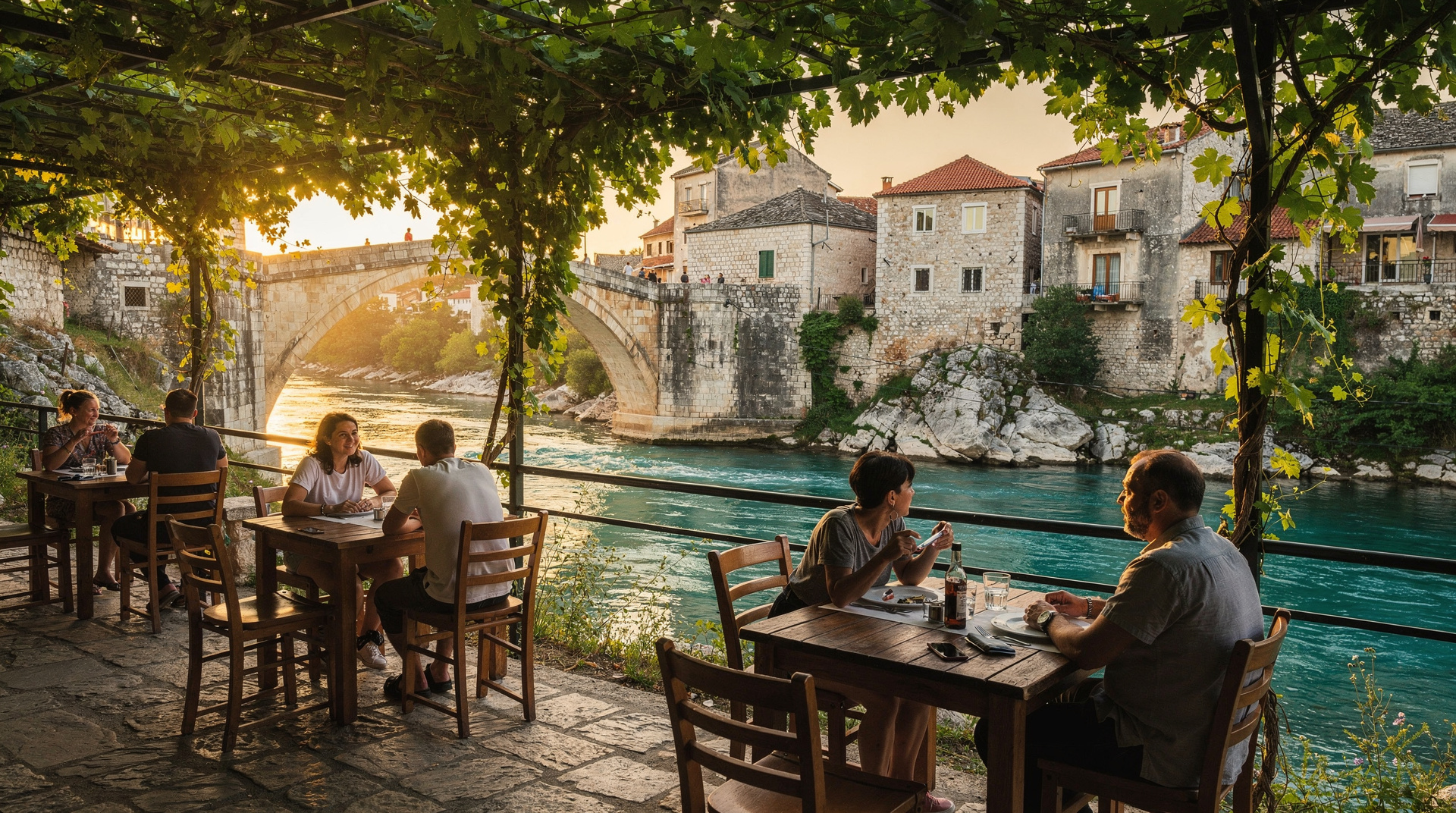
Grilled river trout at a riverside restaurant, with a glass of local mineral water and a view of the water it came from, is one of the cleanest and best eating experiences Bosnia offers. Prices are modest: expect 15–22 BAM for a whole fish with sides.
Trout pairs well with a day of outdoor activity: after a morning on the water near Una National Park or a rafting trip on the Neretva, a riverside table is the obvious reward. The same logic works around Jajce, where the setting by the water is half the appeal.
Cheese: sir and kajmak
Two dairy products appear throughout Bosnian cooking:
Bijeli sir (white cheese) — a fresh, slightly salty cheese with an open, crumbly texture. Served as a side with grilled meat, in pita pastry, or on its own with bread.
Kajmak — a clotted cream dairy product, somewhere between butter and crème fraîche. Served with ćevapi, with grilled bread, and with lamb dishes. The best versions are made from raw milk with a short production time; the commercial versions in supermarkets are a poor substitute.
Wine: Žilavka and Blatina
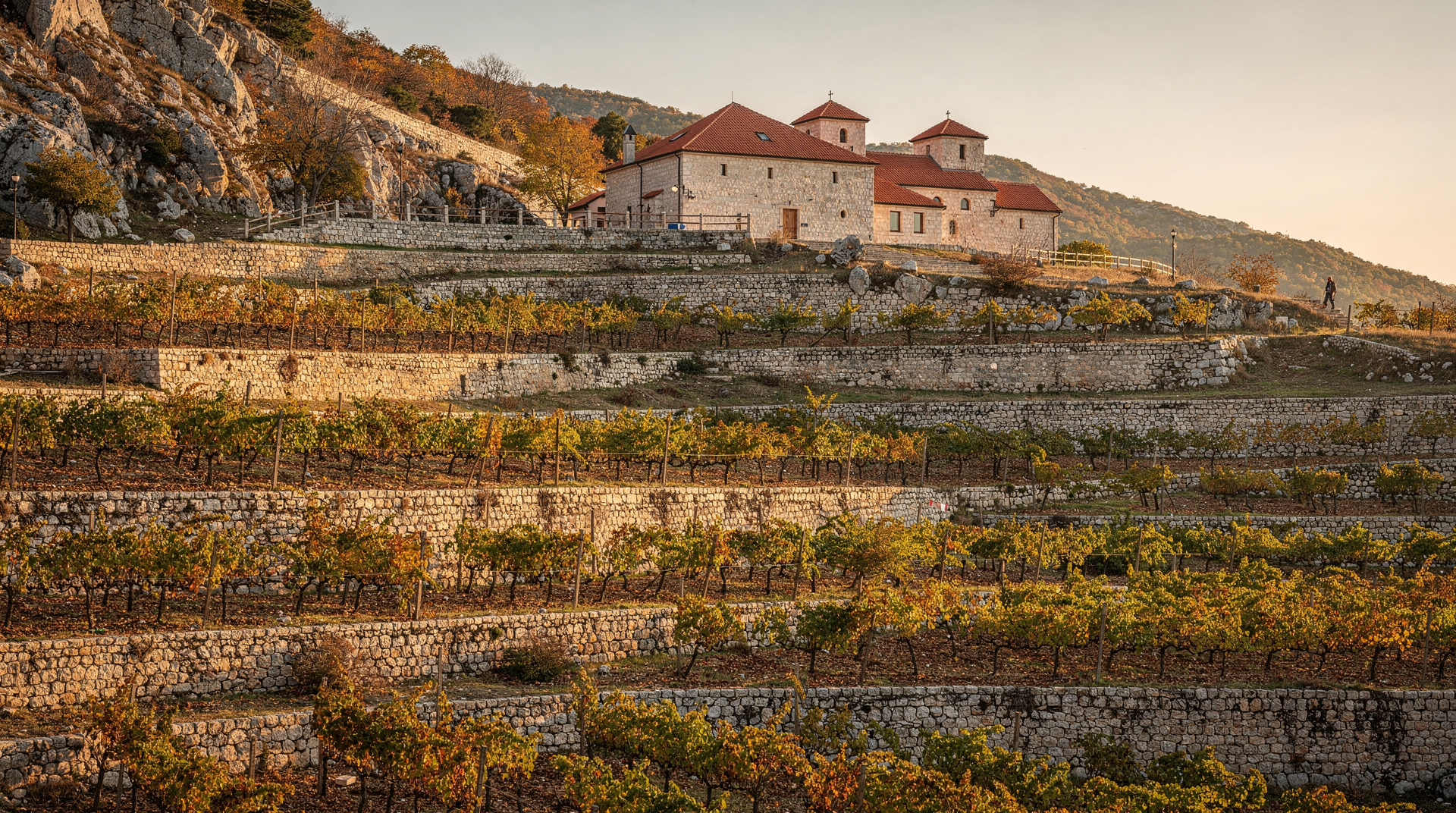
Herzegovina produces wine of genuine quality from varieties found nowhere else in the world. The two major native grapes:
Žilavka (white): Dry, aromatic, with minerality from the karst soils. Grown primarily around Mostar and in the Trebinje valley. The best examples are surprisingly complex and age-worthy. Available at wineries, better restaurants, and increasingly in shops.
Blatina (red): More tannic, full-bodied, best with meat. Grown in the same region.
The Herzegovina wine guide and the Trebinje wine guide cover the wine region in detail. For a tasting in context, some Mostar restaurants include wine pairings with local dishes.
If you would rather taste the wine alongside local food than hunt for bottles yourself, a day through Herzegovina that includes local cuisine is an easy way to connect the dishes above with the landscape they come from.
Rakija
Every Balkan country has its fruit brandy tradition, and Bosnia is no exception. Bosnian rakija tends to be schlivovica (plum-based) or lozovaca (grape-based), and ranges from commercial bottles to homemade versions of impressive strength.
Homemade rakija offered by a local host is a social transaction as much as a drink — accepting is expected, refusing without a strong reason is slightly rude. Commercial versions in restaurants run 2–4 BAM per shot.
For the customs, the styles and how to choose a bottle to take home, see the rakija guide. If you are driving afterwards, remember that a host’s generosity does not change the rules of the road; our driving in Bosnia guide covers what to expect behind the wheel.
Sweets: beyond baklava
Bosnian bakeries and restaurants also lean heavily on syrup-soaked pastries. Baklava is the best known, but tufahija (a whole poached apple stuffed with walnuts and topped with whipped cream) is a Sarajevo specialty worth actively seeking out, and hurmašice (small syrup-soaked sponge cakes shaped like dates) are common at gatherings. These are typically dessert-only items rather than pekara fare — look for them at traditional restaurants rather than bakeries.
Learning to make some of these dishes yourself is a good way to understand them. A Bosnian cooking class in Sarajevo lets you see how the pastry, the fillings and the slow-cooked dishes come together, and gives you something to repeat at home.
Eating well: where to find it
The best traditional Bosnian food is found at:
- Aščinicas (traditional working canteens): pot-based stews, dolma, tarhana. Simple spaces, excellent food, very cheap.
- Čevabdžinicas (ćevapi specialists): do one thing and do it well
- Traditional restaurants in smaller towns off the tourist routes
- Pekara bakeries: morning only, but foundational to the food experience
Food also makes a good thread for planning a whole trip. The Sarajevo and Mostar in three days itinerary and the Bosnia 7-day itinerary both cross the regions where these dishes are strongest, and the Bosnia budget guide shows how cheaply a pekara-and-aščinica diet can be done.
A Sarajevo food tour hitting the local market, old town spots and off-tourist-trail stops is one of the best ways to eat your way through the city’s variety in a single morning. The best Sarajevo restaurants guide and Mostar restaurants guide give specific recommendations with current addresses. For a wider look at the national dish itself, the Bosnian food guide and the ćevapi in Sarajevo guide round out the picture.
Top experiences
Bookable activities with verified prices and instant confirmation on GetYourGuide.