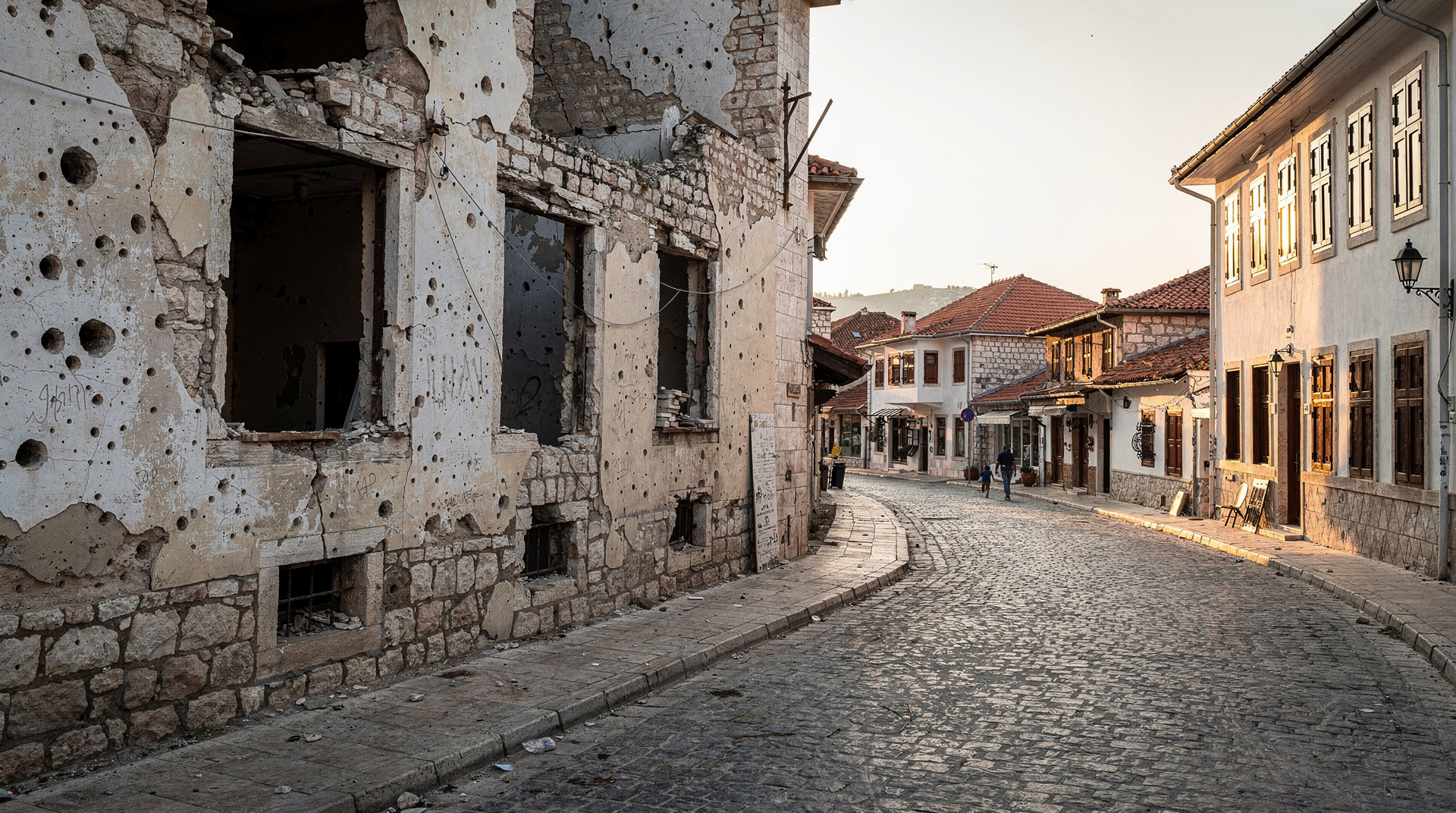
The Sarajevo siege — remembering what happened
On 5 April 1992, a peace march of 50,000 people walked through Sarajevo. Gunmen opened fire from the Holiday Inn Hotel — then occupied by Serbian nationalist paramilitaries — killing two young women at the front of the crowd.
By the following day, the city was encircled.
At a glance
| Where | Central Sarajevo — old town, Baščaršija, and the boulevard toward Marijin Dvor |
| Cost | Street memorials (Sarajevo roses, Sniper Alley) are free to see; the Tunnel of Hope Museum and War Childhood Museum charge a modest entry fee each |
| Time needed | Half a day for the main sites on your own; closer to a full day with a guided war tour |
| Getting there | Central sites are walkable from Baščaršija; the Tunnel of Hope near the airport needs a short taxi, tram, or organised transfer |
| Best time | Any season — quieter in early morning before the old town fills up |
The siege that began in April 1992 did not end until February 1996. One thousand four hundred and twenty-five days. Longer than the siege of Leningrad. Longer than any siege of a capital city in modern warfare. When it was over, nearly 14,000 people were dead, including more than 5,000 civilians. Roughly 1,000 of the dead were children.
This is not easy material. But for visitors to Sarajevo, understanding it is part of understanding the city.
Why a war was possible here
Yugoslavia dissolved through a combination of nationalist politics, economic collapse, and strategic miscalculation that historians are still unpicking. The short version, for a visitor: Bosnia declared independence in March 1992, following similar declarations by Slovenia and Croatia. The Bosnian Serb political leadership, backed by the Yugoslav People’s Army (JNA), refused to accept Bosnian sovereignty. The siege was an attempt to force the city and the country into submission.
The Yugoslav wars explained guide provides more context if you want it. What matters for Sarajevo is the geography: the city sits in a valley, surrounded by mountains and hills. Those hills gave the besieging forces an enormous advantage. They could fire down into the city; the defenders in the valley below could not effectively return fire upward.
Daily life under siege
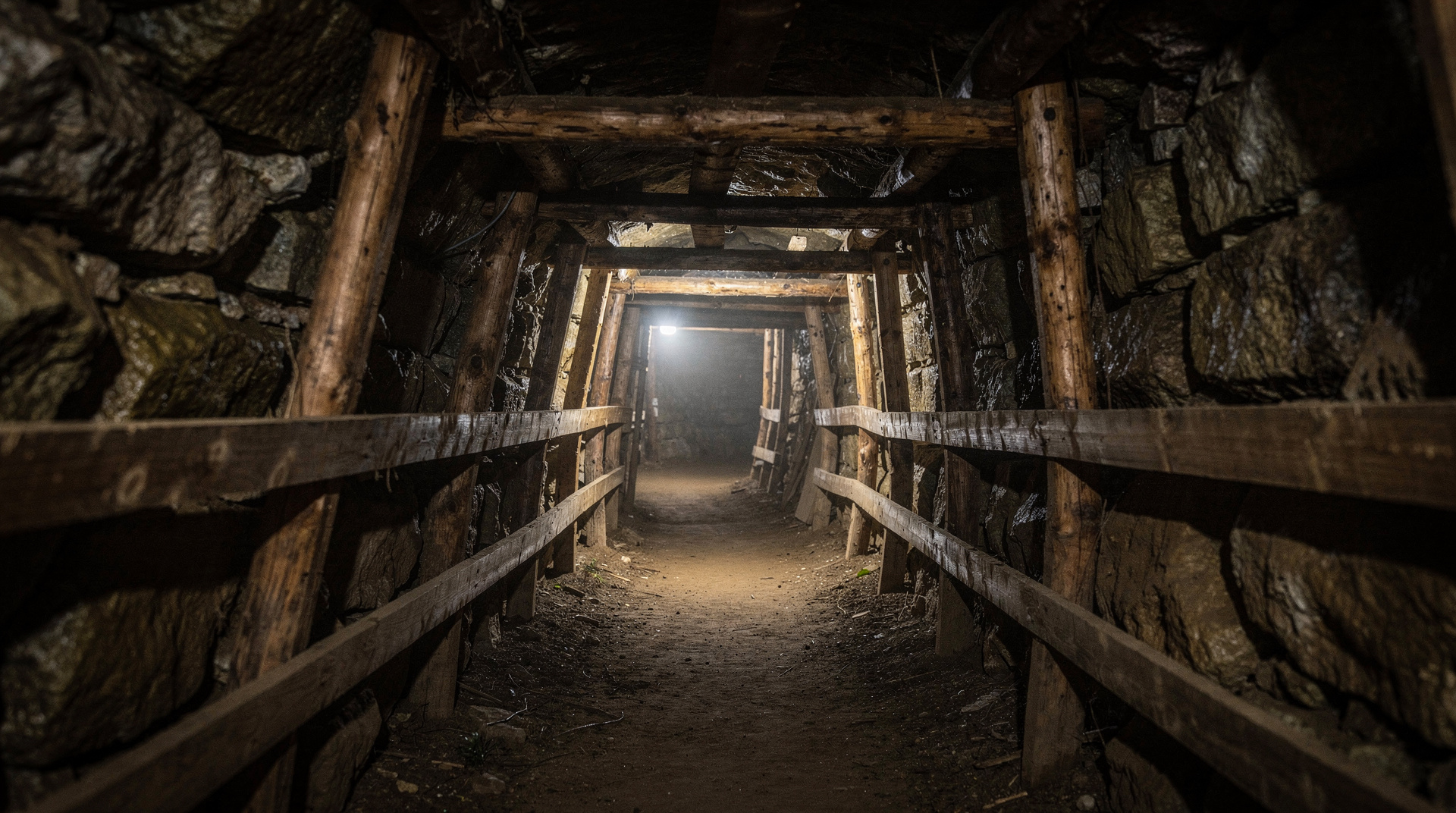
During the siege, the city had no running water for most of the period, intermittent electricity, and almost no heating fuel. Food supplies came through a tunnel — the Tunnel of Hope, hand-dug under the UN-controlled airport runway — at enormous risk. The tunnel was roughly 800 metres long and about one metre high; people crawled through it carrying supplies or fleeing the city.
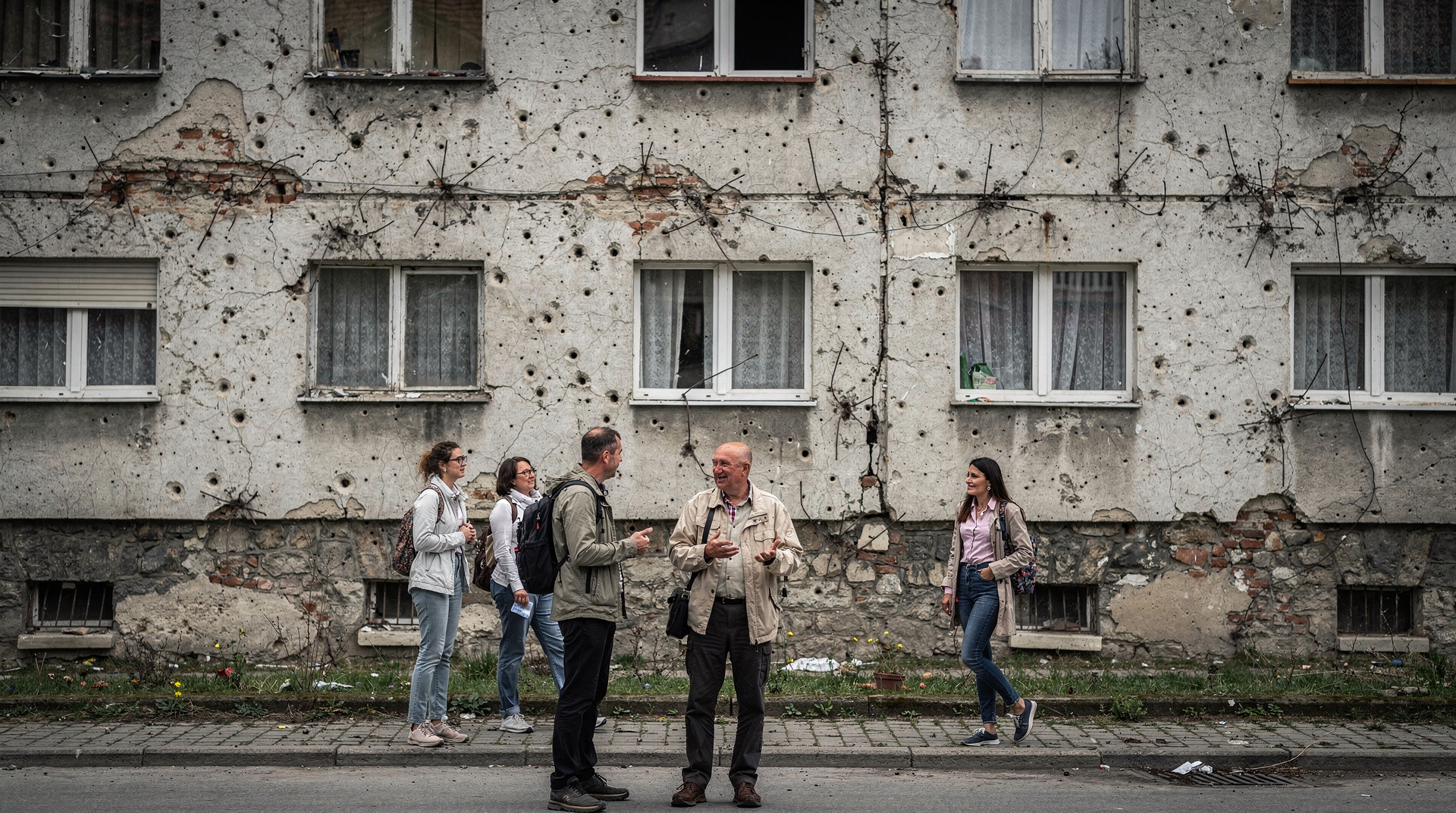
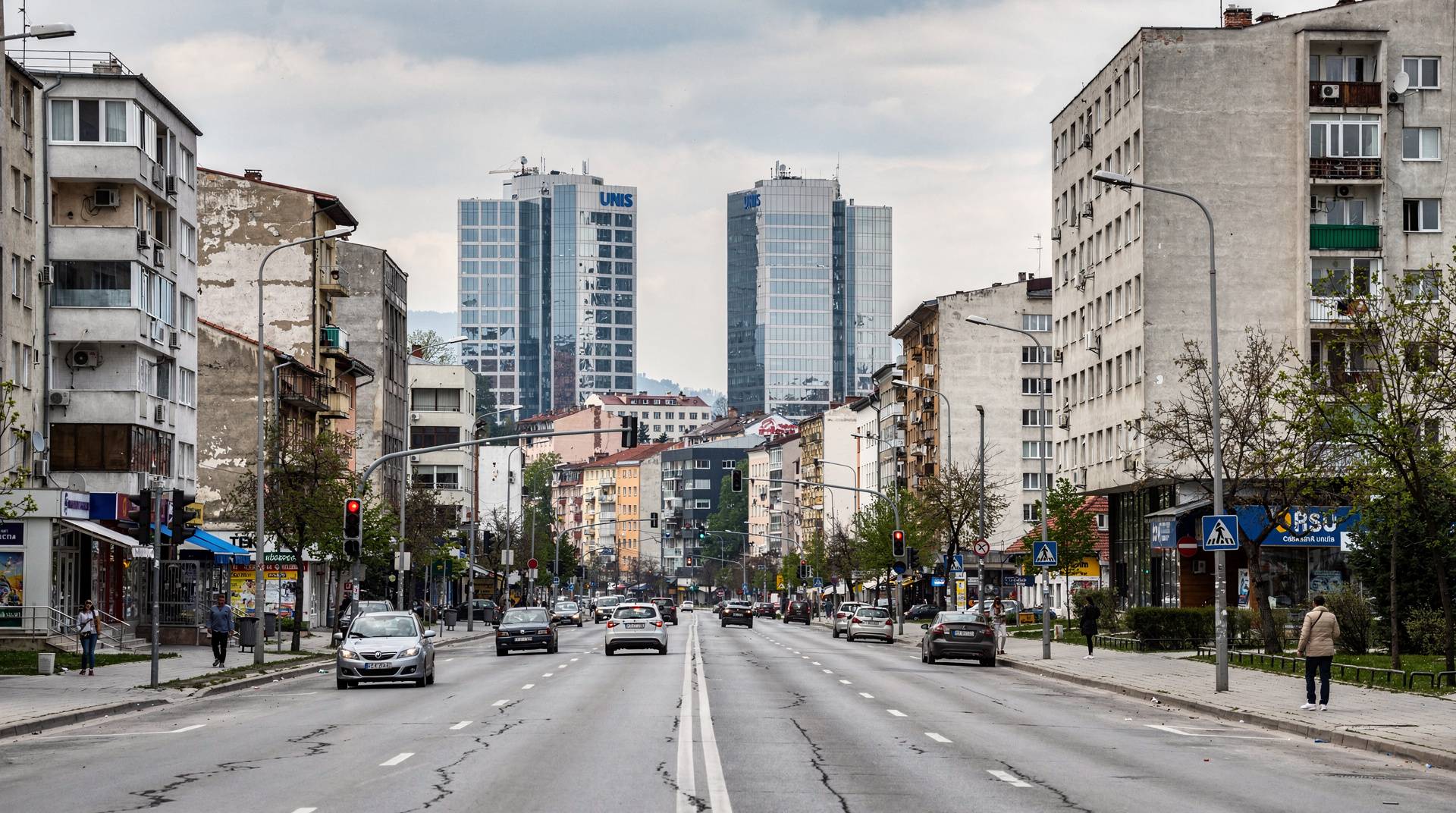
Snipers positioned in the hills made movement through certain streets extremely dangerous. Sniper Alley — now the main boulevard Zmaja od Bosne — was the most notorious: a wide road exposed to fire from the hills, lined with UN armoured vehicles that provided a minimal psychological barrier. Residents ran across exposed intersections. Children were taught specific routes to school that used buildings as cover.
An estimated 14,000 to 18,000 shells fell on the city on its worst days. The average, across the full siege, was roughly 329 shells per day. Markets, hospitals, mosques, churches, libraries, and apartment blocks were all hit.
The Vijećnica — the National Library — was shelled and burned in August 1992, destroying an estimated 1.5 million books and manuscripts, including irreplaceable historical documents and the Sarajevo Haggadah (which was hidden in a vault and survived).
The Sarajevo roses
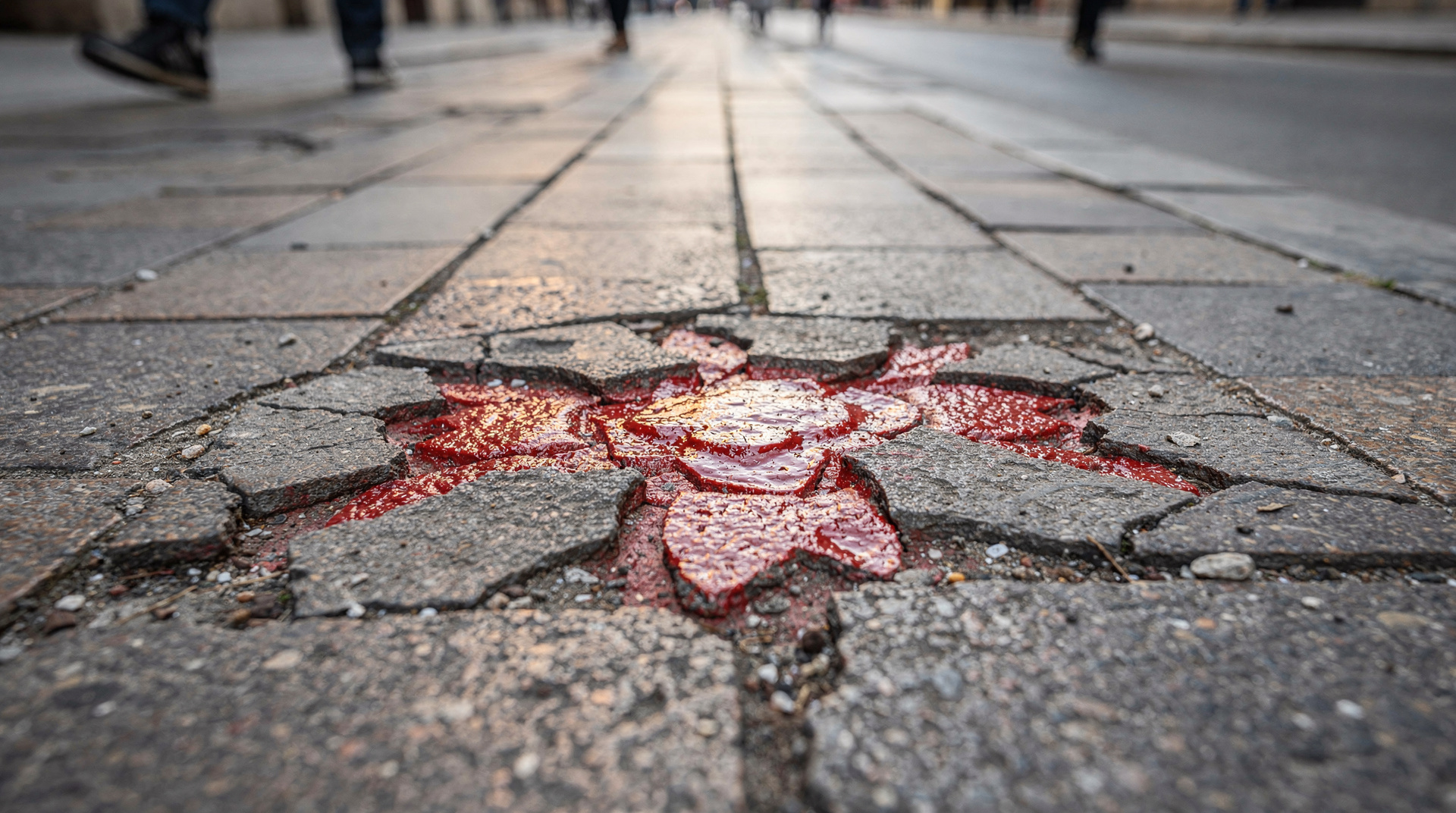
Walk through the streets of the old city today and look down at the pavements. You will see star-shaped impact craters, some filled with red resin. These are the Sarajevo roses — mortar shell impact points that were memorialised in the years after the war, the red resin representing blood.
Not all craters were filled. The roses appear at locations where multiple people were killed by a single shell — typically market squares or public gathering points. They are small, easy to overlook, and they are everywhere once you start looking.
The aftermath and what it means for visitors
The war ended in November 1995 with the Dayton Agreement. The siege formally ended in February 1996 when Serbian forces withdrew from the hills.
The physical reconstruction of Sarajevo has been largely completed — the city is functional, modern in its core, repaired. But the people who lived through the siege are in their fifties and sixties now. Their children grew up during it. The grandchildren are being raised in its aftermath.
This means that a significant portion of the people you will meet in Sarajevo — café owners, tour guides, market vendors, hotel staff — have a direct personal relationship with what happened here. This is not ancient history. It is within living memory, often vivid living memory.
Behave accordingly. The siege is not a dark tourism attraction. It is someone’s parents’ survival story. Approach it with the same respect you would bring to speaking about any personal loss.
What to visit
Several sites make the history tangible:
The Tunnel of Hope Museum (Tunel Spasa) is the most visited. A guided Bosnian war and tunnel tour contextualises the whole period and makes the tunnel meaningful rather than just novel.
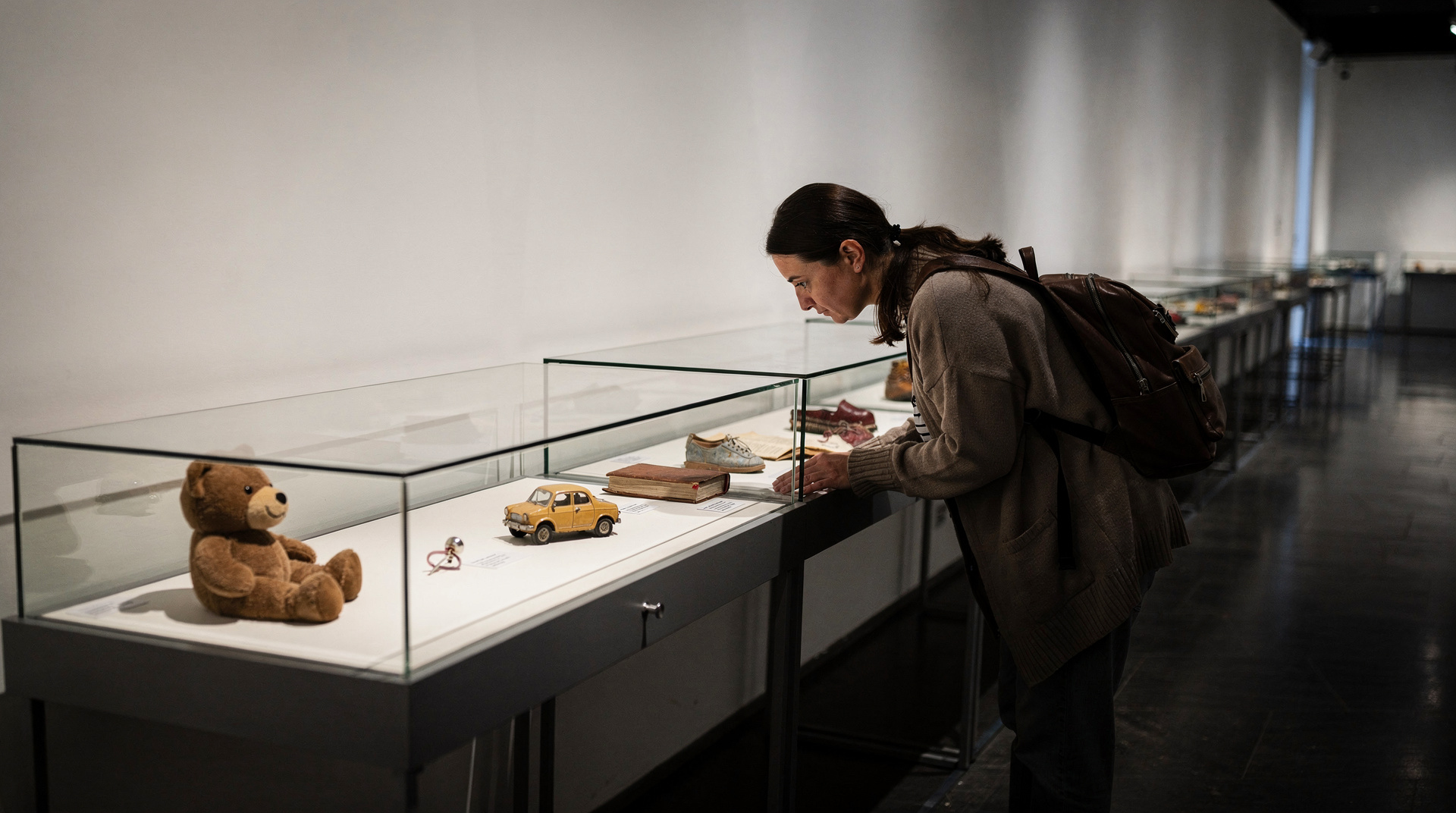
The War Childhood Museum on Ferhadija collects small objects from people’s experiences during the siege — a toy, a pair of shoes, a letter. It is compact and profoundly moving.
The Sarajevo roses are everywhere, though a guide will show you which ones are most significant.
The Sniper Alley area looks today like an ordinary boulevard. Knowing what happened there changes how you see it.
Kovači Cemetery, on the hillside above Baščaršija, contains thousands of white grave markers dated 1992–1995.
You do not need to visit all of these. But understanding the context of at least some of them will change what Sarajevo means to you.
If you would rather not piece the story together alone, a guided visit built around the siege and the tunnel itself keeps the focus on how ordinary people got through those years. For a walk that links the central memorials with the tunnel, a guided walking tour with a panoramic viewpoint and the tunnel is another way to cover the ground with a local voice explaining what you see.
The Museums of Sarajevo that tell the fuller story
The siege sits inside a much longer history of the city — Ottoman, Austro-Hungarian, socialist Yugoslav, and post-war — and the museums that cover it are not limited to the war years. The Austro-Hungarian Sarajevo guide and the Sarajevo meeting of cultures guide give context for what the city was before 1992, which makes the scale of the disruption easier to grasp. Understanding that Sarajevo was already a genuinely cosmopolitan, functioning European capital before the siege — not a backward or inherently violent place — is part of understanding why the siege was such a rupture.
The Franz Ferdinand assassination site at the Latin Bridge, a ten-minute walk from most of the siege memorials, is a useful stop on the same walk: a reminder that this small city has twice been at the centre of European history within a single century, for very different reasons.
Talking to people about it
If a taxi driver, guide, or café owner brings up the war unprompted, it usually means they want to talk about it — this is common, and it is worth listening rather than changing the subject. What is not appropriate is asking pointed personal questions (“did you lose anyone?”) unless the person has clearly opened that door themselves. Guides on the Sarajevo war and tunnel tour are typically well-practised at this balance: they share what is useful for visitors to understand without turning their own history into a performance.
It also helps to know that the siege is not evenly distributed across every conversation in Sarajevo. Plenty of locals, especially younger ones, would rather talk about the Sarajevo Film Festival or the best café on Ferhadija than revisit 1992–96 with every tourist who passes through. Read the room.
A word on complexity
Bosnia’s war was not a simple story of victims and perpetrators. The city of Sarajevo included Serbs who defended it alongside Bosniaks and Croats. The besieging forces included people who were manipulated, people who were coerced, and people who committed deliberate atrocities. The international response was slow, inadequate, and shaped by geopolitical calculations that left civilians to die.
None of this complexity reduces the suffering of the people who lived through the siege. But it is worth holding when you visit — the story is not simple, and the city does not pretend that it is.
What Sarajevo does, quietly and remarkably, is get on with being Sarajevo. The cafés are full. The music plays in summer on the old town square. The young people laugh in the same streets where their grandparents ran to avoid snipers.
Pay attention to that too. If you want a guide who can speak to both the war years and the city’s daily life today, a walking tour that looks past the headlines is a gentle way to hold both at once.
Building a visit around the siege story
If this is your first trip, the first time in Sarajevo diary and the Sarajevo destination page show where the siege sites sit among everything else the city offers. The Baščaršija guide is a good companion, because the old town is where many of the memorials sit and where you will want a quiet coffee afterwards.
The hills that gave the besieging forces their advantage are now places to walk and look back at the city. Trebević Mountain is one of them, and the Sarajevo 1984 Winter Olympics guide explains how the mountain’s Olympic story fits into the same chapter of the city’s history. Seeing the valley from above makes the geography of the siege far easier to grasp than any map.
Where you sleep also shapes the visit. The Sarajevo where to stay guide helps you choose a base within walking distance of the main sites, so you can step away and rest when the material becomes heavy. If you come in the colder months, winter in Sarajevo describes a quieter city, and the Sarajevo faiths guide shows how the mosques, churches and synagogue that survived the shelling still stand within a few streets of each other.
The siege was one part of a wider war, and many travellers want to follow it further. The Bosnia history for travellers guide gives the longer arc, the Mostar war history guide covers another city that was bombarded, and the Srebrenica genocide memorial guide deals with a different and equally important chapter. For a structured route, the Bosnia war history itinerary links these places together, and the Sarajevo 4-day deep dive leaves room to pace the heavy days with lighter ones.
One practical note for anyone leaving the city to explore the surrounding hills and countryside: read the landmine safety guide first, and keep to marked paths. The war left traces beyond the streets of Sarajevo.
Frequently asked questions about Sarajevo siege — remembering what happened
Is it disrespectful to visit siege sites as a tourist? No, as long as you approach them thoughtfully rather than as a dark-tourism curiosity — read the context beforehand, keep voices low at memorial sites, and consider a guided war tour so the visit is informed rather than voyeuristic.
How long does it take to see the main siege-related sites? Budget half a day for the Tunnel of Hope, the Sarajevo roses, and Sniper Alley at a walking pace; a full day if you add the War Childhood Museum and Kovači Cemetery.
Top experiences
Bookable activities with verified prices and instant confirmation on GetYourGuide.