Bosnia off the beaten path — beyond Sarajevo and Mostar
| Where | Trebinje, Lukomir, Sutjeska NP, Bihać/Una NP, Blagaj, Počitelj, Rakitnica Canyon, Jajce |
| Cost | Mostly free access (villages, canyons, towns); Perućica guided entry and Sutjeska tours add a modest fee |
| Time needed | A dedicated off-the-beaten-path loop realistically needs 10–14 days on top of a standard Sarajevo/Mostar visit |
| Getting there | A rental car is close to essential — Bihać, Trebinje, and Sutjeska are far from bus-friendly day trips |
| Best time | Late spring through early autumn; Lukomir and Rakitnica are best avoided in deep winter |
Most visitors to Bosnia follow a tight loop: Sarajevo for two or three days, Mostar for one, possibly Kravice waterfalls on the way. That loop is excellent. The problem is that it accounts for perhaps ten percent of what Bosnia can offer.
The rest — the wine towns, the mountain villages, the canyon trails, the primeval forests, the places where you might be the only foreign visitor that week — goes almost entirely unvisited.
Here are eight of those places.
If you are still deciding how much time Bosnia deserves, the how many days in Bosnia guide and the avoiding crowds in Bosnia guide help you weigh a classic loop against a slower, quieter route. For the overall picture, the Bosnia travel guide is the place to start.
Trebinje: Herzegovina’s quiet wine town
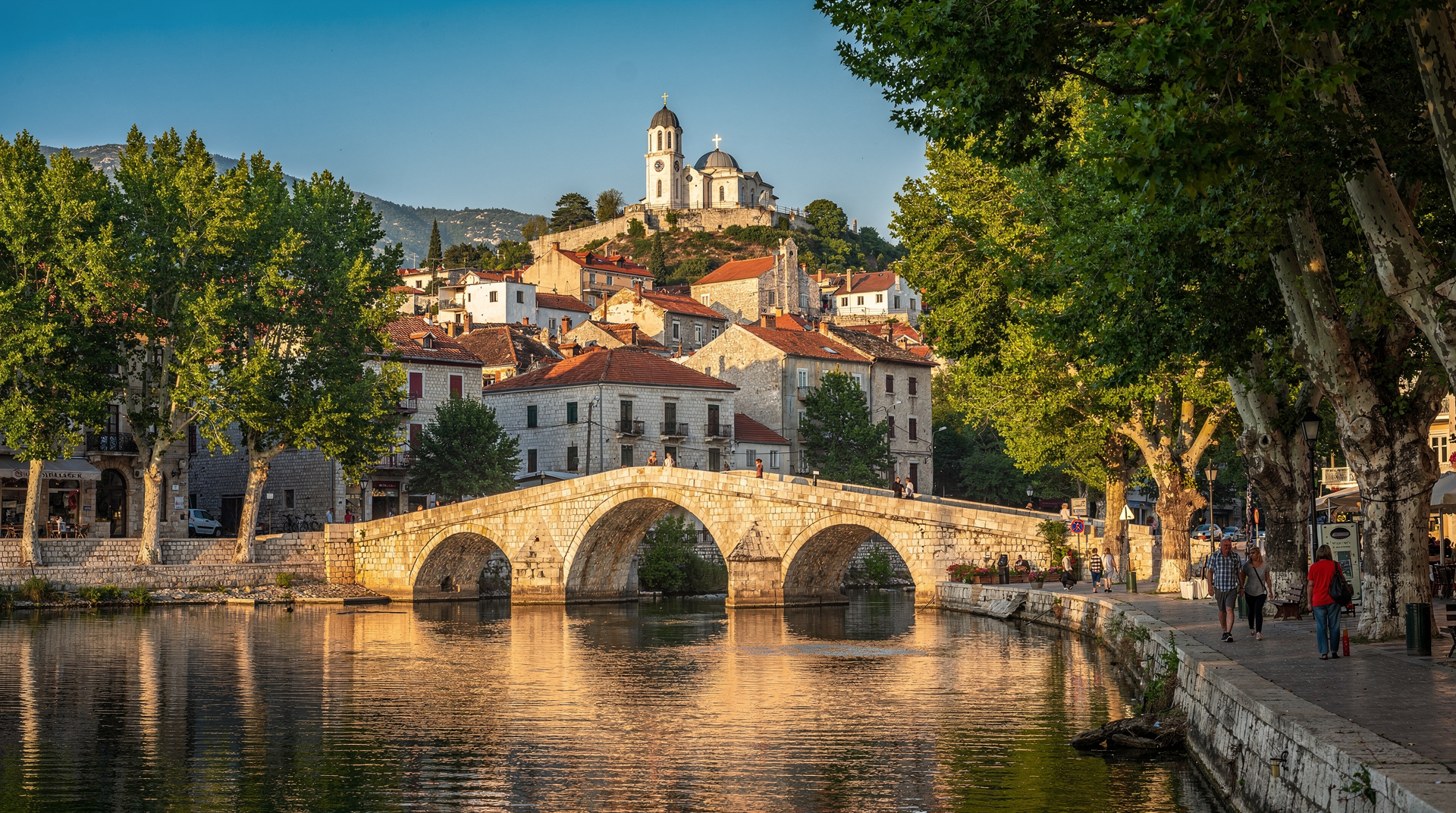
Trebinje is one of the most underrated towns in the Balkans. Sitting near the Montenegrin border in southern Herzegovina, it has a charming walled old town (Stari Grad) on the bank of the Trebišnjica River, outdoor cafés shaded by ancient plane trees, and a serious wine-making tradition — the local Žilavka white wine is excellent, as is the red Blatina.
Most visitors to Dubrovnik (35 kilometres south) never come here. The ones who do often say it was their favourite place in the region.
The Trebinje guide covers the town in detail. Add at least half a day, ideally a full day, if you are in southern Herzegovina.
Trebinje also pairs naturally with the region’s vineyards: the Herzegovina wine guide explains what to taste, and the Hercegovačka Gračanica guide covers the hilltop monastery church that overlooks the town. Visitors coming from the coast will find the Bosnia from Kotor guide and the Dubrovnik page useful for planning the border crossing.
If you would rather not drive the border road yourself, the Dubrovnik to Sarajevo route guide explains how the journey fits together, and a private transfer from Kotor to Sarajevo that stops in Trebinje and Mostar is one way to see the town without handling the logistics. The Trebinje, the other Herzegovina post adds a more personal impression of the place.
Lukomir: the last highland village
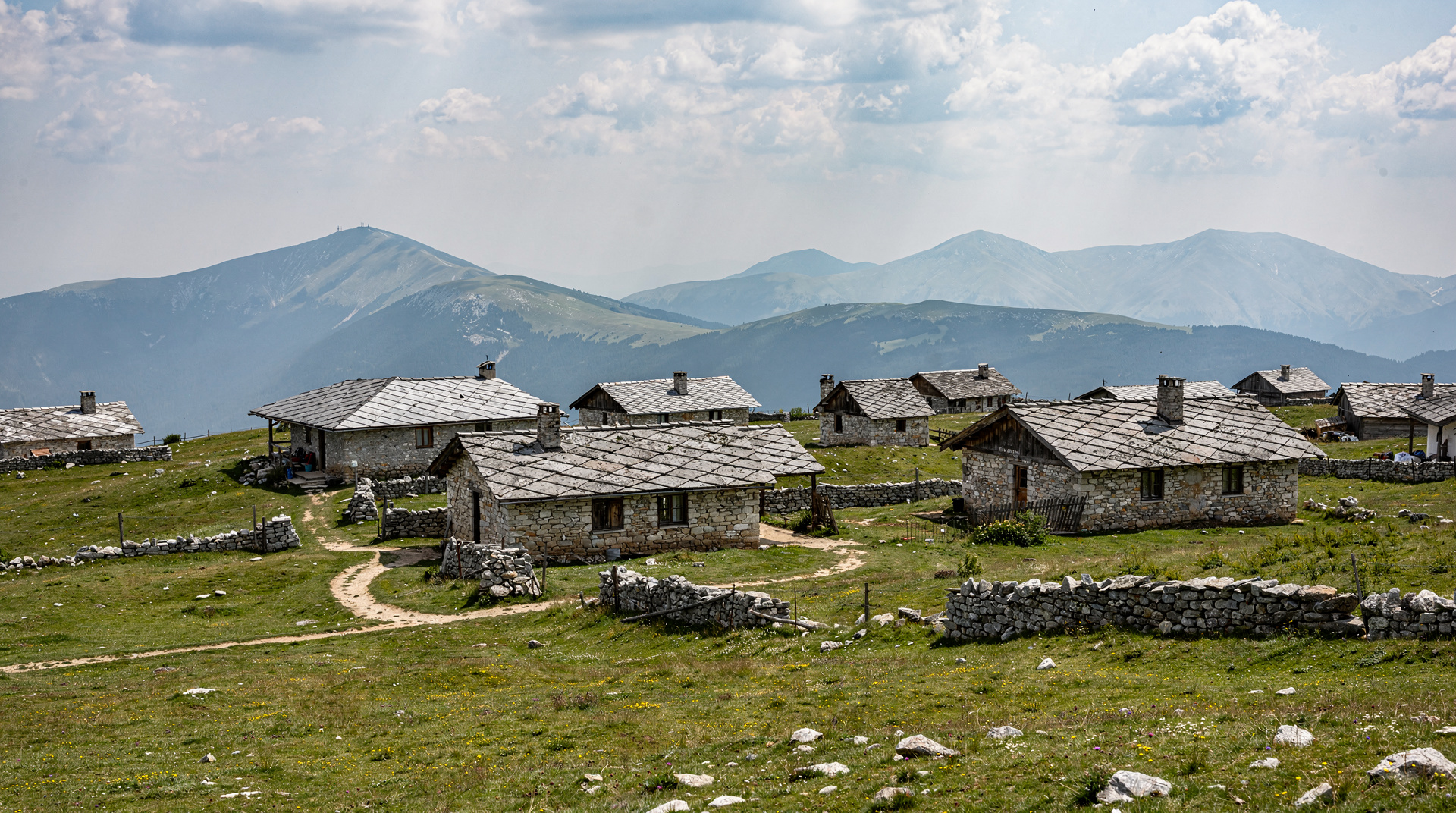
Lukomir, at 1,469 metres on the Bjelašnica plateau above Sarajevo, is one of the highest permanently inhabited villages in Bosnia and the last in the region that has maintained its traditional stone-and-plank architecture. The village is inhabited year-round by a small permanent population; the stone houses, wooden shingles, and narrow lanes look like something from the early twentieth century.
Getting there on foot from the trailhead takes about two hours. The plateau views — down over the Rakitnica canyon, across to Visočica — are among the best in the country.
The Lukomir hiking guide covers the trail approach in detail. Day trips from Sarajevo are possible and popular.
The wider Bjelašnica and Igman area rewards an overnight stay, and the Bjelašnica hiking guide shows how the village fits into longer walks on the plateau. The Lukomir village story on the blog gives a more personal account of the walk.
Anyone without a car or the time to organise the approach can look at a guided full-day hike from Sarajevo to the village, which handles the transport and the route for you. For a gentler look at the highland country, the Trnovačko Lake hike is another quiet option in the same mountains, and the Via Dinarica thru-hike diary shows what longer walking here feels like.
Sutjeska National Park and Perućica
Sutjeska National Park in eastern Bosnia contains Bosnia’s highest peak (Maglić, 2,386 metres) and one of only two surviving primeval forests in Europe: Perućica. The trees here have never been logged. Beeches and firs up to 400 years old, some of them 50 metres tall.
Access to Perućica requires a guided tour (the forest is protected and entry is controlled). Sutjeska is a long drive from Sarajevo — around 3.5 to 4 hours each way — which is part of why so few people go. Those who do consistently describe it as one of the most memorable places in Bosnia.
The Sutjeska guide covers access options, including private tours from Sarajevo.
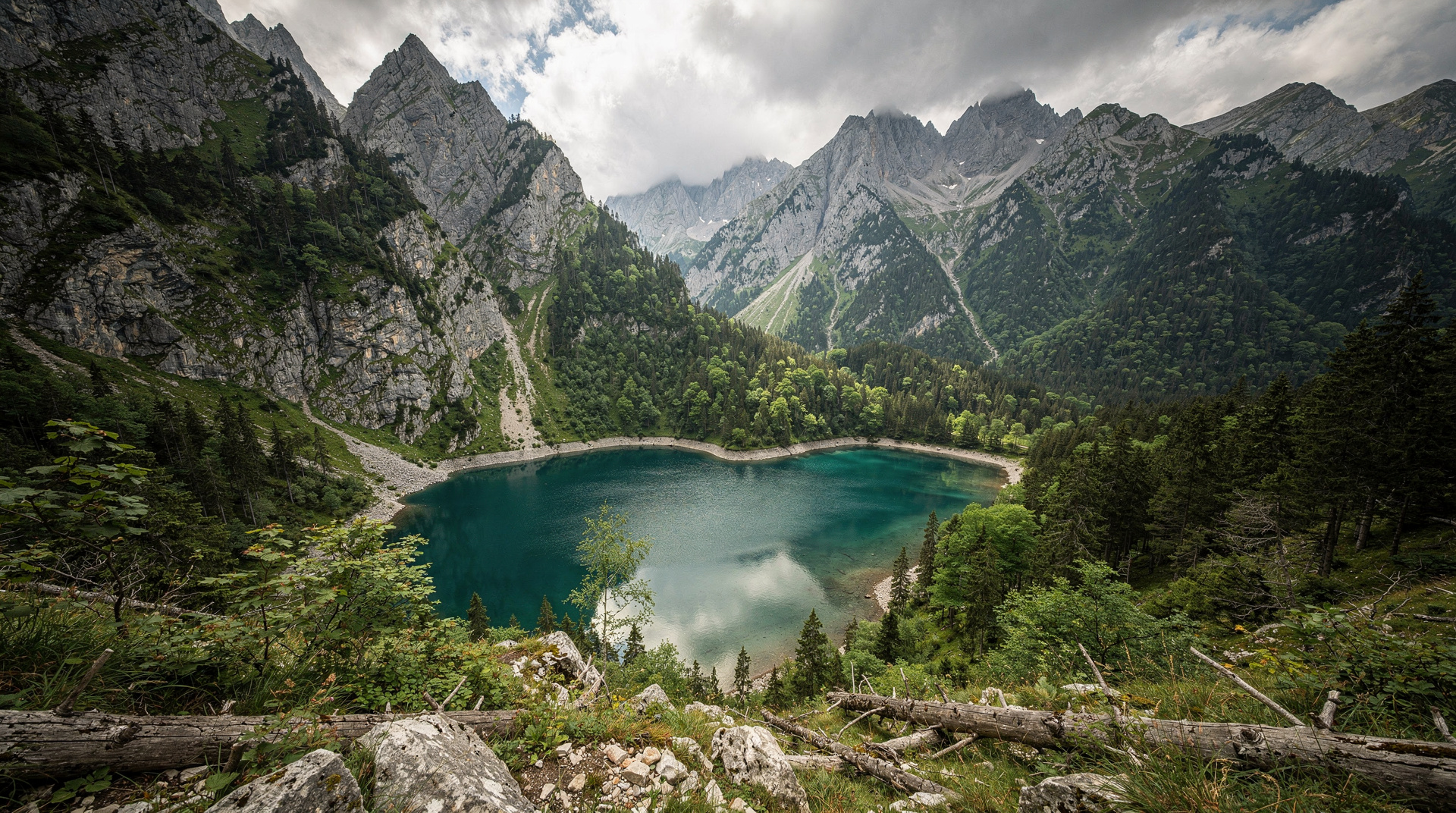
Serious walkers can look further into the Maglić climb and the Zelengora lakes, both in the same wild corner of the country. If you visit late in the year, the autumn colours in Sutjeska post shows why the park is worth the long drive.
Since the drive is the main obstacle, a private tour from Sarajevo into the park is worth considering if you do not want to spend the day behind the wheel. The Tara River rafting guide is a useful companion for anyone building a longer trip in this part of the country.
Bihać and the Una National Park
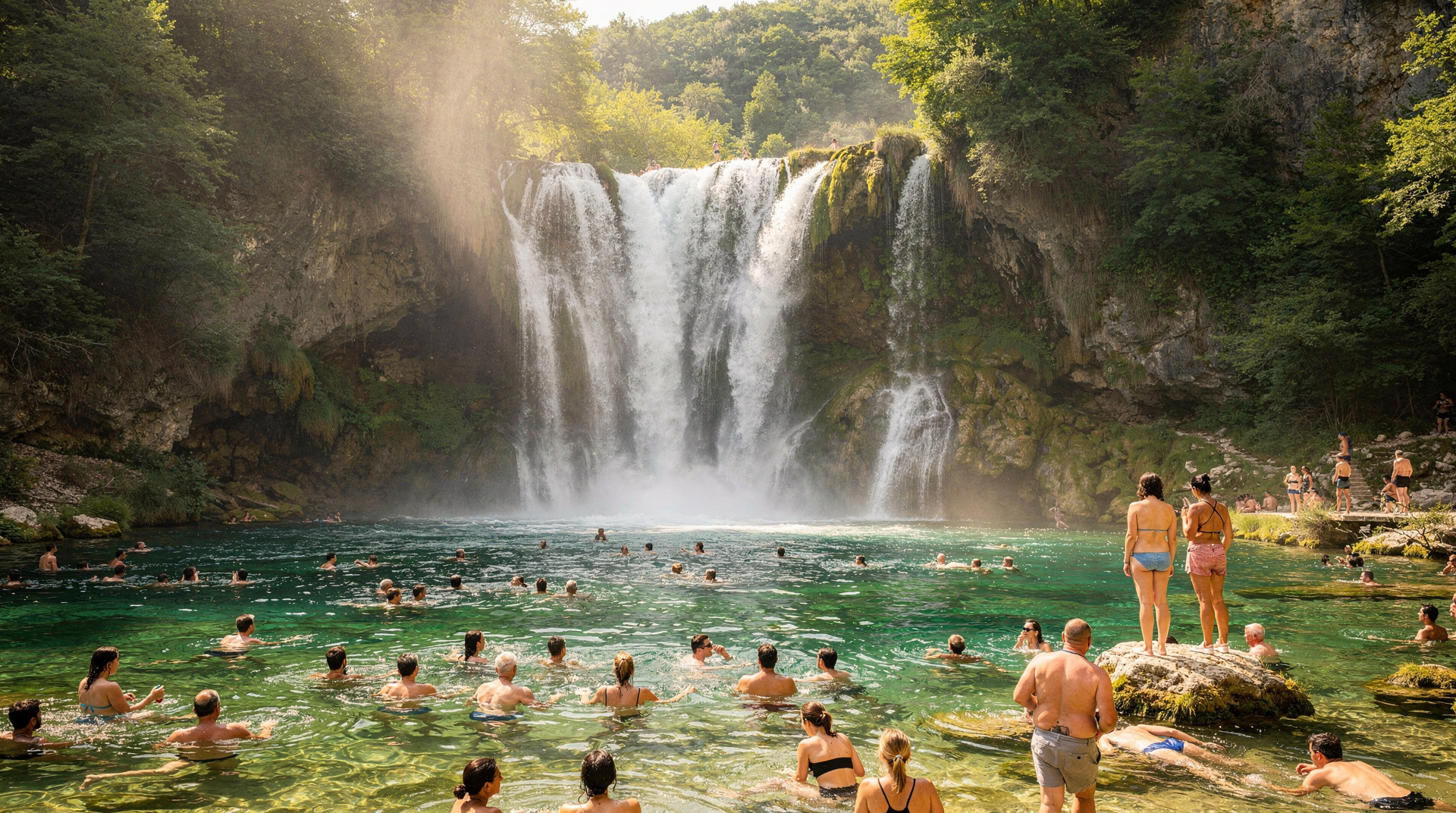
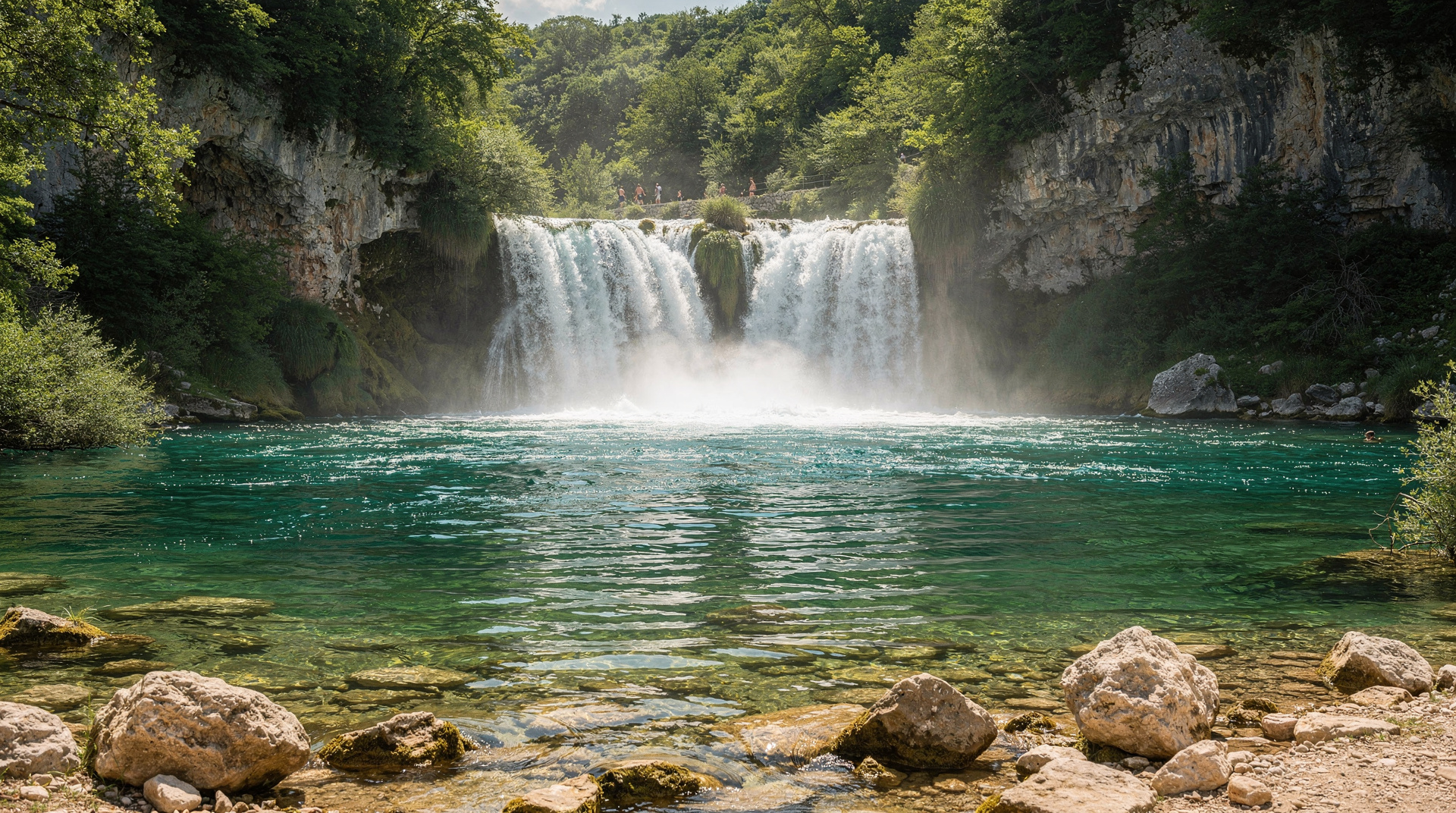
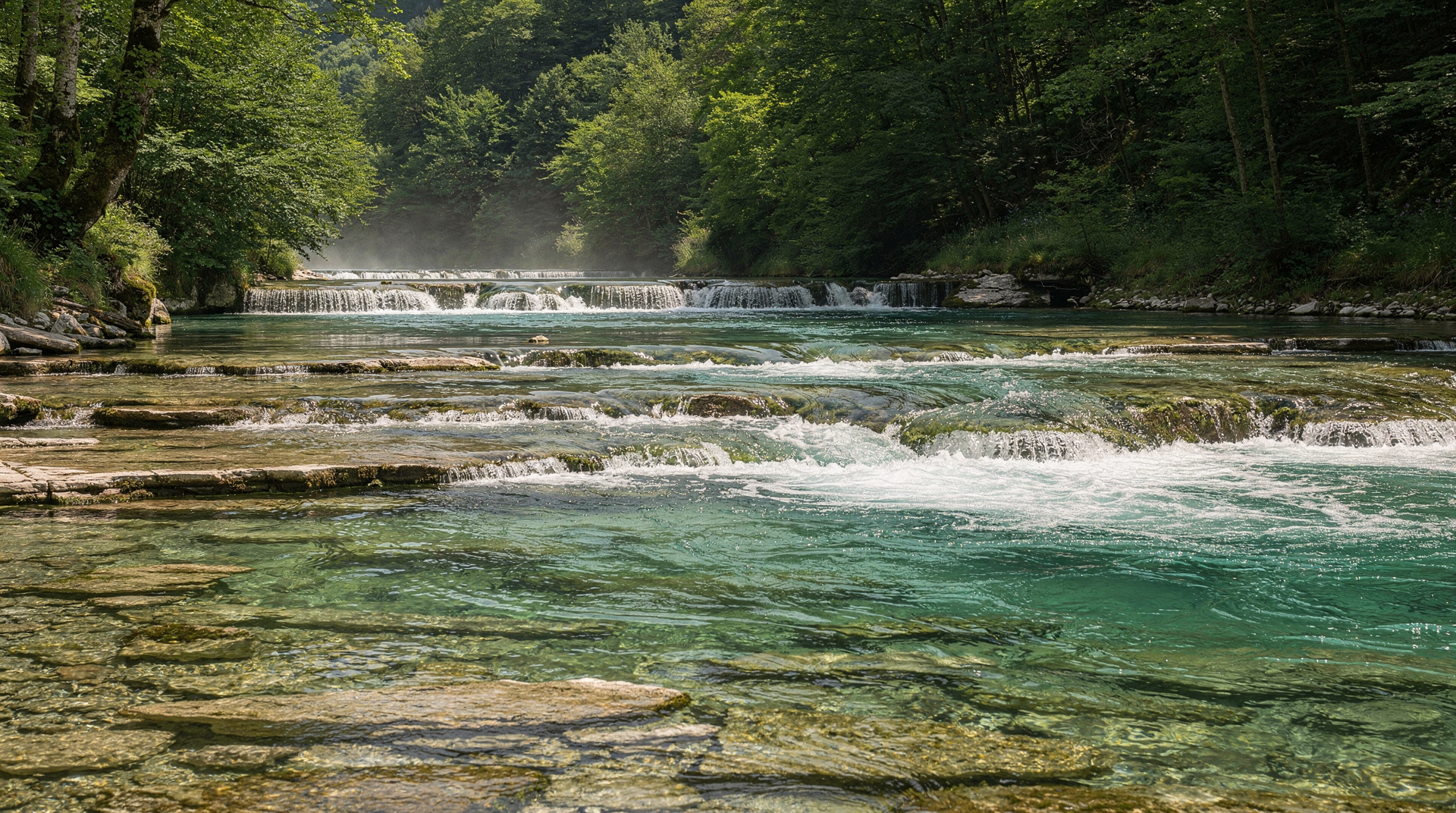
Una National Park in the northwest of Bosnia is built around the Una River — one of the most beautiful watercourses in the Balkans. The river runs from a boiling spring at Bihać through a series of natural travertine barriers, creating a chain of small waterfalls and turquoise pools.
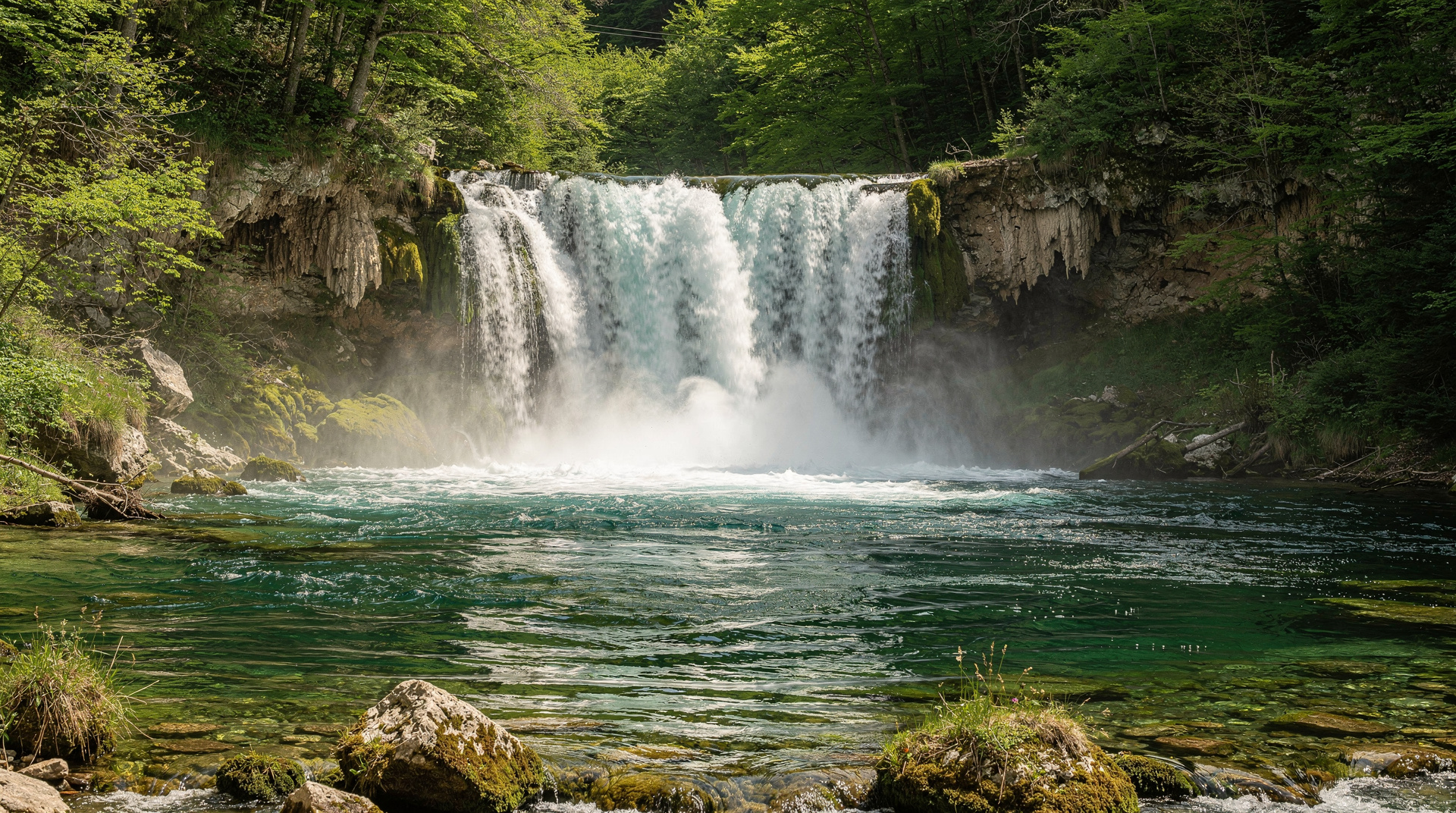
The Štrbački Buk waterfall is the park’s signature attraction: a 25-metre curtain of water in a deep gorge, completely unvisited compared to anything in Croatia or Slovenia. Rafting and kayaking on the Una is outstanding — the Una rafting guide covers the different sections and difficulty levels.
Bihać is 300 kilometres from Sarajevo — it doesn’t work as a day trip. But it works very well as part of a circular northern Bosnia route that can include Jajce and Banja Luka on the way back south.
For the river itself, the Una rafting from Bihać guide and the Una rafting diary give a feel for the experience, while the Bihać page and the western Bosnia and Krajina itinerary help you plan the northern loop.
Blagaj Tekija
Blagaj is 12 kilometres south of Mostar, and almost everyone who visits Kravice Falls passes through — yet remarkably few people stop properly.
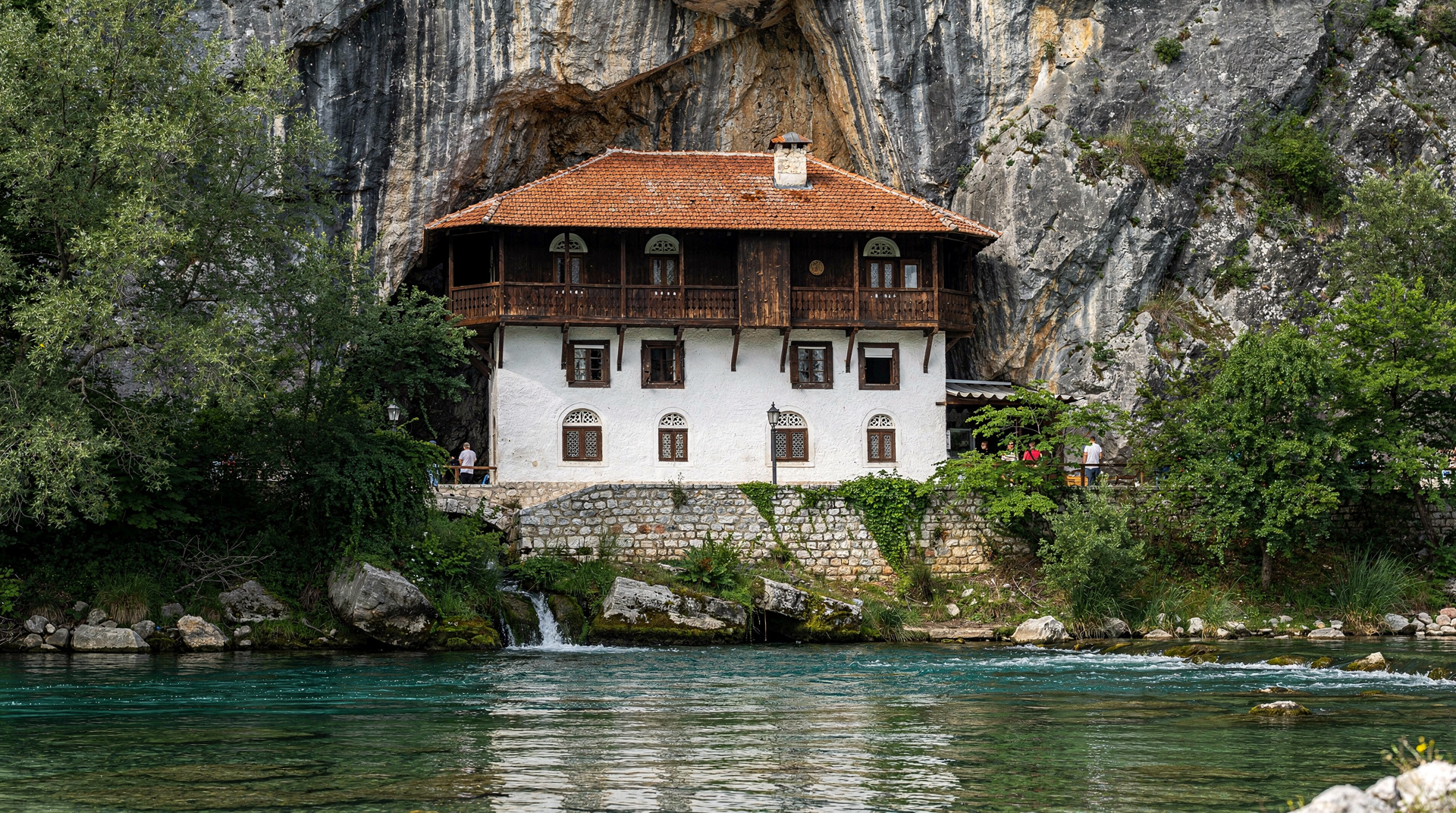
The draw is the Blagaj Tekija: a sixteenth-century Dervish monastery built at the point where the Buna River emerges from a cave at the base of a sheer 200-metre cliff. The spring produces 43 cubic metres of water per second, constant year-round regardless of rainfall. The monastery sits directly over the source.
Inside, the dervish chamber is still used for Sufi rituals. The building — its white walls, its wooden balconies over the rushing water — is extraordinary in a way that photographs consistently fail to convey. The Blagaj Tekija guide explains the context and the best visiting times.
If you want to see the spring from the water, the canoeing the Buna at Blagaj guide describes a gentle way to do it, and the Mostar page helps you plan a base for the whole area.
Počitelj
Počitelj is a semi-ruined Ottoman fortified town on a hillside above the Neretva, roughly halfway between Mostar and Čapljina. Most passing travellers see it briefly on the Mostar to Kravice route. Almost none stop for long.
Stop for long. The hilltop hamlet has a ruined fortress, a sixteenth-century mosque with one of the most beautifully proportioned minarets in Herzegovina, and stone houses built against the cliff face. Many of the buildings are damaged or empty — the town was heavily shelled in the 1990s and only partially restored. The state of semi-ruin is actually part of what makes it so visually extraordinary.
The Počitelj Ottoman village guide goes deeper into the architecture, and the broader Ottoman heritage in Bosnia guide places it alongside the other towns that shaped the country.
Climb to the fortress at the top. The view over the Neretva bend is worth the effort.
Blagaj, Počitelj and the falls are easy to combine on a single day, and a guided day from Sarajevo through Konjic, Blagaj and Počitelj lets you reach them without a rental car. The Blagaj and Počitelj destination pages and the Herzegovina weekend itinerary are good starting points for a slower version.
The Rakitnica Canyon
The Rakitnica gorge, below the Bjelašnica plateau south of Sarajevo, is one of Bosnia’s most dramatic river canyons and one of its least accessible. The canyon walls rise up to 1,000 metres; the river at the bottom runs cold and green through a series of cascades.
A trail runs the length of the canyon but requires proper preparation, navigation skills, and ideally a guide. This is not a casual day hike — it’s a multi-day wilderness experience. The Via Dinarica long-distance route passes through this region.
For experienced hikers who want genuine wilderness without the crowds of Slovenia or Croatia, this is it. Before committing, read the hiking in Bosnia guide and the landmine safety guide, and always stay on marked or locally recommended routes.
Jajce
Jajce sits in central Bosnia at the confluence of the Pliva and Vrbas rivers, with a waterfall in the literal centre of town. The old royal capital of medieval Bosnia has a fortress, catacombs, a church that became a mosque that became a museum, and the Pliva watermills — a cluster of small wooden mills on the lake above the town, photographed endlessly and somehow still not overrun.
It’s two to two and a half hours from Sarajevo by bus or car. The Jajce guide and the Jajce and Travnik day trip cover the logistics.
Two practical notes apply to almost every place on this list. Distances are long and public transport is thin, so read the renting a car in Bosnia and getting around Bosnia guides early. And if you are travelling alone, the solo travel in Bosnia post and the is Bosnia safe guide answer the questions most people have.
The honest argument
Bosnia is not going to stay this quiet forever. The infrastructure is improving, the tourism numbers are rising year on year, and the country’s extraordinary combination of nature, history, and value is becoming better known internationally.
The window for seeing Lukomir, Trebinje, and Sutjeska before they develop proper tourist infrastructure is still open. The question is whether you use it.
Building these into a route, not a checklist
Trying to hit all eight in one trip is a mistake — they’re spread across the country and some, like Bihać, genuinely don’t work as add-ons. A more realistic approach is to pick a region and go deep. Southern Herzegovina groups Trebinje, Blagaj, and Počitelj naturally around a Mostar base — the Herzegovina day trip guide and the best day trips from Mostar guide both cover realistic pairings.
The Sarajevo mountain side groups Lukomir and the Rakitnica canyon with the best day hikes from Sarajevo. Northern Bosnia (Bihać, Jajce, Banja Luka) is its own loop, best done as a multi-day circuit rather than squeezed in — the driving in Bosnia guide has route notes for exactly this kind of longer self-drive trip.
If two weeks feels like a lot to commit without a plan, the Bosnia 14-day grand tour already threads several of these places together, and the Bosnia adventure itinerary leans further into the hiking and rafting side of this list.
Frequently asked questions about Bosnia off the beaten path — beyond Sarajevo and Mostar
Which of these off-the-beaten-path places is most realistic to add to a first-time Bosnia trip? Blagaj and Počitelj — both sit close to the standard Mostar/Kravice route and need no extra driving day, unlike Bihać, Trebinje, or Sutjeska, which genuinely require dedicated time.
Do I need a 4x4 or special vehicle to reach these places? No — a standard rental car handles all the road access described here (Trebinje, Bihać, Jajce, Blagaj, Počitelj). Only the Lukomir and Rakitnica hiking approaches require walking beyond where a car can go.
Top experiences
Bookable activities with verified prices and instant confirmation on GetYourGuide.